Custom marine LiFePO4 batteries for trolling motors, onboard house power, lead-acid replacement, engine starting and OEM marine battery systems.
With more than 20 years of battery manufacturing experience, we support boat builders, marine equipment suppliers, battery brands, distributors and system integrators with battery sizing, Smart BMS configuration, charging-system review, sample testing and OEM production.
Marine lithium battery systems should be selected around the vessel, electrical load, charging equipment, current requirements and available installation space rather than voltage and amp-hours alone.
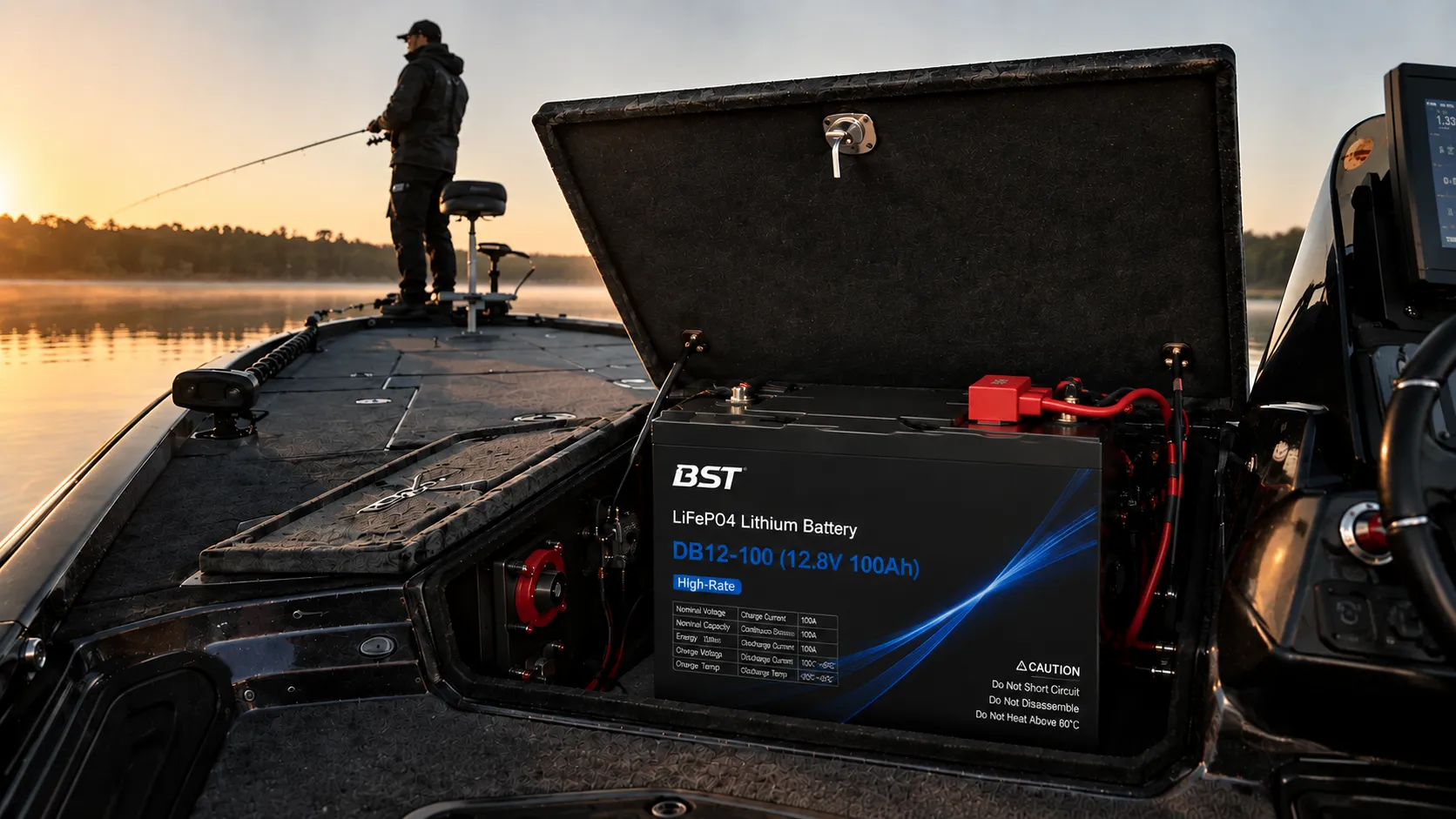
The correct marine lithium battery depends on the application, engine requirements, trolling motor current, onboard electrical loads, required runtime, charging equipment and available installation space.
High-current LiFePO4 battery configurations can be developed for compatible marine engines after the required CCA or MCA, alternator output, charging voltage and installation conditions have been confirmed.
Not every deep-cycle LiFePO4 battery is suitable for engine starting. Starting-current capability and BMS peak-current limits must be verified before connection to a marine engine.
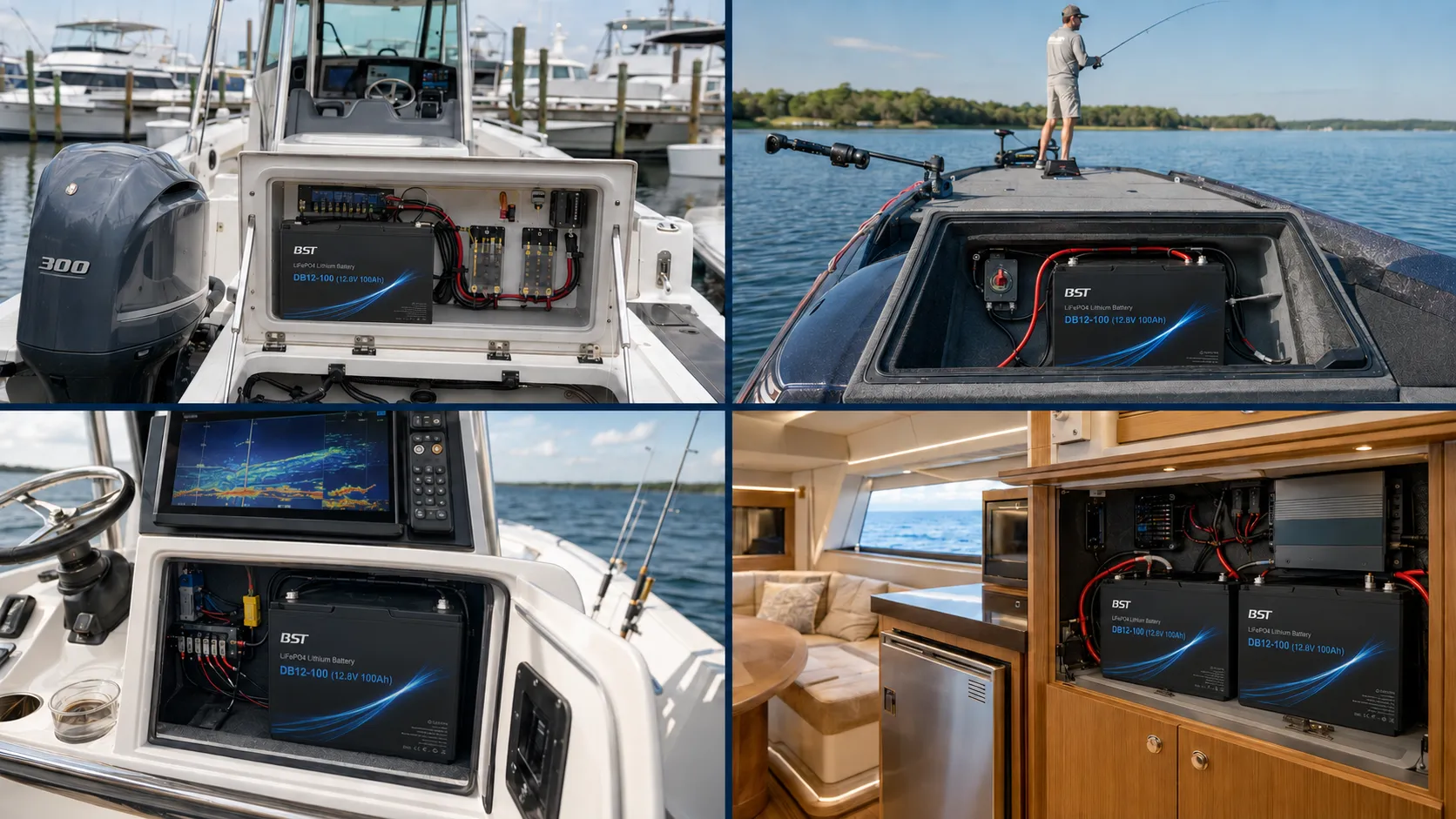
Deep-cycle marine batteries provide energy for trolling motors, fish finders, sonar, navigation equipment, lighting, refrigeration, pumps and other onboard electrical loads.
For higher-capacity 12V applications, a 12V 200Ah LiFePO4 Battery can be evaluated after confirming maximum current, required runtime and available charging energy.
Marine house battery banks should be sized around actual daily energy use, inverter power, peak load, required off-grid runtime and the available shore, alternator and solar charging capacity.
A 12V 165Ah Dual-Purpose Marine LiFePO4 Battery can be used in approved applications that require both engine-starting current and energy for onboard equipment.
A standard deep-cycle battery should not be used for engine starting unless it has a verified starting-current rating. Likewise, a starting battery should not be used for sustained deep-cycle loads unless it is designed for dual-purpose operation.
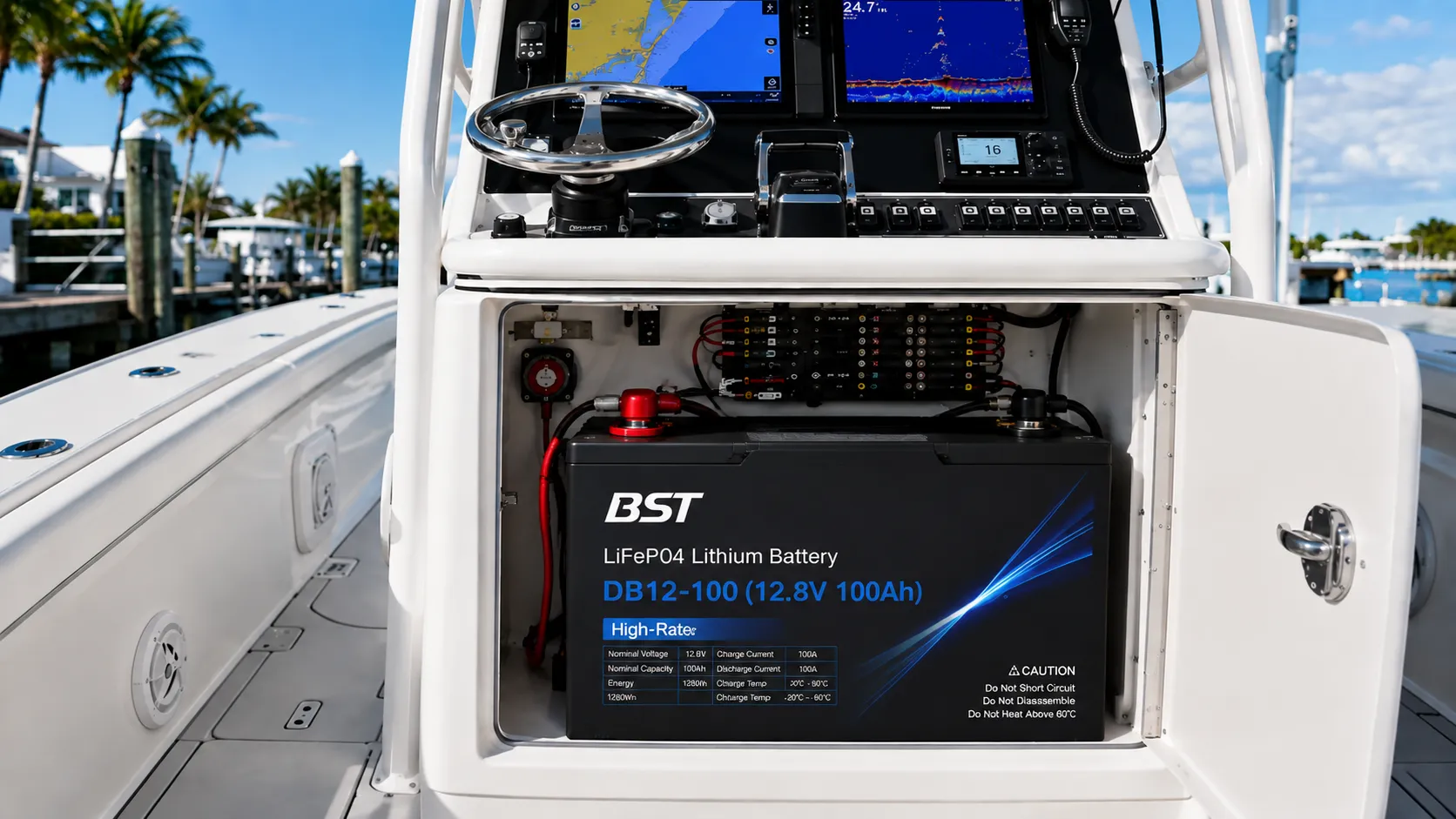
12V 100Ah Group 31 deep-cycle LiFePO4 battery for compatible trolling motors and marine auxiliary loads.
View Group 31 Trolling Motor Battery →12V 100Ah Group 31 battery with CAN, RS485 and Bluetooth for compatible Victron-based marine systems.
View Group 31 Victron-Compatible Battery →Higher-capacity 12V LiFePO4 battery for marine house-power and extended runtime applications.
View 12V 200Ah LiFePO4 Battery →Marine AGM, gel and flooded lead-acid battery banks can often be replaced with LiFePO4 batteries, but a reliable conversion requires more than matching nominal voltage and Ah capacity.
Before recommending a marine lithium replacement battery, confirm:
A DC-to-DC charger, alternator regulator or another approved current-control method may be required depending on the vessel, alternator and battery-bank capacity.
For the complete conversion process, review our Lead-Acid to LiFePO4 Replacement Guide covering charger compatibility, alternator charging, wiring, fuse protection, battery fitment and temperature requirements.
Replacing a 200Ah marine lead-acid house bank? See the 200Ah Lead-Acid to LiFePO4 Replacement Guide for usable-energy and capacity-sizing examples.
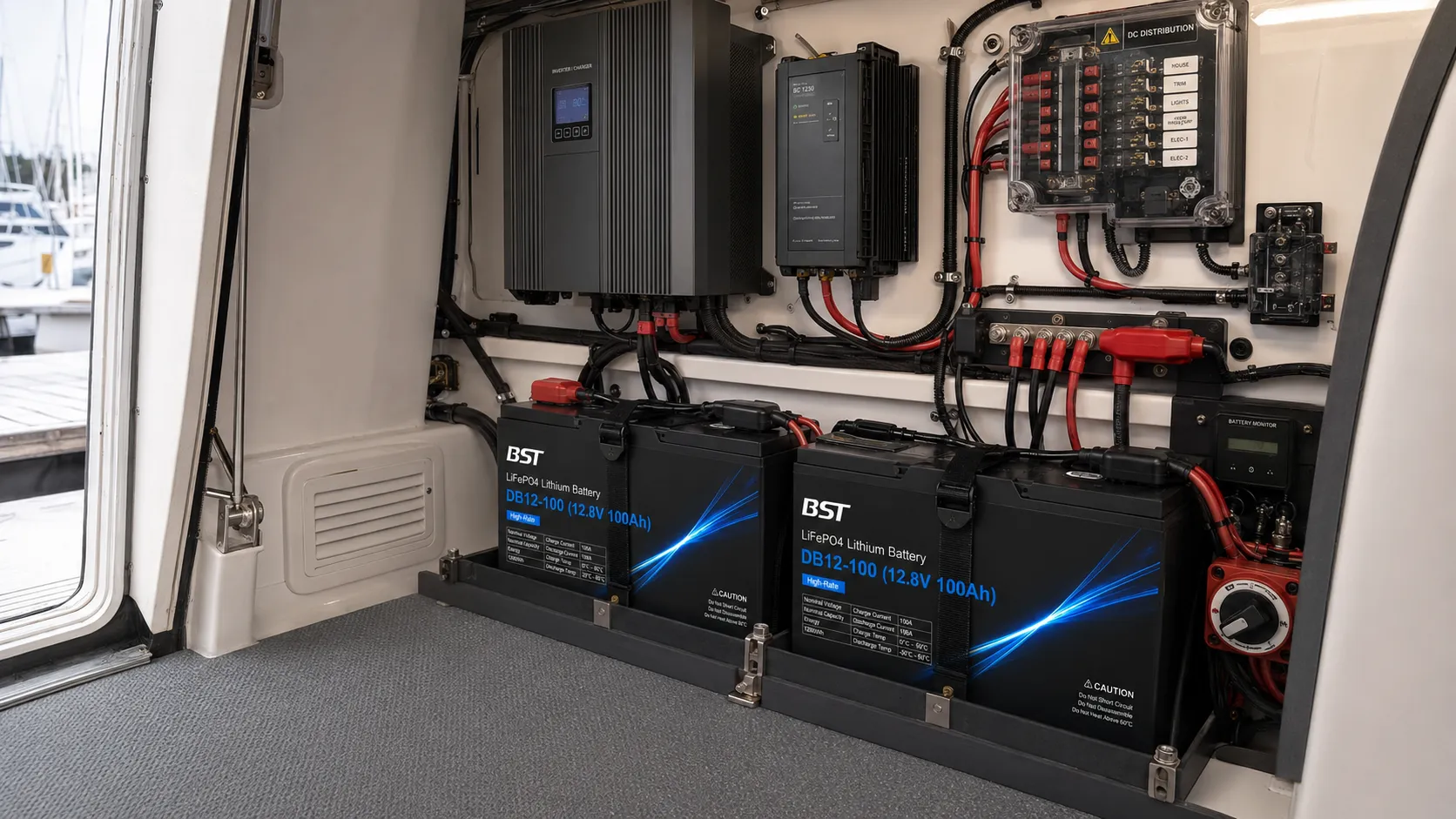
A dependable marine electrical system requires the battery, charging sources, inverter, wiring and protection devices to operate as one complete system.
Marine LiFePO4 battery integration can include:
Review the LiFePO4 Battery System Compatibility Guide for BMS current, charger, inverter, alternator, wiring and protection checks.
If the battery is not charging, shuts down under load, shows excessive voltage drop or has alternator, BMS or DC-to-DC charger problems, use the Marine Lithium Battery Troubleshooting Guide .
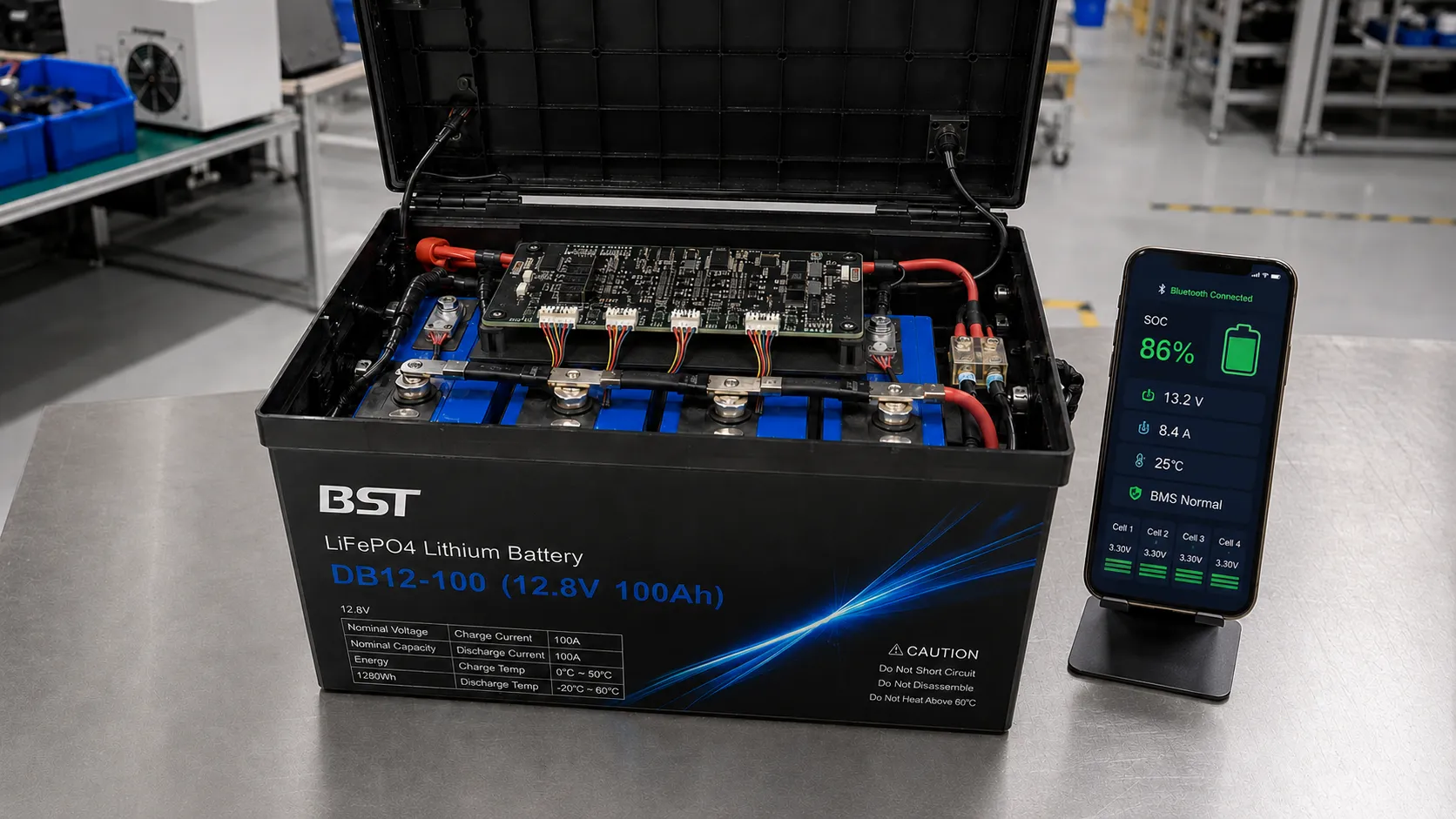
The Smart BMS monitors battery voltage, current, cell condition and temperature while controlling charge and discharge protection.
CAN and RS485 communication can be configured for compatible marine equipment where battery data is required. BMS protocol, firmware and communication cables should be confirmed before sample development or volume production.
A BMS shutdown does not automatically mean the battery has failed. Overcurrent, cell voltage, temperature and charging conditions should be checked before reset.
High-current LiFePO4 starting batteries can be configured for compatible marine engines with confirmed CCA, MCA, alternator and charging requirements.
Deep-cycle LiFePO4 batteries are available for 12V, 24V and 36V trolling motor systems. Battery capacity and BMS current should be selected according to motor current, operating speed, cable length and required runtime.
For a standard 12V application, review the 12V 100Ah Group 31 LiFePO4 Trolling Motor Battery .
If a trolling motor operates normally at low speed but shuts down at higher power, check BMS current limits, battery voltage under load, breaker condition and cable resistance. See the Trolling Motor Lithium Battery Shutdown Troubleshooting Guide .
Choosing between 12V, 24V and 36V or comparing 50Ah and 100Ah? Read our Lithium Trolling Motor Battery Sizing Guide .
LiFePO4 batteries provide stable DC power for fish finders, sonar, GPS, navigation and communication equipment.
Marine house batteries support lighting, refrigeration, water pumps, communication equipment, inverters and other onboard electrical loads.
| Feature | Lead-Acid | LiFePO4 |
|---|---|---|
| Weight | Heavier | Lower weight for comparable usable energy |
| Usable Capacity | More limited in many deep-cycle systems | Higher usable percentage when allowed by battery specification |
| Charging | Generally lower charge acceptance | Higher charge acceptance within specified limits |
| Cycle Life | Generally shorter | Generally longer under specified operating conditions |
| Voltage | Greater voltage drop during discharge | More stable discharge voltage |
| Monitoring | External monitoring often required | Smart BMS and Bluetooth available on selected batteries |
Actual battery performance depends on the specific model, operating temperature, charging equipment, current demand and approved depth of discharge.
We manufacture custom marine LiFePO4 batteries for boat builders, marine equipment manufacturers, distributors, system integrators and private-label battery brands.
OEM and ODM capabilities can include:
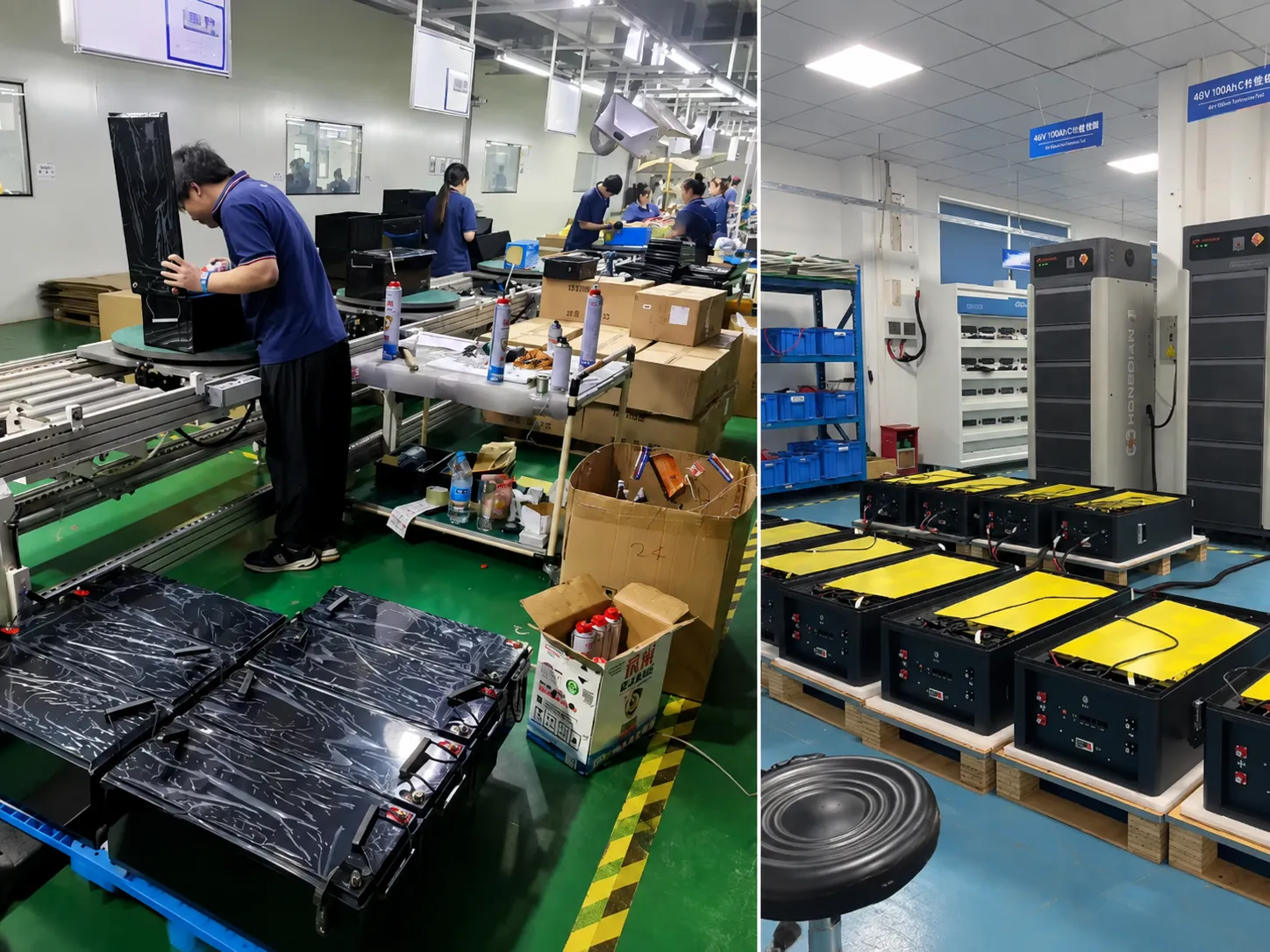
Marine battery packs are inspected and tested against the approved specification before shipment.
Testing can include:
Review our LiFePO4 Battery Testing & Validation for additional battery, BMS and performance-verification information.
Confirm required CCA or MCA, engine type, alternator output, charging voltage, battery dimensions and terminal layout.
Confirm trolling motor voltage, maximum current, cable length, required runtime and charging method. BMS discharge current must be suitable for the motor load.
Calculate daily energy use from refrigeration, lighting, electronics, pumps and inverter-powered equipment. Then compare required runtime with available shore, solar and alternator charging energy.
Use a verified dual-purpose battery where one battery must provide both engine-starting current and energy for onboard equipment.
Yes, in many marine systems. System voltage, charging settings, alternator output, required CCA or MCA, BMS current, cables, fuse protection and installation dimensions should be checked before replacement.
A marine starting battery is designed to provide a short burst of high current for engine cranking. A deep-cycle battery is designed to supply energy over a longer discharge period for trolling motors and onboard equipment.
Selected batteries support Bluetooth monitoring for state of charge, voltage, current, temperature and battery operating status.
It depends on the charger. Charging voltage and charging stages must be compatible with the selected LiFePO4 battery. Incompatible lead-acid equalization modes should not be used.
Yes, when the alternator charging system is correctly configured. Alternator output, temperature, battery charge acceptance and BMS charge-current limits should be reviewed. A DC-to-DC charger or external regulator may be required in some installations.
Yes. The solar charge controller should use charging settings suitable for the approved battery voltage and LiFePO4 specification.
Common causes include BMS discharge-current limits, battery voltage sag, undersized cables, breaker resistance or loose connections.
Selected models provide IP-rated protection. The exact protection rating should be confirmed for the specific battery model. Installation inside a secure and protected battery compartment is still recommended.
Send the required battery voltage, capacity, CCA or MCA, continuous and peak current, inverter power, charging equipment, installation dimensions, communication requirements and estimated order quantity.
Our engineering team can review the application and recommend a suitable marine LiFePO4 battery configuration.