Battery energy storage for EV charging stations helps manage high charging demand, reduce grid peaks, support DC fast-charging loads and integrate solar PV for commercial, fleet and public charging sites.
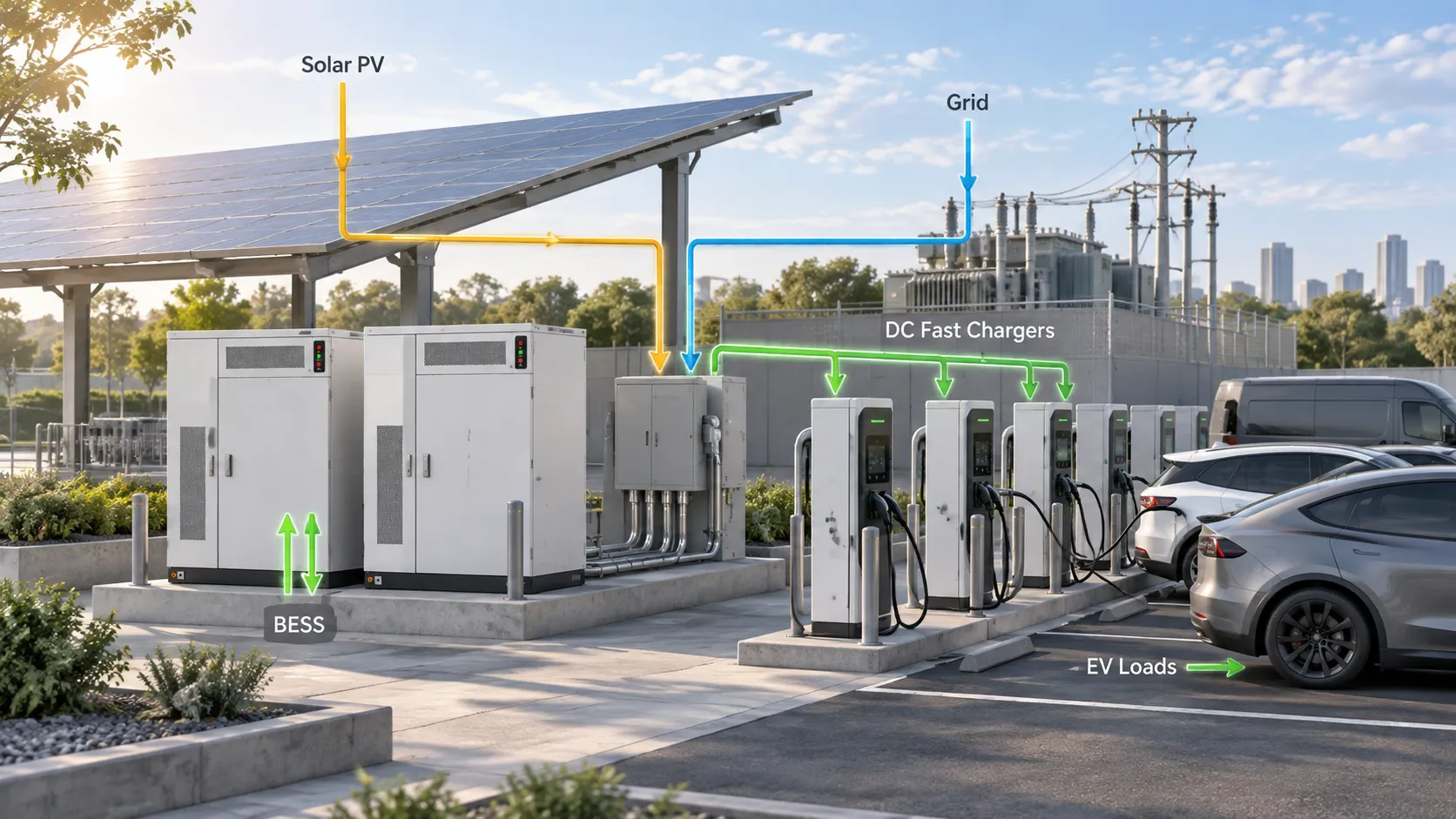
High-power EV chargers can create short, concentrated demand peaks that are significantly higher than the site's normal electrical load. At locations with limited transformer or utility connection capacity, adding more chargers may also require electrical infrastructure upgrades.
A Battery Energy Storage System can charge during lower-demand periods or from solar PV, then discharge when EV charging demand rises. This allows the site to manage grid import more actively while supporting scalable charging infrastructure.
Multiple DC fast chargers operating simultaneously can create large short-duration power peaks.
Available utility capacity may be lower than the total charging power required by the site.
Charging expansion may require larger transformers, switchgear or utility upgrades when no battery buffer is available.
In markets with demand-based tariffs, short charging peaks can materially affect site electricity costs.
Solar PV output may not coincide with vehicle arrival and charging demand, making storage useful for time shifting.
Fleet depots and public charging hubs may need to add chargers faster than the local grid can be upgraded.
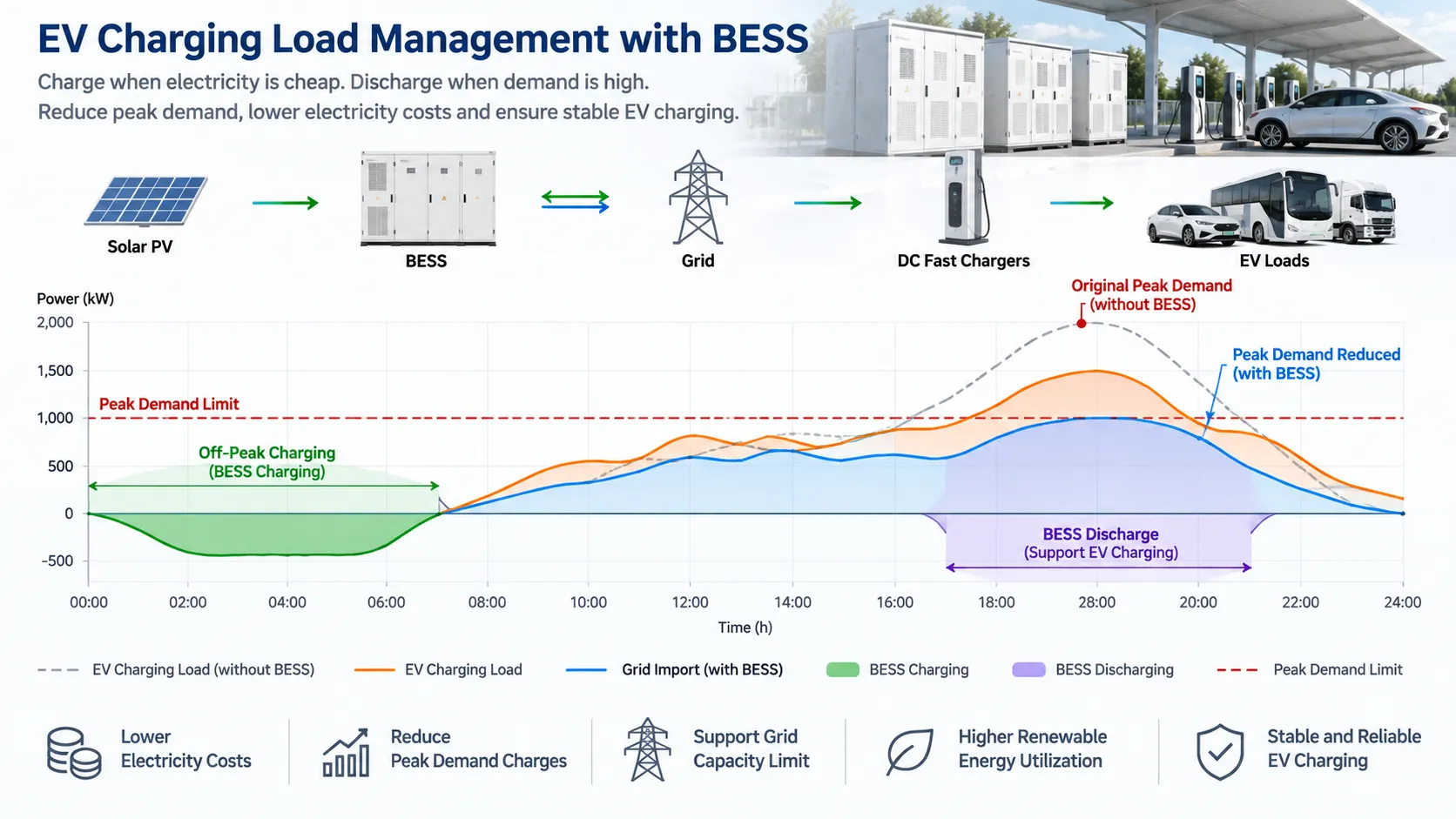
The BESS charges from the utility grid or available solar PV when site demand is lower.
EMS and site metering monitor charger demand, grid import and the configured power limit.
When charging demand rises, stored battery energy supplies part of the required power and reduces grid import.
The EMS coordinates BESS charging, discharging, solar generation, grid power and EV charger demand.
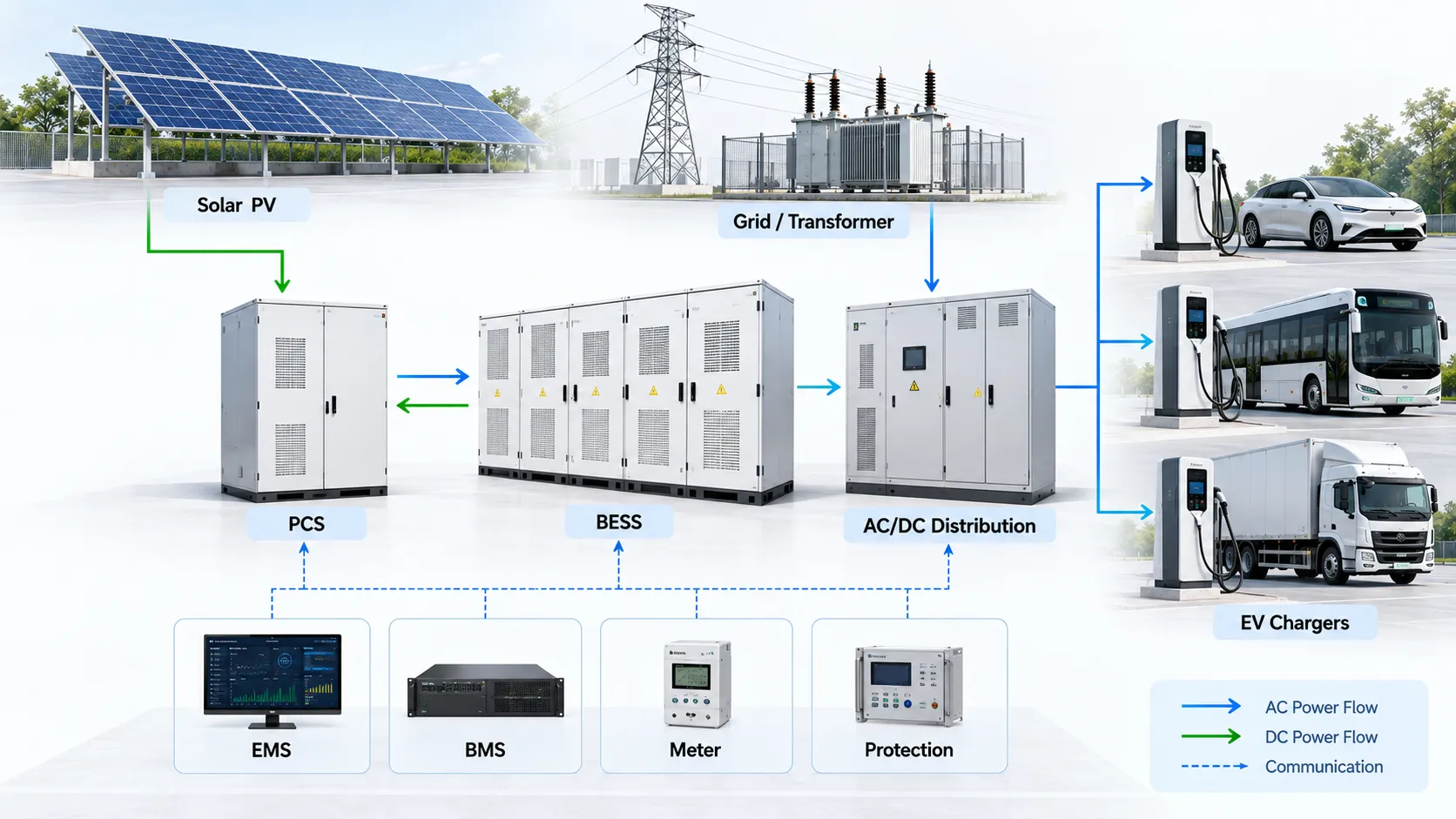
The final architecture depends on charger power, site voltage, transformer capacity, grid connection limits, PCS topology, solar PV capacity and the required operating strategy.
Use battery power during charging peaks to reduce the maximum power drawn from the utility grid.
Supplement available grid power when charging demand temporarily exceeds the preferred site import level.
Support phased charger deployment where utility or transformer upgrades are constrained or delayed.
Store available solar generation for later charging demand when vehicles arrive outside peak PV hours.
In applicable tariff structures, limiting short power peaks can support demand-cost management strategies.
Coordinate grid, solar, battery and charger loads according to site operating priorities.
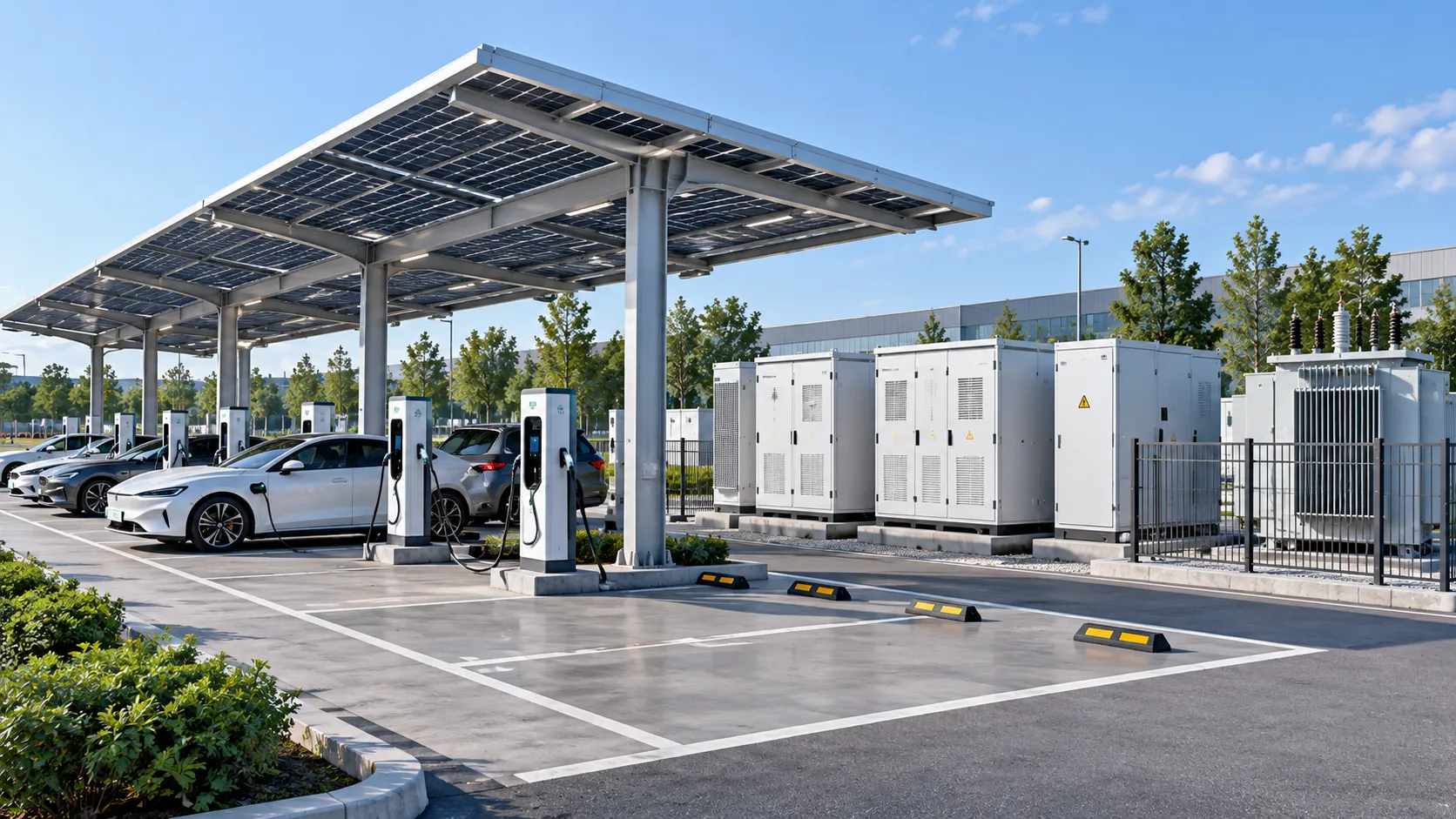
BESS sizing for EV charging should be based on charger power, charging behavior, grid limits and the required battery support duration. Important project inputs include:
If several fast chargers create a combined charging peak above the site's preferred grid import level, the BESS can be configured to supply part of the difference during those periods.
Final PCS power and usable battery capacity should be calculated from actual charger concurrency, peak duration, state-of-charge reserve, battery operating limits and the required number of daily cycles.
EV charging projects can range from smaller commercial sites to high-power charging hubs and fleet depots. Battery capacity and PCS power should be matched to the site's charger demand and grid constraints.
Battery storage can supply part of the charging power during high-demand periods, helping manage grid import and support sites with constrained electrical capacity.
Yes. A properly configured BESS can discharge when several chargers operate simultaneously and reduce the site's peak grid demand.
Yes. Available solar generation can charge the battery when the system architecture and operating strategy permit it, and stored energy can later support EV charging loads.
Required power and energy depend on total charger demand, expected concurrency, grid capacity, charging-peak duration and the site's operating strategy.
In some projects, battery storage can reduce short-duration grid import and support charger deployment within existing electrical limits. Whether an upgrade can actually be avoided depends on utility requirements and site design.
Send us the number of chargers, charger power, expected concurrency, grid capacity, solar PV information and target operating strategy to evaluate an appropriate battery energy storage configuration.
Request an EV Charging BESS Solution