LiFePO4 battery solutions for replacing lead-acid batteries in RVs, boats, golf carts, utility vehicles and industrial equipment.
We support battery sizing, charger compatibility, alternator and DC-DC charging, Smart BMS configuration, low-temperature protection, custom enclosures and OEM manufacturing.
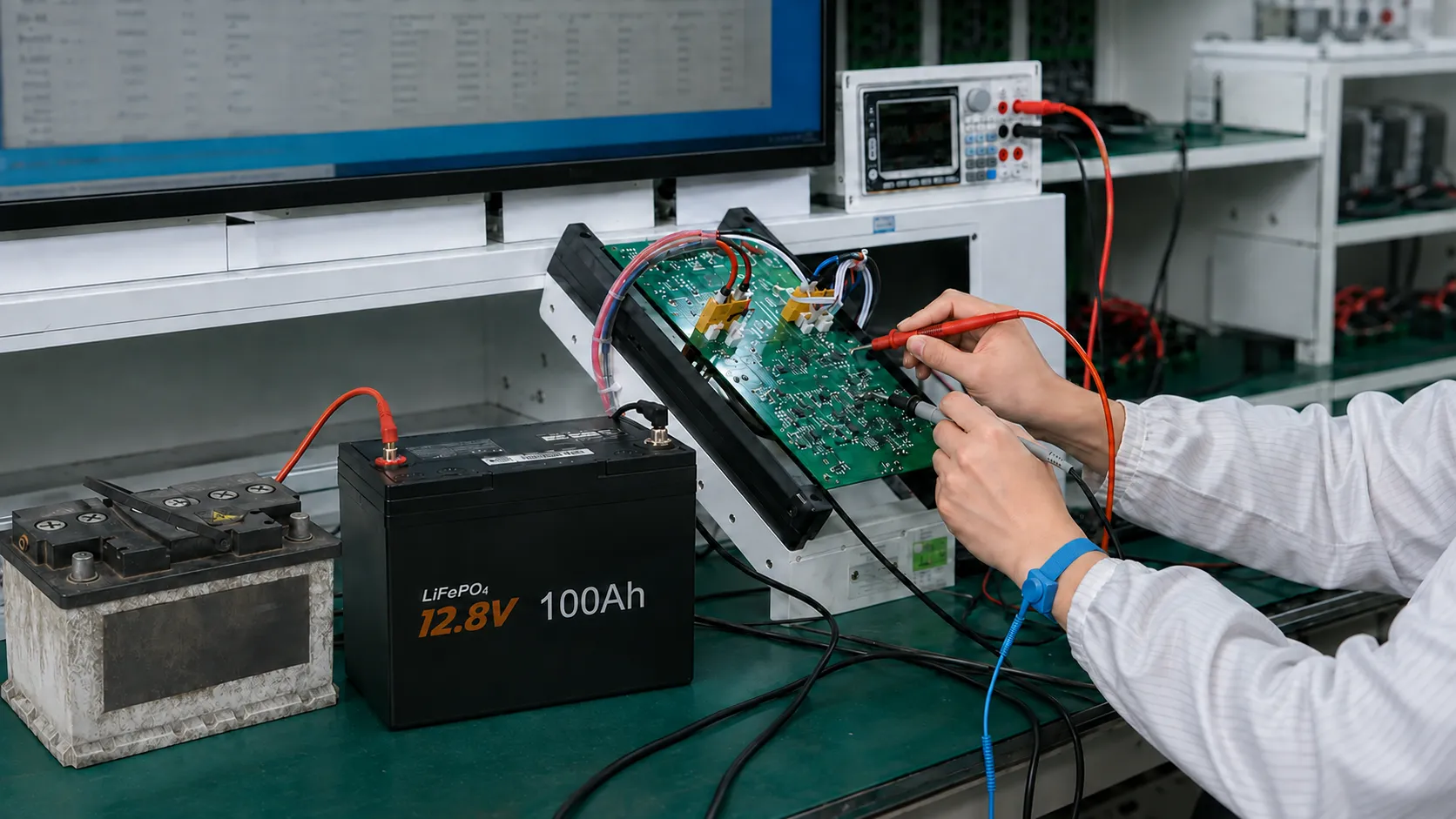
A correctly configured LiFePO4 battery can provide more usable energy, lower weight, faster charging and more stable voltage under load than a conventional lead-acid battery.
A successful conversion requires more than matching nominal voltage. The original battery dimensions, terminal layout, charger, alternator, inverter, motor controller, cables, fuses and maximum current must also be checked.
Actual performance depends on the battery specification, connected equipment, charging system and operating conditions.
The table below shows a common 12V deep-cycle replacement configuration. The original lead-acid battery label, compartment dimensions and electrical system must be checked before the replacement specification is approved.
| Configuration Item | Original Lead-Acid System | 12V LiFePO4 Replacement |
|---|---|---|
| Battery Type | Flooded lead-acid, AGM or gel deep-cycle battery | LiFePO4 deep-cycle battery |
| Nominal Voltage | 12V | 12.8V |
| Battery Capacity | Confirm from the original battery label | 100Ah reference configuration |
| Nominal Energy | Depends on the original capacity | 1280Wh |
| Battery Management | Normally no integrated BMS | Integrated 100A BMS |
| Continuous Discharge Current | Confirm from the original load and equipment | Up to 100A for this reference configuration |
| AC Charger | Lead-acid charging profile | 14.2–14.6V CC/CV LiFePO4 charger |
| Recommended Charging Current | Confirm from the original charger | 20A reference charging current |
| Alternator Charging | May be connected through the original charging circuit | Matched DC-DC charger normally required |
| Reference DC-DC Output | Not normally installed in older lead-acid systems | 20A or 40A, subject to alternator and cable capacity |
| Battery Dimensions | Measure the original battery and compartment | Approx. 10.24 × 6.61 × 8.30 in for the Group 24 reference configuration |
| Terminal Layout | Confirm position, polarity and cable reach | M8 or project-specific terminal configuration |
This is a reference configuration, not a universal drop-in specification. Final battery capacity, BMS current, charger, DC-DC charger, dimensions and terminals must be confirmed against the original equipment.
Record the following information before selecting a LiFePO4 replacement:
Photos of the battery label, compartment, terminals, charger and wiring layout help reduce compatibility errors during engineering review.
LiFePO4 batteries are available in common lead-acid replacement formats, including qualified Group 24, Group 27 and Group 31 lithium replacement battery configurations.
A battery should only be identified by a BCI group size when its physical dimensions and terminal arrangement meet the relevant requirements.
Compact replacement batteries for verified Group 24 compartments. A 12.8V 100Ah configuration can provide 1280Wh of nominal energy in a compact enclosure, subject to the approved model specification.
Replacement options for verified Group 27 compartments requiring additional usable energy. Exact dimensions and terminal positions must be checked before installation.
Deep-cycle replacement batteries for RV, marine and industrial equipment using a verified Group 31 compartment. The Group 31 enclosure is generally longer than a Group 24 enclosure and should not be assumed to fit the same tray.
Important: Select the replacement using the exact product drawing and equipment measurements rather than the group name alone.
Lead-acid replacement batteries can be developed for 12V, 24V, 36V and 48V systems. The replacement voltage must match the connected equipment and approved charging configuration.
A single integrated LiFePO4 battery may replace a compatible multi-battery lead-acid bank when its voltage, capacity, current rating and enclosure meet the system requirements.
Series and parallel connections should only be used when the battery model and BMS are approved for the required arrangement.
An existing lead-acid charger should only be retained when its maximum voltage, current and charging profile are suitable for the selected LiFePO4 battery.
For the 12.8V 100Ah reference configuration, the charging review should cover:
A matched LiFePO4 charger should be used when compatibility with the existing charger cannot be confirmed.
Vehicle and marine alternators are not always suitable for charging a LiFePO4 house battery directly. A DC-DC charger regulates charging voltage and current while helping protect the alternator and battery.
The DC-DC charger must be selected according to:
A 20A or 40A DC-DC charger may be considered for a 12V 100Ah battery, but the final output must be confirmed against the alternator, wiring and battery specification.
Before replacing a lead-acid battery with LiFePO4, review the complete electrical and mechanical system.
View LiFePO4 Battery Technical Support →
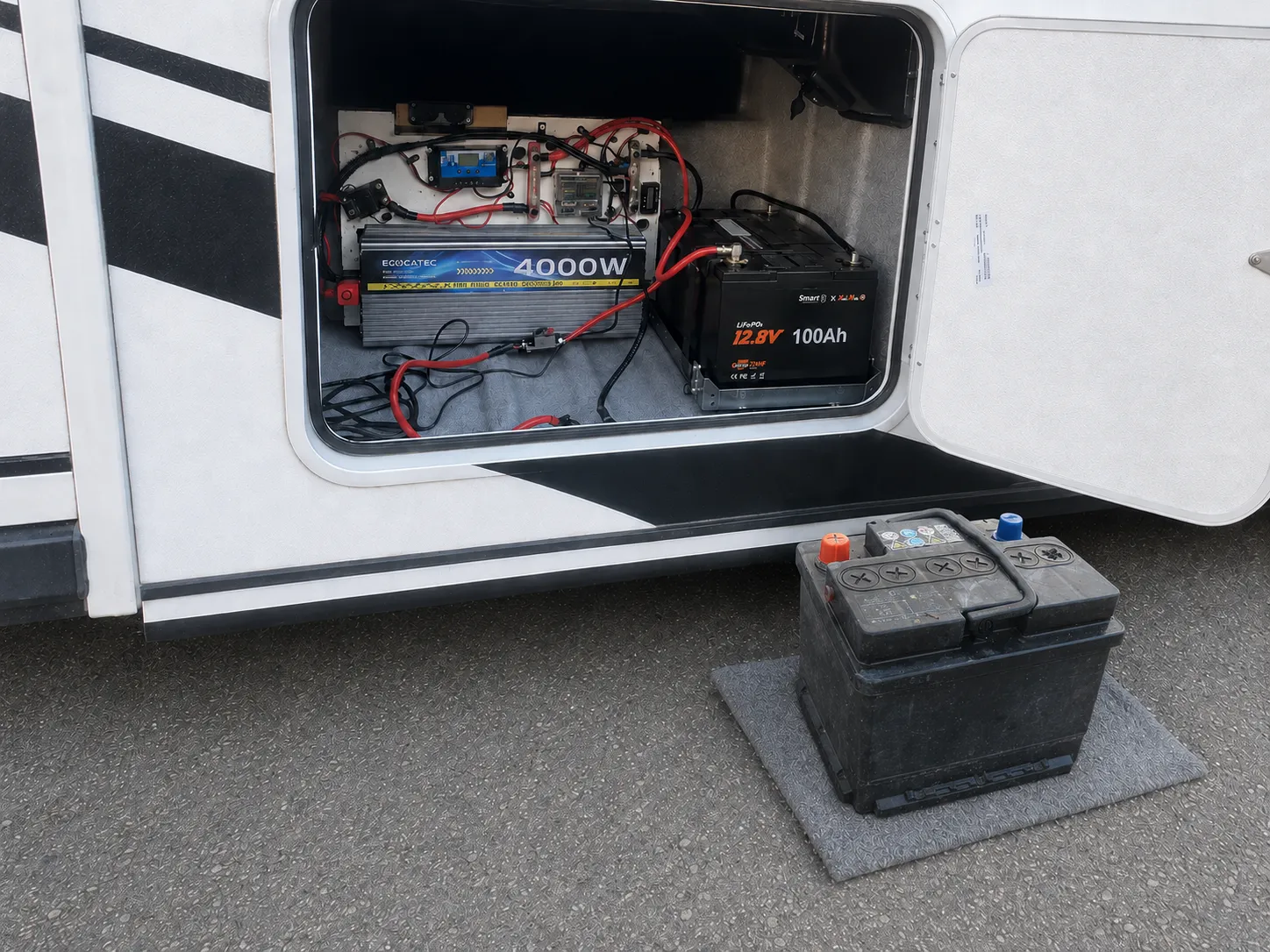
LiFePO4 batteries for camper vans, motorhomes and travel trailers. The conversion review covers the house battery bank, inverter, AC charger, solar controller, alternator charging, cable size, fuse protection and battery compartment.
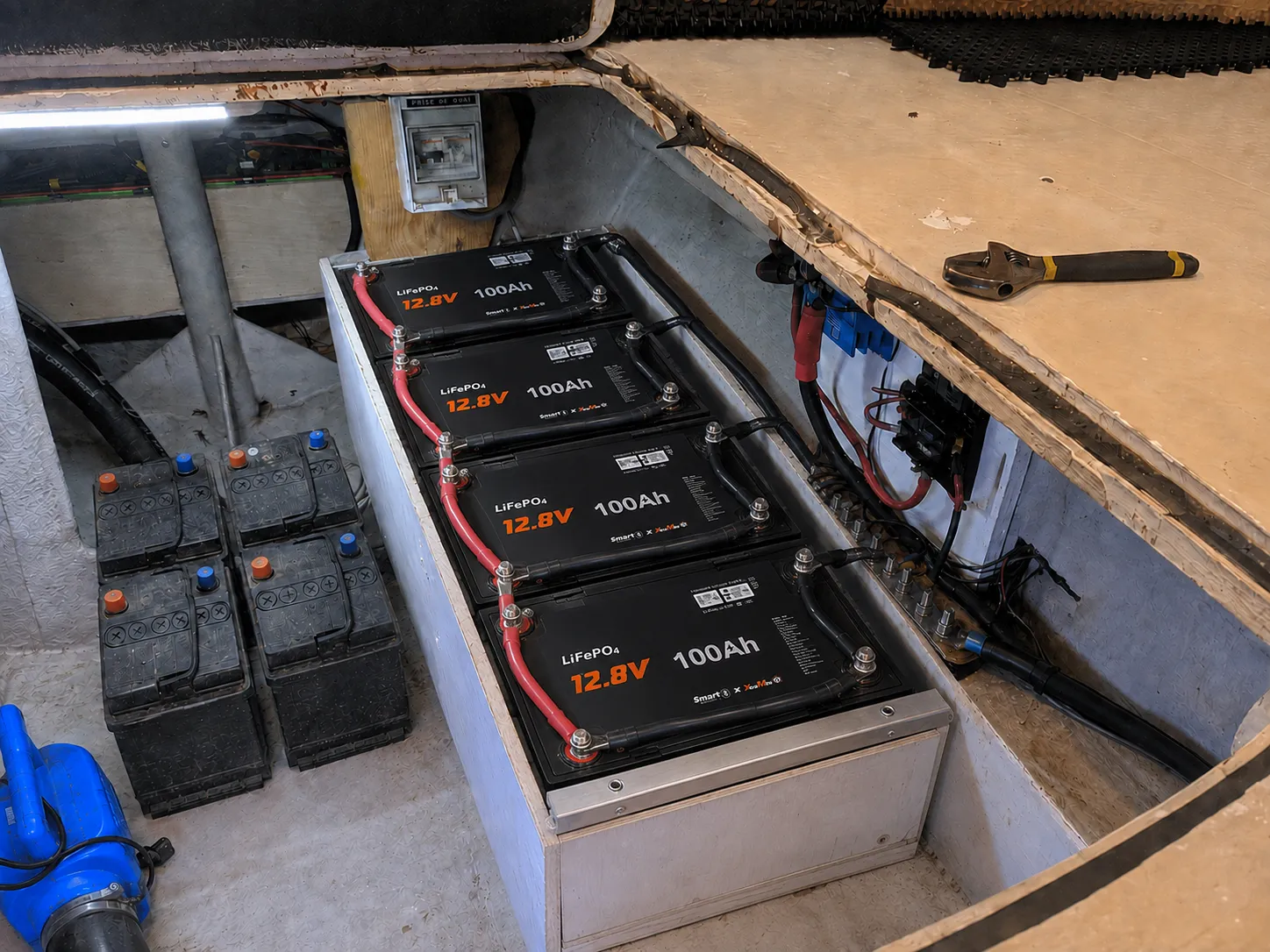
Marine LiFePO4 batteries can replace compatible lead-acid house banks used for lighting, refrigeration, navigation electronics, pumps and other onboard equipment.
The shore charger, alternator charging circuit, solar controller, inverter, fuses, isolation equipment and marine-grade cables must be checked before conversion. Starting applications require batteries specifically designed and approved for cranking loads.
View Marine Battery Solutions →
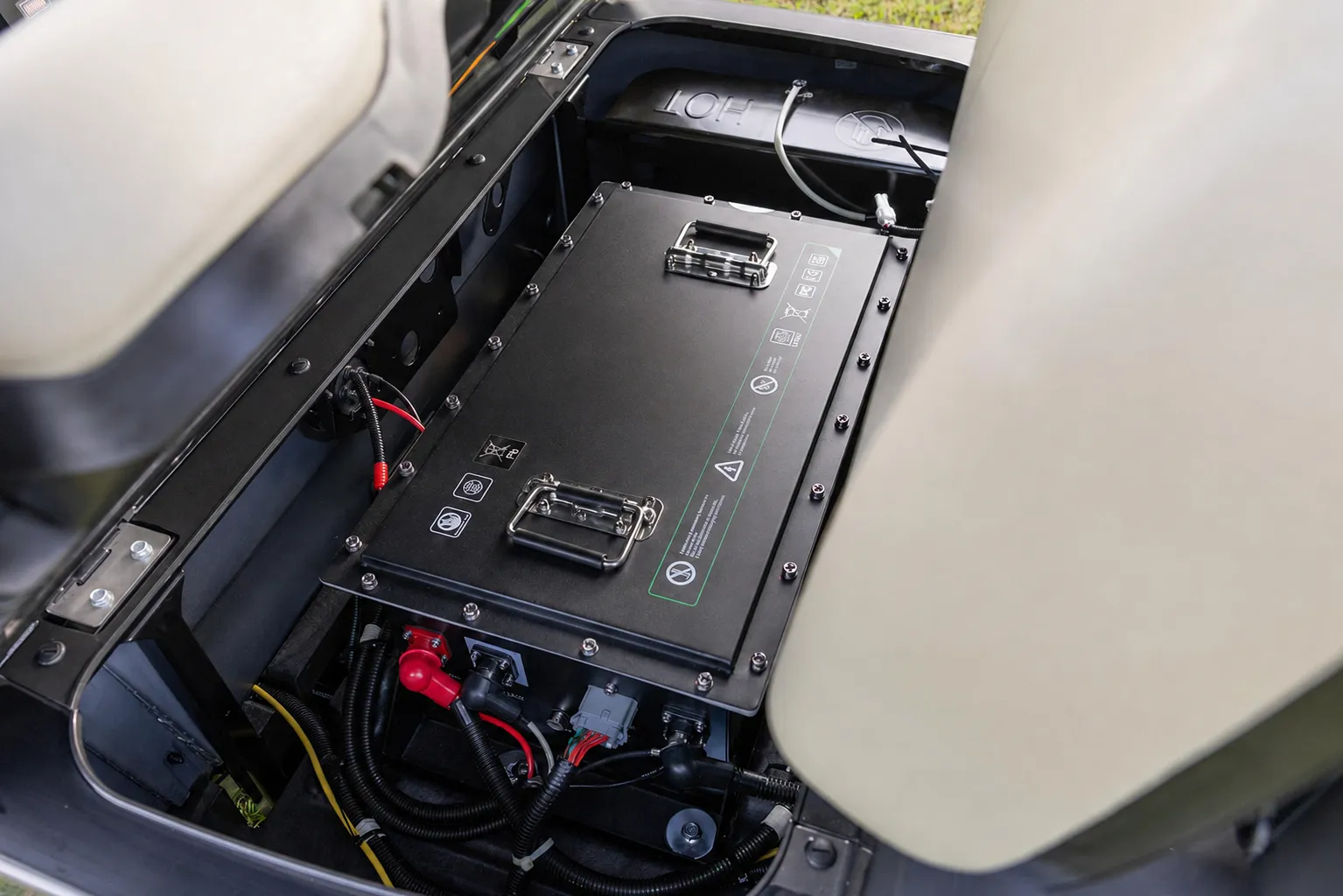
A single LiFePO4 battery can replace a compatible multi-battery lead-acid bank in a golf cart or utility vehicle, reducing inter-battery cables and connection points.
The replacement must match the motor-controller voltage and supply the required continuous and peak current during acceleration, hill climbing and loaded operation.
View Golf Cart Battery Solutions →
Having shutdown, charging, BMS or controller problems after a lithium conversion? Golf Cart Lithium Battery Troubleshooting →
Questions about voltage, capacity, BMS current, charging or lead-acid replacement? View Golf Cart Lithium Battery FAQ →
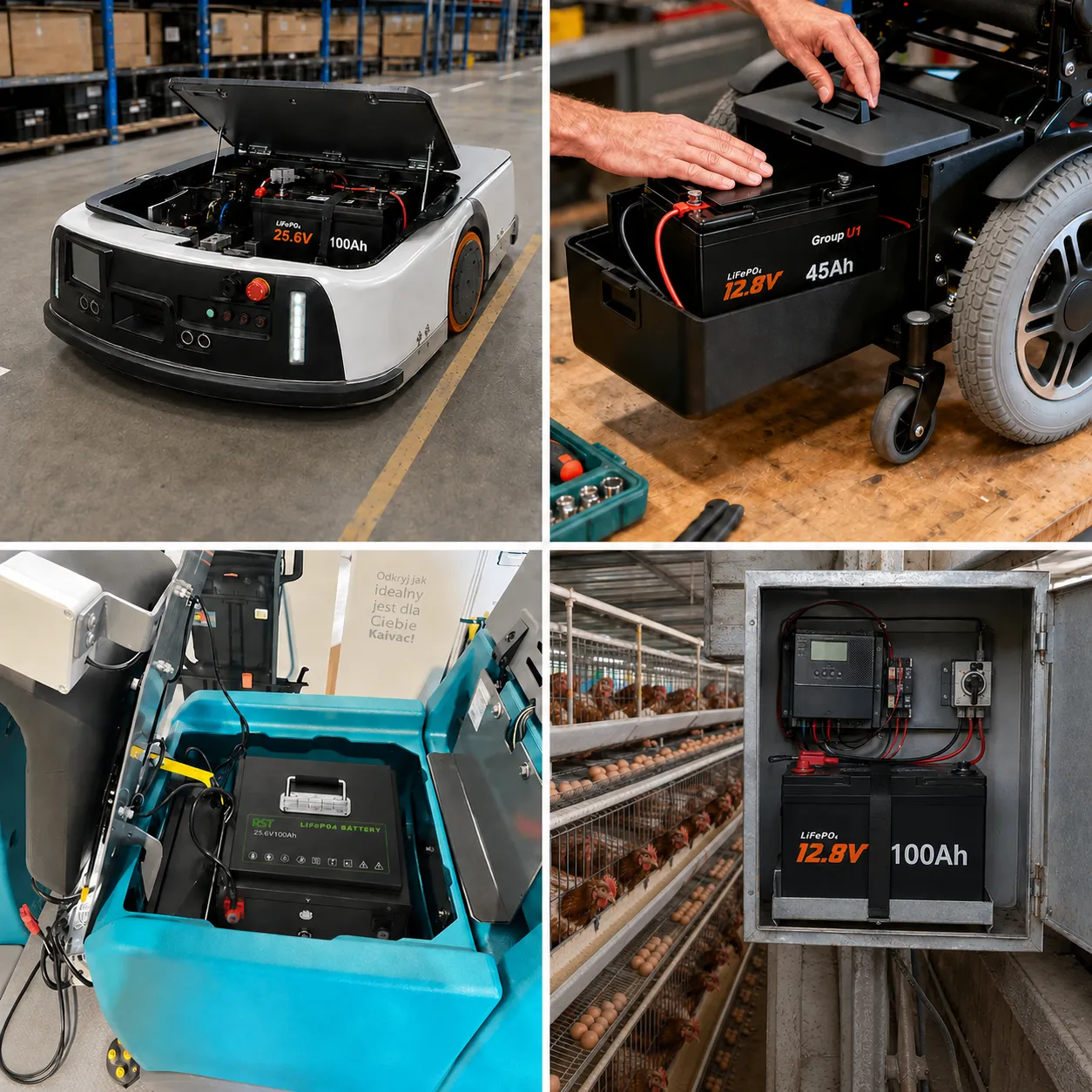
Custom LiFePO4 batteries can replace compatible lead-acid batteries in AGVs, AMRs, cleaning machines, mobility equipment and agricultural equipment.
Industrial replacement projects often require equipment-specific dimensions, connectors, wiring harnesses, charger settings and communication protocols.
View Industrial Battery Solutions →
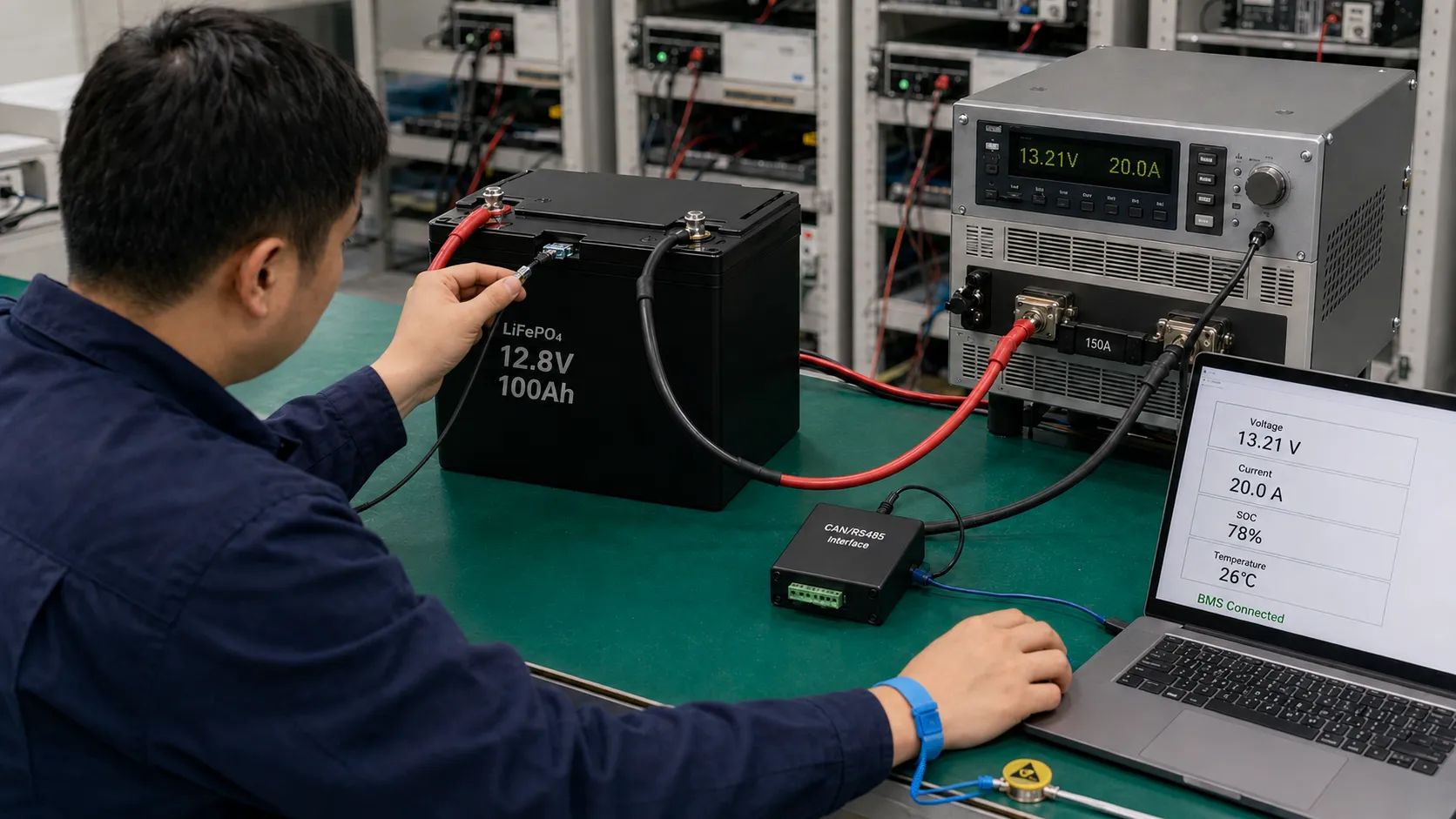
The BMS is selected according to battery voltage, capacity, continuous current, peak current, charging equipment and operating environment.
Available functions can include:
Bluetooth, CAN, RS485 and self-heating are not standard on every battery. Availability depends on the model, BMS and approved project specification.
A replacement battery often needs to fit an existing tray, compartment or equipment enclosure. Mechanical requirements should be confirmed before the battery structure is approved.
We support equipment manufacturers, battery brands, distributors and system integrators with custom LiFePO4 replacement battery development and production.
View OEM & ODM Battery Services →
Not in every system. Battery voltage, dimensions, terminal layout, maximum current, charging equipment, cables, fuses and operating conditions must be checked before replacement.
It may be retained only when its charging voltage, current and charging profile are suitable for the selected LiFePO4 battery. A matched lithium charger should be used when compatibility cannot be confirmed.
It is often recommended for RV, vehicle and marine house-battery systems. The requirement and output current depend on the alternator, battery capacity, wiring and charging architecture.
Only when the battery model and BMS are approved for the required arrangement. The connection limits and charging method must be confirmed before installation.
The correct replacement depends on the original battery dimensions, terminal arrangement, required capacity and output current. Confirm the exact battery drawing rather than selecting by group name alone.
Please provide the application, original battery specification, system voltage, required capacity, continuous and peak current, installation dimensions, charger, alternator or DC-DC charging details, communication requirements and estimated order quantity.
Send us the original battery model, system voltage, capacity, continuous and peak current, battery-compartment dimensions, charger model, alternator or DC-DC charging details, terminal layout, communication requirements and estimated order quantity.
Our engineering team will review the electrical and mechanical requirements and recommend a suitable LiFePO4 replacement battery for sample development or volume production.