Custom 12V and 24V LiFePO4 batteries for solar tracker motors, controllers, sensors and remote monitoring equipment.
We work with solar tracker manufacturers, automation companies and system integrators on battery sizing, lead-acid replacement, outdoor enclosure integration, solar charging compatibility, sample testing and OEM production.
Request a Solar Tracker Battery Quote →
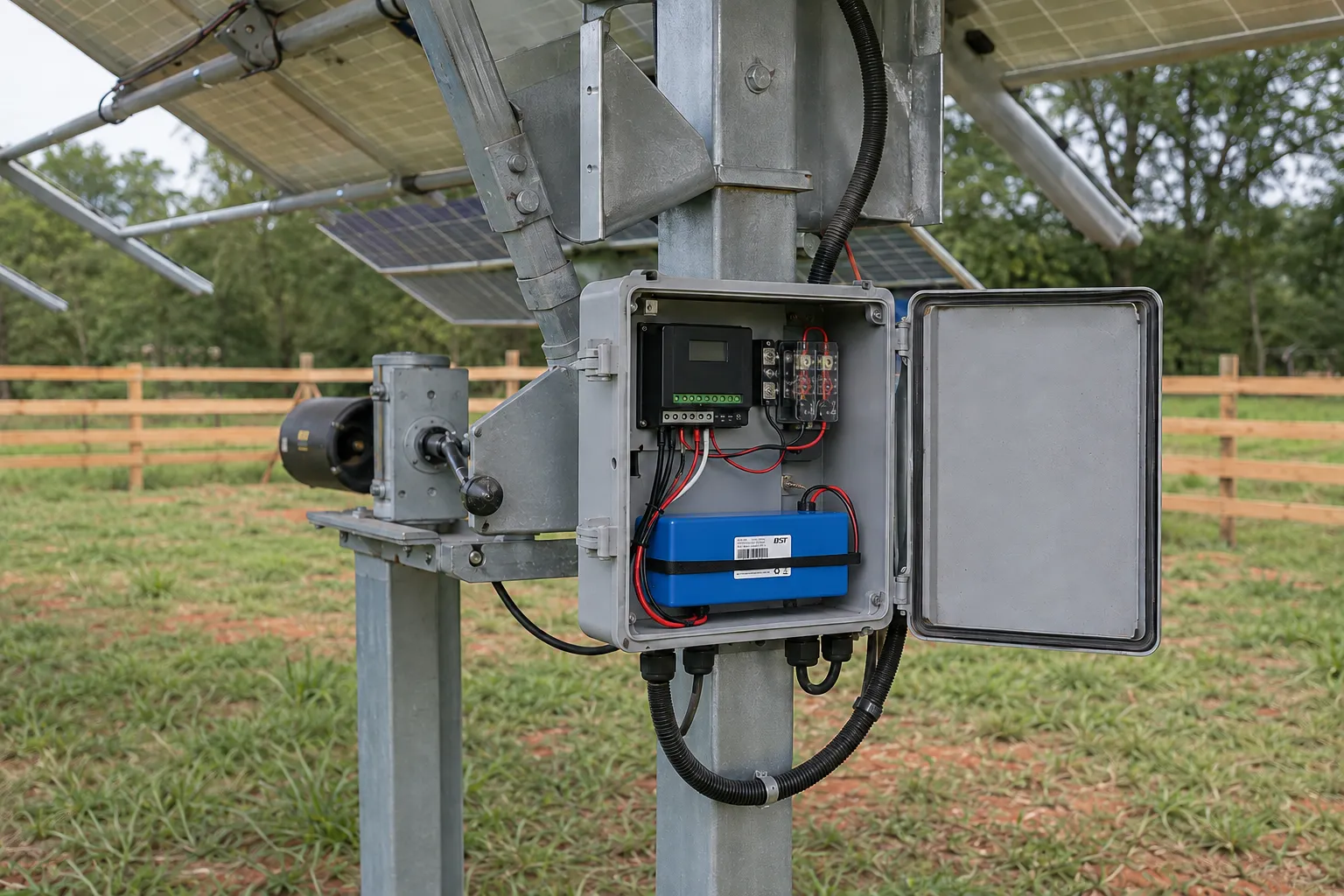
A solar tracker battery must supply the operating and startup current required by the drive motor while providing dependable power to the controller, sensors and monitoring equipment.
The battery configuration should be based on:
A battery selected only by its energy capacity may not provide enough current when the tracker motor starts, stops or changes direction. Both usable capacity and peak-current capability must be checked.
LiFePO4 batteries can be configured for compact solar tracker control cabinets and remote outdoor installations. Battery voltage, capacity and BMS protection settings are selected according to the drive motor, controller and charging system.
A 12V or 12.8V LiFePO4 battery is suitable for compact tracker motors, controllers, sensors and monitoring equipment when its discharge-current rating matches the system requirements.
A 24V or 25.6V LiFePO4 battery can be configured for tracker systems using higher-voltage motors or requiring lower cable current for the same power output.
Available configurations include:
Battery dimensions, terminal positions and cable routing should be checked against the available control-cabinet space before a sample is produced.
Battery capacity should be calculated from motor power, movement time, daily movement cycles, controller consumption, required backup time and available solar charging energy.
A basic daily energy calculation is:
Daily Energy (Wh) = Motor Energy (Wh) + Controller and Sensor Energy (Wh)
Motor energy can be estimated using:
Motor Energy (Wh) = Motor Power (W) × Total Daily Operating Time (Hours)
The final battery capacity should also allow for conversion losses, reserve capacity, changing weather and periods with limited solar charging.
Before selecting a battery, confirm:
Request Battery Sizing Support →
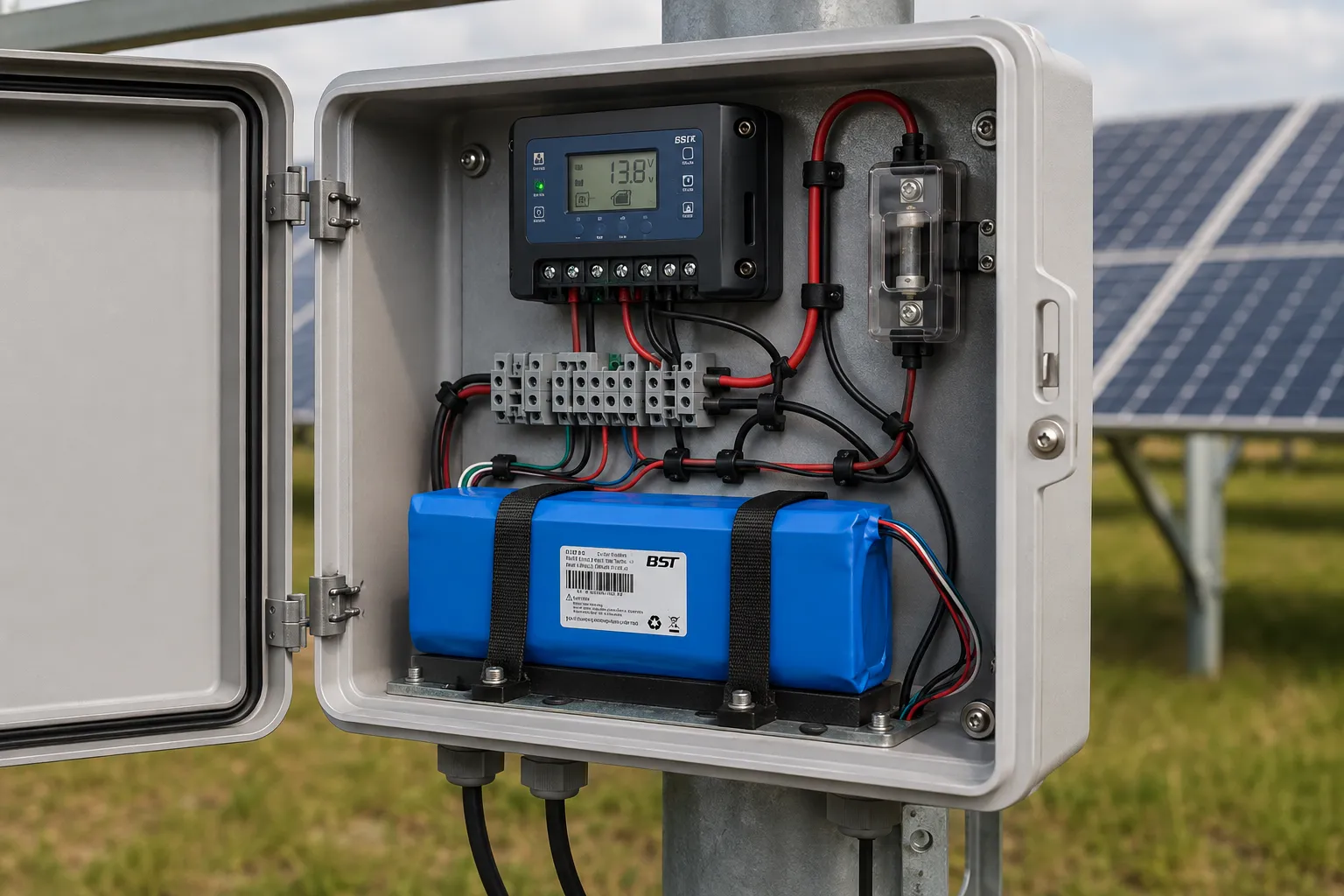
A compatible 12V or 24V lead-acid battery can be replaced with a LiFePO4 battery after the tracker motor, controller, solar charger, battery compartment and operating environment have been reviewed.
The replacement review should cover:
The existing lead-acid charging system should only be retained when its output voltage, charging current and charging profile are suitable for the replacement LiFePO4 battery.
View Lead-Acid Replacement Batteries →
The battery should be secured inside a suitable enclosure with correctly sized cables, circuit protection and sealed cable entries. Local temperature, rain, dust, direct sunlight and maintenance access must all be considered.
The required enclosure protection level depends on the installation location. A battery without a suitable outdoor rating should not be exposed directly to rain, standing water or prolonged sunlight.
The battery stores energy from the solar charging system and supplies the tracker motor, controller and monitoring equipment when solar input is limited.
The battery and solar charge controller must use compatible voltage and current settings. Daily charging energy should be sufficient to replace the energy consumed by tracker movement and continuous controller operation.
The charging-system review should include:
A Smart BMS protects the battery against unsuitable voltage, current and temperature conditions. Communication can be added when the tracker controller or remote monitoring platform requires battery data.
Available functions can include:
Not every solar tracker requires battery communication. The controller protocol and required battery data should be confirmed before sample development.
We develop custom LiFePO4 batteries for solar tracker manufacturers, automation companies, system integrators and project suppliers.
OEM and ODM services can include:
View OEM & ODM Battery Services →
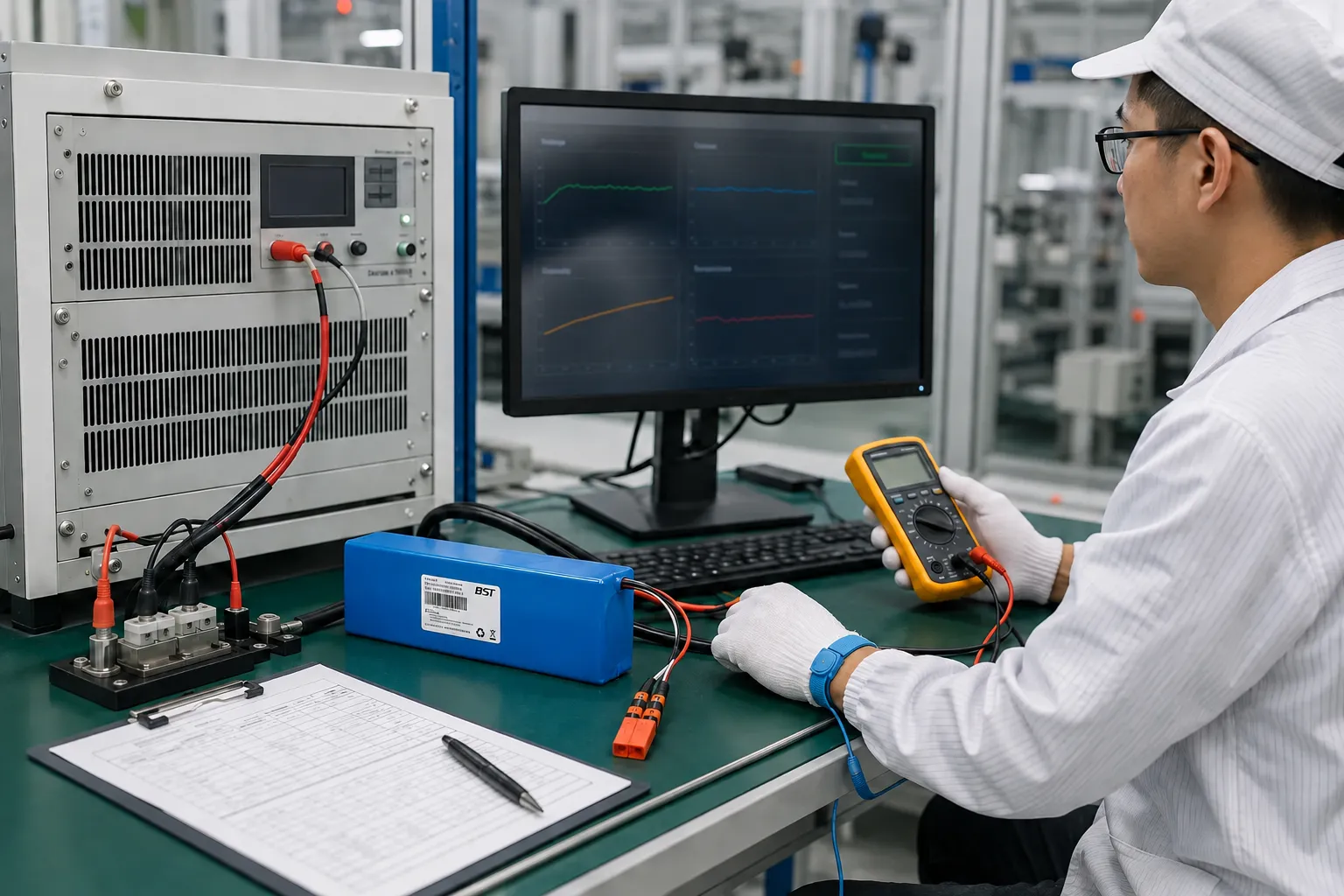
Sample batteries can be assembled and tested after the electrical, mechanical and environmental requirements have been confirmed.
Testing can include:
The approved sample specification is used as the reference for repeat production.
Many solar tracker control systems use 12V or 24V batteries. The correct voltage must match the tracker motor, controller and charging equipment.
Capacity is calculated from motor power, movement time, daily movement cycles, controller consumption, required backup time and available solar charging energy. Motor startup current must also be considered.
Yes, when the system voltage, motor current, charging settings, battery enclosure and environmental requirements are compatible with the proposed LiFePO4 battery.
Yes, when the battery is installed inside a suitable enclosure with secure mounting, sealed cable entries and protection from rain, dust, direct sunlight and unsuitable temperatures.
Yes. Battery voltage, capacity, current rating, dimensions, BMS settings, enclosure, terminals and cables can be configured for qualified OEM projects.
Not every system requires battery communication. CAN or RS485 can be configured when the tracker controller or monitoring system requires battery data and a compatible protocol is available.
Send us the system voltage, motor operating and peak current, daily movement cycles, controller consumption, required backup time, solar charging specifications, operating temperature, installation dimensions and estimated order quantity.
Our engineering team will review the requirements and recommend a suitable LiFePO4 battery configuration for sample development or volume production.