Custom LiFePO4 batteries for motorhomes, camper vans, travel trailers and off-grid RV power systems.
With more than 20 years of battery manufacturing experience, we support RV manufacturers, conversion companies, distributors, installers and private-label brands with lead-acid battery replacement, Smart BMS configuration, electrical integration, sample testing and OEM production.
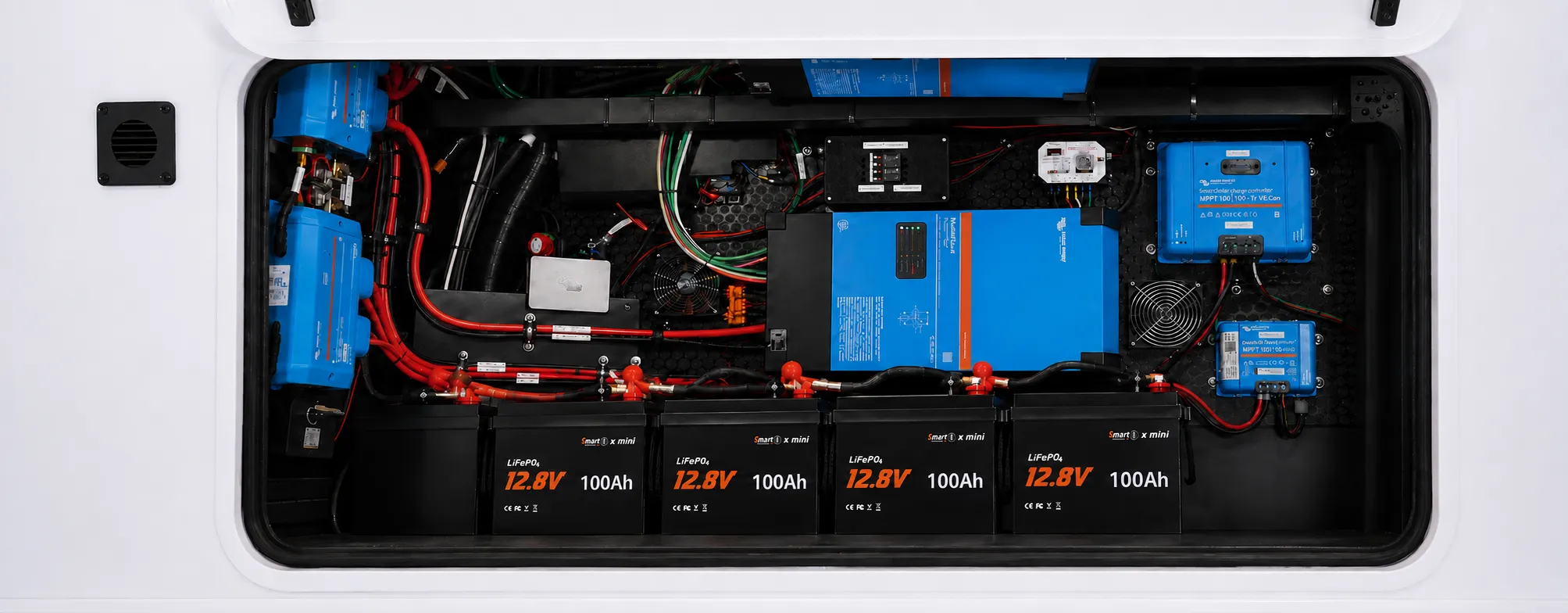
LiFePO4 batteries can replace lead-acid, AGM or gel house batteries in many motorhomes and camper vans, but the complete RV electrical system should be reviewed before installation.
Battery voltage, case size, terminal layout, charger profile, alternator charging, inverter current, cable size, fuse protection and low-temperature requirements must all be compatible with the new lithium battery.
A correctly configured RV lithium conversion can provide:
For the complete conversion process, review our Lead-Acid to LiFePO4 Replacement Guide covering charger compatibility, DC-to-DC charging, cable sizing, fuse protection, temperature and battery fitment.
Replacing a 200Ah lead-acid house bank? See the 200Ah Lead-Acid to LiFePO4 Replacement Guide for usable-energy and capacity-sizing examples.
RV battery capacity should be selected according to daily energy consumption, inverter power, charging availability, required off-grid runtime and available battery-compartment dimensions.
Compact 12V battery format for selected RV, camper van and space-limited installations.
View 12V 100Ah Group 24 Battery →Medium-size deep-cycle battery format for RV house power, camper and marine auxiliary systems.
View 12V 100Ah Group 27 Battery →Group 31 battery with CAN, RS485 and Bluetooth for compatible Victron-based RV systems.
View Group 31 Victron-Compatible Battery →Compare physical fitment using our Group 24 vs Group 27 vs Group 31 Battery Size Guide .
12V and 12.8V LiFePO4 batteries are commonly used for RV house-power systems, lighting, pumps, refrigerators, electronics and inverter-supported appliances.
For higher-capacity 12V systems, a 12V 200Ah LiFePO4 RV Battery can be evaluated after confirming energy demand, inverter current, charging sources and battery-compartment space.
24V and 48V configurations can be used for higher-power inverters and custom motorhome electrical systems. Battery voltage must match the inverter, charger, solar controller and connected DC equipment.
Higher-voltage systems can reduce DC current for the same power level, but the complete battery bank, BMS, cables, fuses, busbars and charging equipment must be engineered for the final system voltage.
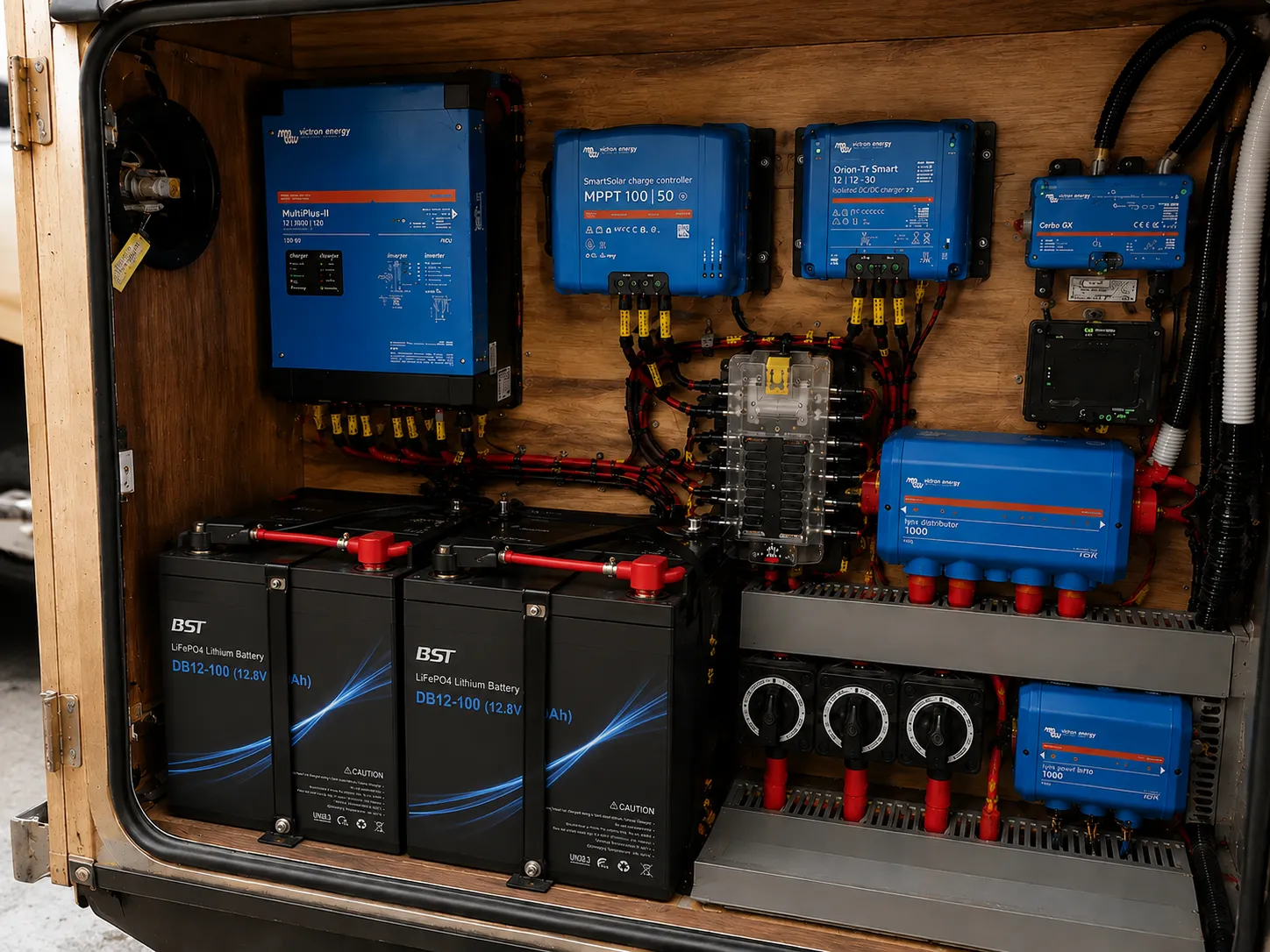
An RV lithium battery should be treated as part of the complete DC power system. It must be matched with the inverter, shore-power charger, solar controller, alternator charging system and DC-to-DC charger.
System review can include:
Battery compatibility involves more than matching voltage and Ah. Review our LiFePO4 Battery System Compatibility Guide for charger, inverter, BMS current, communication, wiring and protection checks.
If an RV lithium battery is not charging, shuts down under load, shows incorrect state of charge or has inverter or DC-to-DC charging problems, use the RV LiFePO4 Battery Troubleshooting Guide .
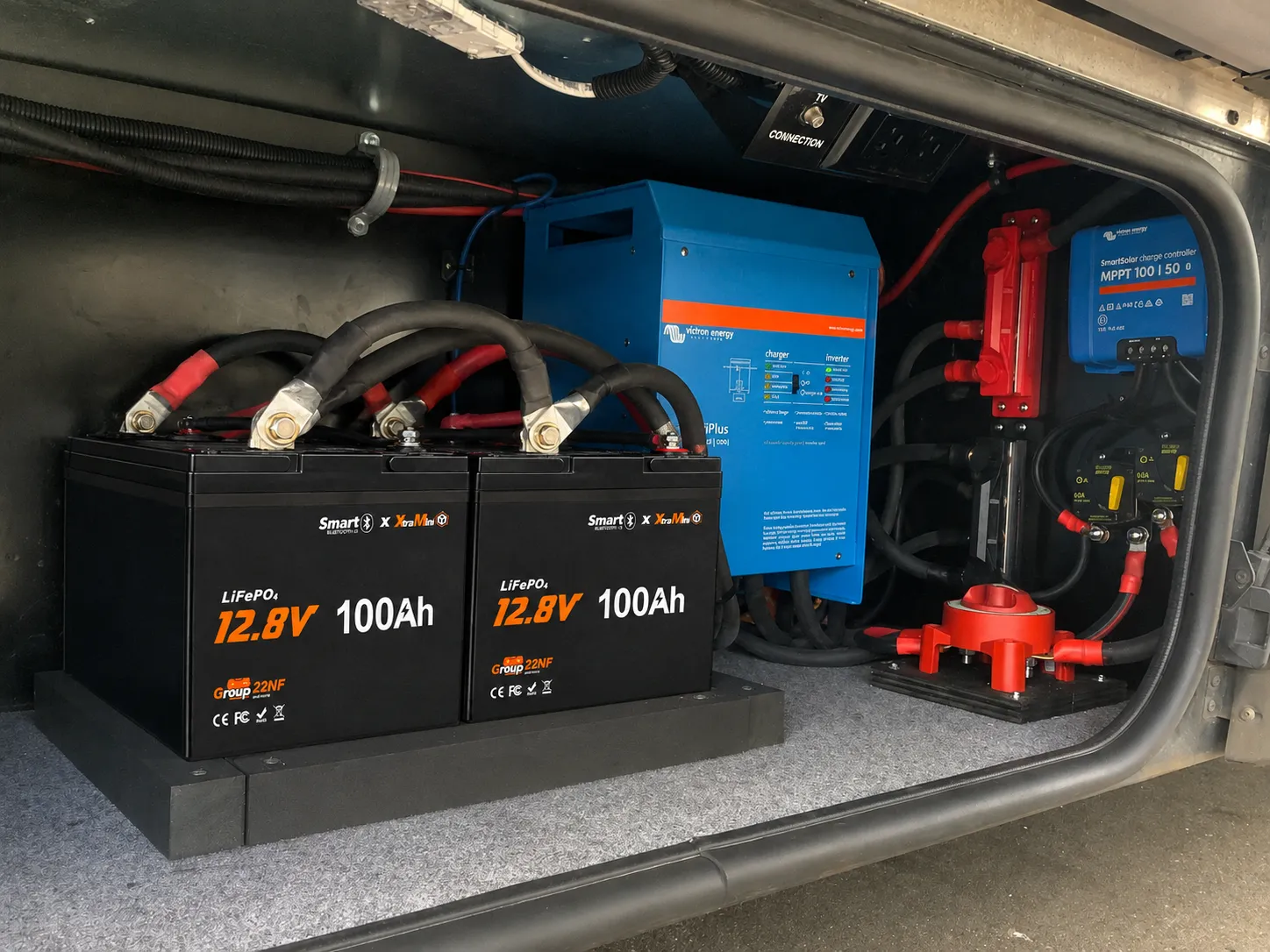
Selected battery configurations support CAN communication with compatible Victron-based systems. Exact compatibility depends on the battery model, Smart BMS protocol, cable pinout, GX device, firmware and connected power equipment.
Available communication data may include:
For RV projects that require CAN, RS485 and Bluetooth communication, review the 12V 100Ah Group 31 Victron-Compatible LiFePO4 Battery .
Victron compatibility should always be confirmed by battery protocol, cable pinout, GX device, inverter-charger model and firmware before ordering.
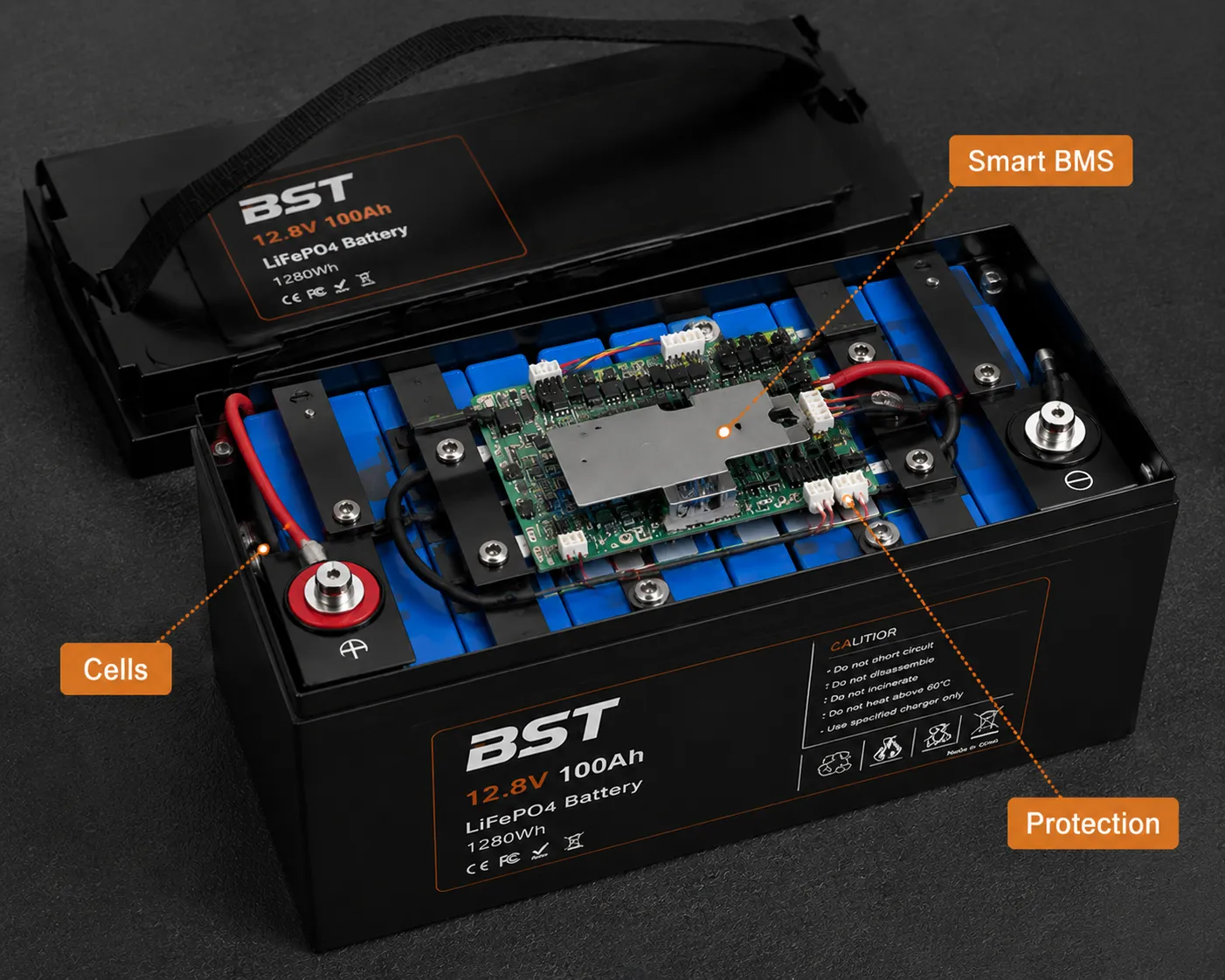
A Smart Battery Management System monitors battery voltage, current, cell conditions and temperature while providing protection during charging and discharging.
Depending on the battery model, Smart BMS functions can include:
The BMS does not replace correctly sized external fuses, breakers, disconnect switches, cables or busbars.
Selected RV LiFePO4 batteries are available with low-temperature charging protection and integrated self-heating for winter travel and cold-weather operation.
Self-heating and low-temperature protection are not the same function. Low-temperature protection blocks unsafe charging, while self-heating raises the cell temperature before charging begins.
Heating activation temperature, heating power and charging-source requirements vary by model and should be confirmed before installation.
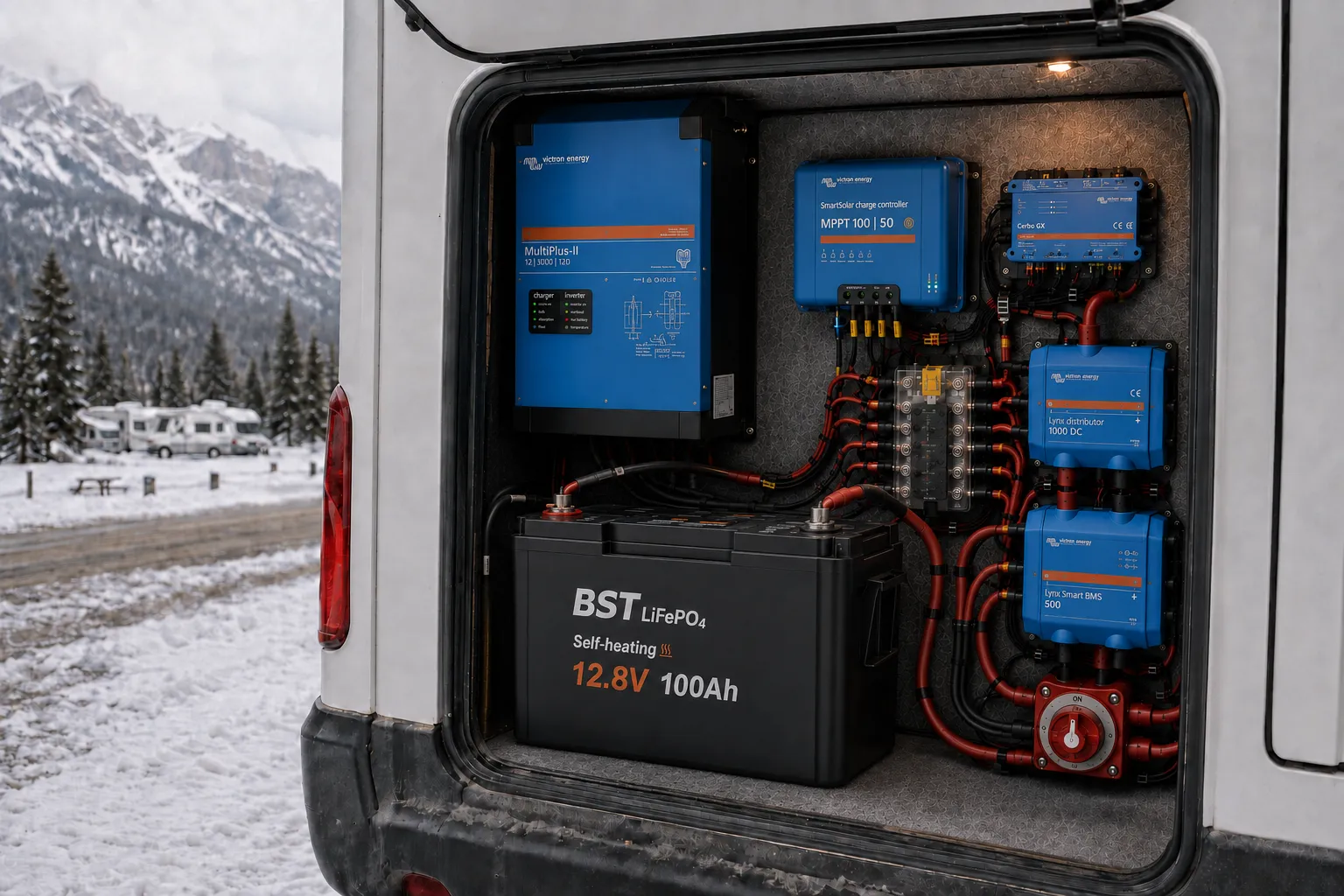
RV battery projects can be supported from specification review and sample development through electrical testing and volume production.
Production and quality-control procedures can include:
Review our LiFePO4 Battery Testing & Validation for additional battery, BMS and performance verification information.
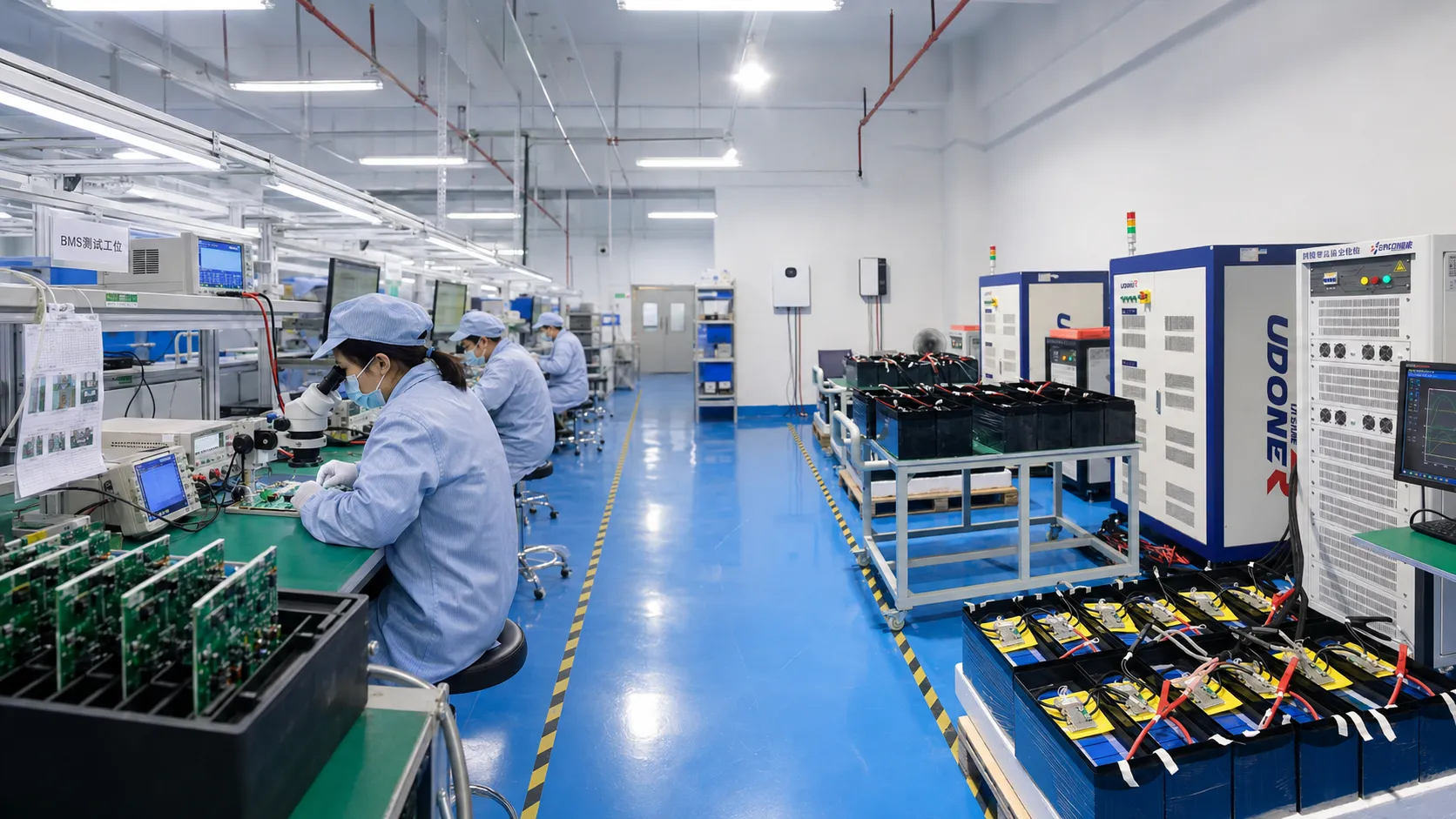
We work with RV manufacturers, camper conversion companies, distributors, system integrators and private-label battery brands on custom lithium battery projects.
OEM and ODM services can include:
Yes, in many RV house-power systems. Battery voltage, dimensions, terminal layout, charger settings, inverter current, cable size, fuse protection and operating temperature must be checked before replacement.
Battery capacity should be based on daily energy consumption, inverter load, required runtime, available solar or charging energy and battery-compartment space.
Selected configurations support CAN communication with compatible Victron-based systems. The battery protocol, cable pinout, GX device, firmware and connected equipment must be confirmed before ordering.
Selected models support parallel connection when permitted by the battery and BMS specification. Use matched batteries and follow the approved connection limits and branch-protection requirements.
Yes. Solar panels should be connected through a compatible MPPT or solar charge controller configured for the battery's LiFePO4 charging requirements.
It depends on the vehicle alternator and charging system. A DC-to-DC charger is commonly used to regulate lithium charging current and voltage from the alternator.
No. Some models provide only low-temperature charging protection, while selected models include integrated self-heating for cold-weather charging.
Yes. Available services include custom electrical specifications, BMS settings, enclosures, communication protocols, labels, packaging, sample development and volume production.
Send the required voltage, capacity, maximum current, inverter power, charging equipment, battery-compartment dimensions, communication requirements and estimated order quantity.
Our engineering team can review the system and recommend a suitable RV LiFePO4 battery configuration for sample evaluation or volume production.