Microgrid battery energy storage integrates solar PV, utility power, generators and critical loads through intelligent BMS, PCS and EMS control to improve energy flexibility, renewable utilization and power resilience.
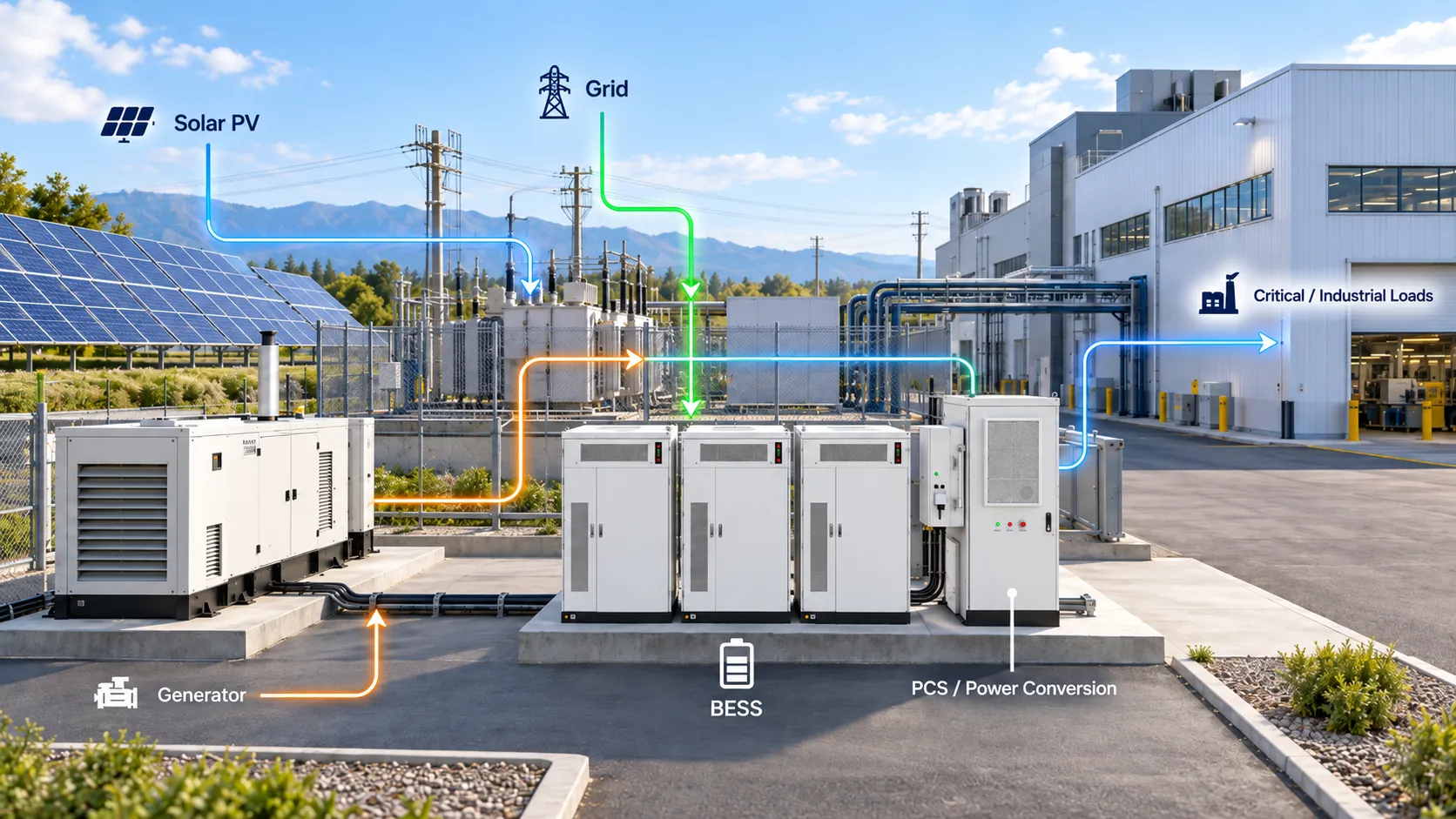
A microgrid combines local power generation, energy storage and electrical loads within a coordinated energy system. Battery Energy Storage Systems help balance differences between generation and demand while allowing the microgrid controller to manage multiple power sources more effectively.
Depending on the project architecture, a microgrid BESS can support solar self-consumption, peak shaving, load shifting, grid import control, generator optimization and backup operation for selected critical loads.
Solar PV output changes throughout the day and may not match the site's instantaneous load profile.
Industrial and remote sites may have limited grid connection capacity or unstable utility supply.
Diesel or gas generators may operate inefficiently when required to follow changing loads without battery buffering.
Short high-load periods can increase utility demand or exceed the preferred grid import limit.
Selected loads may require additional energy reserve when the grid is interrupted or unavailable.
Solar PV, grid power, generators, BESS and site loads must be coordinated through a clear operating strategy.
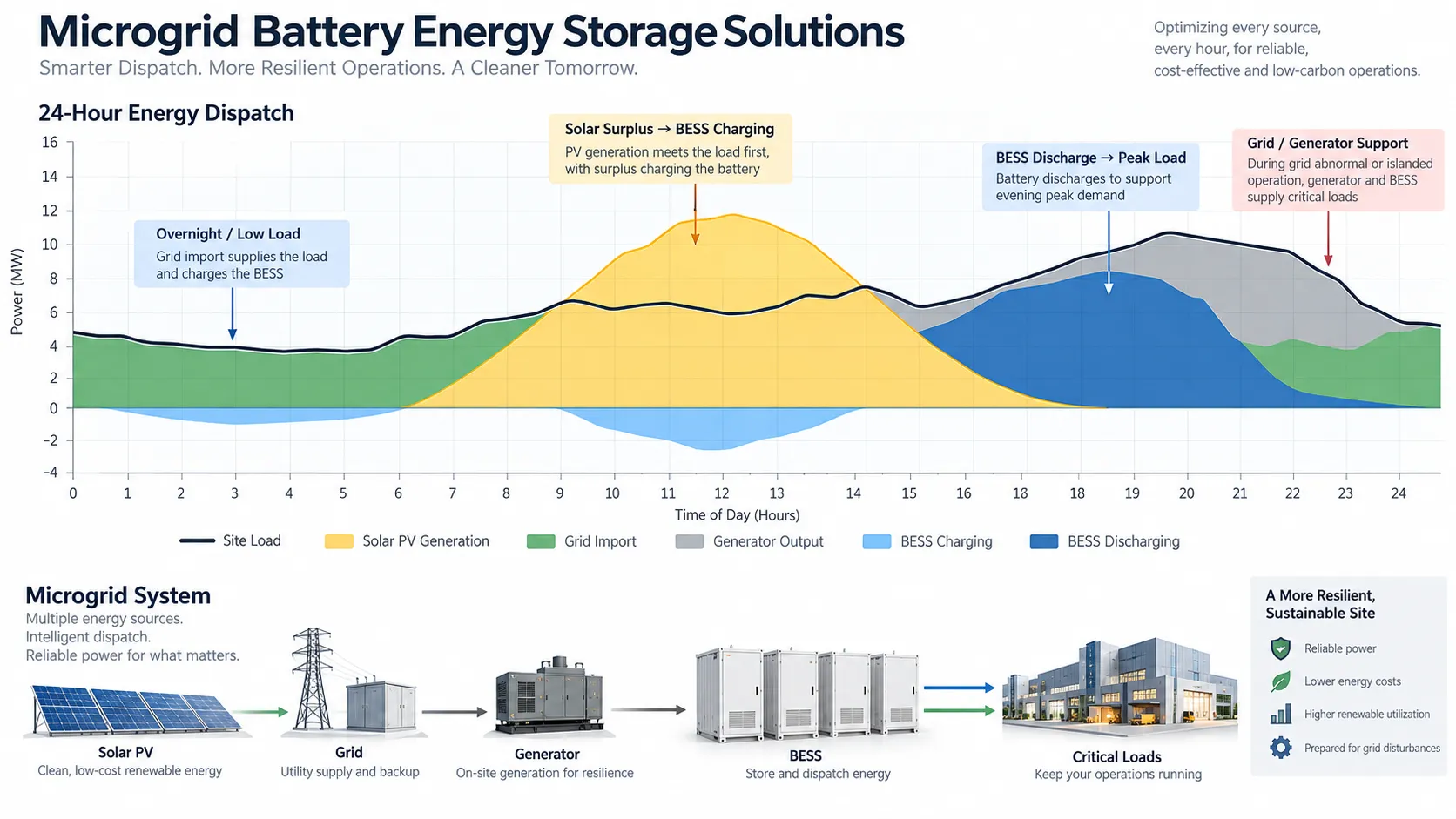
The EMS monitors solar PV, grid power, generator status, battery state of charge and site demand.
The BESS can charge from available solar generation or grid power according to the selected operating strategy.
Stored energy supports site loads during demand peaks, lower renewable generation or qualifying grid interruptions.
The EMS schedules energy flow among the grid, generator, solar PV, BESS and critical or non-critical loads.
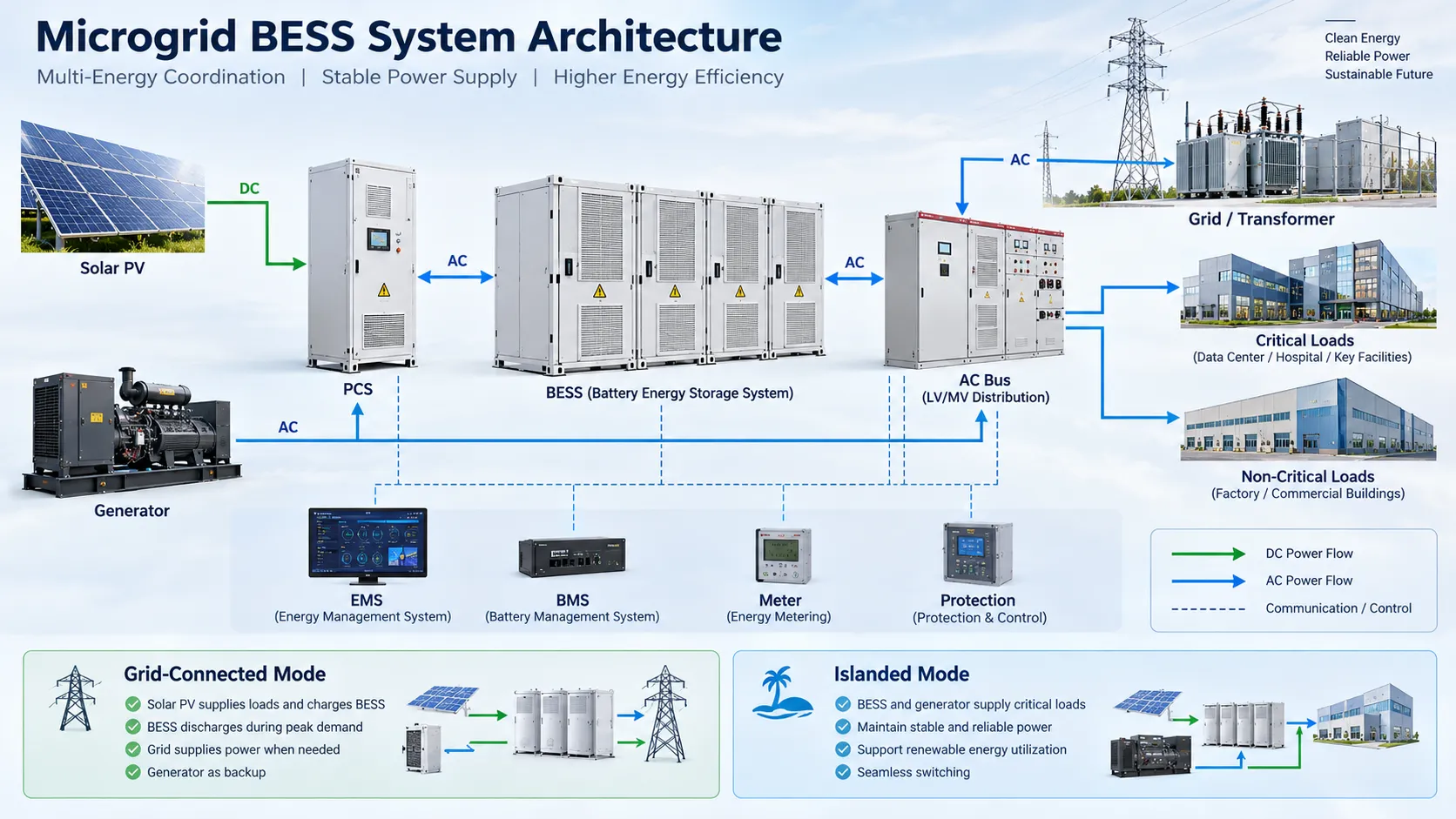
The final microgrid architecture depends on site voltage, generator configuration, renewable capacity, critical-load requirements, grid interconnection rules and the required on-grid or islanded operating modes.
Store available renewable generation for later use when site demand is higher.
Discharge stored energy during high-load periods to reduce peak grid import.
Shift energy between different operating periods according to site demand and tariff conditions.
Use battery power to reduce unnecessary generator runtime or smooth load changes where the project design allows.
Help manage site demand where utility capacity is limited or where grid conditions vary.
Where the PCS, switchgear and controls are designed for it, the BESS can support selected loads during islanded operation.
| Operating Mode | How It Works | Typical Objective |
|---|---|---|
| Grid-Connected | BESS operates with utility power and local generation. | Peak shaving, load shifting and solar utilization. |
| Solar + Storage | Available PV generation charges the battery for later use. | Increase renewable self-consumption. |
| Generator + BESS | Battery storage works alongside local generators to support changing site demand. | Reduce unnecessary generator loading and improve flexibility. |
| Islanded Operation | The microgrid supplies selected loads independently from the utility grid when properly designed. | Support critical-load resilience. |
| Energy Scheduling | EMS schedules charging and discharging based on load, generation and operating priorities. | Optimize site-level energy management. |
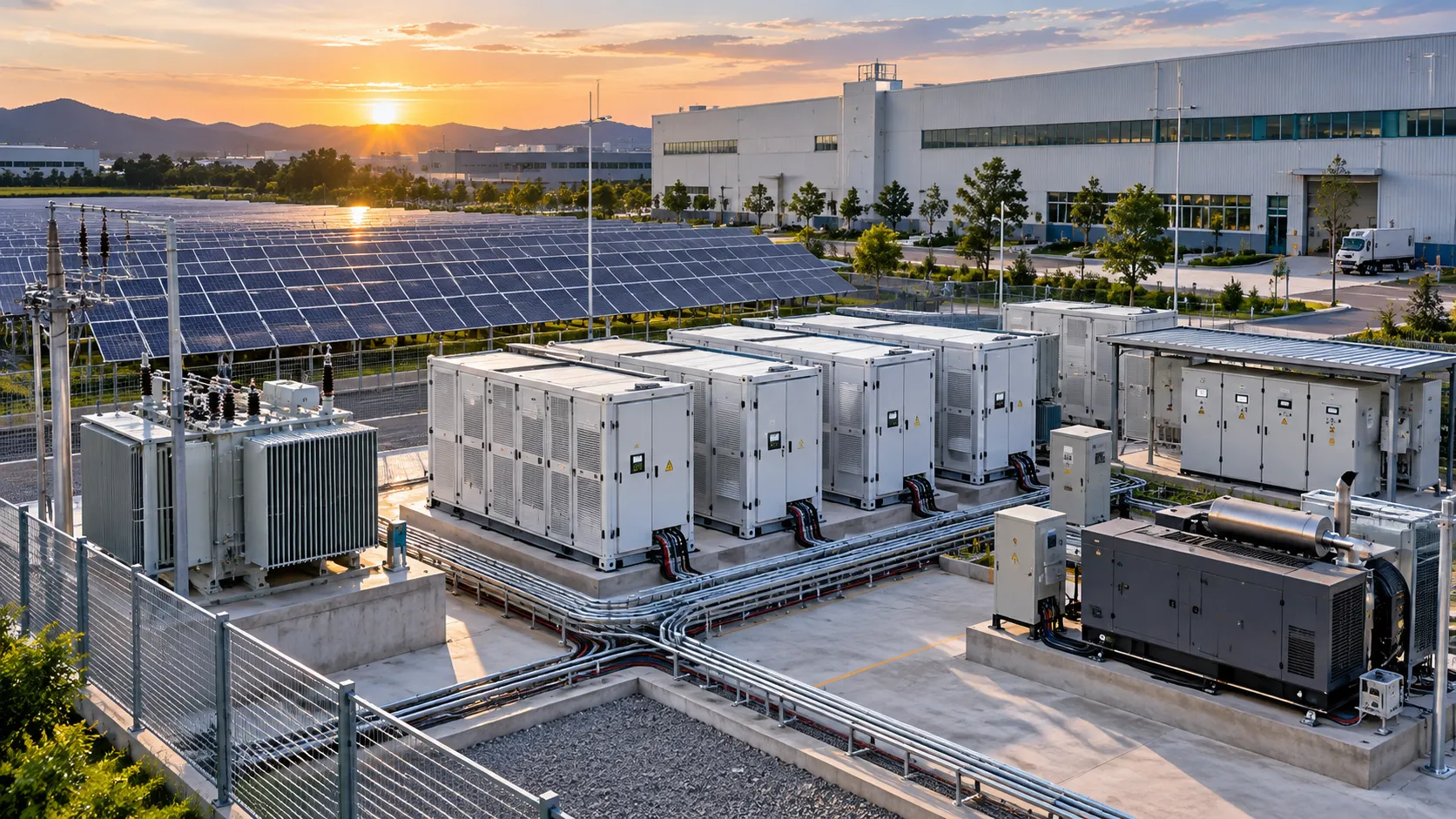
Microgrid projects can range from smaller commercial systems to large industrial and MWh-scale installations. Final BESS power and energy capacity should be selected from the site's actual load profile, renewable generation and operating strategy.
Microgrid BESS sizing should be based on real site data and the required operating modes. Important project inputs include:
It is a battery storage system integrated with local generation, grid power and site loads under coordinated controls such as BMS, PCS and EMS.
Yes. A properly designed microgrid can coordinate solar PV, battery storage, utility power and generators according to the selected operating strategy.
It can when the PCS, switchgear, protection and control system are specifically designed for islanded operation and the available generation and battery capacity can support the selected loads.
Required power and energy depend on peak load, critical-load demand, renewable generation, generator capacity, grid limits and required operating duration.
In suitable system designs, battery storage can absorb or supply short-duration power and help the EMS coordinate generator operation more efficiently.
Send us your site load profile, solar PV capacity, generator information, grid connection data, critical-load requirements and target operating modes to evaluate an appropriate battery energy storage configuration.
Request a Microgrid BESS Solution