Explore typical industrial BESS project applications for factories, industrial parks, solar-plus-storage, EV charging, microgrids and backup power. Learn how battery energy storage systems are configured around site load, grid capacity, operating strategy and project requirements.
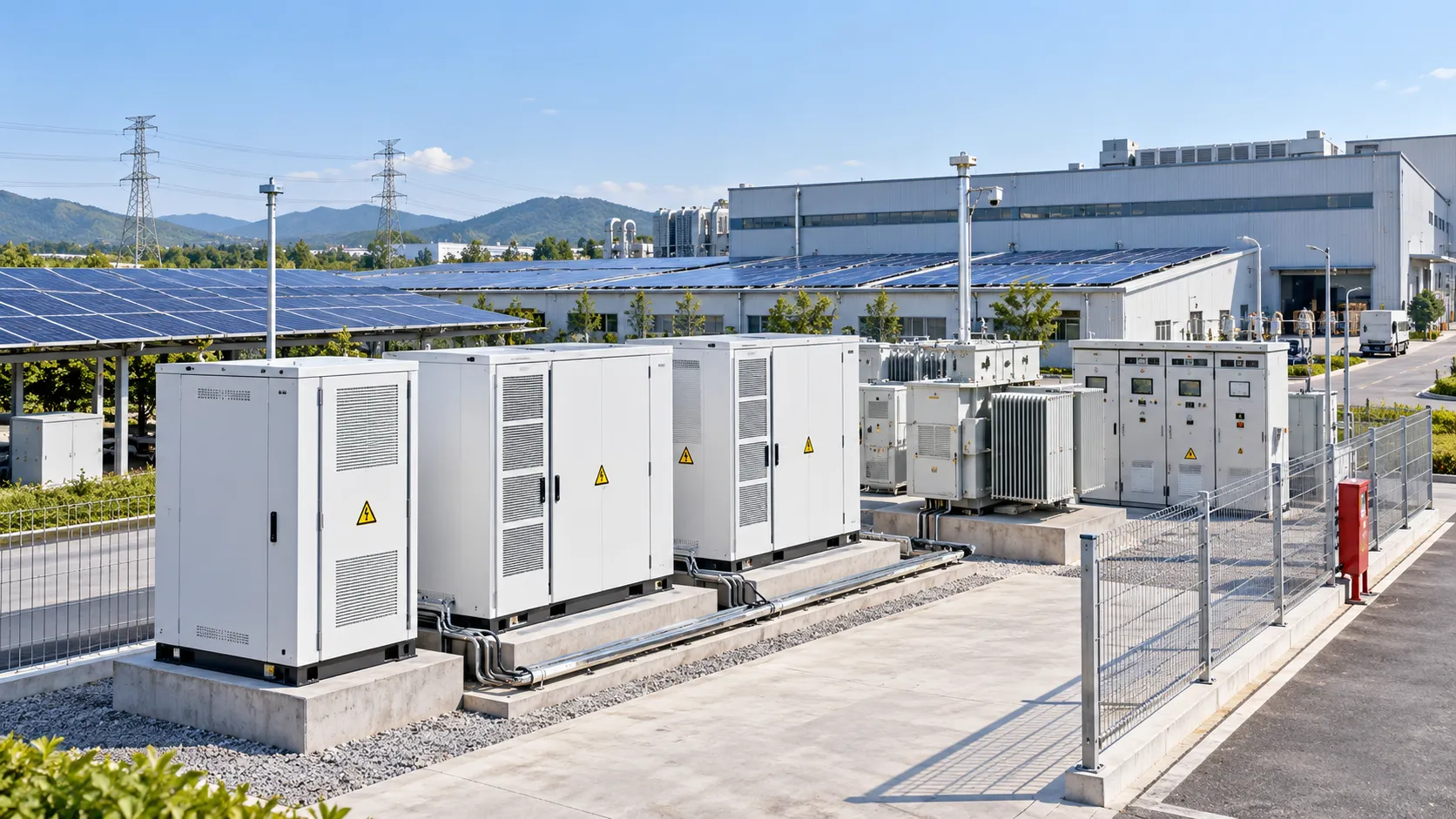
Industrial battery energy storage projects are usually designed around a specific site objective rather than battery capacity alone. Required PCS power in kW, battery energy in kWh, charge and discharge duration, transformer capacity, tariff structure, solar generation and backup requirements all influence the final system configuration.
Project engineering should begin with the site load profile and operating strategy, then move to BESS sizing, electrical integration, thermal management, protection, communication and commissioning.
Reduce demand peaks, support critical production loads, shift energy use and integrate onsite solar generation.
Coordinate multiple loads, renewable generation and grid import limits across a larger industrial energy network.
Store surplus PV energy during the day and discharge later to increase solar self-consumption and reduce grid purchases.
Support high-power charging loads where transformer or grid capacity is limited and reduce short-duration charging peaks.
Coordinate BESS with solar PV, utility grid, generators and critical loads for grid-connected or islanded operation.
Maintain energy reserve for selected loads during outages, grid instability or planned operating events.
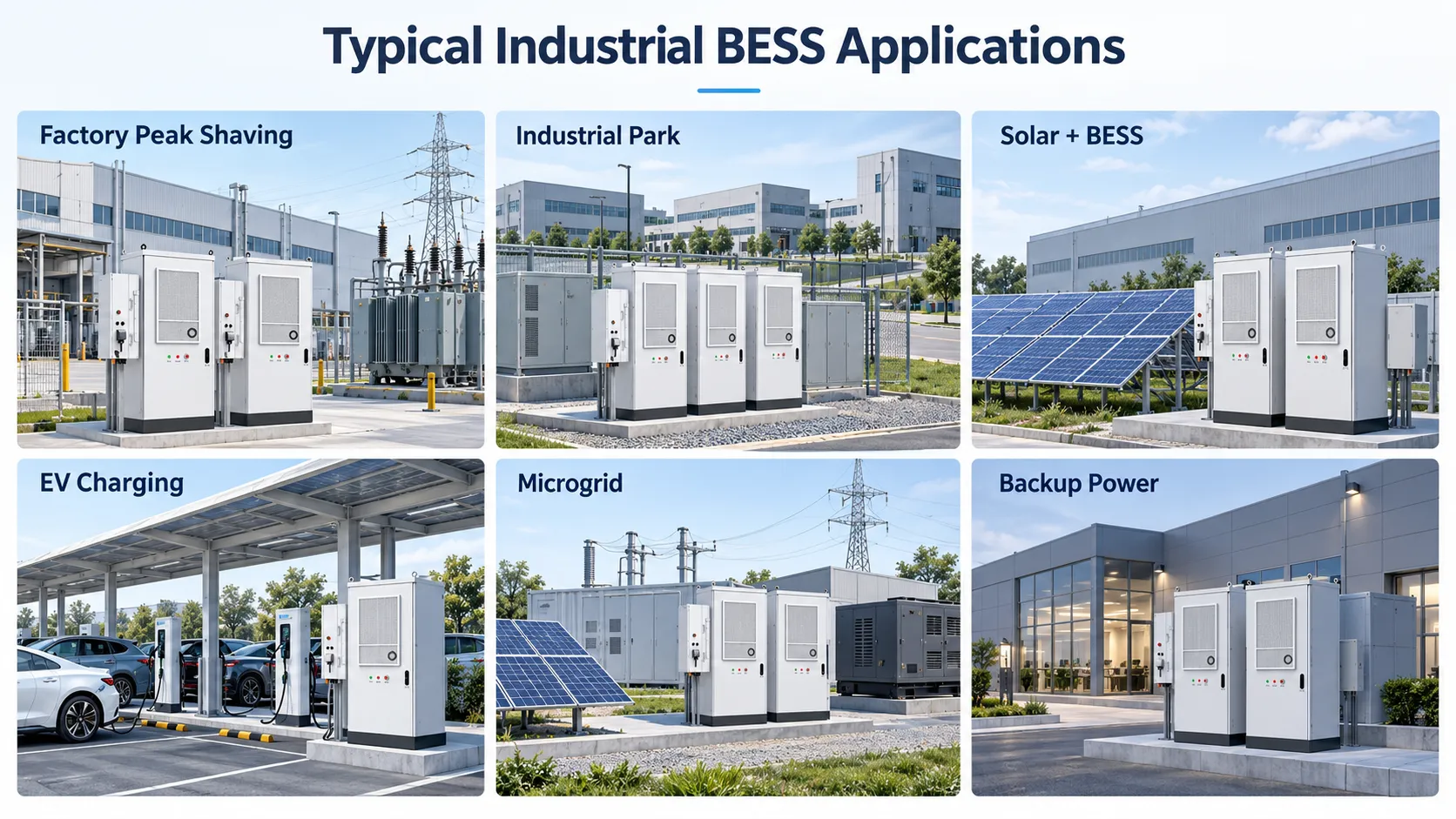
The following examples illustrate common project-design logic. They are application scenarios rather than claims about specific completed installations.
| Project Scenario | Primary Objective | Key Sizing Input | Typical Integration |
|---|---|---|---|
| Factory Peak Shaving | Reduce maximum grid demand | Peak kW reduction + duration | BESS + PCS + EMS + site meter |
| Solar Self-Consumption | Shift surplus PV energy | PV surplus profile + evening load | PV + BESS + PCS + EMS |
| EV Charging Hub | Support charger demand beyond grid limit | Concurrent charger load + grid shortfall | Grid + BESS + chargers + EMS |
| Industrial Microgrid | Coordinate multiple energy sources | Critical load + generation + island duration | PV + Grid + Generator + BESS + EMS |
| Backup Power | Maintain selected critical loads | Critical-load kW + backup runtime | BESS + PCS + transfer/protection logic |
C&I projects can range from compact cabinet systems to MWh-scale containerized energy storage. Final configuration should be selected from the project load profile and electrical requirements.
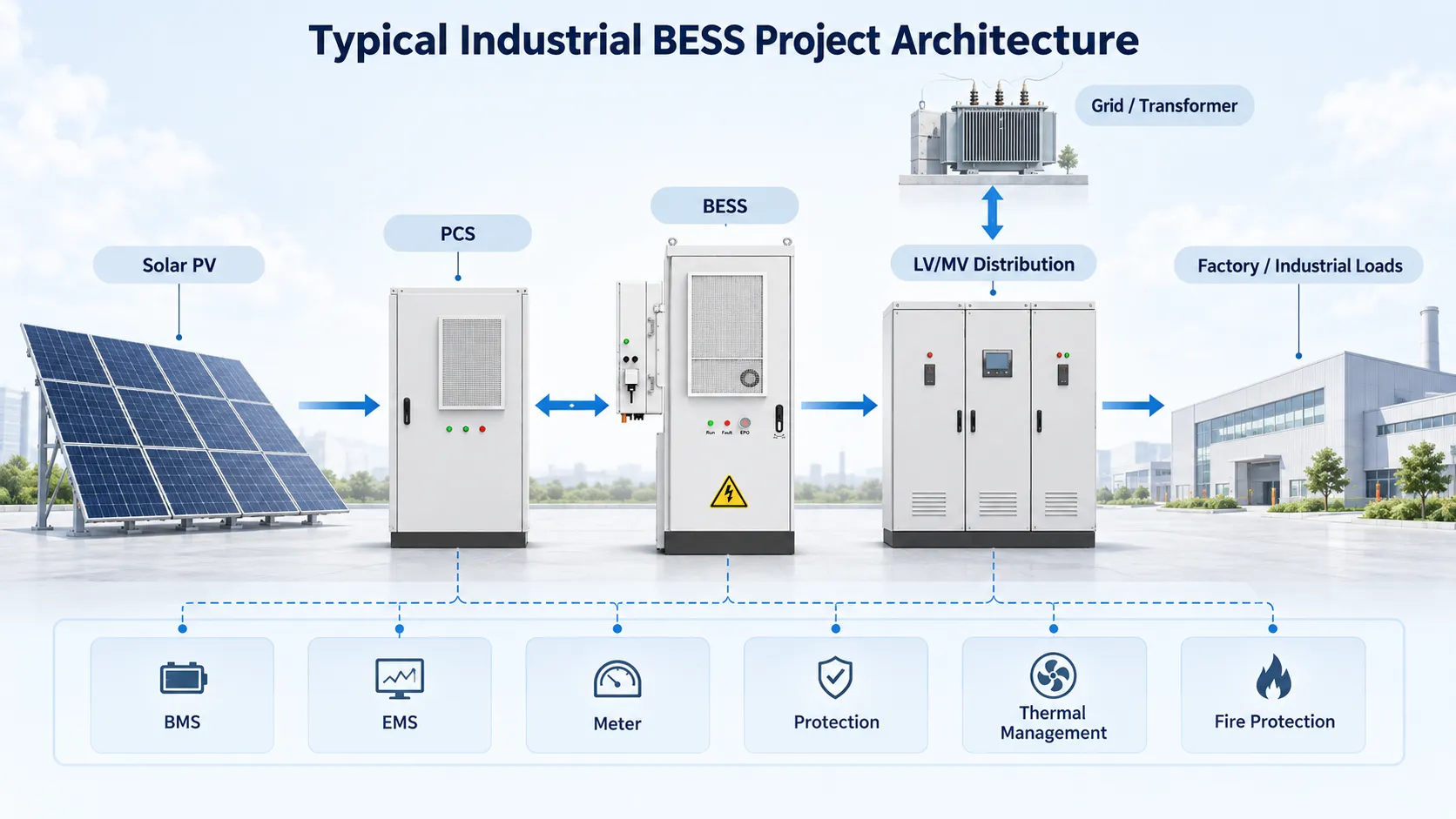
A typical industrial BESS connects the battery system to the site AC distribution through a PCS and protection system, while the EMS coordinates power flow using site-meter, battery and equipment data.
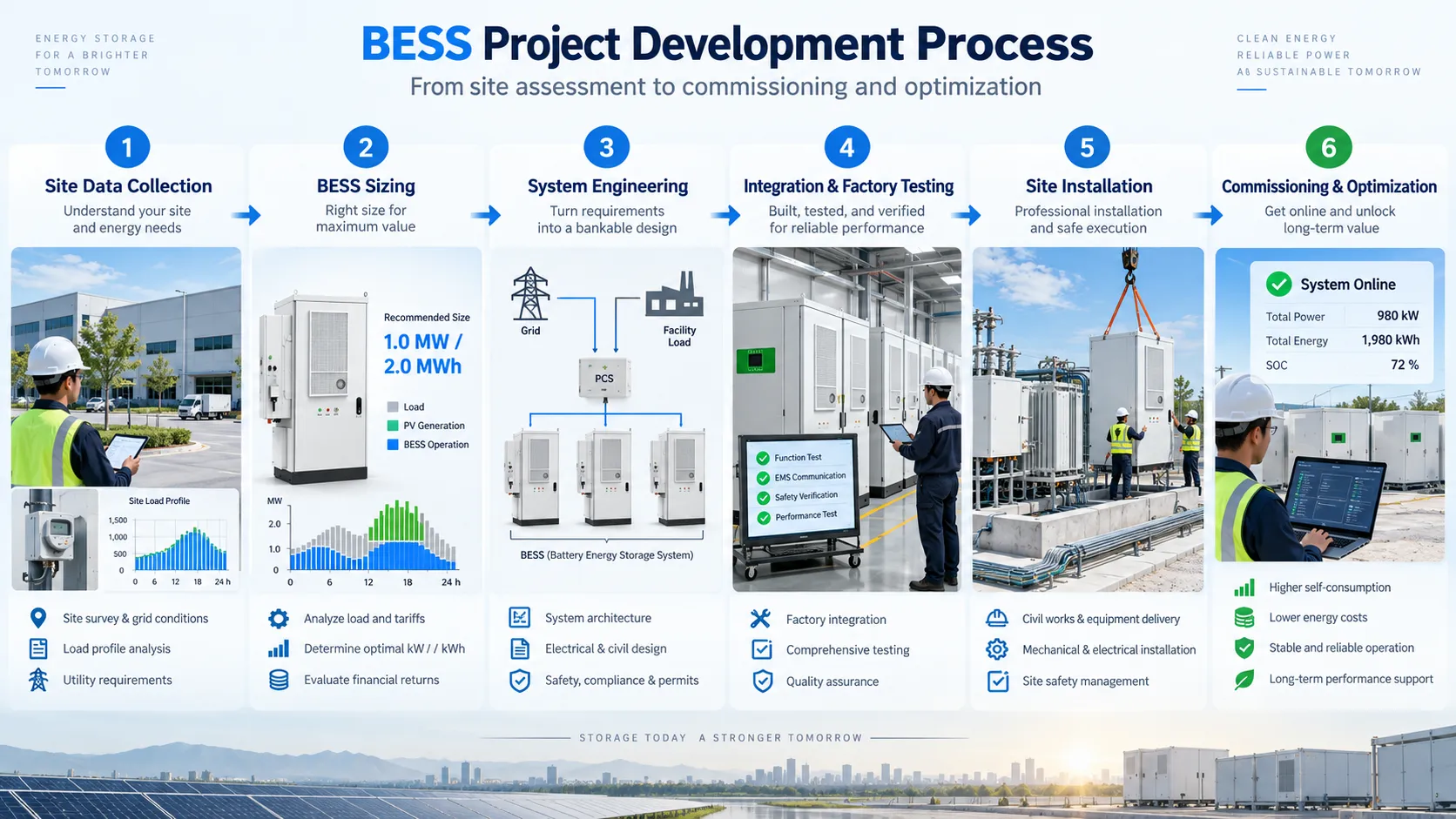
Collect load profile, transformer data, tariff, PV information, site voltage and operating requirements.
Determine required PCS power in kW and battery energy in kWh based on the project objective.
Confirm DC/AC architecture, switchgear, transformer, communications, protection and thermal-management design.
Verify battery, BMS, PCS, EMS, communication and protection logic before shipment.
Position equipment, complete electrical connections, communications and site protection interfaces.
Test operating modes, alarms, controls and EMS strategy under real site conditions.
Depending on project scope, technical documentation may include system datasheets, battery and PCS specifications, communication information, system architecture, single-line diagrams, installation instructions, commissioning procedures, transport documentation and applicable certificates.
Start with the site objective and load profile, then determine required PCS power in kW and battery energy in kWh. Final sizing should also consider DoD, efficiency, reserve SOC, degradation, temperature and electrical constraints.
Cabinet systems are commonly used for smaller and medium-sized commercial or industrial installations, while containerized BESS is more suitable when MWh-scale energy capacity and modular expansion are required.
Yes, but the EMS strategy and SOC reserve must be designed so that economic dispatch does not consume the energy required for backup operation.
Provide your load profile, peak demand, target grid limit, transformer data, solar PV information, backup requirements, site voltage, location and ambient temperature where available.
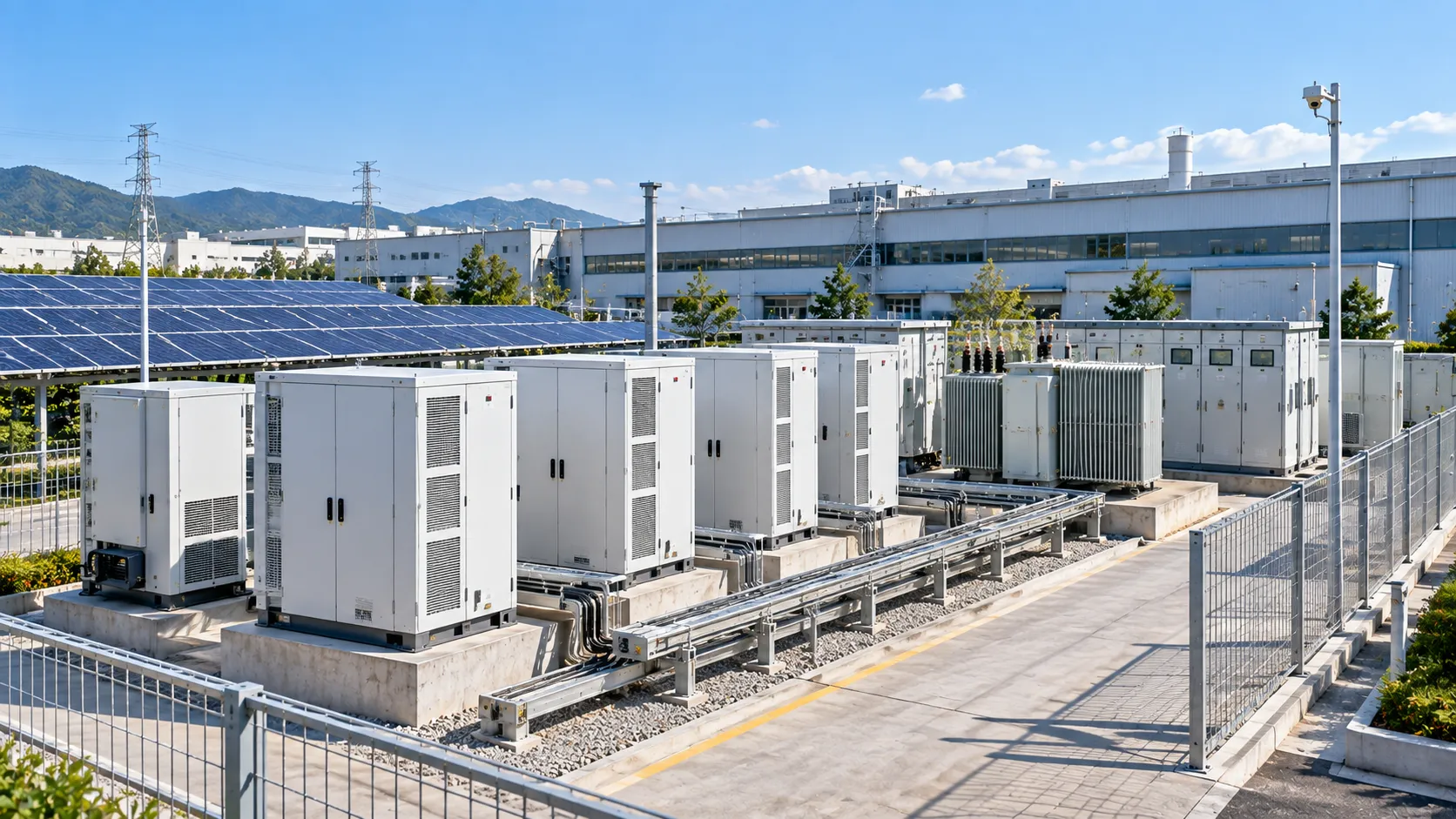
A practical C&I BESS installation typically coordinates outdoor battery cabinets with solar PV, transformers, switchgear, cable routing, concrete foundations, safety clearances and controlled electrical areas.
Send us your load profile, target application, required kW/kWh, site voltage, transformer data, solar PV information and operating conditions to evaluate an appropriate C&I battery energy storage configuration.
Request a BESS Project Review