LiFePO4 golf cart batteries for 24V, 36V and 48V personal carts, utility vehicles, commercial fleets and OEM vehicle programs.
We work with golf cart manufacturers, distributors, fleet operators and system integrators on battery voltage, capacity, Smart BMS current, charger and controller compatibility, battery-compartment fitment, sample testing and OEM production.
A golf cart lithium battery should be selected around the complete vehicle system rather than voltage and amp-hours alone. Motor power, controller current, vehicle load, terrain, required range and charging equipment all affect the final battery specification.
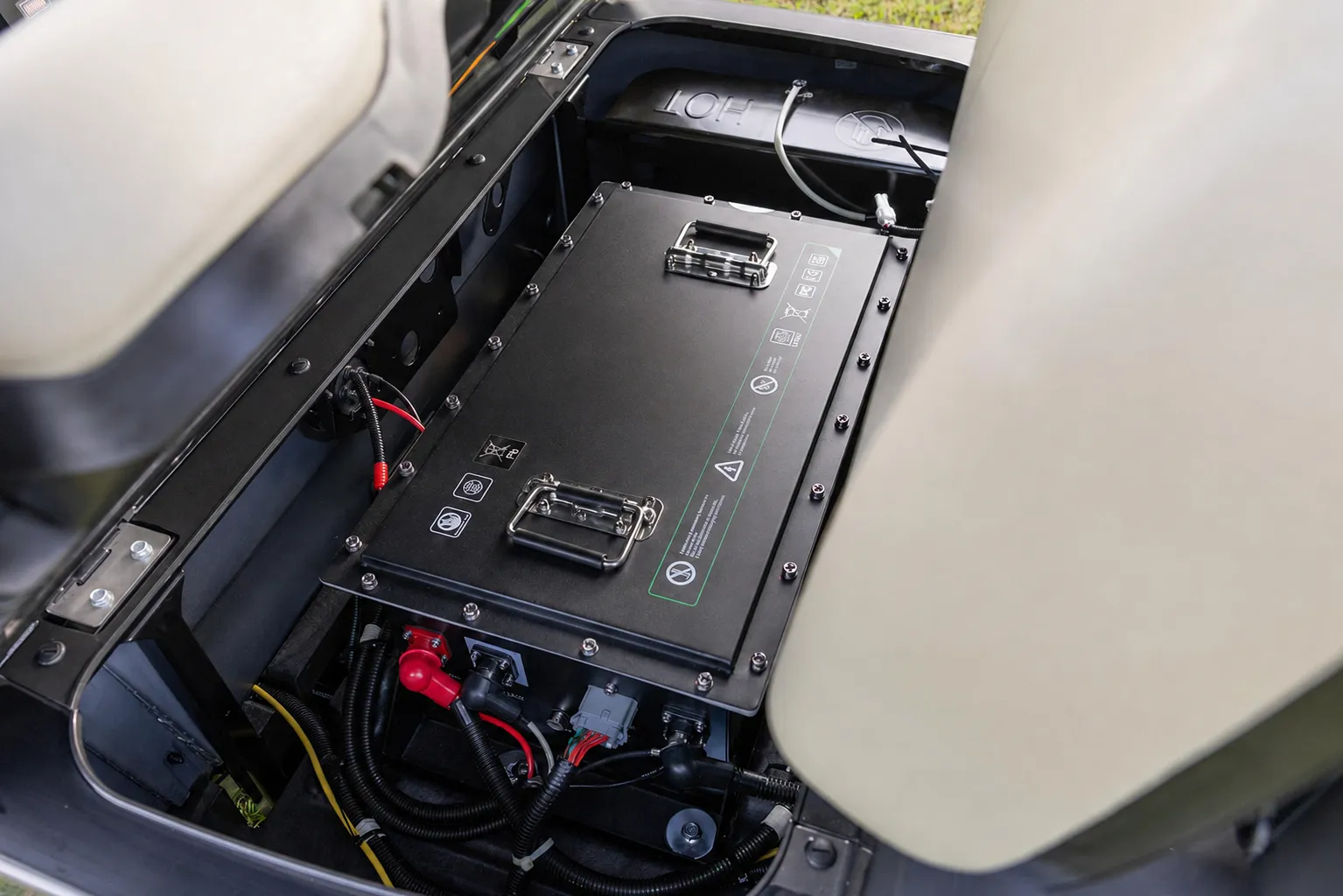
A golf cart battery must maintain stable voltage, supply the motor controller's continuous and peak current and provide sufficient energy for the required driving range.
The correct configuration depends on vehicle voltage, motor power, controller current, passenger or cargo load, terrain, operating schedule and available battery space.
Typical applications include:
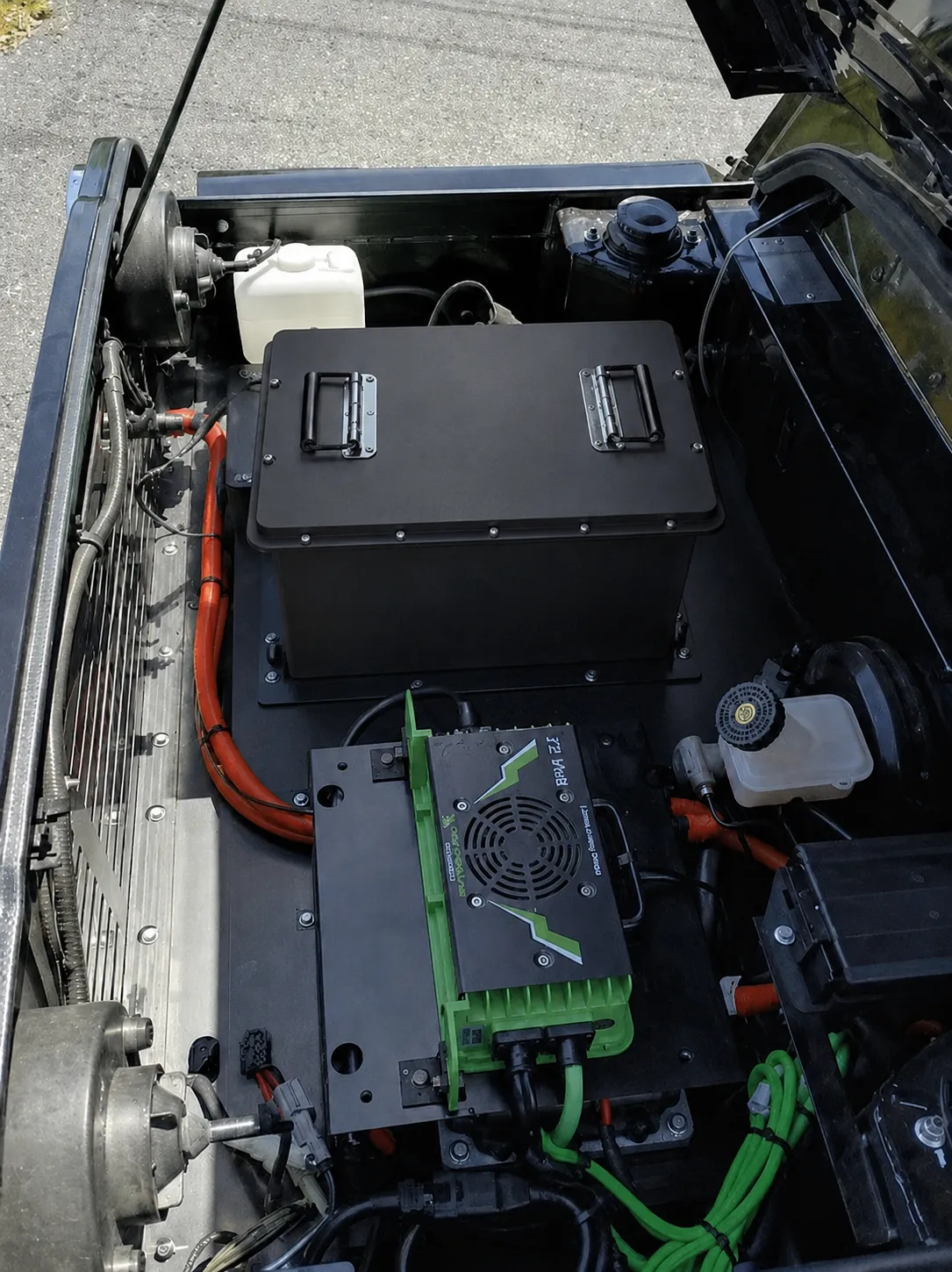
The replacement battery must match the nominal voltage of the vehicle's motor controller unless the complete drive system is being redesigned.
24V and 25.6V LiFePO4 batteries are available for compact golf carts, light-duty utility vehicles and low-speed electric equipment. Capacity and discharge current are selected according to the motor, controller, vehicle load and required operating range.
36V and 38.4V LiFePO4 battery systems can replace compatible lead-acid battery banks in golf carts and utility vehicles. A single integrated lithium battery can reduce the number of inter-battery cables and connection points.
Review available 36V LiFePO4 Battery Options .
48V and 51.2V LiFePO4 batteries are commonly used in modern golf carts, utility vehicles and commercial fleets that require dependable output and longer operating time.
Review available 48V LiFePO4 Battery Options .
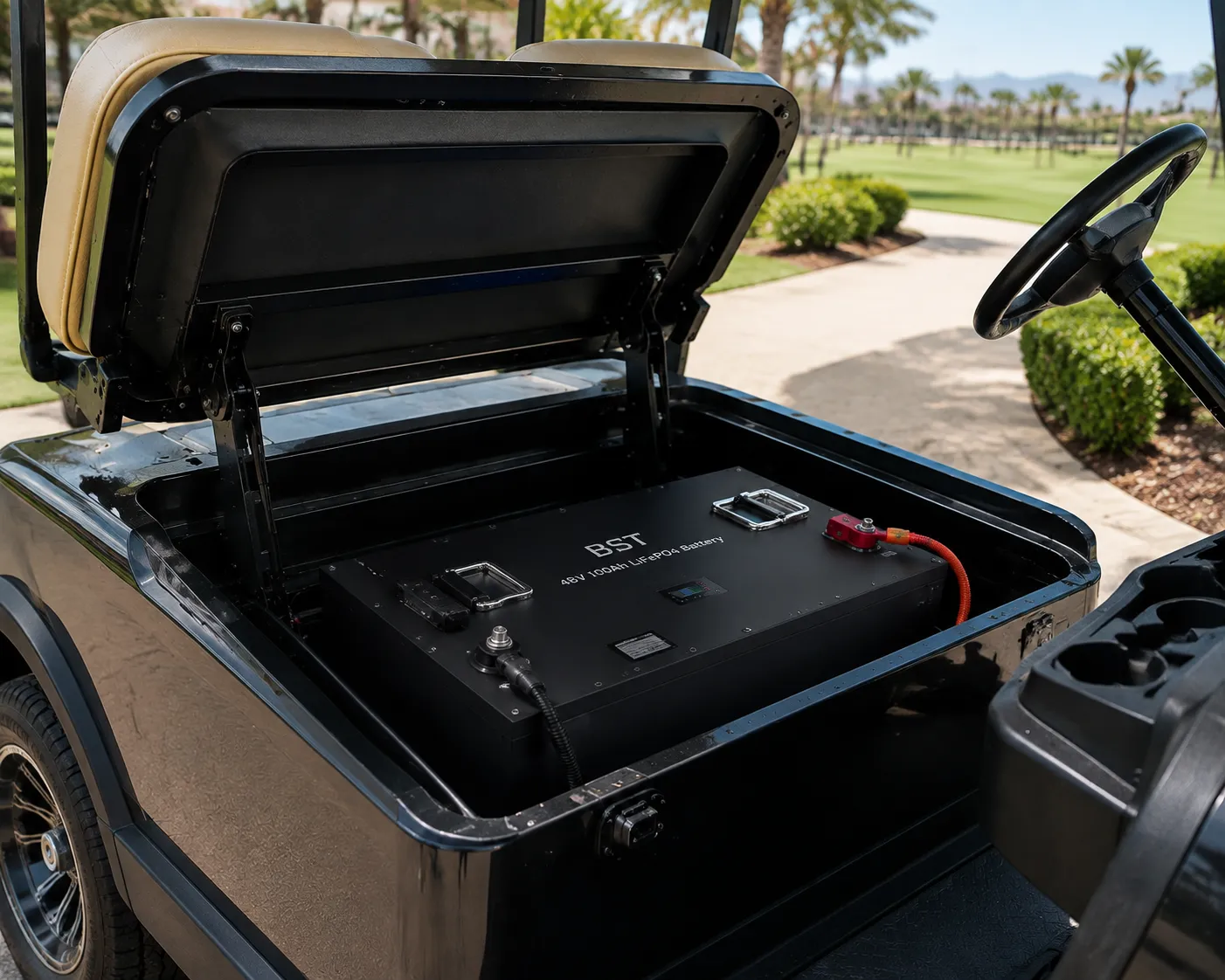
Compact 36V lithium battery option for compatible golf carts and utility vehicles.
View 36V 45Ah Golf Cart Battery →Higher-capacity 36V battery for applications requiring longer driving range.
View 36V 100Ah Battery →48V LiFePO4 battery for compatible carts, fleet vehicles and utility platforms.
View 48V 100Ah Battery →Battery capacity should be selected from the vehicle's actual energy consumption and required driving range rather than amp-hour capacity alone.
A battery sizing review should include:
Vehicle weight, speed, terrain, tire condition, ambient temperature and driving pattern all affect real-world energy consumption and range.
Each battery should be configured around the electrical, mechanical and operating requirements of the golf cart or utility vehicle.
The Smart BMS must support normal driving current and short periods of higher current during acceleration, hill climbing or heavy-load operation.
Available BMS functions can include:
If the vehicle uses regenerative braking, the battery cells, BMS and controller settings must accept the expected regenerative charging current.
Communication compatibility depends on the BMS, vehicle controller, protocol, firmware and cable configuration. These requirements should be confirmed before sample production.
The battery, motor controller and charger should be reviewed together before the final LiFePO4 battery specification is approved.
The compatibility review should confirm:
An existing lead-acid charger should only be retained when its charging voltage, current and operating profile are confirmed as suitable for the new LiFePO4 battery. Otherwise, a matched lithium battery charger should be used.
For complete charger, BMS, controller, cable and fuse review, see the LiFePO4 Battery System Compatibility Guide .
Replacing golf cart lead-acid batteries with LiFePO4 involves more than removing the original battery bank. The motor controller, charger, cables, connectors, mounting structure and state-of-charge display should also be checked.
A conversion review can include:
For the complete lead-acid conversion process, review our Lead-Acid to LiFePO4 Replacement Guide covering voltage, charging, BMS current, wiring, fuse protection and installation compatibility.
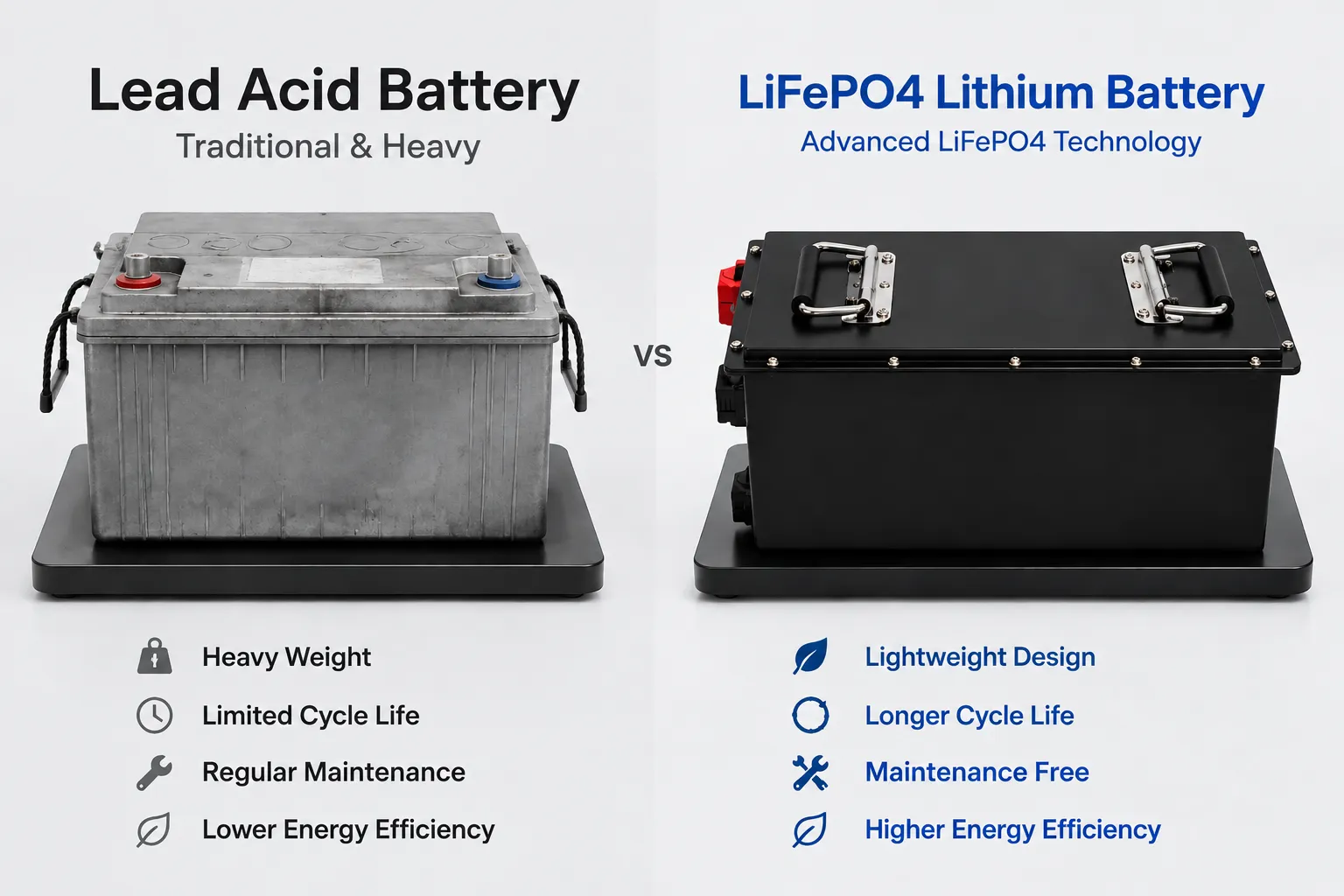
Review conversion requirements for common golf cart platforms. Final battery suitability must be confirmed for the specific vehicle model and year, system voltage, motor, controller current, charger, wiring and available battery-compartment space.
We support golf cart brands, distributors, fleet suppliers and vehicle integrators with custom battery development from specification review and prototype validation through volume production.
OEM and ODM options include:
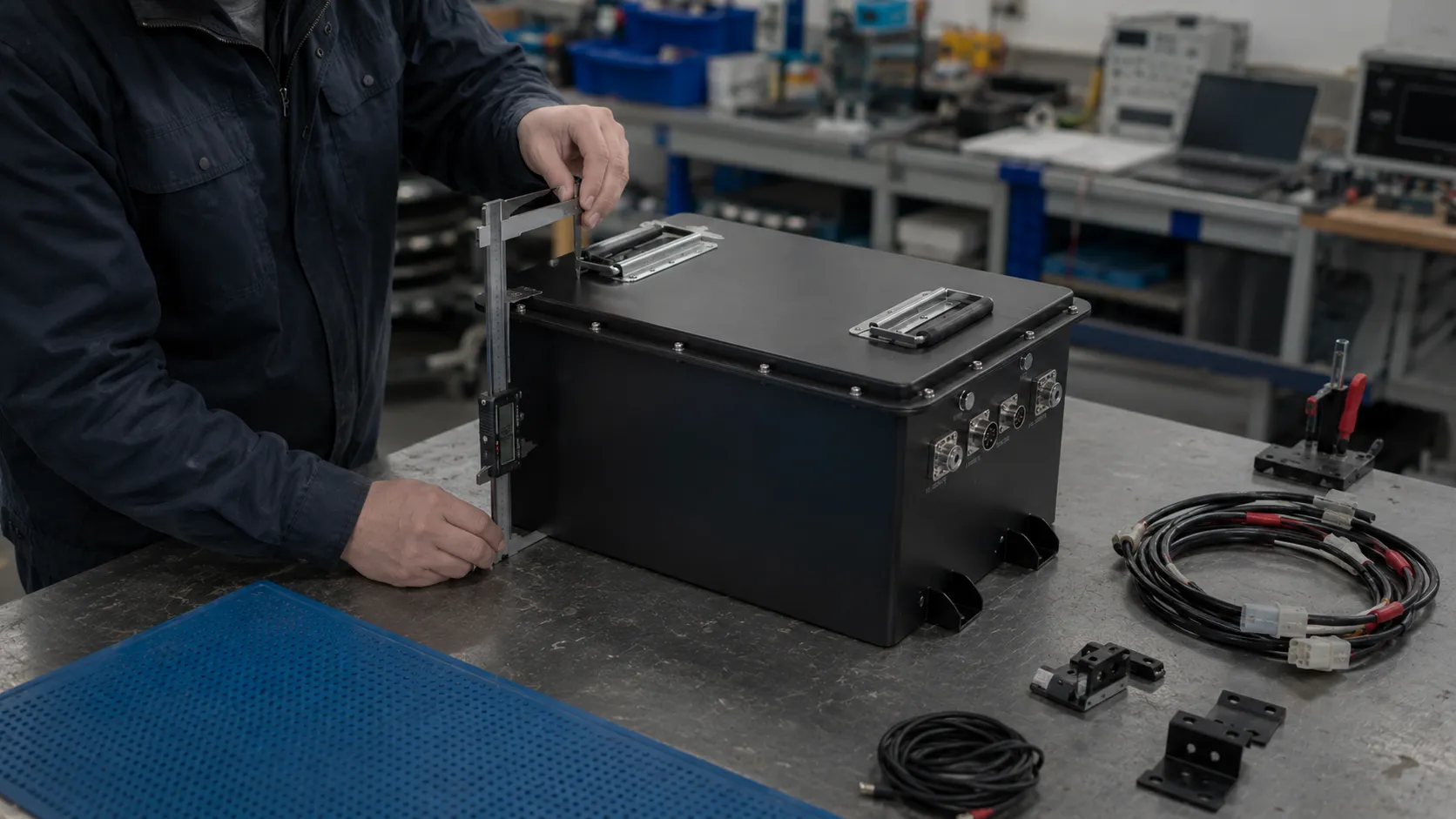
Battery projects can be supported from pack assembly and Smart BMS integration through sample validation and repeat production.
Production and quality checks can include:
Review our LiFePO4 Battery Testing & Validation for additional electrical and BMS testing information.
Golf carts commonly use 36V or 48V battery systems. Selected compact golf carts and light-duty utility vehicles use 24V batteries. Battery voltage must match the vehicle controller and electrical system.
Capacity should be selected according to required driving range, motor power, controller current, vehicle load, terrain, average operating speed and installation space.
Yes. Battery voltage, motor-controller current, charger, cables, connectors, mounting structure and state-of-charge display should all be reviewed before conversion.
Only when its voltage, current and charging profile are suitable for the new LiFePO4 battery. Otherwise, a matched lithium charger should be used.
Selected configurations support Bluetooth monitoring for battery voltage, current, state of charge, temperature and alarm information.
Selected configurations support CAN or RS485 communication when a compatible protocol is available for the vehicle controller or connected equipment.
Yes. Enclosure dimensions, mounting brackets, terminal positions, connectors and cable outlets can be configured for qualified OEM projects.
Provide the vehicle model, system voltage, required capacity, motor power, controller model or maximum current, battery-compartment dimensions, charger information, communication requirements and estimated order quantity.
Send the vehicle model, required voltage and capacity, motor power, continuous and peak current, battery-compartment dimensions, charger information, communication protocol and estimated order quantity.
Our engineering team can review the requirements and recommend a suitable golf cart LiFePO4 battery for sample development or volume production.