Combine solar PV with battery energy storage to increase solar self-consumption, reduce peak grid demand, shift energy use and improve power flexibility for factories, industrial parks and commercial facilities.
A properly designed C&I solar-plus-storage system coordinates PV generation, battery charging and discharging, utility-grid import and facility demand through the Energy Management System.
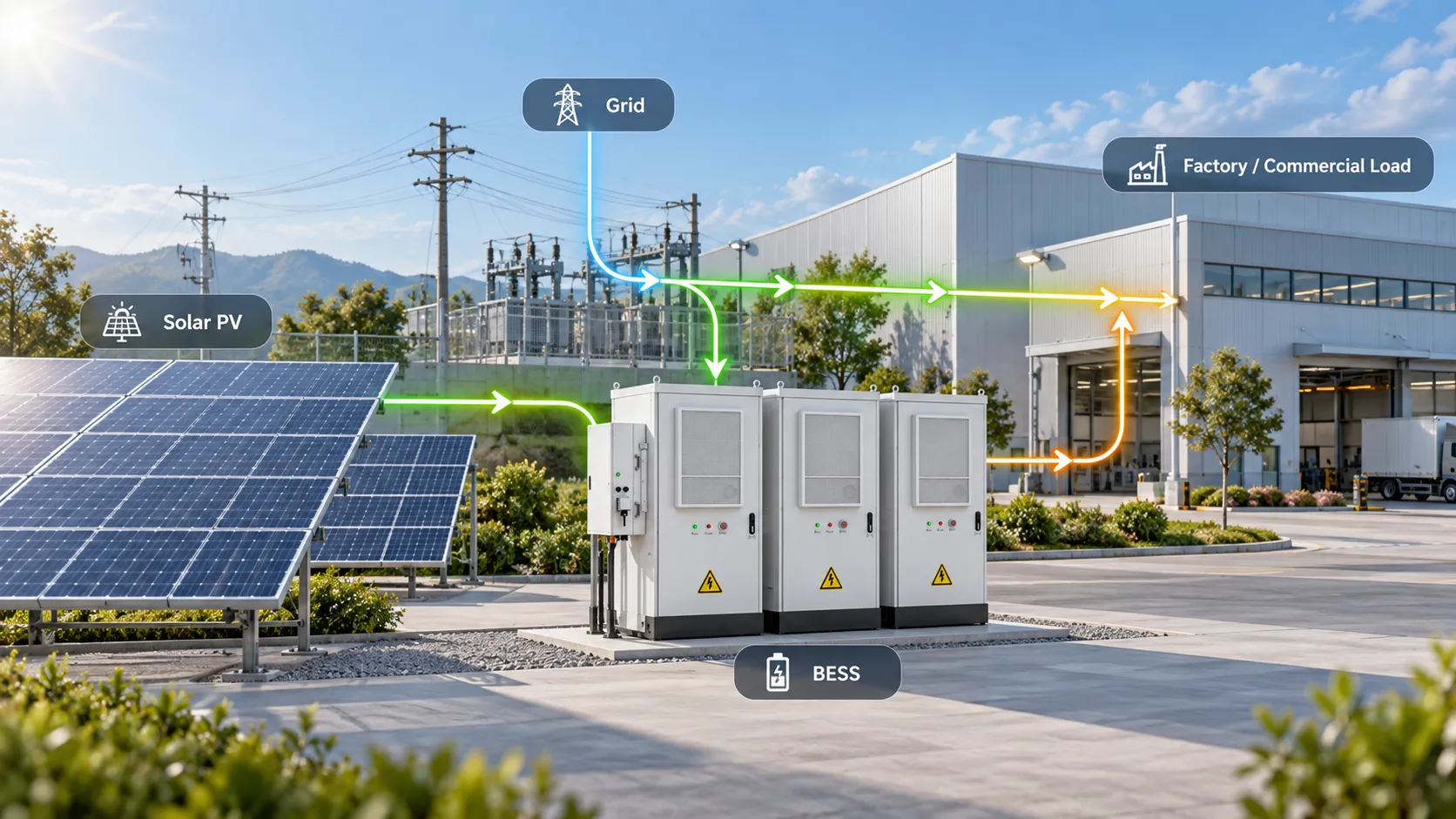
Commercial and industrial solar systems often produce the most electricity during daytime hours, while facility demand can vary throughout the day. When solar generation and site consumption do not occur at the same time, some available PV energy may be exported, curtailed or left underutilized.
A Battery Energy Storage System can absorb available surplus solar energy and make it available later when facility demand increases, solar production falls or electricity tariffs change.
By coordinating solar PV, battery storage, utility power and facility loads through an Energy Management System, a C&I site can operate with greater energy flexibility while improving the utilization of on-site renewable generation.
Solar PV supplies available renewable electricity to the facility during daylight hours.
When PV generation exceeds immediate site demand, available energy can charge the battery within the system's operating limits.
Stored energy can be discharged when site demand rises, solar generation decreases or the operating strategy calls for battery support.
The EMS coordinates PV generation, battery SOC, PCS operation, grid import and facility demand according to the selected project strategy.
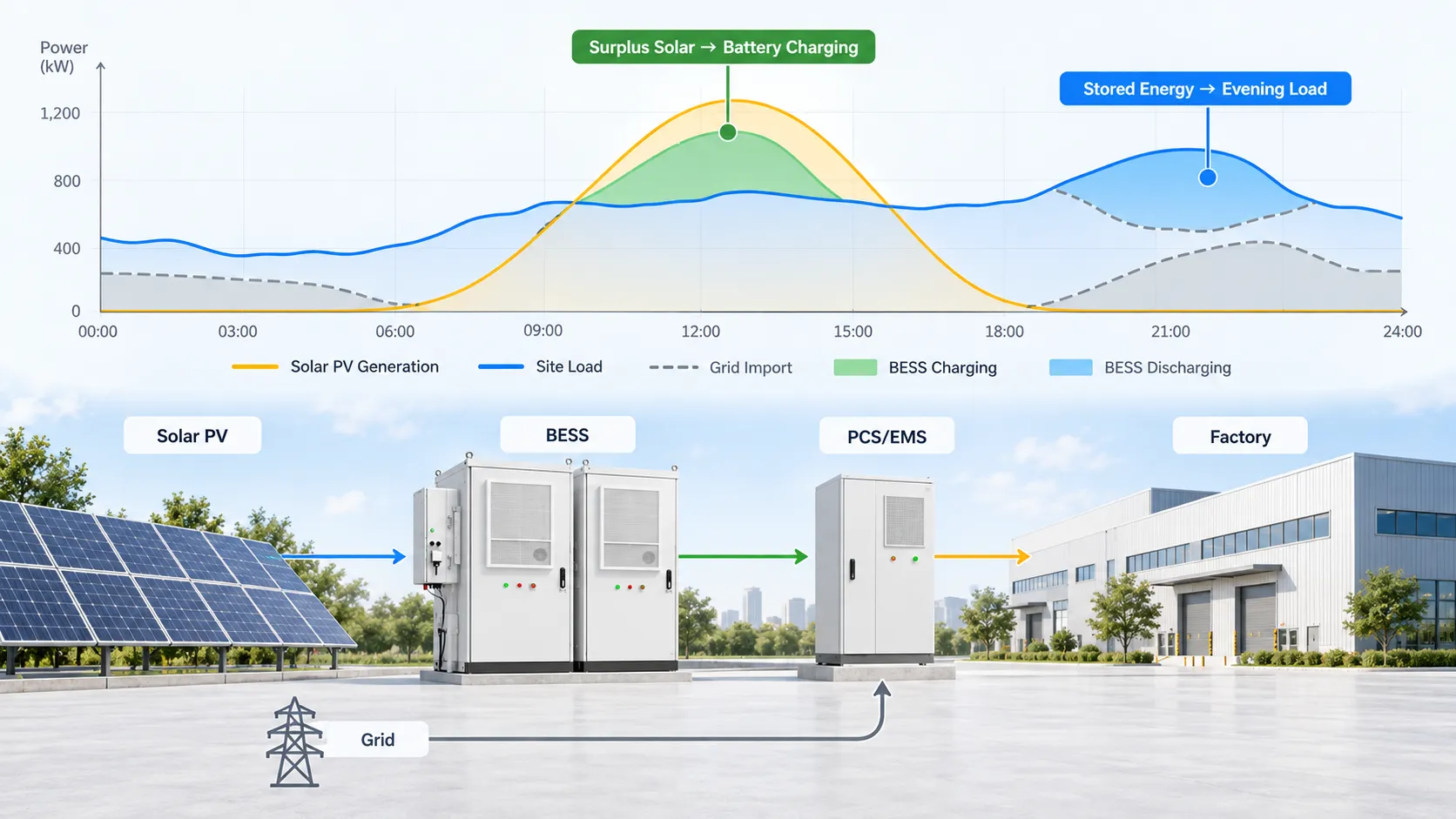
Final architecture depends on whether the project uses AC-coupled or DC-coupled storage, the selected PCS or inverter platform, site voltage, transformer arrangement, grid-connection requirements and required operating modes.
Store available daytime solar energy and use it later instead of immediately exporting or curtailing available generation.
Discharge stored energy during high-load periods to reduce the site's maximum utility-grid import.
Learn About C&I BESS for Peak Shaving →Move stored energy between different periods according to facility demand, solar availability and applicable electricity tariffs.
Balance differences between PV generation and facility demand by storing energy when production and consumption do not align.
Coordinate PV generation, battery power and grid import to respond more effectively to changing commercial and industrial loads.
Where the PCS, switching equipment, protection and controls are designed for backup operation, stored energy can support selected critical loads.
| Operating Mode | How It Works | Typical Objective |
|---|---|---|
| Solar Self-Consumption | Available surplus PV energy charges the battery for later use. | Increase on-site utilization of solar generation. |
| Peak Shaving | The BESS discharges when site demand approaches the configured grid-import limit. | Reduce peak utility-grid demand. |
| Time-of-Use Shifting | The battery charges and discharges according to available solar energy and electricity tariff periods. | Shift energy consumption across different tariff periods. |
| PV Energy Shifting | Midday solar energy is stored and discharged later when PV output decreases. | Match renewable generation more closely with site demand. |
| Backup Operation | Selected loads receive battery power during qualifying utility interruptions when the system architecture supports it. | Support critical operations. |
Solar-plus-storage sizing should start with the site's actual load profile and PV generation profile. Battery capacity should not be selected from solar-panel capacity alone.
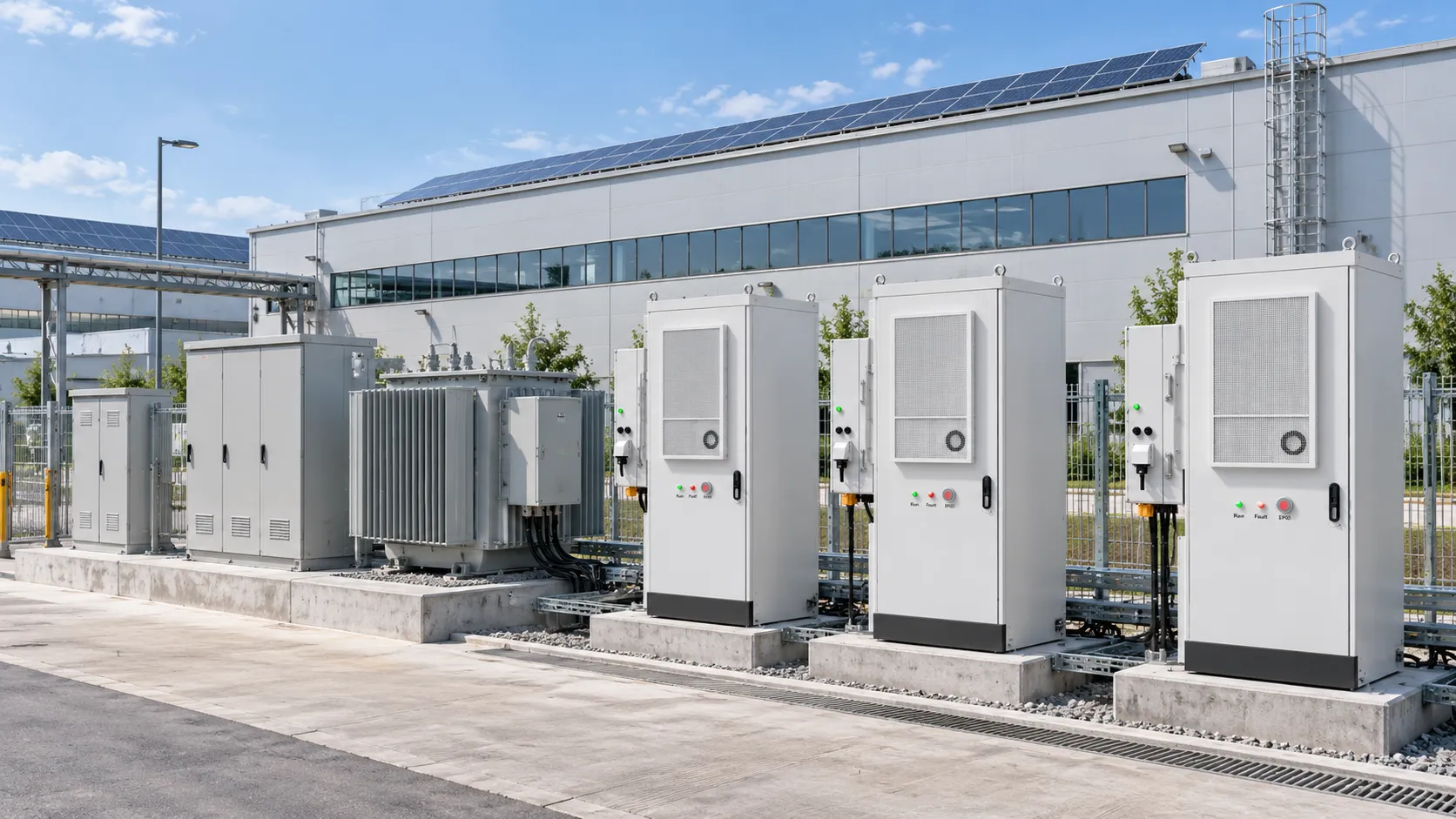
Final system selection depends on required power, available solar energy, discharge duration, site voltage, PCS configuration and project integration requirements.
High-voltage C&I storage platform for renewable-energy integration, peak management and commercial or industrial energy applications.
View System Specifications →Higher-energy C&I platform for PV-plus-storage, industrial energy management and scalable multi-cabinet projects.
View System Specifications →A solar-plus-storage project should be designed around the complete site electrical system rather than the battery cabinet alone. Typical engineering checks include:
Review BESS datasheets, system architecture, single-line diagrams, installation documents and EMS / BMS / PCS integration resources when evaluating a commercial solar-plus-storage project.
It combines solar PV generation with battery energy storage so that available solar electricity can be used immediately, stored for later use or coordinated with utility power according to the site's energy-management strategy.
Yes. When the BESS has sufficient discharge power and usable energy, the EMS can command it to support the site load when grid demand approaches the configured limit.
Yes. Available PV generation that is not immediately consumed by the facility can charge the battery when the battery SOC, PCS capability and operating strategy permit it.
Battery capacity depends on the site's load profile, solar generation profile, target charge and discharge power, required operating duration, usable DoD, efficiency, reserve requirements and selected operating strategy.
The appropriate architecture depends on whether the PV system is new or existing, inverter and PCS topology, required operating modes, site voltage and project integration requirements. Both architectures can be appropriate when engineered for the specific site.
It can when the PCS, switchgear, protection, controls and electrical architecture are specifically designed for backup or islanded operation. Backup capability should therefore be defined during the project-design stage.
Send us your site load profile, PV capacity and generation profile, peak demand, grid voltage, transformer data and required operating modes. We can evaluate an appropriate BESS power, energy and system configuration for your project.
Request a Solar + BESS Solution