Battery energy storage for factories and industrial parks helps manage peak demand, integrate solar PV, shift energy use and improve site-level power flexibility across manufacturing and multi-building industrial facilities.
Industrial BESS should be engineered around the site's actual load profile, transformer capacity, production schedule, grid connection and required operating modes rather than battery capacity alone.
Part of our Commercial & Industrial Energy Storage Solutions engineering resource cluster.
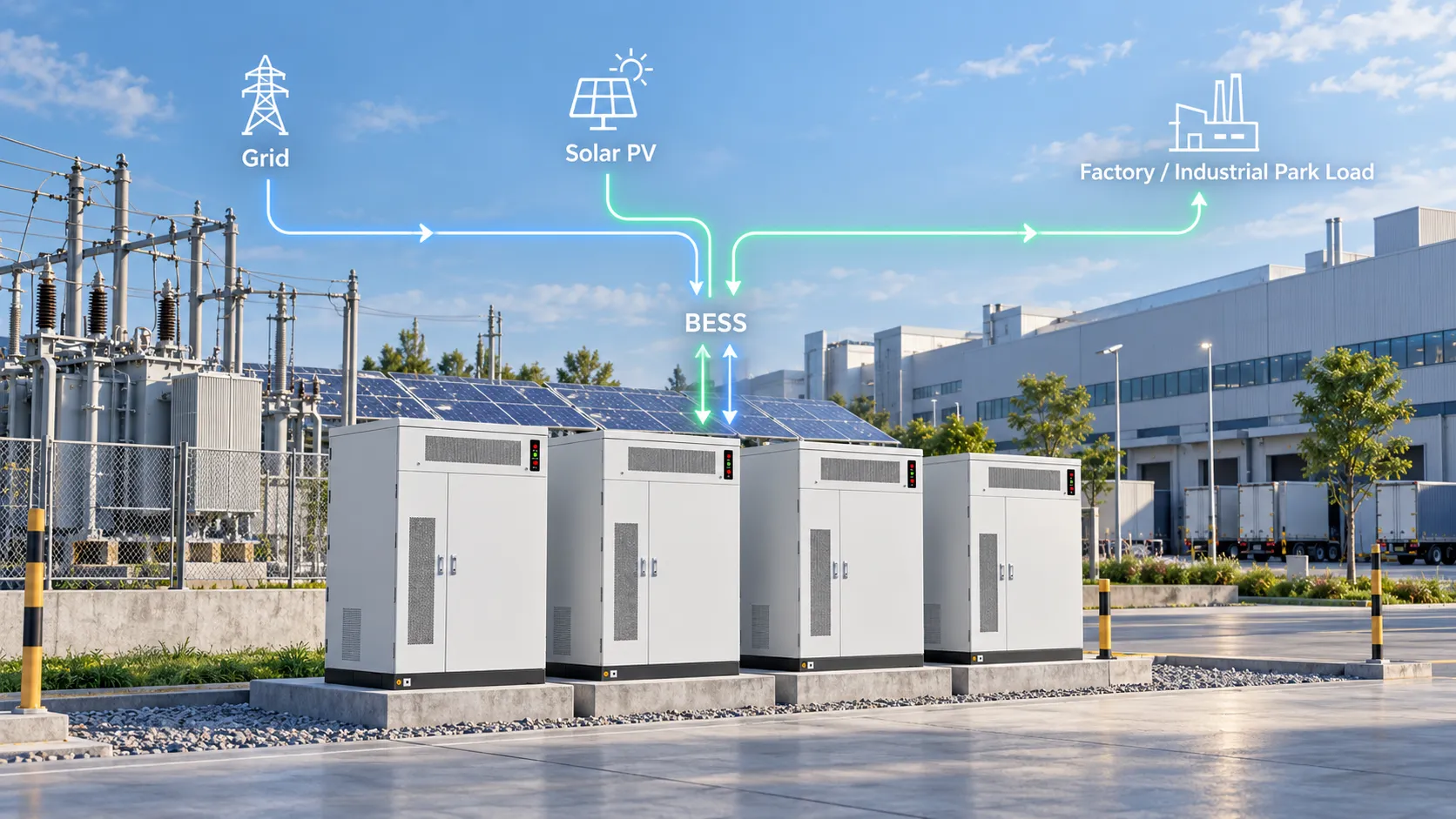
Industrial sites often operate with large motors, production lines, HVAC systems, compressors, pumps, EV charging loads and other equipment that can create high or rapidly changing electrical demand.
A Battery Energy Storage System can charge during selected periods and discharge when additional power is required, helping the site manage peak demand, energy scheduling and changing industrial loads.
For industrial parks, this concept can be expanded across multiple buildings, tenants or production areas, with an Energy Management System coordinating battery power, solar PV, utility-grid import and site demand according to the project strategy.
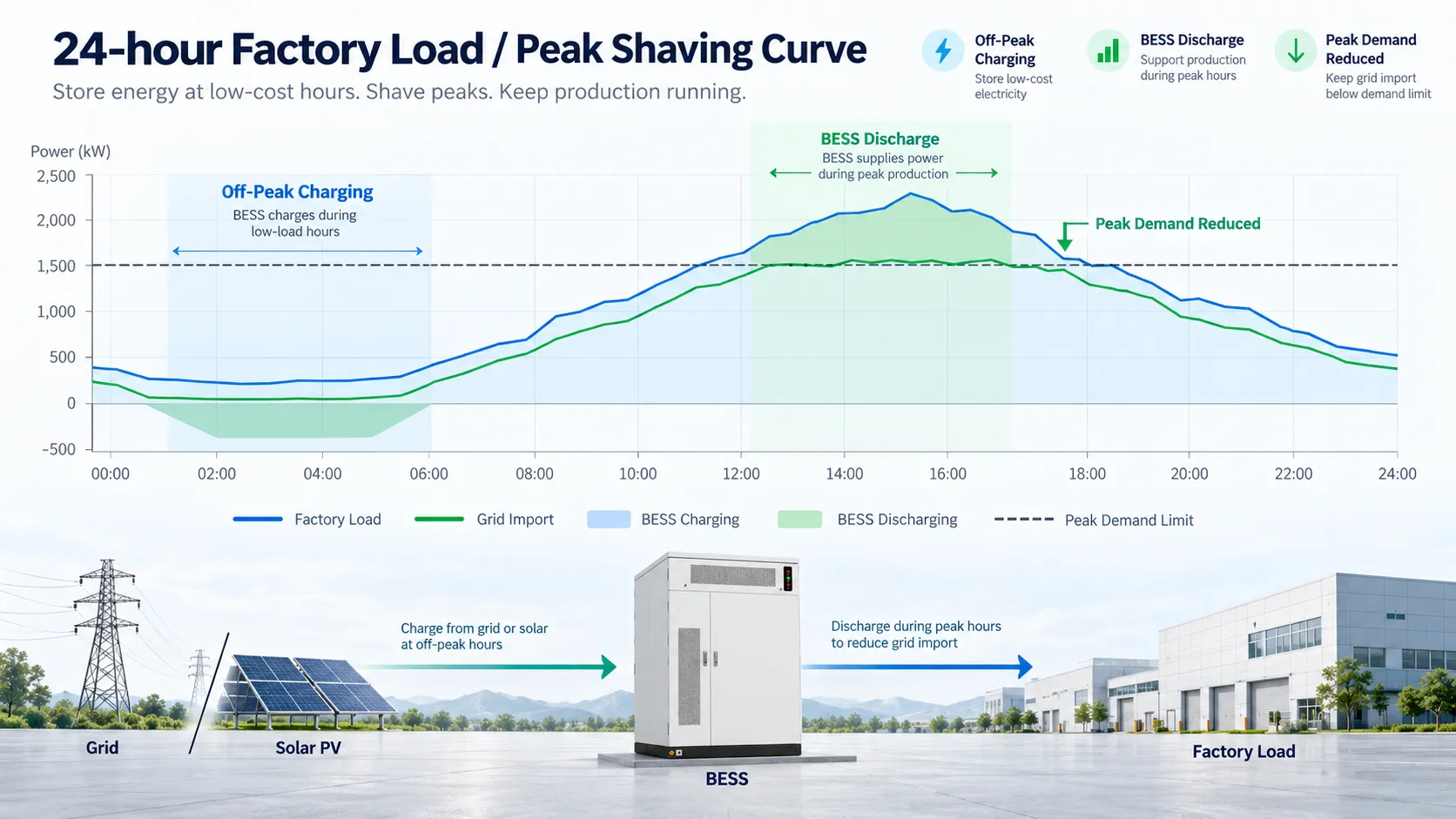
Short production peaks can push site demand significantly above the normal operating level. Battery storage can discharge during selected high-load periods to support peak-demand management.
Existing electrical infrastructure may have limited capacity for new production loads, facility expansion, automation equipment or EV charging.
Solar output may peak when facility demand is lower. Battery storage can absorb available PV energy and shift it to later industrial load periods.
Electricity pricing can vary by time period, creating opportunities for controlled battery charging, discharging and site energy scheduling.
Selected manufacturing processes may require additional power-continuity measures when backup operation is included in the system design.
Multi-building industrial sites may require centralized energy scheduling across different load profiles, meters, transformers and operating hours.
Site meters and the EMS monitor facility demand, PV generation, battery SOC and configured operating limits.
The battery charges from available solar PV or the utility grid according to the configured operating strategy.
Stored energy supports the site when demand reaches a configured threshold or during selected operating or tariff periods.
The EMS coordinates the PCS, battery, utility connection, solar PV and industrial loads according to the selected project objectives.
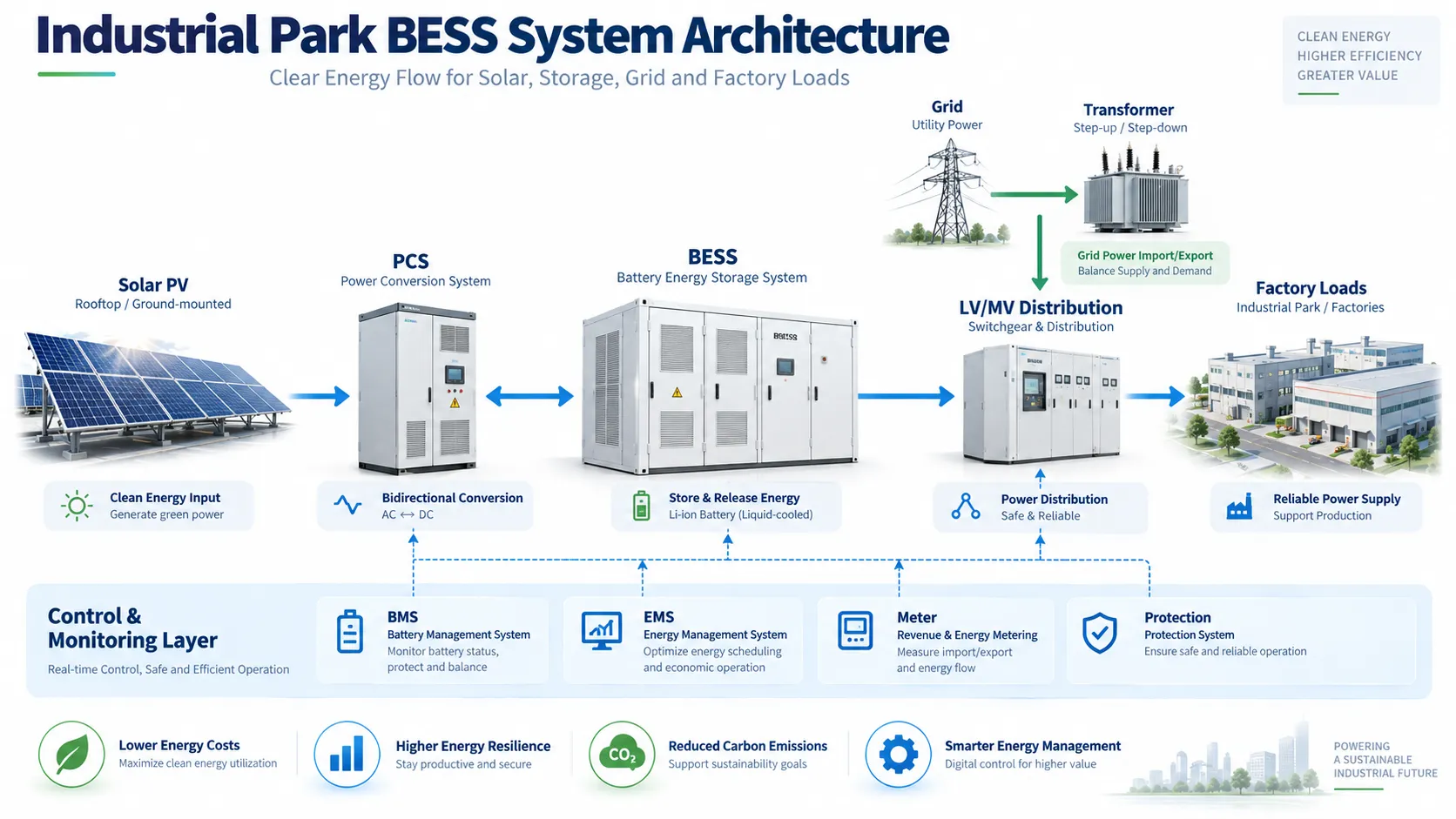
Final electrical architecture depends on site voltage, transformer arrangement, PCS topology, metering, protection, backup requirements, grid-connection rules and selected operating modes.
Discharge stored energy during high-load periods to reduce peak utility-grid import.
Move energy between operating periods through controlled battery charging and discharging.
Store available PV energy and use it later when industrial demand is higher.
Use battery power to help manage temporary load increases where site electrical capacity is constrained.
Coordinate battery power, PV generation and industrial demand using EMS-based operating strategies.
Where PCS, protection, switching and controls are designed for backup operation, stored energy can support selected critical loads.
| Operating Mode | Typical Use | Project Objective |
|---|---|---|
| Peak Shaving | Battery discharges when factory or industrial park demand approaches a configured grid-import limit. | Reduce peak grid demand. |
| Time-of-Use Shifting | Charge and discharge according to electricity tariff periods and site operating requirements. | Optimize site energy scheduling. |
| Solar + Storage | Store available PV generation for later facility use. | Increase solar self-consumption. |
| Grid Capacity Support | Battery supports short-duration loads above the preferred utility-grid import level. | Support load growth or constrained grid connections. |
| Backup Operation | Configured critical loads receive stored energy during qualifying utility interruptions. | Support production continuity where designed. |
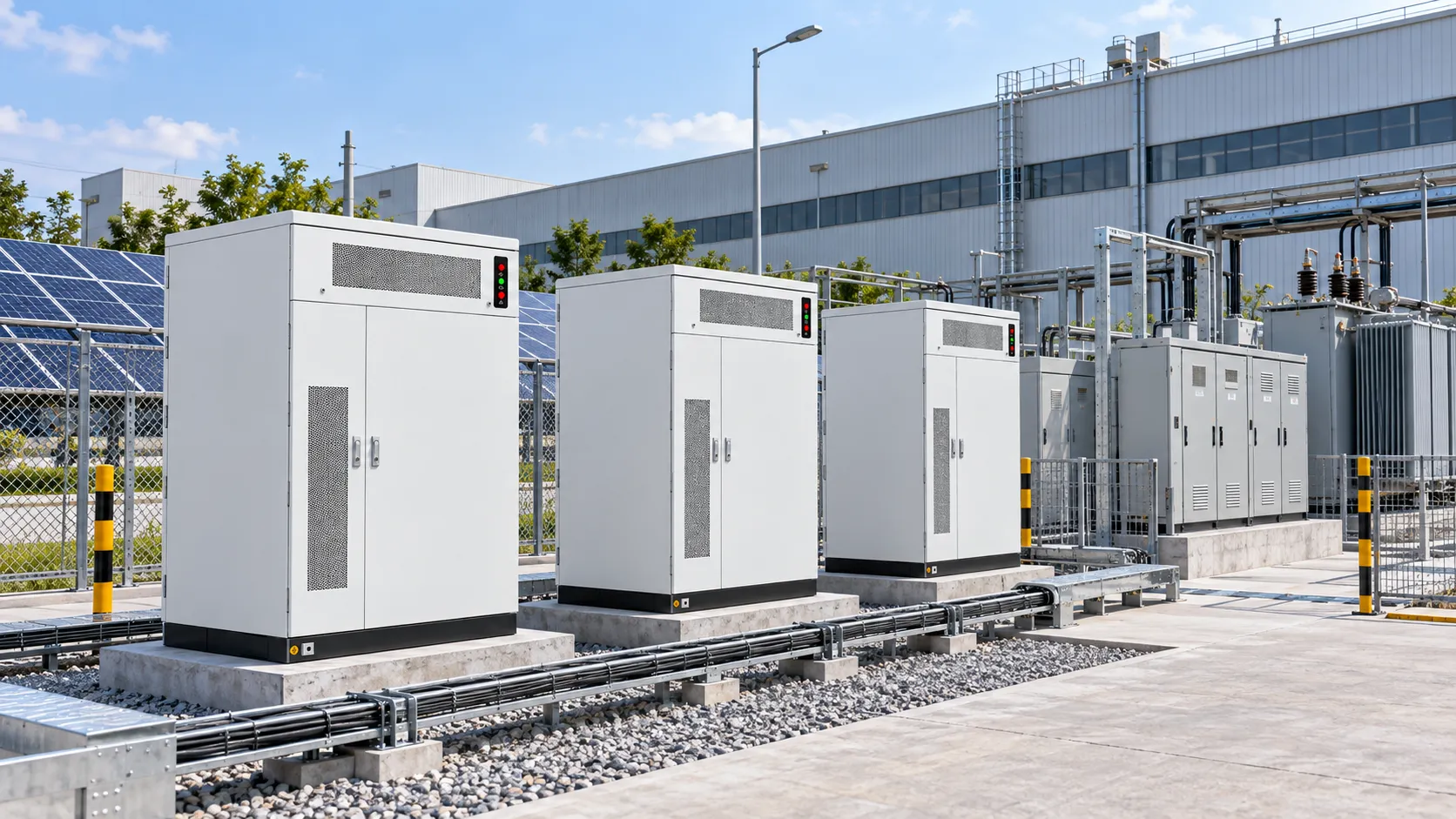
Industrial BESS sizing should be based on real electrical and operating data. Important project inputs include:
The appropriate platform depends on required discharge power, energy duration, site electrical architecture and project scale. The examples below represent a cabinet-scale C&I system and a larger containerized configuration.
After defining the industrial application and preliminary system size, review the available BESS engineering documentation before final configuration and project integration.
C&I BESS Technical Downloads → Review BESS datasheets, system architecture, SLDs and available engineering documentation.The required BESS depends on the site's peak demand, load profile, target power reduction, discharge duration, solar generation and operating strategy. Both PCS power in kW and usable battery energy in kWh must be evaluated.
Yes. A properly sized system can discharge during high-load periods to reduce the amount of power imported from the utility grid.
Yes. Available solar energy can supply facility loads and charge the battery, while stored energy can be used later according to the EMS strategy.
A system can be designed as centralized or distributed depending on the site's electrical topology, metering arrangement, transformer configuration and control requirements.
Battery storage can help support temporary loads above a preferred grid-import threshold when battery power, usable energy, PCS capability and protection architecture are appropriately engineered. Site electrical studies should be completed before final system selection.
Backup operation is possible when the PCS, protection, switching equipment, controls and electrical architecture are specifically designed for backup or islanded operation.
Send us your site load profile, peak demand, transformer capacity, PV information, grid voltage, critical loads and required operating modes to evaluate an appropriate industrial BESS configuration.
Request an Industrial BESS Solution