Access LiFePO4 battery specifications, installation guidance, Smart BMS communication information and certification documents for lead-acid replacement, RV, marine, golf cart and industrial battery systems.
Technical documentation and engineering support are available for equipment manufacturers, battery distributors, installers and OEM system integrators.
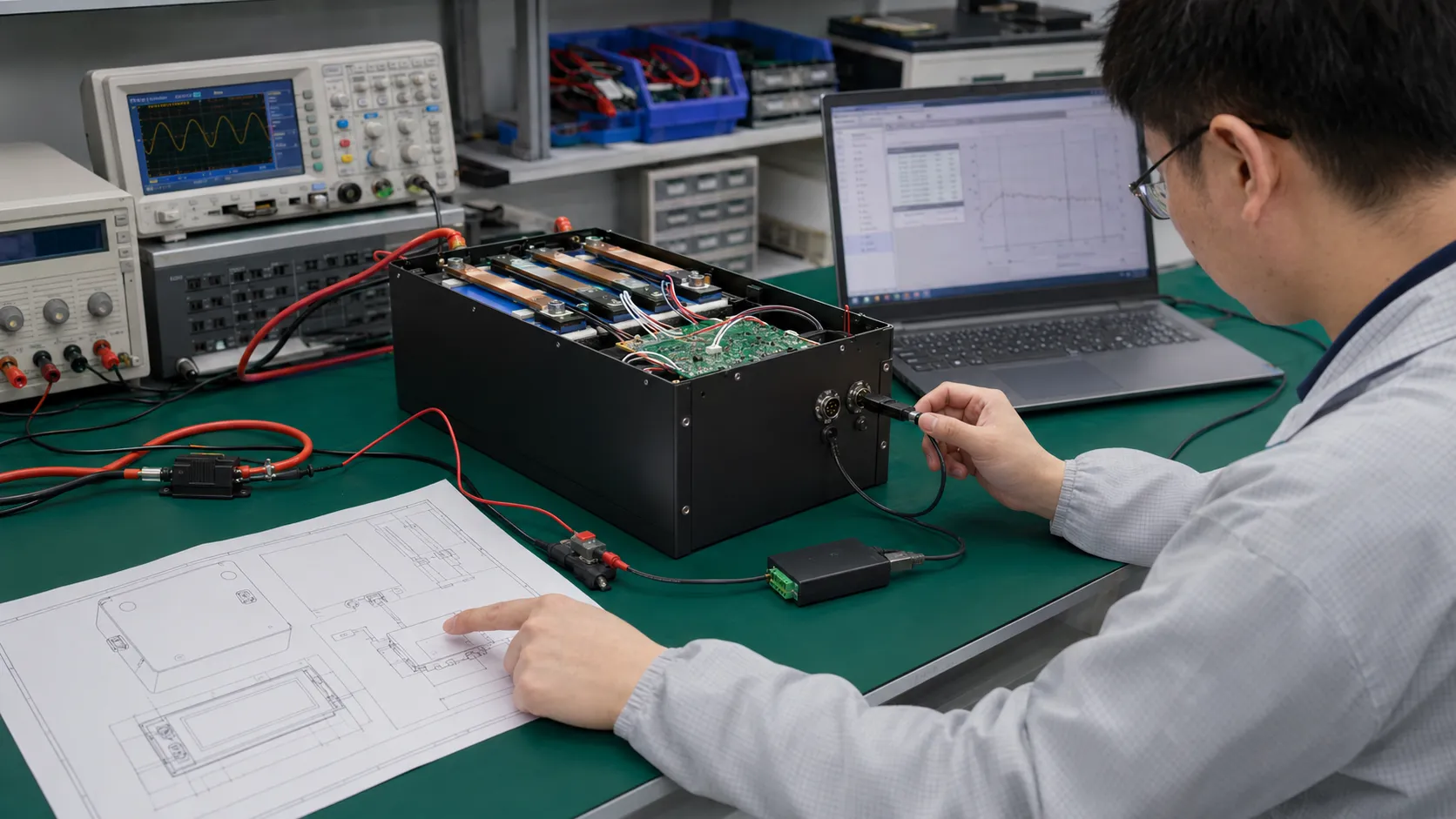
A battery datasheet provides the electrical, mechanical and operating information needed to evaluate a battery for a particular application.
Available product information may include:
Specifications must be confirmed for the exact battery model. Values from a different voltage, capacity, enclosure or BMS configuration may not apply to a modified battery.
Replacing a lead-acid battery involves more than selecting a LiFePO4 battery with the same nominal voltage. Battery dimensions, terminal positions, maximum current and charging equipment must also be reviewed.
A replacement assessment should include:
Common lead-acid replacement formats can include Group 24, Group 27 and Group 31 batteries. The actual enclosure dimensions and terminal layout must be checked before a battery is identified as a compatible replacement.
View Lead-Acid Replacement Batteries →
Correct installation depends on battery voltage, maximum current, mounting position, charging equipment and operating environment. The complete electrical system should be reviewed before installing a new LiFePO4 battery bank.
Installation guidance can cover:
Installation requirements depend on the battery model and connected equipment. The instructions supplied with the approved battery configuration should be followed.
View Battery Installation Support →
Selected LiFePO4 battery systems can support Bluetooth monitoring, CAN communication and RS485 communication. Available functions depend on the battery model, Smart BMS protocol and connected equipment.
Engineering support can include:
The inverter, charger, motor controller or equipment model should be provided before ordering. Matching the physical communication connector does not by itself confirm protocol compatibility.
Request BMS Communication Support →
Battery safety, transport and compliance documents vary by model, battery configuration and destination market.
Available documents may include:
Certification should be confirmed for the exact battery model. A report issued for one voltage, capacity, cell configuration or enclosure may not apply to a modified product.
View LiFePO4 Battery Certifications →
Custom LiFePO4 batteries can be developed for equipment manufacturers, battery brands, distributors and system integrators.
Engineering support is available from specification review and prototype development through testing and volume production.
OEM and ODM capabilities include:
View OEM & ODM Battery Services →
Review RV lead-acid replacement, battery sizing, inverter loads, solar charging, alternator charging, low-temperature protection and off-grid power requirements.
Review battery selection and integration requirements for sailboat house power, motor yachts, trolling motors, onboard electronics and qualified marine applications.
View Marine Battery Solutions →
Find battery configuration information for 24V, 36V and 48V golf carts, utility vehicles and low-speed electric vehicles, including charger, controller and high-current BMS requirements.
View Golf Cart Battery Solutions →
Find battery configuration support for AGVs, AMRs, floor cleaning machines, mobility equipment, agricultural systems and other industrial applications.
View Industrial Battery Solutions →
Provide the battery model, voltage, capacity and application. For a custom project, also include the required current, installation dimensions and order quantity.
No. Charging voltage and current limits depend on the battery configuration and Smart BMS settings. Use the parameters supplied for the approved battery model.
Only when its charging profile, voltage and current limits are suitable for the LiFePO4 battery. Charger compatibility should be confirmed before installation.
No. CAN and RS485 are available on selected battery configurations. The required protocol and connected equipment must be confirmed before production.
Not automatically. Changes to voltage, capacity, cells, Smart BMS or enclosure may affect document applicability. Certification must be confirmed for the exact battery configuration.
Send us the battery model, application, system voltage, required capacity, maximum current, inverter or charger model and communication requirements. Please also identify the documents or technical information you require.
Our engineering team will review the request, provide available documentation or recommend a suitable battery configuration.