Custom LiFePO4 battery solutions for replacing lead-acid batteries in RVs, boats, golf carts, utility vehicles and industrial equipment.
With more than 20 years of battery manufacturing experience, we support equipment manufacturers, battery brands and distributors with battery sizing, charger compatibility, Smart BMS configuration, custom enclosures, sample testing and volume production.
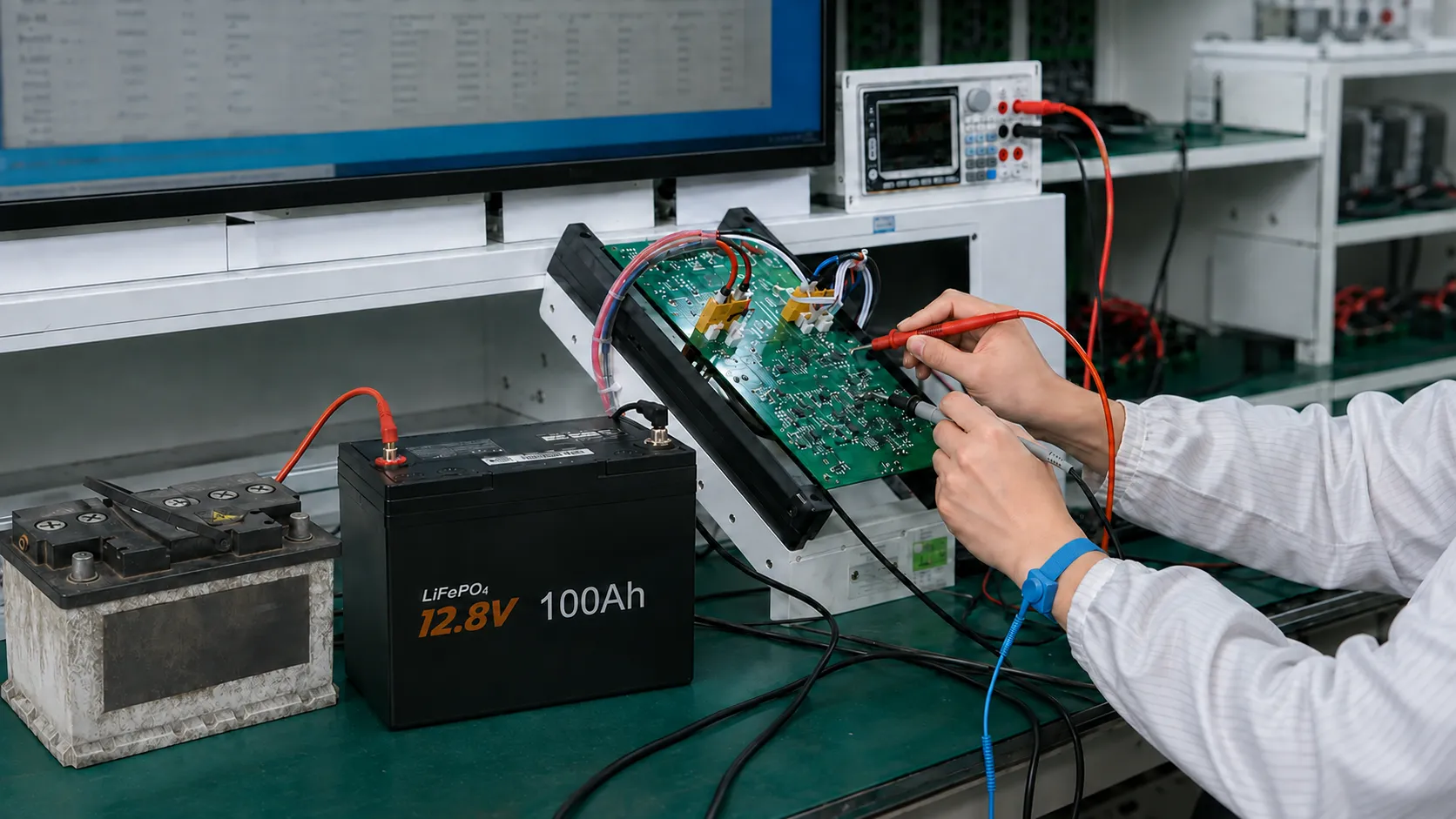
Replacing a lead-acid battery involves more than matching the nominal voltage. Battery dimensions, current demand, charging equipment, cable size, circuit protection and operating temperature must all be checked before the new battery specification is approved.
Lead-acid replacement options can include:
Available sizes and functions depend on the application, battery specification and project quantity.
View Lead-Acid Replacement LiFePO4 Batteries →
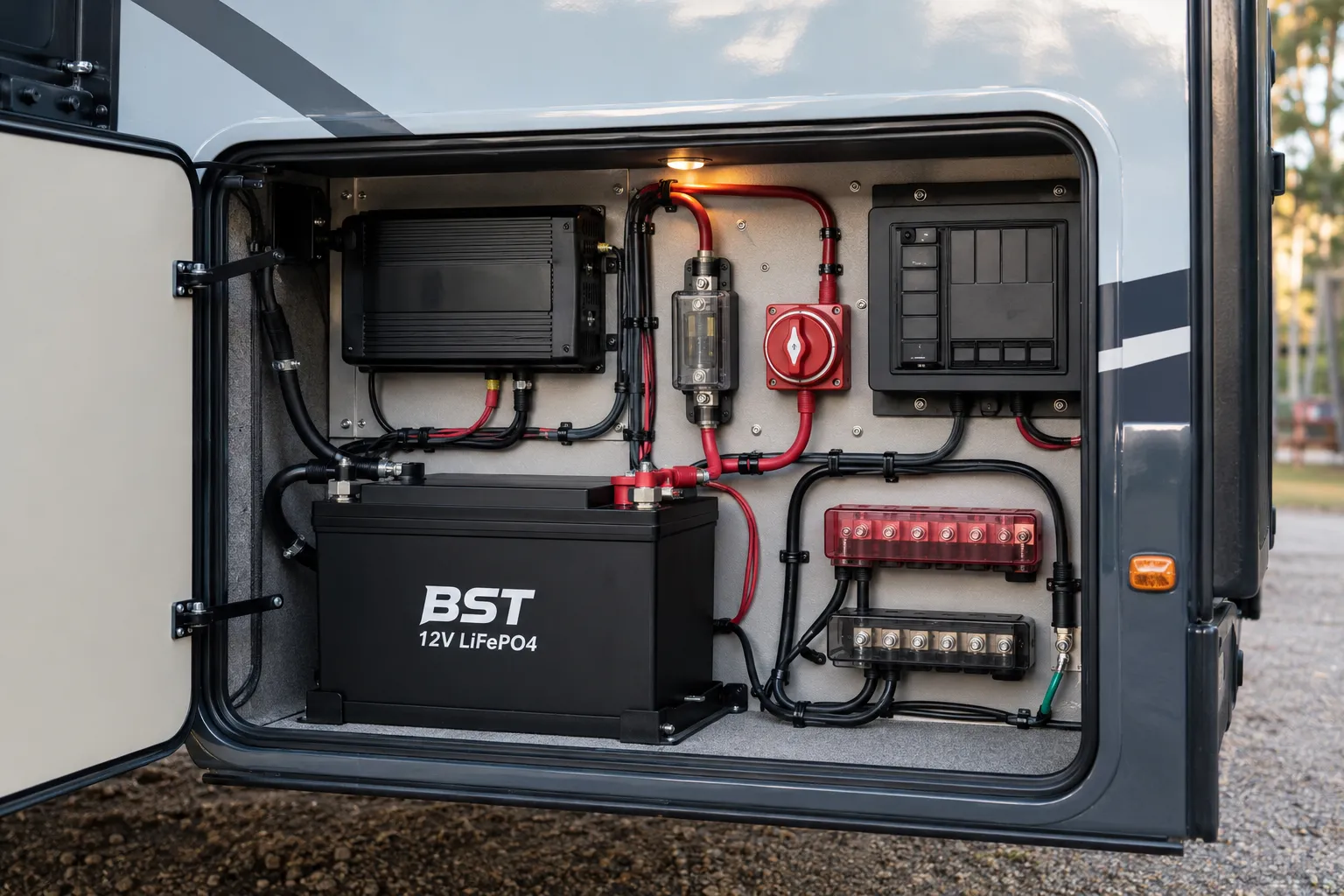
Custom RV LiFePO4 batteries are available for motorhomes, camper vans, specialty vehicles and professional conversion projects.
Battery capacity is selected according to daily energy use, inverter power, charging equipment, installation space and required off-grid runtime. For a lead-acid to lithium conversion, the complete charging and protection system should be reviewed together with the battery.
View RV LiFePO4 Battery Solutions →
See real RV conversion, charging and OEM integration pathways: RV LiFePO4 Battery Projects →
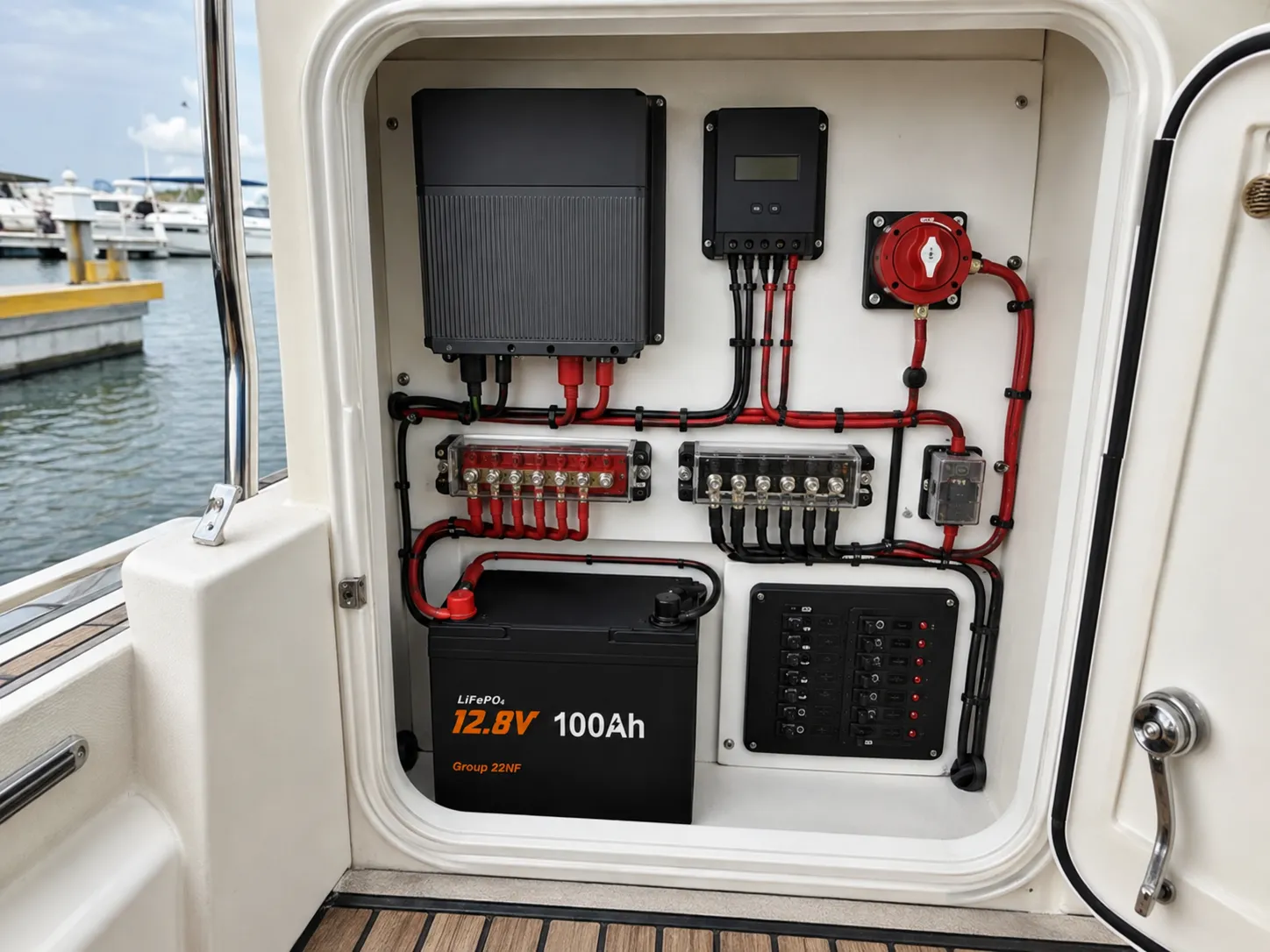
Marine LiFePO4 batteries are available for onboard house power, trolling motors, marine electronics and qualified engine-starting applications.
The correct configuration depends on vessel voltage, required capacity, continuous and peak current, charging sources, available space and operating conditions. When replacing an existing lead-acid bank, charger, alternator, cable and protection compatibility should also be verified.
View Marine LiFePO4 Battery Solutions →
See marine battery integration and application project pathways: Marine LiFePO4 Battery Projects →
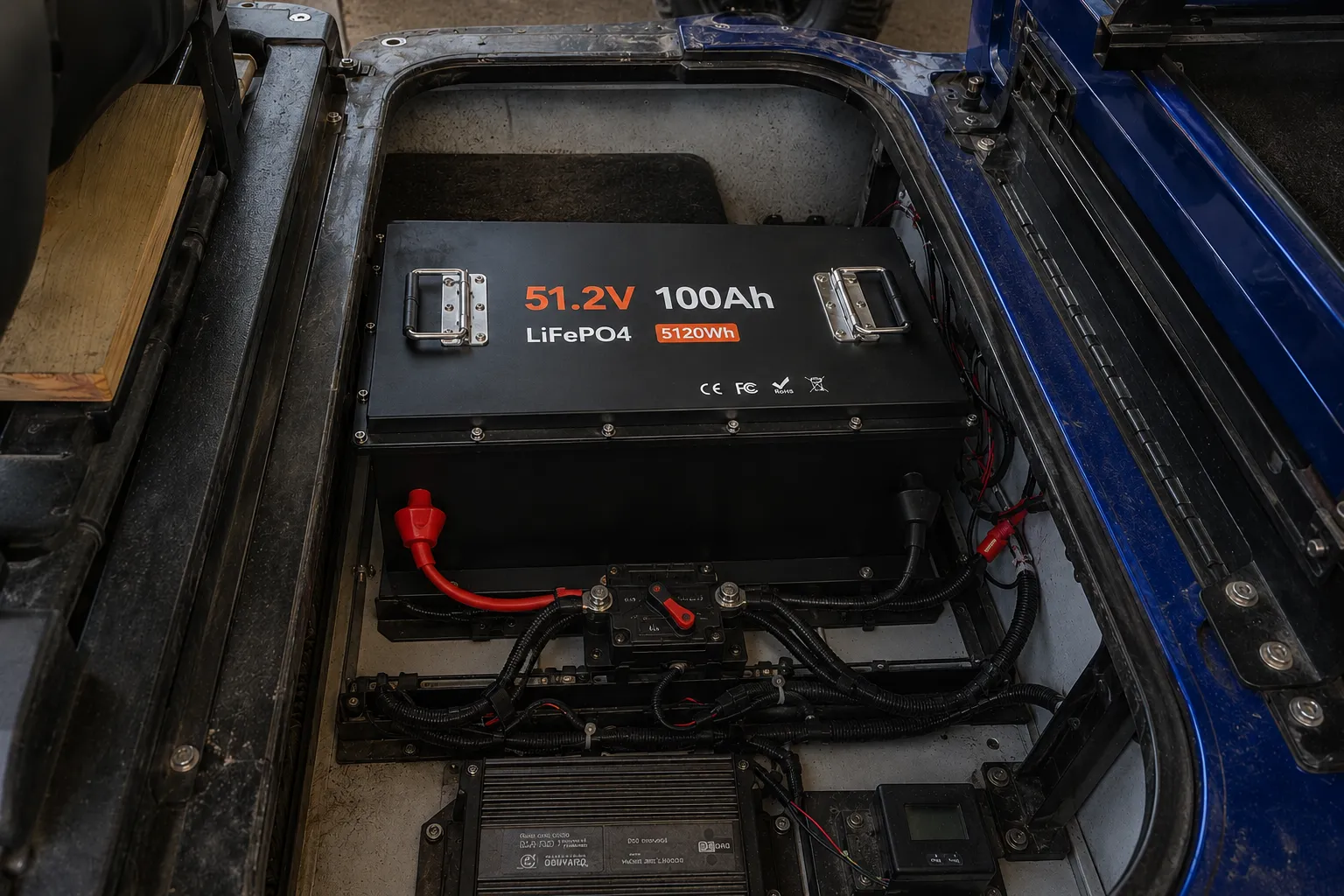
Custom LiFePO4 batteries are available for golf carts, utility vehicles, neighborhood electric vehicles and commercial fleets.
Battery voltage, capacity and BMS current are selected according to motor power, controller current, required driving range, terrain and available battery-compartment dimensions.
For golf cart lead-acid to lithium conversions, matching only voltage and Ah is not enough. Controller demand, BMS discharge current, regenerative braking, charger compatibility, cables and protection should all be considered as part of the system.
View Golf Cart Battery Solutions →
Having shutdown, charging or controller-related problems? Golf Cart Lithium Battery Troubleshooting →
Questions about voltage, capacity, BMS current, charging, range or lead-acid replacement? Golf Cart Lithium Battery FAQ →
See battery integration and conversion examples: Golf Cart LiFePO4 Battery Projects →
Real retrofit case: 48V Golf Cart LiFePO4 Retrofit for Limited Space →
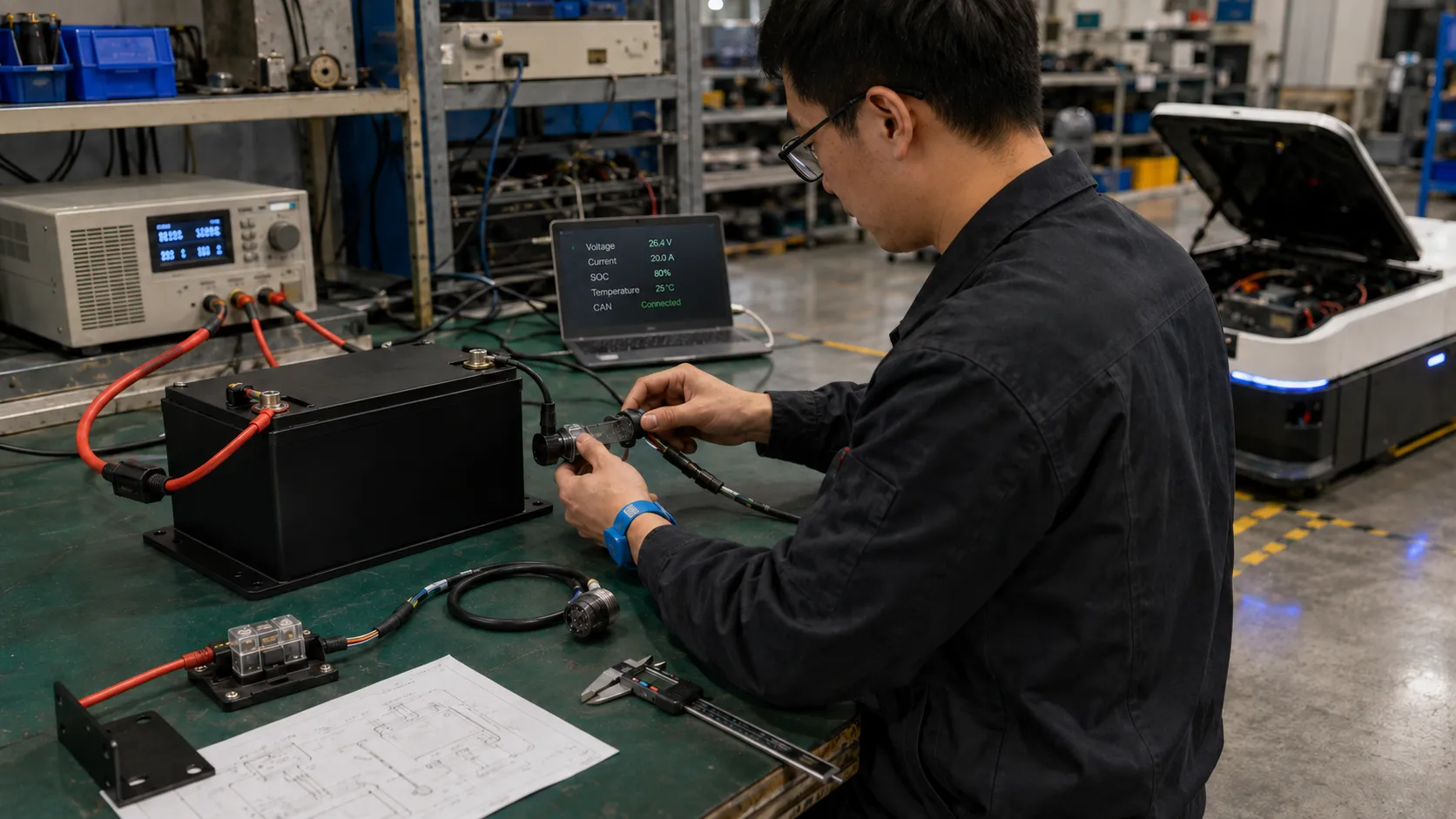
Custom LiFePO4 battery packs are available for AGVs, AMRs, floor cleaning machines, mobility equipment, agricultural systems, solar trackers and other industrial equipment.
Battery voltage, capacity, current, enclosure, connectors and communication functions are configured around the equipment and installation requirements. Industrial lead-acid replacement projects may also require charger, connector, cable and equipment-interface review.
View Industrial LiFePO4 Battery Solutions →
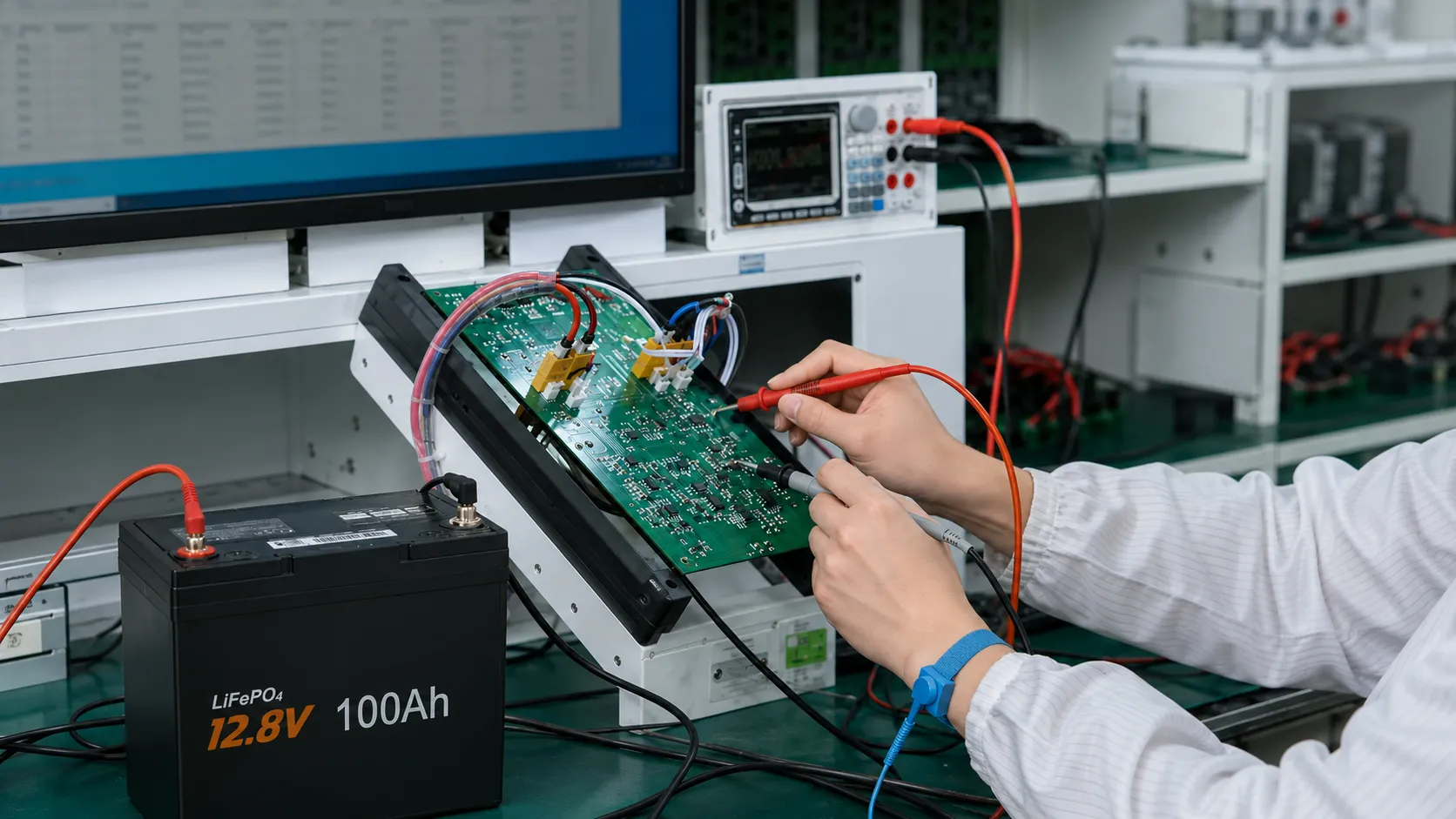
Battery systems can include Smart BMS protection, Bluetooth monitoring and CAN or RS485 communication. Available functions depend on the battery model, BMS and connected equipment.
For lead-acid replacement projects, BMS current capability is especially important. A battery may have sufficient Ah capacity but still shut down if controller, inverter or motor current exceeds the battery system's allowable discharge current.
Engineering support can include:
View LiFePO4 Battery Technical Support →
Review charger, inverter, controller and CAN/RS485 matching: LiFePO4 Battery System Compatibility →
Explore technical guidance for sizing, charging, BMS protection and communication: LiFePO4 Battery Technical Knowledge →
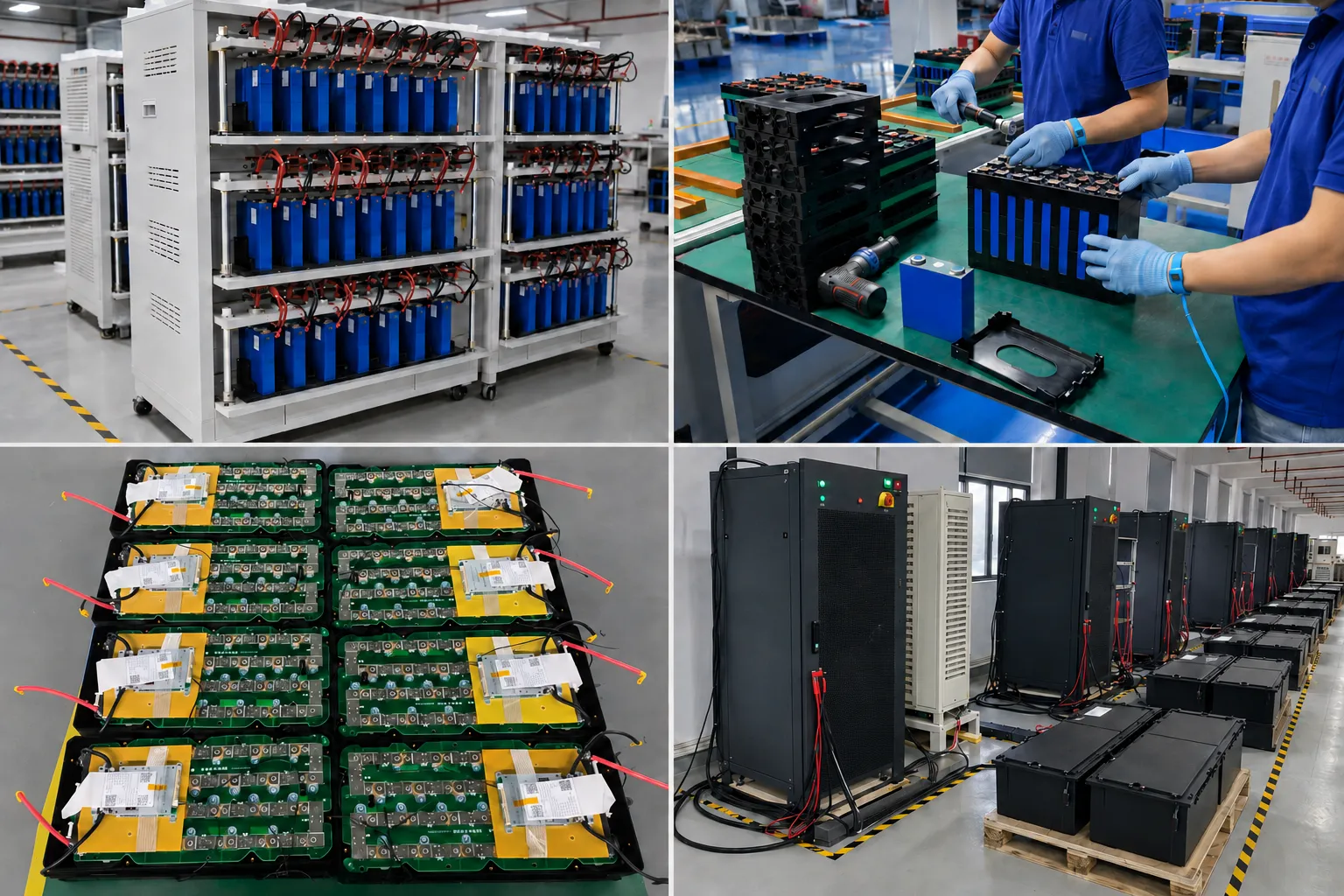
Custom LiFePO4 battery manufacturing is available for equipment manufacturers, battery brands and distributors requiring application-specific lead-acid replacement or new lithium battery systems.
OEM support covers product definition, electrical configuration, enclosure development, BMS settings, communication, testing, branding and packaging.
View OEM & ODM Battery Services →
Review sample, BMS, communication and performance validation: LiFePO4 Battery Testing & Validation →
Yes, in many applications. Battery voltage, dimensions, continuous and peak current, charging equipment, cables, fuses and operating conditions must be checked before replacement.
No. Voltage and capacity are only part of the specification. Continuous current, peak current, BMS limits, charging equipment, installation dimensions, cables and protection devices must also be compatible with the application.
Yes. Available configurations depend on the required voltage, capacity, current, installation space, charging equipment and project quantity.
Yes. Support can include battery sizing, inverter and charger matching, alternator charging, solar integration, cable selection and circuit protection.
Selected marine batteries are available for starting, deep-cycle, trolling motor and onboard house-power applications. Starting batteries require verified cranking-current and equipment compatibility.
Yes. Battery voltage, capacity, BMS current, enclosure, charger, connectors and communication can be configured for qualified golf cart and utility-vehicle projects.
For golf-cart-specific questions about voltage, capacity, controller demand, BMS current, charging, range and lead-acid replacement, visit our Golf Cart Lithium Battery FAQ .
These functions are available on selected battery configurations. Compatibility depends on the BMS, communication protocol and connected equipment.
Yes. Private-label support can include product labels, packaging, manuals, terminals, cables and approved battery configurations.
Please provide the application, voltage, capacity, continuous and peak current, installation dimensions, charging equipment, communication requirements and estimated quantity.
Send us your application, existing battery voltage and capacity, maximum current, installation dimensions, charging equipment, communication requirements and estimated quantity. We can review the LiFePO4 battery configuration and system compatibility.
Request a Quote →