This project involved converting an older 48V golf cart from a lead-acid battery bank to a LiFePO4 battery system while working within a limited, non-standard battery compartment.
The project could not be treated as a simple voltage-for-voltage battery swap. Battery fitment, enclosure layout, Smart BMS current capability, motor-controller demand, charger compatibility, cable routing, mounting and vehicle-side protection all had to be reviewed as one system.
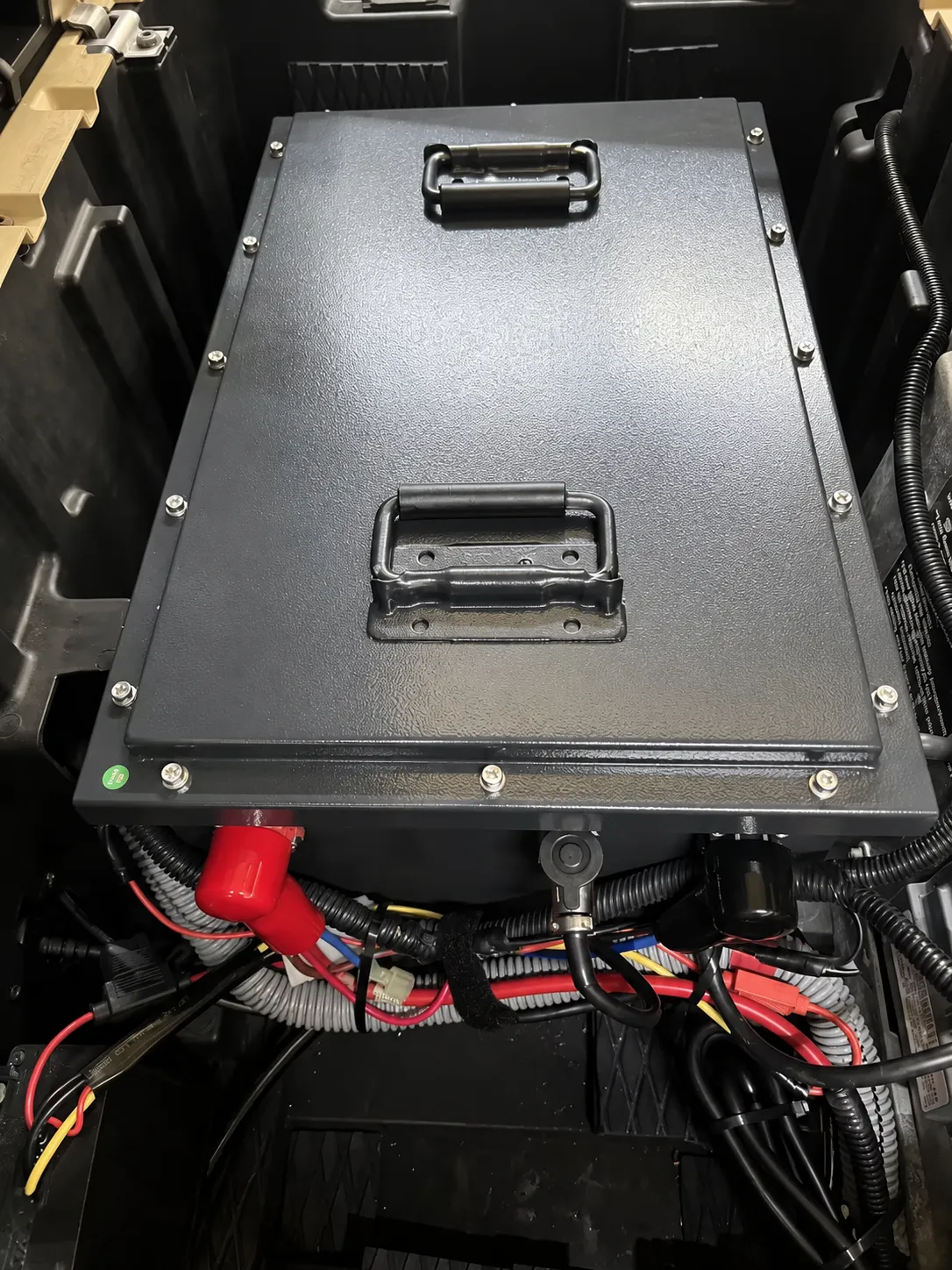
The battery configuration was developed around the existing vehicle layout instead of assuming that a standard lithium battery enclosure would fit the original battery space.
The older golf cart used a battery compartment originally arranged for a lead-acid battery bank. The available space and mounting layout were not ideal for a conventional one-piece lithium battery enclosure.
A successful retrofit therefore required more than choosing a 48V LiFePO4 battery. The battery had to fit the existing compartment while remaining compatible with the vehicle controller, charging system, main cables, connectors and protection devices.
The project was approached as both a mechanical fitment problem and an electrical integration problem.
The retrofit review included the following requirements:
Related guide: LiFePO4 Lead-Acid Battery Replacement →
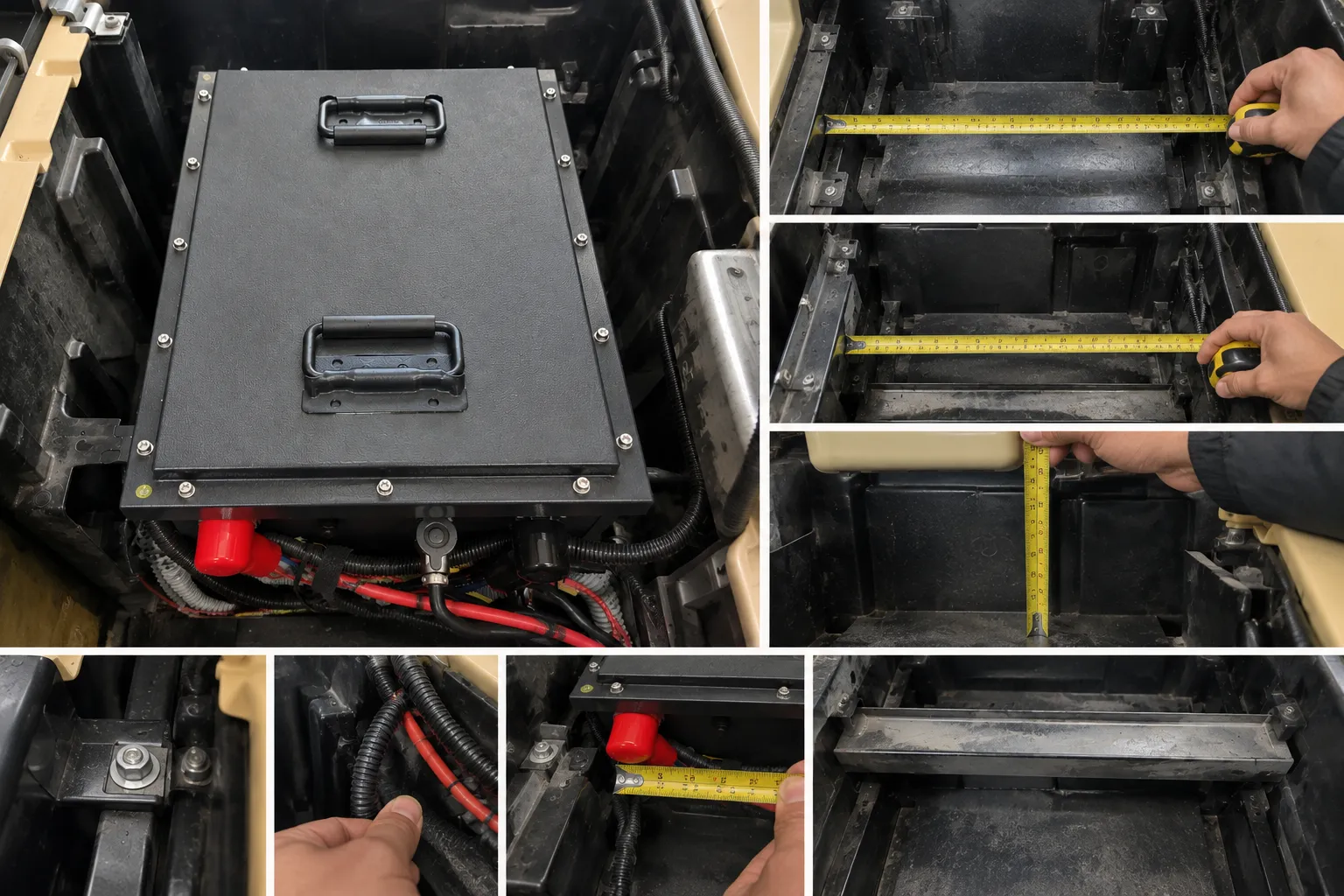
The usable battery-compartment length, width and height had to be considered together with mounting points, terminal access, cable routing and service clearance.
Because the compartment was limited and non-standard, enclosure layout and connection positions were treated as project-specific design items instead of forcing the vehicle to accept a generic battery case.
Battery Ah mainly determines available energy and runtime. The BMS current capability determines whether the battery can support acceleration, hill climbing and short-duration controller demand without entering protection.
For this reason, controller battery current and peak-current duration must be reviewed against the approved battery and Smart BMS operating limits rather than judging compatibility from battery capacity alone.
Related technical guide: Golf Cart Battery Troubleshooting →
A shared “48V” label does not by itself confirm charger compatibility. Charging voltage, charging current, charge profile and connector arrangement must be checked against the selected LiFePO4 battery configuration.
Lead-acid equalization or desulfation functions should not be assumed compatible with a LiFePO4 retrofit unless specifically approved.
The main positive and negative cables, terminals, connectors, fuse protection and disconnect hardware were part of the vehicle-integration review. Cable routing also needed to avoid sharp edges, moving components and unnecessary mechanical strain.
Where regenerative braking is used, return current must remain compatible with the battery charge-current limit and BMS protection settings. Regen behavior therefore needs to be considered during controller and battery validation.
Related guide: Golf Cart Regen BMS Cutoff →
The retrofit solution used a custom 48V-class LiFePO4 battery configuration developed around the available battery space and the vehicle-side electrical requirements.
The key design principle was to solve the fitment problem at the battery-design level while keeping installation, wiring and future service practical.
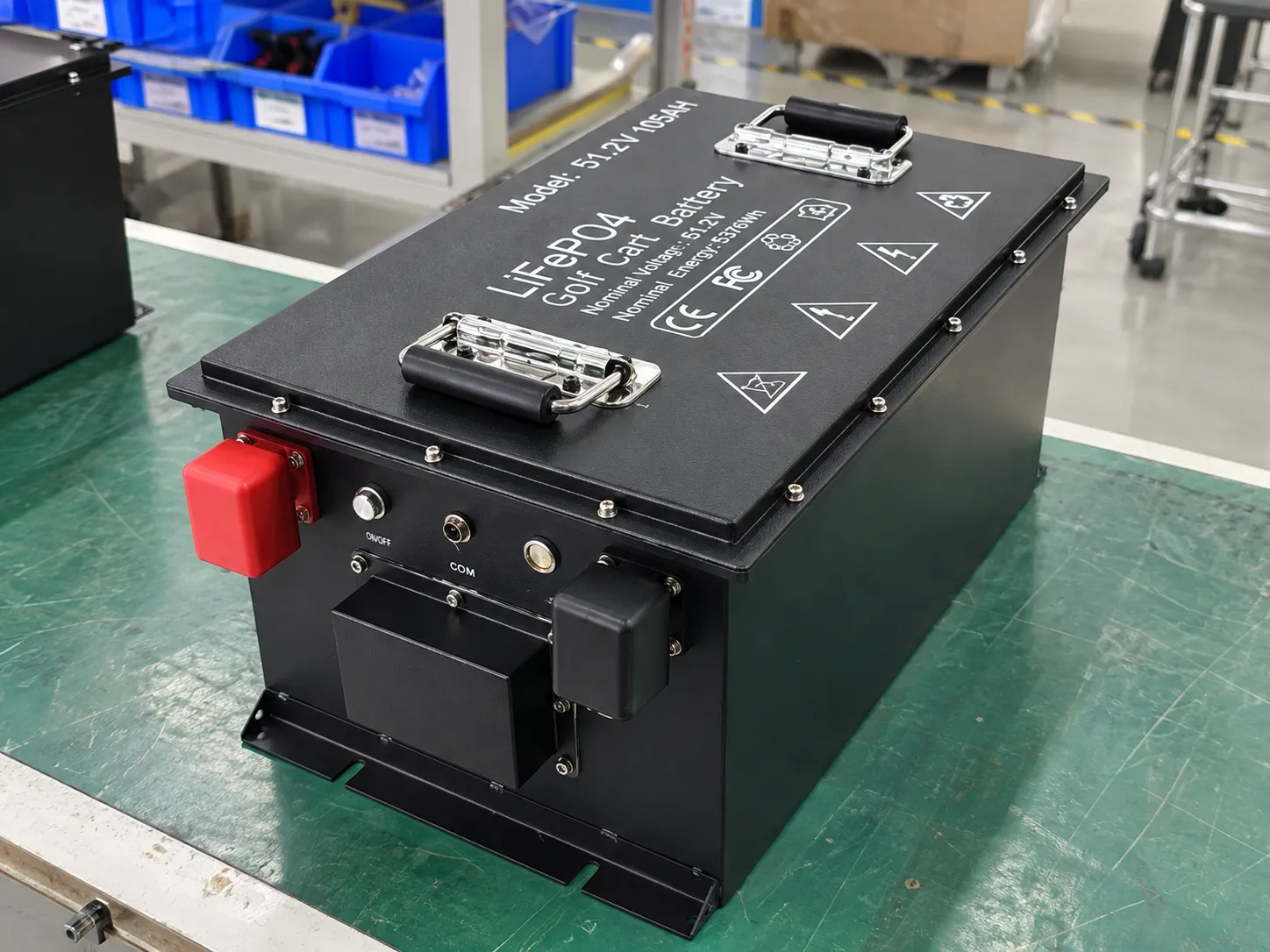
The approved retrofit configuration should be validated against the actual vehicle and electrical requirements before volume production or repeated installation.
The validation scope can include:
Manufacturing and test reference: LiFePO4 Battery Manufacturing & Testing →
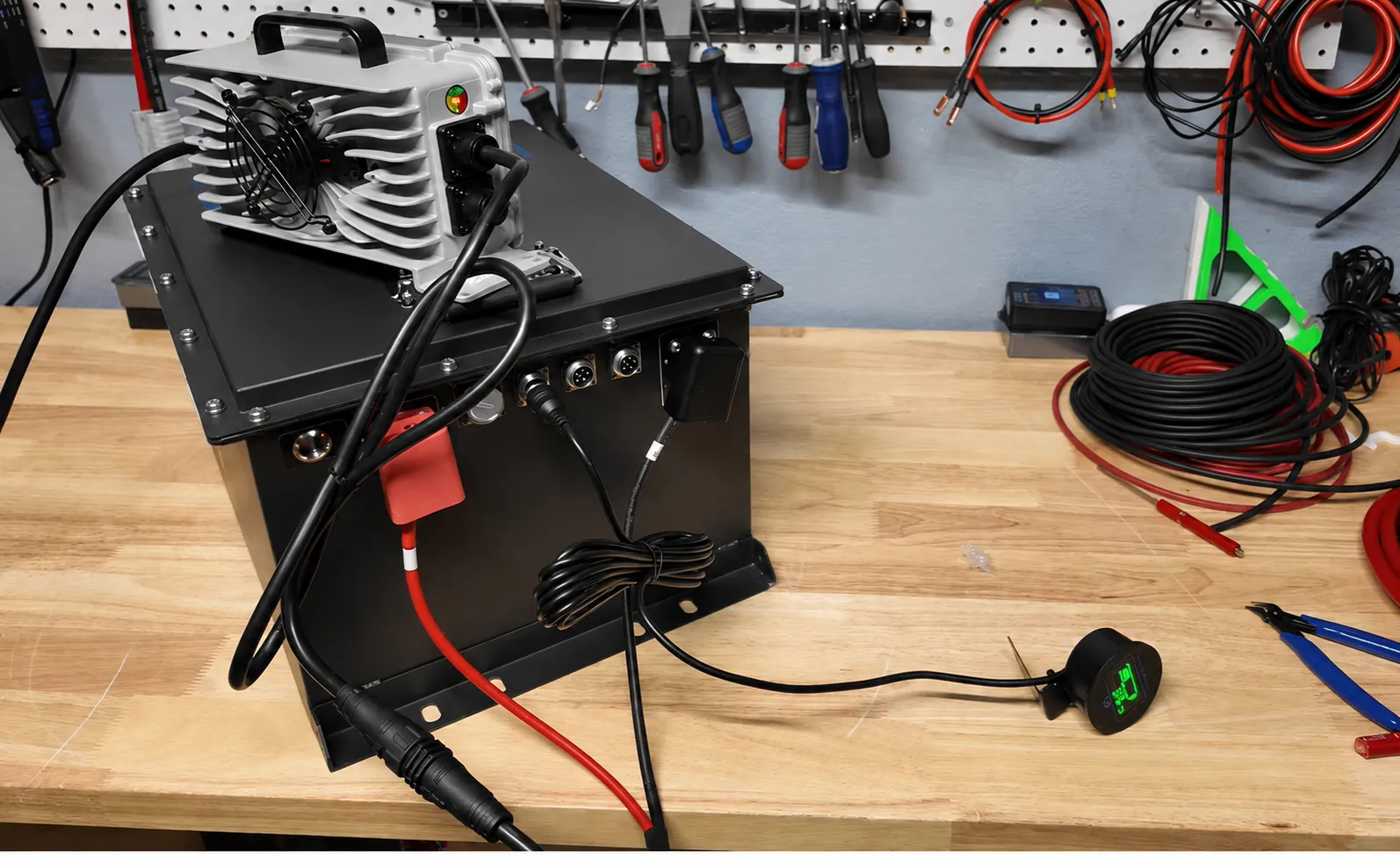
The project established a 48V LiFePO4 retrofit approach built around the older golf cart’s limited battery compartment and vehicle-integration requirements rather than a generic one-size-fits-all enclosure.
The battery enclosure, Smart BMS, controller demand, charger compatibility, cable routing, mounting and protection were treated as one integrated system.
This type of approach is particularly useful for older golf carts, utility vehicles and OEM conversion projects where the original battery space does not match a standard lithium battery case.
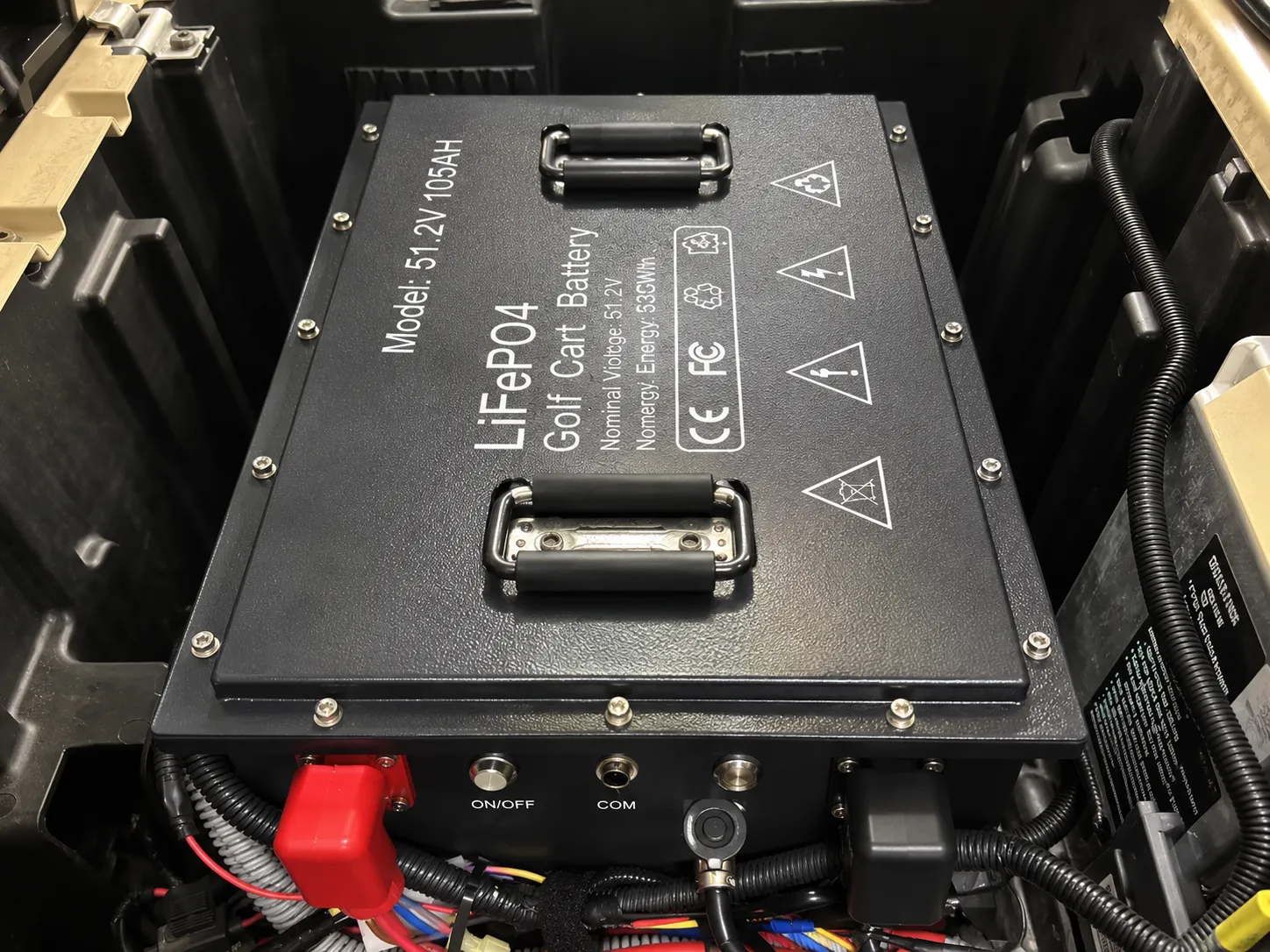
Golf cart battery specifications should be selected around vehicle voltage, controller current, motor load, required driving range, charger and available installation space.
Yes, when the vehicle voltage, controller demand, charger, cables, connectors, battery compartment and protection devices are compatible with the approved LiFePO4 battery configuration.
No. Older golf carts can use different tray dimensions, mounting structures, terminal positions and cable layouts. Fitment should be confirmed before the enclosure is selected.
The BMS must support the controller’s continuous and short-duration battery-current demand. A battery can have enough Ah for runtime but still enter protection if current demand exceeds its approved limits.
Only when its charging voltage, current, control profile and connector arrangement are confirmed as suitable for the selected LiFePO4 battery.
Yes. For qualified retrofit and OEM projects, enclosure dimensions, mounting points, terminals, connectors and cable routing can be developed around the available installation space.
Send us the golf cart model, original battery configuration, vehicle voltage, motor and controller information, battery-compartment dimensions, charger details, required range and estimated order quantity.
Our engineering team can review the vehicle requirements and recommend a suitable LiFePO4 battery configuration for sample development or OEM production.