This Class A motorhome battery project replaced an aging lead-acid house bank with a 12V LiFePO4 battery system. The upgrade increased usable capacity, reduced battery weight and extended off-grid runtime for refrigeration, lighting, water pumps, electronics and inverter-powered equipment.
Three 12V 100Ah LiFePO4 batteries were connected in parallel to create a 12V 300Ah RV house battery bank. Before installation, the battery compartment, inverter, charger, solar controller, cables, fuses and mounting arrangement were checked for compatibility.
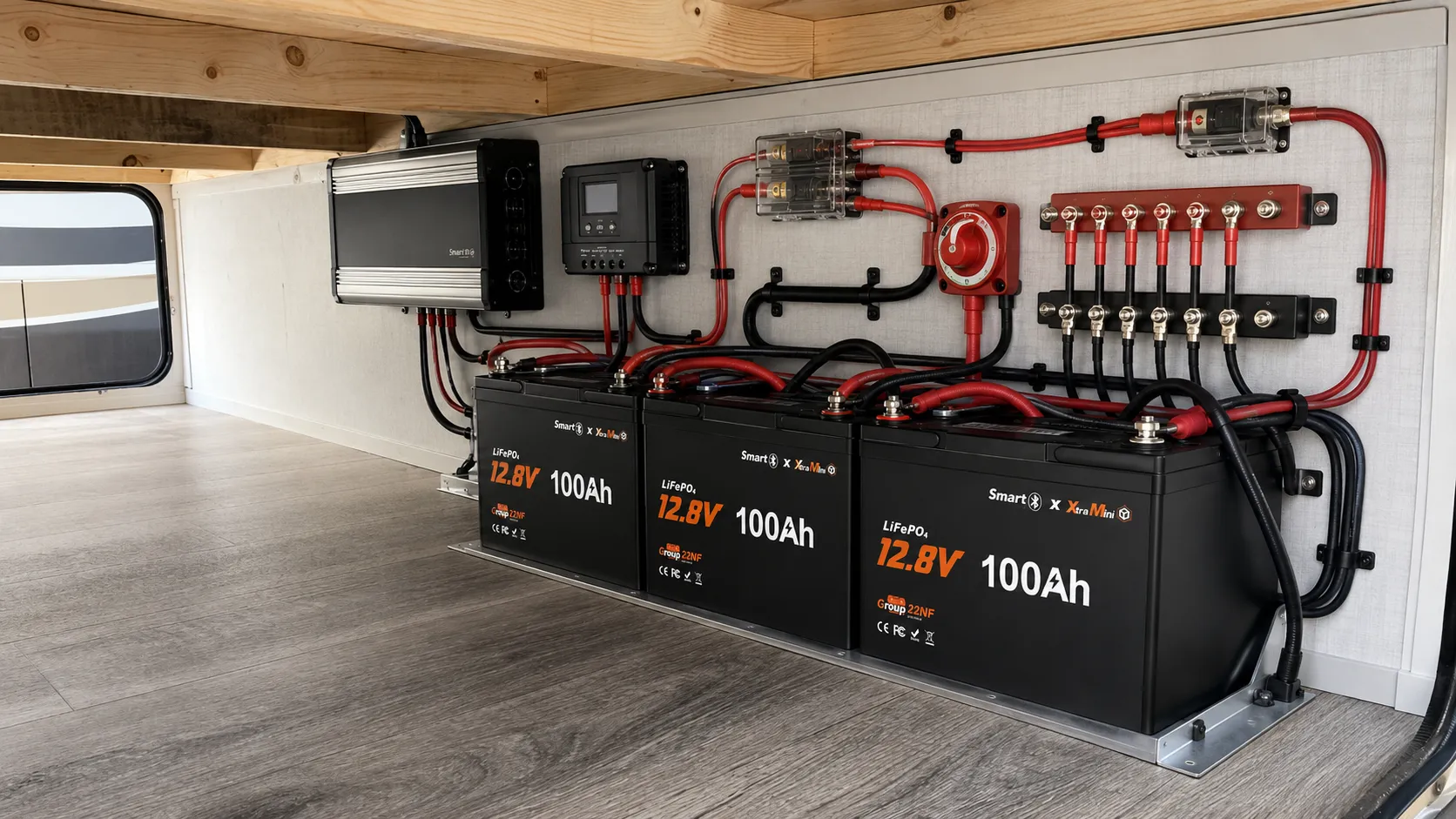
The replacement battery bank needed to fit the existing electrical compartment and support the motorhome’s inverter, refrigeration, lighting, water pumps and other onboard equipment.
The project requirements included:
Three 12V 100Ah LiFePO4 batteries were connected in parallel to provide a nominal capacity of 300Ah while retaining the motorhome’s existing 12V electrical architecture.
A parallel battery bank increases capacity without increasing system voltage. The batteries must be approved for parallel operation and should use the same model, capacity, state of charge and connection arrangement.
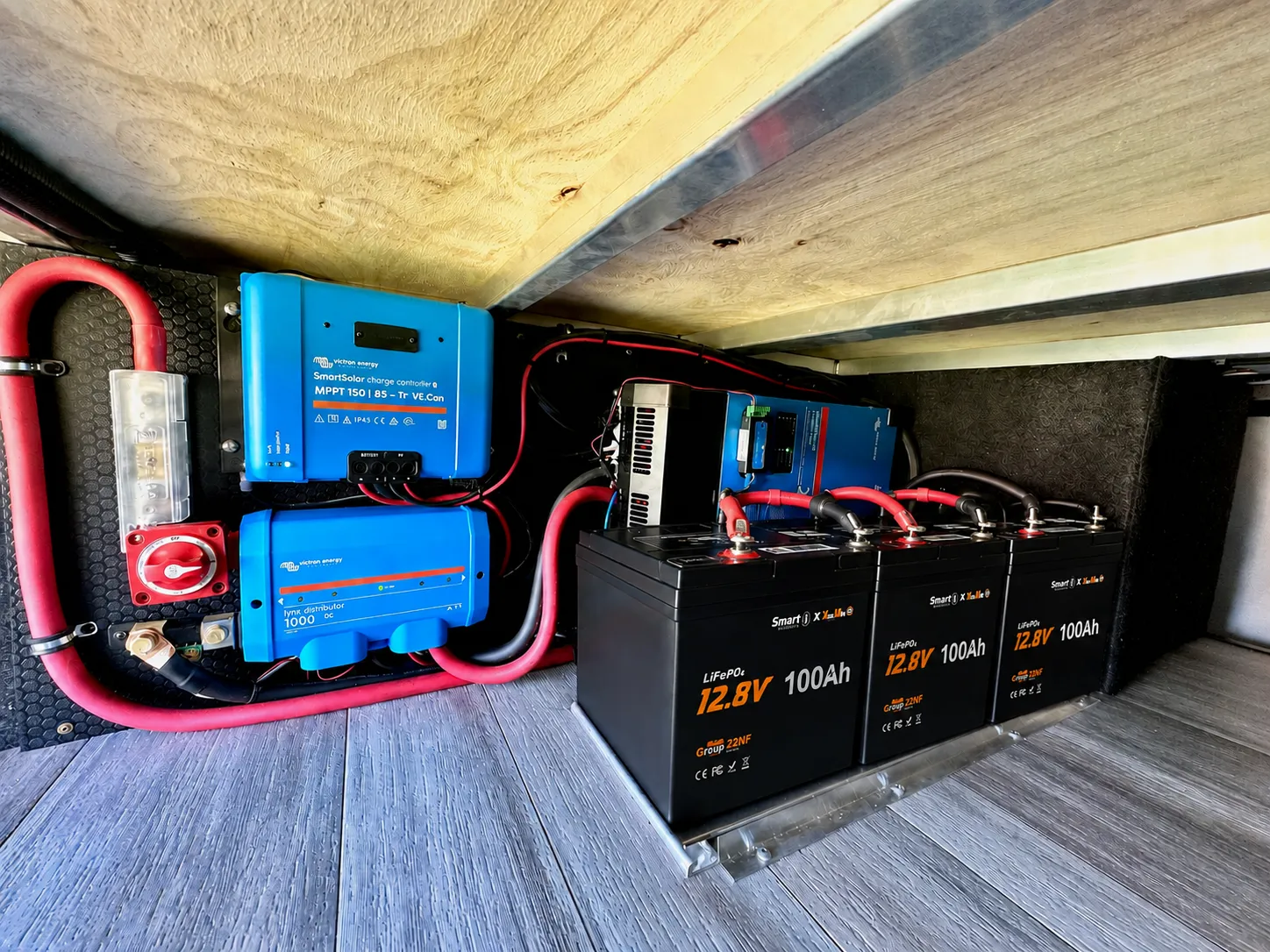
Replacing an RV lead-acid battery bank involves more than matching the system voltage. LiFePO4 batteries use different charging limits and can deliver higher current, so the complete charging and electrical system must be reviewed before installation.
The compatibility review covered:
View RV Lead-Acid to LiFePO4 Conversion →
The 12V 300Ah battery bank was integrated with the inverter, AC charger, solar charge controller, main fuse, battery disconnect switch and positive and negative busbars.
The electrical integration included:
An existing charger, inverter or solar controller should only be retained when its voltage, charging profile and current limits are suitable for the approved LiFePO4 battery configuration.
The batteries and electrical components were secured to limit movement during travel. Cable routes were supported and protected from sharp edges, excessive heat and accidental contact.
The completed installation included:
After installation, the RV lithium battery bank and connected equipment were checked under charging and discharging conditions. The system was tested before the motorhome was returned to service.
Testing and commissioning included:
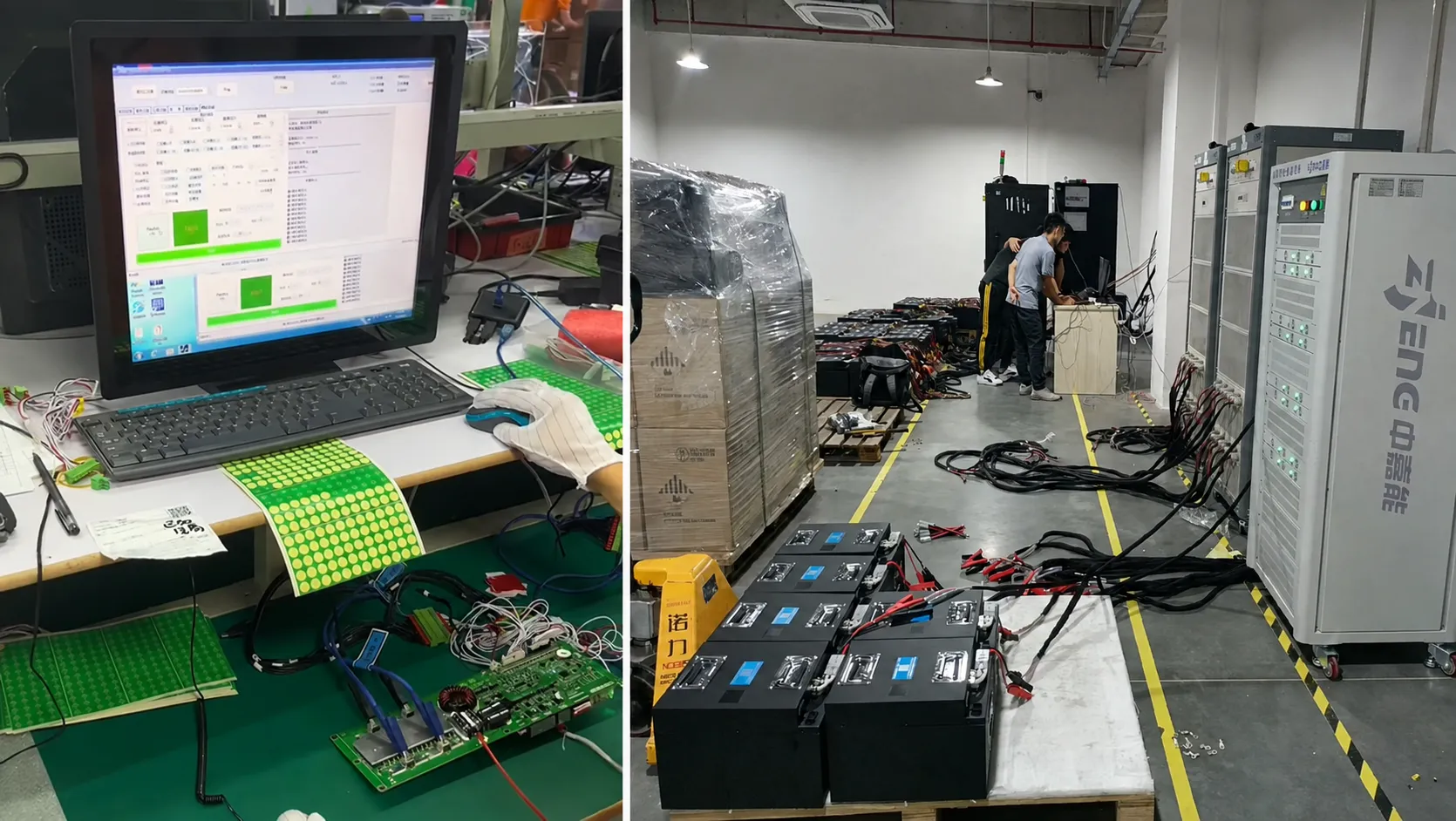
The completed 12V 300Ah LiFePO4 battery bank provides more usable energy for refrigeration, lighting, electronics, water pumps and inverter-powered appliances.
The conversion retained the motorhome’s existing 12V architecture while providing longer off-grid runtime, lower battery weight and easier battery monitoring than the previous lead-acid house bank.
With more than 20 years of battery manufacturing experience, we support motorhome manufacturers, camper builders, distributors and system integrators with custom RV LiFePO4 battery development and production.
OEM and private-label options include:
View OEM & ODM Battery Services →
Three 12V 100Ah batteries connected in parallel provide a nominal 12V 300Ah battery bank. Actual usable energy depends on the battery limits, Smart BMS settings and required reserve.
Not always. The charger, solar controller, alternator charging circuit, inverter, cables, fuses and installation space should be checked before conversion.
They may be retained if their voltage, charging profile, current limits and operating settings are suitable for the new LiFePO4 battery bank.
Selected battery models support parallel connection. The manufacturer’s connection limits, cable arrangement and commissioning instructions must be followed.
Runtime depends on usable battery energy, connected loads, inverter efficiency and the required reserve. A load calculation should be completed before the battery configuration is finalized.
Please provide the system voltage, required capacity, continuous and peak current, battery compartment dimensions, inverter power, charging equipment and estimated order quantity.
Send us the required voltage, capacity, continuous and peak current, installation dimensions, inverter and charger information, communication requirements and estimated order quantity.
Our engineering team will review the requirements and recommend a suitable RV LiFePO4 battery configuration for sample development or volume production.