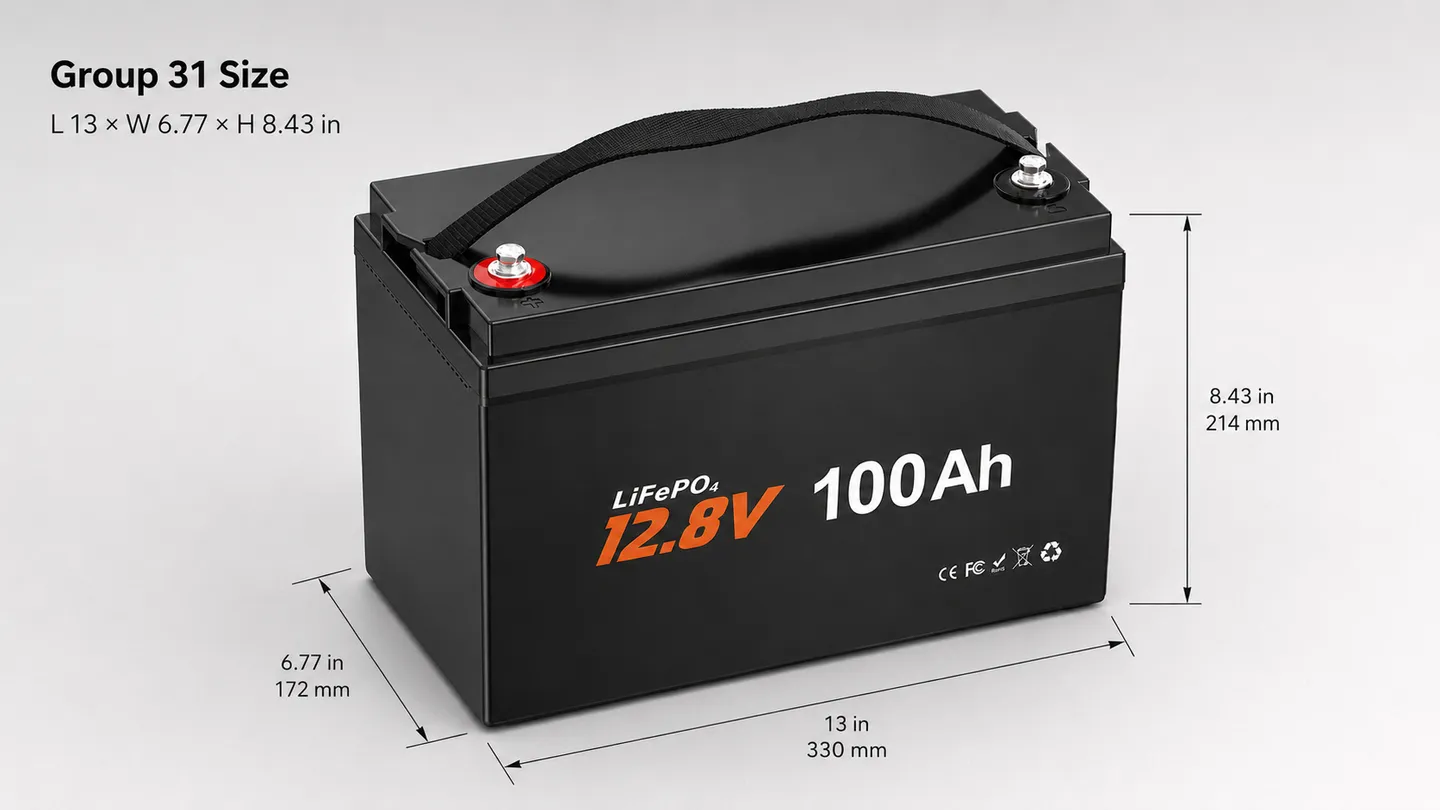
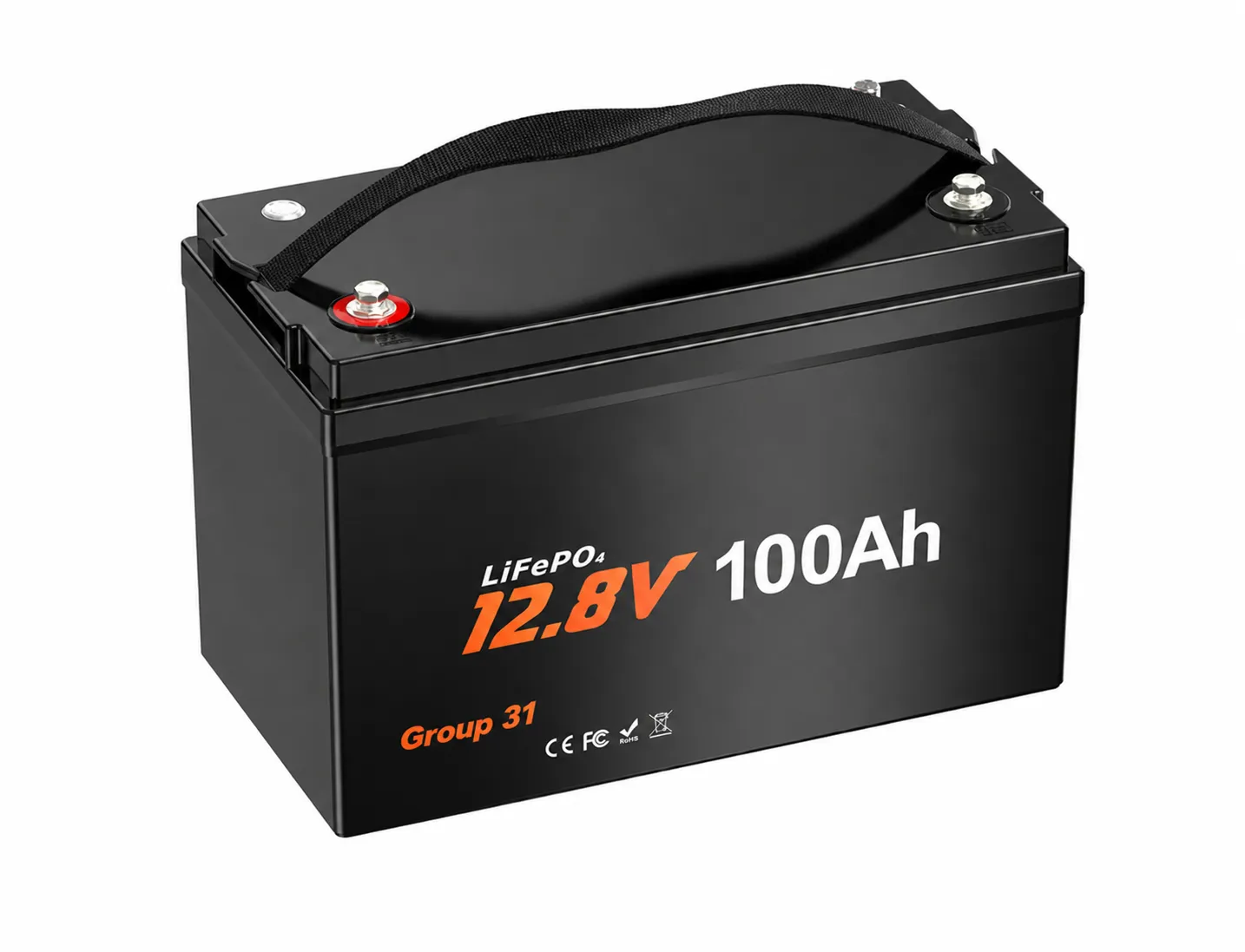
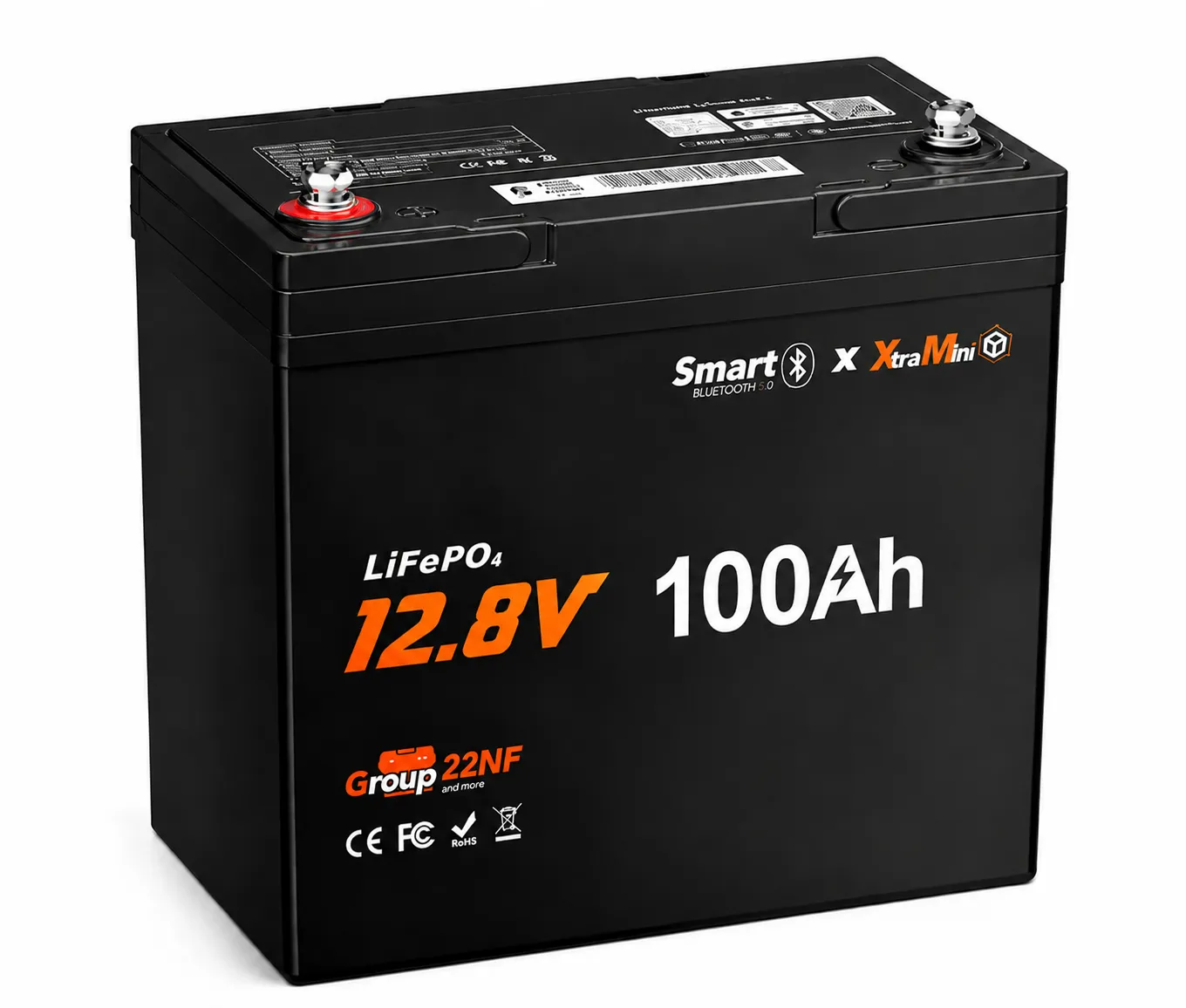
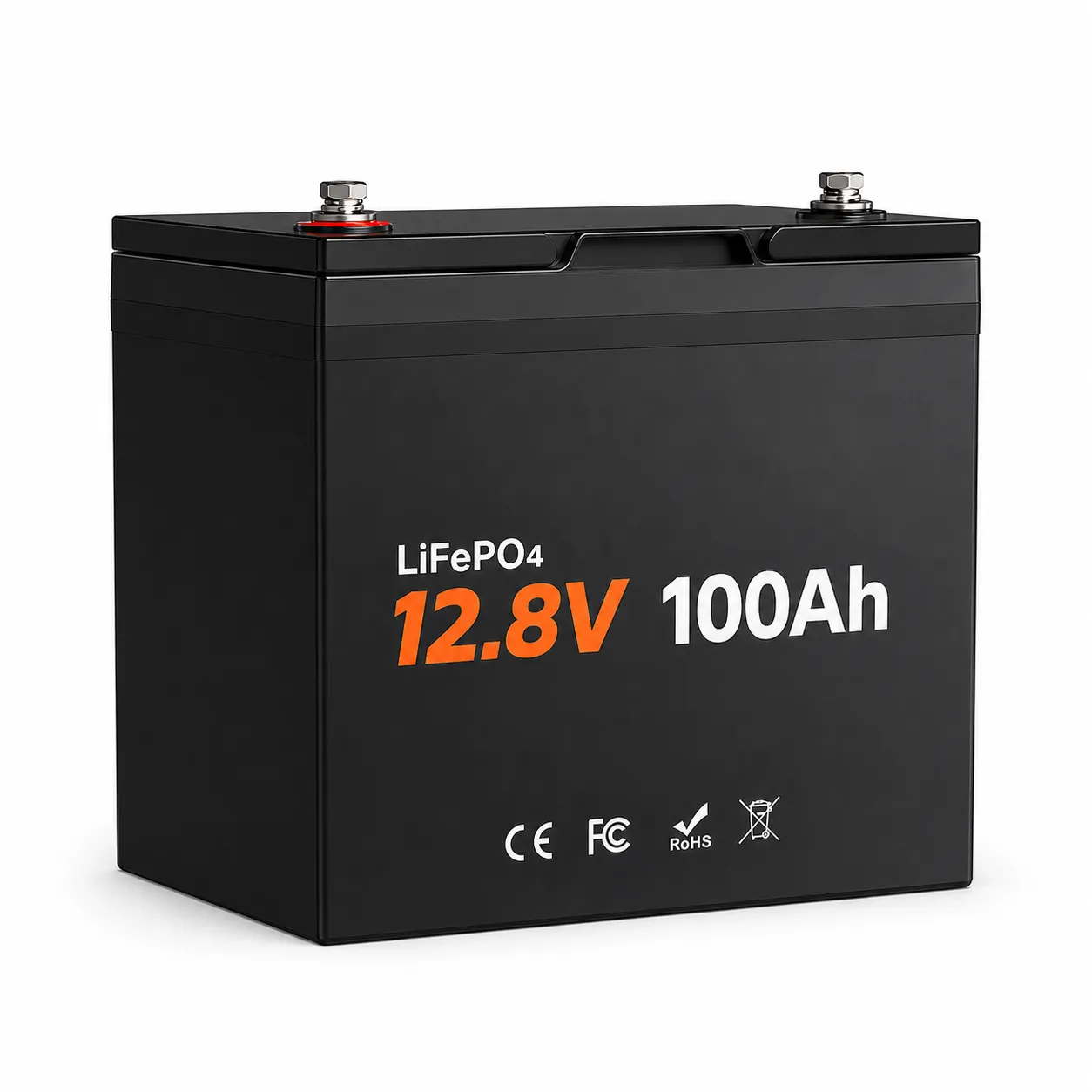
12V 100Ah Group 31 LiFePO4 Battery for Trolling Motors
$169.00
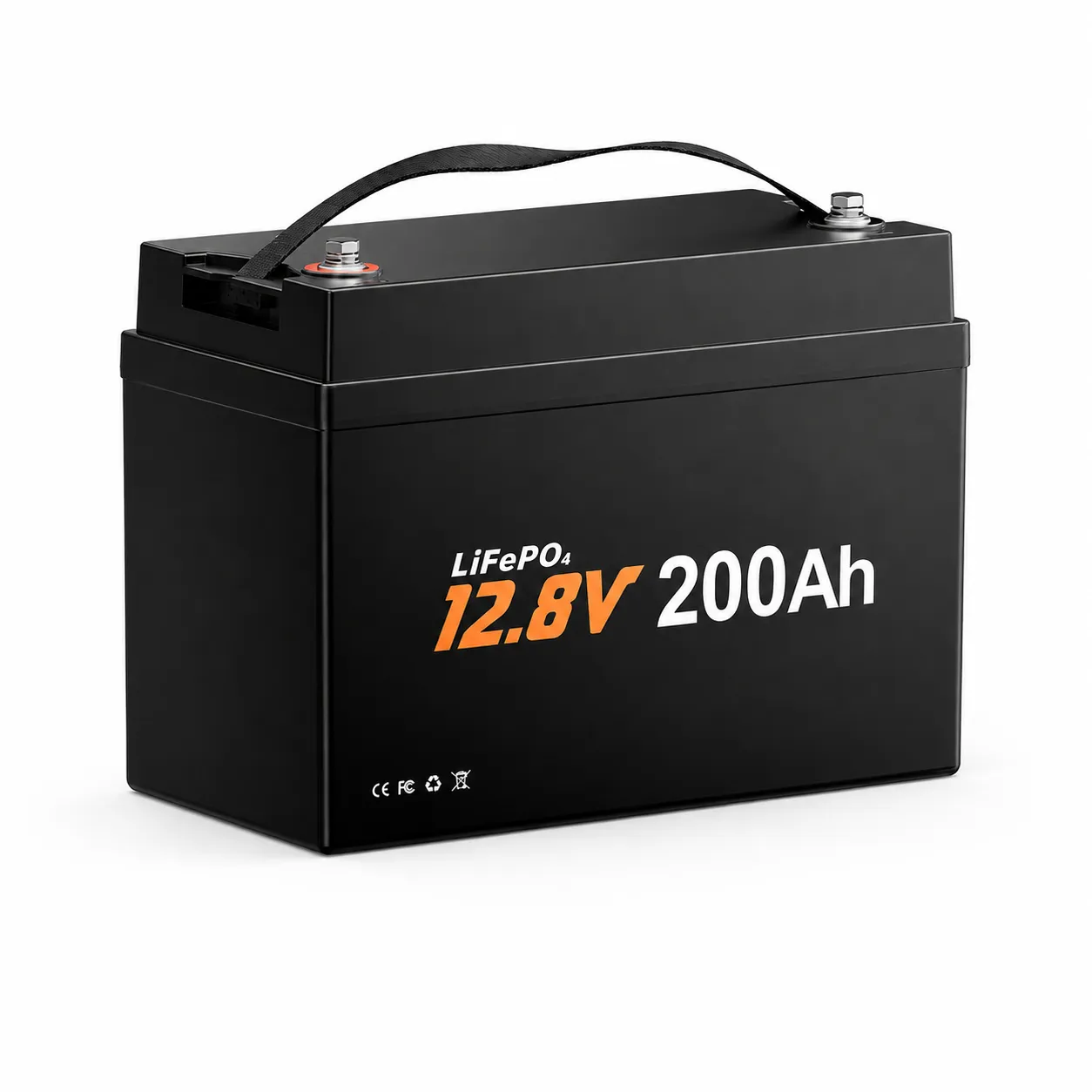
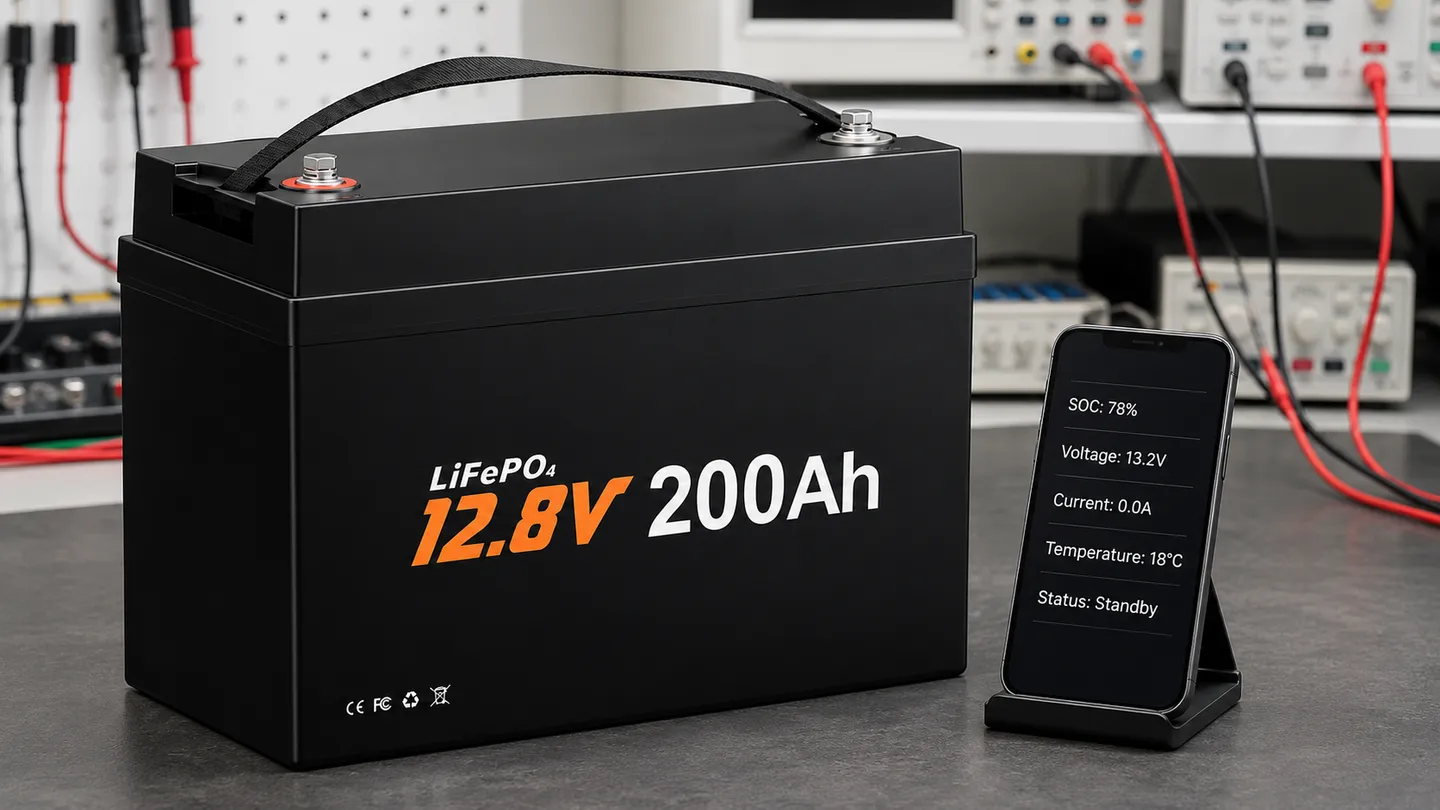
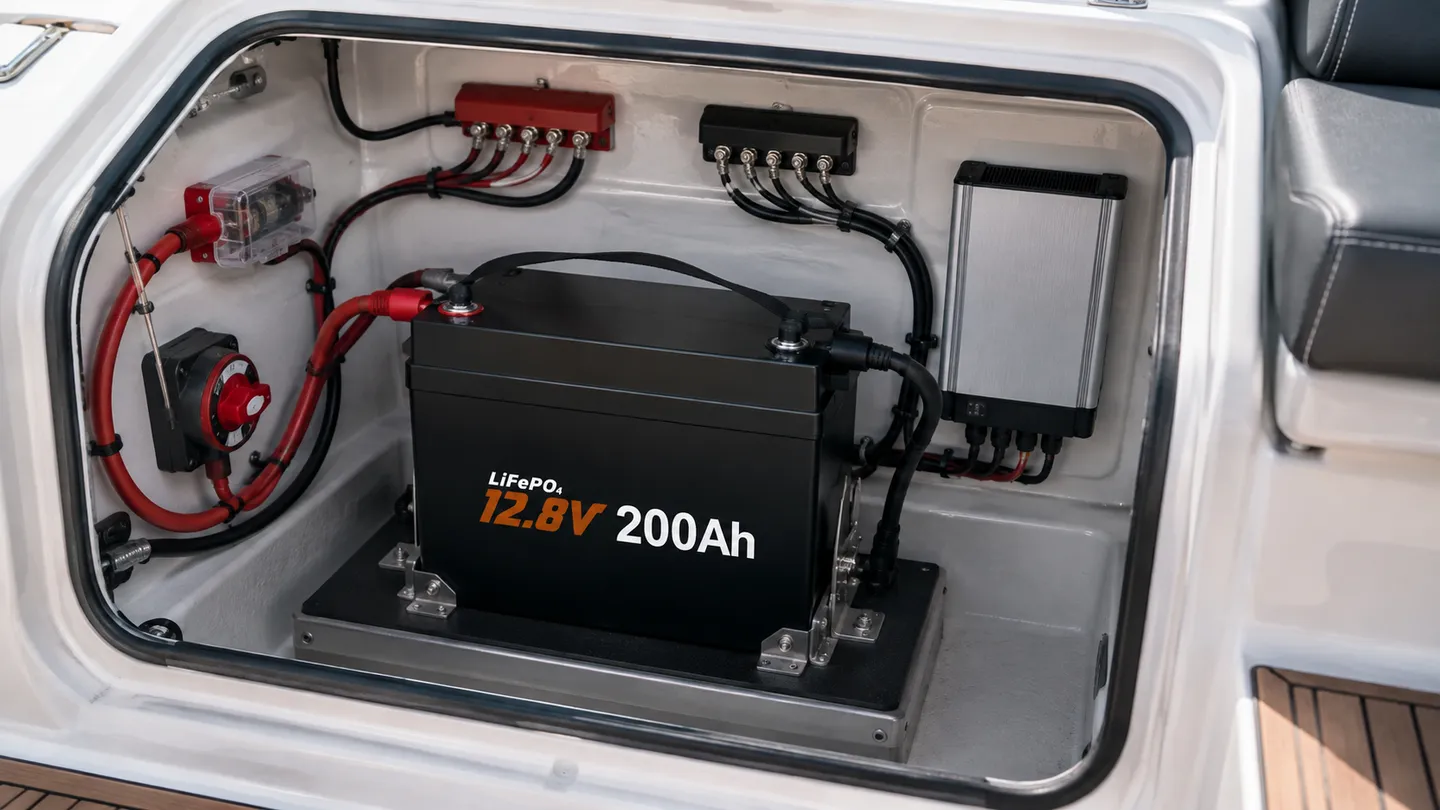
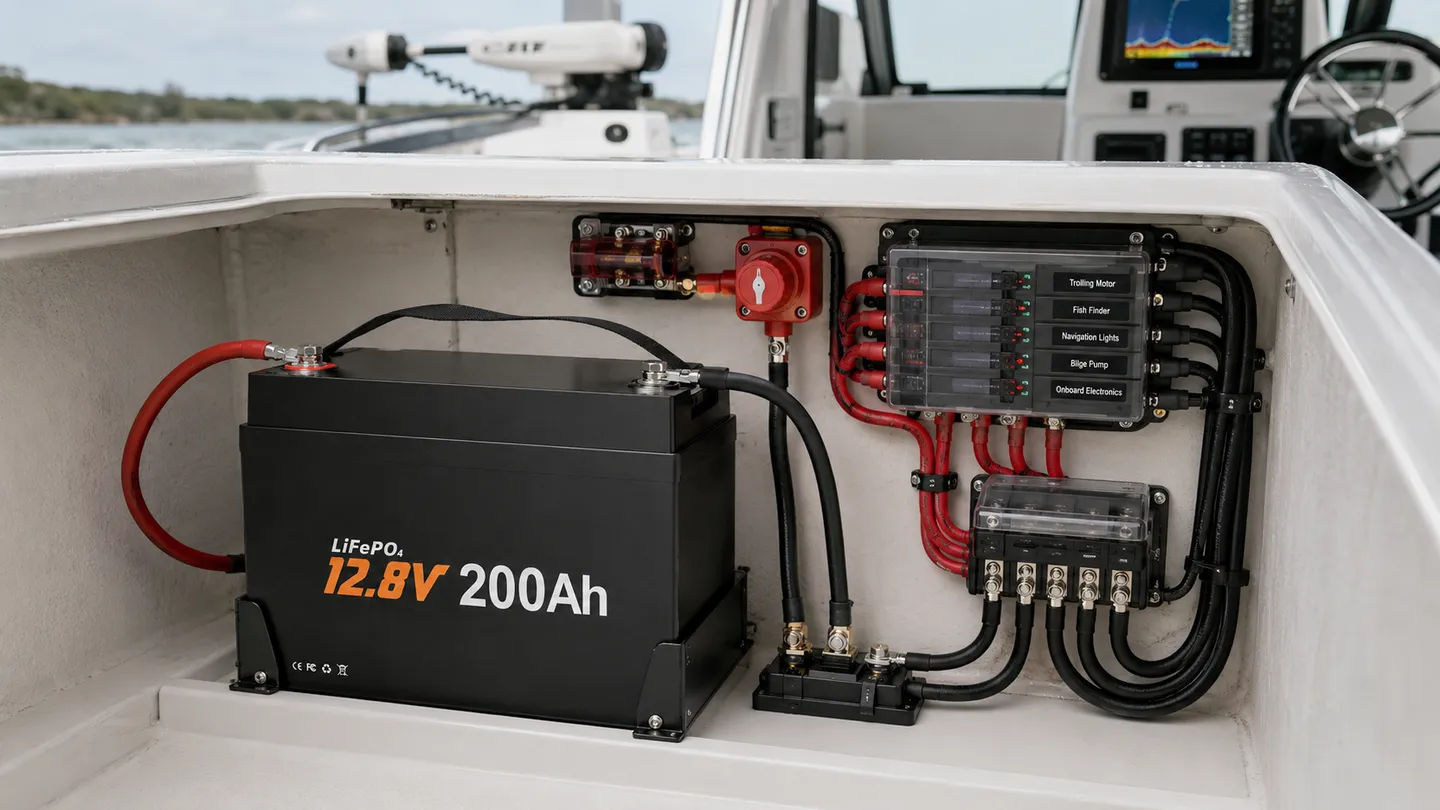
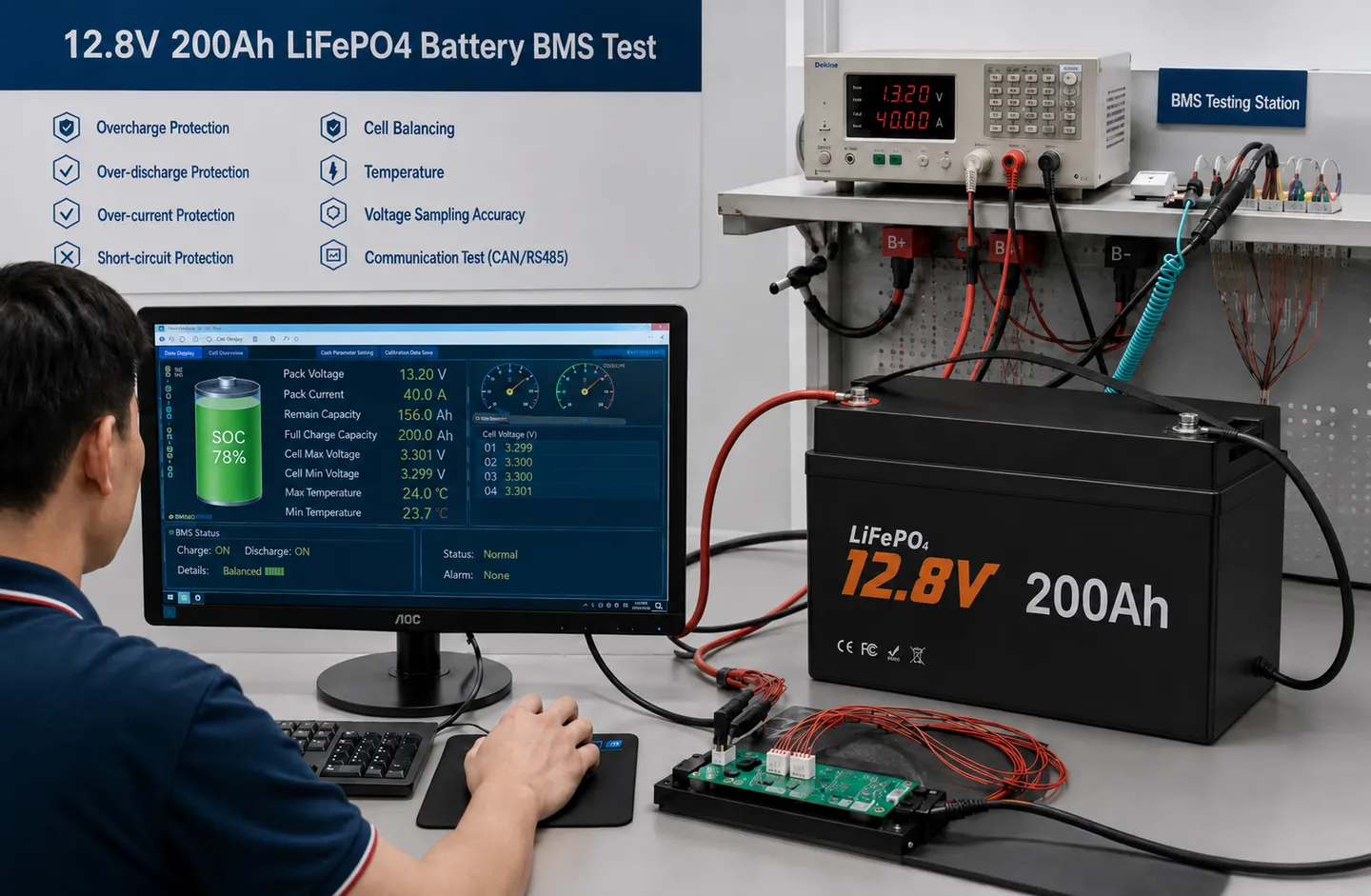
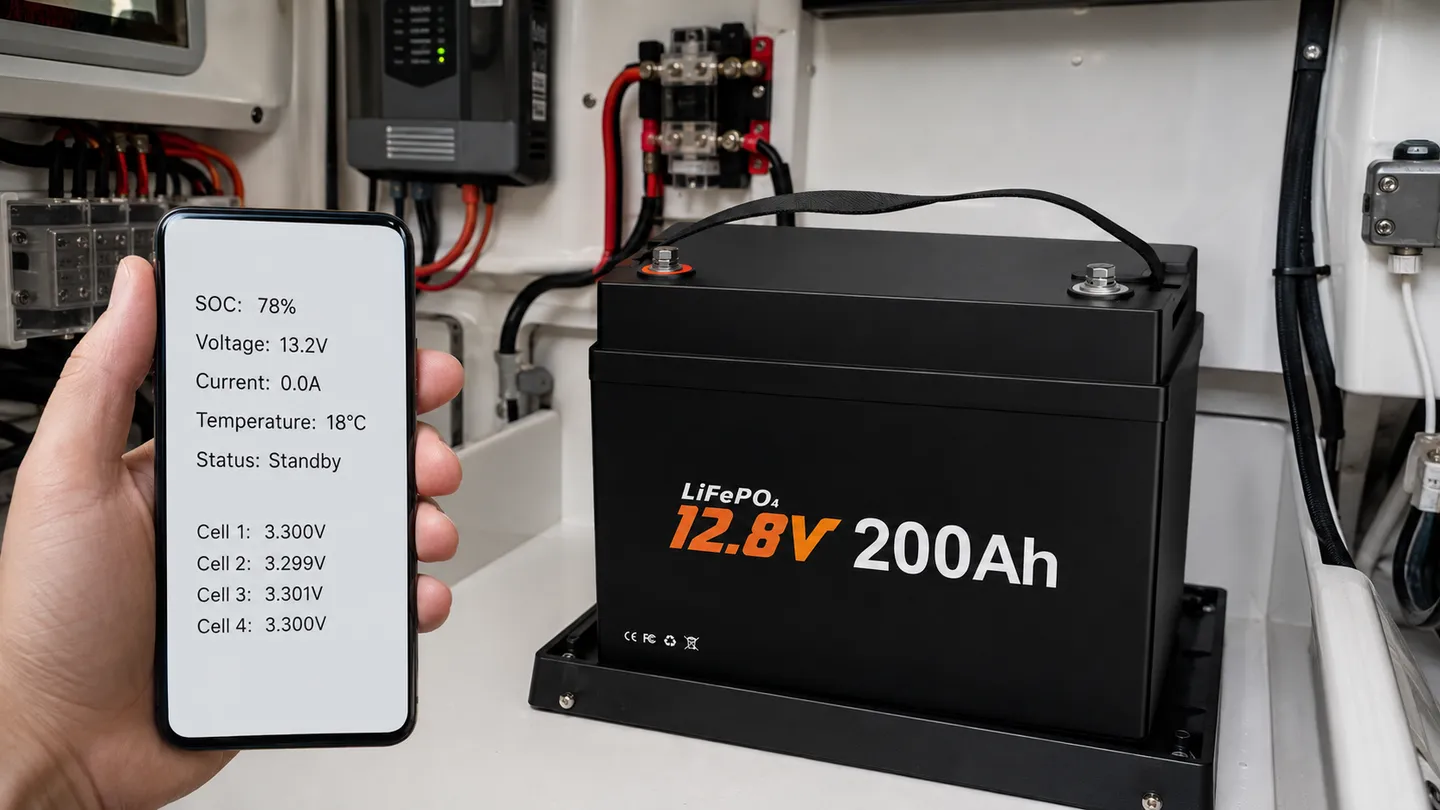
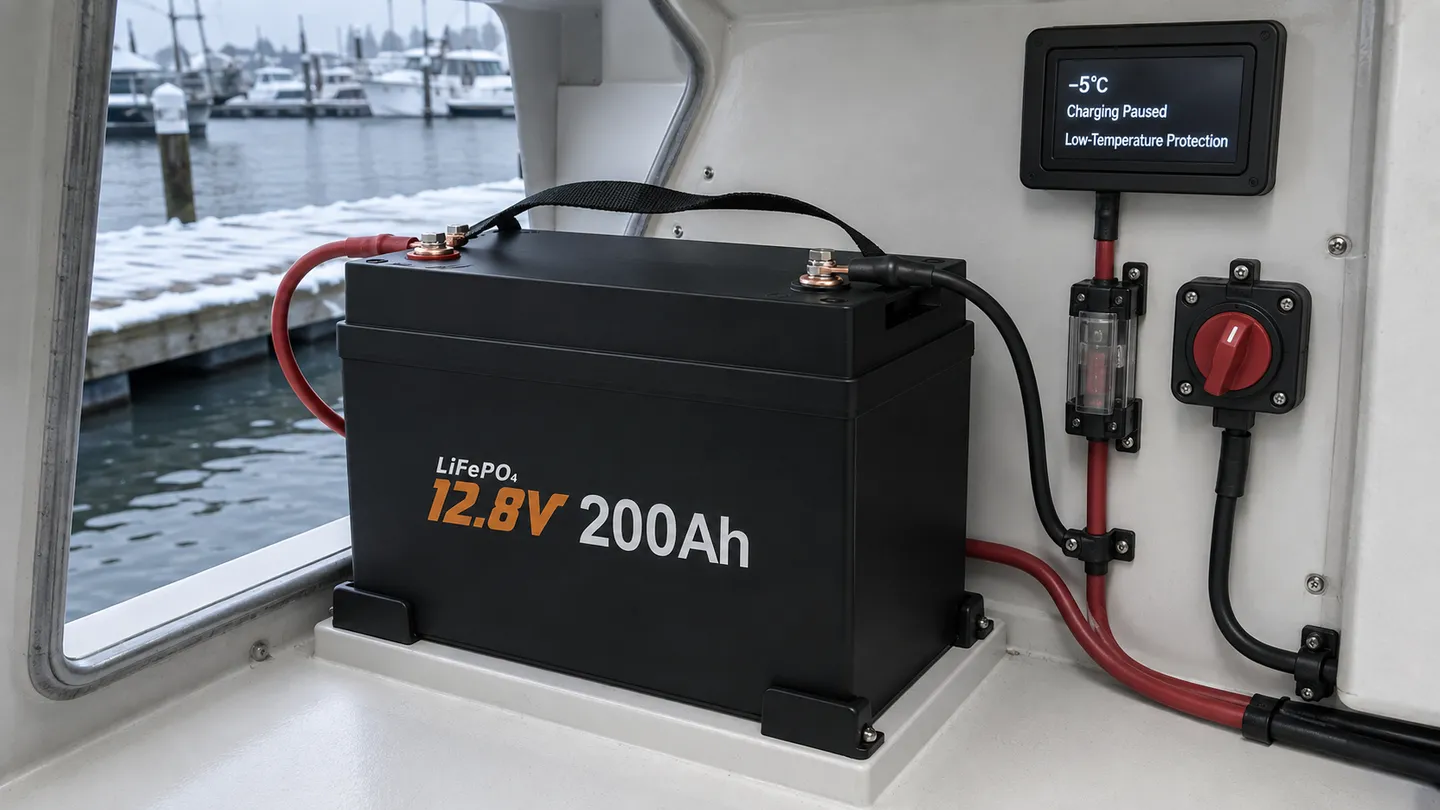
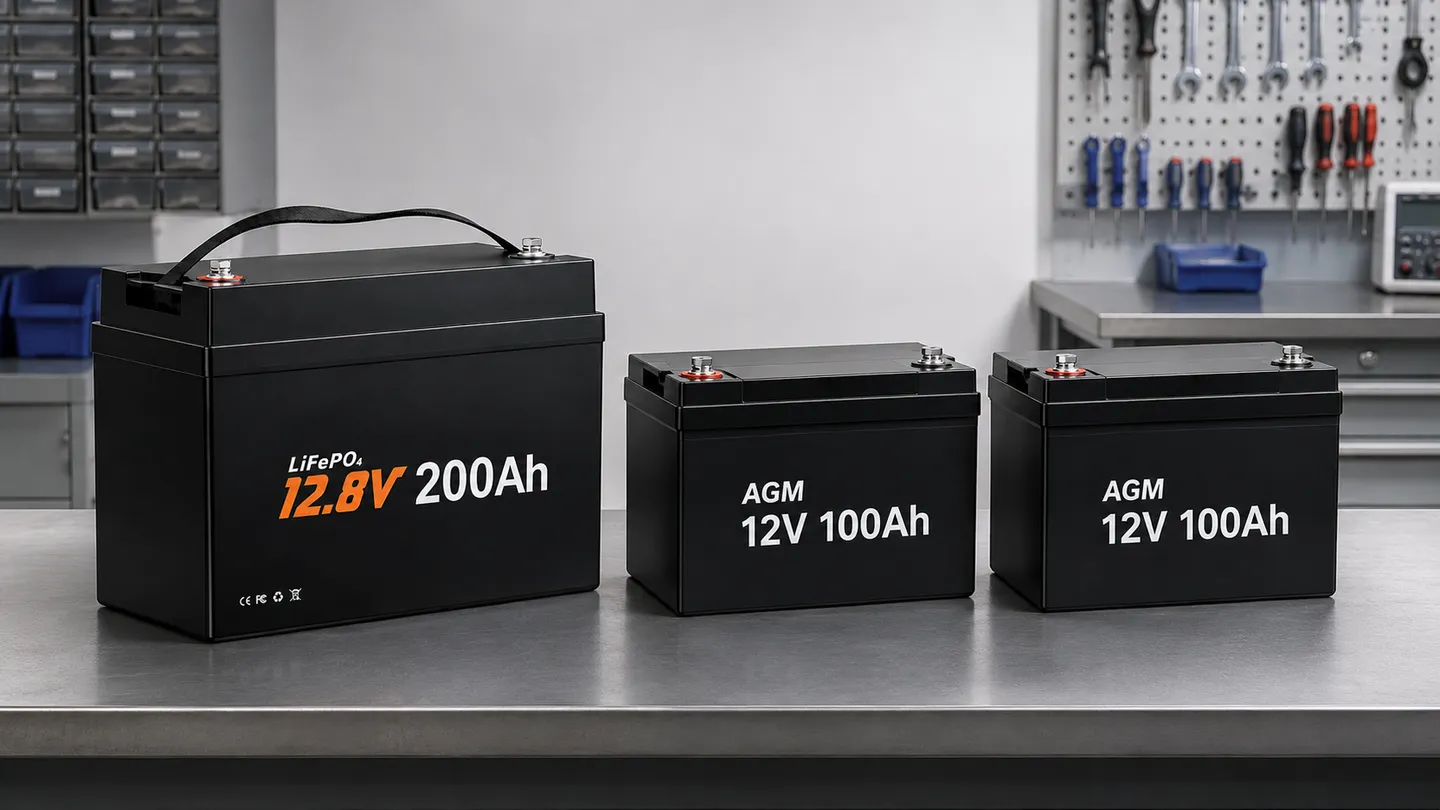
This 12V 200Ah LiFePO4 marine battery stores 2,560Wh of nominal energy in a compact enclosure designed for space-conscious boat installations. A 200A Smart BMS supports demanding deep-cycle loads, while Bluetooth monitoring gives boat owners and installers convenient access to available battery operating data through a compatible mobile app.
The battery is designed for marine house-power systems, fishing electronics, pumps, navigation equipment, onboard DC loads and compatible 12V trolling motors. This model is a deep-cycle battery and is not designed for engine starting.
12.8V | 200Ah | 2,560Wh | Group 31-Style Footprint | 200A Smart BMS | Bluetooth | Low-Temperature Protection
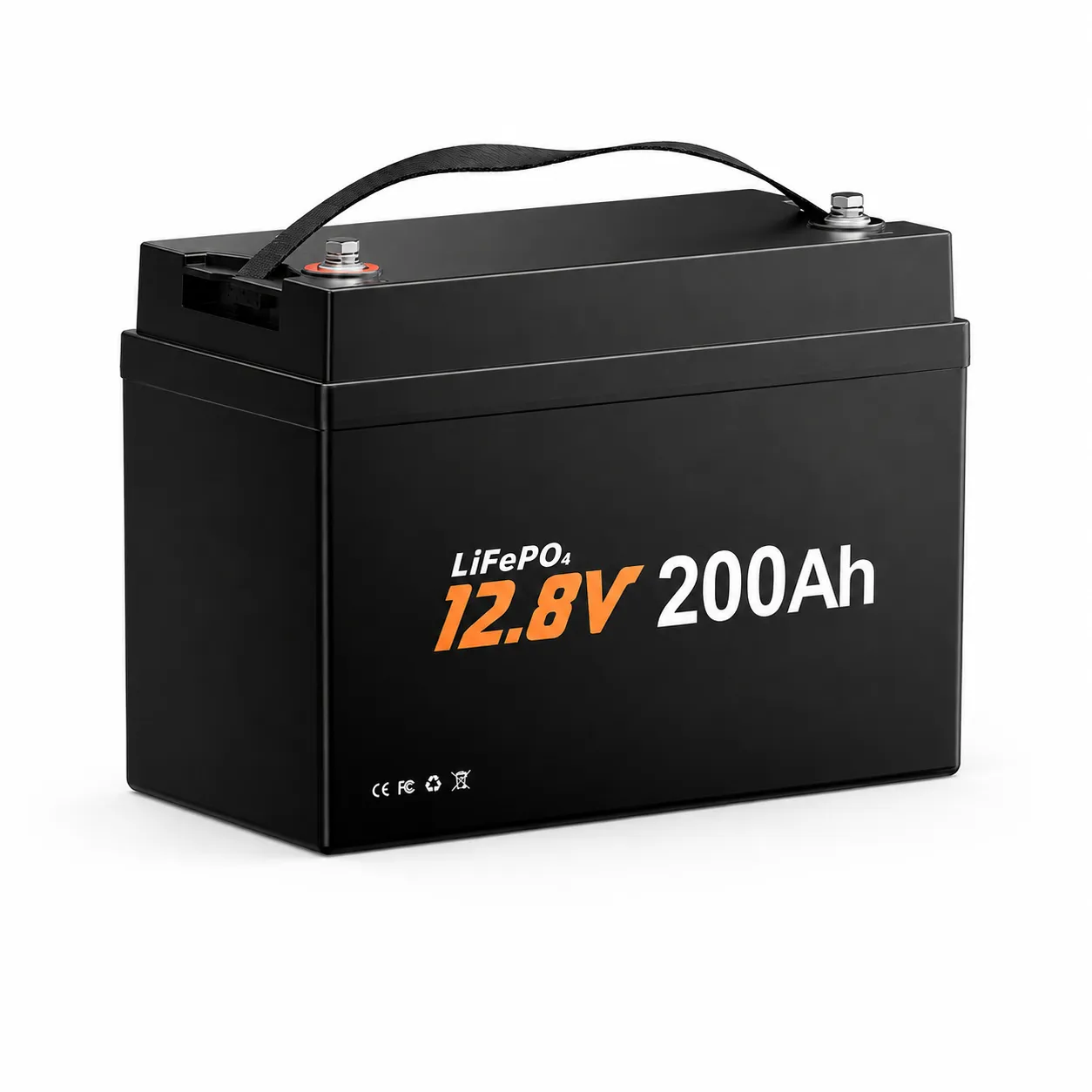
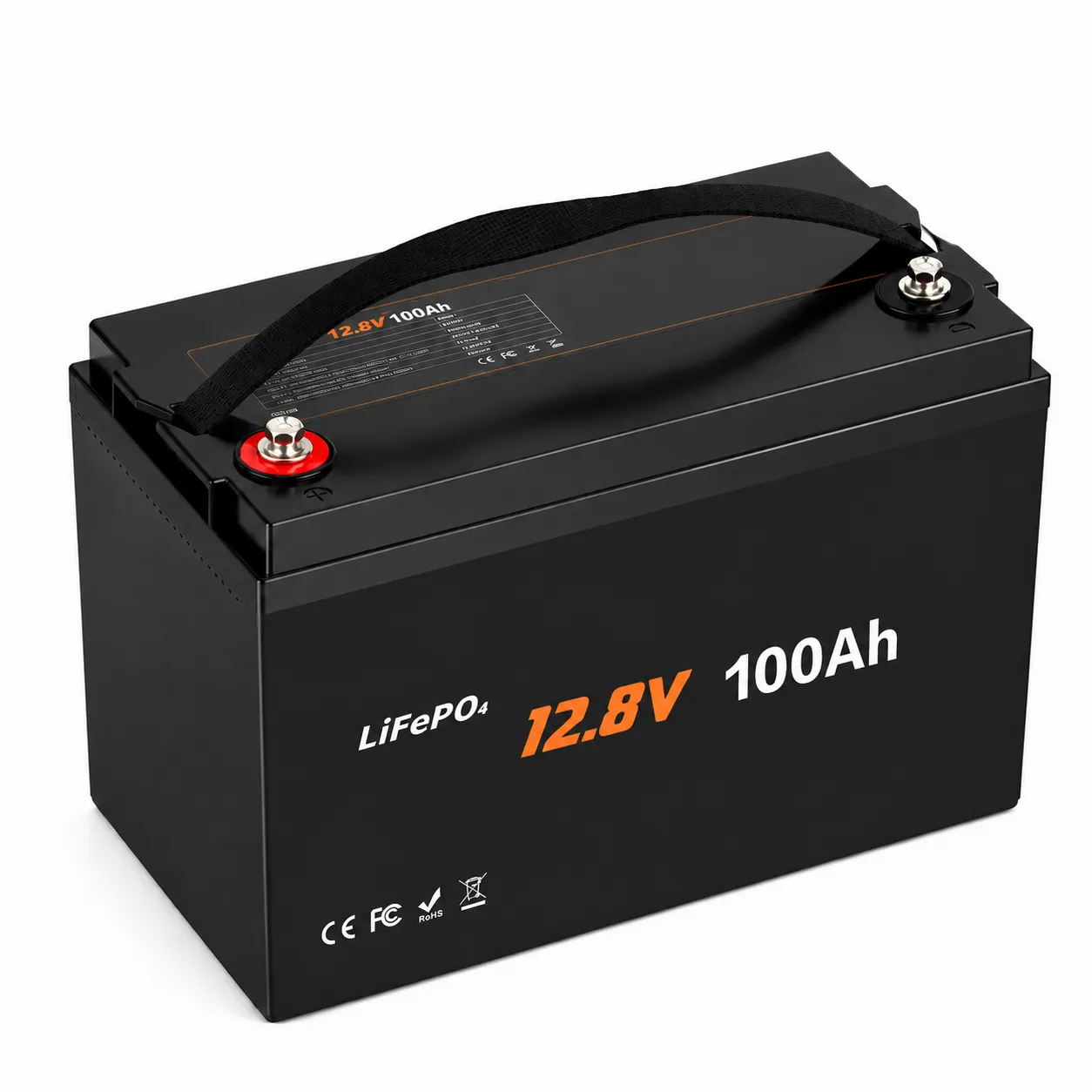
Battery compartments on fishing boats, sailboats and compact motor yachts often leave limited room for electrical upgrades. This 12V 200Ah lithium marine battery provides 2,560Wh of nominal energy while using a compact enclosure suitable for many Group 31-style installation spaces.
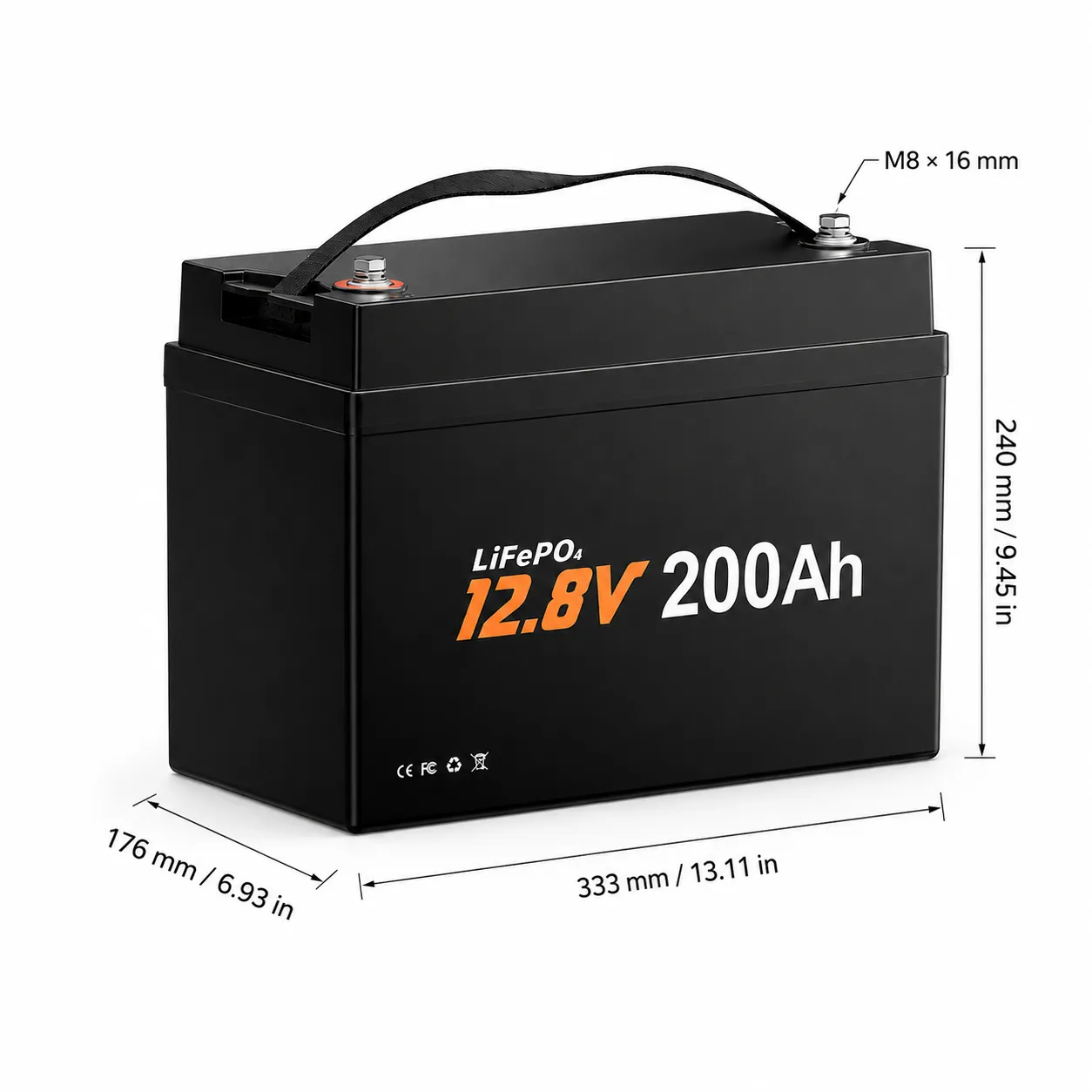
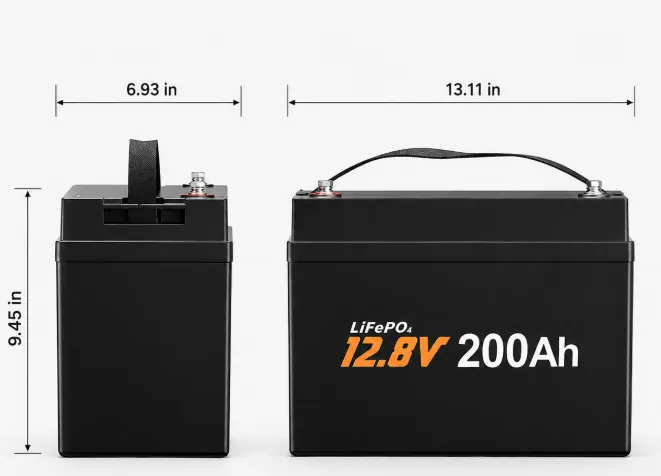
Group-size terminology alone does not guarantee physical fit. Before replacing an existing battery, measure the tray, lid clearance, terminal clearance and cable reach, then compare those measurements with the current production drawing.
The 200A continuous-discharge capability supports high-current 12V applications when the trolling motor, inverter, cables, fuse, disconnect and distribution equipment are correctly selected.
Trolling-motor compatibility depends on operating voltage and maximum current, not only the advertised thrust rating. Confirm the trolling-motor manufacturer's electrical requirements before installation.
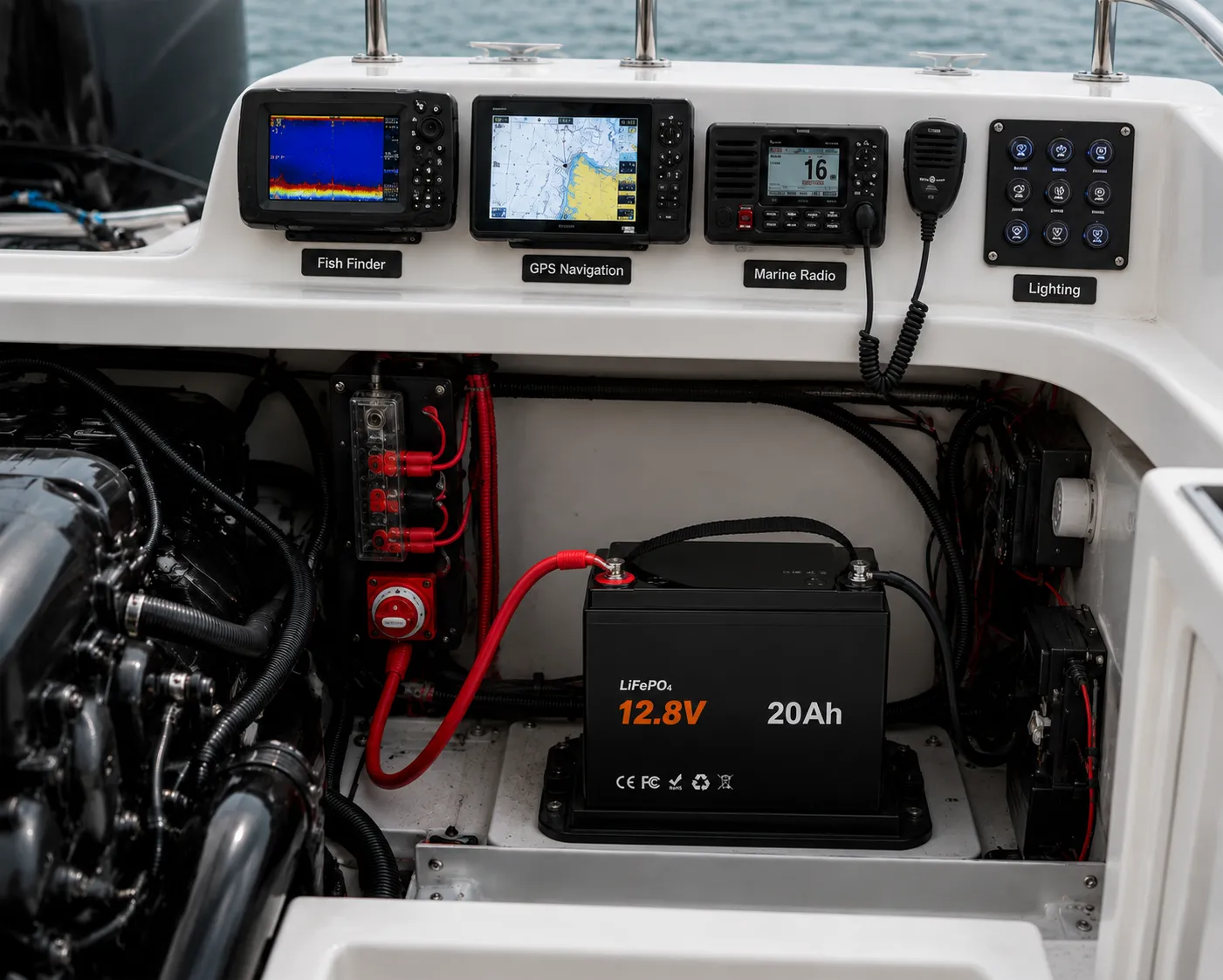
Typical loads can include compatible 12V trolling motors, fish finders, navigation electronics, lighting, bilge pumps, communication equipment and other onboard DC loads.
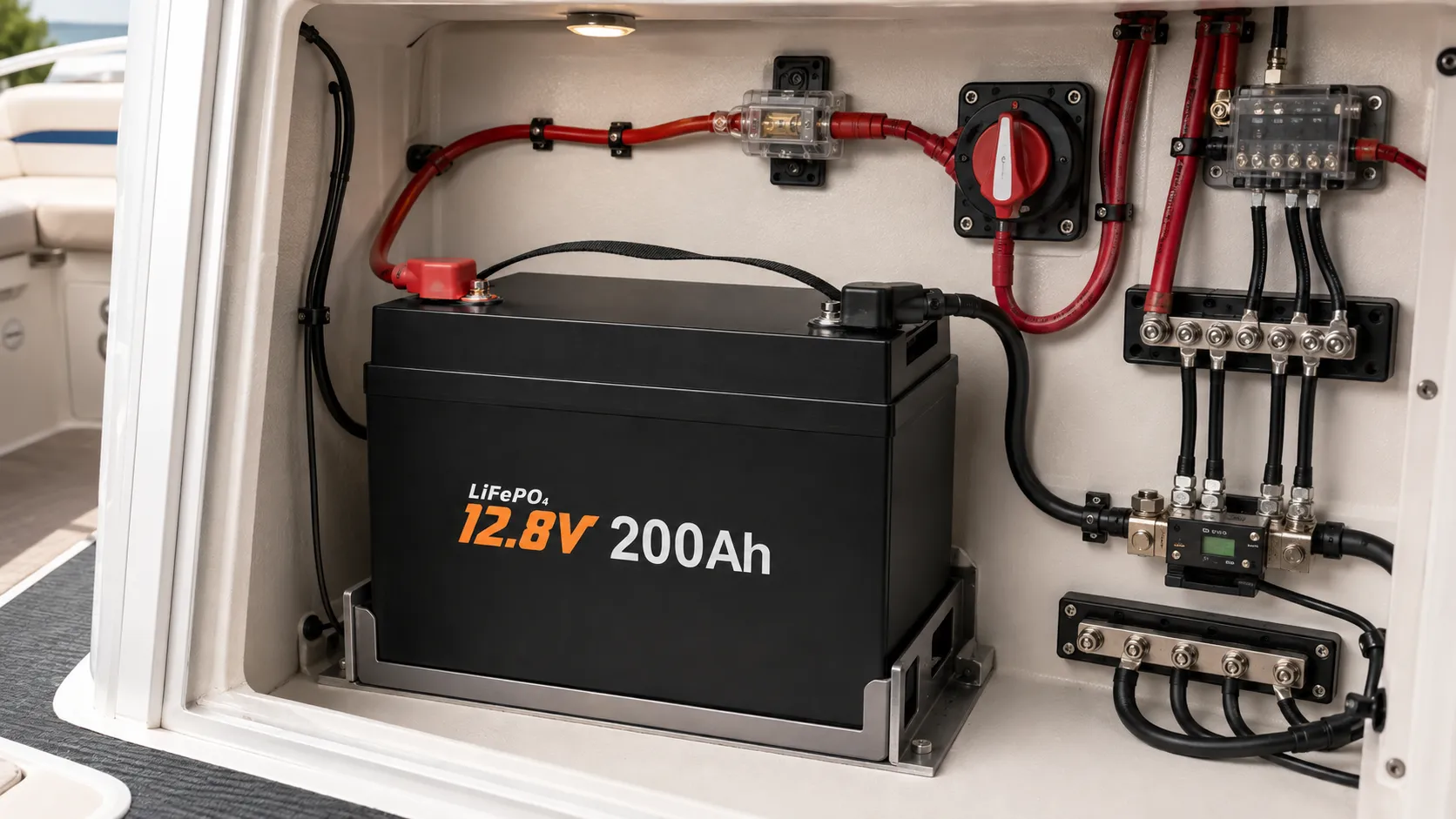
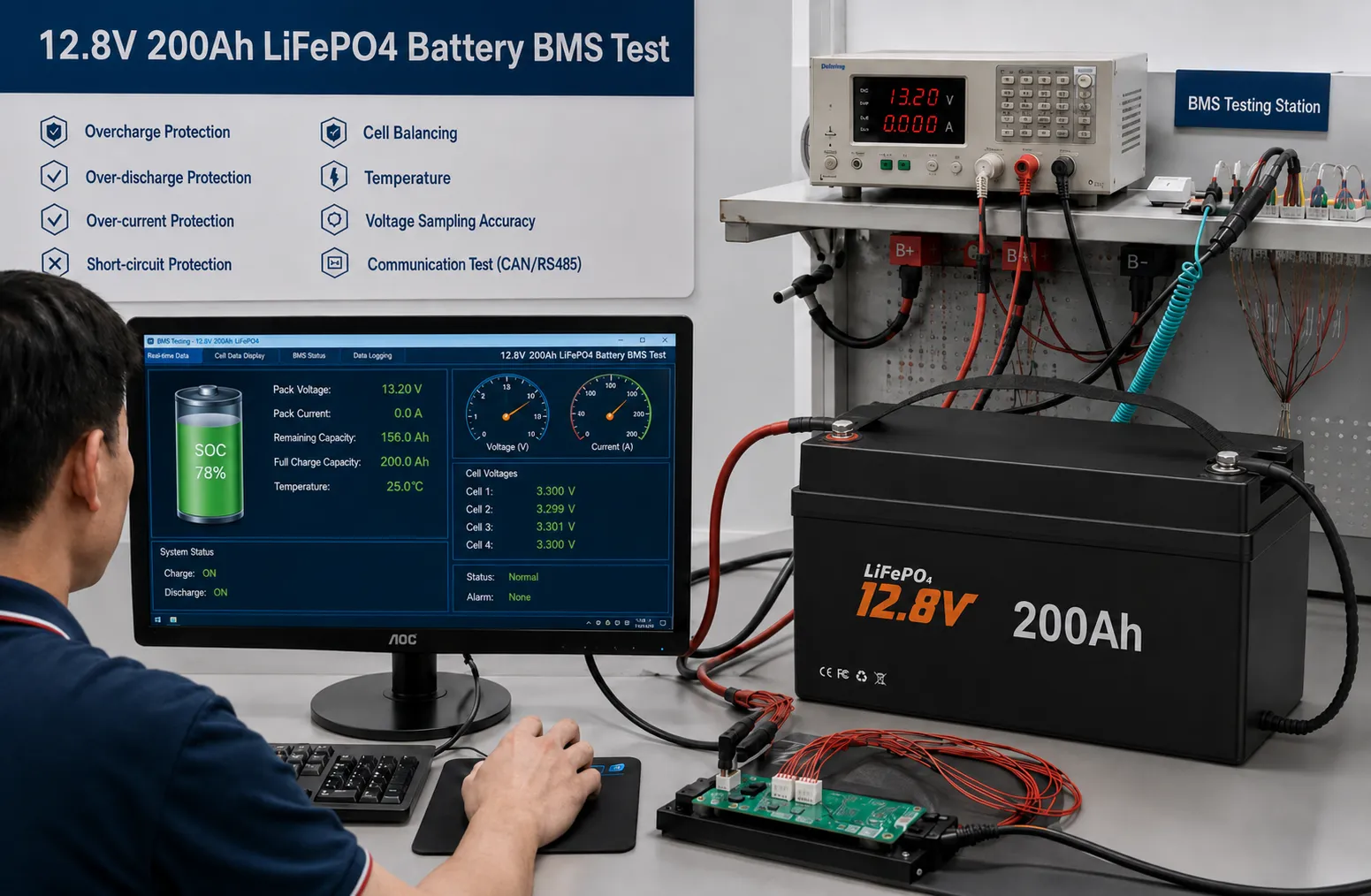
The integrated 200A Smart BMS manages battery charging and discharging while providing protection against abnormal voltage, current, short-circuit and temperature conditions.
At the nominal battery voltage of 12.8V, a 200A continuous-discharge rating corresponds to approximately 2,560W of nominal continuous battery output.
The internal BMS does not replace correctly sized external fuses, circuit breakers, battery disconnects, cables or distribution equipment.
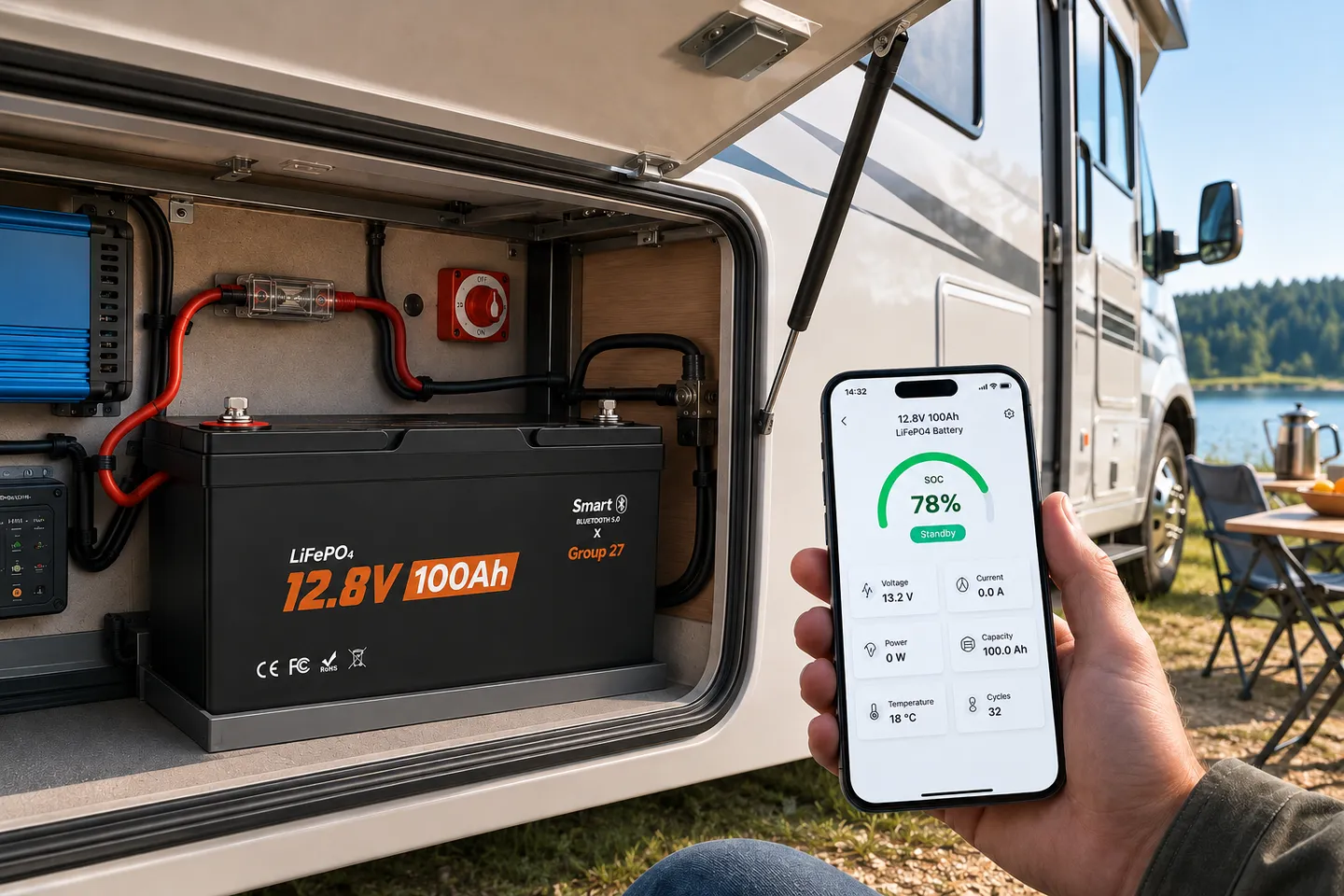
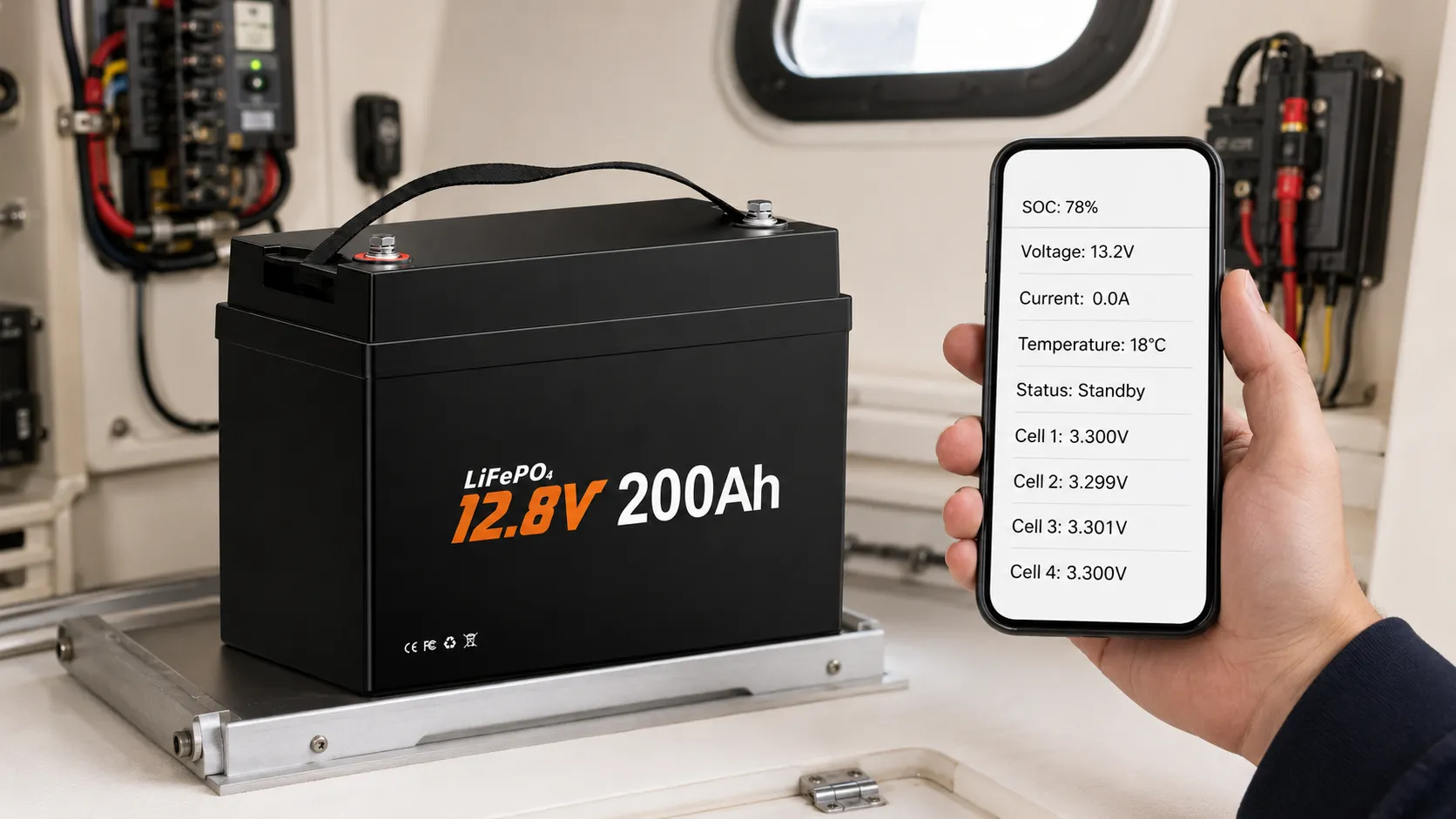
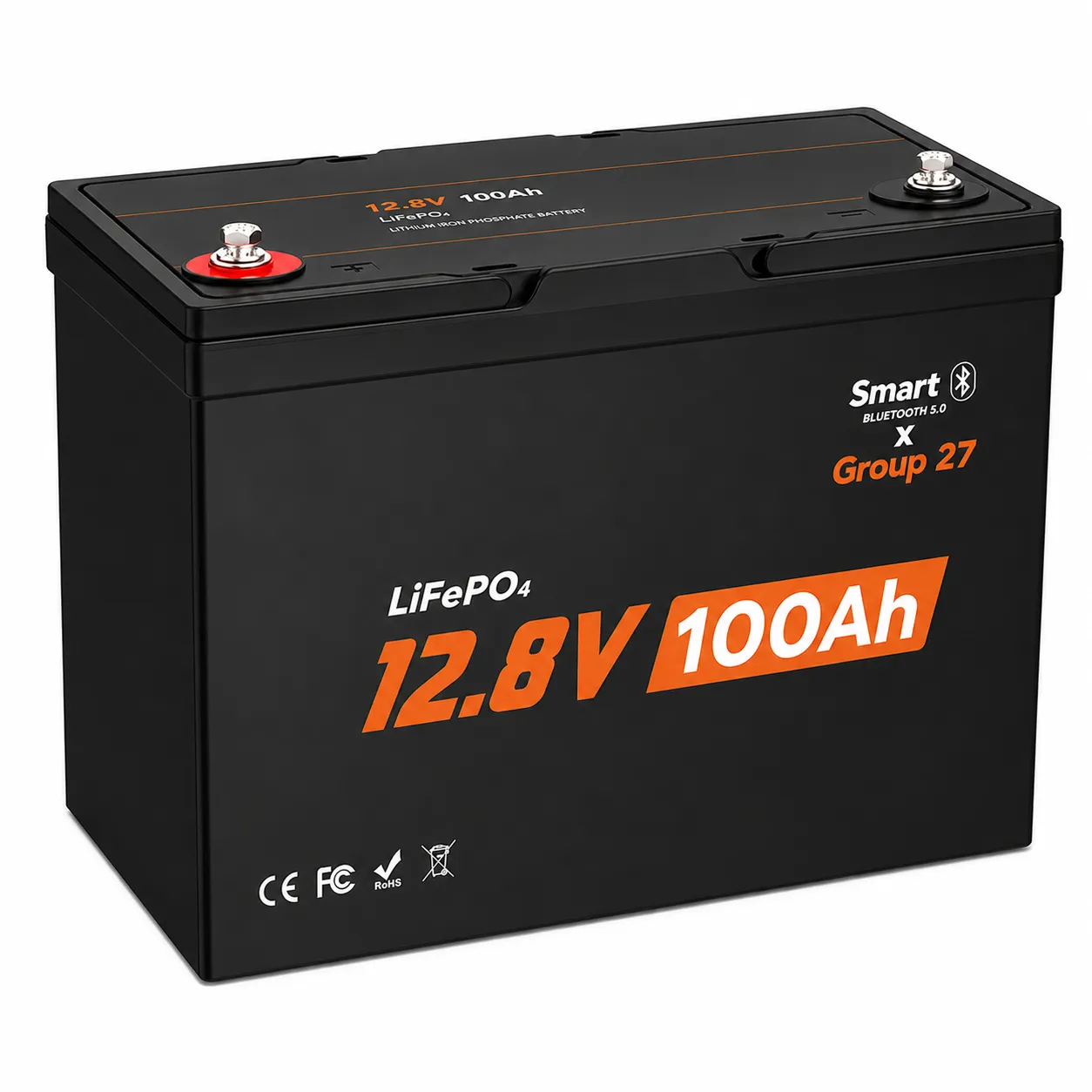
Bluetooth monitoring allows boat owners and marine installers to check battery information without opening the battery compartment. Depending on the final BMS and app version, available data may include state of charge, pack voltage, current, power, temperature, cycle information and protection status.
These readings can support pre-departure battery checks, charging-system review and troubleshooting of compatible trolling-motor or onboard DC loads.
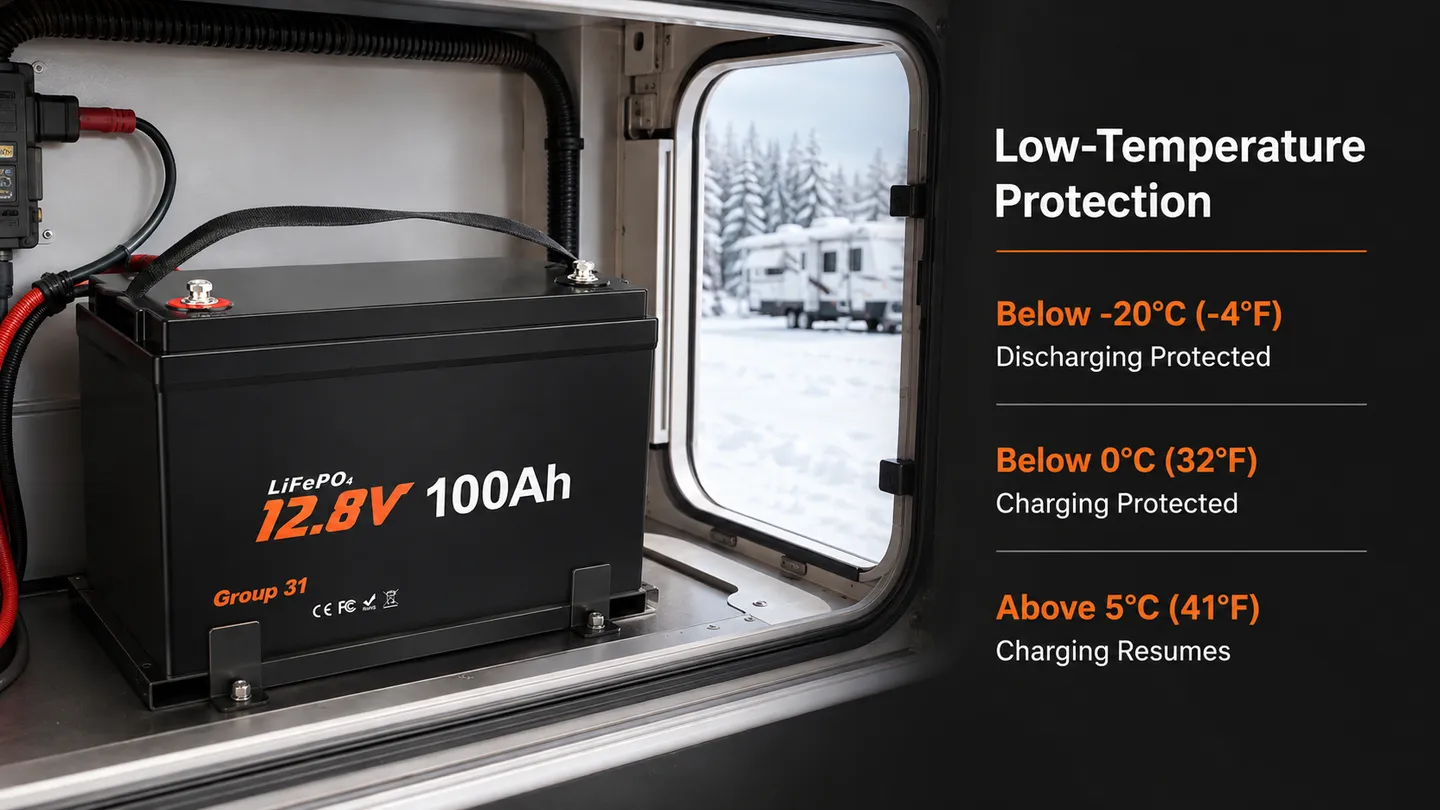
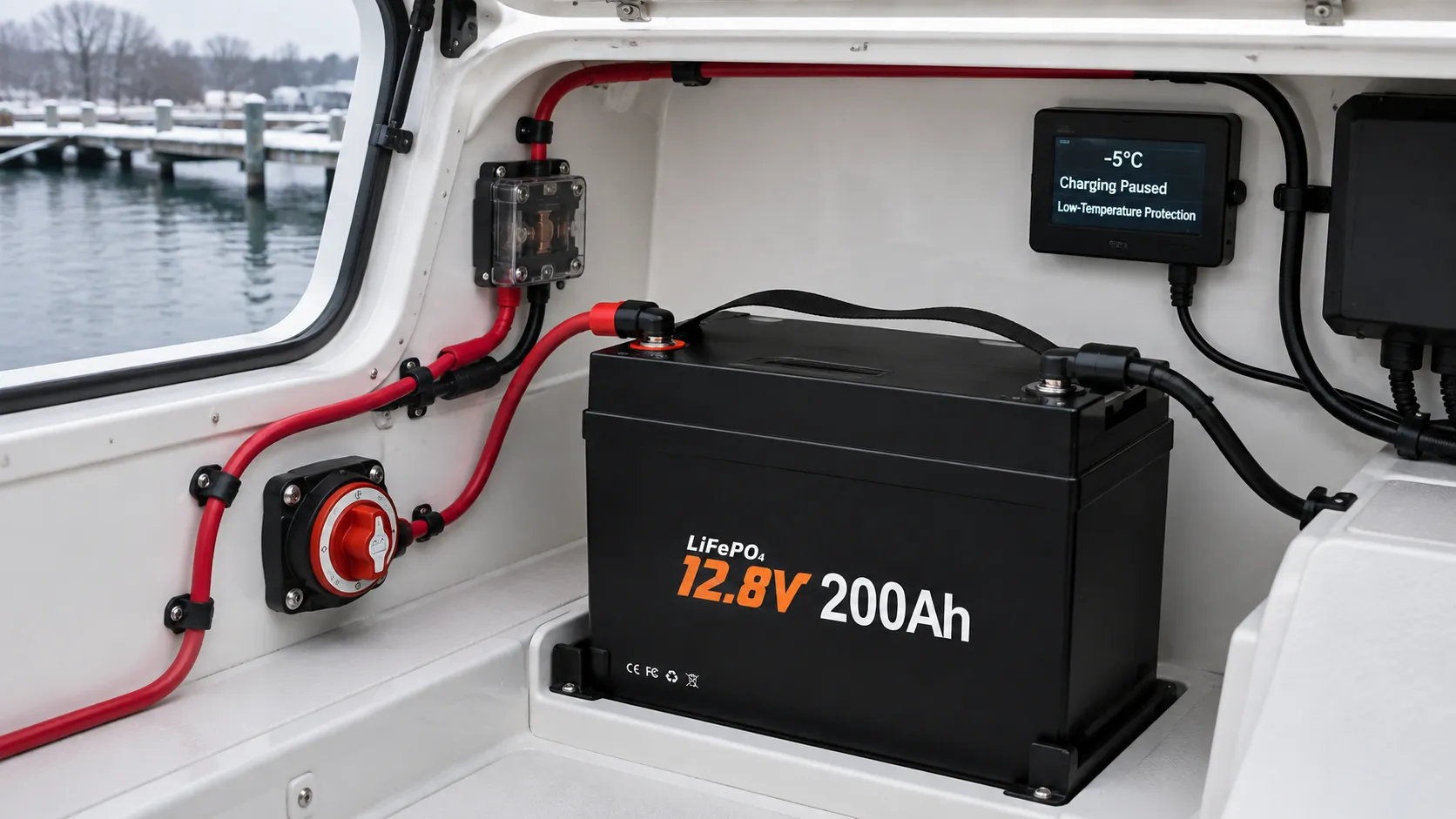
Charging LiFePO4 cells below their permitted charging temperature can damage the cells. The low-temperature protection function is designed to stop charging when cell temperature falls below the configured protection threshold and allow charging again after the required recovery temperature is reached.
This model uses low-temperature protection rather than internal self-heating. The battery does not warm the cells before charging.
Confirm the exact low-temperature charge cut-off, charging recovery and discharge-temperature limits against the current production datasheet for the ordered model.
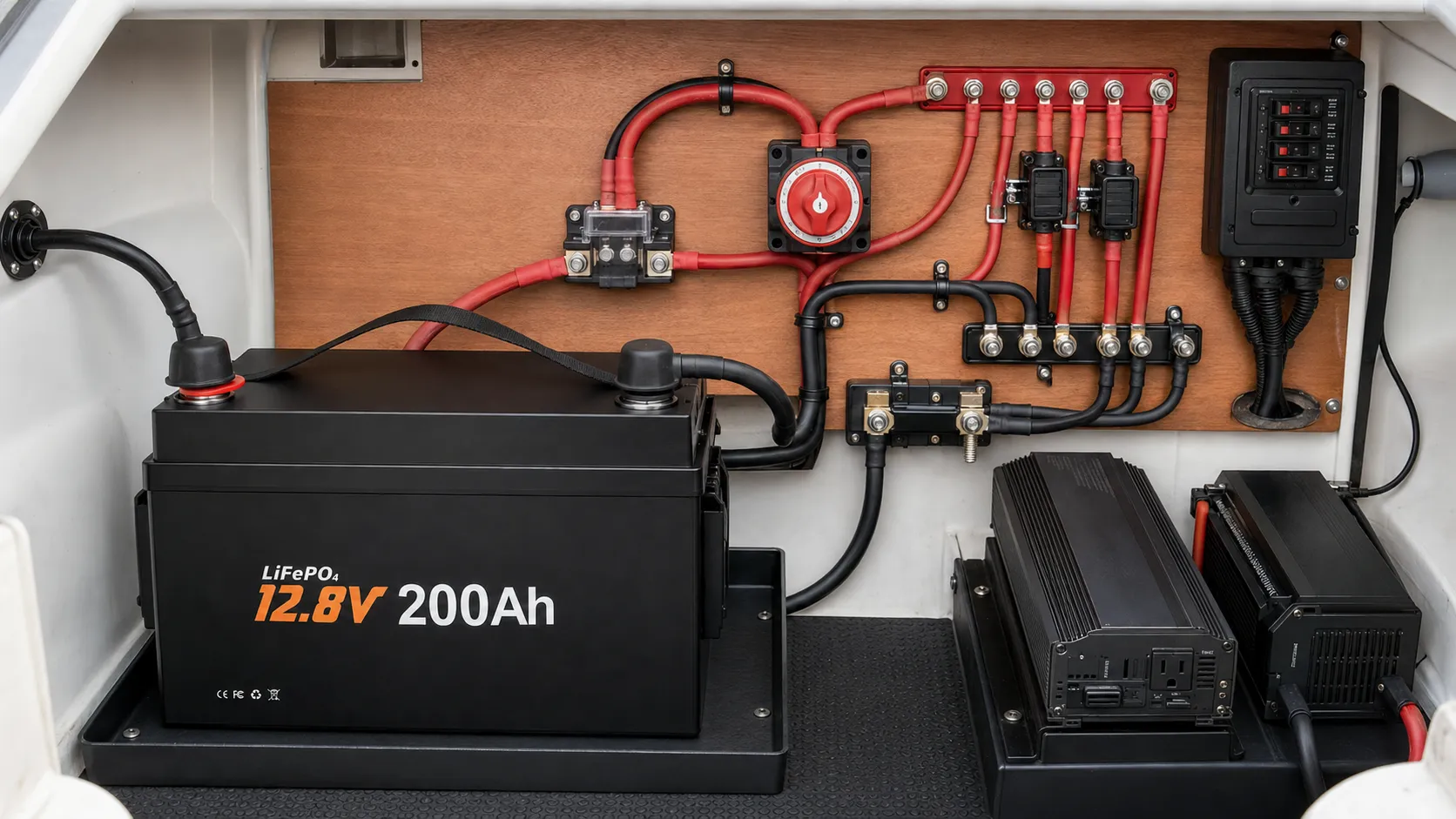
Install the battery upright in a dry, ventilated and protected compartment. Use a rigid battery tray and a secure hold-down system that prevents movement without applying load to the battery terminals.
A properly designed marine installation should include:
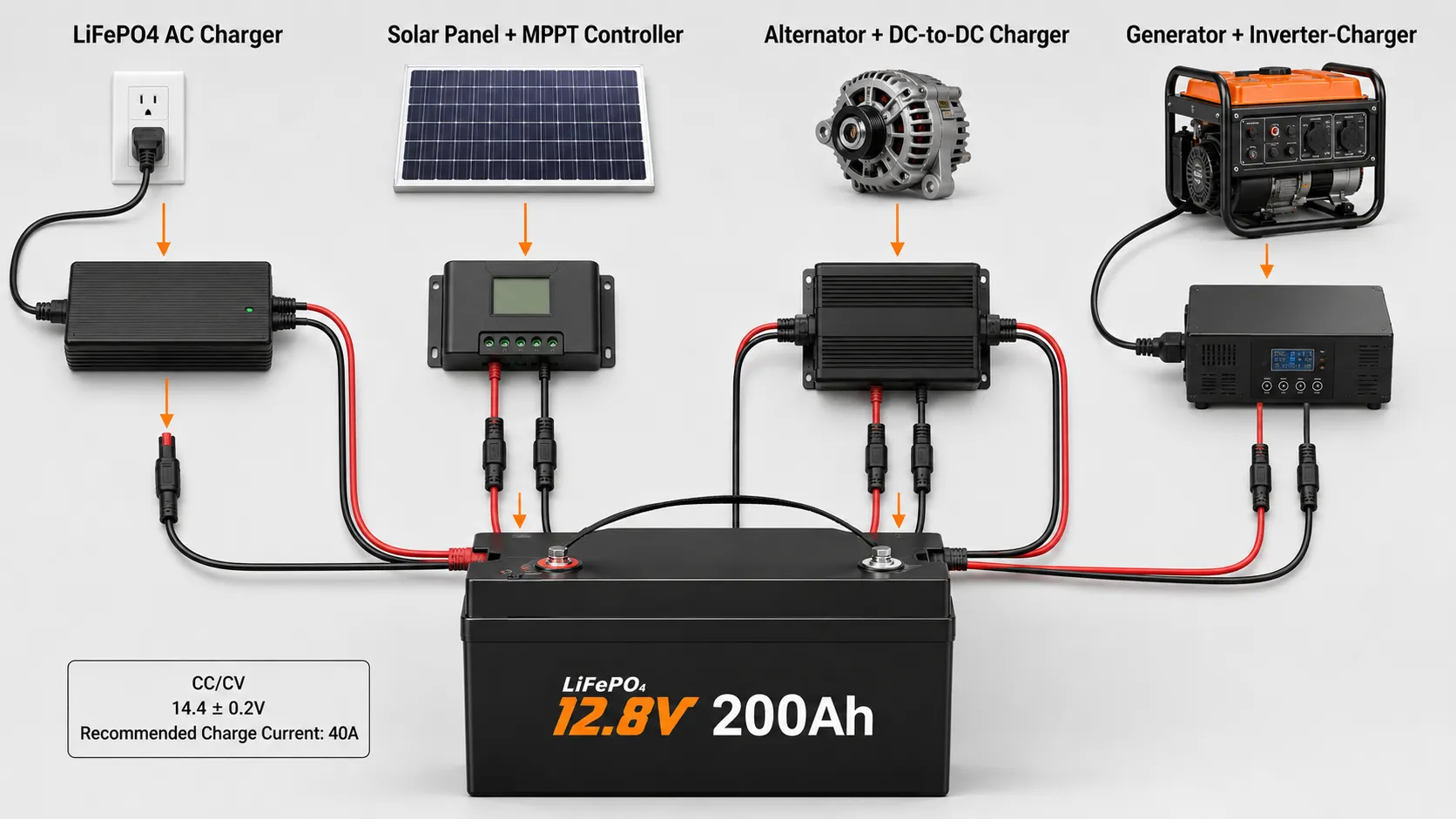
Use a charger or charge controller with a LiFePO4-compatible CC/CV profile and settings that match the current production datasheet.
Compatible charging sources may include:
Do not connect an engine alternator directly without confirming voltage regulation, current control and alternator protection. A correctly sized marine DC-to-DC charger is commonly used when charging a lithium house battery from an engine alternator.
| Parameter | Specification |
|---|---|
| Battery Chemistry | Lithium Iron Phosphate (LiFePO4) |
| Nominal Voltage | 12.8V |
| Rated Capacity | 200Ah |
| Nominal Energy | 2,560Wh |
| Battery Management System | 200A Smart BMS |
| Maximum Continuous Discharge Current | 200A |
| Maximum Continuous Output | 2,560W at nominal voltage |
| Monitoring | Bluetooth mobile app |
| Low-Temperature Protection | Included; confirm cut-off and recovery thresholds in the current production datasheet |
| Self-Heating | Not included |
| Cycle Life | 4,000+ cycles* |
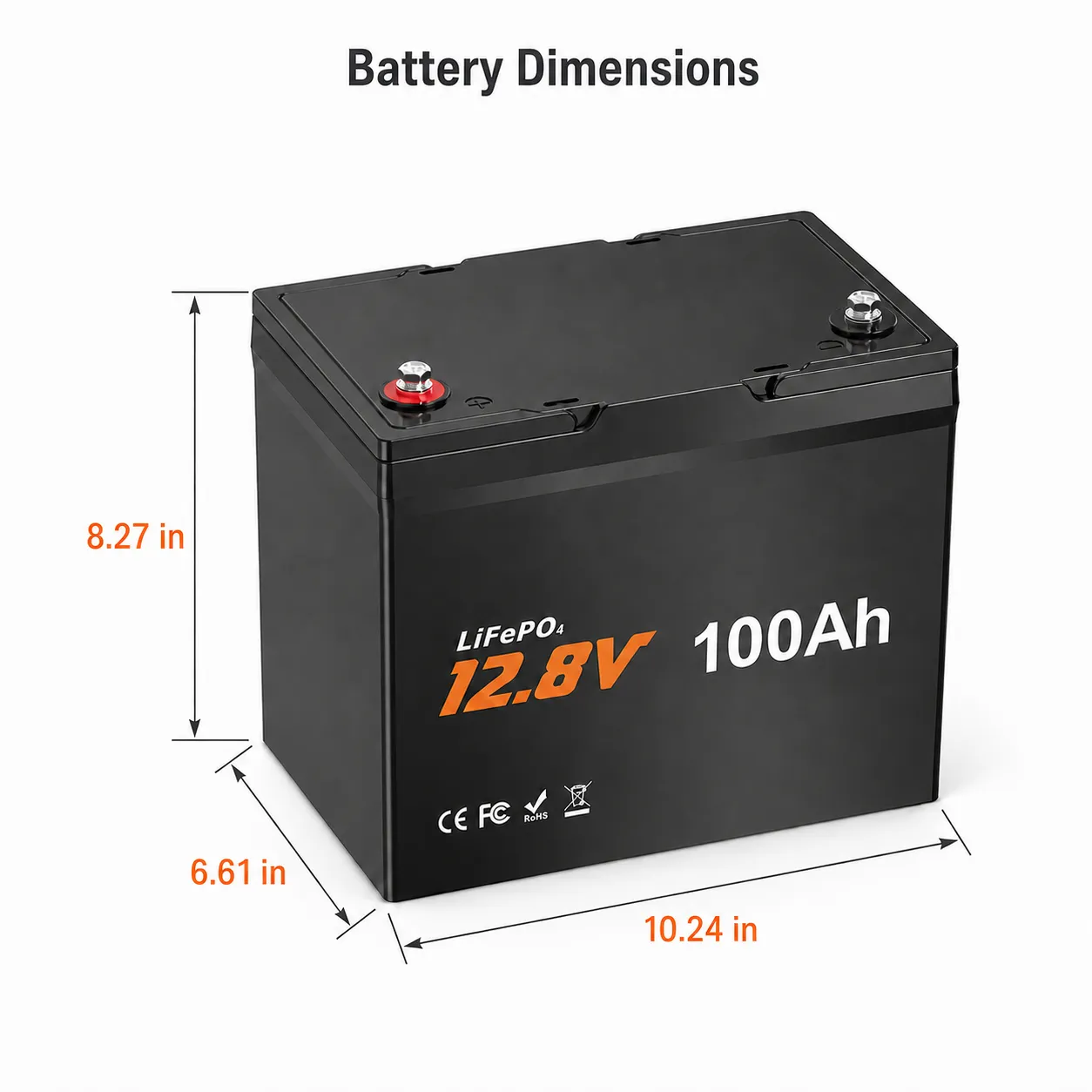
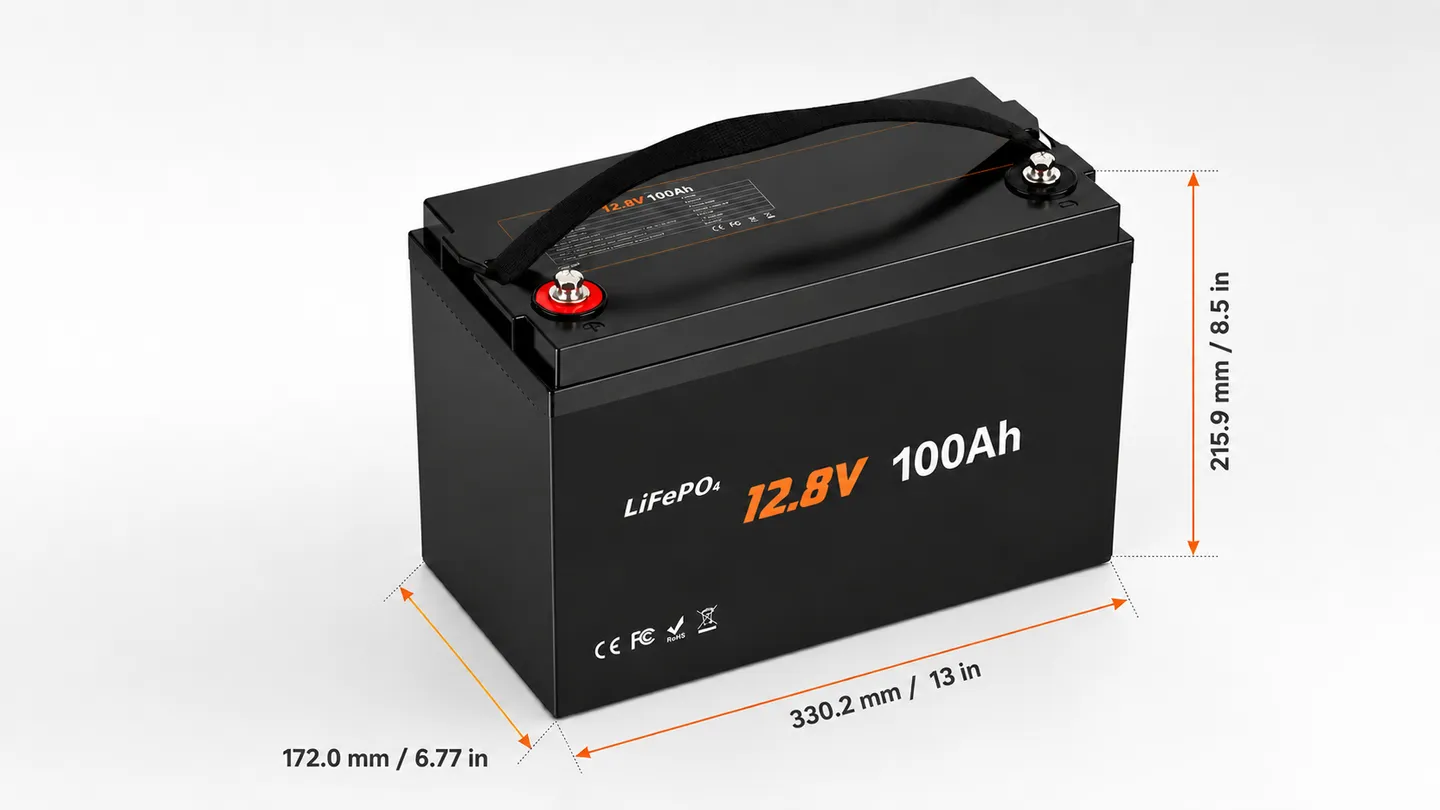
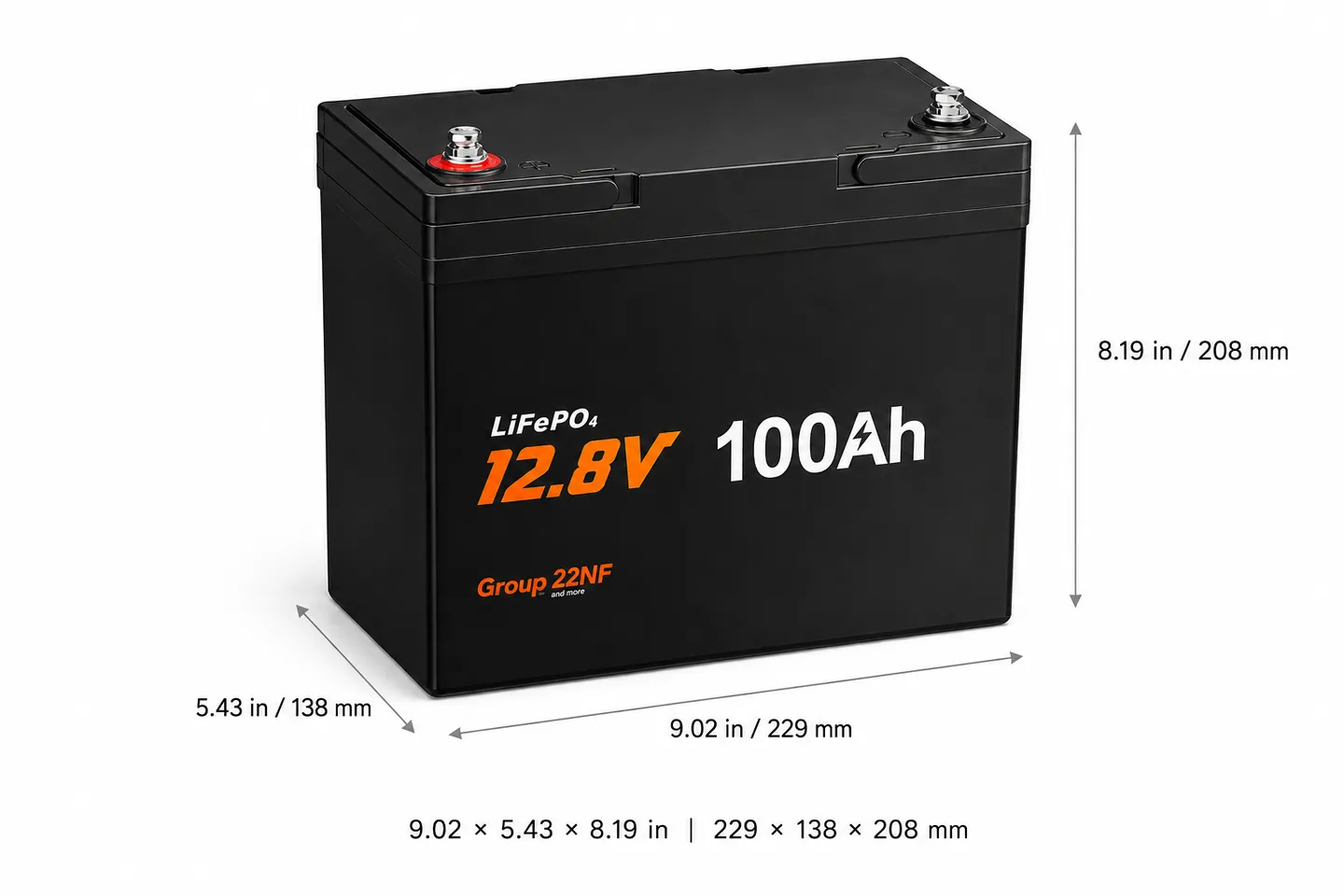
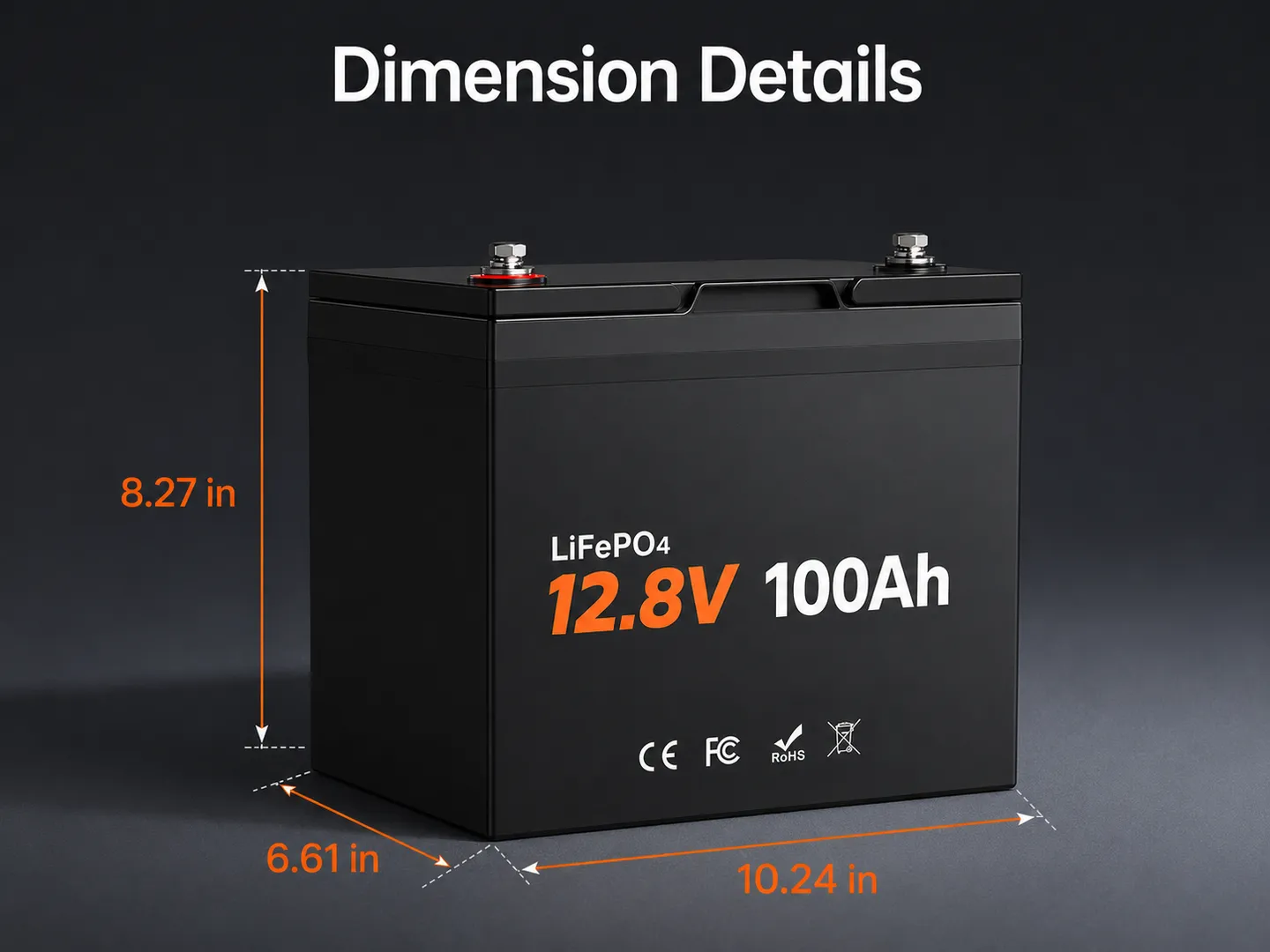
| Approximate Dimensions | 13.11 × 6.93 × 9.45 in / 333 × 176 × 240 mm** |
| Form Factor | Group 31-style footprint |
| Typical Applications | Marine house power, fishing electronics and compatible 12V trolling motors |
| Starting-Battery Use | Not designed for engine starting |
| Compliance Documentation | Datasheet and available compliance documents supplied for the confirmed model and destination market |
*Cycle life depends on depth of discharge, charging method, operating temperature and test conditions. **Confirm final dimensions, terminal details and tolerances against the current production drawing before ordering.
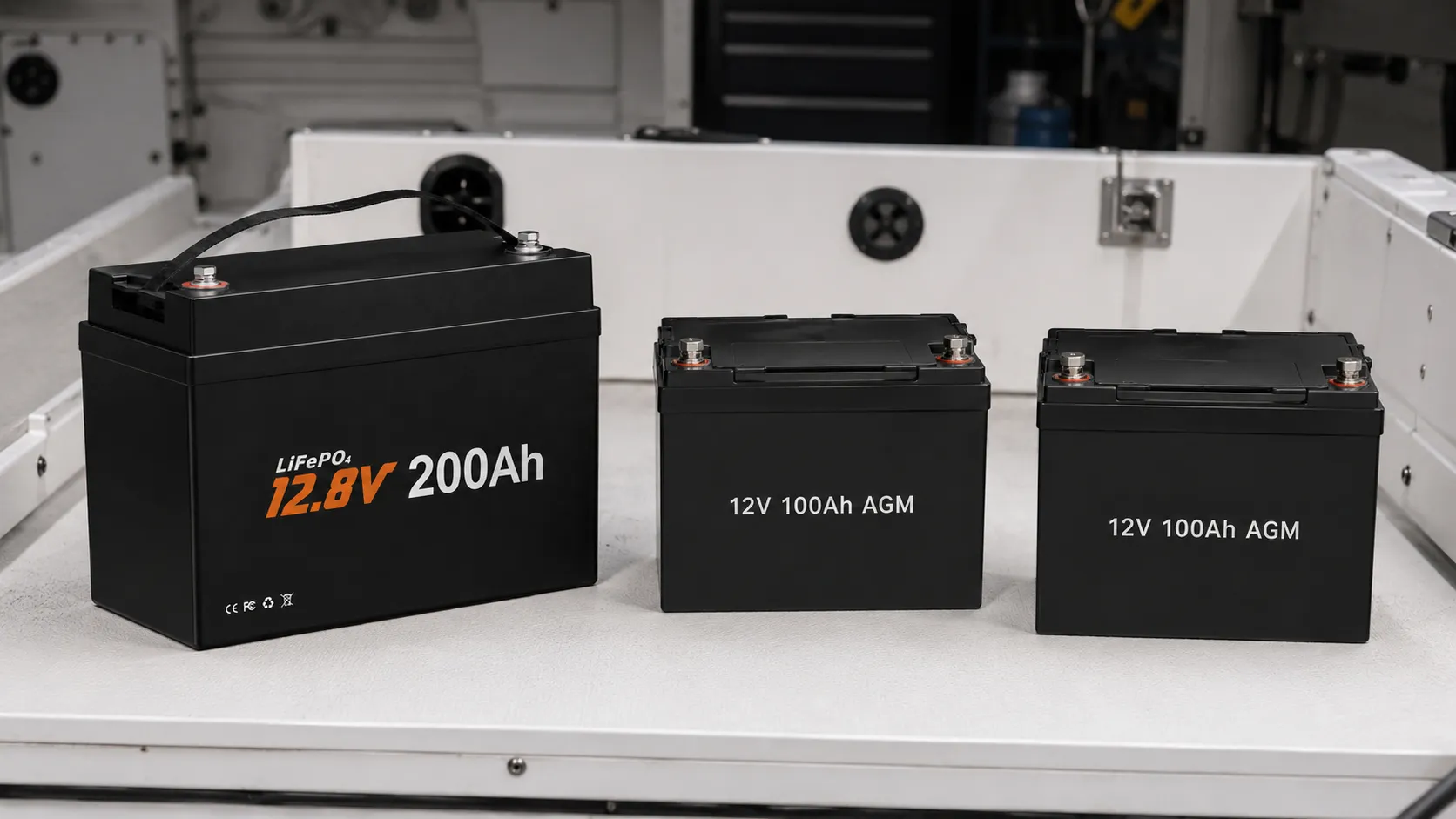
This 12V 200Ah lithium battery can be considered for compatible AGM or flooded lead-acid deep-cycle replacement projects, but nominal voltage and capacity are only part of the assessment.
Check the battery tray, enclosure dimensions, terminal position, charging profile, maximum trolling-motor or inverter current, cable size, fuse rating and operating environment before conversion.
LiFePO4 batteries generally provide more usable deep-cycle capacity and require less routine maintenance than comparable lead-acid battery banks. Actual runtime, weight reduction and replacement suitability depend on the batteries being compared and the complete electrical system.
Review the Lead-Acid to LiFePO4 Battery Replacement Guide before converting an existing battery system.
Factory-direct supply is available for boat builders, marine electrical installers, trolling-motor distributors, battery brands and system integrators.
Send the target application, installation dimensions, trolling-motor or inverter current, charging method, communication requirements and expected order quantity for specification review.
OEM and private-label support may include:
Yes, when used with a compatible 12V trolling motor whose maximum current remains within the battery, BMS, cable and protection-device ratings. Confirm the trolling-motor manual and expected operating conditions before installation.
The enclosure uses a Group 31-style footprint, but battery trays and hold-down systems vary. Compare the current production drawing with the available compartment, lid clearance, terminal position and cable routing before ordering.
No. This model is designed for deep-cycle marine house power, onboard electrical loads and compatible trolling motors. Do not use it to crank or start an engine.
Use a LiFePO4-compatible CC/CV charger with voltage and current settings that match the current production datasheet. Alternator charging may require a correctly sized DC-to-DC charger.
Yes. This configuration includes Bluetooth monitoring. Available app functions depend on the final BMS, Bluetooth module and firmware version.
No. This model uses low-temperature charging protection rather than an internal self-heating system.
Series and parallel capability must be confirmed in the current product manual. When expansion is approved, use identical batteries with matched model, voltage, capacity, age and state of charge, together with correctly sized cables and branch protection.
Send the boat type, trolling-motor or inverter rating, charging method, available battery-space dimensions and required quantity. We can review the configuration before providing the current datasheet, sample options, lead time and OEM quotation.
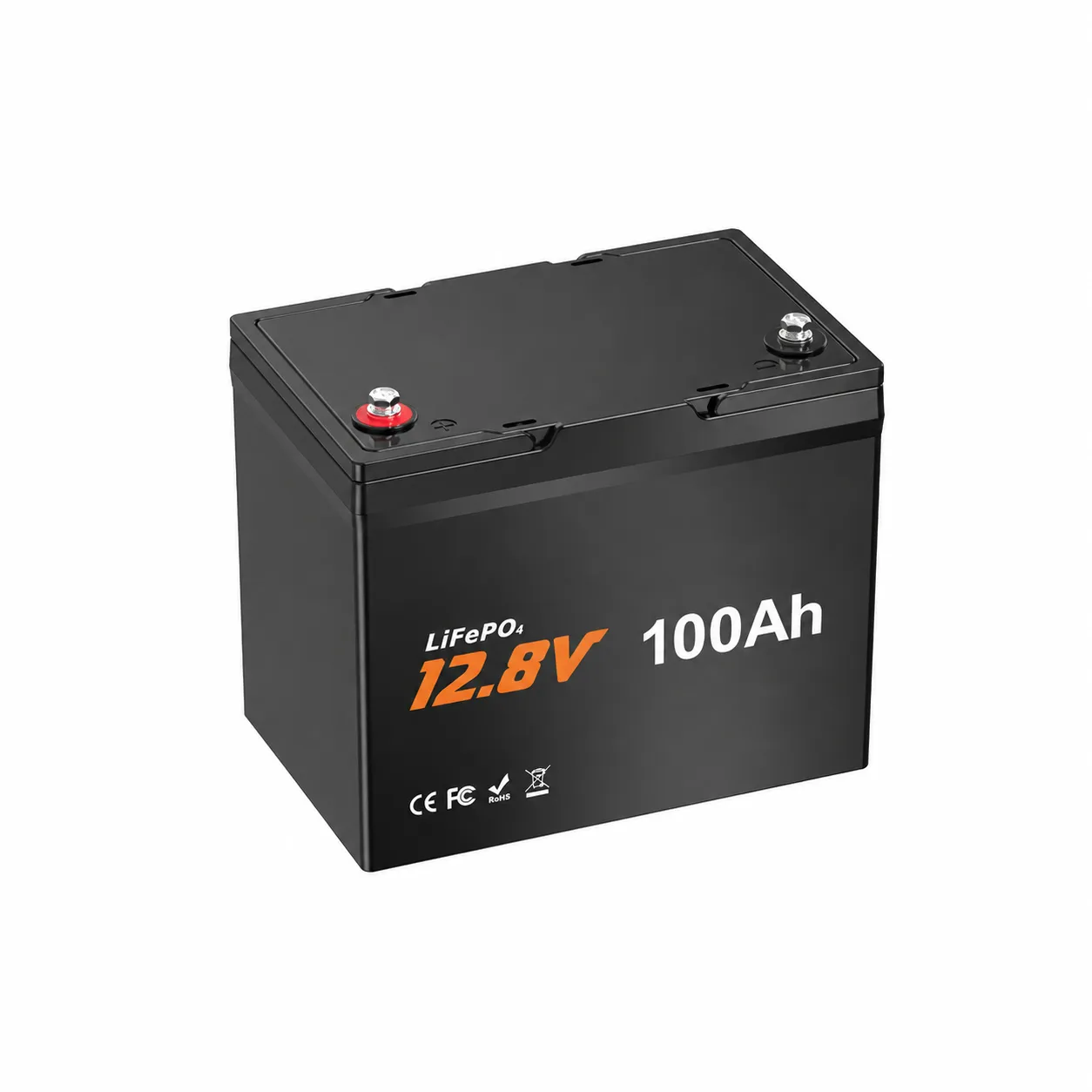
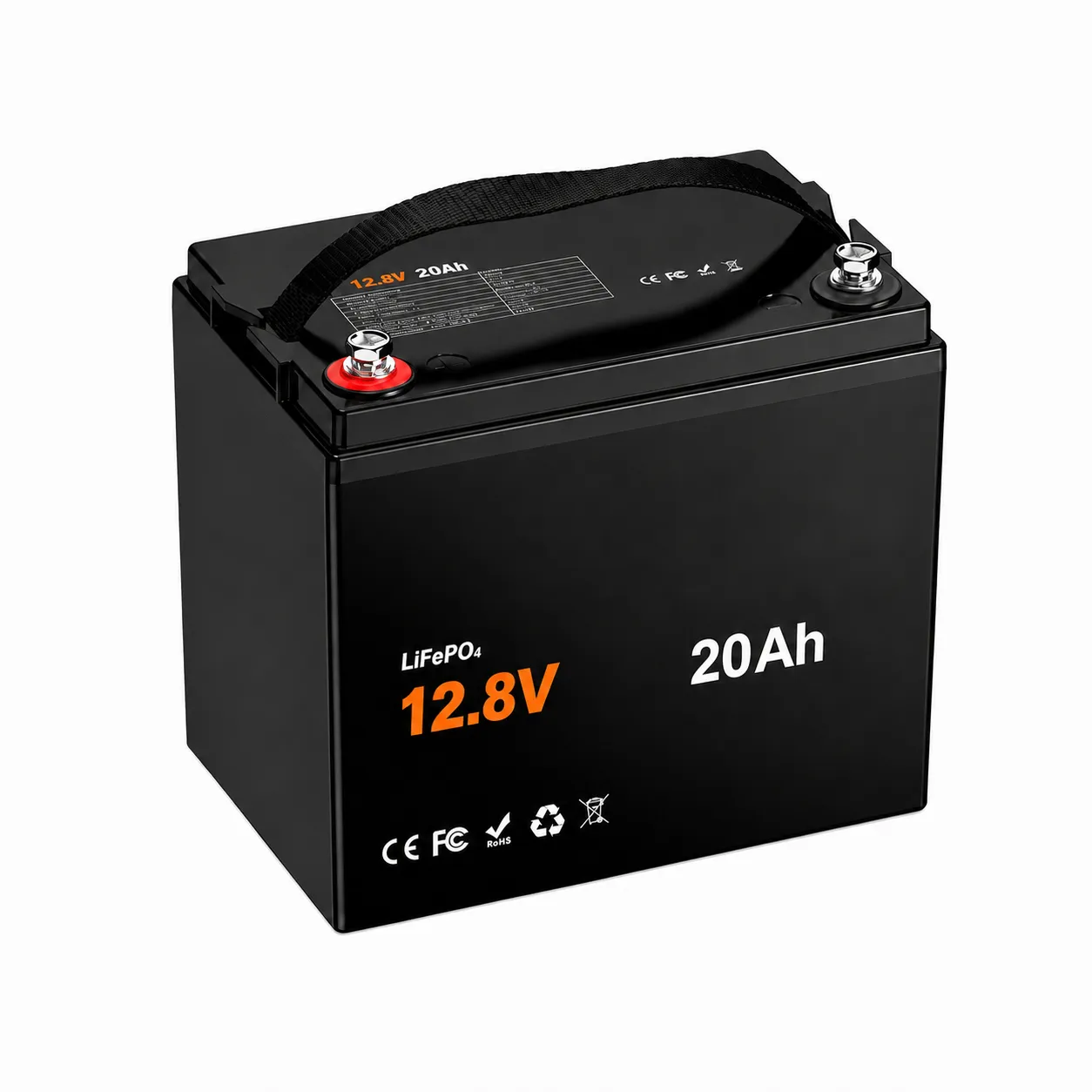
Many LiFePO4 batteries can replace compatible lead-acid deep-cycle batteries in RVs, boats, golf carts and industrial equipment. Before installation, confirm the system voltage, battery dimensions, terminal layout, charger profile, maximum load, cable size, fuse rating and operating temperature.
Most LiFePO4 batteries are compatible with standard 12V, 24V, 36V or 48V inverters when the system voltage and power requirements match. Many modern chargers also include a LiFePO4 charging profile. For lead-acid replacement projects, confirm the charger voltage, inverter rating and maximum load before installation. A compatible charger or DC-to-DC charger may be required if the existing charging equipment does not support LiFePO4 batteries.
Yes. OEM and custom battery support can include voltage, capacity, BMS settings, enclosures, terminals, connectors, communication protocols, labels and packaging. Send us the application, electrical requirements, installation dimensions and expected order quantity for review.
MOQ depends on the battery model, specification and customization requirements. Standard models may be available for sample testing, while custom enclosures, private labels and OEM production normally require a confirmed order quantity. Contact us with the model and required quantity for details.
Available certifications and documents depend on the battery model and destination market. Supporting documents may include UN38.3, MSDS, CE, RoHS and product test reports. Confirm the required documents and target market before placing an order.
Lead time depends on the battery model, order quantity, customization and testing requirements. Export shipping options are arranged according to the battery specification, destination and order volume. Send us the required quantity, delivery location and target schedule for a project-specific quotation.