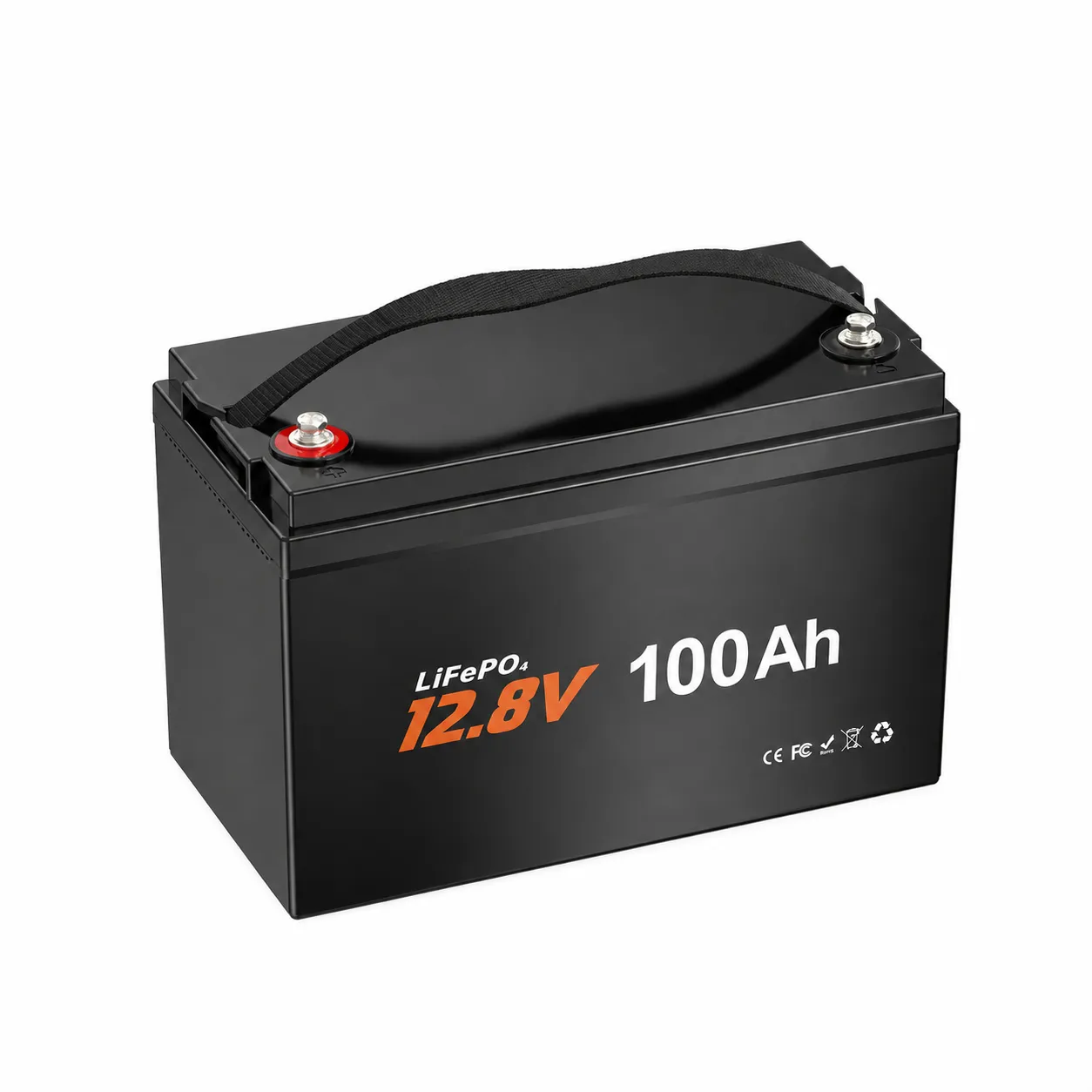
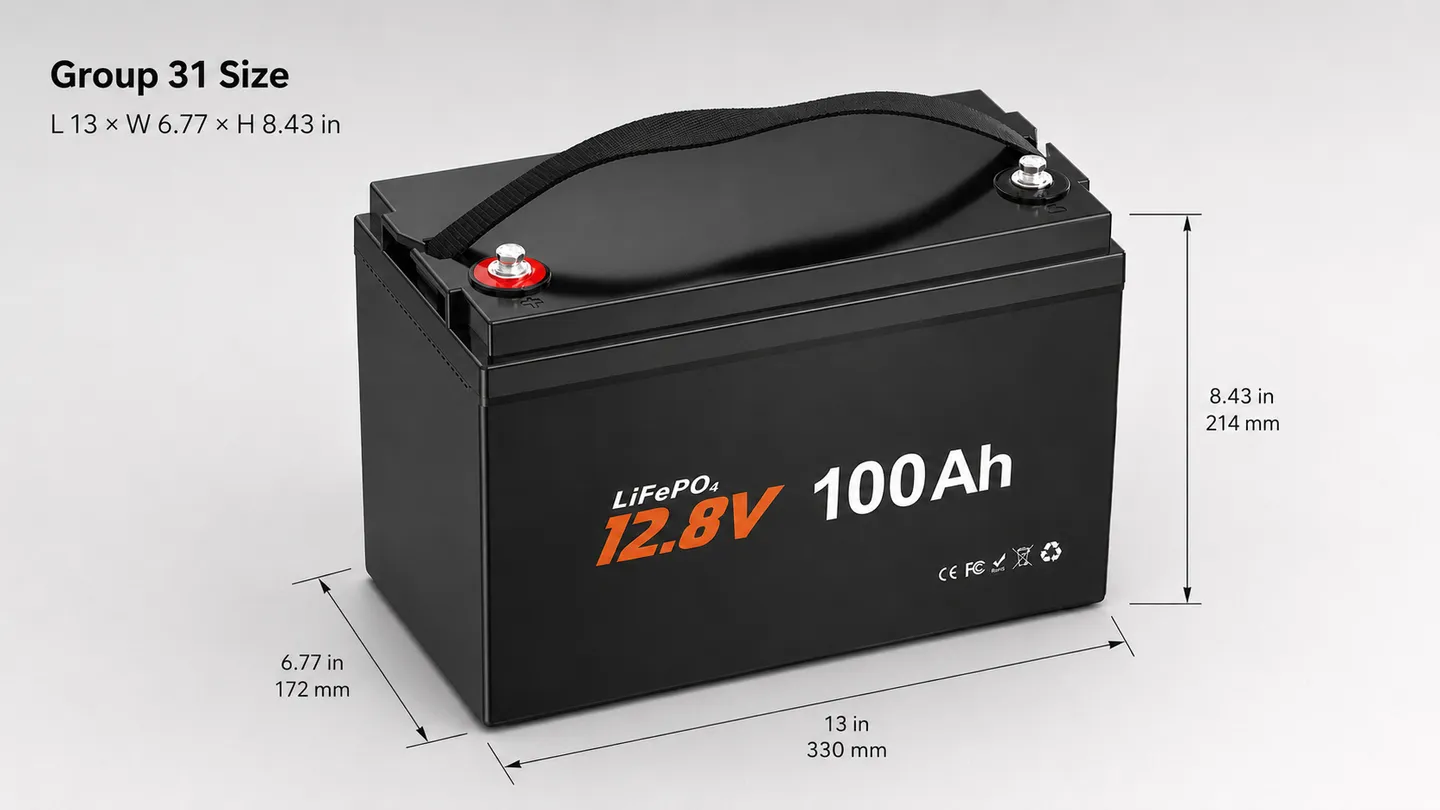
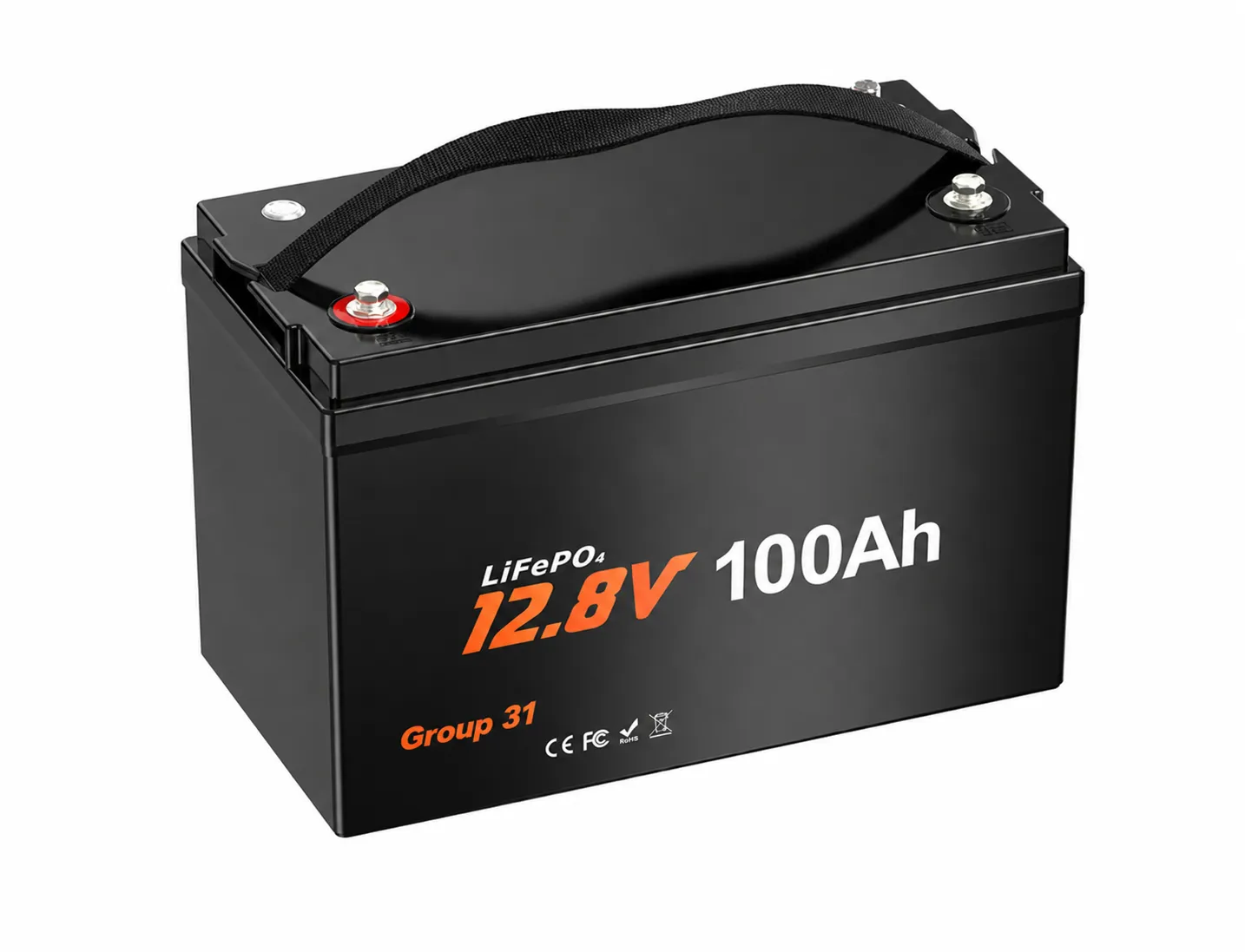
12V 100Ah Group 31 LiFePO4 Battery for Trolling Motors
$169.00
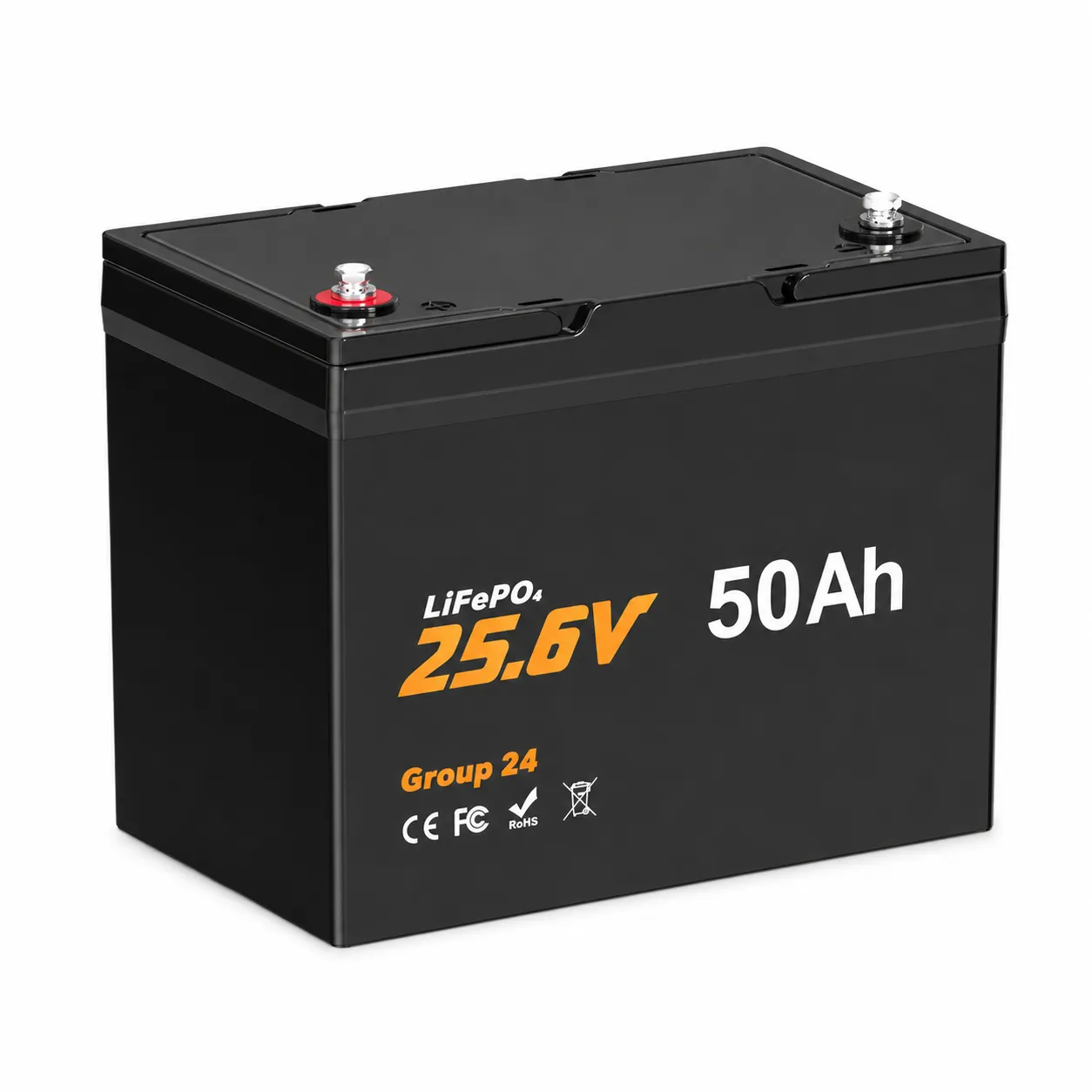
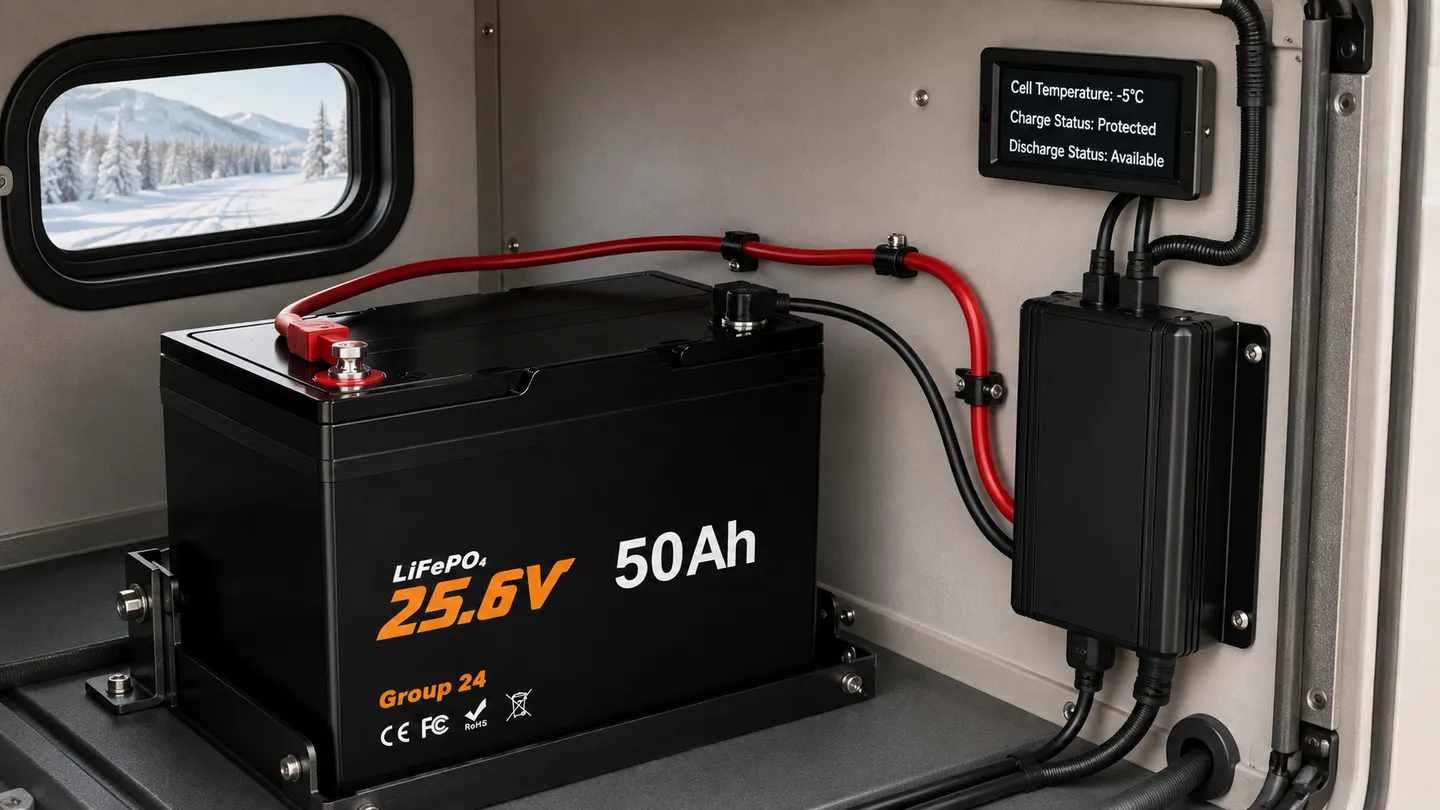
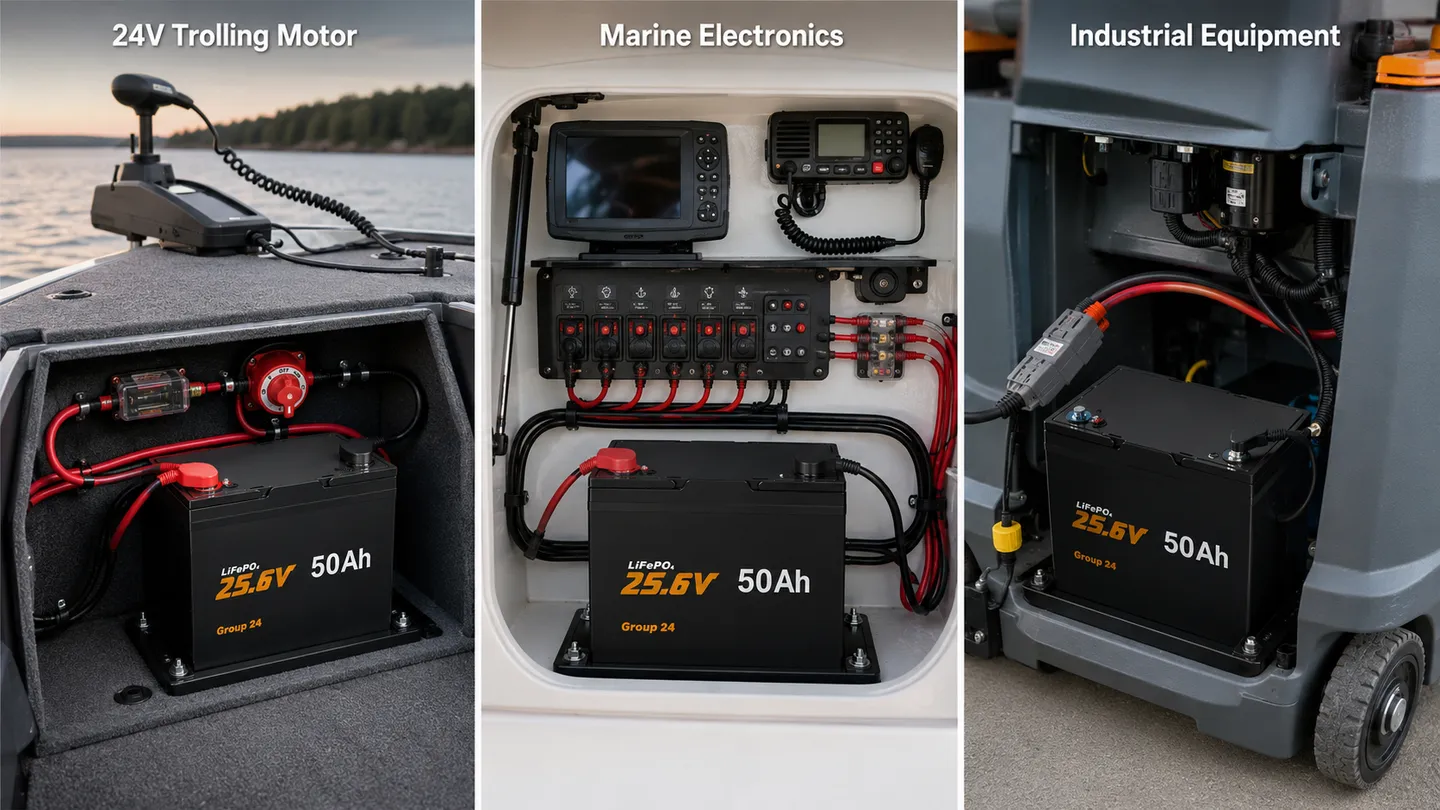
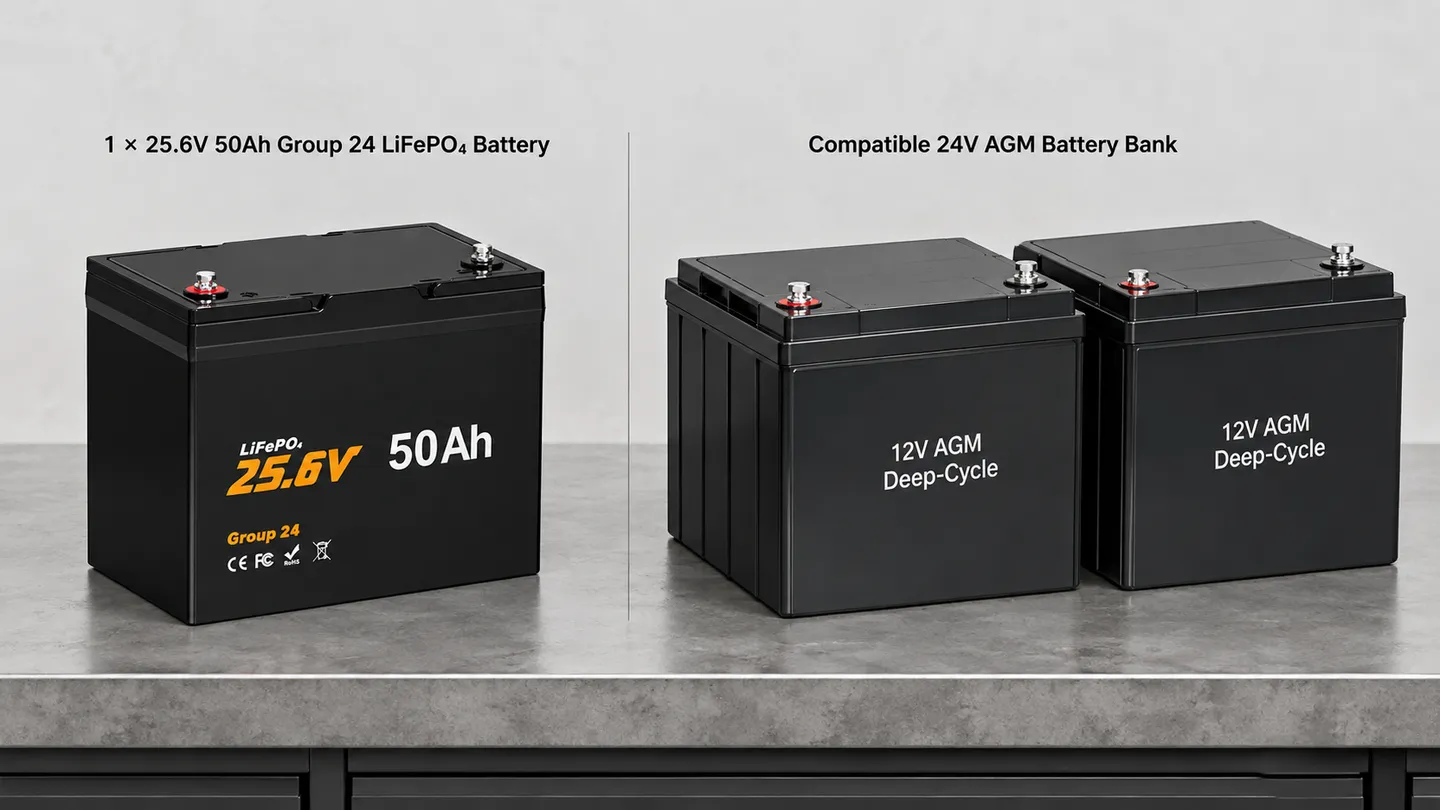
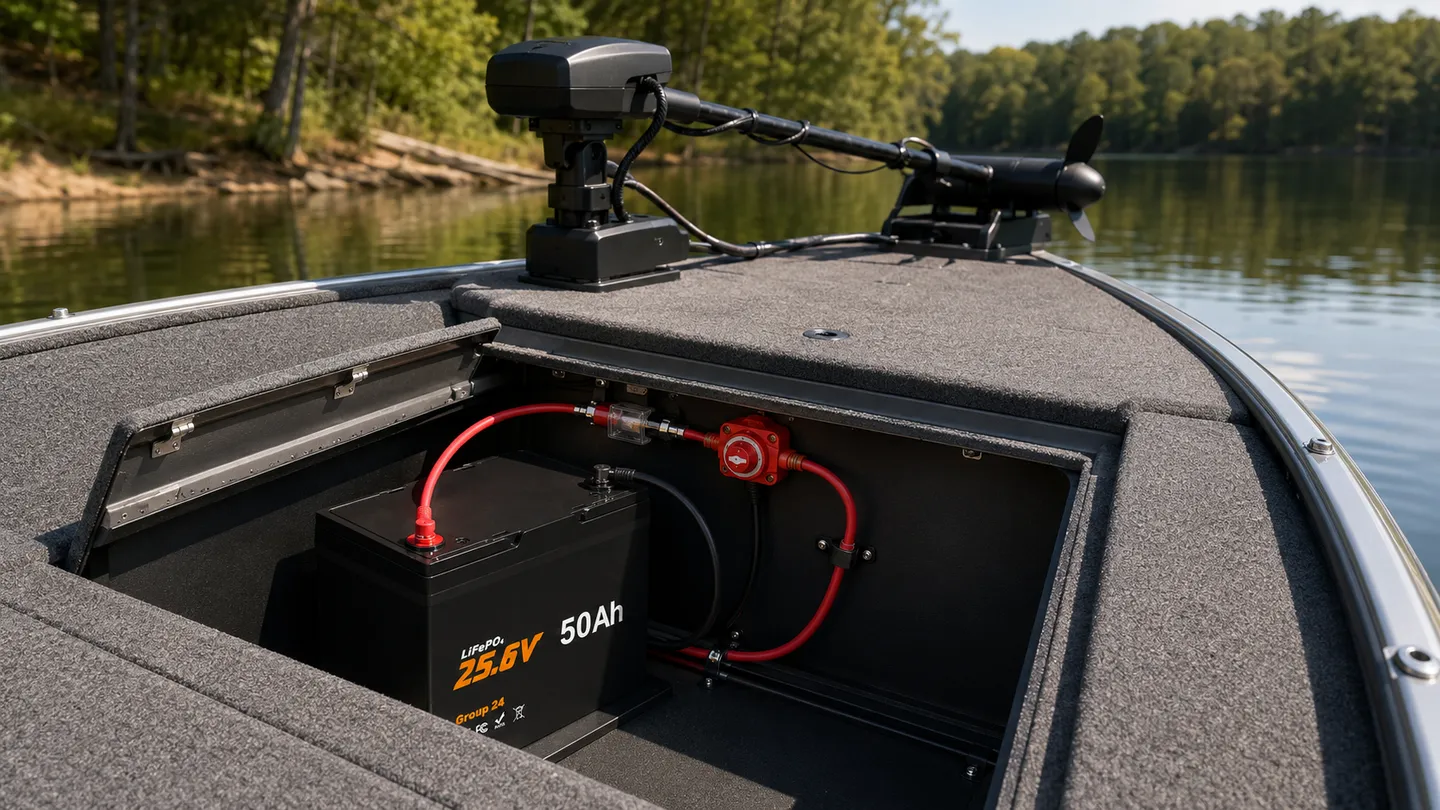
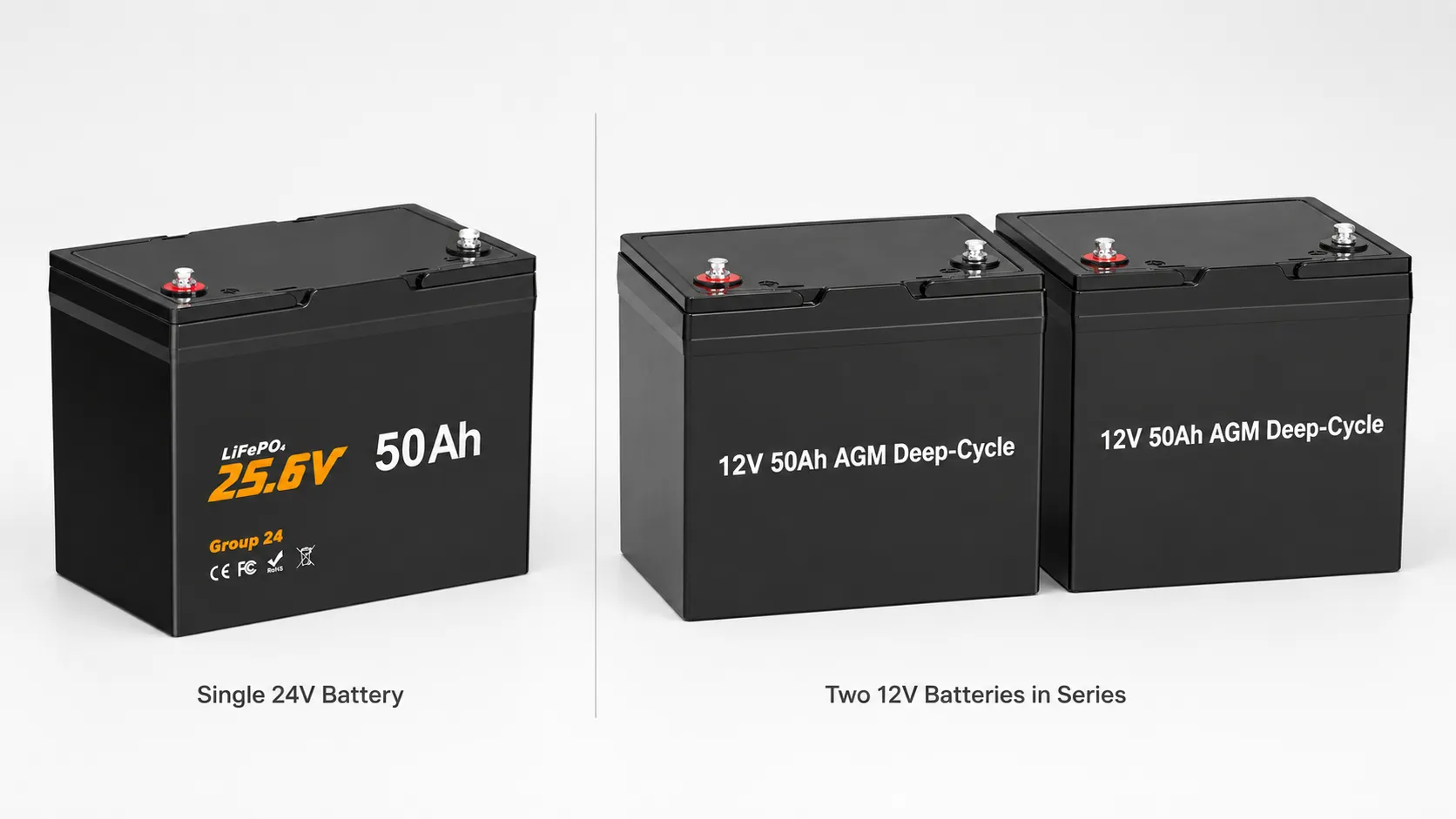
Built for compatible 24V trolling motors, this 25.6V 50Ah LiFePO4 battery stores 1,280Wh in a compact Group 24 case. It gives fishing boats a straightforward alternative to running two 12V batteries in series, with fewer battery connections to install and inspect.
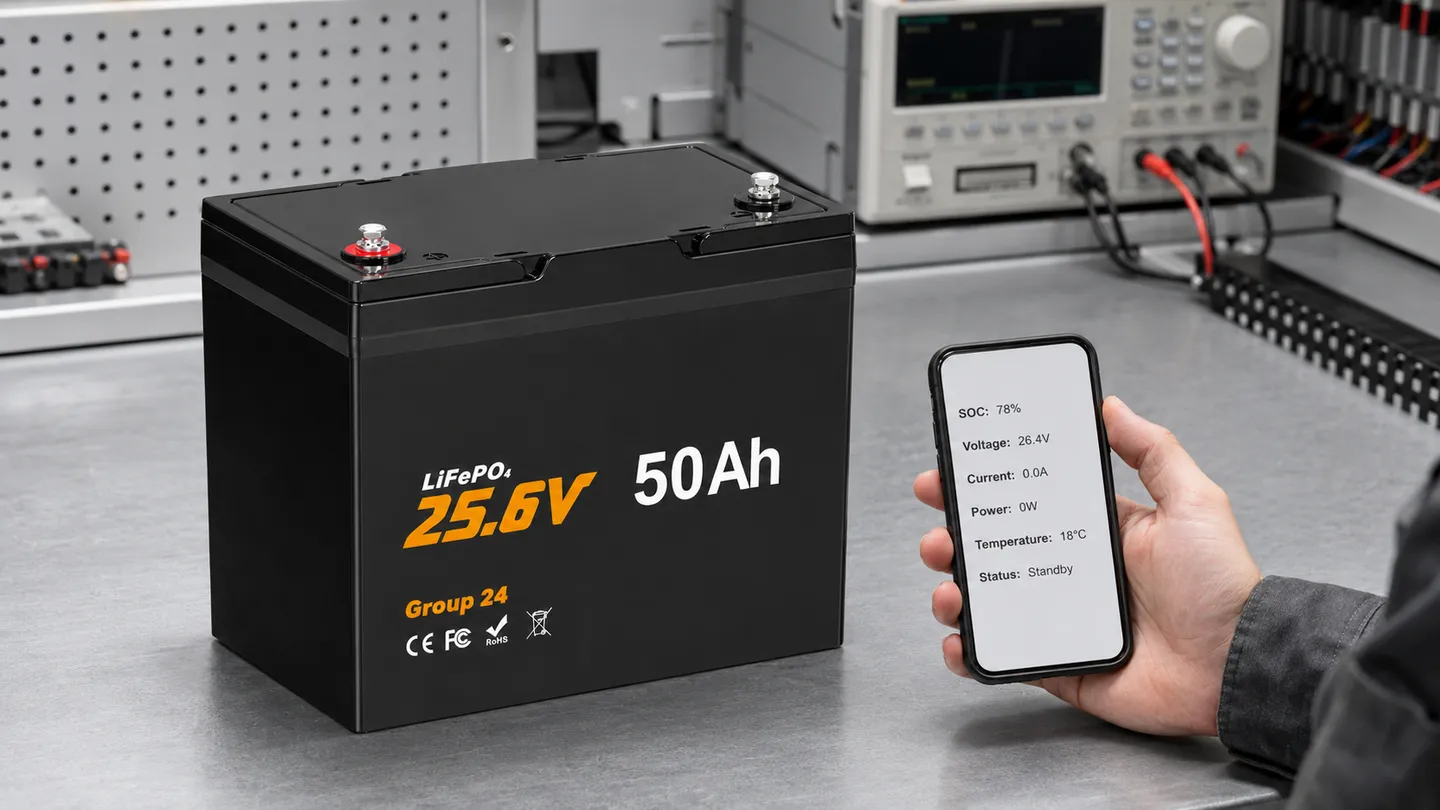
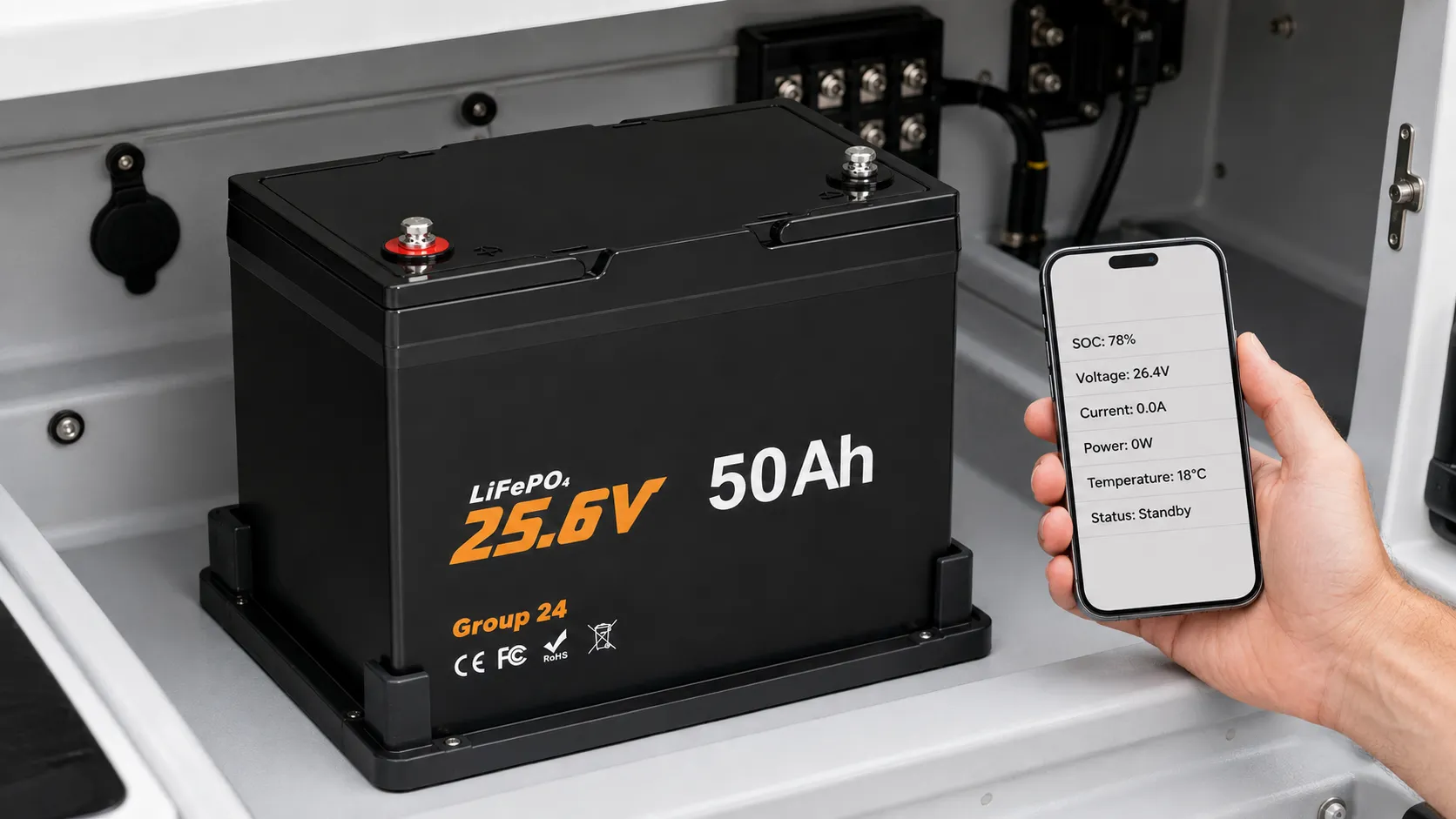
Bluetooth monitoring lets you check state of charge, voltage, current and temperature without opening the battery compartment. The integrated 50A smart BMS supports steady deep-cycle output and stops charging at low cell temperatures.
25.6V | 50Ah | 1,280Wh | Group 24 Size | 50A Smart BMS | Bluetooth Monitoring | IP65
Designed for compatible 24V trolling motor systems, this battery provides 50A continuous discharge and up to 1,280W of continuous output. It is suitable for many 24V trolling motors in the 70–100 lb thrust range, provided the motor’s normal and peak current requirements remain within the battery and BMS ratings.
The single 25.6V battery layout avoids the additional interconnect cable required when two 12V batteries are connected in series. This can make battery installation, inspection and routine system maintenance more straightforward.
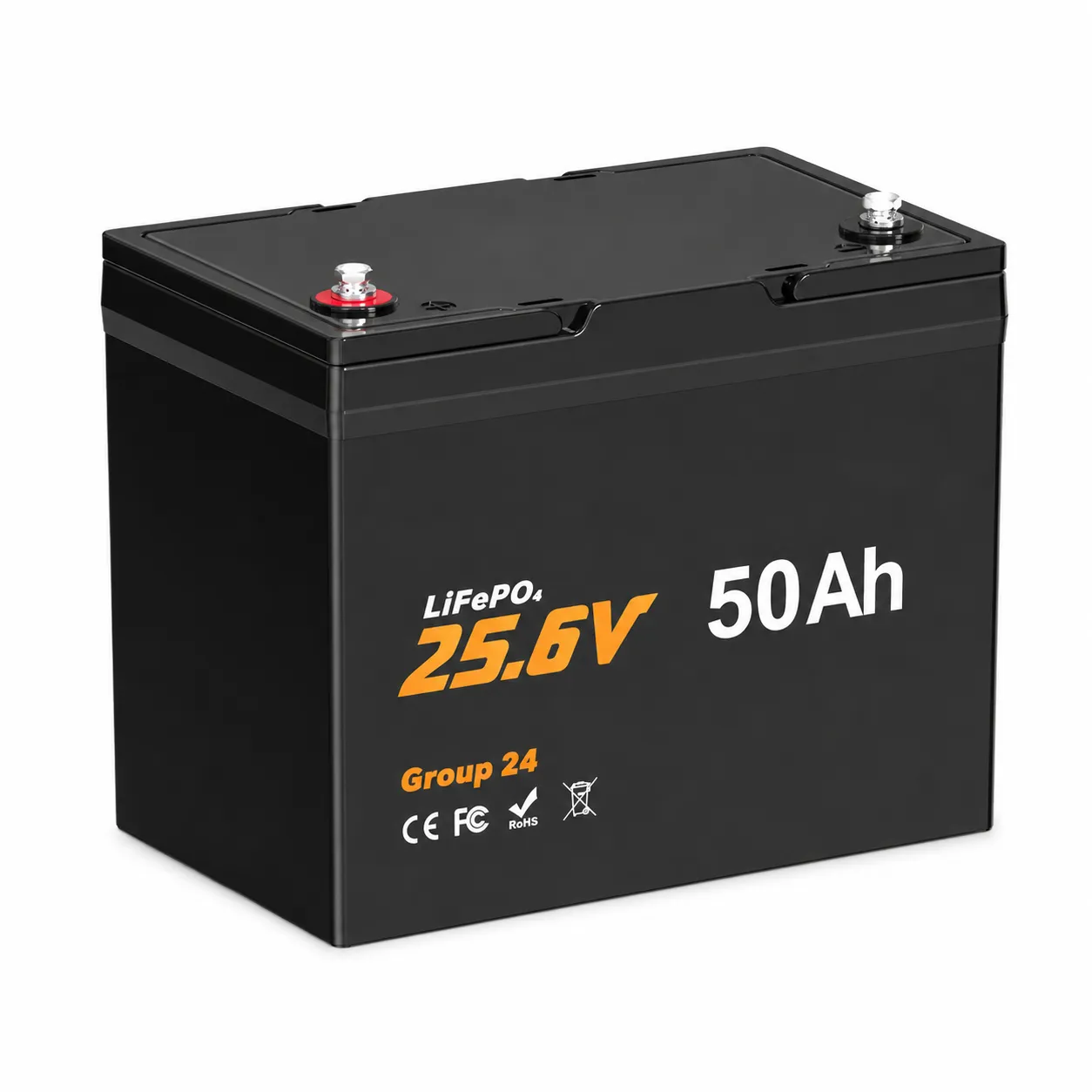
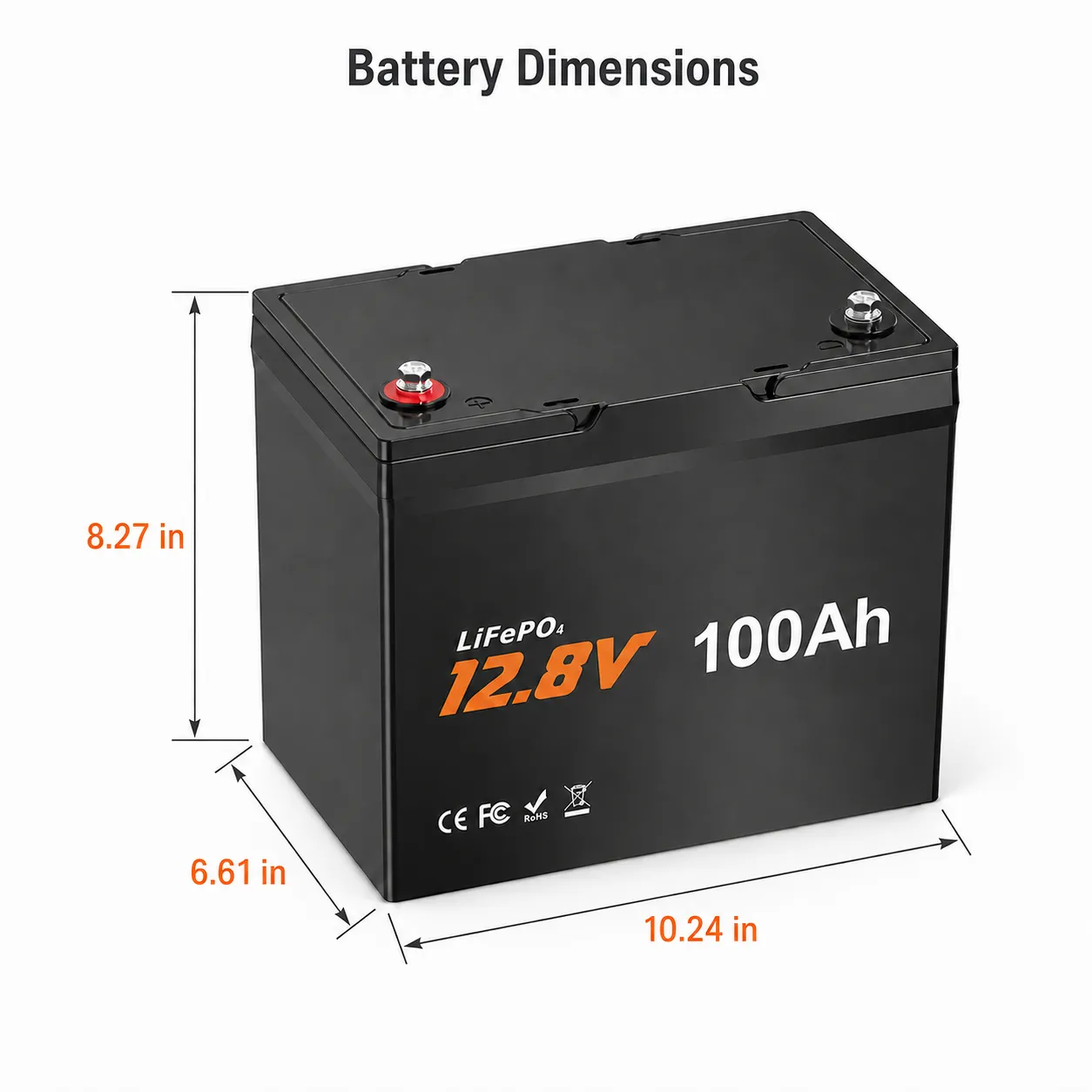
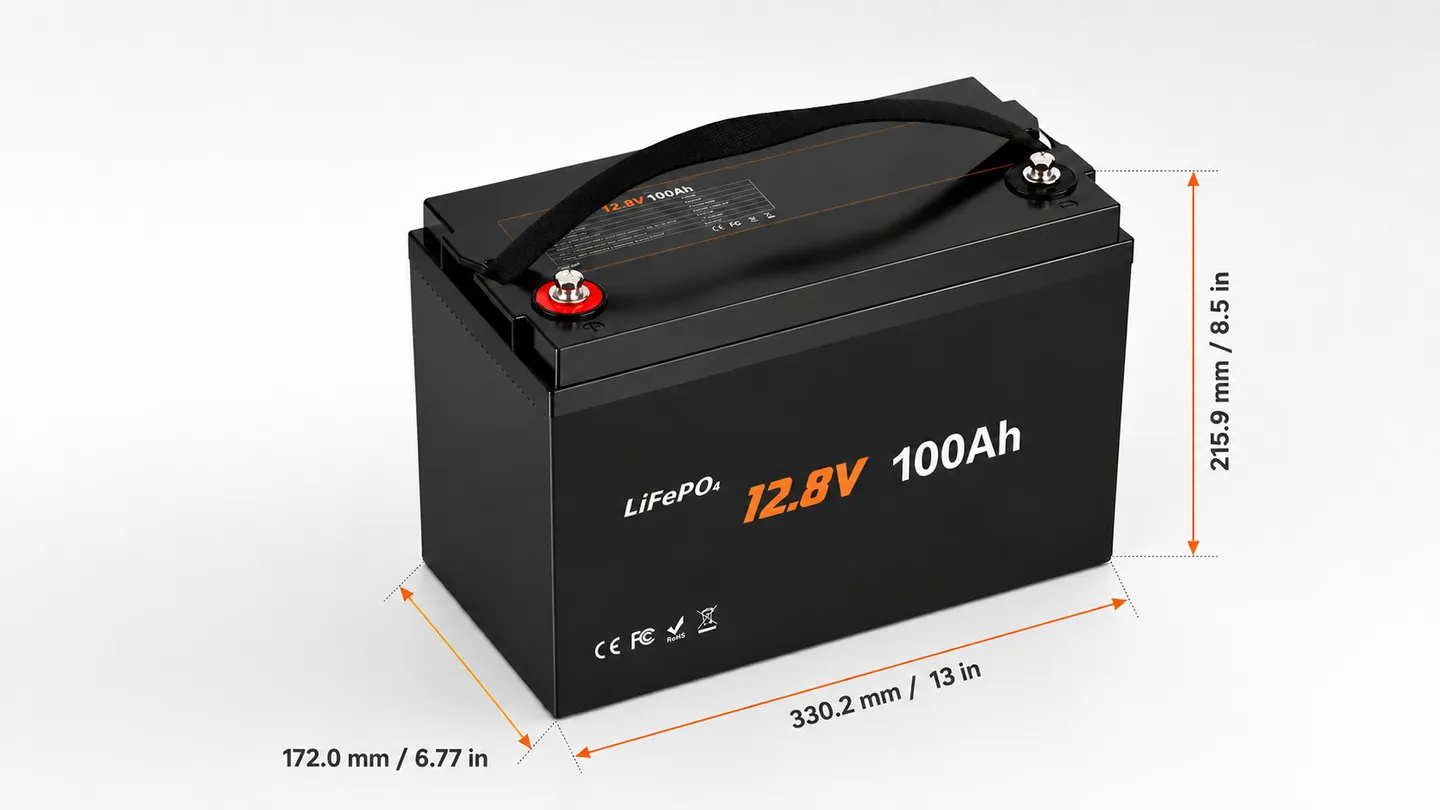
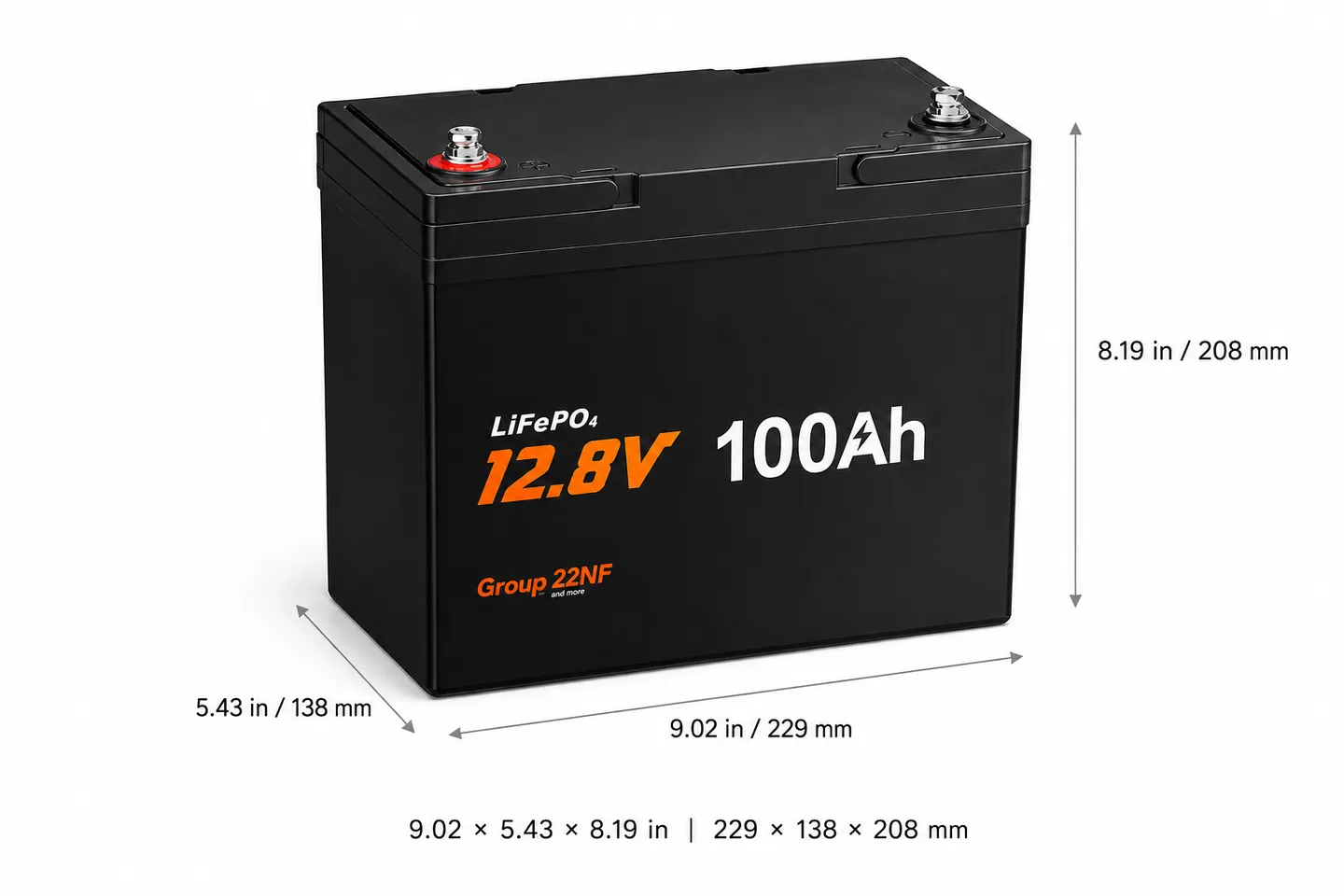
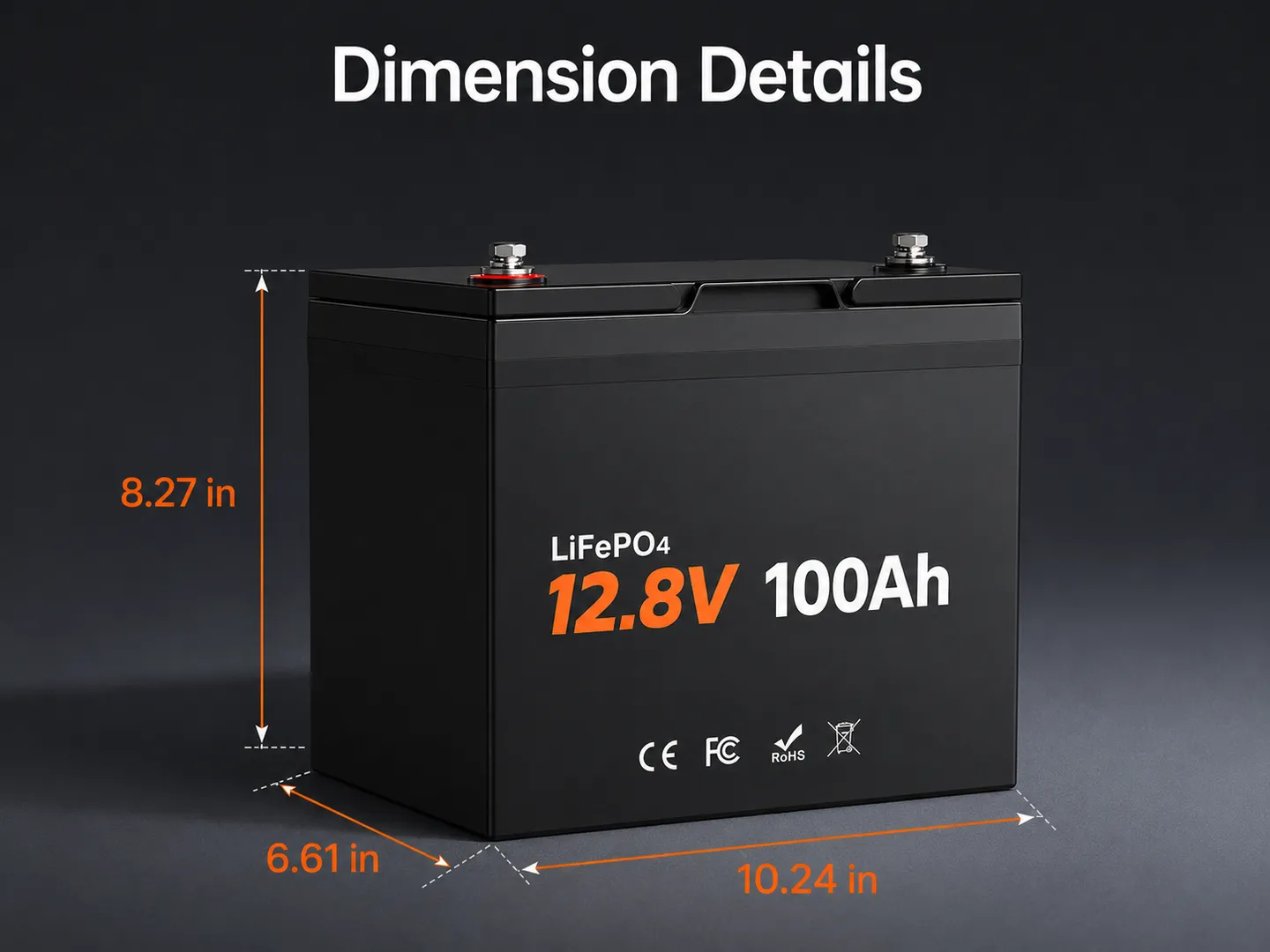
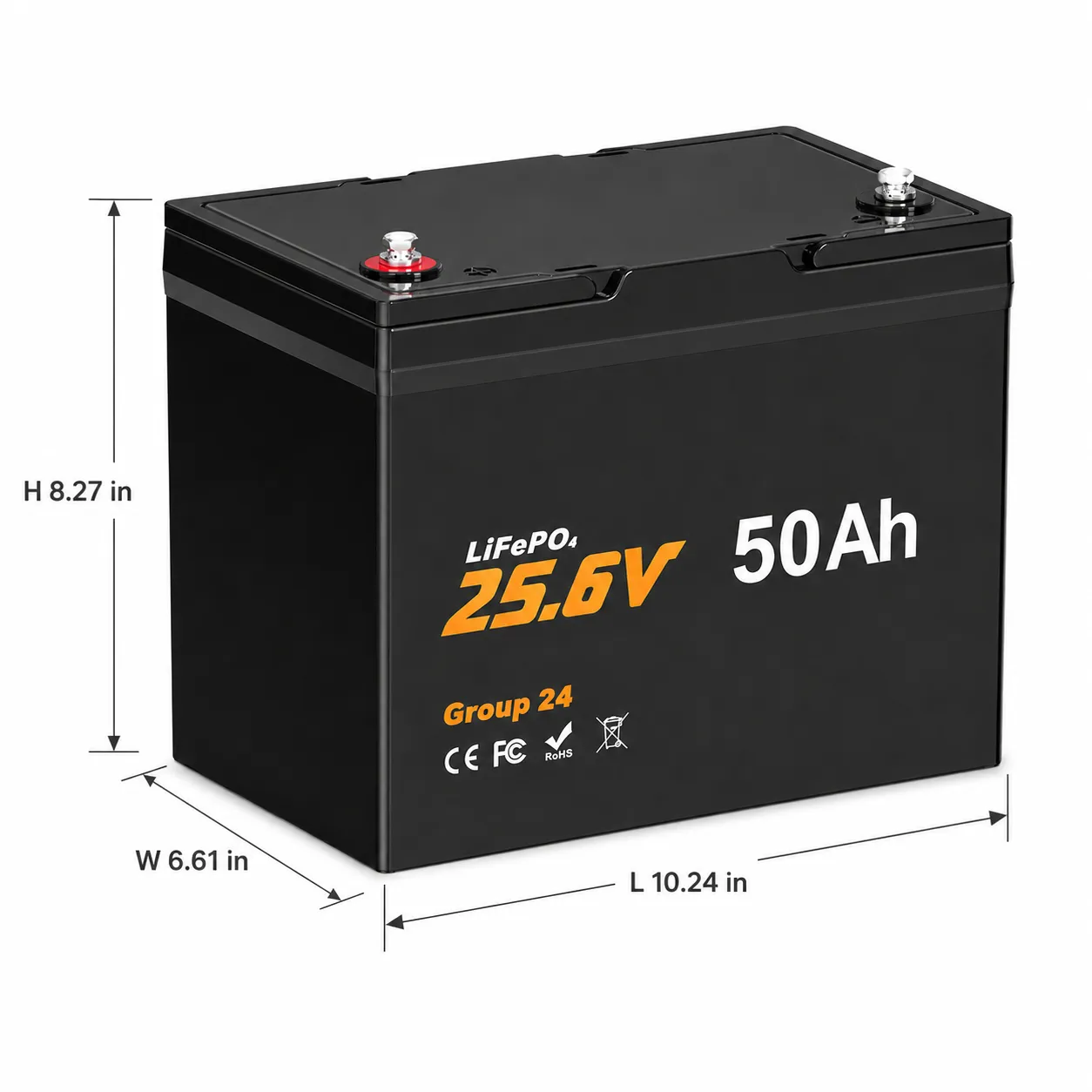
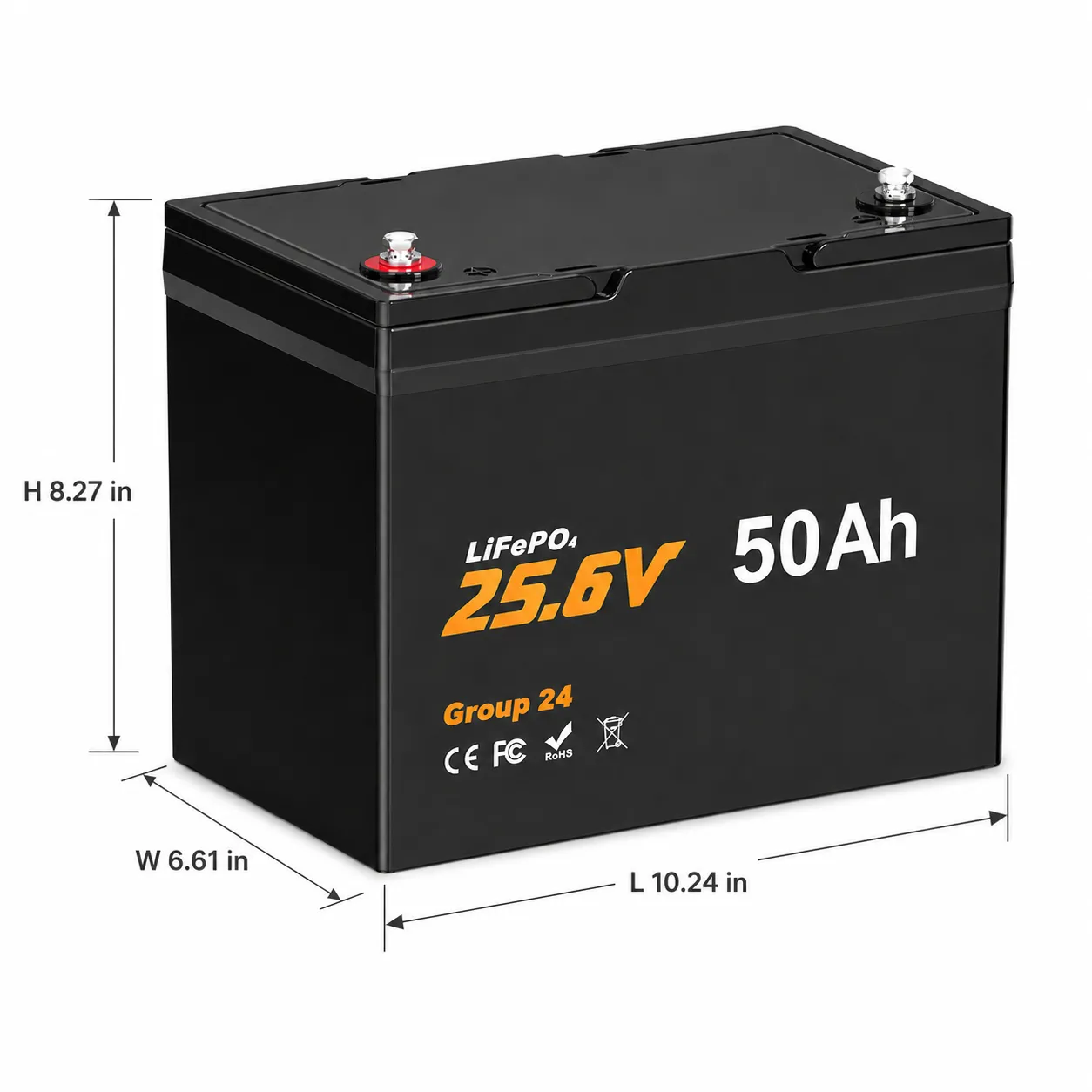
The battery measures 10.24 × 6.61 × 8.31 inches and weighs approximately 21.15 lb. Before installation, check the battery tray, hold-down points, terminal clearance and cable route rather than relying on the Group 24 designation alone.
The ABS enclosure uses M8 bolt terminals and carries an IP65 protection rating. It should still be mounted upright in a dry, ventilated and protected battery compartment, not left exposed on an open deck.
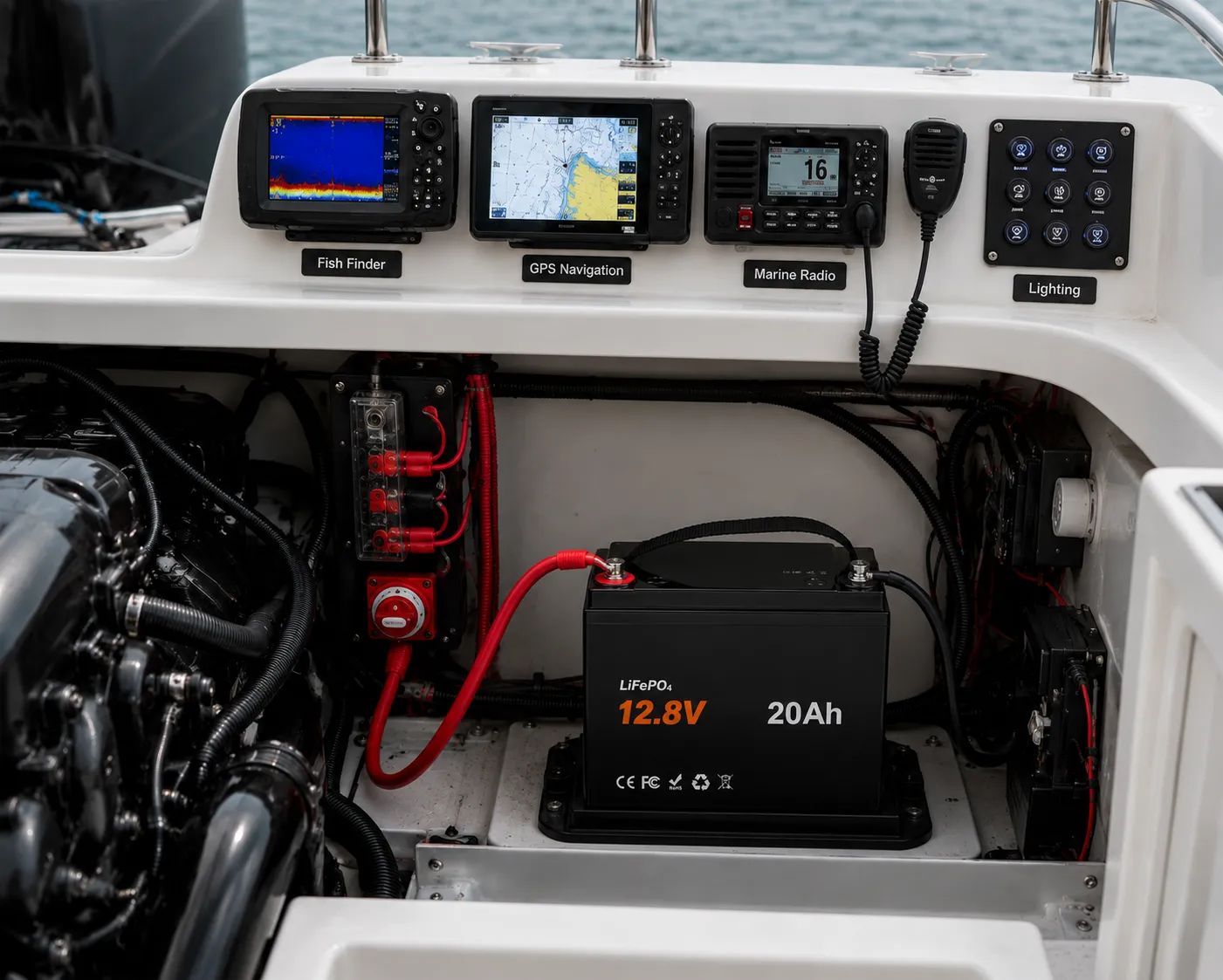
Bluetooth monitoring allows the operator to check state of charge, battery voltage, current, temperature and operating status from a compatible mobile device. This is useful on fishing boats where the battery is installed inside a closed compartment and cannot be inspected directly while the trolling motor is operating.
Bluetooth information should be used together with correct system wiring, circuit protection and routine physical inspection. It does not replace a properly sized fuse or circuit breaker, battery disconnect switch or secure terminal connections.
The integrated 50A BMS manages charging and discharging while providing protection against overcharge, over-discharge, overcurrent, short circuit and excessive temperature. The battery supports 50A continuous discharge, 50A maximum continuous charging and a peak discharge current of 250A for one second.
A pre-charge function and automatic recovery from compatible protection events help support stable operation with suitable marine electrical equipment. Final compatibility must be confirmed against the trolling motor controller’s continuous current and startup-current requirements.
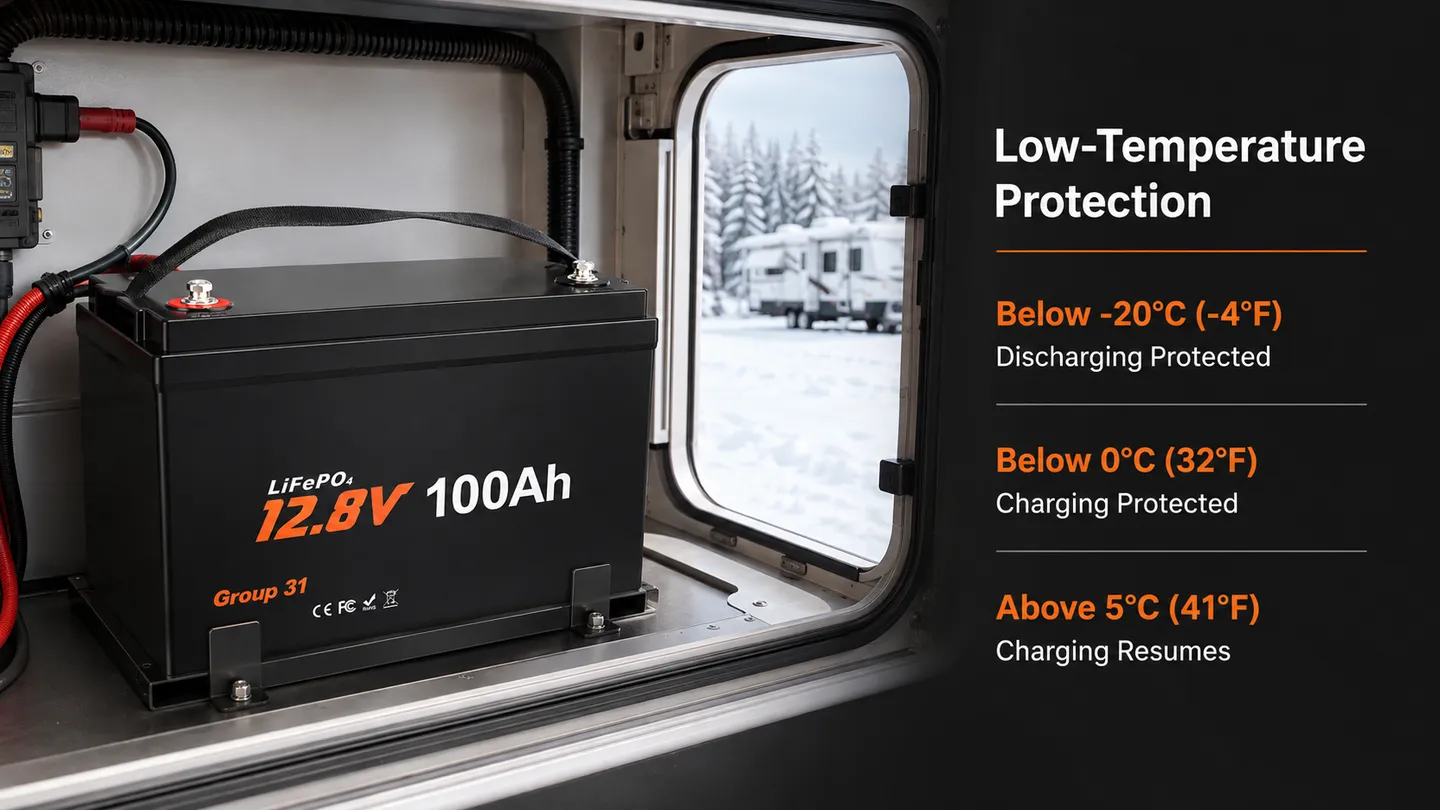
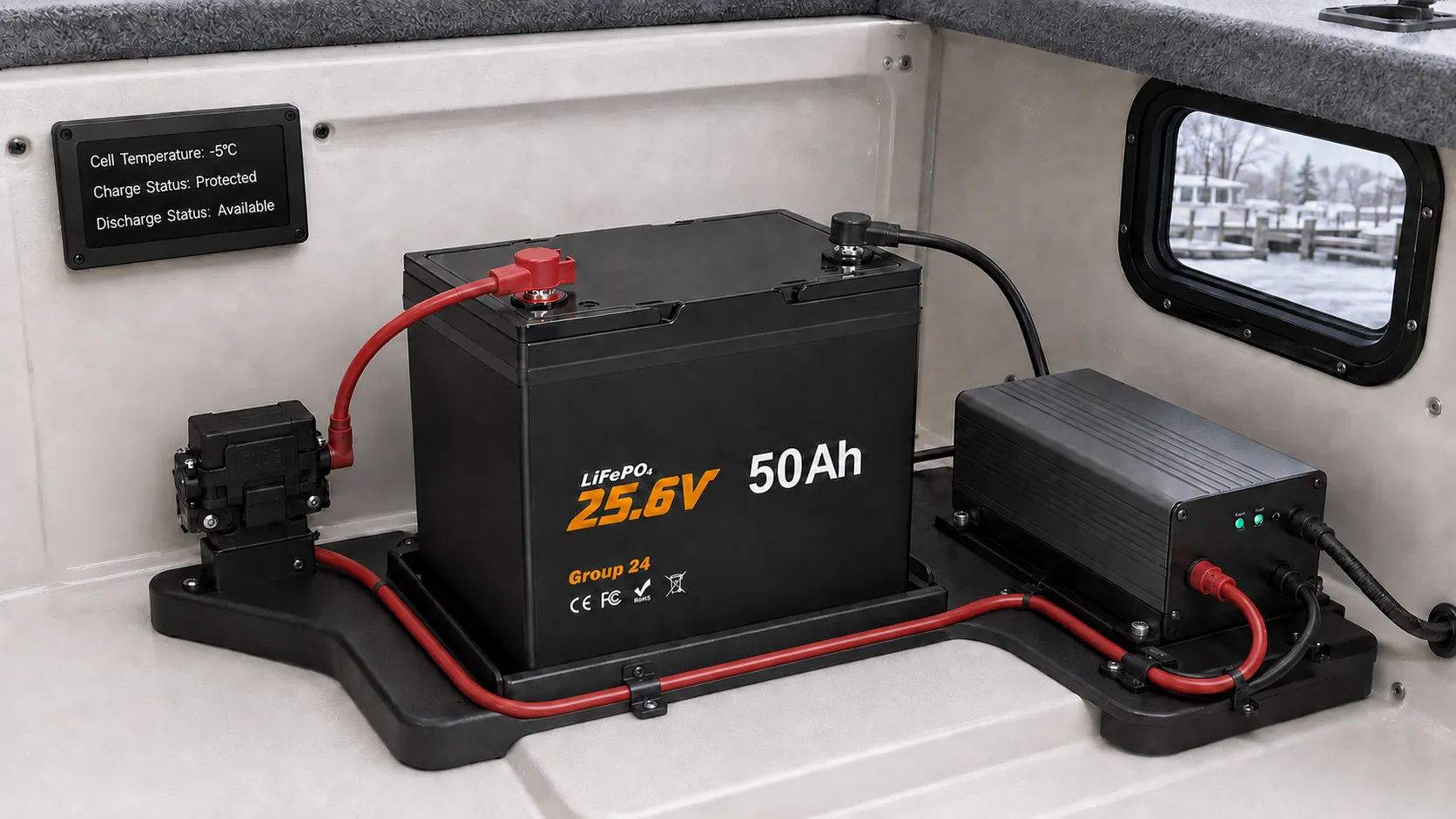
Charging automatically stops when cell temperature falls below 0°C / 32°F and resumes when the battery reaches a safe recovery temperature of at least 5°C / 41°F. Discharge operation is supported down to -20°C / -4°F, subject to load conditions and the BMS protection limits.
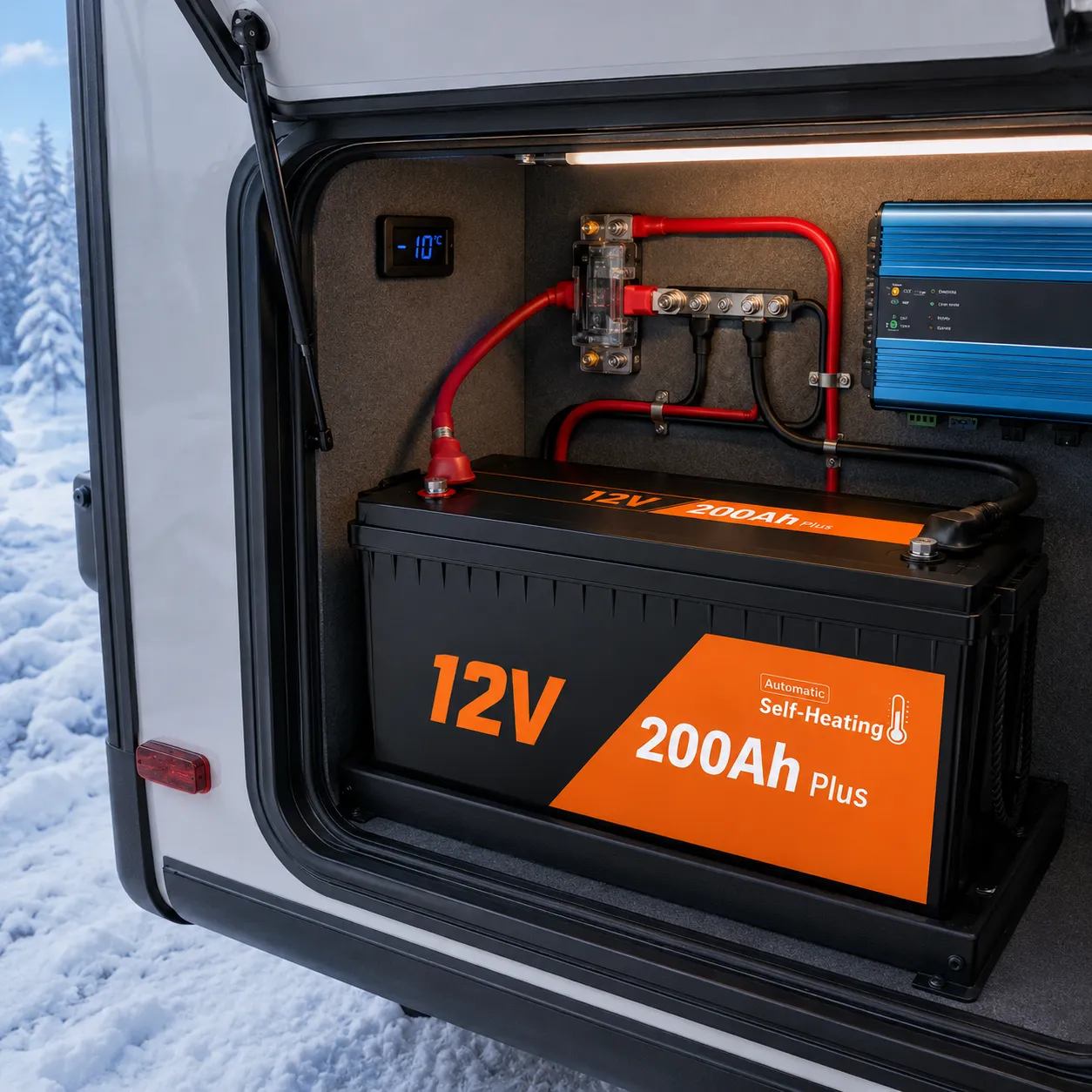
This model provides low-temperature charging protection; it is not a self-heating battery. When operating in cold climates, install the battery inside a dry protected compartment and allow it to warm naturally before charging.
For compatible 24V trolling motor installations, one 25.6V 50Ah LiFePO4 battery can replace a two-battery 12V series bank. The LiFePO4 system provides 1,280Wh of rated energy without requiring a series connection between two separate 12V batteries.
Replacement compatibility is not determined by voltage and case size alone. Verify the trolling motor’s current demand, battery-tray dimensions, charger profile, cable size, overcurrent protection and required operating time before replacing an existing AGM or flooded lead-acid bank.
Use a charger designed for 24V LiFePO4 batteries with a CC/CV charging profile. The recommended charging voltage is 28.8V ± 0.4V, and the recommended charging current is 10A.
Solar panels must connect through a compatible MPPT charge controller. Alternator charging requires an appropriately configured DC-to-DC charger. Do not connect an unregulated power source directly to the battery.
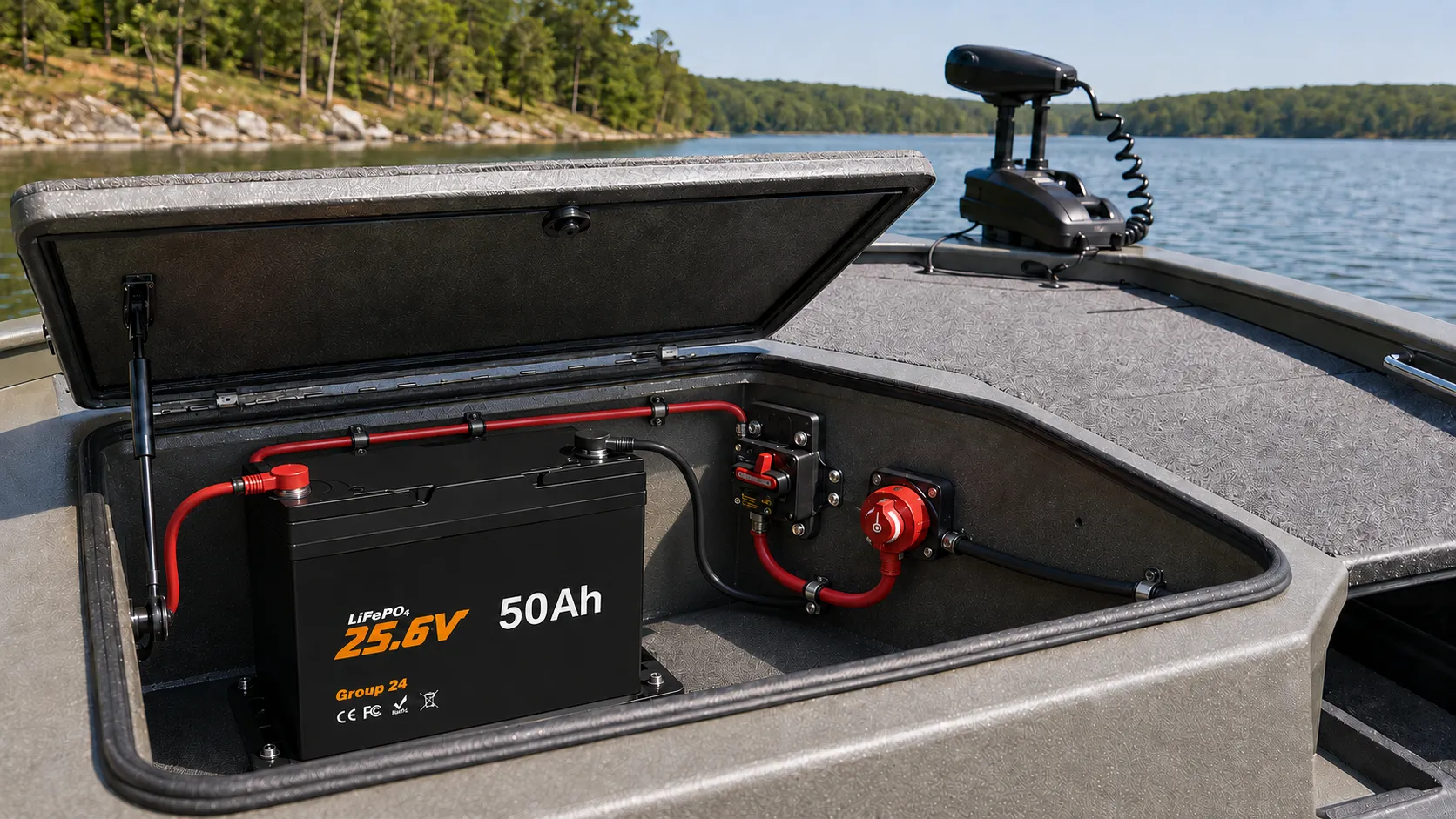
Install the battery upright in a dry, protected compartment using a correctly sized tray and secure hold-down system. Keep the terminals accessible and provide enough clearance for insulated terminal covers and correctly crimped cable lugs.
The positive cable should pass through a correctly rated fuse or marine circuit breaker installed close to the battery, followed by a battery disconnect switch before continuing to the trolling motor circuit. Cable size and overcurrent protection must be selected for the motor current, cable length and applicable marine electrical standards.
| Battery chemistry | LiFePO4 |
|---|---|
| Nominal voltage | 25.6V |
| Rated capacity | 50Ah |
| Rated energy | 1,280Wh |
| BMS rating | 50A |
| Maximum continuous output | 1,280W |
| Maximum continuous discharge current | 50A |
| Maximum continuous charge current | 50A |
| Peak discharge current | 250A for 1 second |
| Recommended charge current | 10A |
| Charge voltage | 28.8V ± 0.4V |
| Charge method | CC/CV |
| Charge temperature | 0°C to 50°C / 32°F to 122°F |
| Discharge temperature | -20°C to 60°C / -4°F to 140°F |
| Storage temperature | -10°C to 50°C / 14°F to 122°F |
| Low-temperature charge cutoff | Below 0°C / 32°F |
| Automatic charge recovery | At or above 5°C / 41°F |
| Cycle life | 4,000 cycles at 100% DOD; 6,000 cycles at 80% DOD; up to 15,000 cycles at 60% DOD |
| Maximum configuration | 4 parallel × 2 series, using matched batteries where supported |
| Maximum expanded system | 51.2V 200Ah / 10.24kWh |
| Bluetooth monitoring | Supported |
| Self-heating | Not supported |
| Terminals | M8 bolt terminals |
| Dimensions | 10.24 × 6.61 × 8.31 in / approximately 260 × 168 × 211 mm |
| Case size | Group 24 |
| Approximate weight | 21.15 lb / 9.59 kg |
| Housing material | ABS |
| Protection rating | IP65 |
This is a deep-cycle battery designed primarily for compatible trolling motors and auxiliary power systems. It must not be used as an engine-starting battery. It is not recommended for golf carts or high-power electric outboard motors unless the equipment manufacturer confirms that the battery’s 50A continuous and 250A one-second peak ratings meet all operating requirements.
Yes, it is designed for compatible 24V trolling motors, including many models in the 70–100 lb thrust range. Confirm the motor’s continuous current, startup demand and manufacturer requirements before installation.
It can replace a compatible 24V series bank when the required capacity, output current, physical dimensions and operating time match the application. The existing charger must also support a 24V LiFePO4 charging profile.
A compatible mobile device can display state of charge, voltage, current, battery temperature and operating status. App availability and interface details may vary by supplied Bluetooth module.
No. It has low-temperature charging protection but does not contain a self-heating system. Charging stops below 0°C / 32°F and resumes when the battery reaches the recovery temperature.
No. It is a deep-cycle trolling motor battery and is not designed as a marine cranking or engine-starting battery.
Matched batteries may support configurations up to 4P2S when approved for the project. Use batteries of the same model, capacity, age and state of charge, with correctly sized cables, individual branch protection and balanced connections.
Use a 24V LiFePO4 charger with a CC/CV profile and a charging voltage of 28.8V ± 0.4V. A 10A charging current is recommended for normal use.
Before placing an order, confirm the trolling motor voltage, maximum current, expected operating time, battery-compartment dimensions, charger profile and required system configuration. Technical review and product configuration support are available for compatible marine projects.
Request Product Information | Ask for Technical Support | View LiFePO4 Batteries
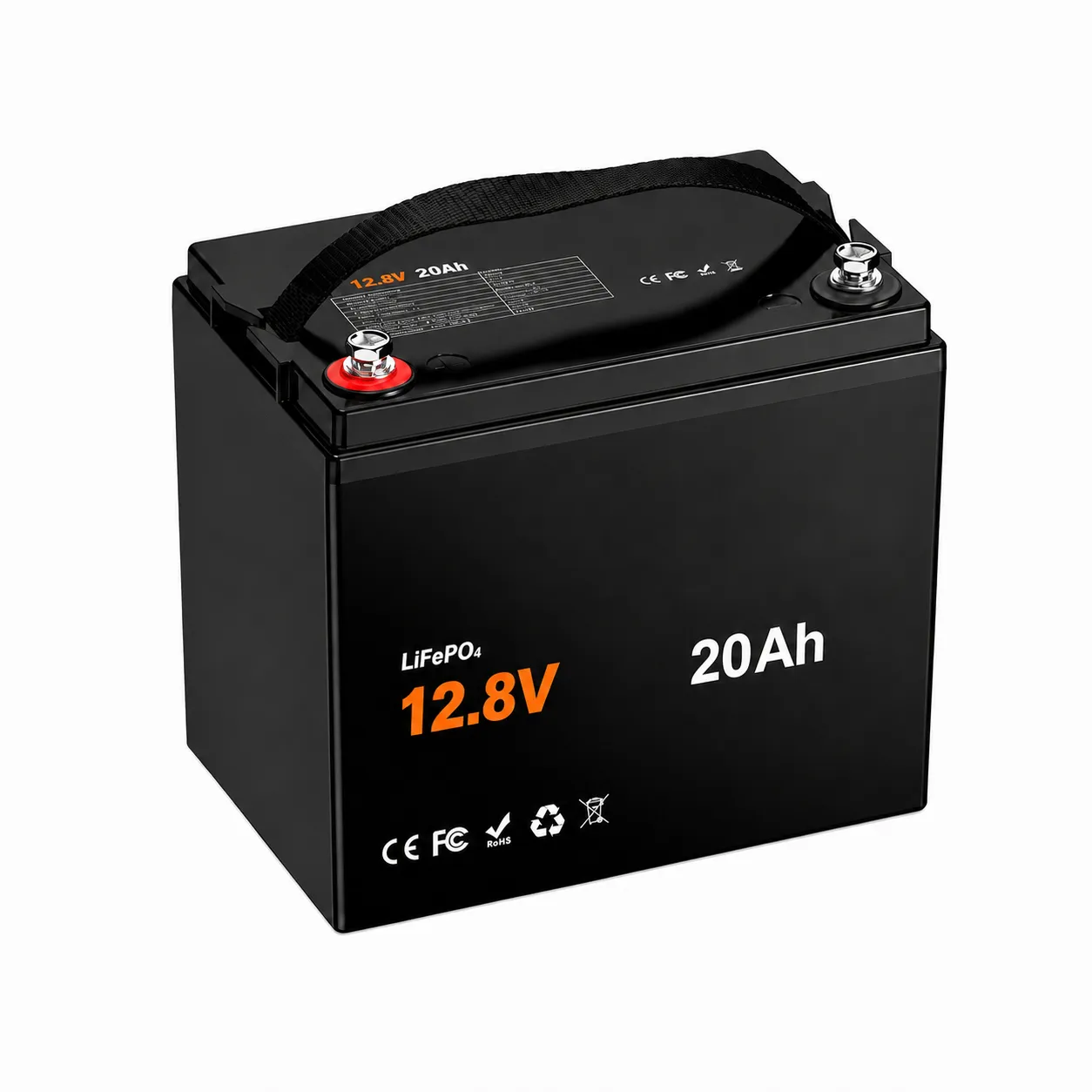
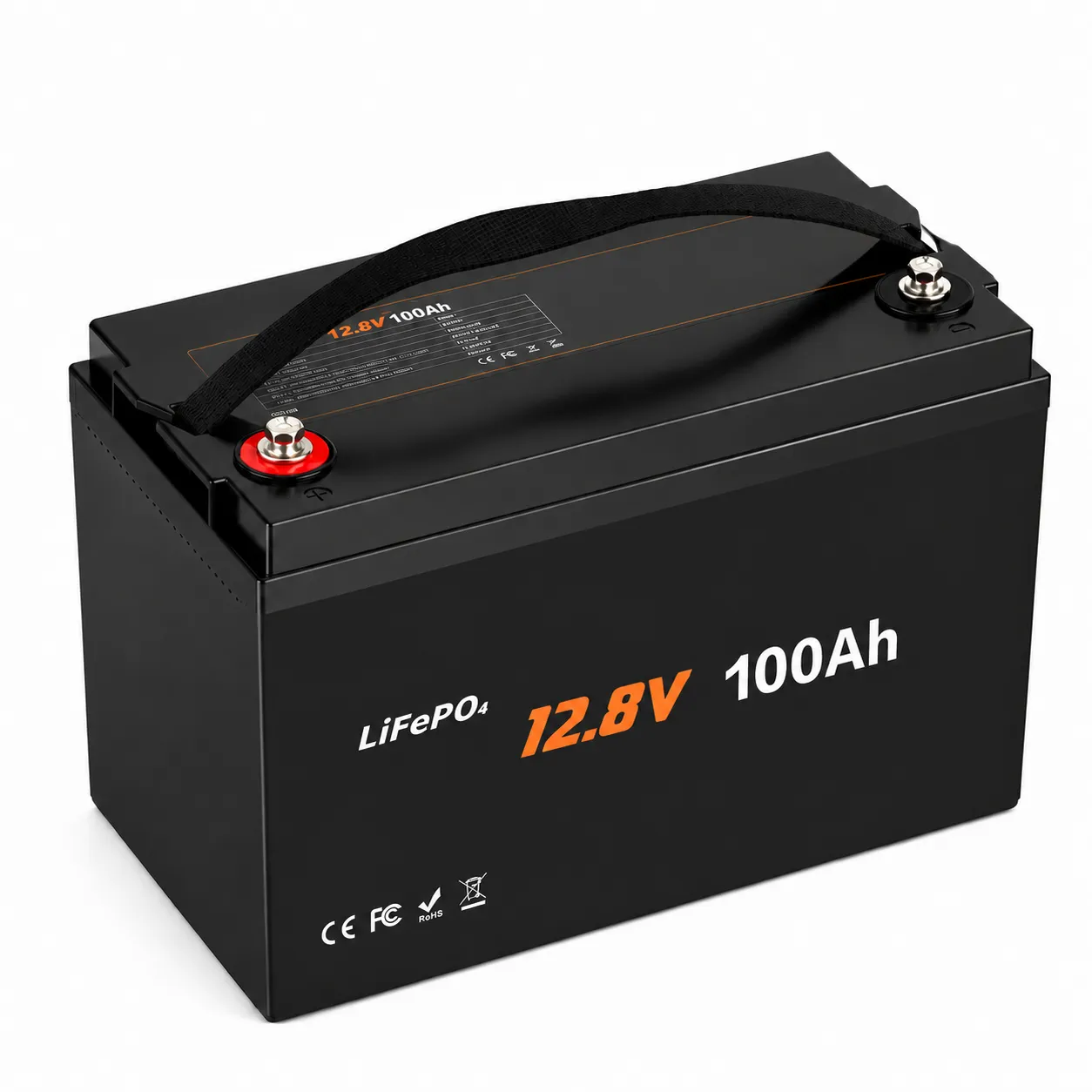
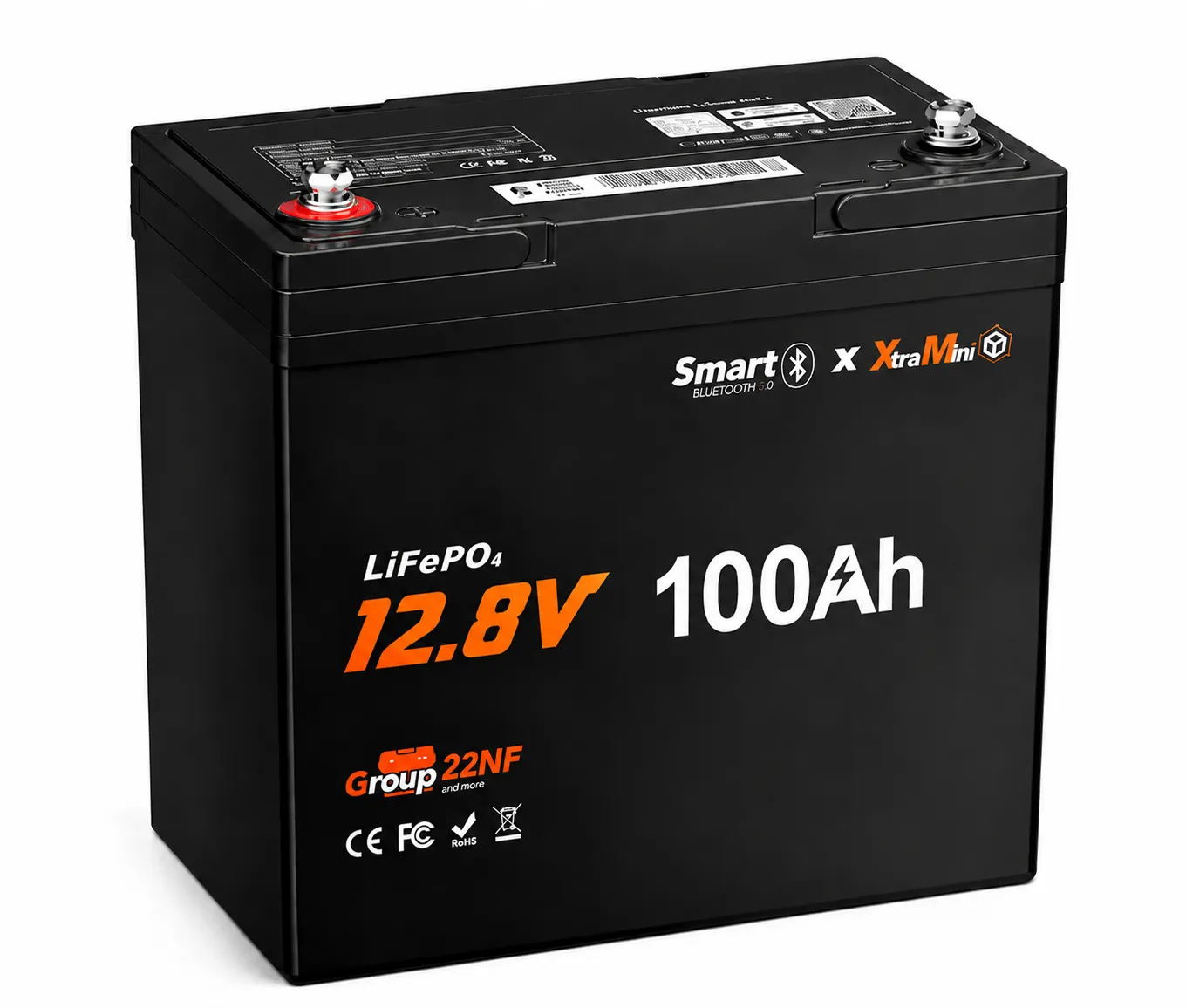
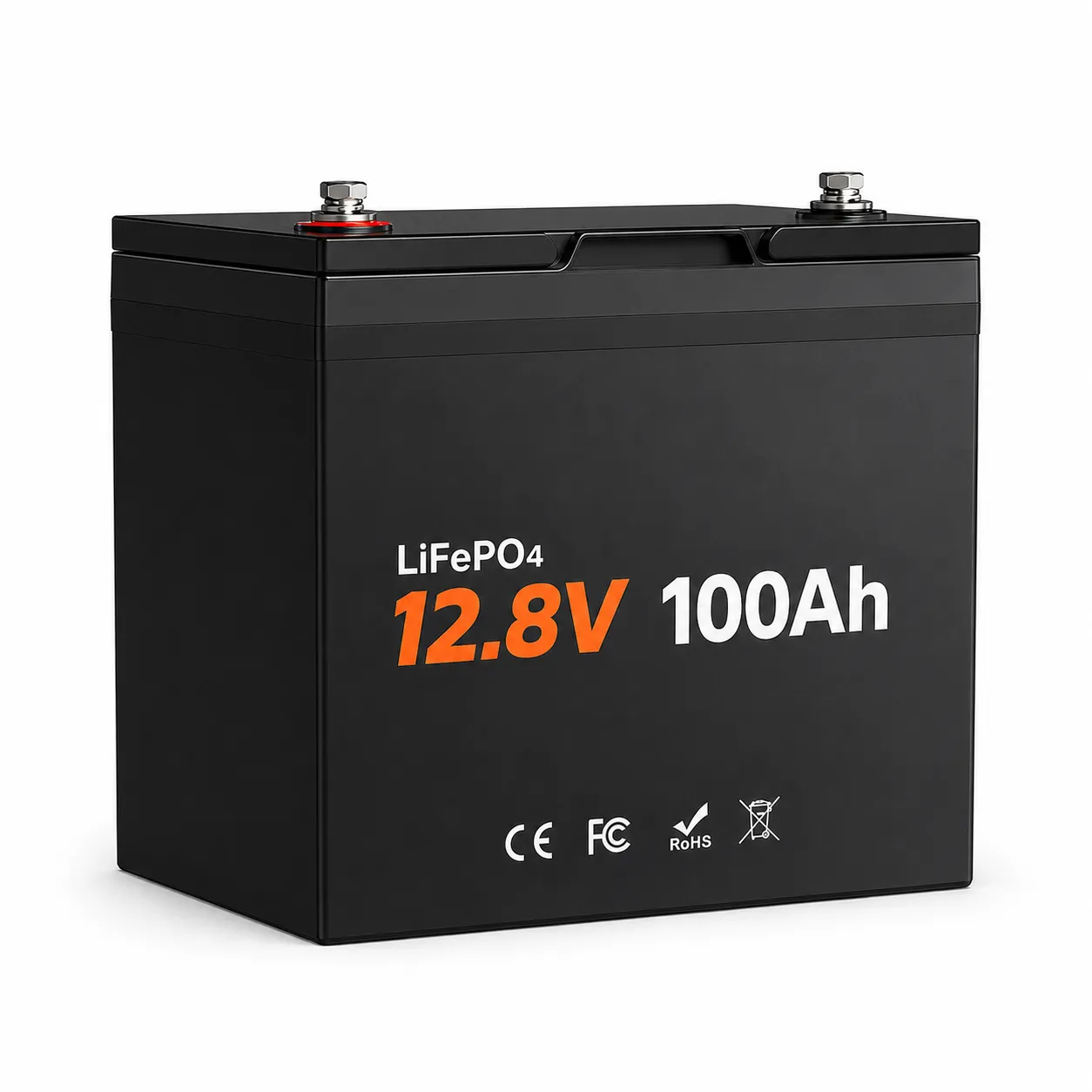
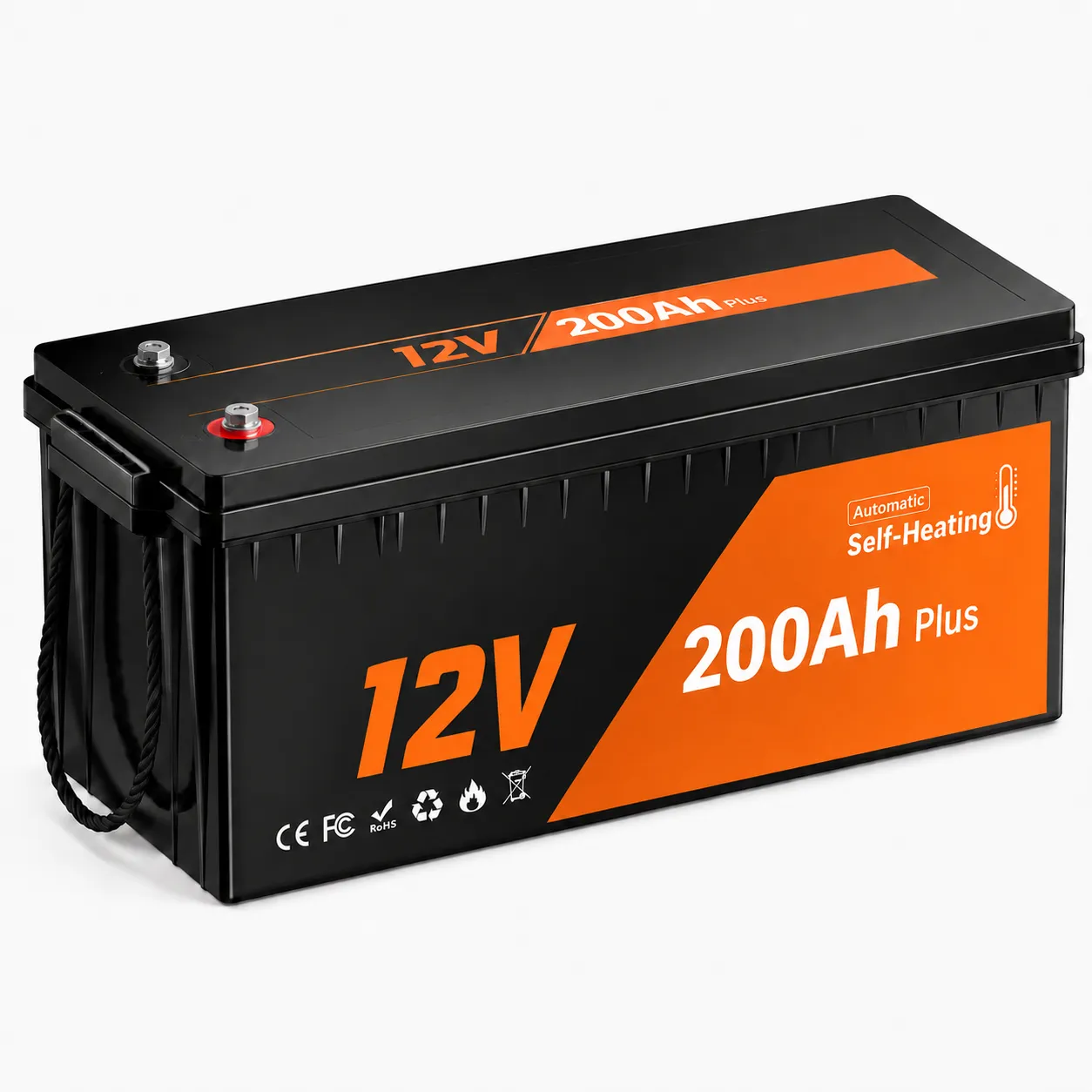
Many LiFePO4 batteries can replace compatible lead-acid deep-cycle batteries in RVs, boats, golf carts and industrial equipment. Before installation, confirm the system voltage, battery dimensions, terminal layout, charger profile, maximum load, cable size, fuse rating and operating temperature.
Most LiFePO4 batteries are compatible with standard 12V, 24V, 36V or 48V inverters when the system voltage and power requirements match. Many modern chargers also include a LiFePO4 charging profile. For lead-acid replacement projects, confirm the charger voltage, inverter rating and maximum load before installation. A compatible charger or DC-to-DC charger may be required if the existing charging equipment does not support LiFePO4 batteries.
Yes. OEM and custom battery support can include voltage, capacity, BMS settings, enclosures, terminals, connectors, communication protocols, labels and packaging. Send us the application, electrical requirements, installation dimensions and expected order quantity for review.
MOQ depends on the battery model, specification and customization requirements. Standard models may be available for sample testing, while custom enclosures, private labels and OEM production normally require a confirmed order quantity. Contact us with the model and required quantity for details.
Available certifications and documents depend on the battery model and destination market. Supporting documents may include UN38.3, MSDS, CE, RoHS and product test reports. Confirm the required documents and target market before placing an order.
Lead time depends on the battery model, order quantity, customization and testing requirements. Export shipping options are arranged according to the battery specification, destination and order volume. Send us the required quantity, delivery location and target schedule for a project-specific quotation.