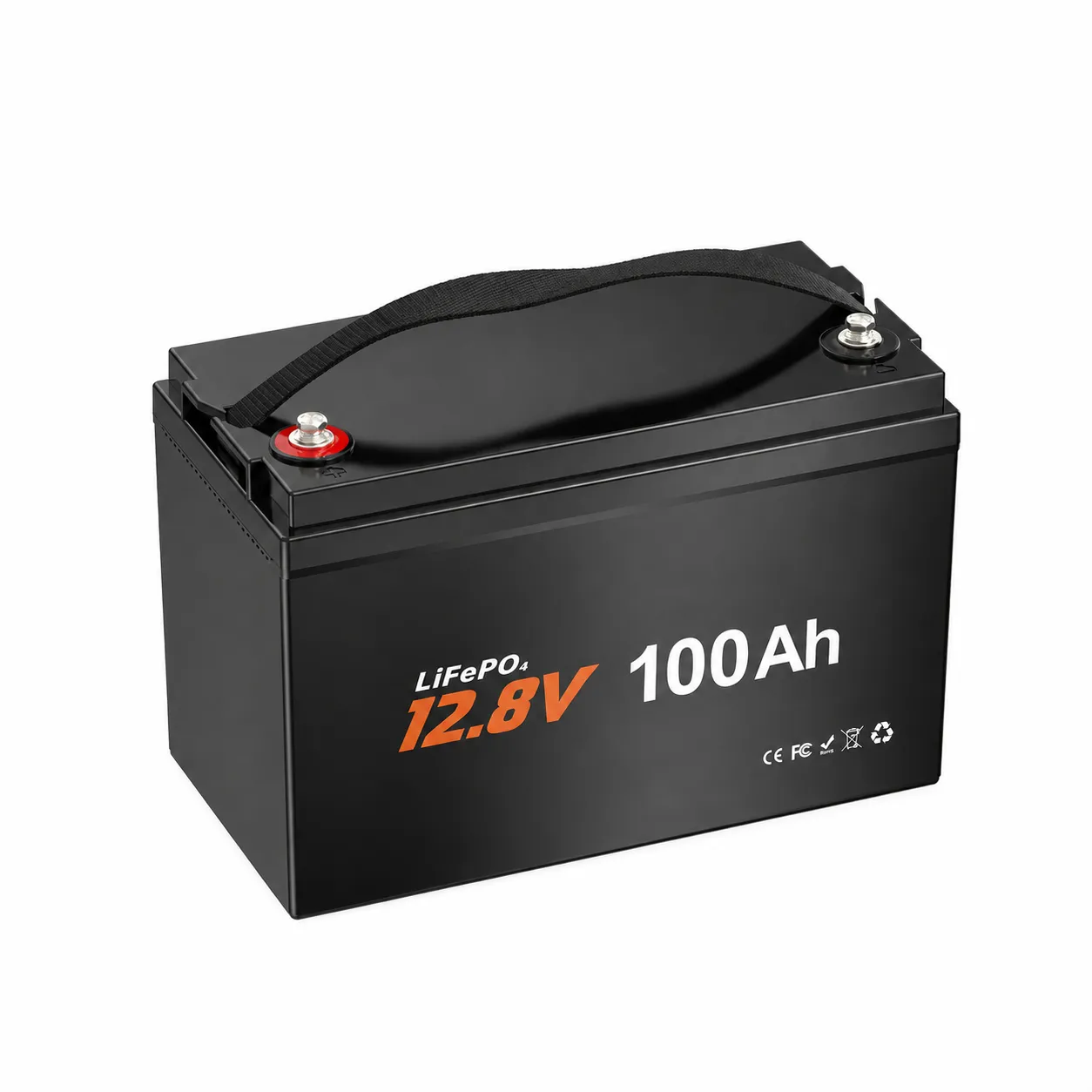
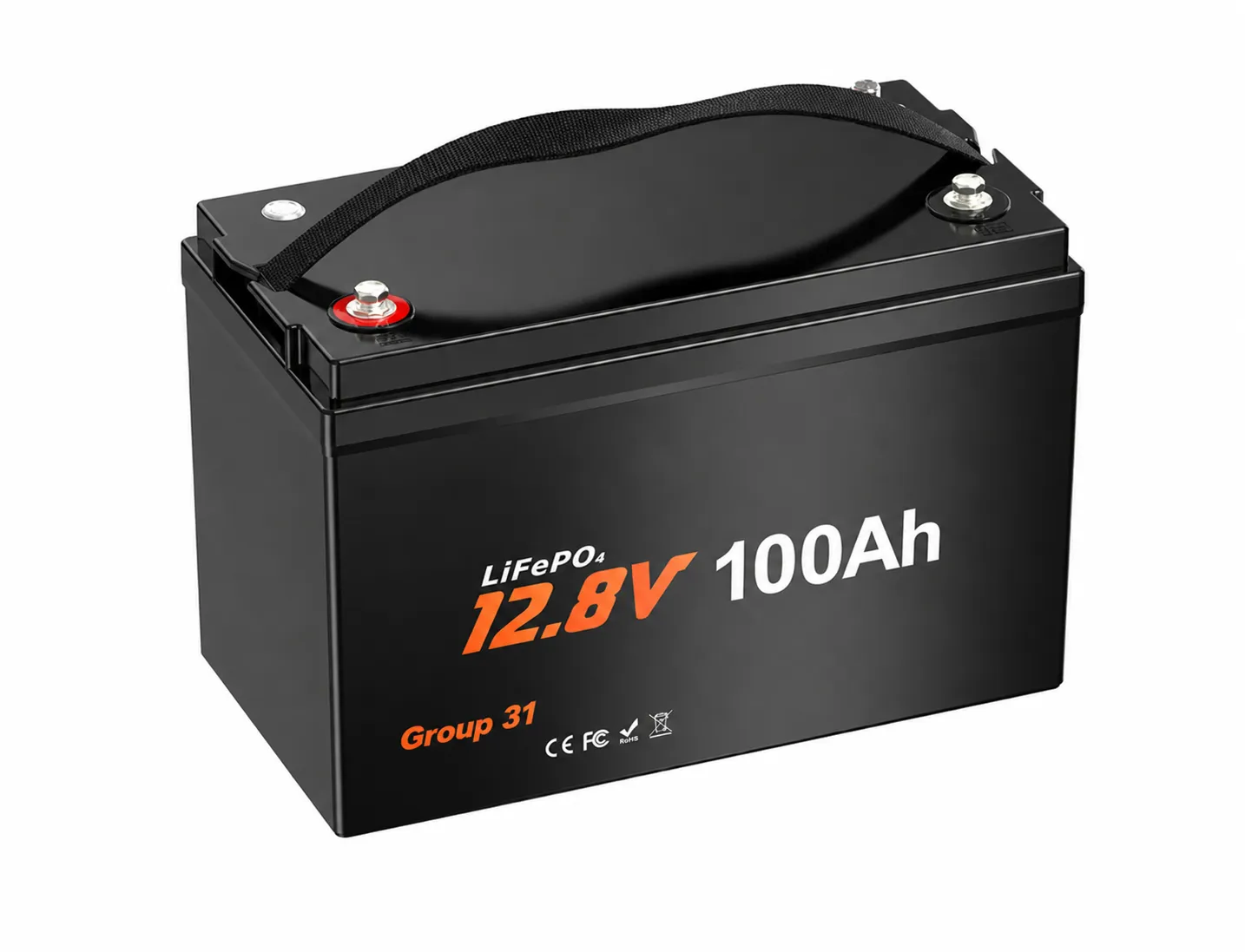
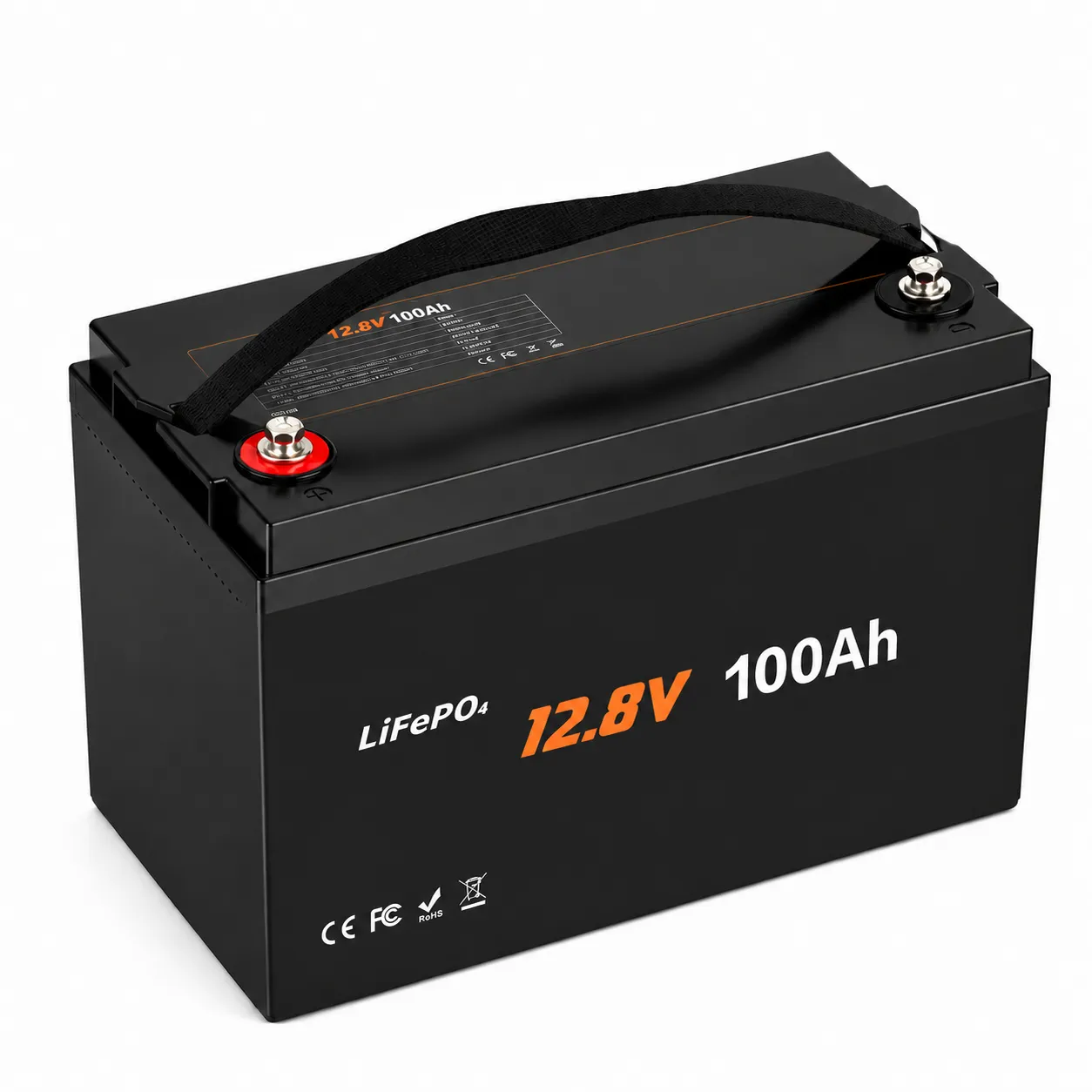
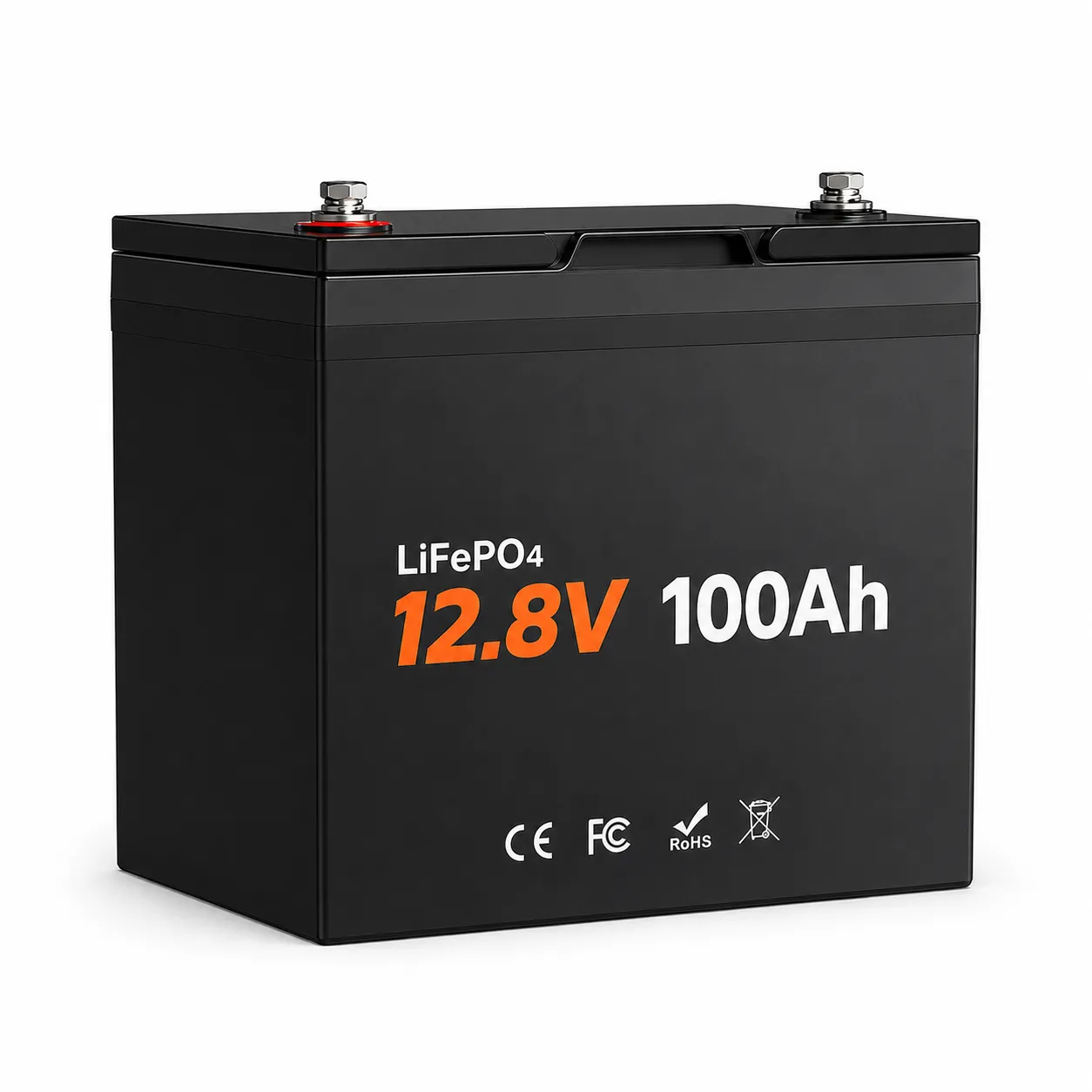
12V 100Ah Group 31 LiFePO4 Battery for Trolling Motors
$169.00
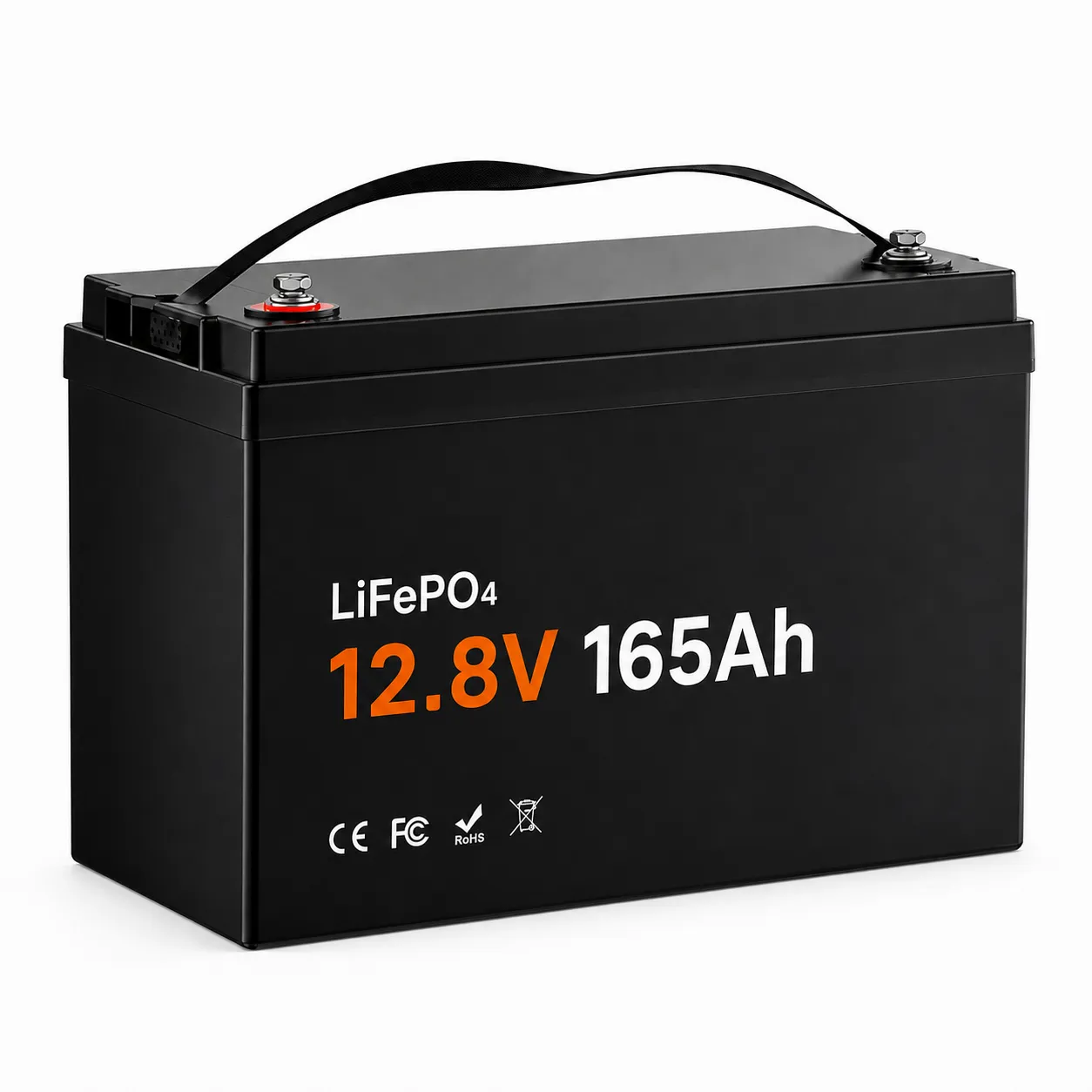
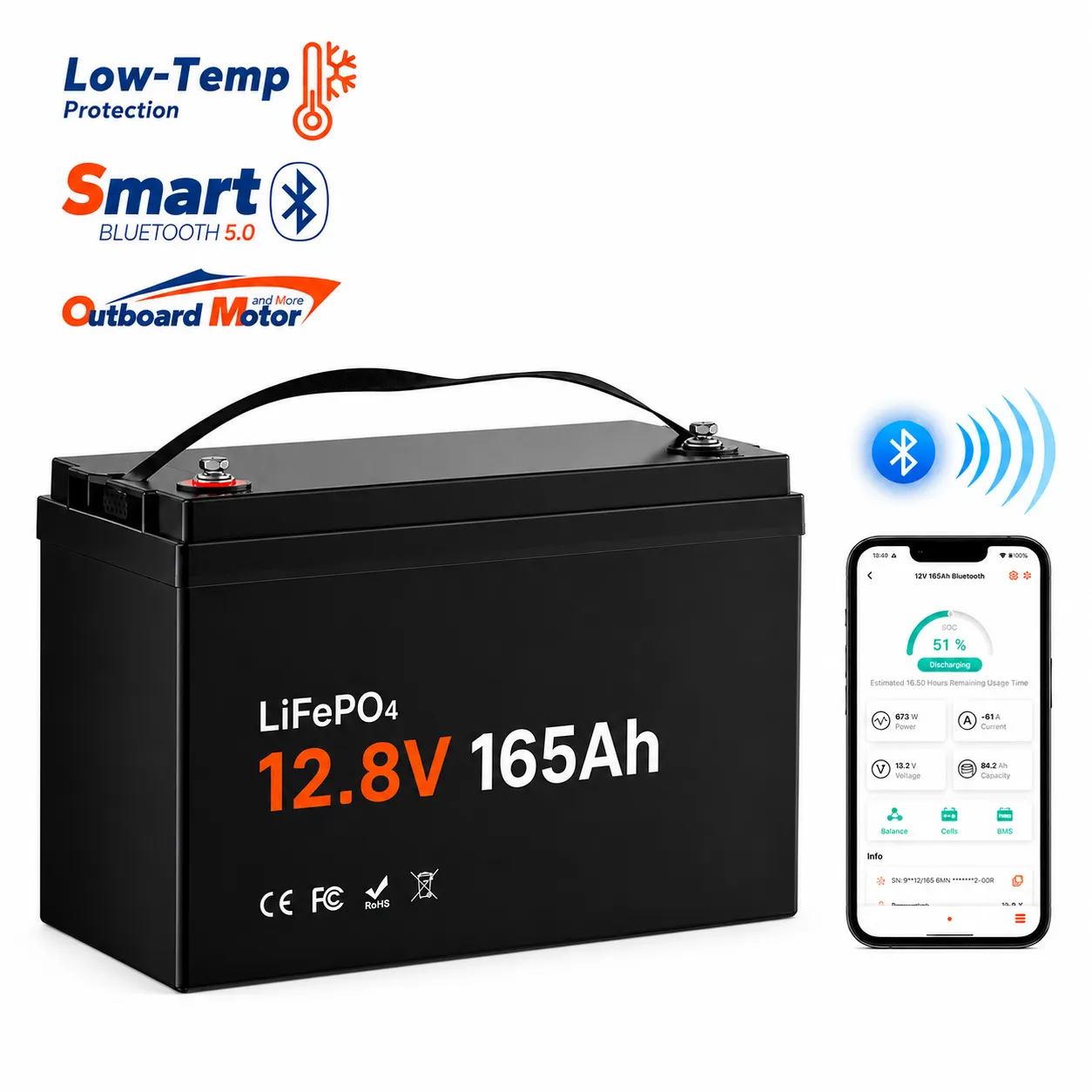
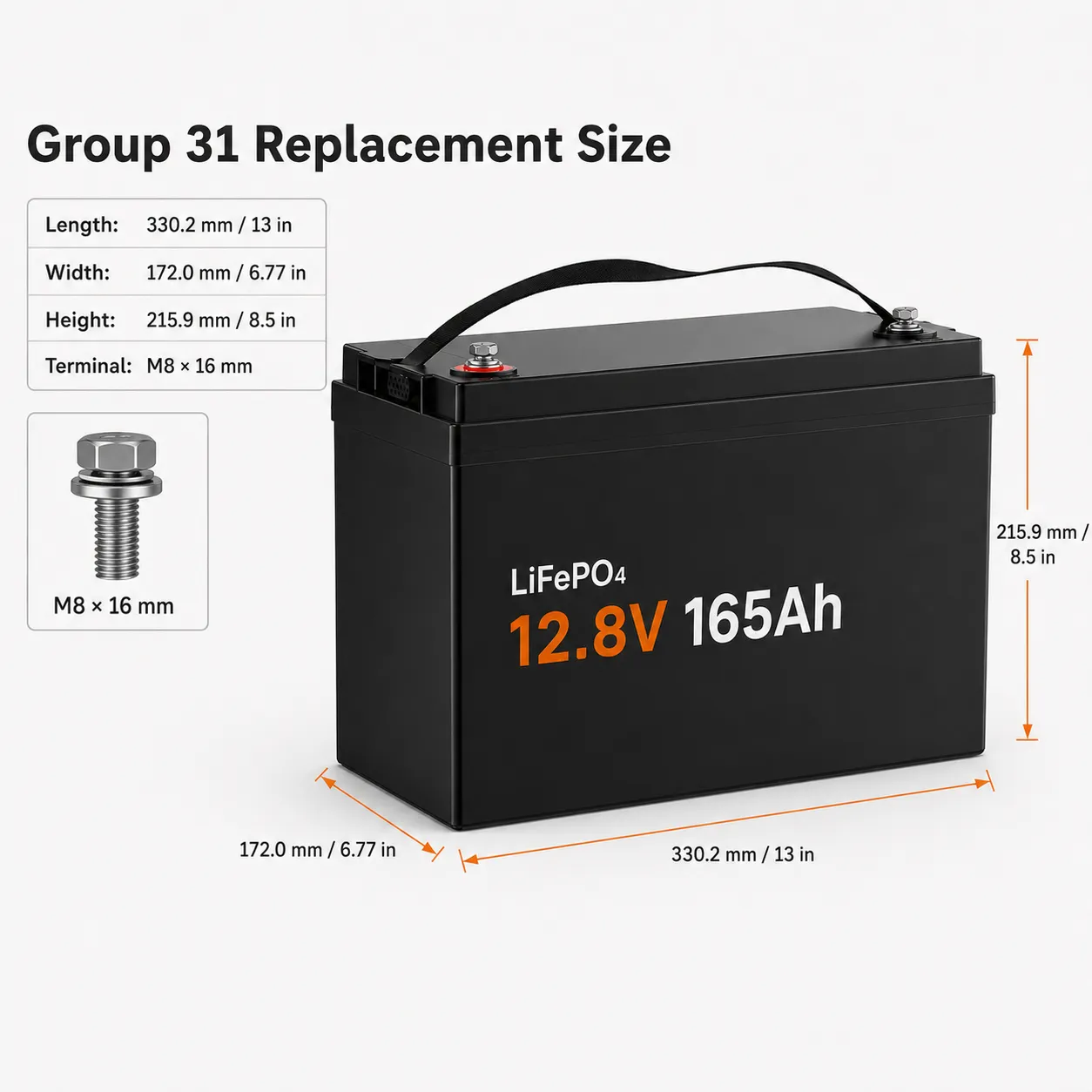
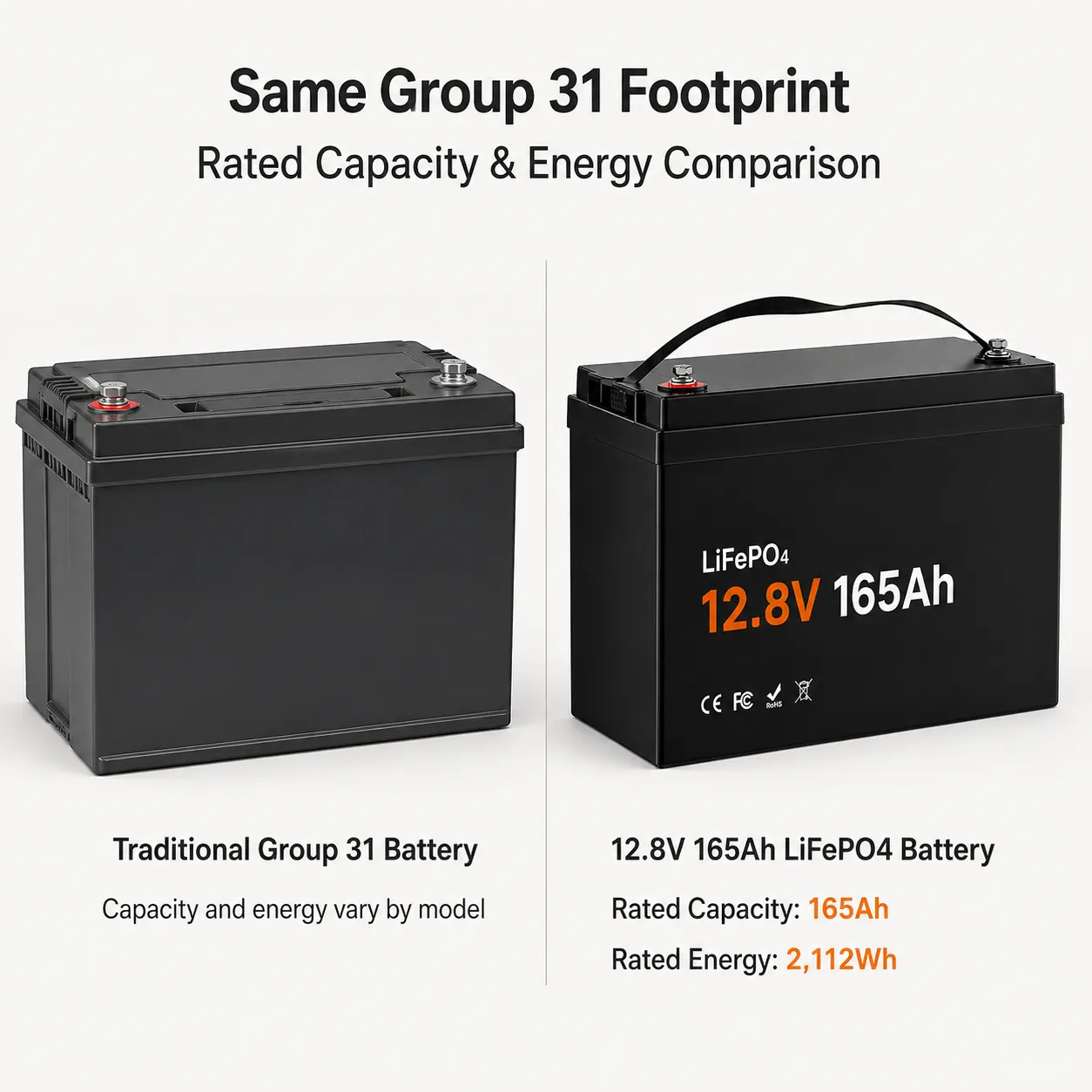
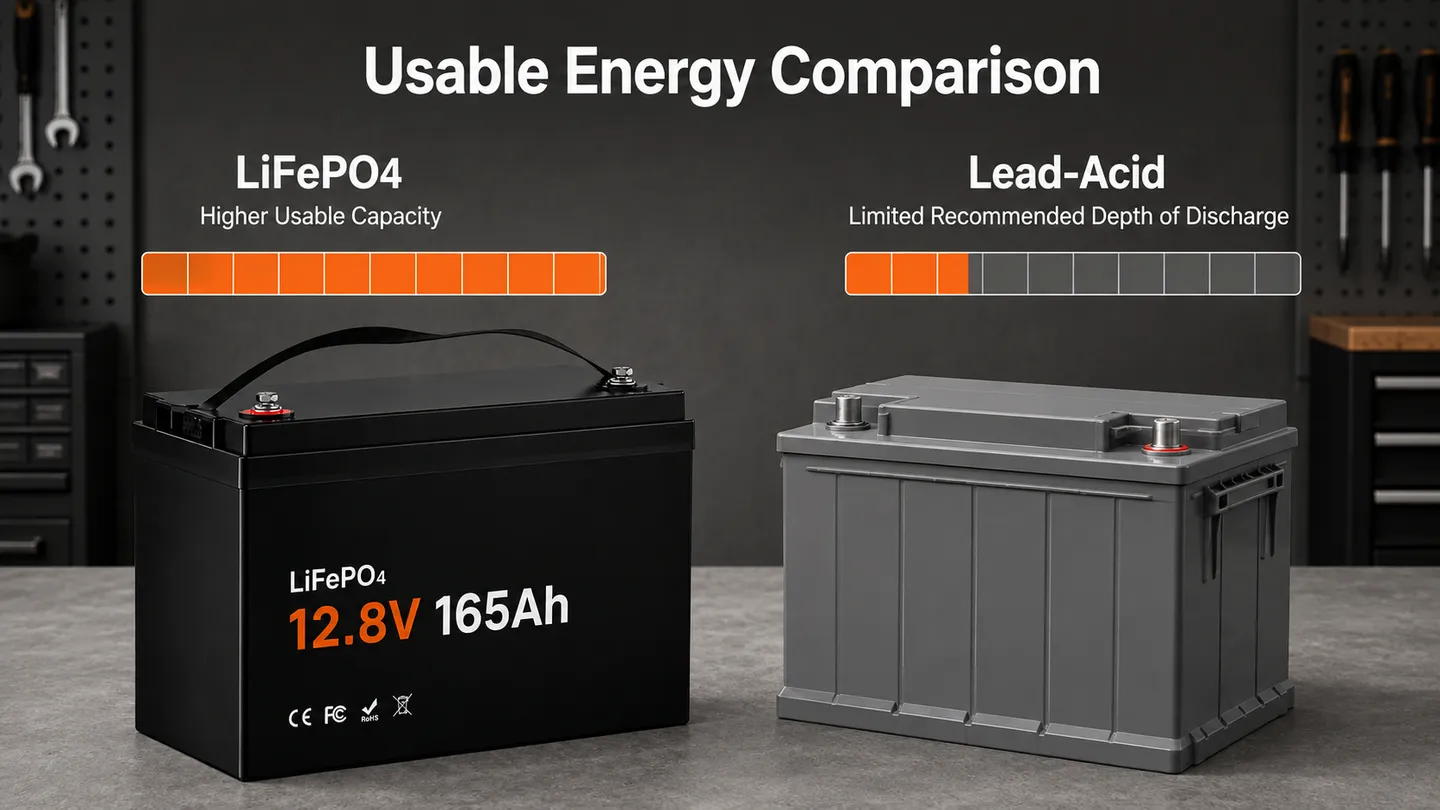
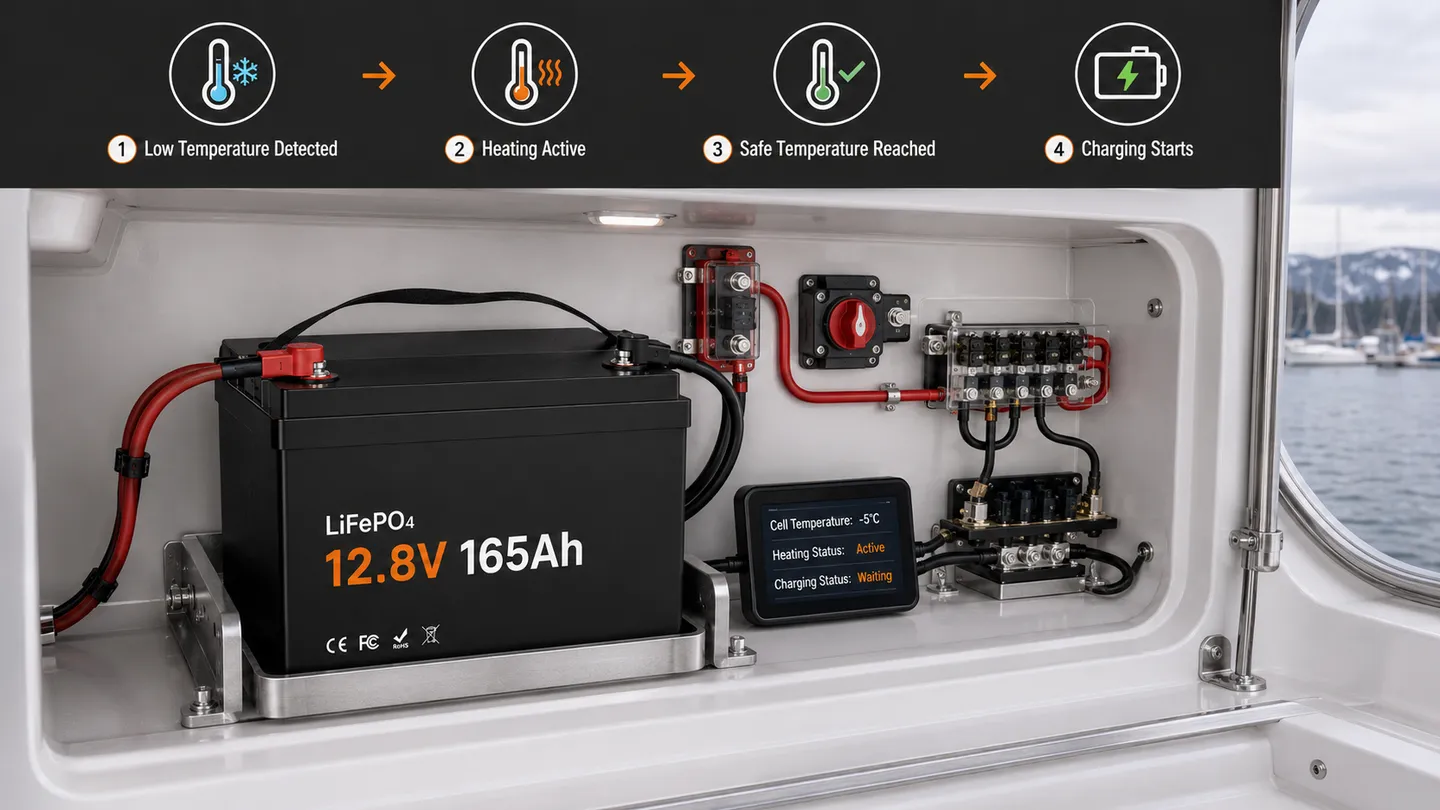
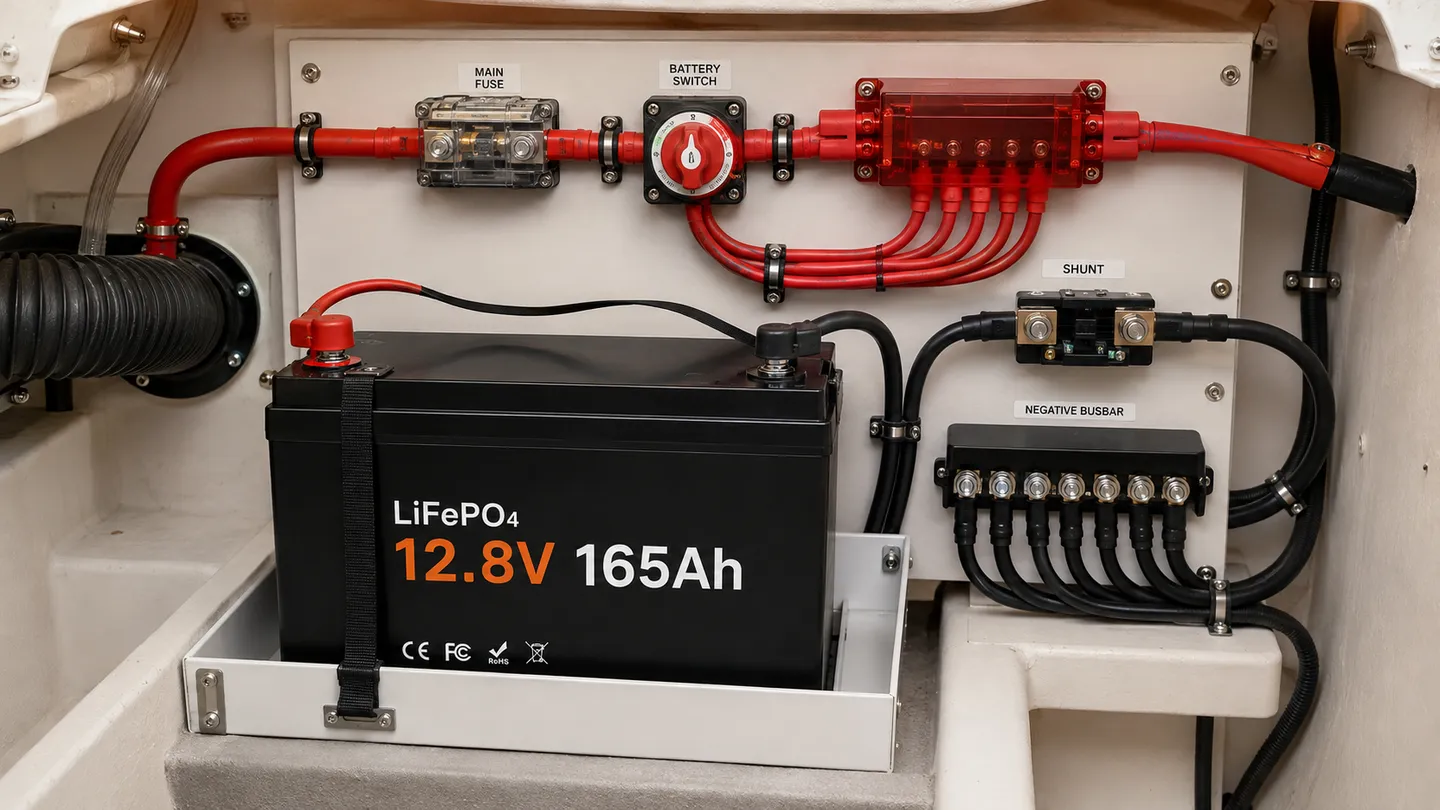
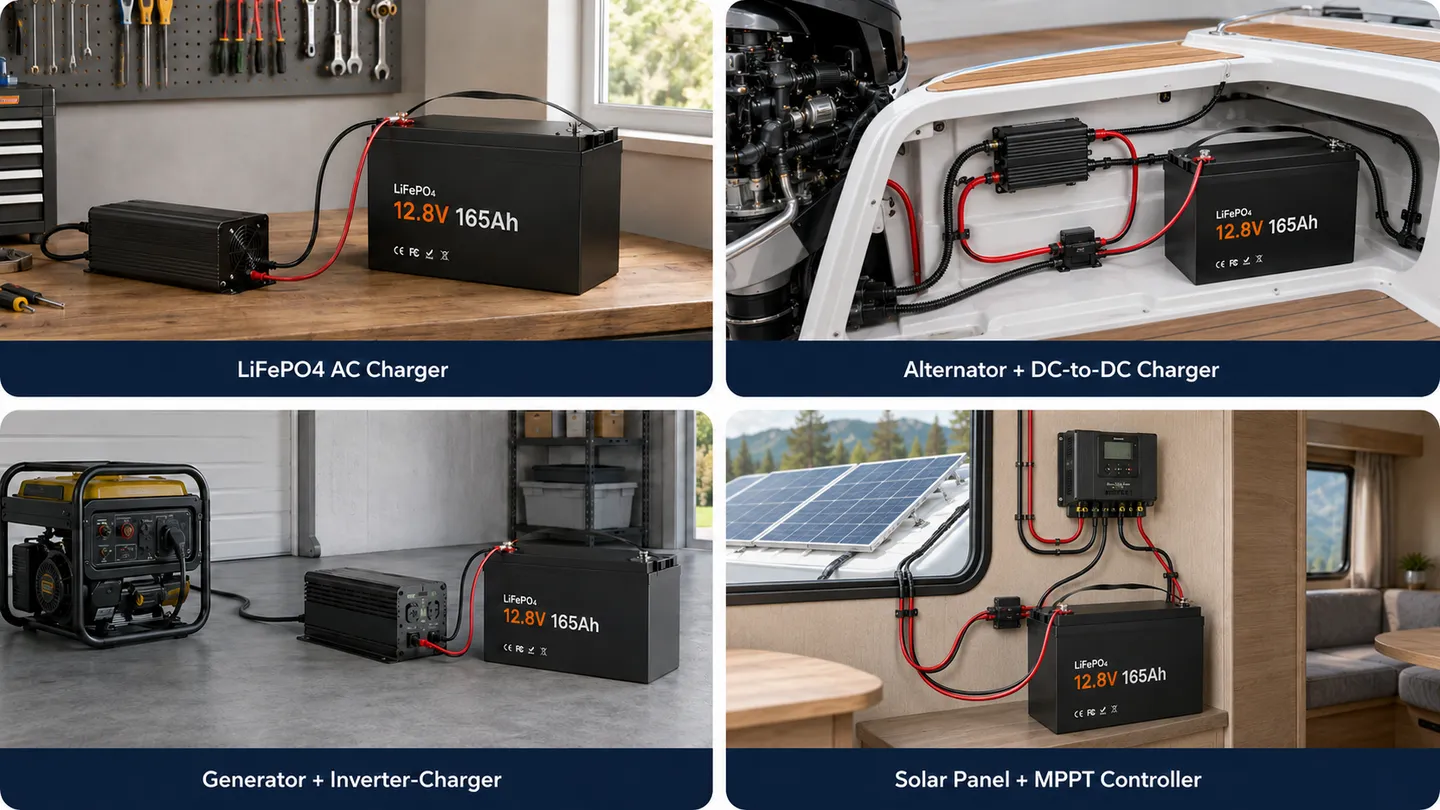
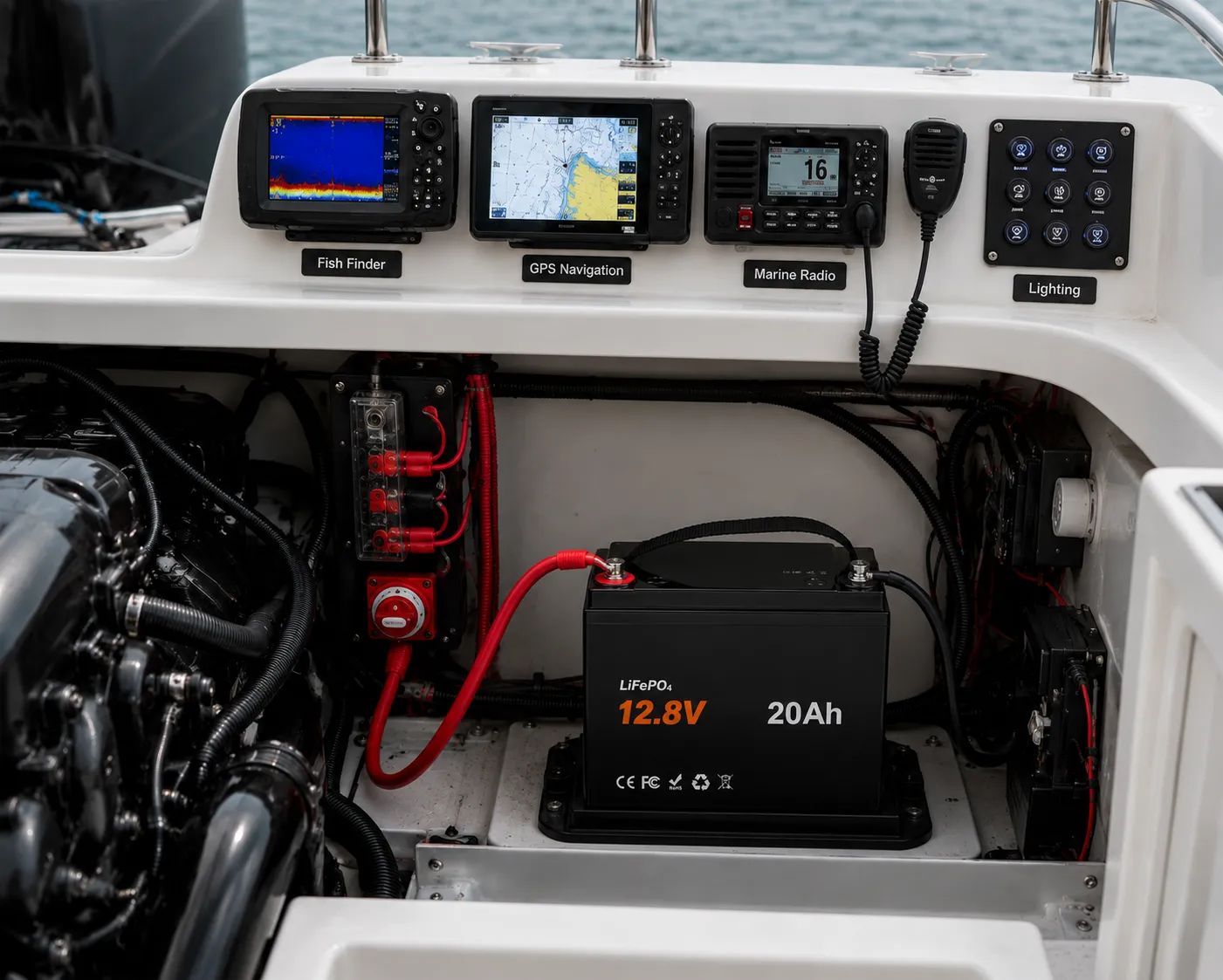
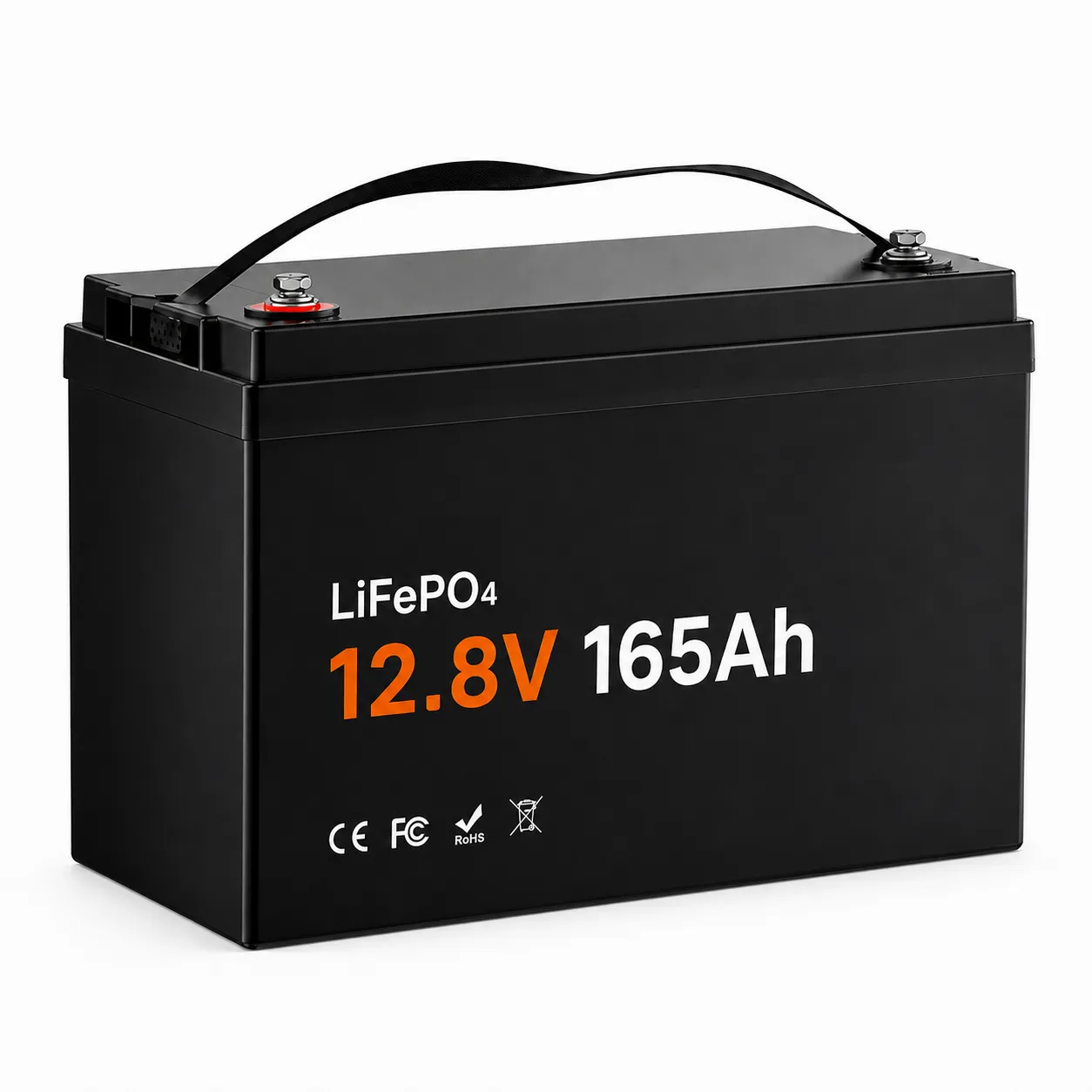
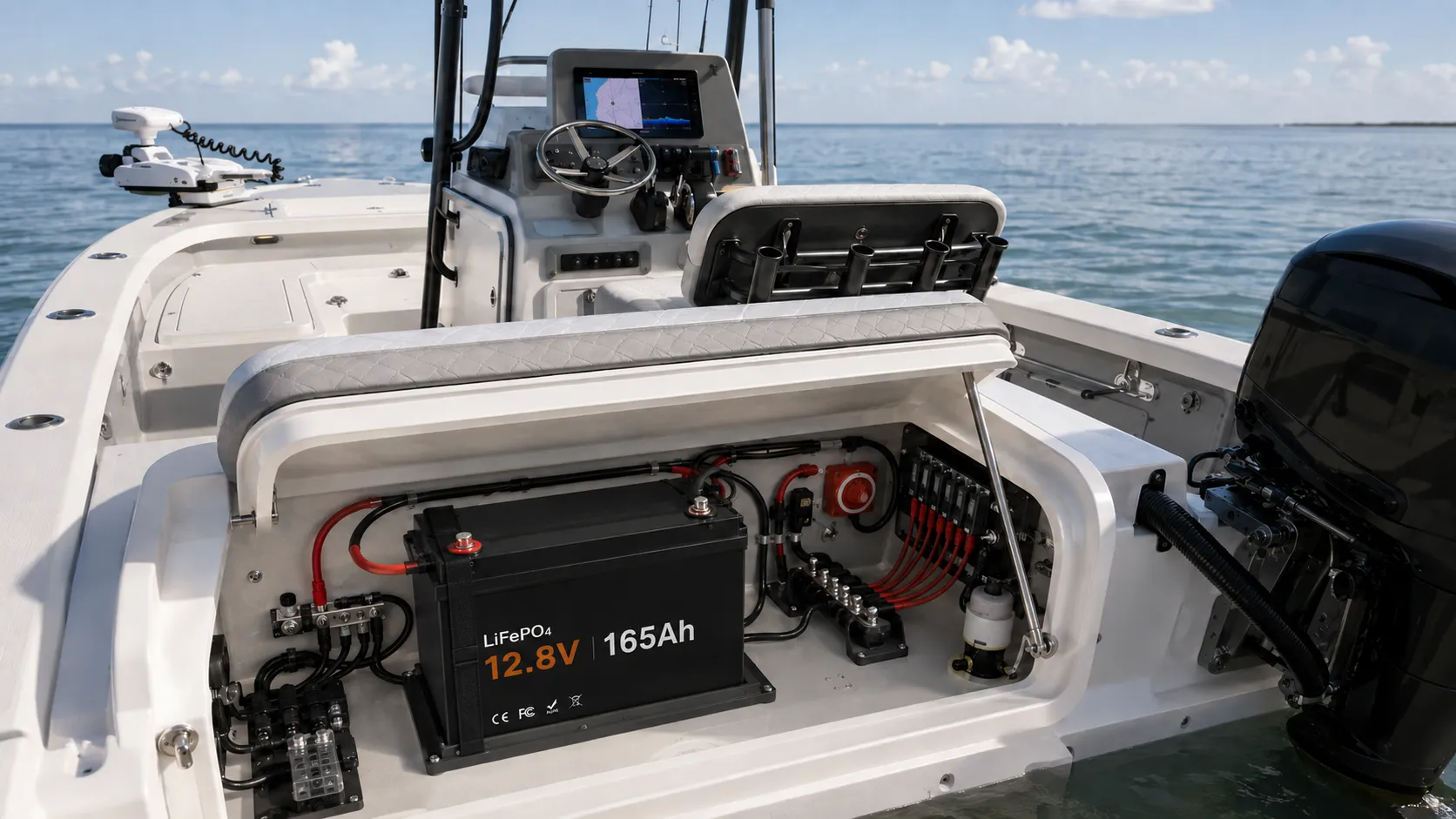
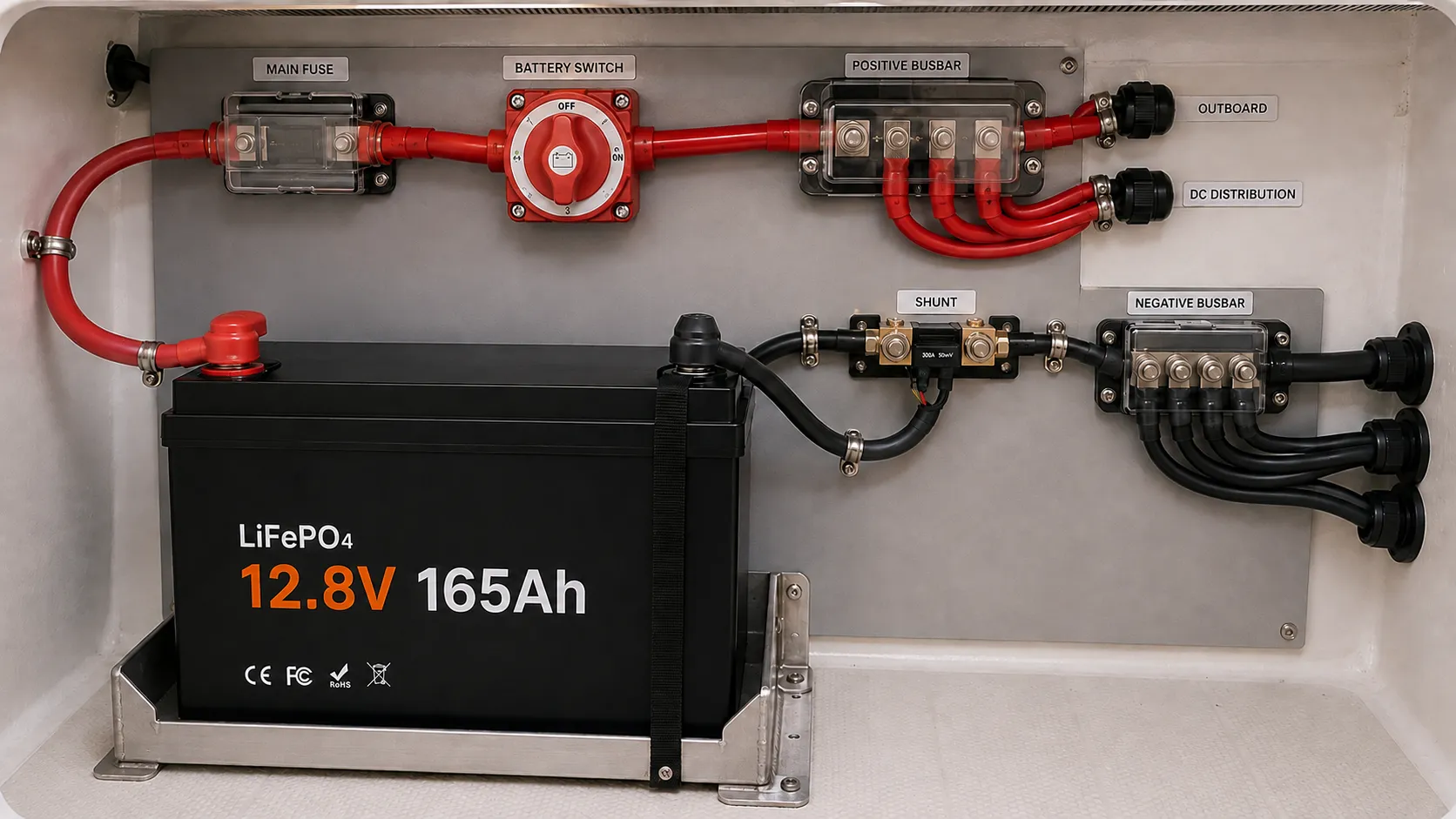
This 12V 165Ah dual-purpose marine LiFePO4 battery combines outboard-engine starting capability with 2112Wh of deep-cycle energy for trolling motors, fish finders, navigation equipment, lighting and other onboard loads. The Group 31 case provides a compact installation option for boats that would otherwise require separate starting and house batteries.
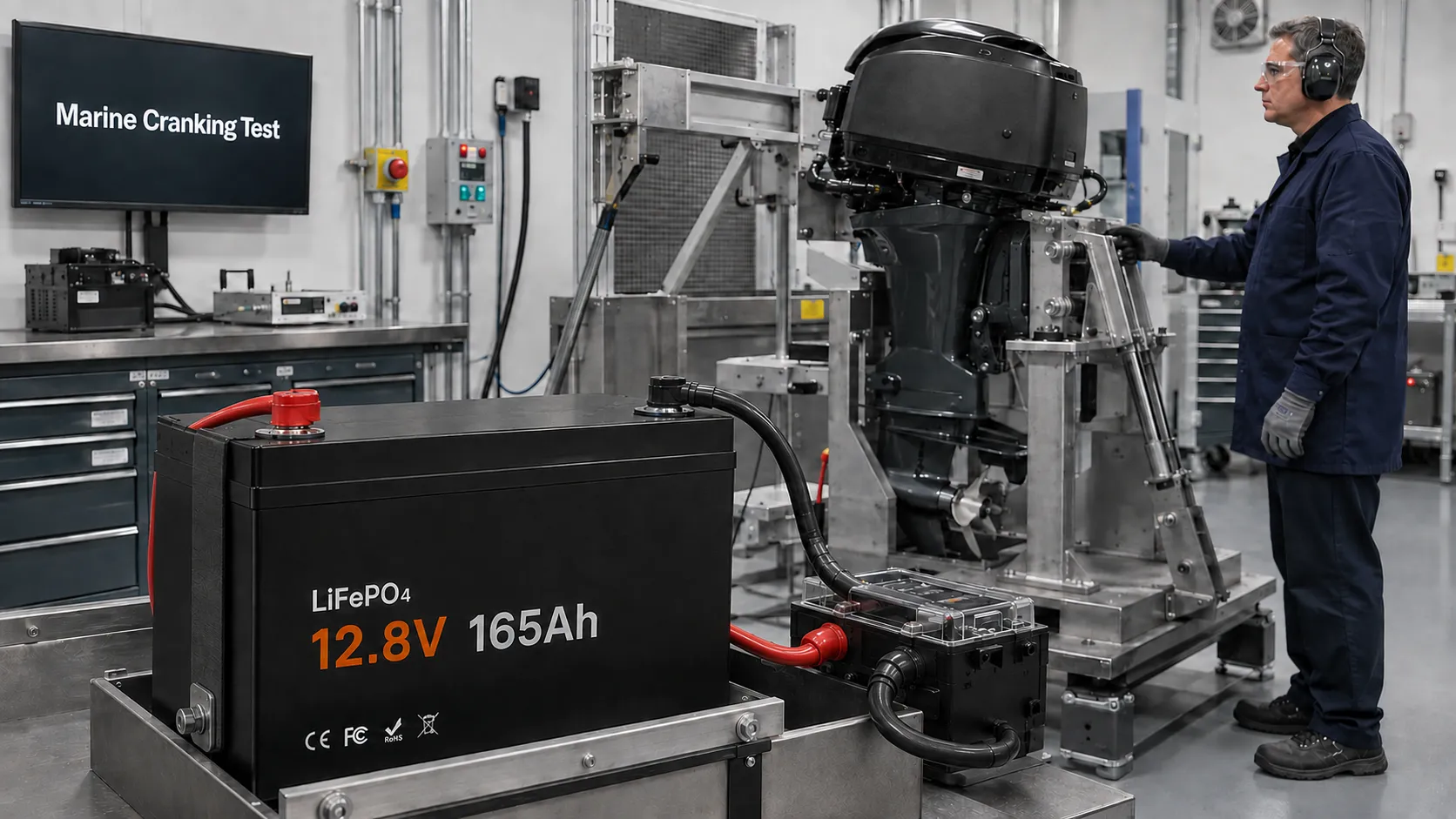
A 150A Smart BMS supports 1920W of continuous output, while 1200 CCA and 1300 MCA provide the short-duration current required by compatible fuel-powered outboards. Bluetooth monitoring, automatic self-heating and low-temperature protection support routine operation across changing marine conditions.
12.8V | 165Ah | 2112Wh | 1200 CCA | 1300 MCA | 150A Smart BMS | Bluetooth | Self-Heating | IP67
| Feature | Practical Benefit |
|---|---|
| 1200 CCA / 1300 MCA* | Provides starting current for compatible regulated fuel-powered outboard motors. |
| 165Ah deep-cycle capacity | Stores 2112Wh for trolling motors and onboard electrical loads. |
| 150A Smart BMS* | Supports up to 1920W of continuous output while managing battery protection. |
| Bluetooth monitoring* | Provides access to battery operating data through a compatible mobile app. |
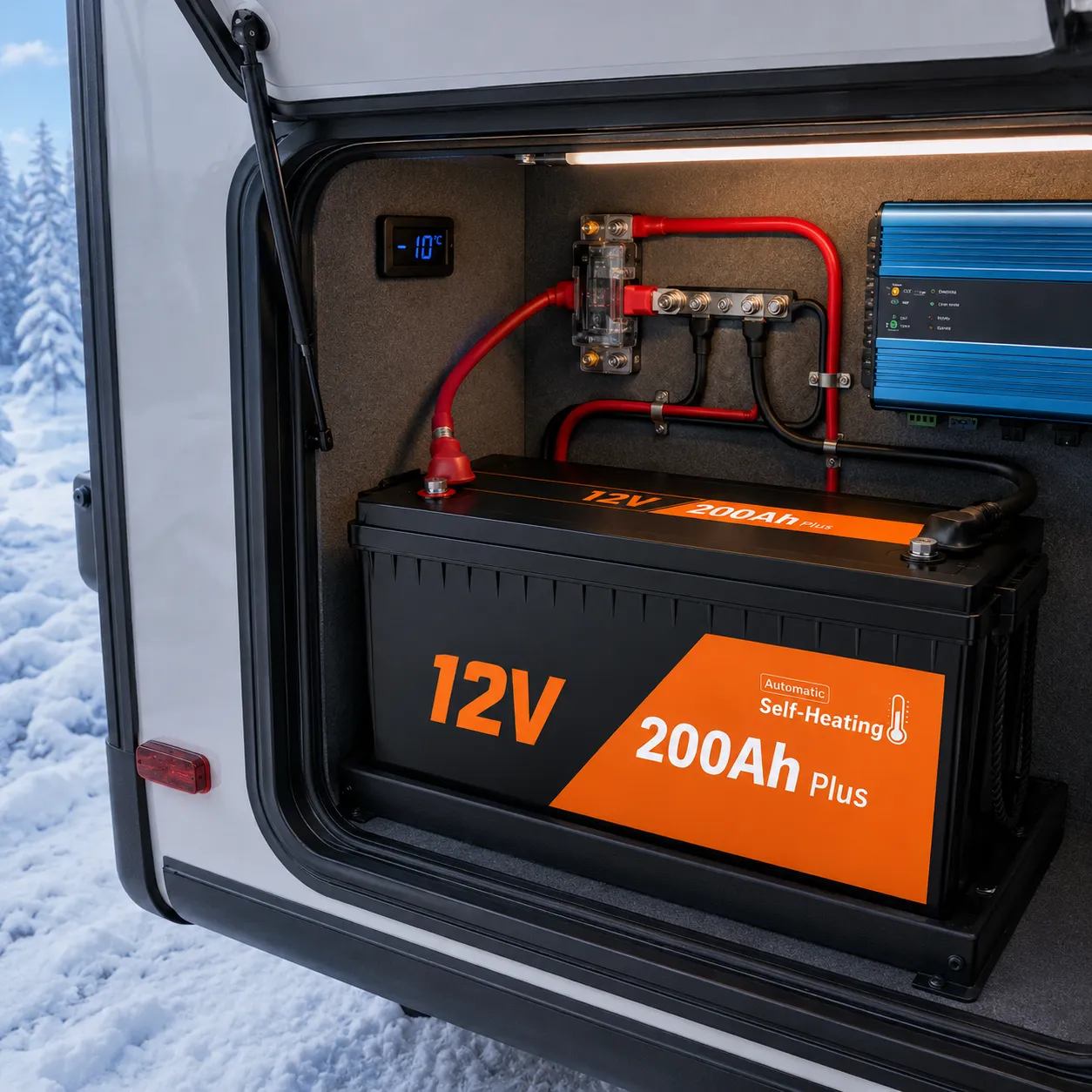
| Automatic self-heating* | Warms the cells before charging when temperature is below the approved range. |
| Group 31 / IP67 enclosure* | Supports compact, properly secured installation in a dry marine battery compartment. |
The starting section of the battery is designed to deliver high current for a compatible fuel-powered outboard. After the engine starts, the same 165Ah battery can supply trolling motors, sonar, radar, pumps, lighting and other approved DC loads. This can simplify smaller marine electrical systems where installation space is limited.
Outboard compatibility must be checked by engine model, horsepower, minimum CCA/MCA requirement, alternator regulator, charging voltage and cable length. This product is not a general-purpose automotive, motorcycle, tractor or generator starting battery.
The reference configuration is rated at 1200 cold cranking amps at 14°F (-10°C), 1300 marine cranking amps at 32°F (0°C) and 1500 hot cranking amps. These ratings are intended for compatible regulated fuel-powered outboard motors whose published starting requirements fall within the approved range.
Do not select a starting battery by horsepower alone. Confirm the outboard manufacturer's required battery chemistry, CCA/MCA, regulator type and maximum charging voltage before installation.
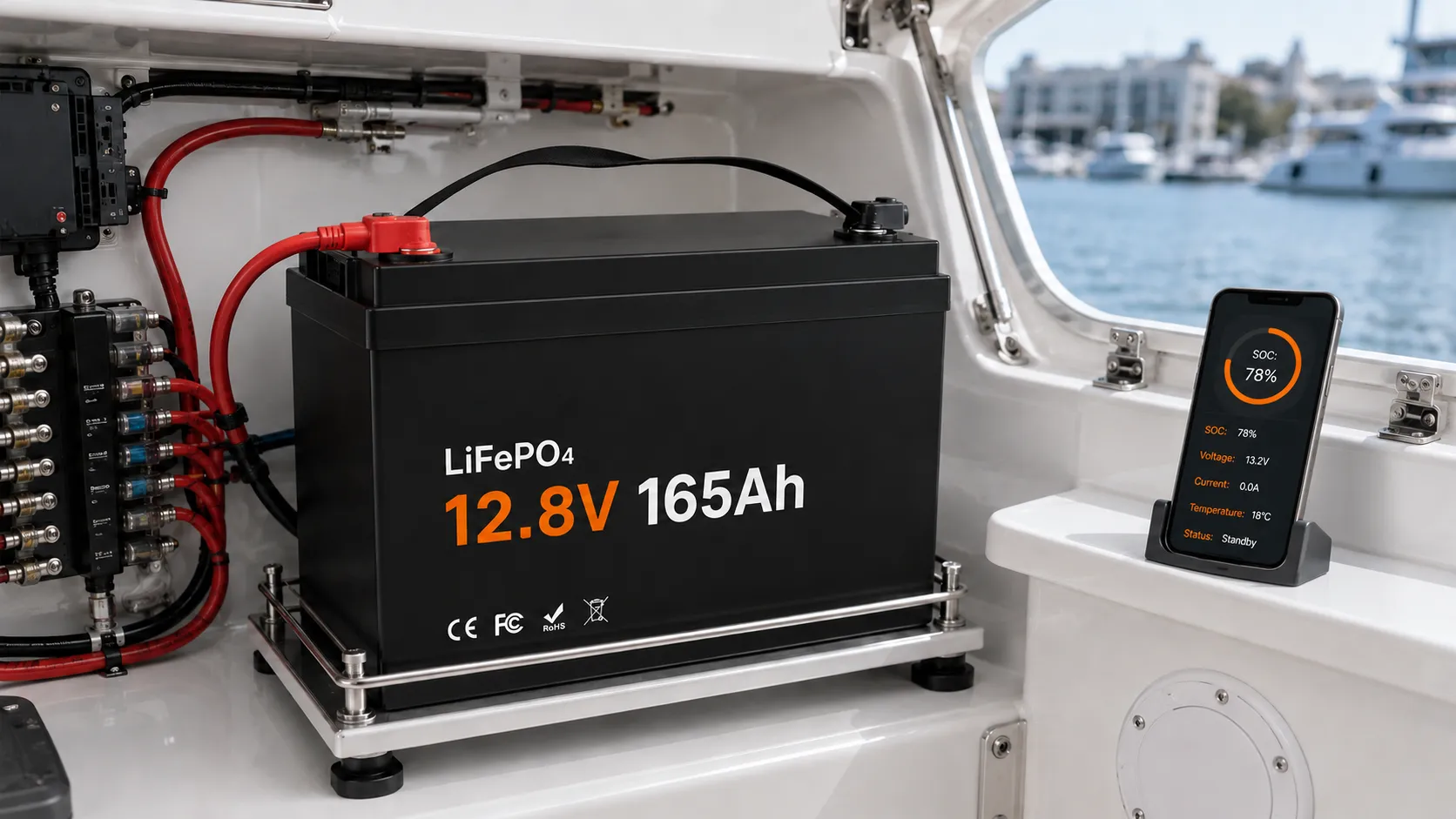
The reference 150A Smart BMS supports up to 1920W of continuous output and monitors voltage, current, cell temperature and protection status. A compatible Bluetooth app allows installers and boat owners to check battery information without opening the battery compartment.
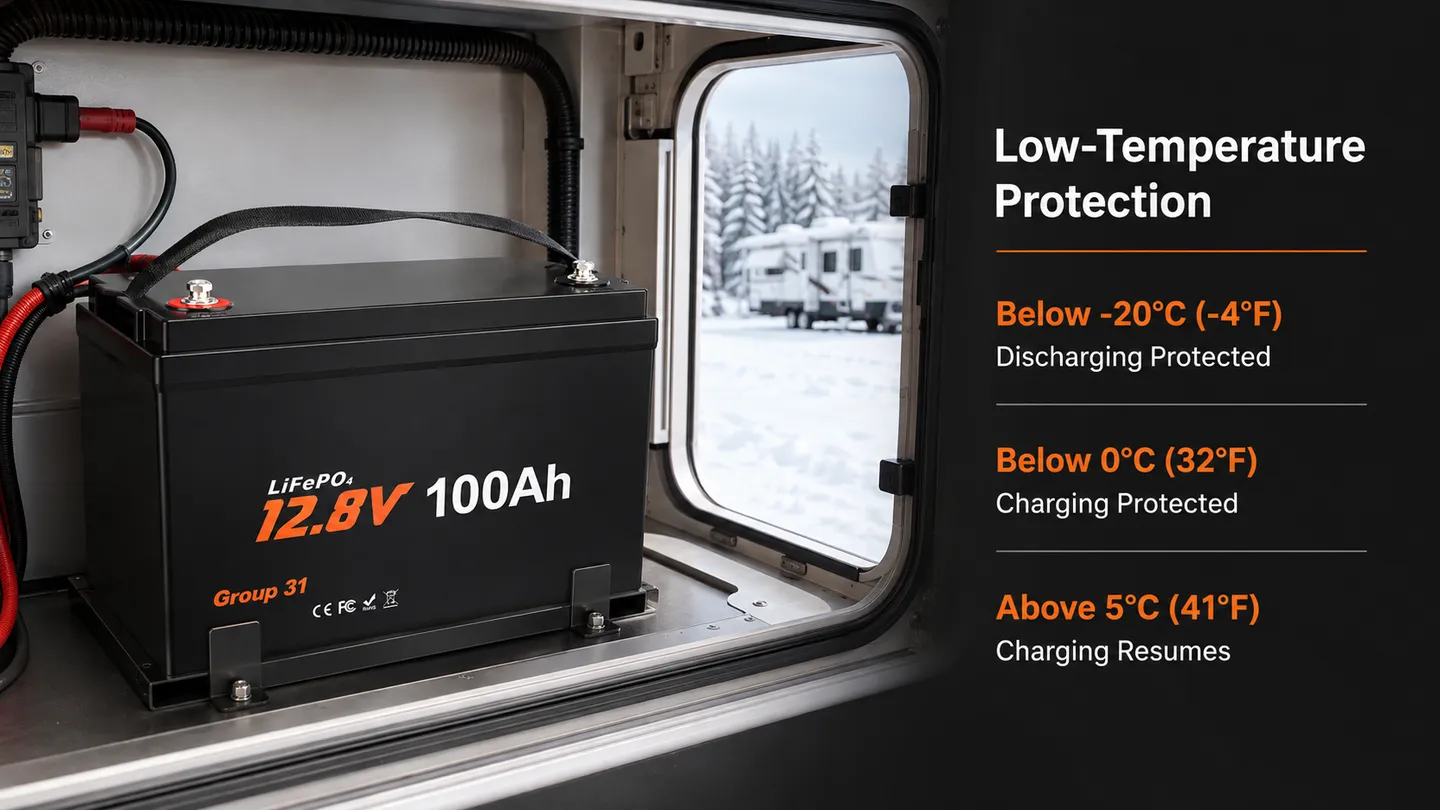
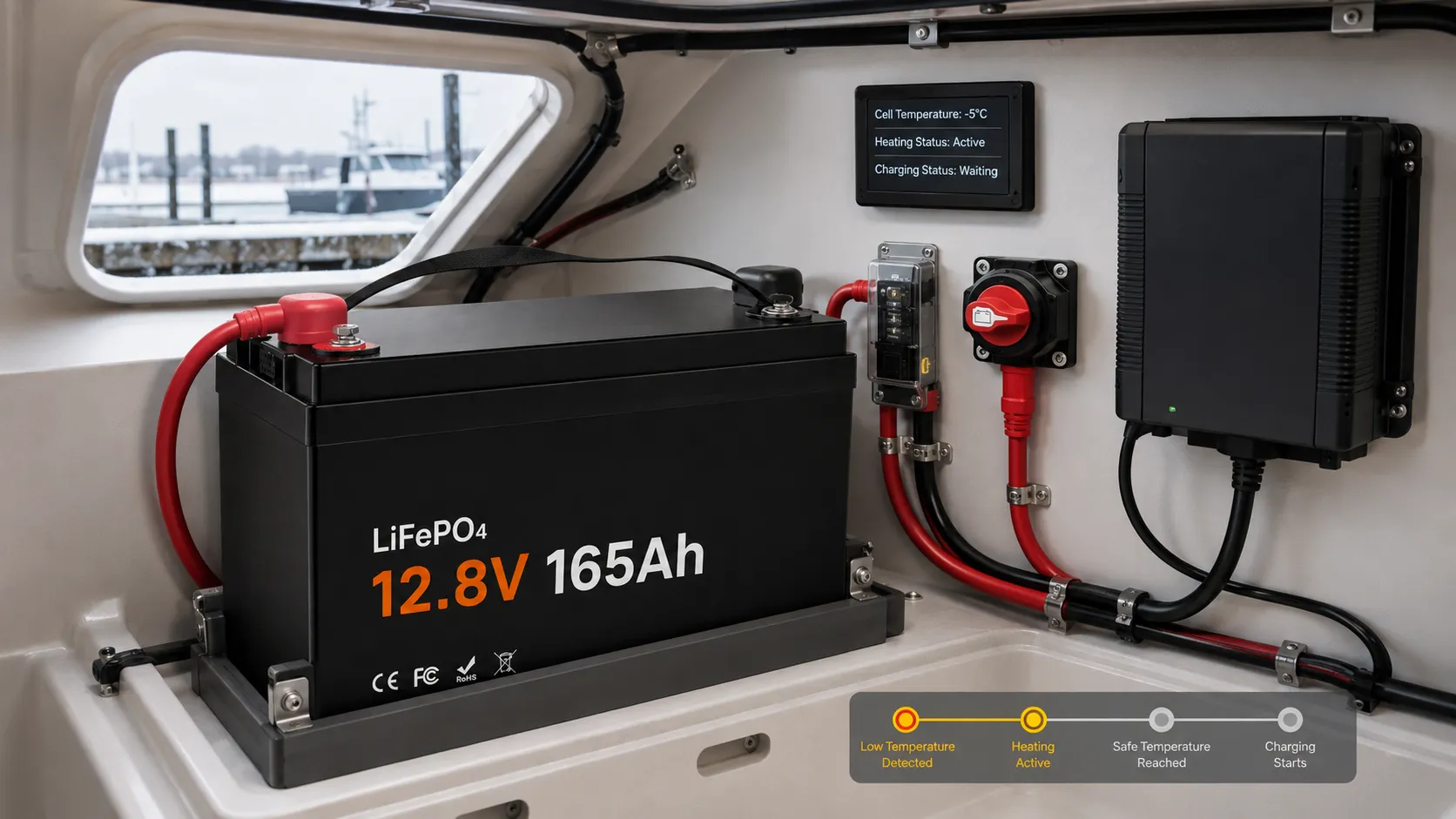
When cell temperature falls below the approved charging range, the heating system warms the cells before charging begins. In the reference configuration, heating operates between -4°F and 41°F (-20°C to 5°C), requires at least 15A of charging current and allows charging recovery at 41°F (5°C) or above.
Self-heating supports charging preparation; it does not increase cranking or continuous discharge power. Confirm activation temperature, recovery temperature, minimum charger current and heating logic against the final manual.
| Parameter | Reference Specification |
|---|---|
| Cell Chemistry | Lithium Iron Phosphate (LiFePO4) |
| Nominal Voltage | 12.8V |
| Rated Capacity | 165Ah |
| Nominal Energy | 2112Wh |
| Cold Cranking Amps | 1200 CCA at 14°F / -10°C* |
| Marine Cranking Amps | 1300 MCA at 32°F / 0°C* |
| Hot Cranking Amps | 1500 HCA* |
| Battery Management | 150A Smart BMS* |
| Maximum Continuous Output | 1920W* |
| Maximum Continuous Charge Current | 150A* |
| Maximum Continuous Discharge Current | 150A* |
| Maximum Outboard-Alternator Charge Current | 165A* |
| Monitoring | Bluetooth mobile app* |
| Self-Heating | Integrated automatic heating* |
| Charge Method | CC/CV |
| Charge Voltage | 14.4V ± 0.2V* |
| Recommended Charge Current | 33A* |
| Charge Temperature | -20°C to 50°C / -4°F to 122°F with heating protection* |
| Discharge Temperature | -20°C to 60°C / -4°F to 140°F* |
| Storage Temperature | -10°C to 50°C / 14°F to 122°F* |
| Heating Range | -20°C to 5°C / -4°F to 41°F* |
| Minimum Charger Current for Heating | 15A* |
| Maximum Expansion | Dual-purpose use: 4P1S; energy-storage use: up to 4P4S* |
| Internal Resistance | ≤40mΩ* |
| Terminals | M8 bolts* |
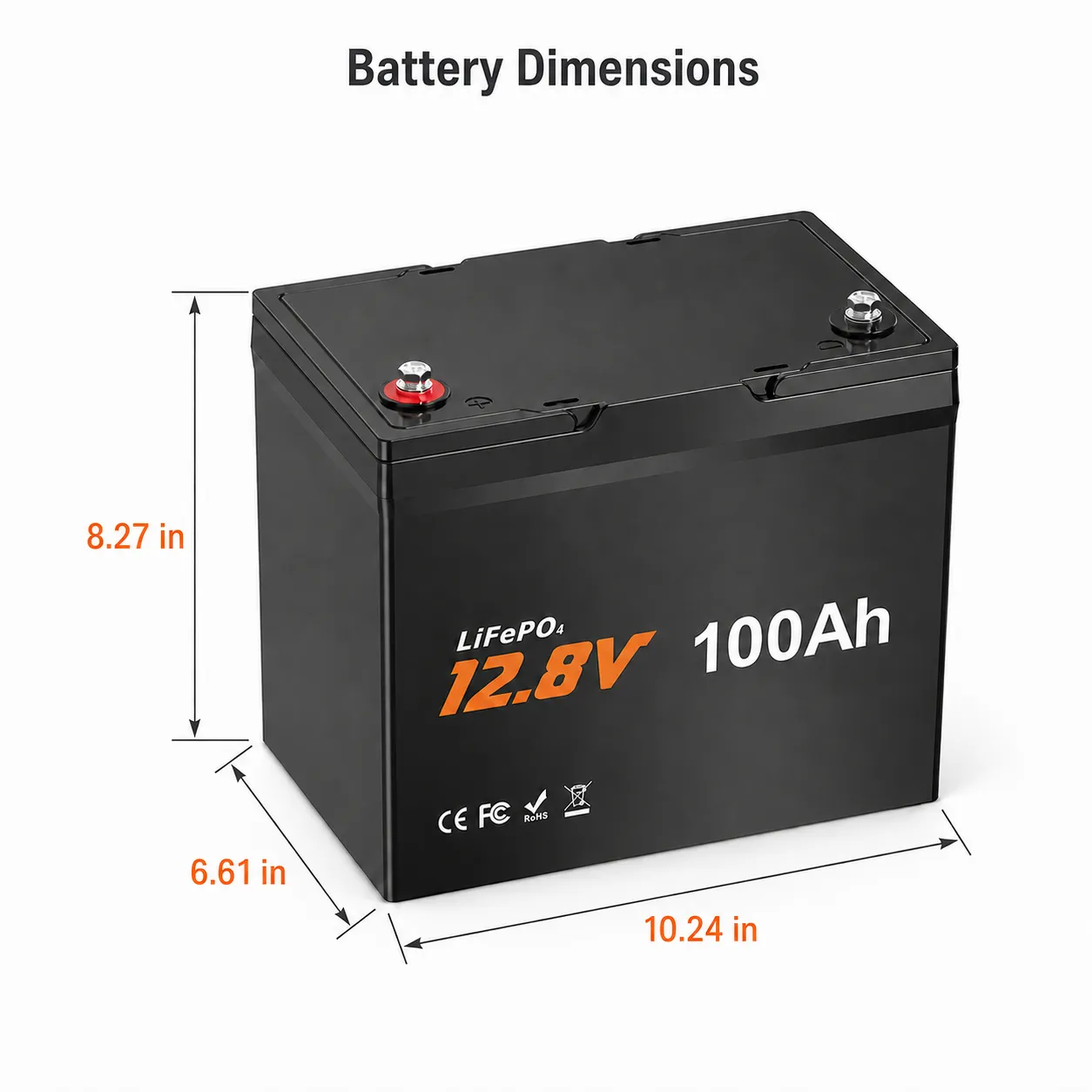
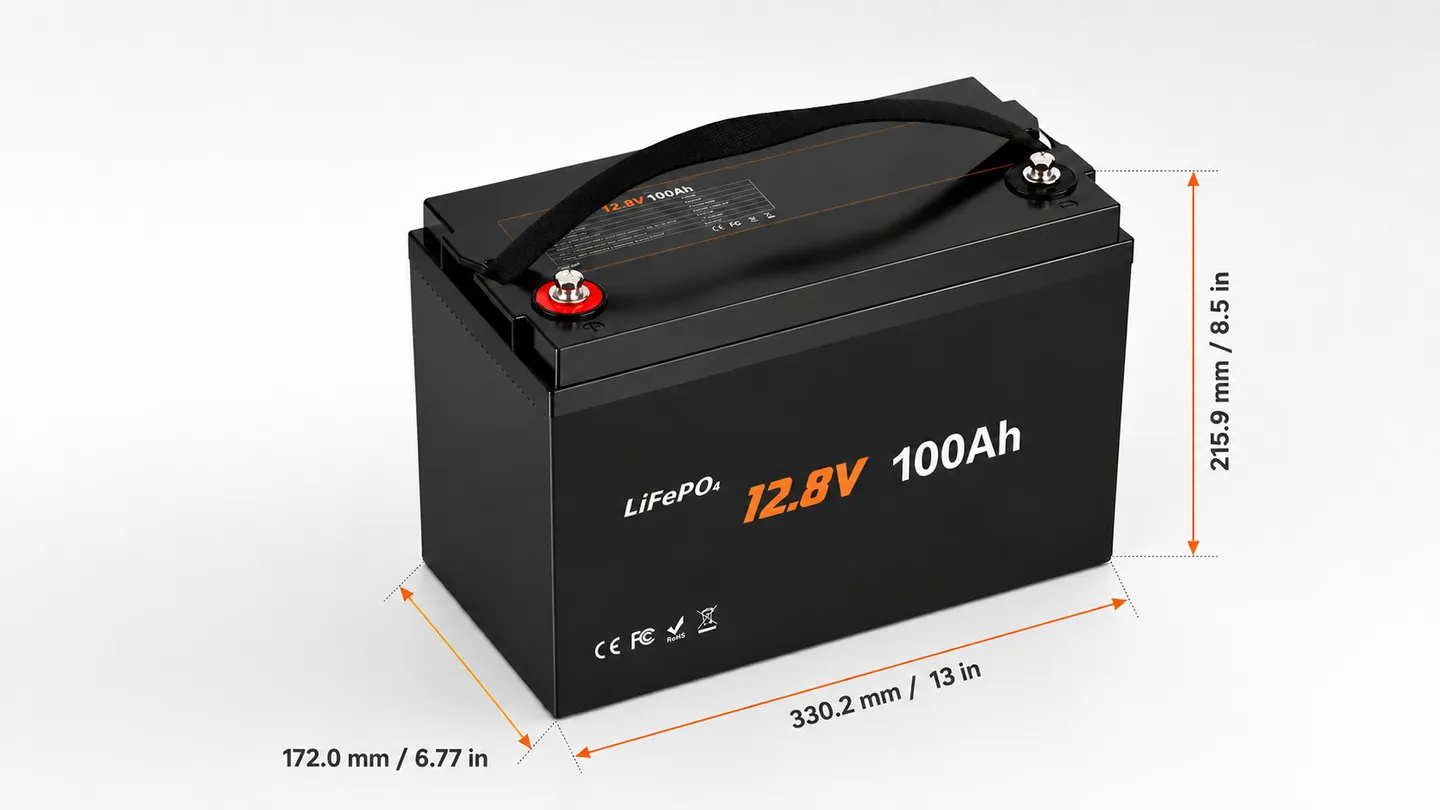
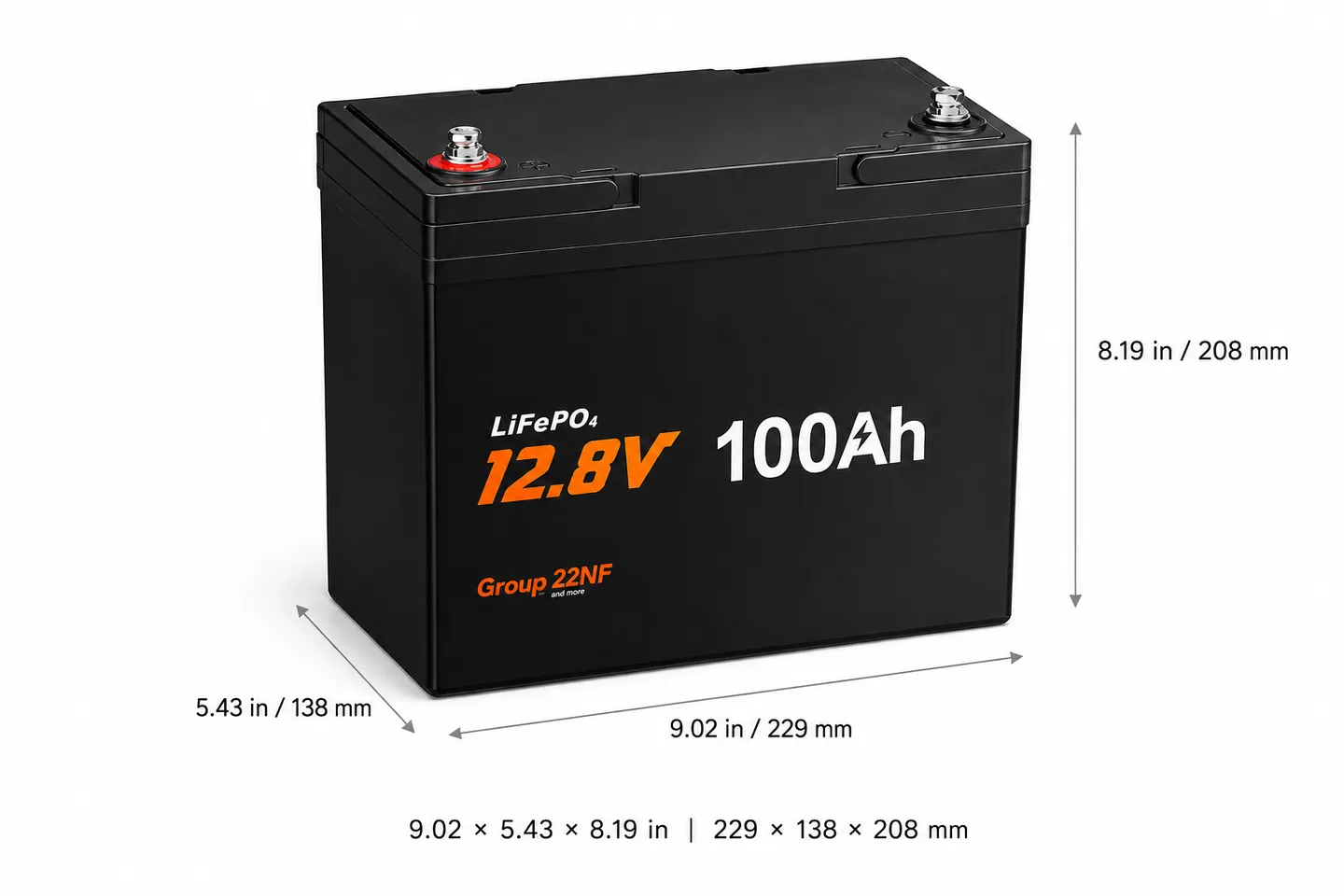
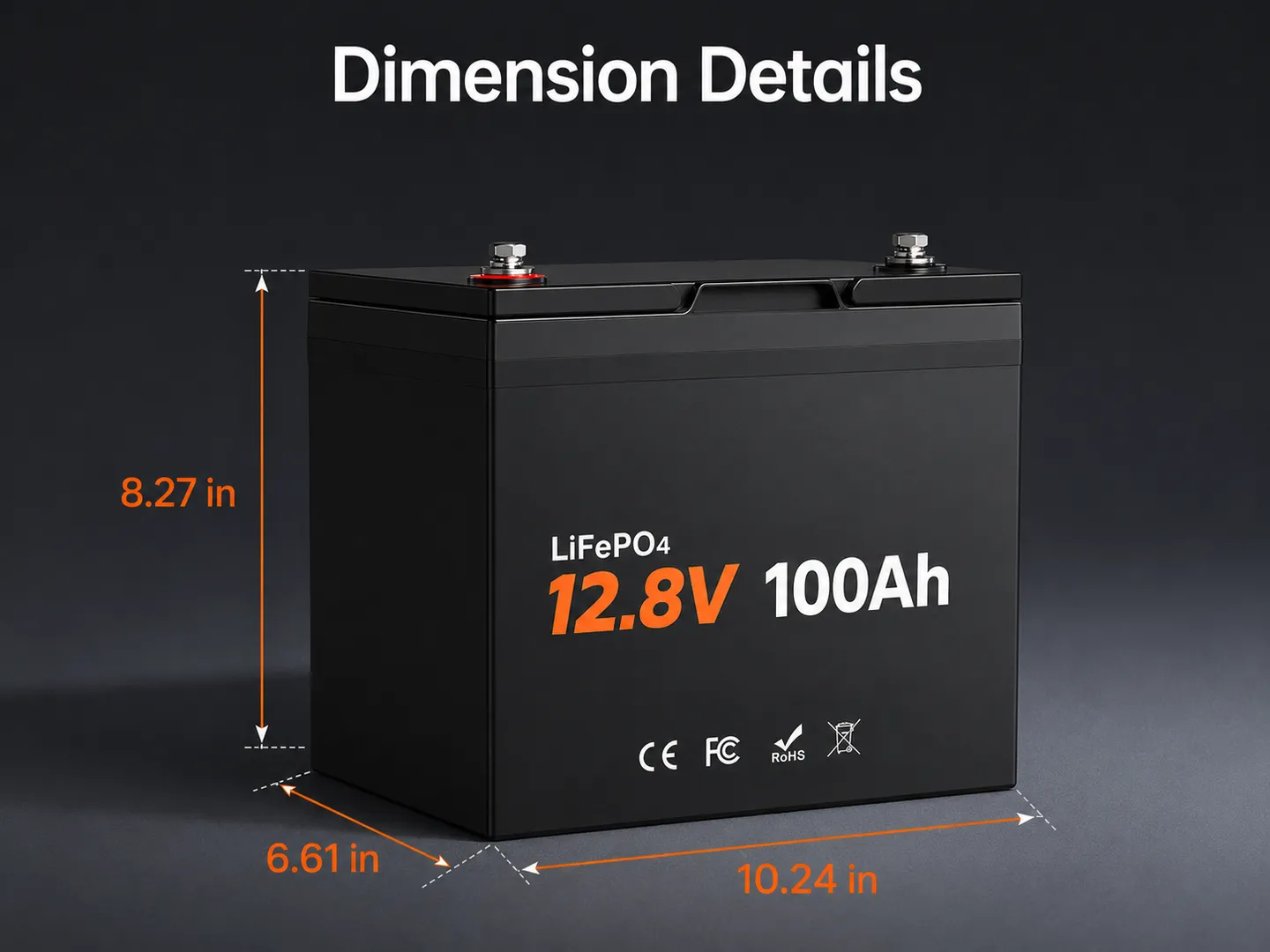
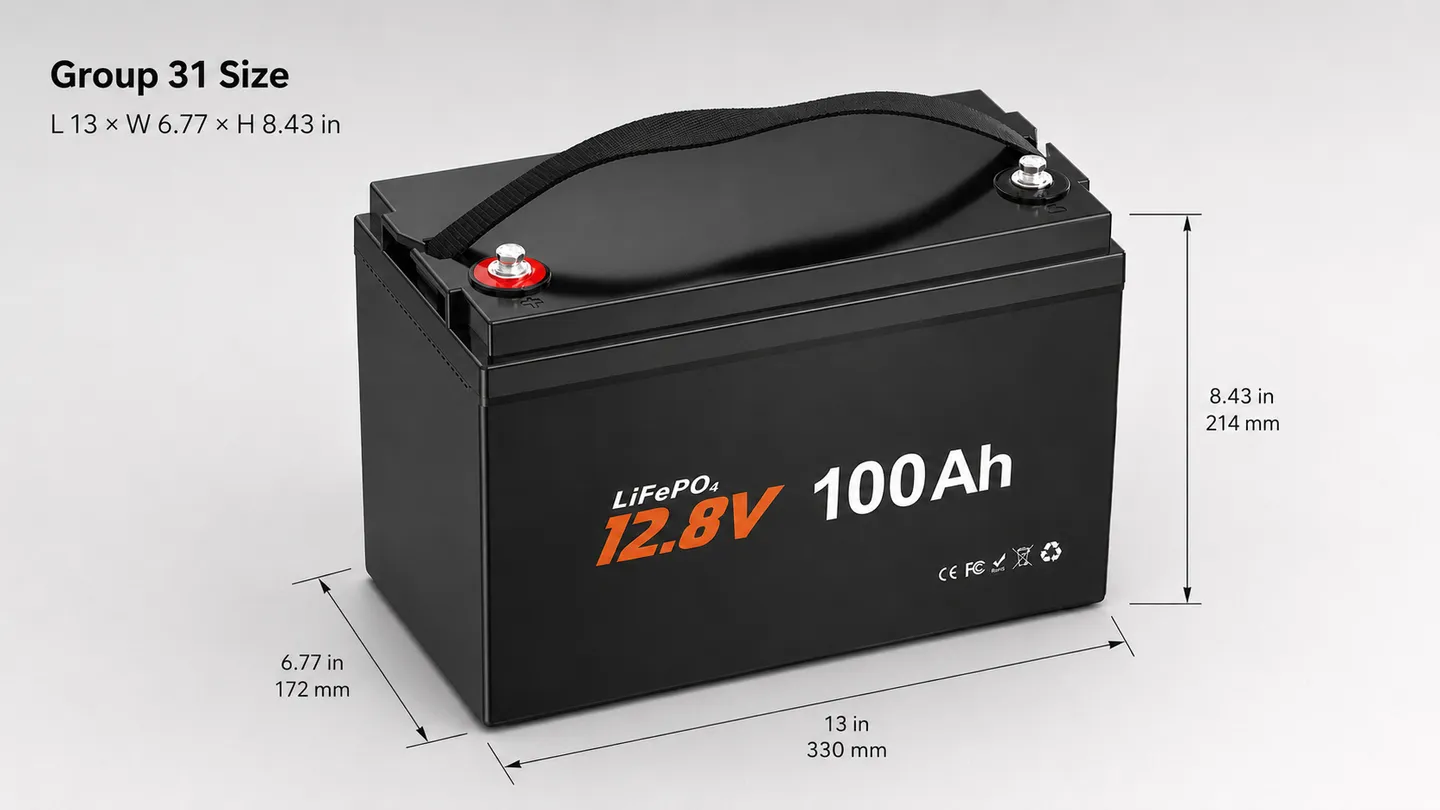
| Dimensions | 13 × 6.77 × 8.5in / 330 × 172 × 216mm, Group 31* |
| Approximate Weight | 33.49lb / 15.19kg* |
| Housing / Protection | ABS / IP67* |
| Reference Certifications | FCC, CE, RoHS and UN38.3* |
*Reference-model value. Confirm the starting-current test method, BMS rating, alternator-charge limit, heating logic, dimensions, weight, ingress rating, expansion rules and certifications against the final production datasheet and test reports.
Install the battery upright in a dry, ventilated marine battery compartment using a corrosion-resistant tray and secure hold-down system. Fit correctly sized marine cable, crimped lugs, terminal covers and circuit protection. Keep the battery close enough to the outboard to limit voltage drop, while following the engine and boat manufacturer's installation requirements.
Before connecting the outboard alternator, verify that the regulator is compatible with LiFePO4 batteries and keeps charging voltage within the approved range. Shore chargers, solar controllers and DC-to-DC chargers must use settings that match the final battery datasheet.
For dual-purpose engine-starting service, the reference configuration allows up to four batteries in parallel at 12.8V. Series connection is reserved for approved energy-storage configurations, with support up to 4S4P. Use batteries of the same model, age and state of charge, and follow the final wiring, fuse and balancing instructions.
OEM and private-label support can include starting-current targets, BMS settings, Bluetooth functions, heating logic, housing labels, terminals, connectors, packaging and application-specific testing. Send the outboard model, required CCA/MCA, alternator specifications, onboard loads, installation dimensions, operating temperature and order quantity for engineering review.
No. Compatibility depends on the outboard's required CCA/MCA, regulator design, charging voltage and installation. Confirm the exact engine model before ordering or installing the battery.
No. The reference design is intended for approved marine outboard applications and should not be used as a general automotive, motorcycle, tractor or generator starting battery.
Yes, within the battery's approved continuous-current and energy limits. Calculate the combined load of the trolling motor, fish finder, pumps, lighting and other equipment before installation.
Only when the outboard has a compatible regulated charging system and its voltage and current remain within the final battery specification. Otherwise, use an approved DC-to-DC charger or retain a compatible starting-battery arrangement.
When cell temperature is below the approved charging range, the heating system warms the cells before charging begins. The activation temperature, recovery point and required charger current must follow the final manual.
A compatible app can display information such as state of charge, voltage, current, temperature and protection status. Available controls depend on the selected Bluetooth module and BMS configuration.
Send the required quantity, outboard model, minimum CCA/MCA, alternator specifications, trolling-motor rating, onboard loads and available installation space. The configuration can then be reviewed before the datasheet, sample options, lead time and OEM pricing are provided.
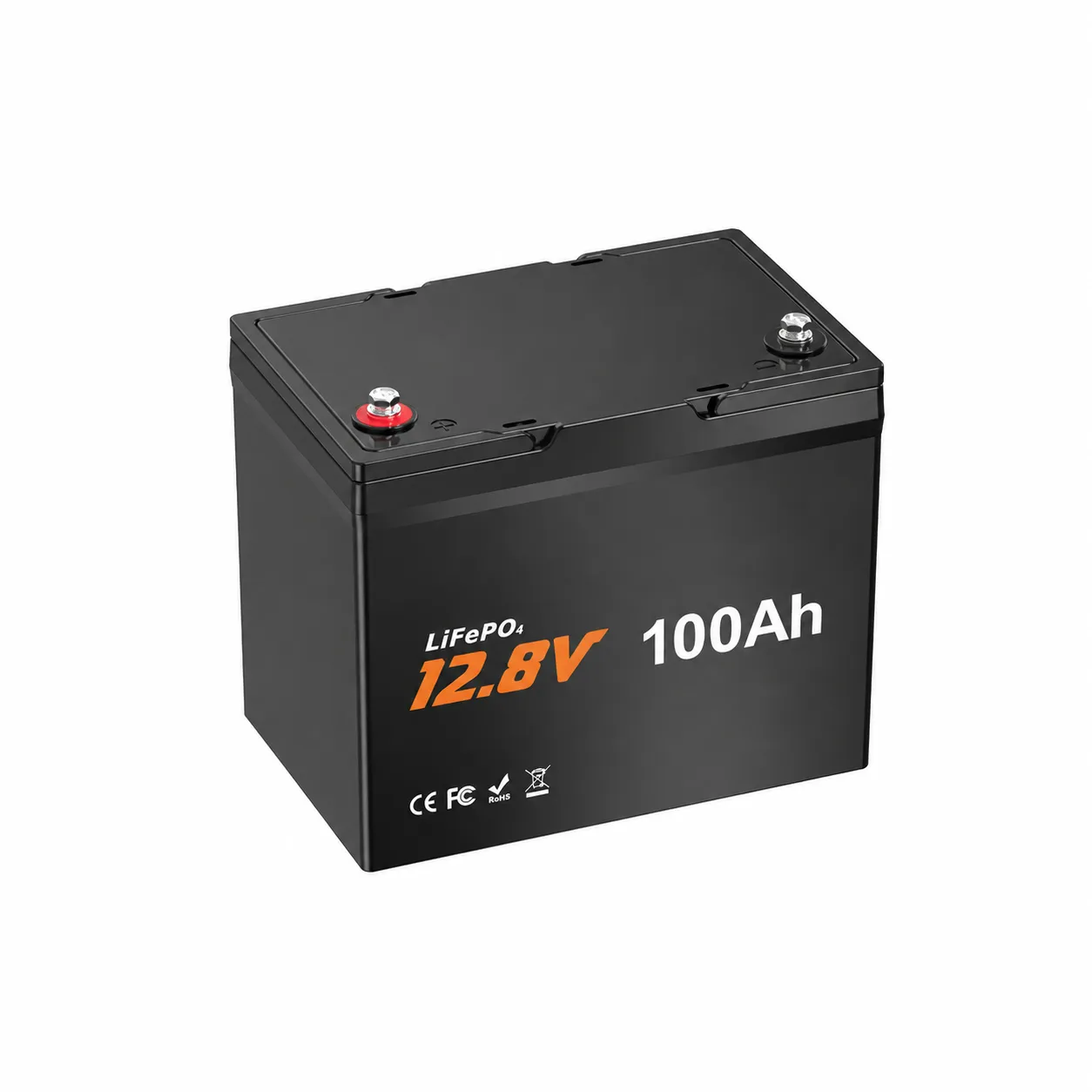
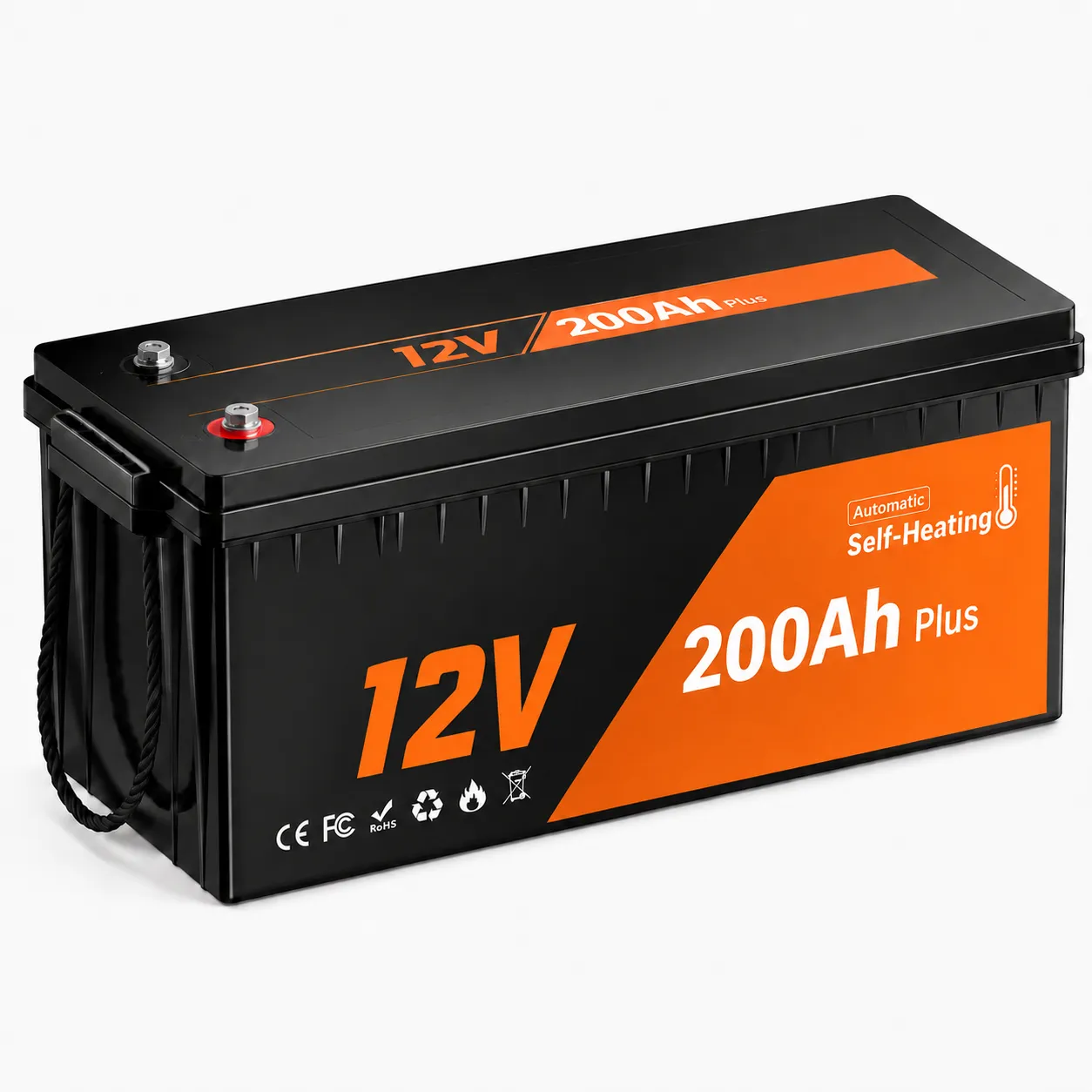
Many LiFePO4 batteries can replace compatible lead-acid deep-cycle batteries in RVs, boats, golf carts and industrial equipment. Before installation, confirm the system voltage, battery dimensions, terminal layout, charger profile, maximum load, cable size, fuse rating and operating temperature.
Most LiFePO4 batteries are compatible with standard 12V, 24V, 36V or 48V inverters when the system voltage and power requirements match. Many modern chargers also include a LiFePO4 charging profile. For lead-acid replacement projects, confirm the charger voltage, inverter rating and maximum load before installation. A compatible charger or DC-to-DC charger may be required if the existing charging equipment does not support LiFePO4 batteries.
Yes. OEM and custom battery support can include voltage, capacity, BMS settings, enclosures, terminals, connectors, communication protocols, labels and packaging. Send us the application, electrical requirements, installation dimensions and expected order quantity for review.
MOQ depends on the battery model, specification and customization requirements. Standard models may be available for sample testing, while custom enclosures, private labels and OEM production normally require a confirmed order quantity. Contact us with the model and required quantity for details.
Available certifications and documents depend on the battery model and destination market. Supporting documents may include UN38.3, MSDS, CE, RoHS and product test reports. Confirm the required documents and target market before placing an order.
Lead time depends on the battery model, order quantity, customization and testing requirements. Export shipping options are arranged according to the battery specification, destination and order volume. Send us the required quantity, delivery location and target schedule for a project-specific quotation.