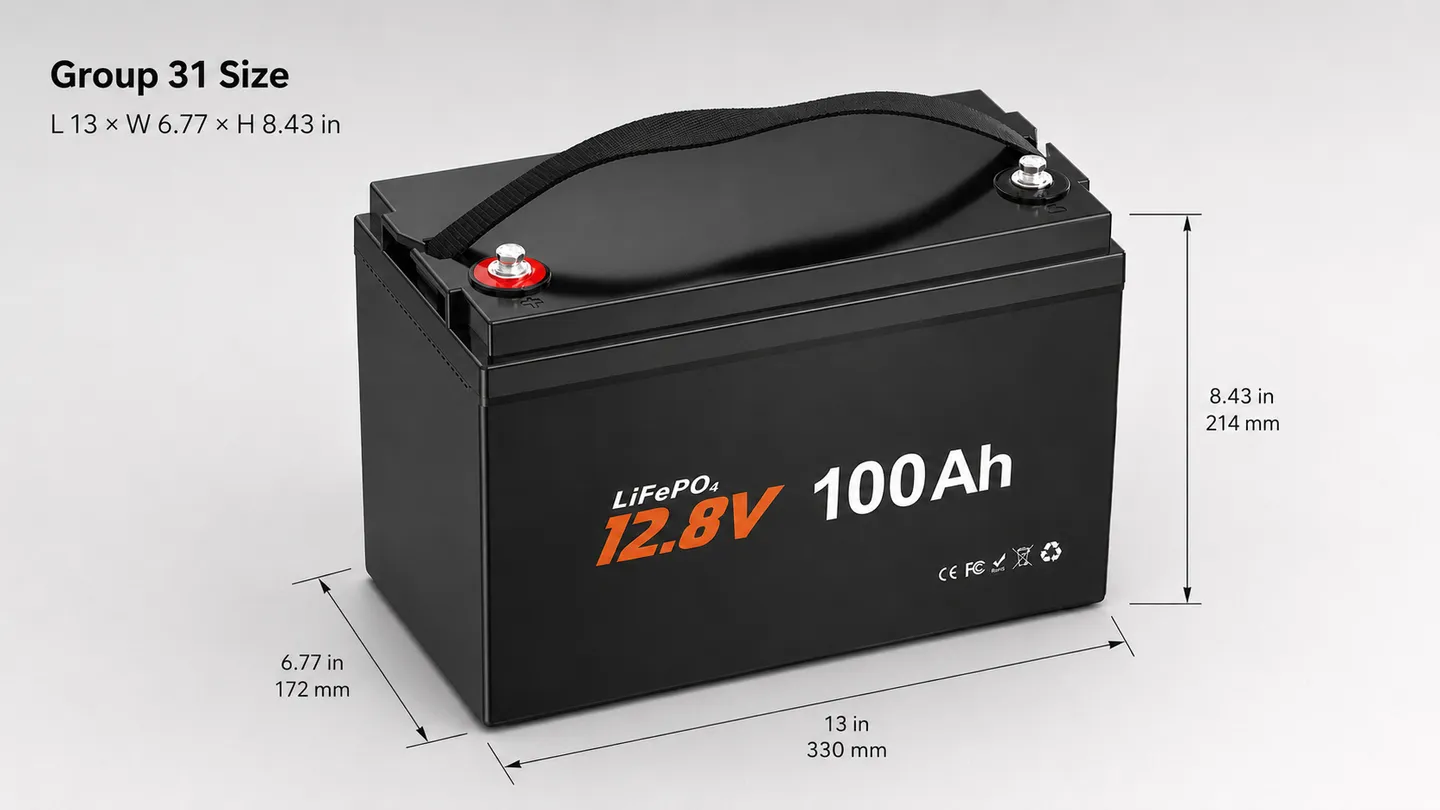
12V 100Ah Group 31 LiFePO4 Battery for Trolling Motors
$169.00
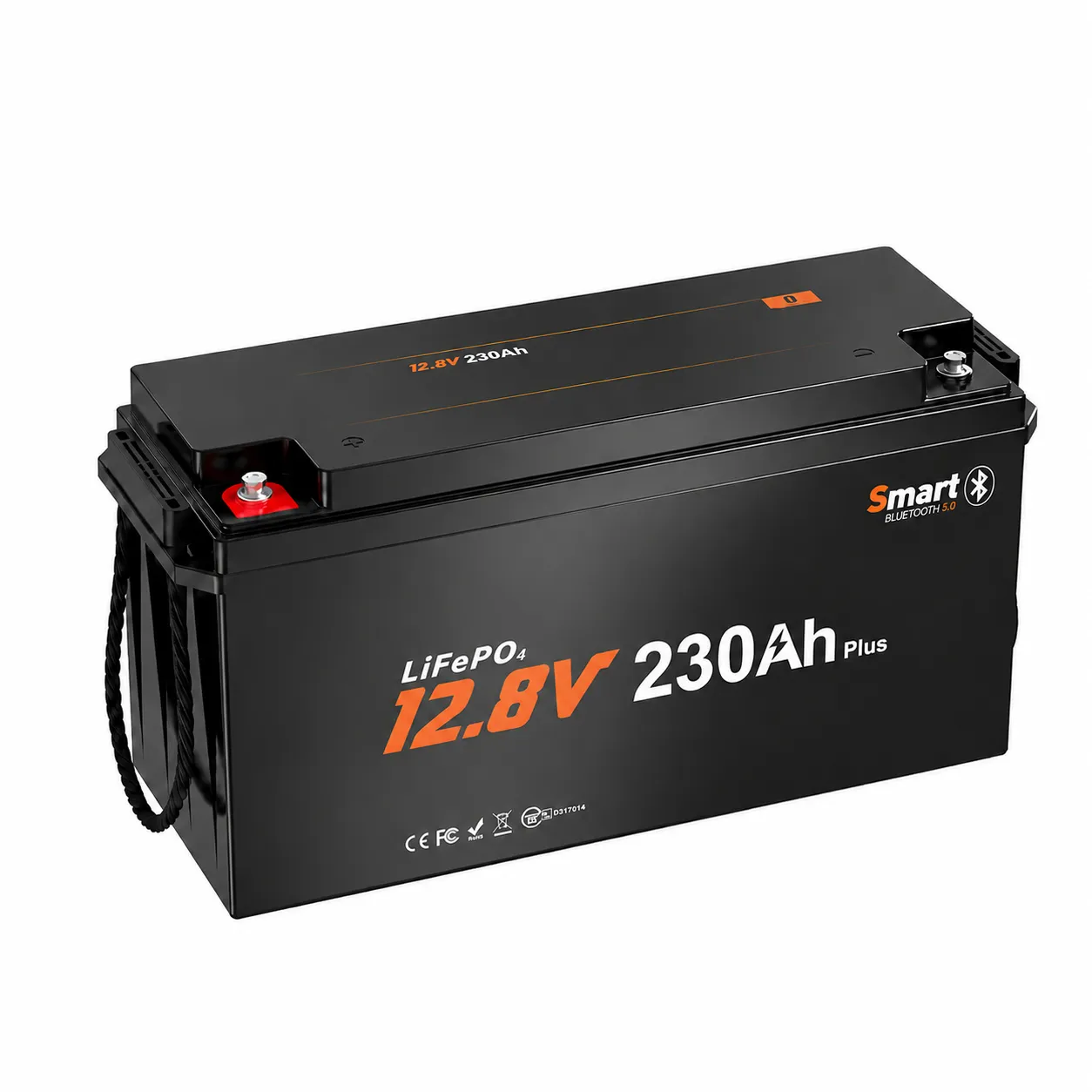
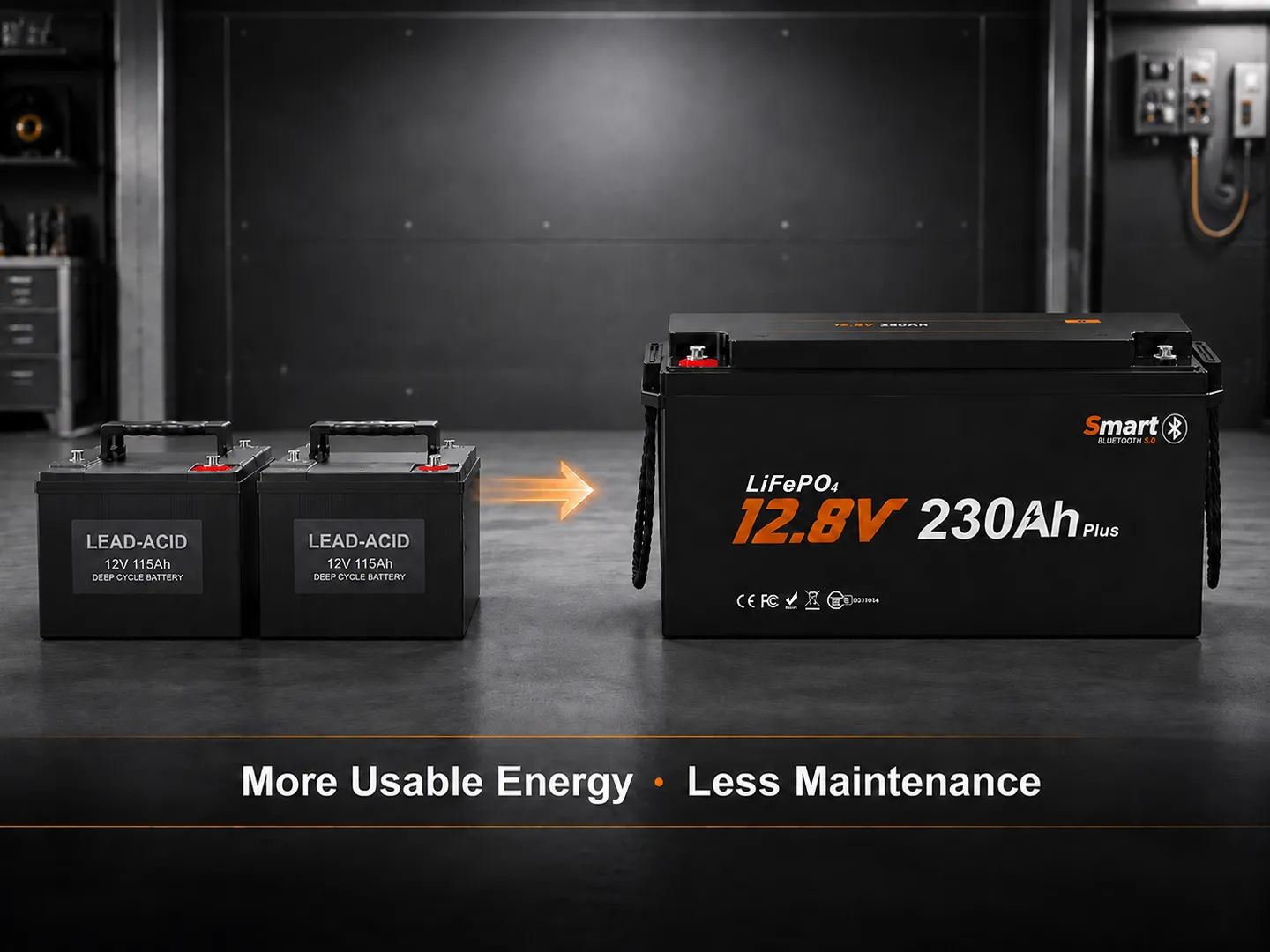
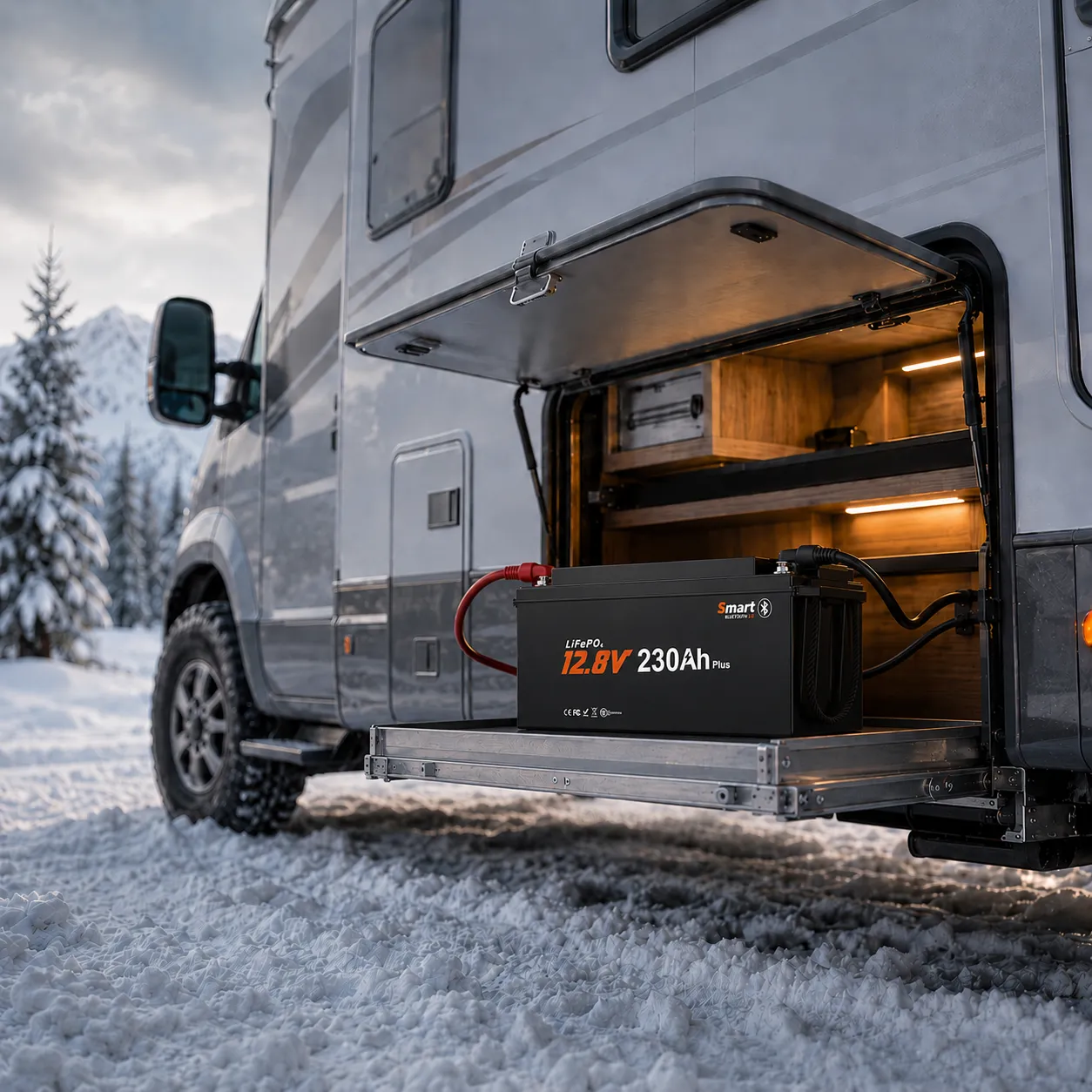
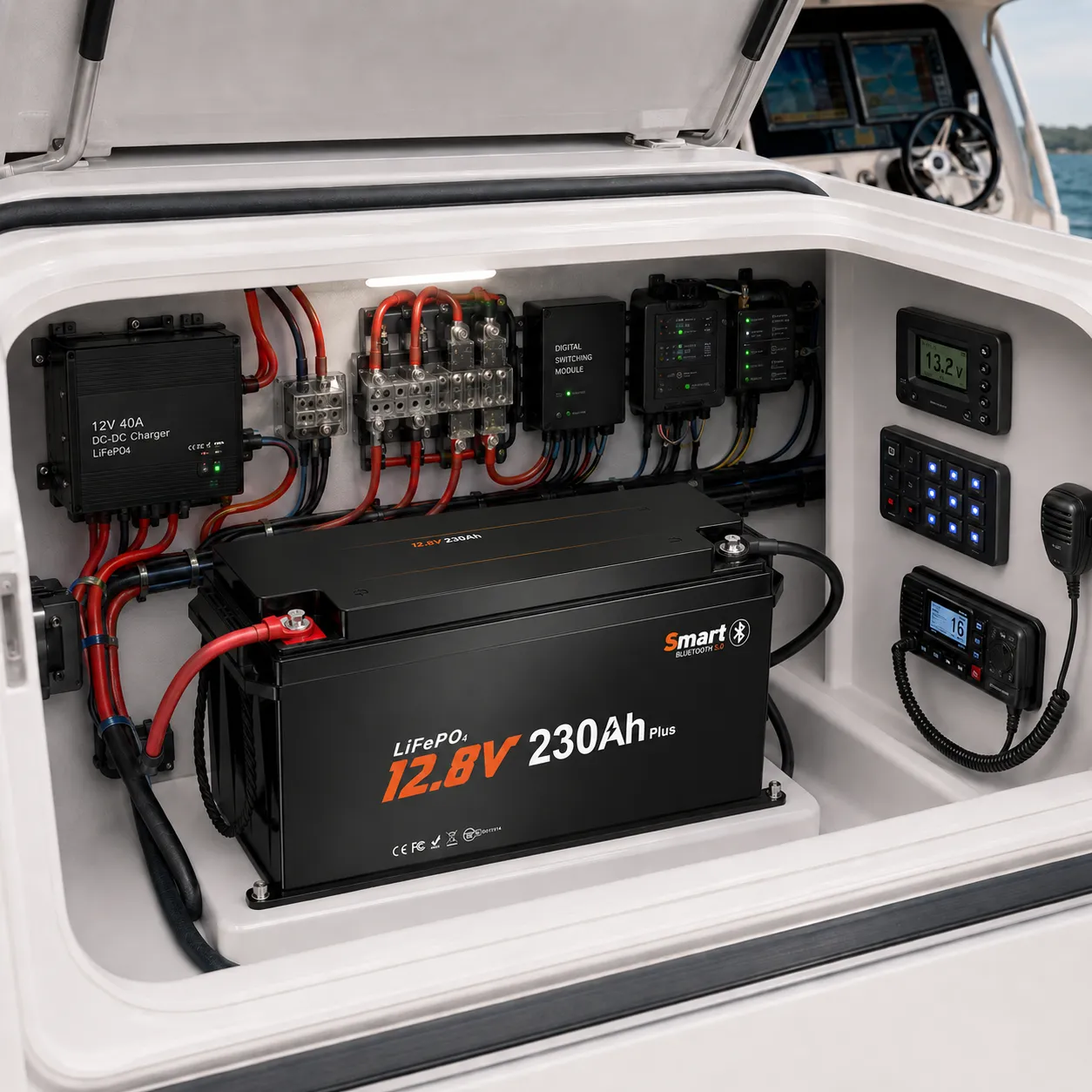
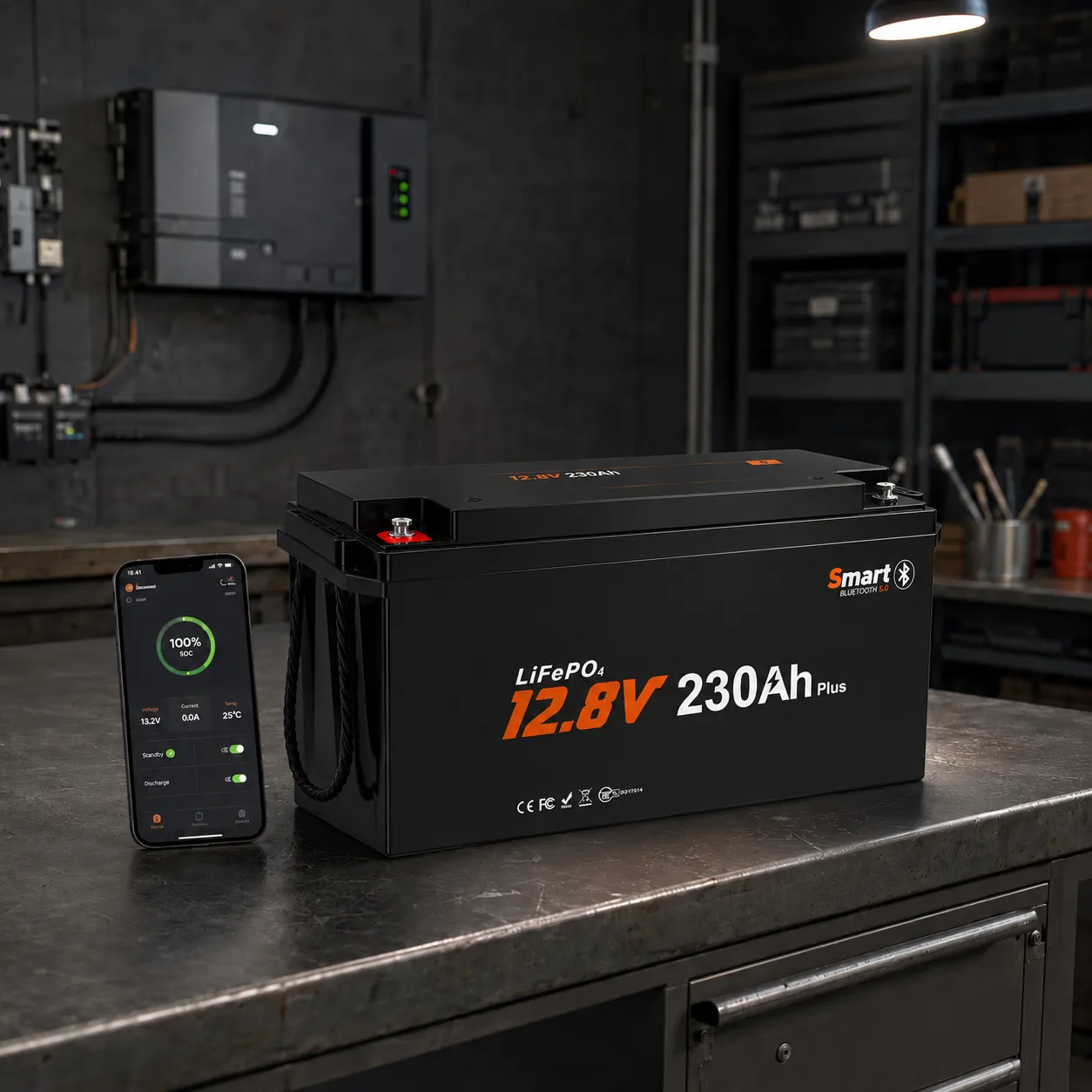
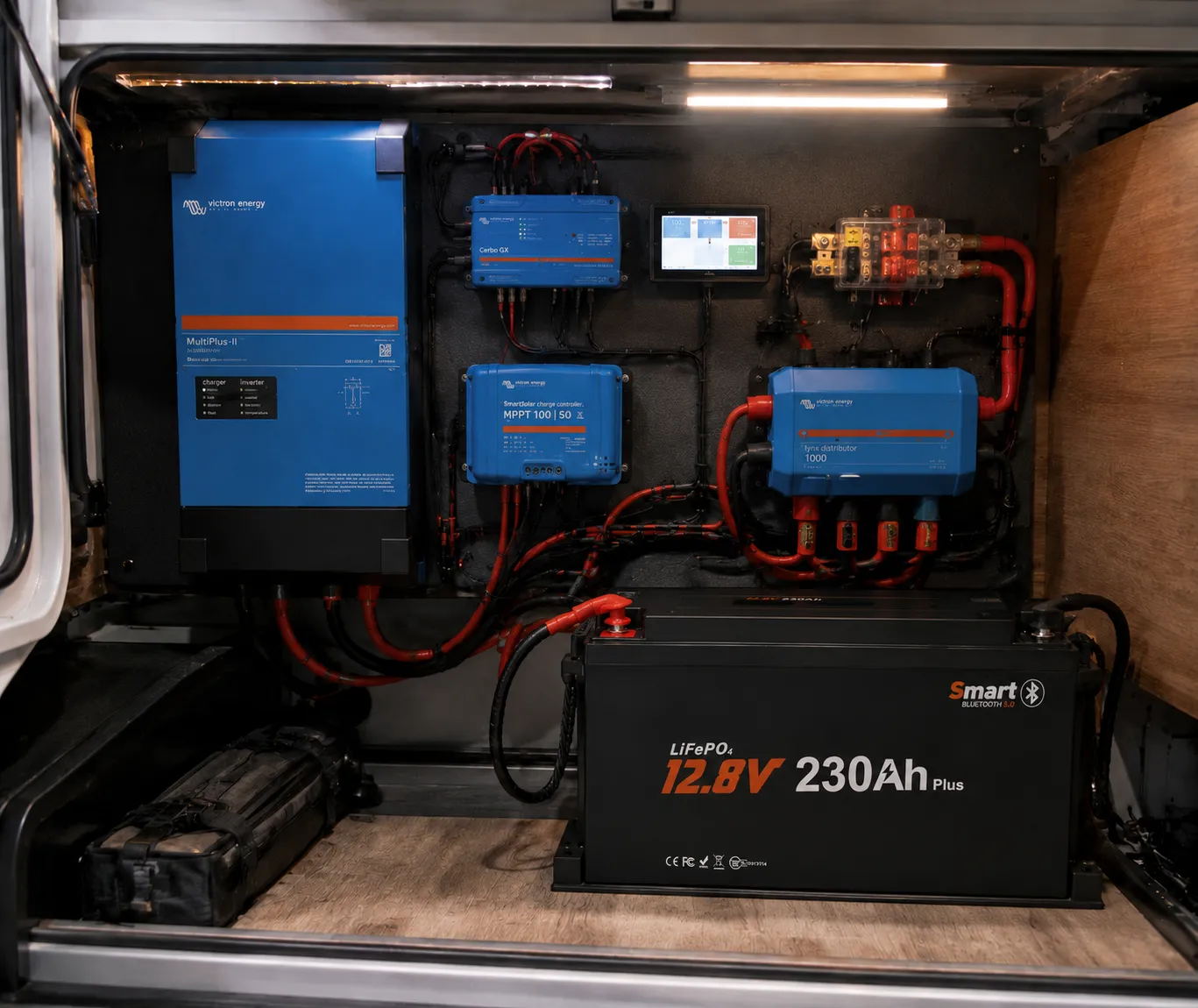
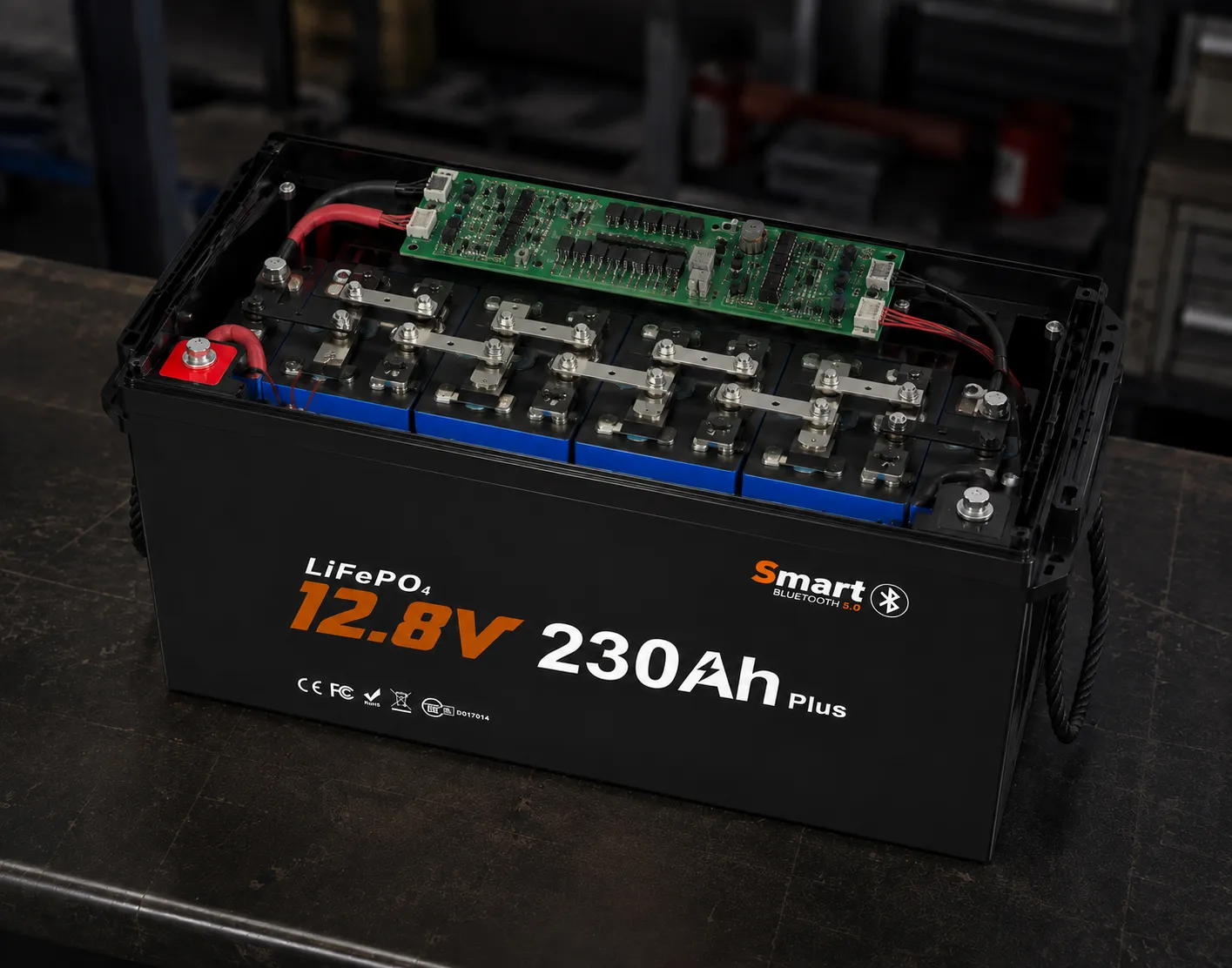
Built for RVs, camper vans and off-grid power systems, this 12V 230Ah Bluetooth LiFePO4 deep cycle battery stores 2944Wh of energy in a single battery. The integrated 200A Smart BMS supports high-current loads, while Bluetooth monitoring provides direct access to battery status from a mobile device.
12.8V | 230Ah | 2944Wh | 200A Smart BMS | Bluetooth Monitoring | Low-Temperature Protection | IP65
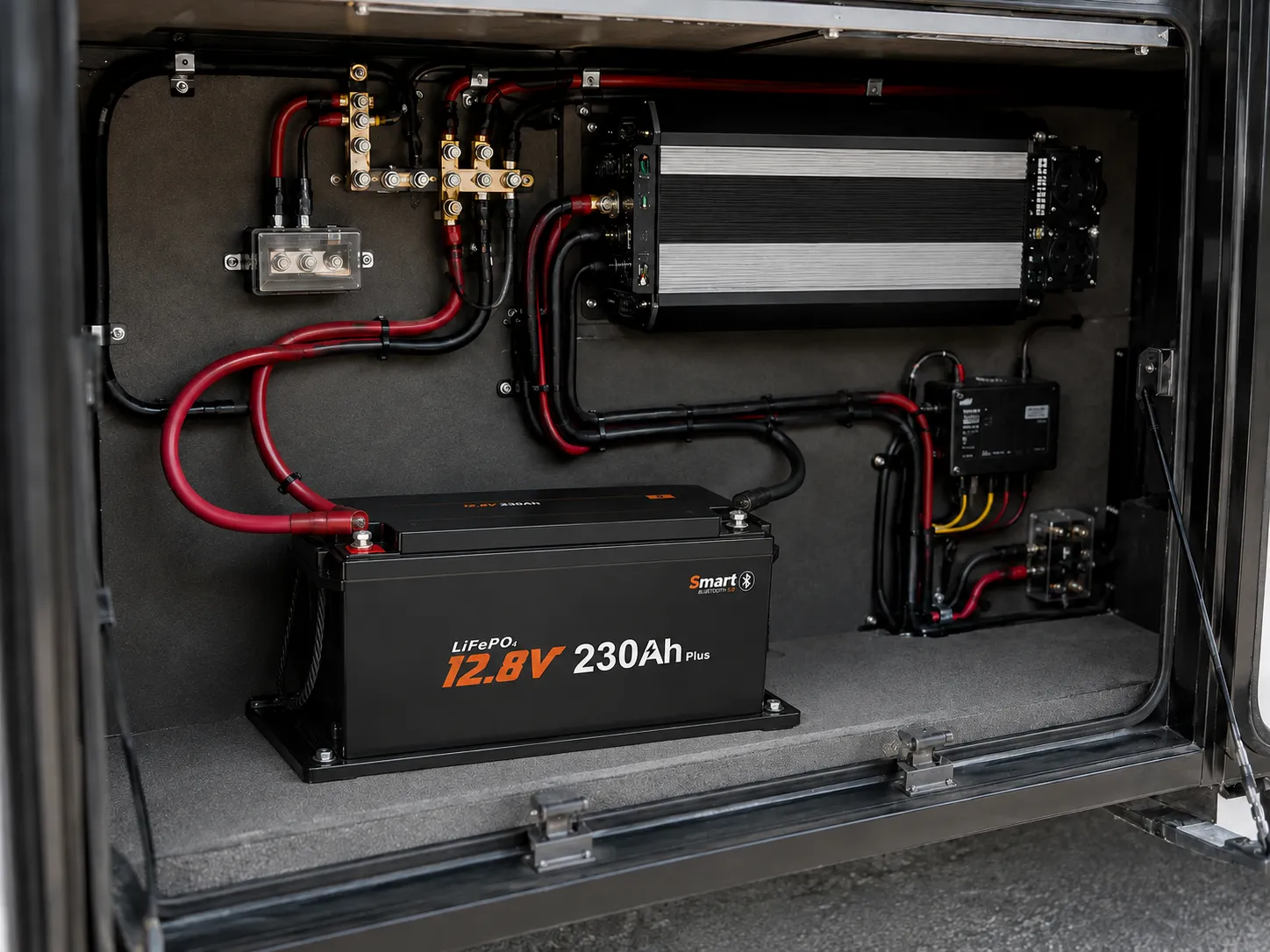
The 230Ah capacity provides a practical balance of stored energy, installation space and current capability. With 2944Wh available at the nominal voltage, one battery can support lighting, refrigeration, electronics and other onboard equipment when the inverter, charger, cables and circuit protection are correctly sized.
Using one high-capacity battery can reduce the number of interconnect cables compared with a battery bank assembled from several smaller batteries. Fewer connections can simplify installation, inspection and routine maintenance.
Suitable applications include:
The integrated 200A Smart BMS monitors cell voltage, current and temperature during charging and discharging. It supports up to 2560W of continuous battery output, subject to correct cable sizing, fuse selection, terminal installation and inverter configuration.
BMS protection functions include:
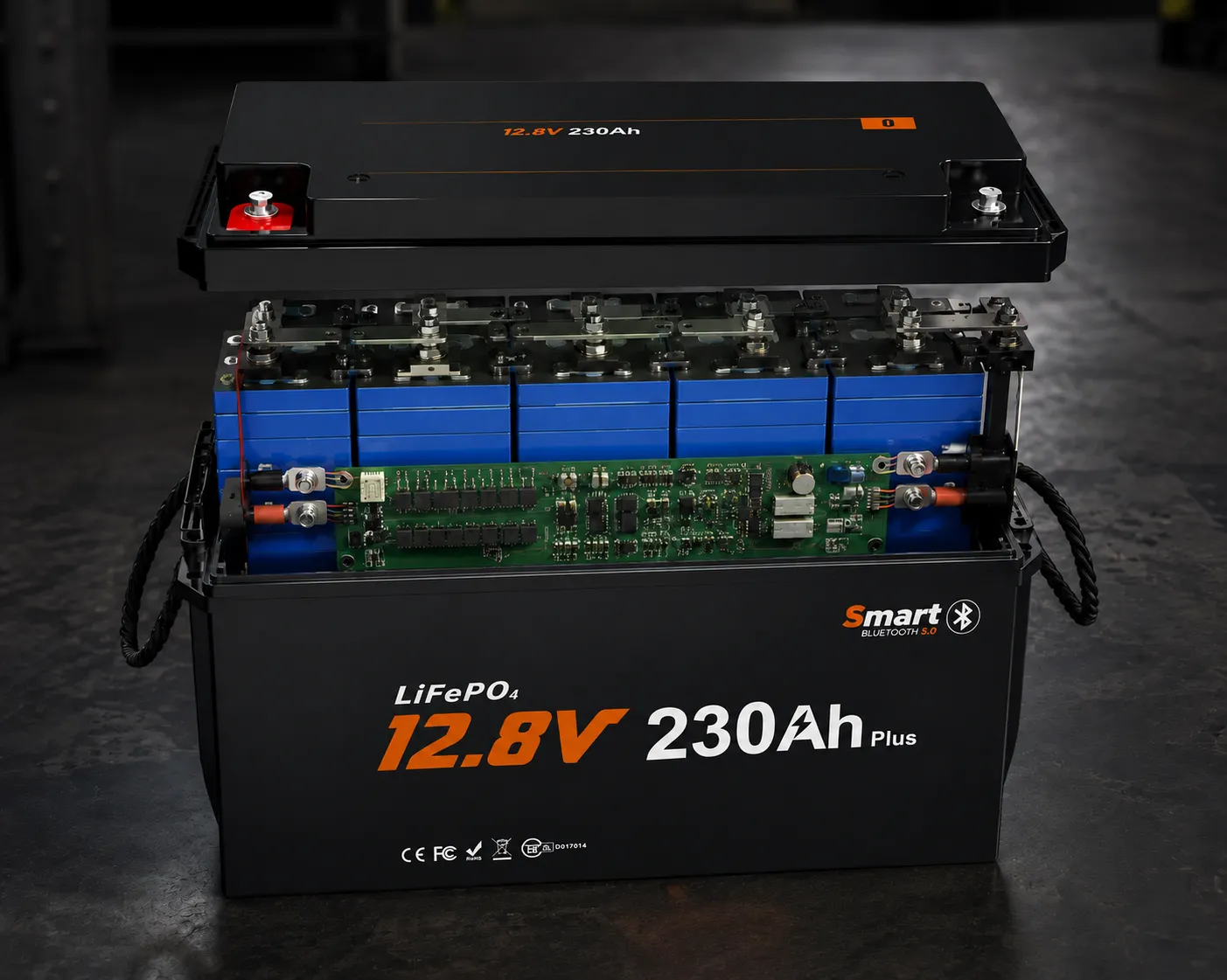
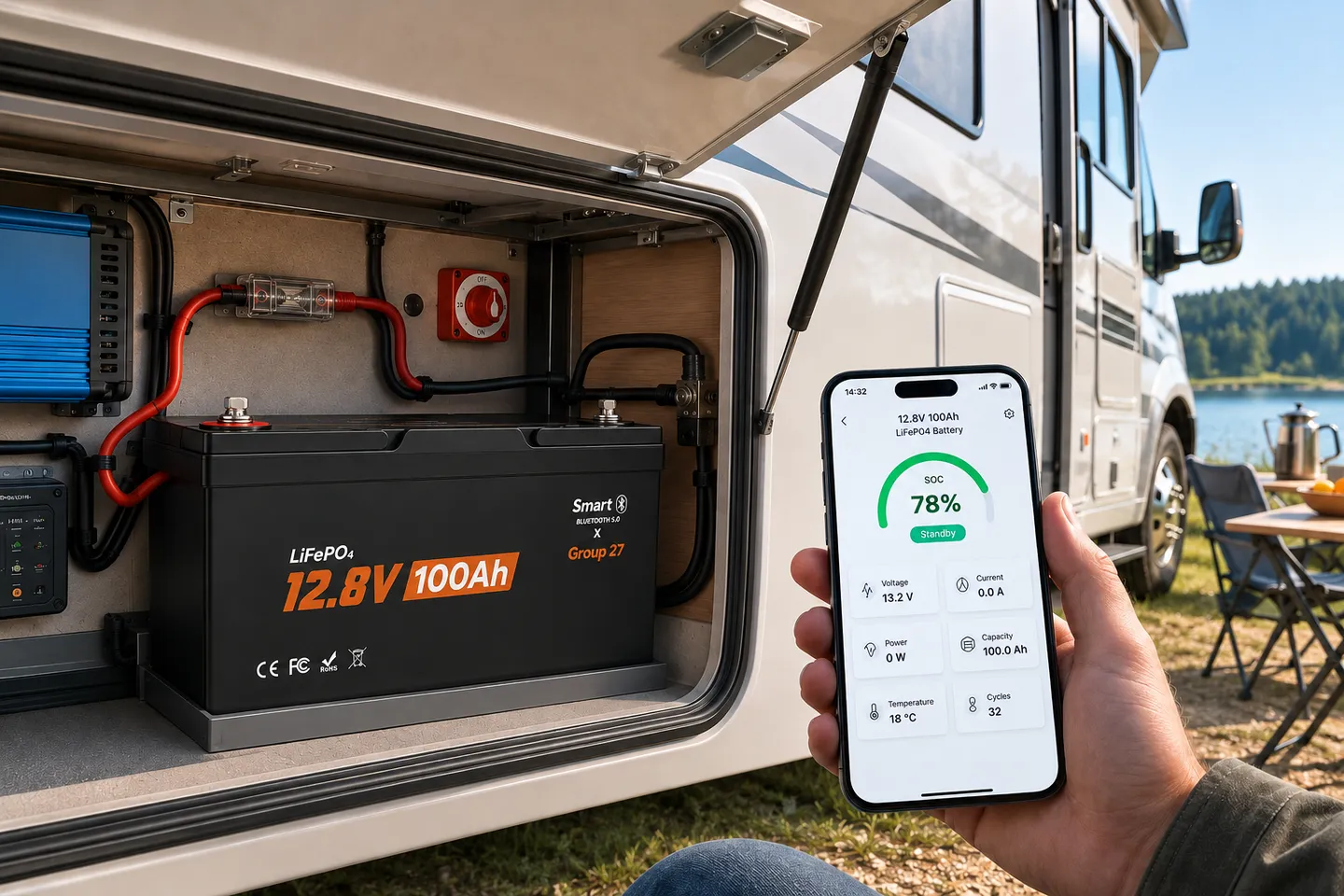
Bluetooth monitoring provides a quick way to check battery condition during installation, daily use and system maintenance. The mobile interface displays key operating information without requiring a separate battery monitor beside the enclosure.
Available battery information includes:
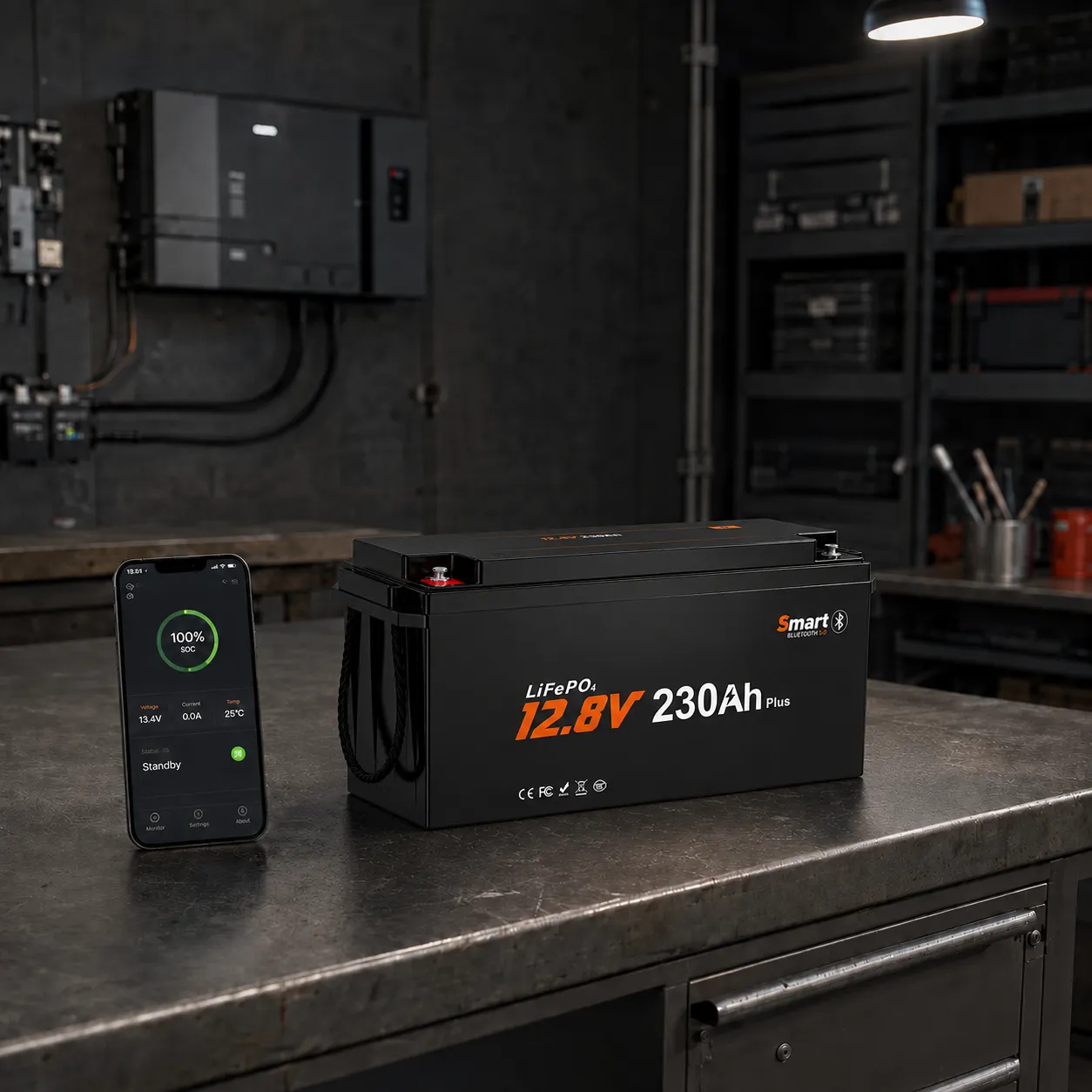
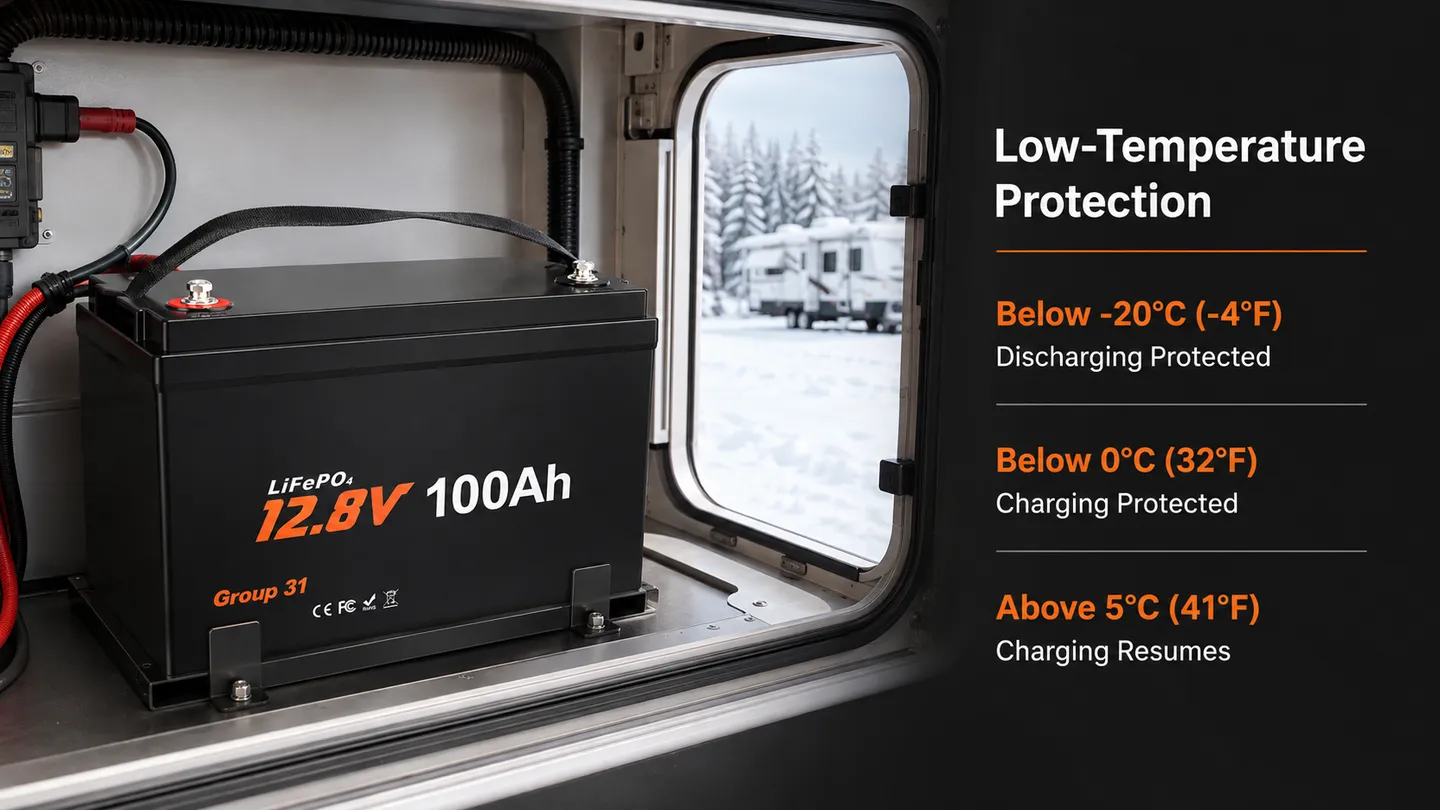
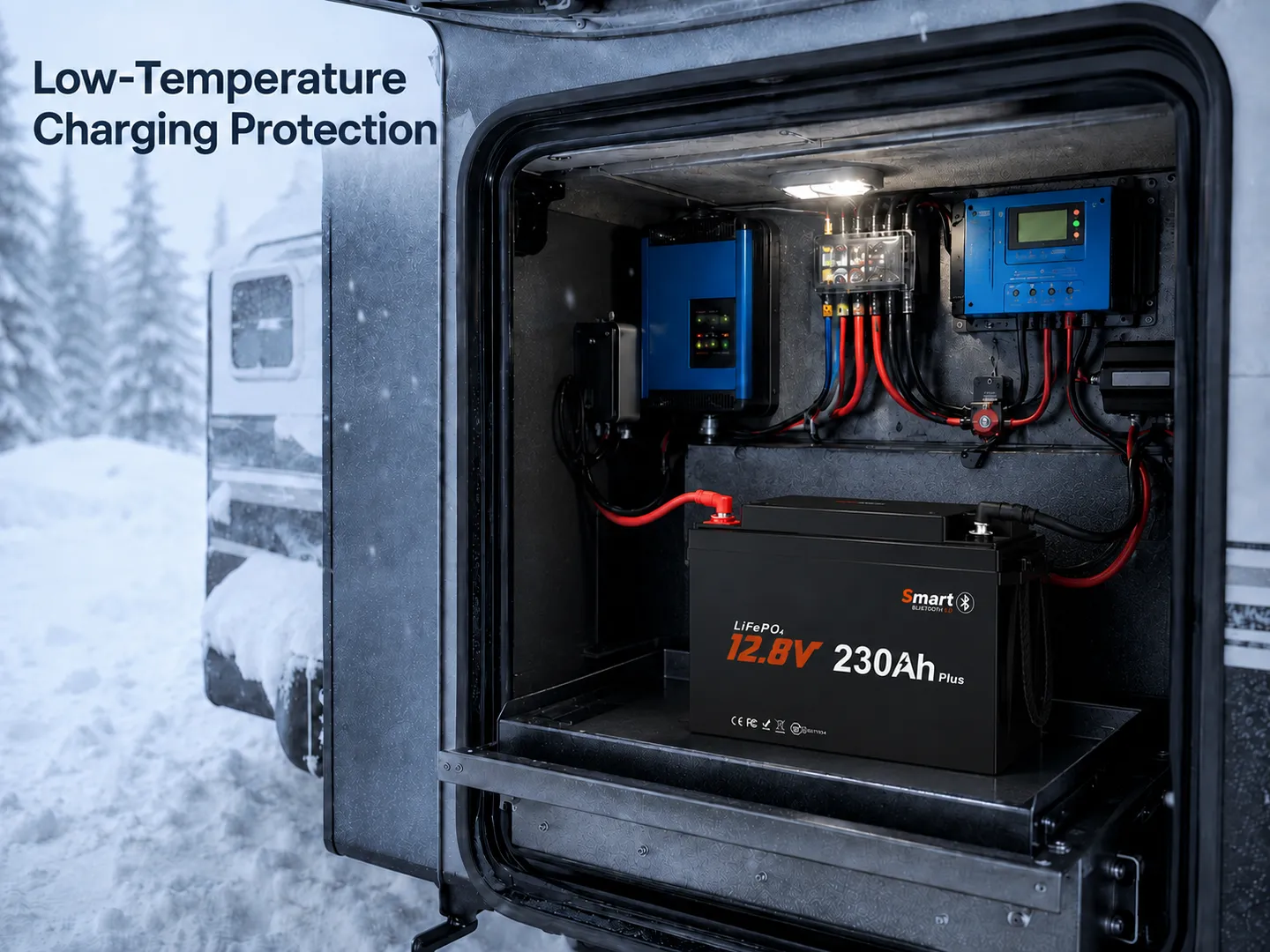
The Smart BMS stops charging when the battery temperature falls below 0°C (32°F). Charging resumes when the temperature reaches 5°C (41°F). Discharging is stopped below -20°C (-4°F).
This model does not include self-heating. Low-temperature protection prevents charging or discharging outside the specified limits, but it does not warm the battery.
Use a LiFePO4-compatible charger with a CC/CV charging profile. The specified charging voltage is 14.4V ± 0.2V, and the recommended charging current is 46A.
Charging sources may include:
Before installation, confirm that the charger settings, current rating and temperature limits match the battery specification. An existing lead-acid charger should not be reused unless its charging profile is suitable for LiFePO4 batteries.
Identical batteries may be connected in configurations up to 4P4S. A complete 4P4S battery bank provides a nominal 51.2V, 920Ah and approximately 47.1kWh of stored energy.
All batteries in the same bank should be the same model, capacity and age, with a similar state of charge before connection. Series and parallel systems also require correctly sized cables, busbars, fuses and disconnect devices.
Always confirm that the inverter, charger, controller and connected equipment are compatible with the completed battery-bank voltage.
| Parameter | Specification |
|---|---|
| Battery chemistry | LiFePO4 |
| Nominal voltage | 12.8V |
| Rated capacity | 230Ah |
| Nominal energy | 2944Wh |
| Battery management system | 200A Smart BMS |
| Maximum continuous charge current | 200A |
| Maximum continuous discharge current | 200A |
| Maximum continuous output power | 2560W |
| Peak discharge current | 1000A for 1 second |
| Charging method | CC/CV |
| Charging voltage | 14.4V ± 0.2V |
| Recommended charging current | 46A |
| Bluetooth monitoring | Yes |
| Self-heating | No |
| Maximum configuration | 4P4S |
| Maximum battery-bank voltage | 51.2V nominal |
| Maximum parallel capacity | 920Ah |
| Maximum stored energy | Approximately 47.1kWh |
| Internal resistance | ≤40mΩ |
| Charge temperature | 0°C to 50°C / 32°F to 122°F |
| Discharge temperature | -20°C to 60°C / -4°F to 140°F |
| Storage temperature | -10°C to 50°C / 14°F to 122°F |
| Low-temperature charge cutoff | Below 0°C / 32°F |
| Charging recovery temperature | 5°C / 41°F or higher |
| Low-temperature discharge cutoff | Below -20°C / -4°F |
| Terminal type | M8 bolts |
| Housing material | ABS |
| Ingress protection | IP65 |
| Approximate weight | 45.98 lb / 20.86 kg |
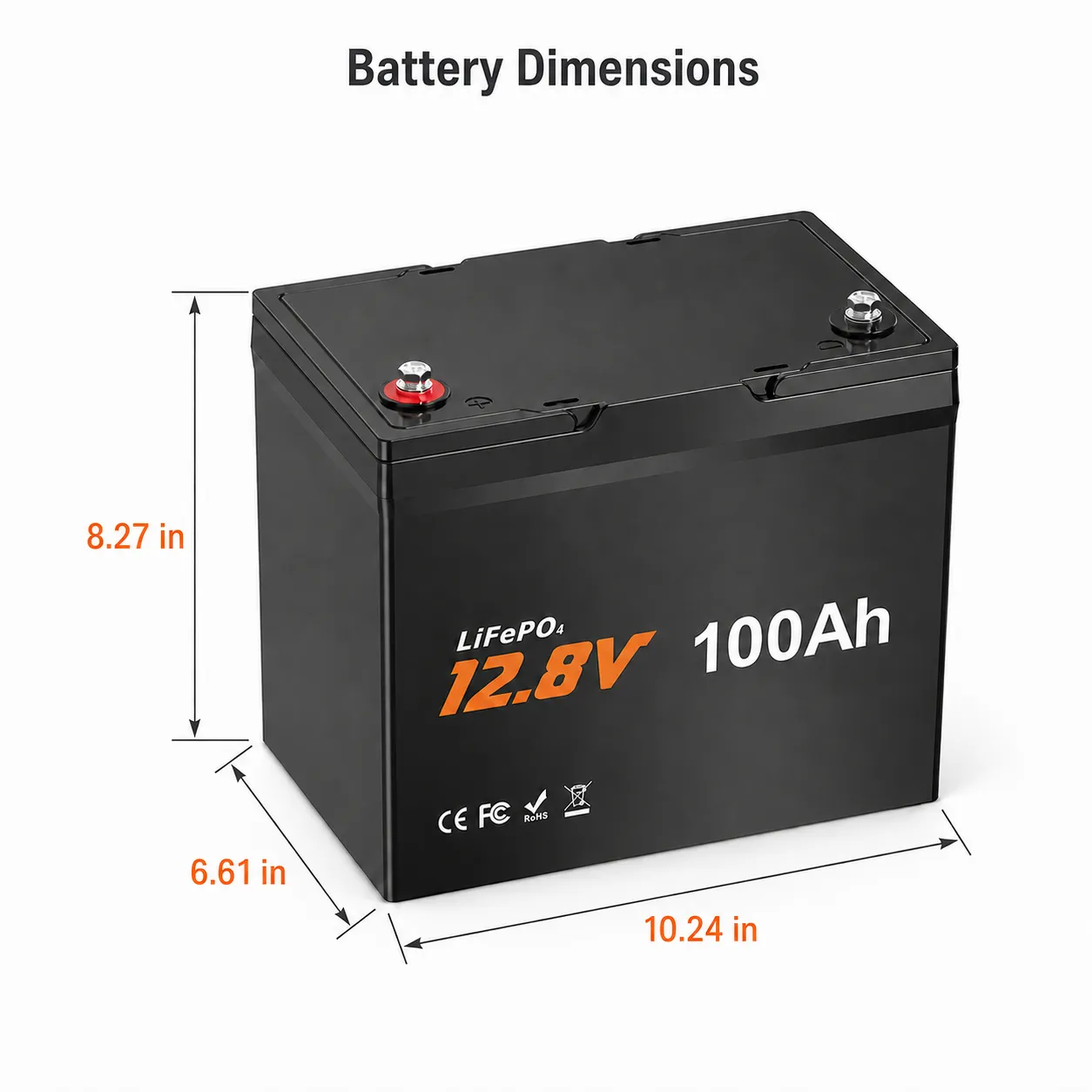
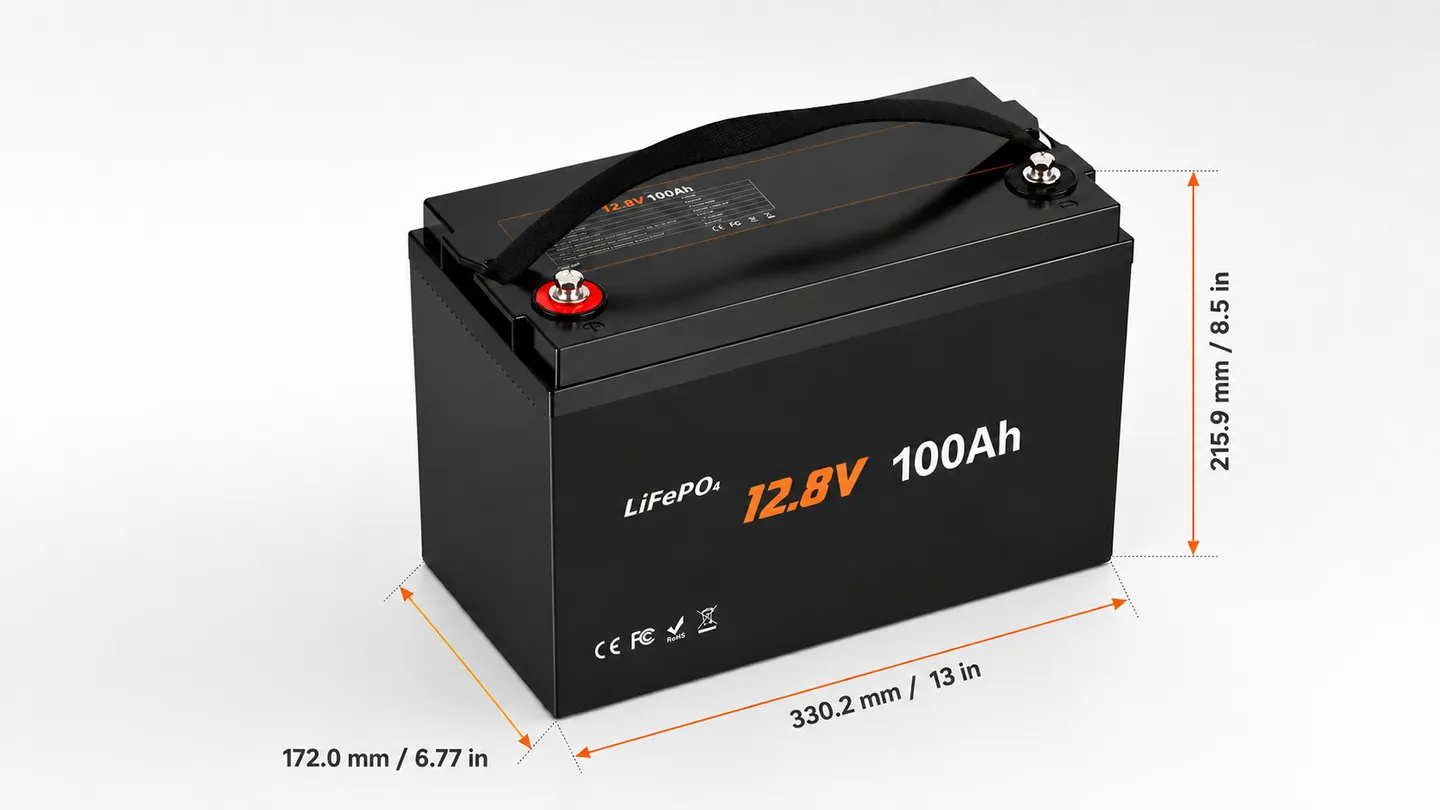
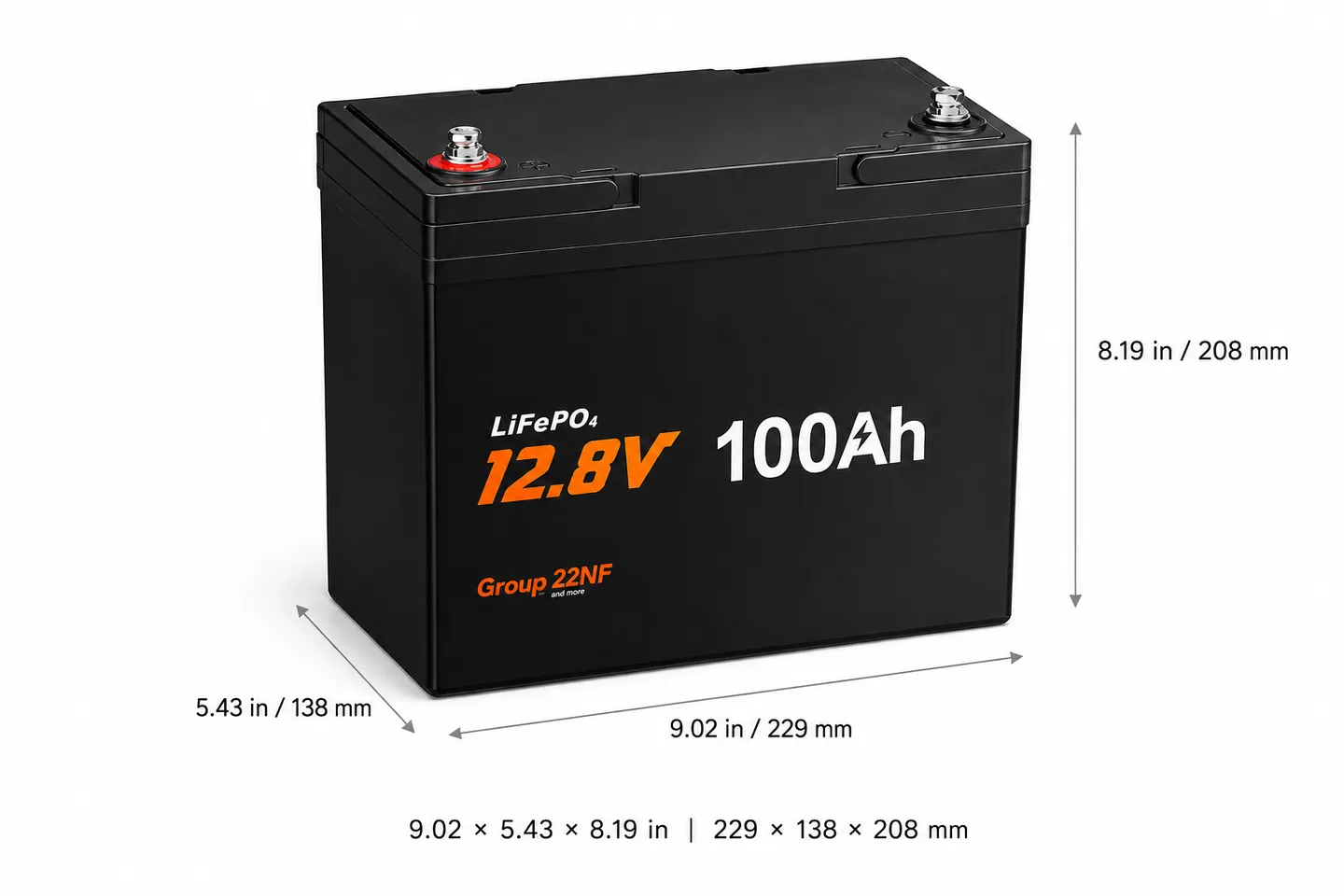
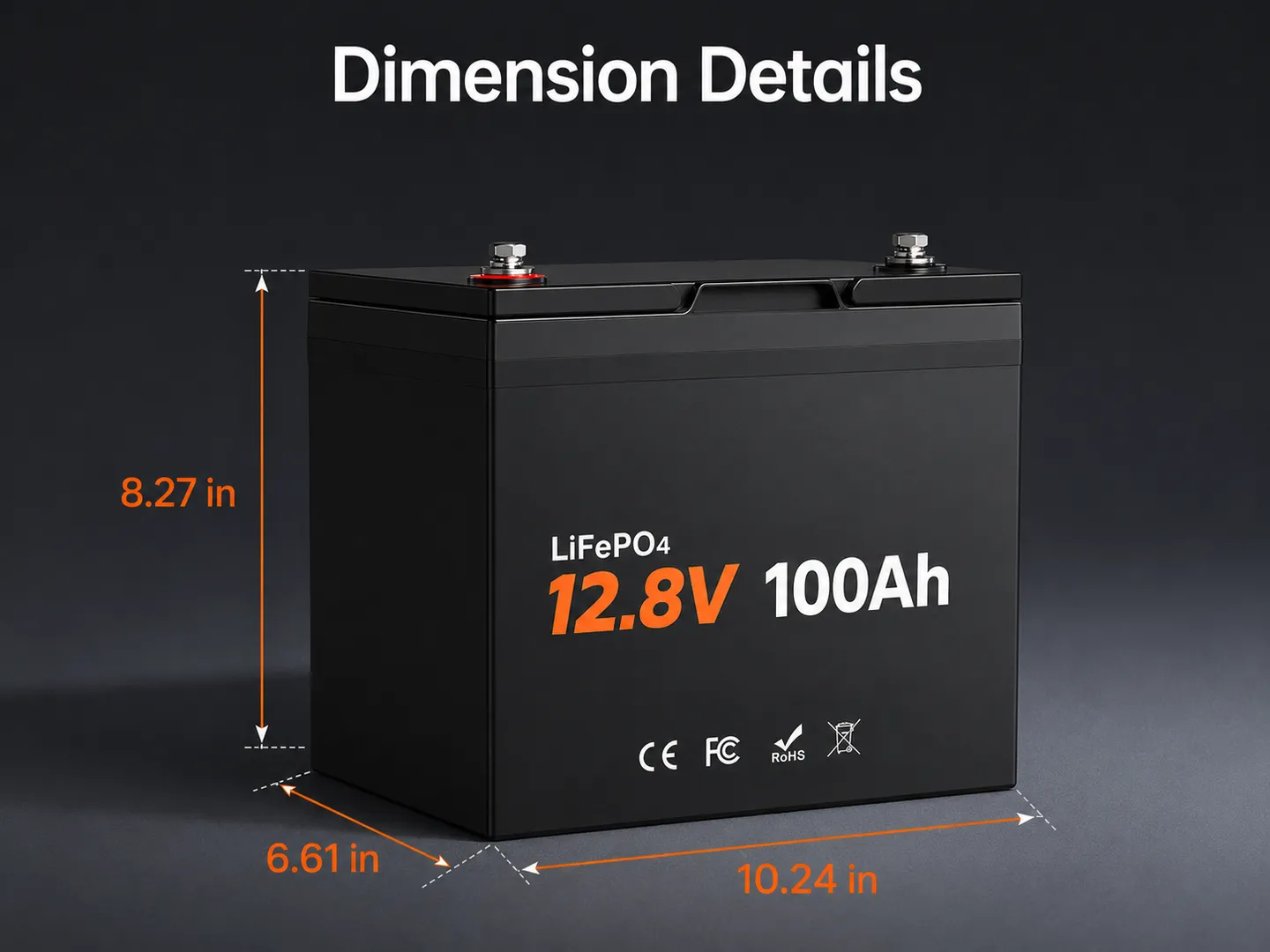
| Dimensions | 19.02 × 6.69 × 9.45 in / 483 × 170 × 240 mm |
| Cycle life at 100% DOD | 4,000 cycles |
| Cycle life at 80% DOD | 6,000 cycles |
| Cycle life at 60% DOD | 15,000 cycles |
Battery testing covers pack voltage, cell-voltage sampling, current monitoring, temperature sensing, cell balancing and BMS protection functions. Production units may also undergo charge-discharge testing and aging inspection according to the agreed product specification.
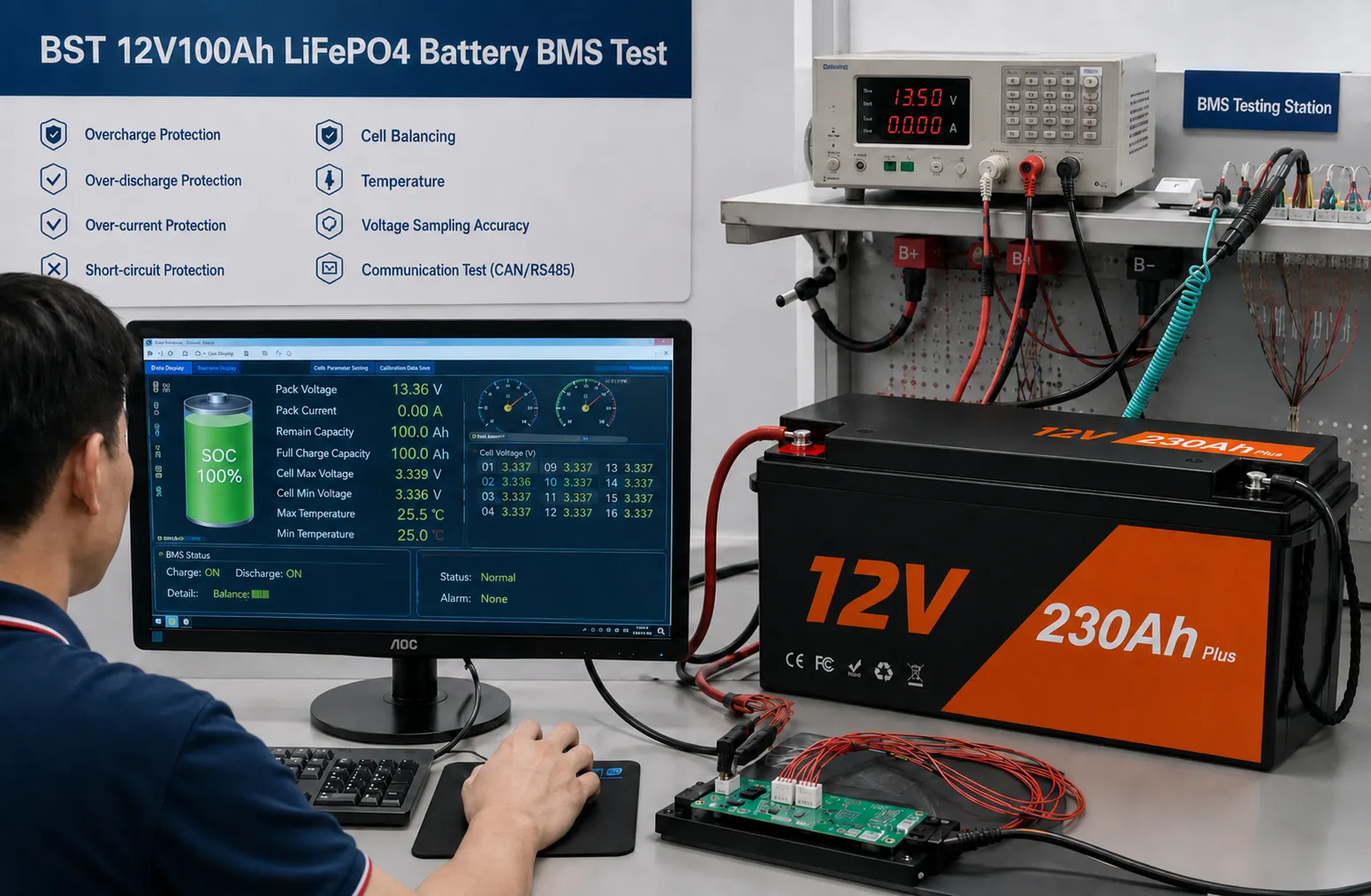
This 12V 230Ah LiFePO4 battery can be considered for RV lead-acid replacement projects after the charging system, available space and required current have been checked.
Before installation, confirm:
A lead-acid to LiFePO4 conversion involves more than matching battery voltage and capacity. The charging profile, cables and protective devices must also be suitable for lithium battery operation.
Support is available for RV builders, camper conversion companies, battery distributors and system integrators requiring a 12V 230Ah lithium battery configuration.
Available services may include:
It is designed for nominal 12V electrical systems. Its nominal voltage is 12.8V because the battery uses four LiFePO4 cells connected in series.
The battery stores 2944Wh at its nominal voltage. This is calculated by multiplying 12.8V by 230Ah.
The 200A BMS supports up to 2560W of continuous battery output. Actual inverter compatibility also depends on efficiency, surge demand, cable size, cable length, fuse rating and terminal installation.
No. It includes low-temperature charge and discharge protection but does not contain an internal heating function.
Yes, when the available space, charging system, cables, circuit protection and required operating current are compatible with the battery specification.
Yes. Identical batteries support configurations up to four in series and four in parallel when installed according to the product manual.
Bluetooth monitoring provides access to state of charge, pack voltage, current, temperature, operating status and protection information.
Yes. A correctly sized DC-to-DC charger configured for LiFePO4 batteries should be installed between the alternator and battery.
Use a LiFePO4-compatible CC/CV charger with the correct voltage and current settings. The specified charging voltage is 14.4V ± 0.2V.
Send the required quantity, application, inverter power, charging method and available installation dimensions. The battery configuration can then be reviewed before specifications, sample options and OEM pricing are provided.
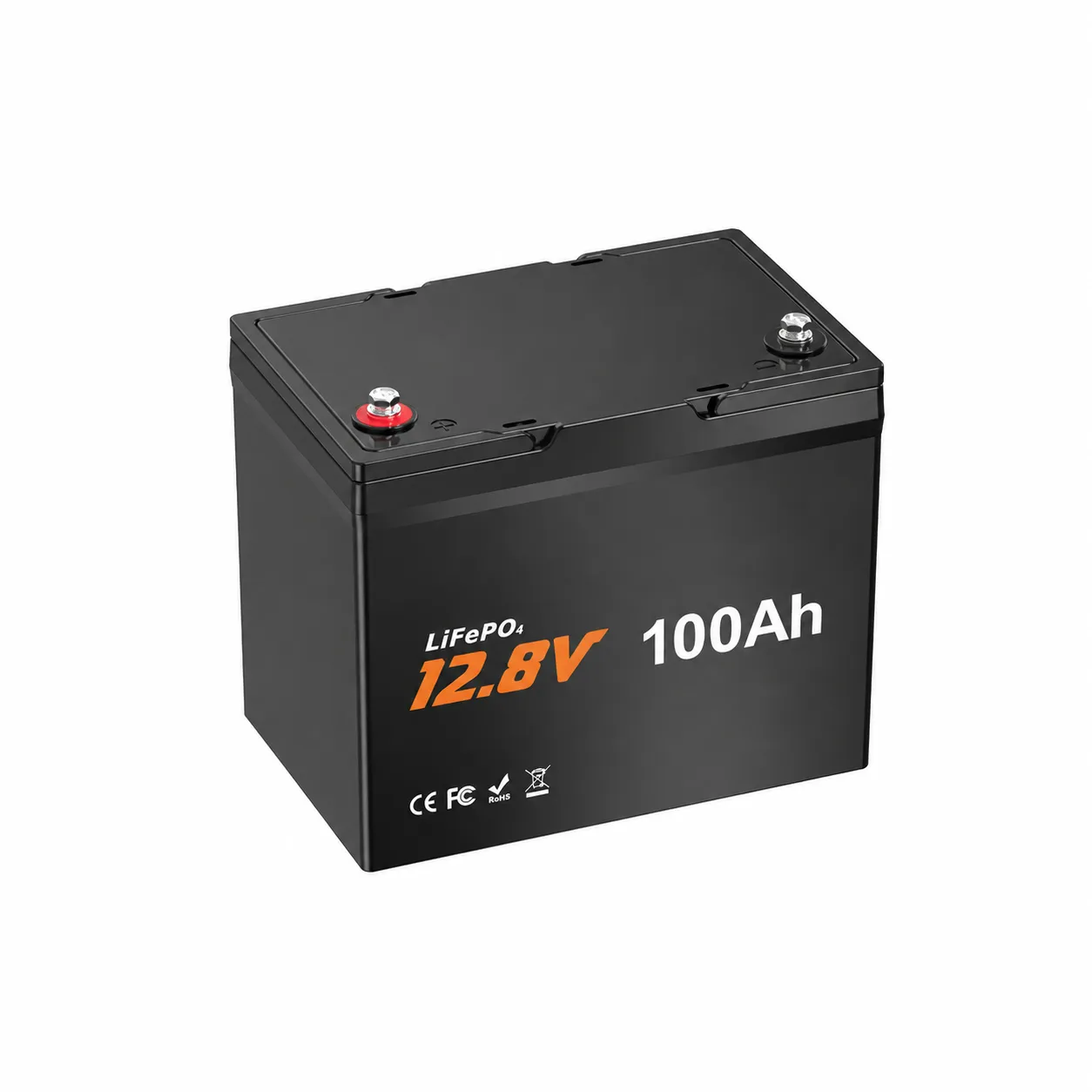
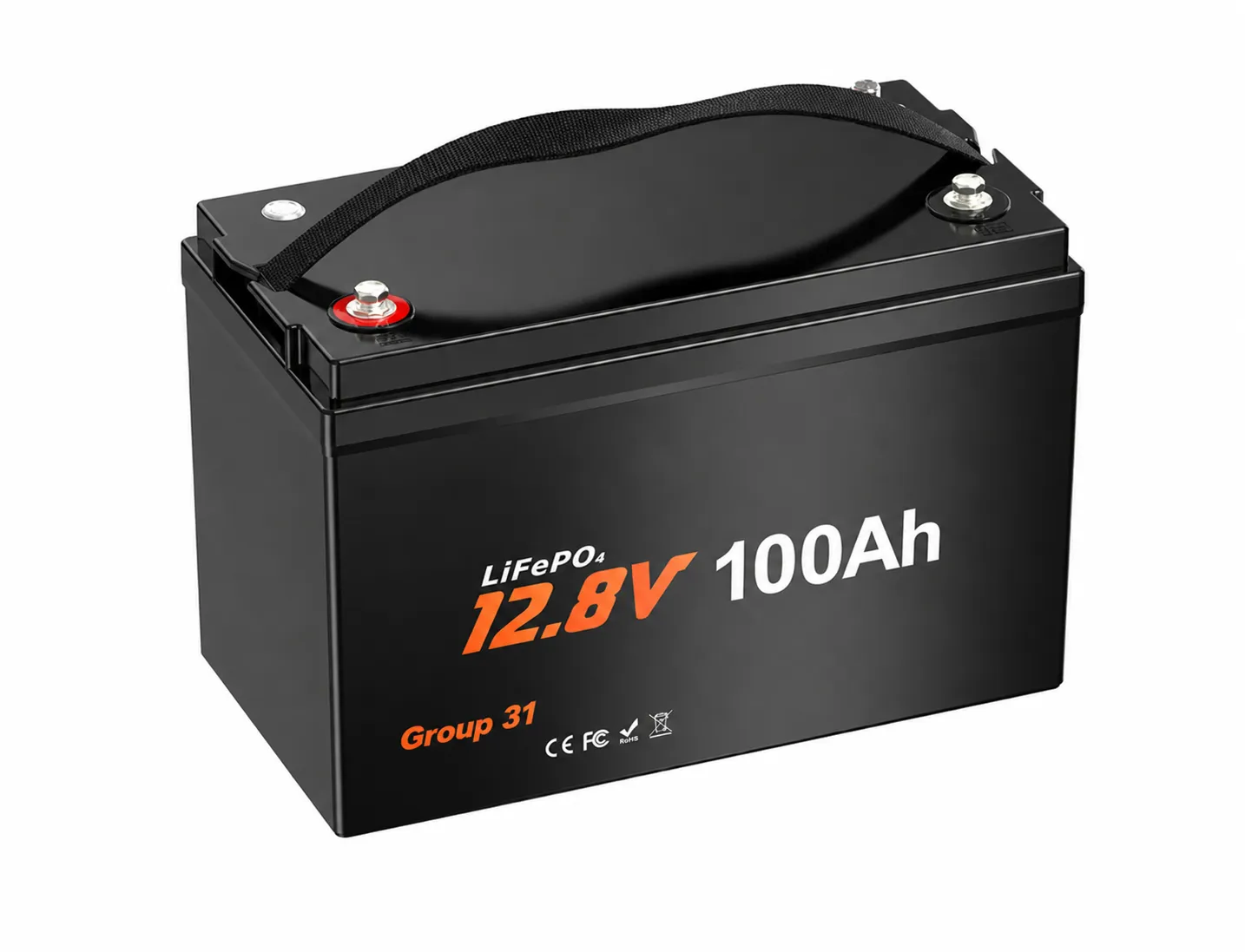
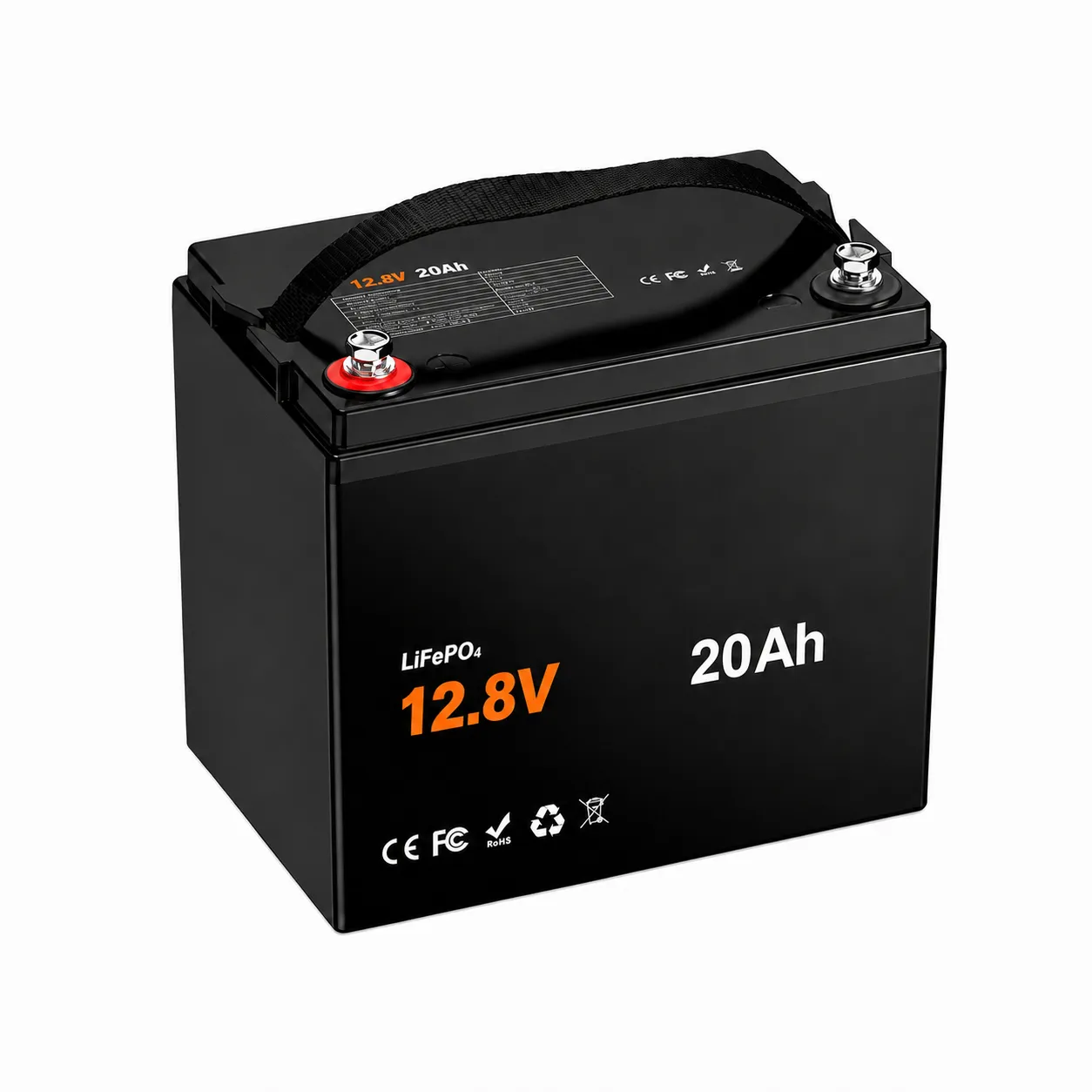
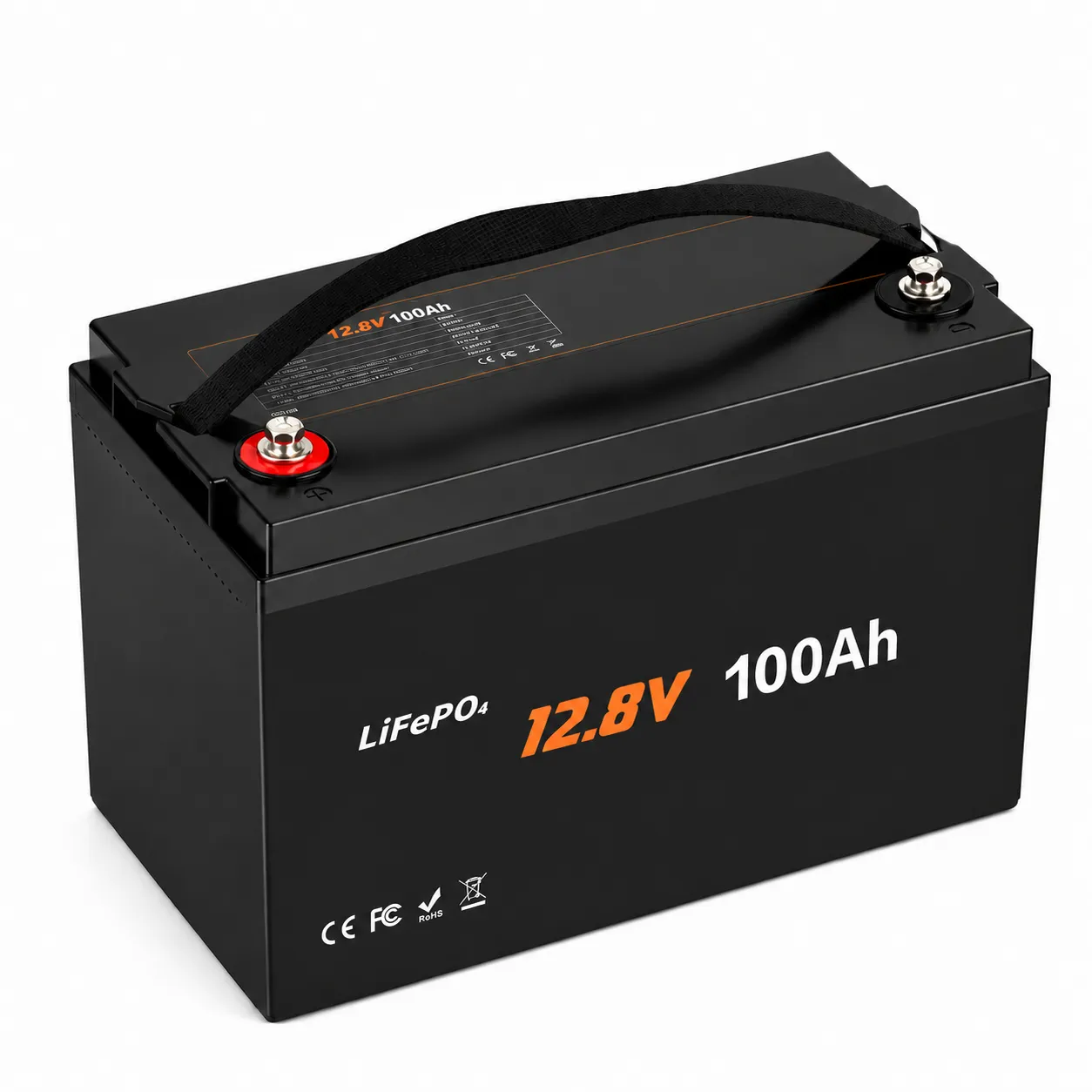
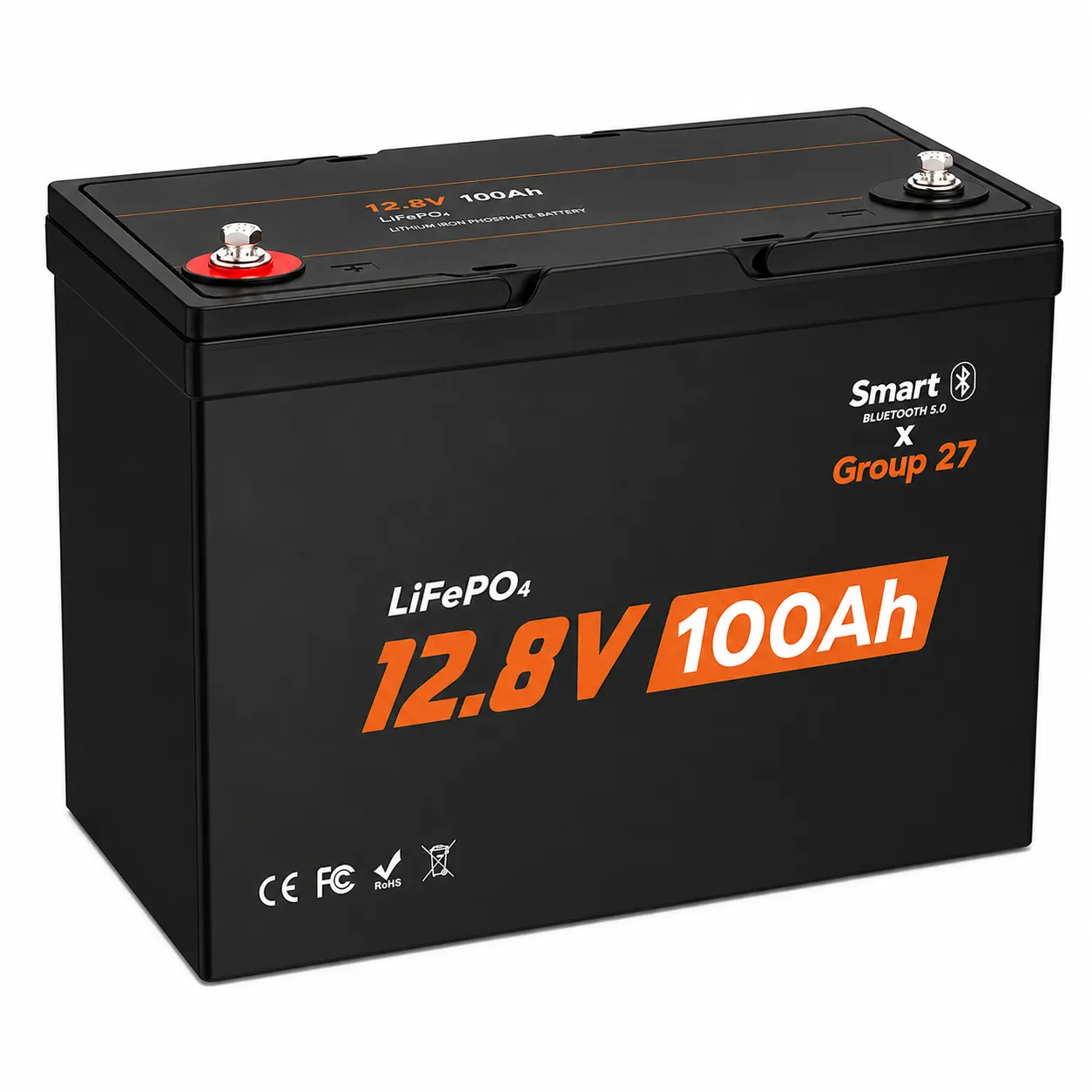
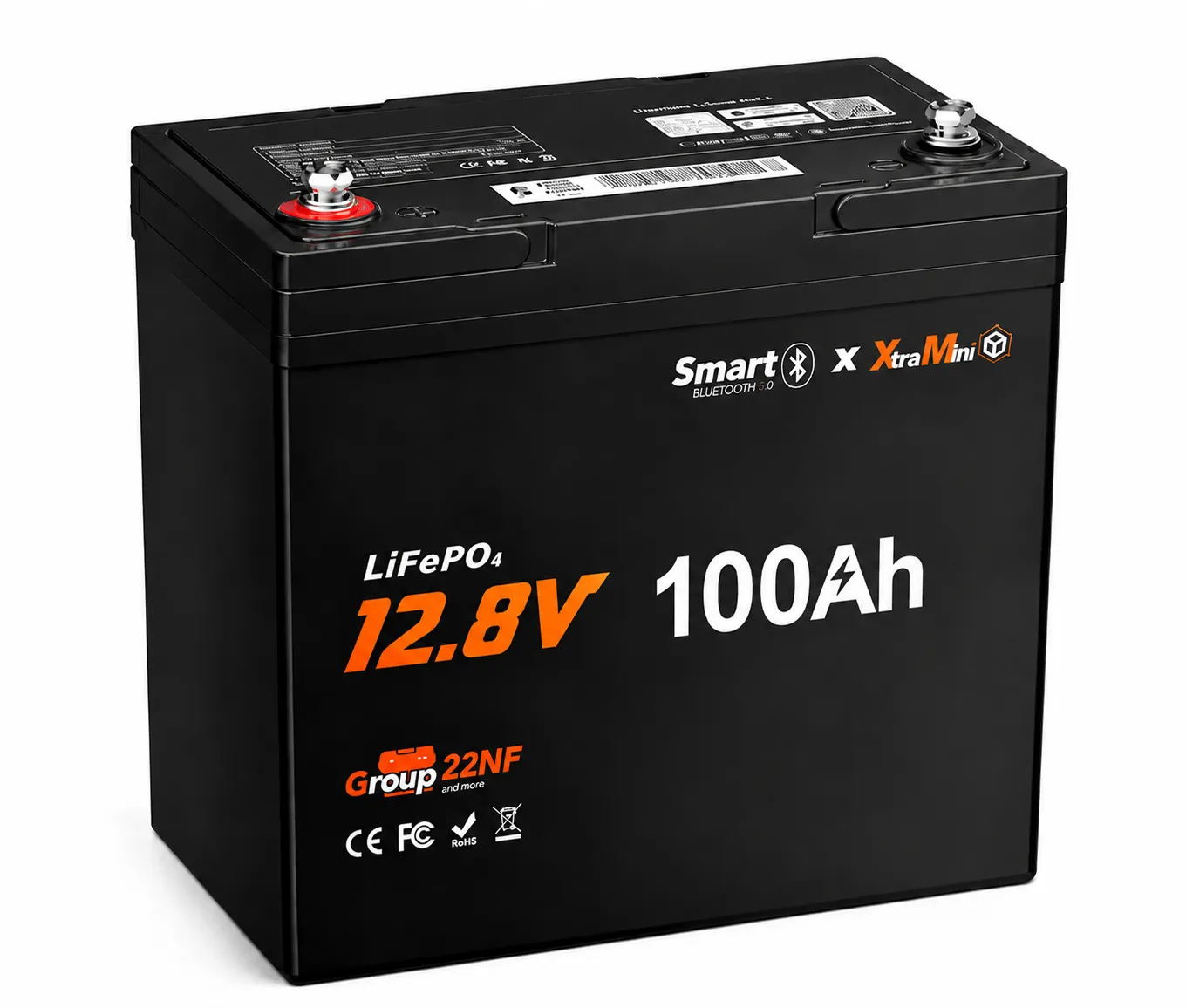
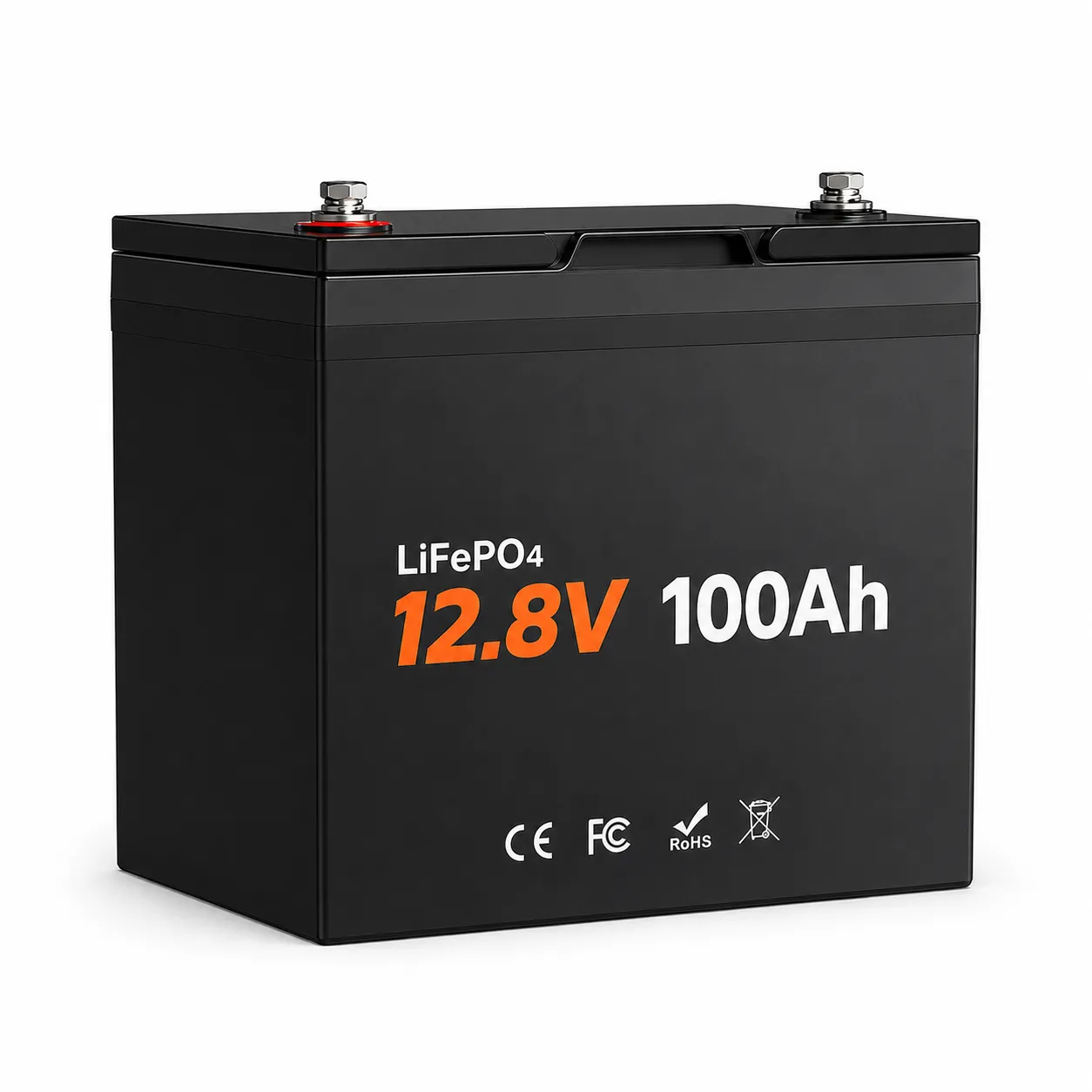
Many LiFePO4 batteries can replace compatible lead-acid deep-cycle batteries in RVs, boats, golf carts and industrial equipment. Before installation, confirm the system voltage, battery dimensions, terminal layout, charger profile, maximum load, cable size, fuse rating and operating temperature.
Most LiFePO4 batteries are compatible with standard 12V, 24V, 36V or 48V inverters when the system voltage and power requirements match. Many modern chargers also include a LiFePO4 charging profile. For lead-acid replacement projects, confirm the charger voltage, inverter rating and maximum load before installation. A compatible charger or DC-to-DC charger may be required if the existing charging equipment does not support LiFePO4 batteries.
Yes. OEM and custom battery support can include voltage, capacity, BMS settings, enclosures, terminals, connectors, communication protocols, labels and packaging. Send us the application, electrical requirements, installation dimensions and expected order quantity for review.
MOQ depends on the battery model, specification and customization requirements. Standard models may be available for sample testing, while custom enclosures, private labels and OEM production normally require a confirmed order quantity. Contact us with the model and required quantity for details.
Available certifications and documents depend on the battery model and destination market. Supporting documents may include UN38.3, MSDS, CE, RoHS and product test reports. Confirm the required documents and target market before placing an order.
Lead time depends on the battery model, order quantity, customization and testing requirements. Export shipping options are arranged according to the battery specification, destination and order volume. Send us the required quantity, delivery location and target schedule for a project-specific quotation.