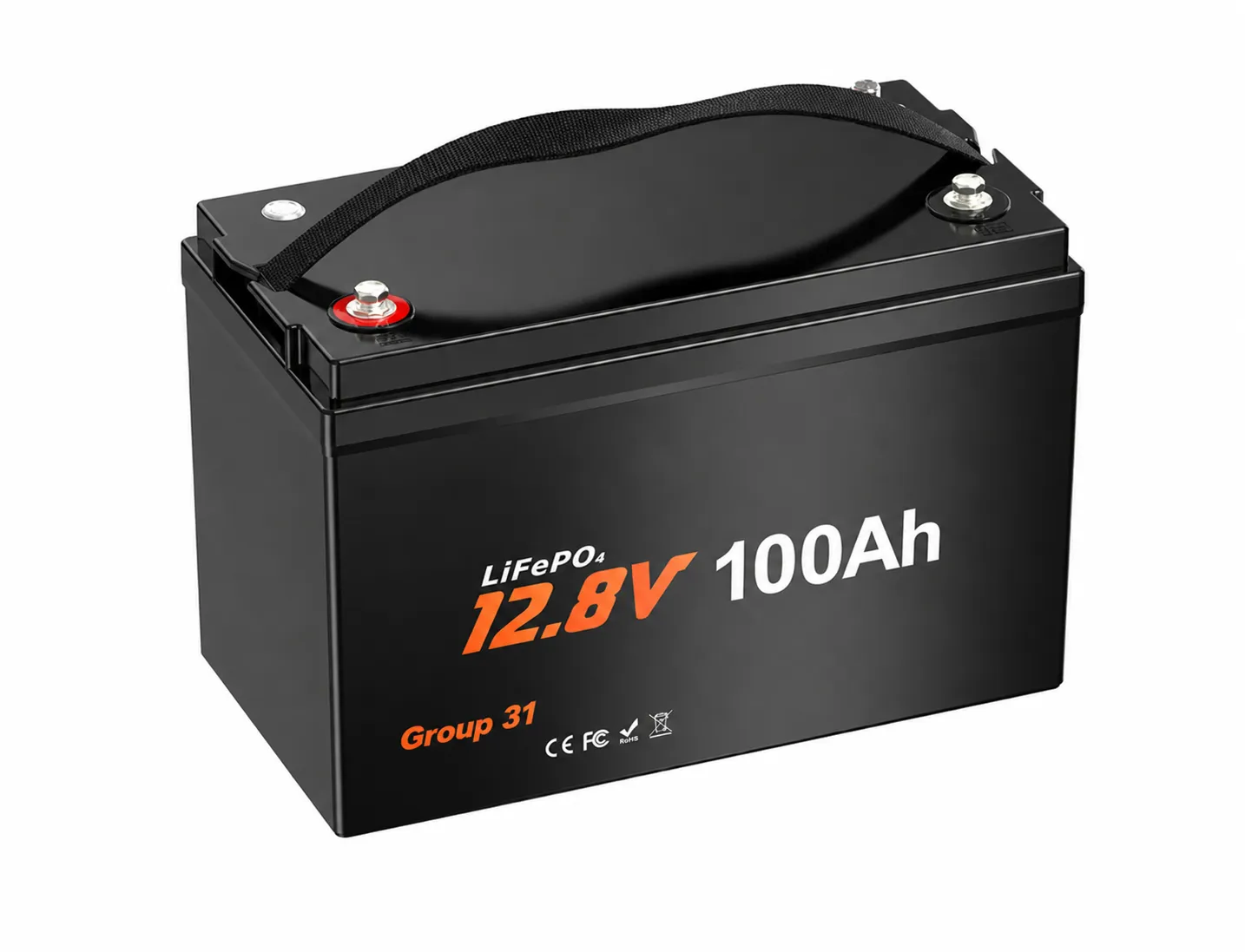
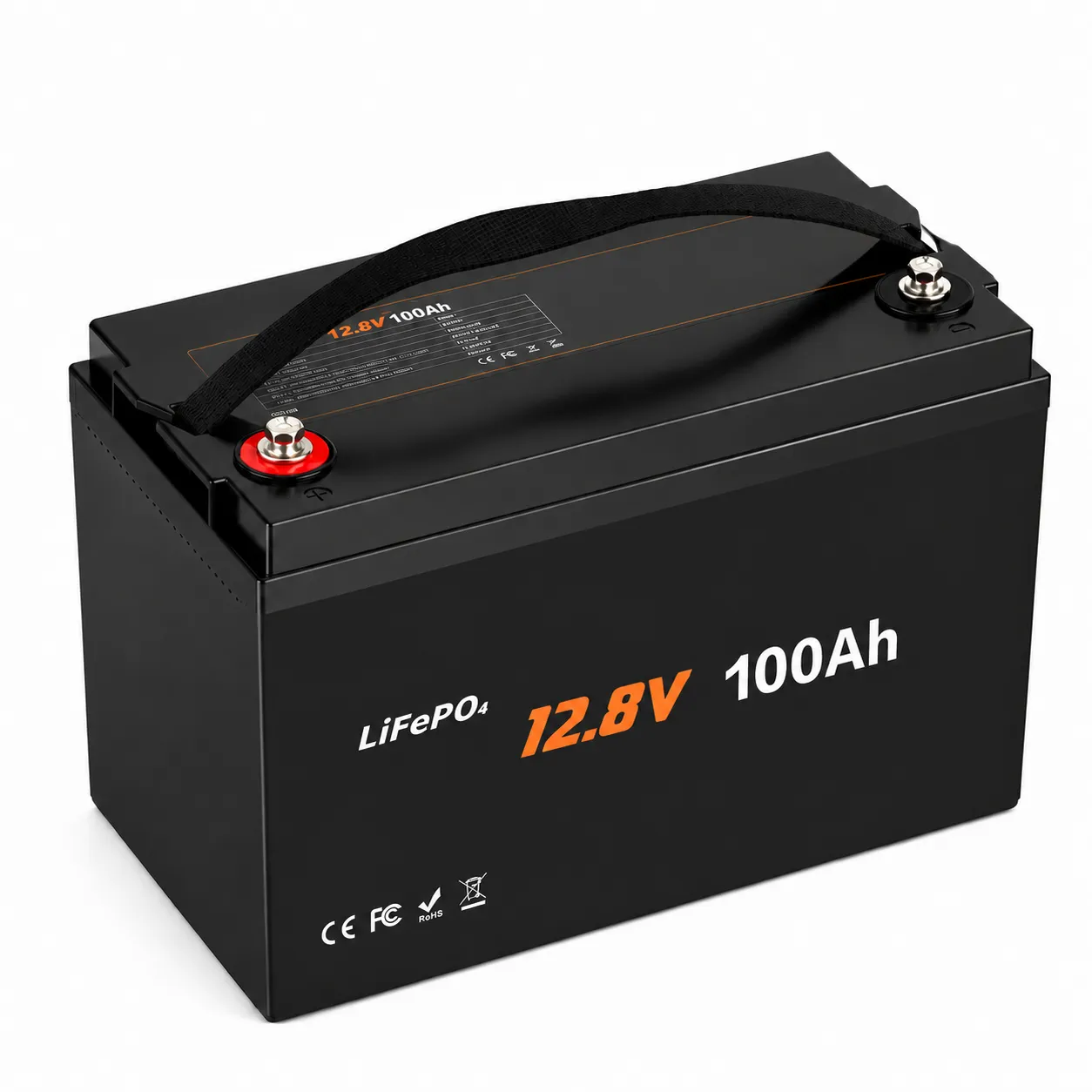
12V 100Ah Group 31 LiFePO4 Battery for Trolling Motors
$169.00
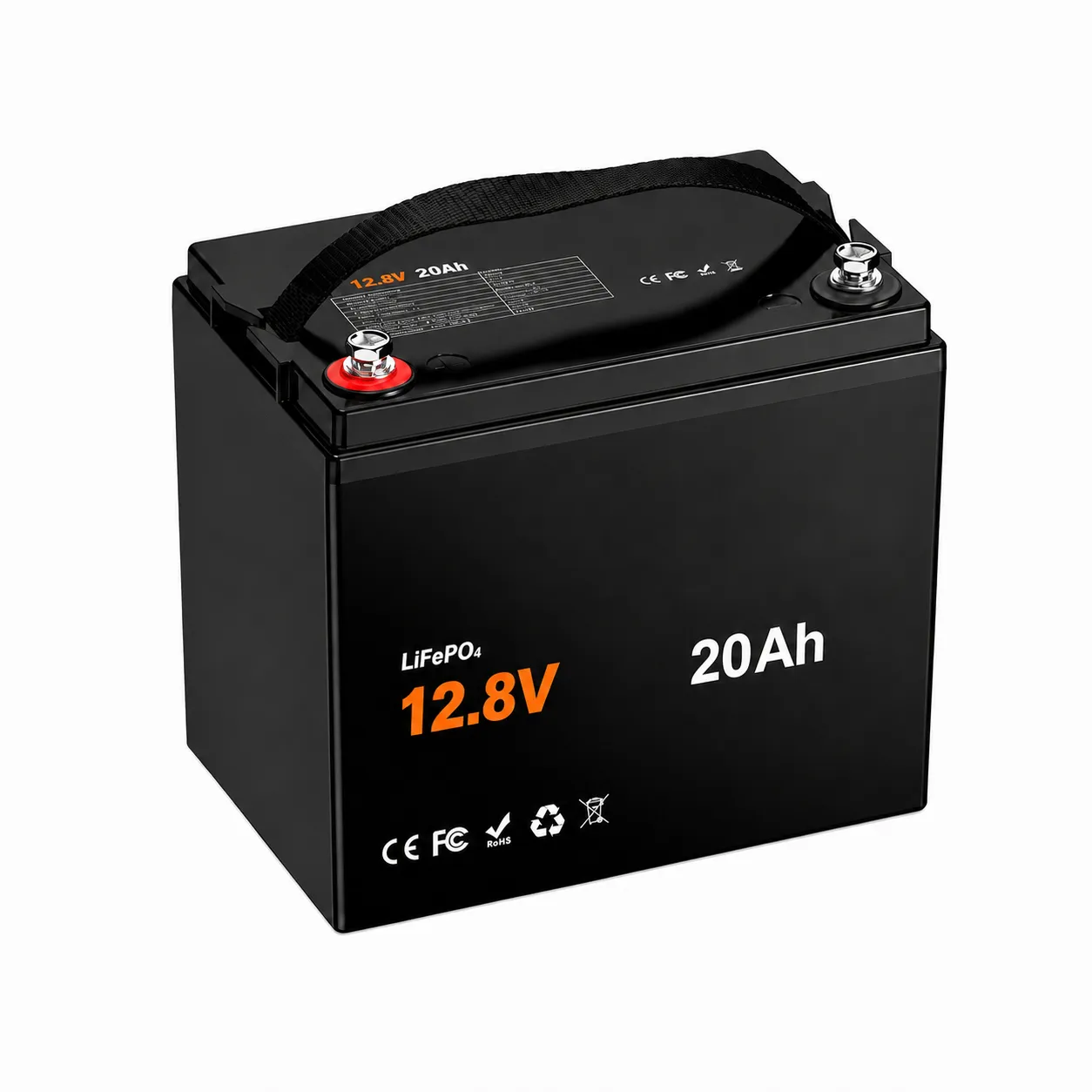
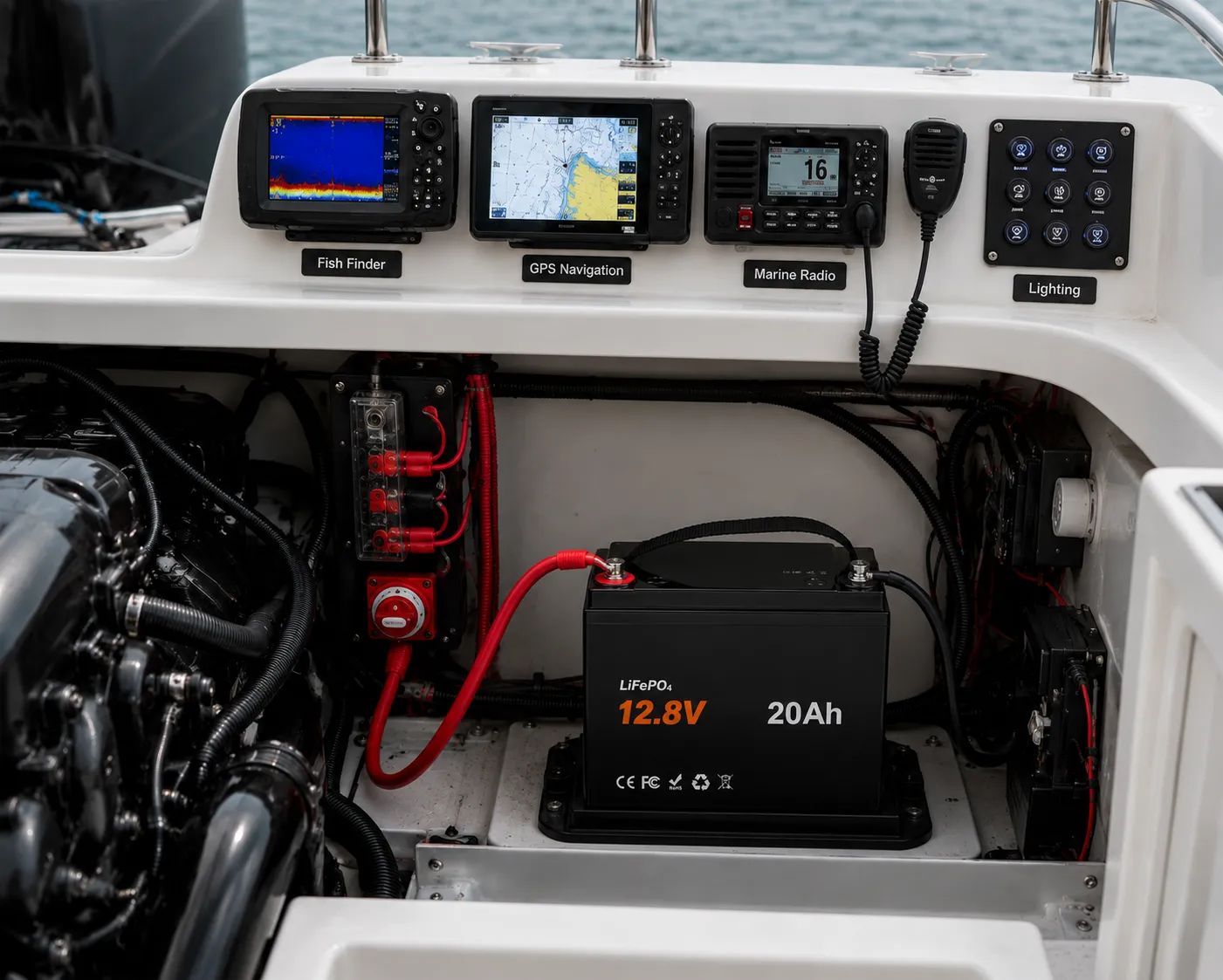
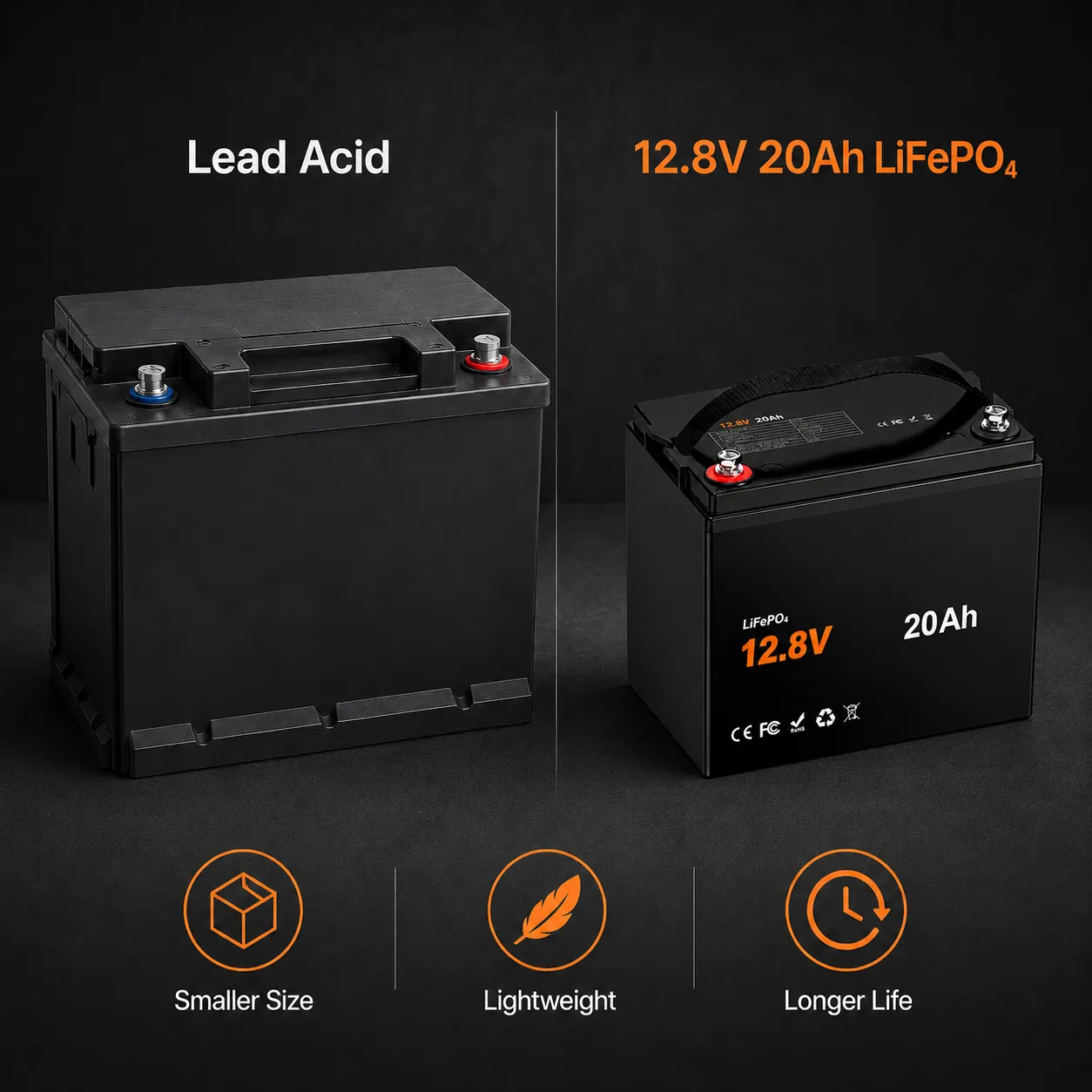
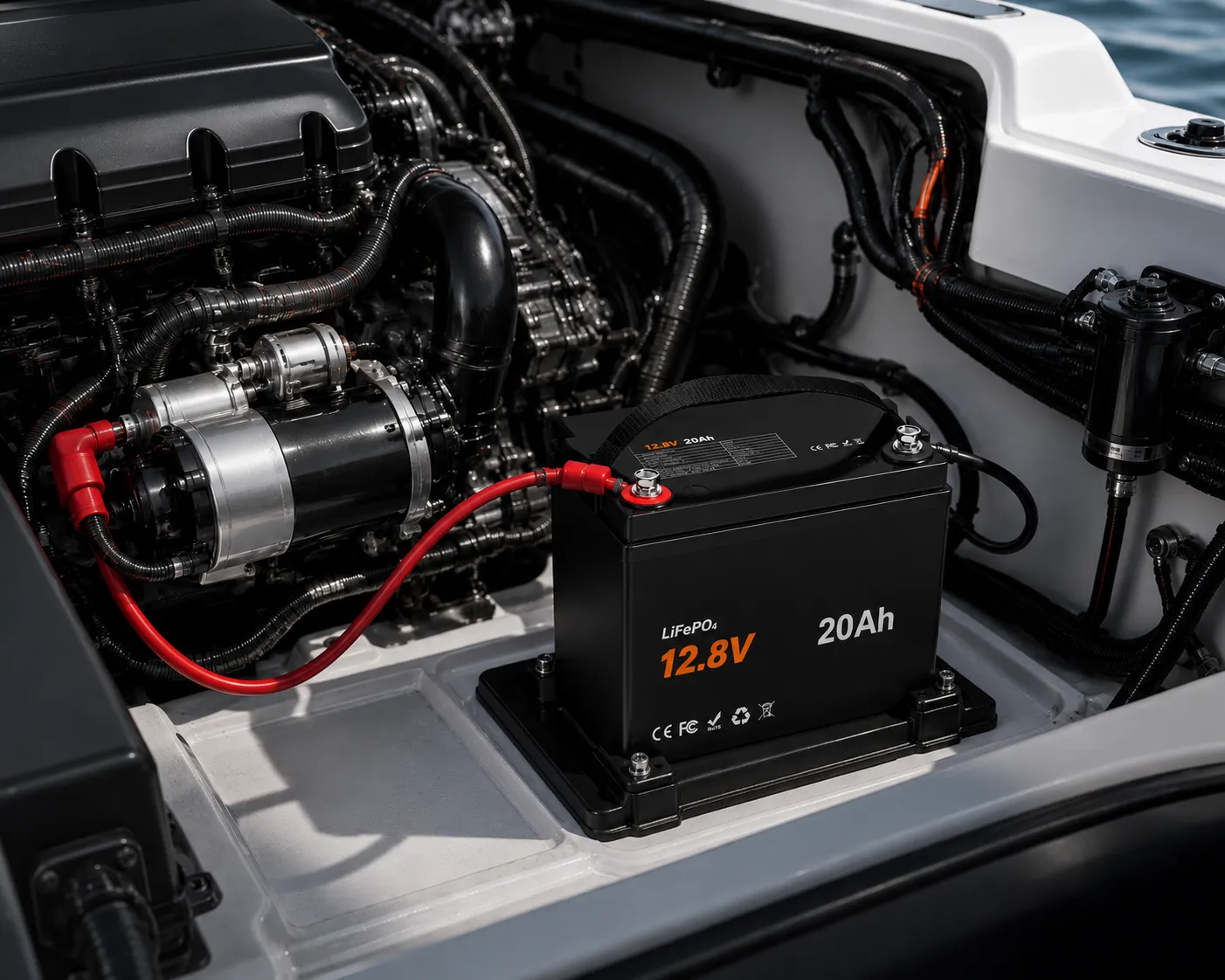
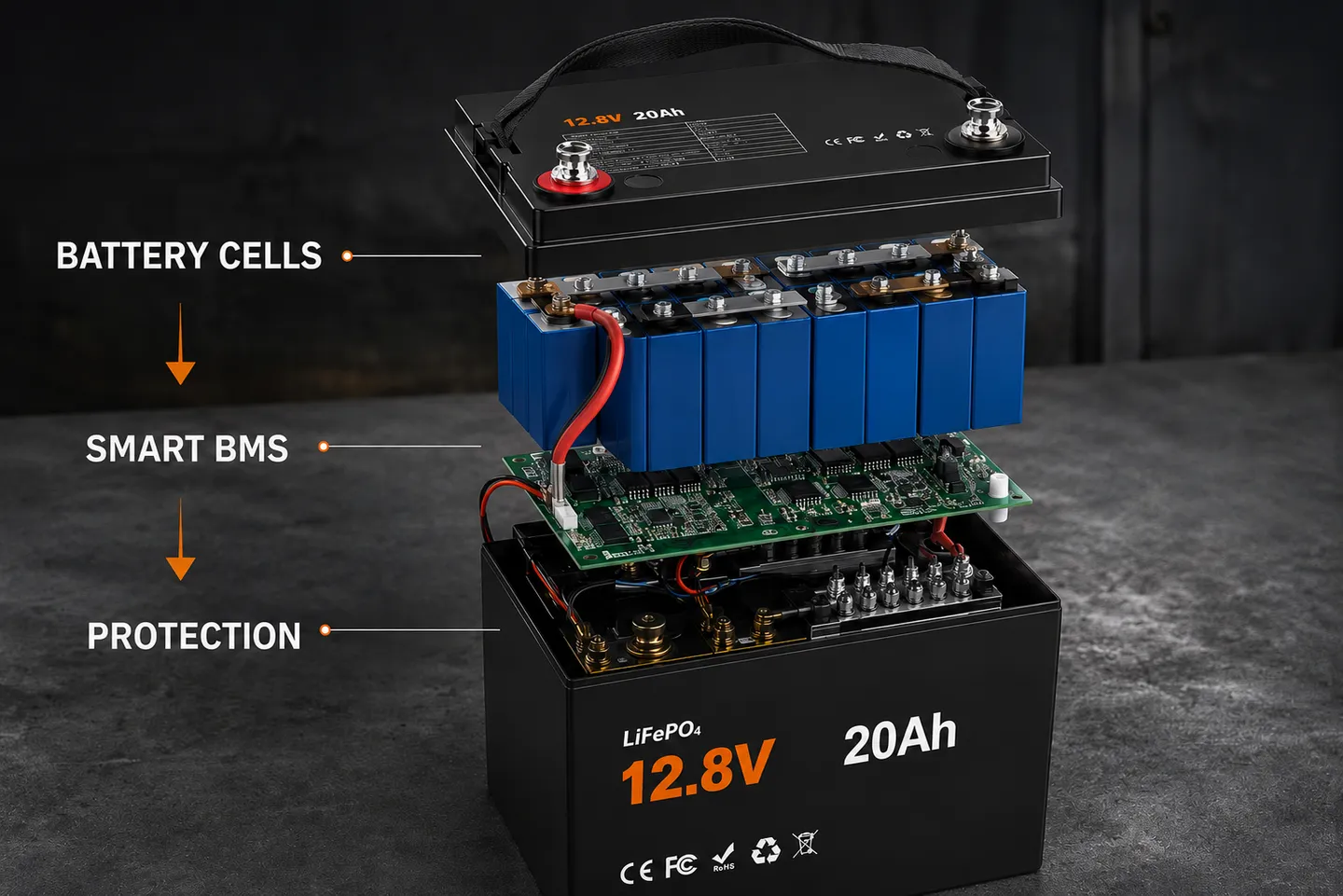
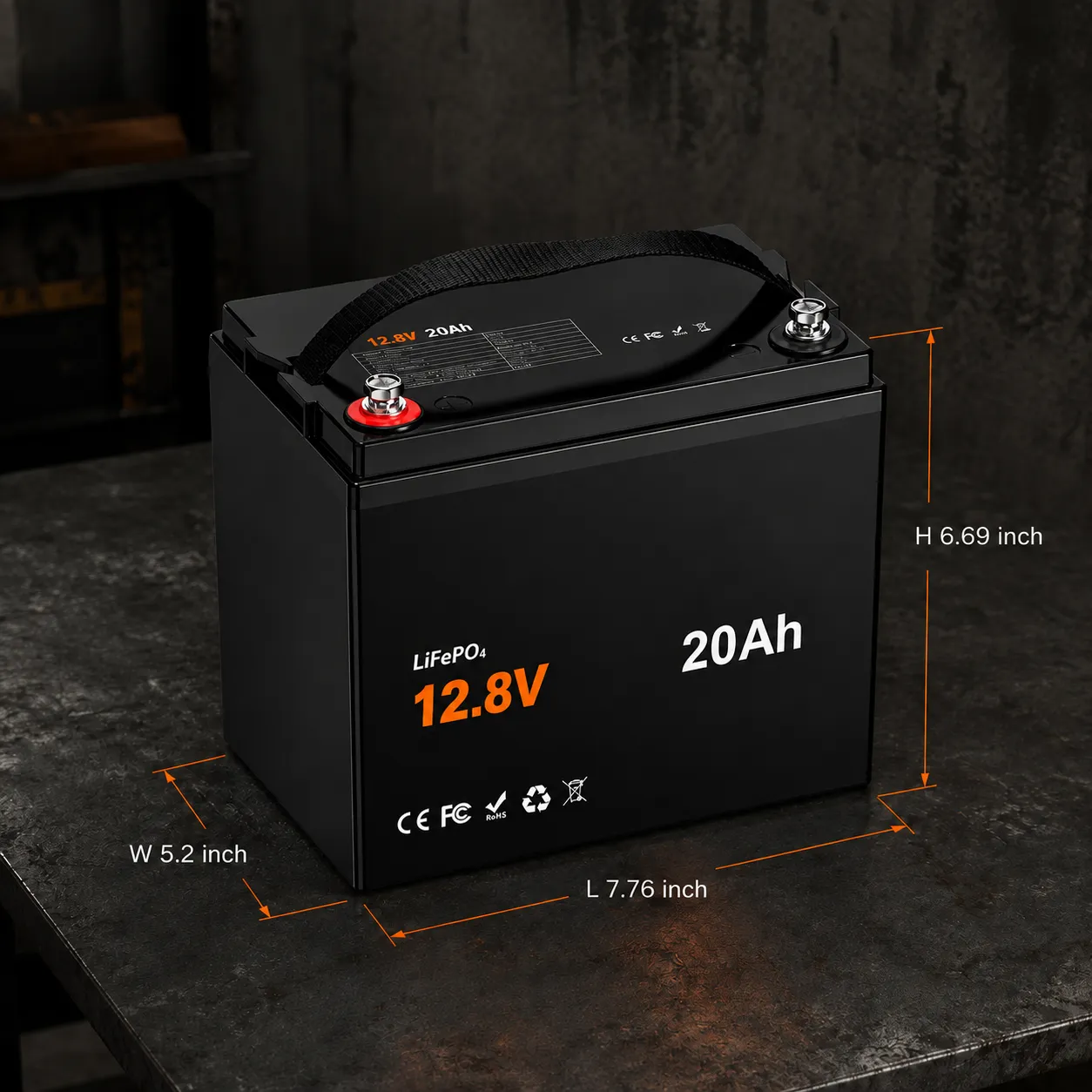
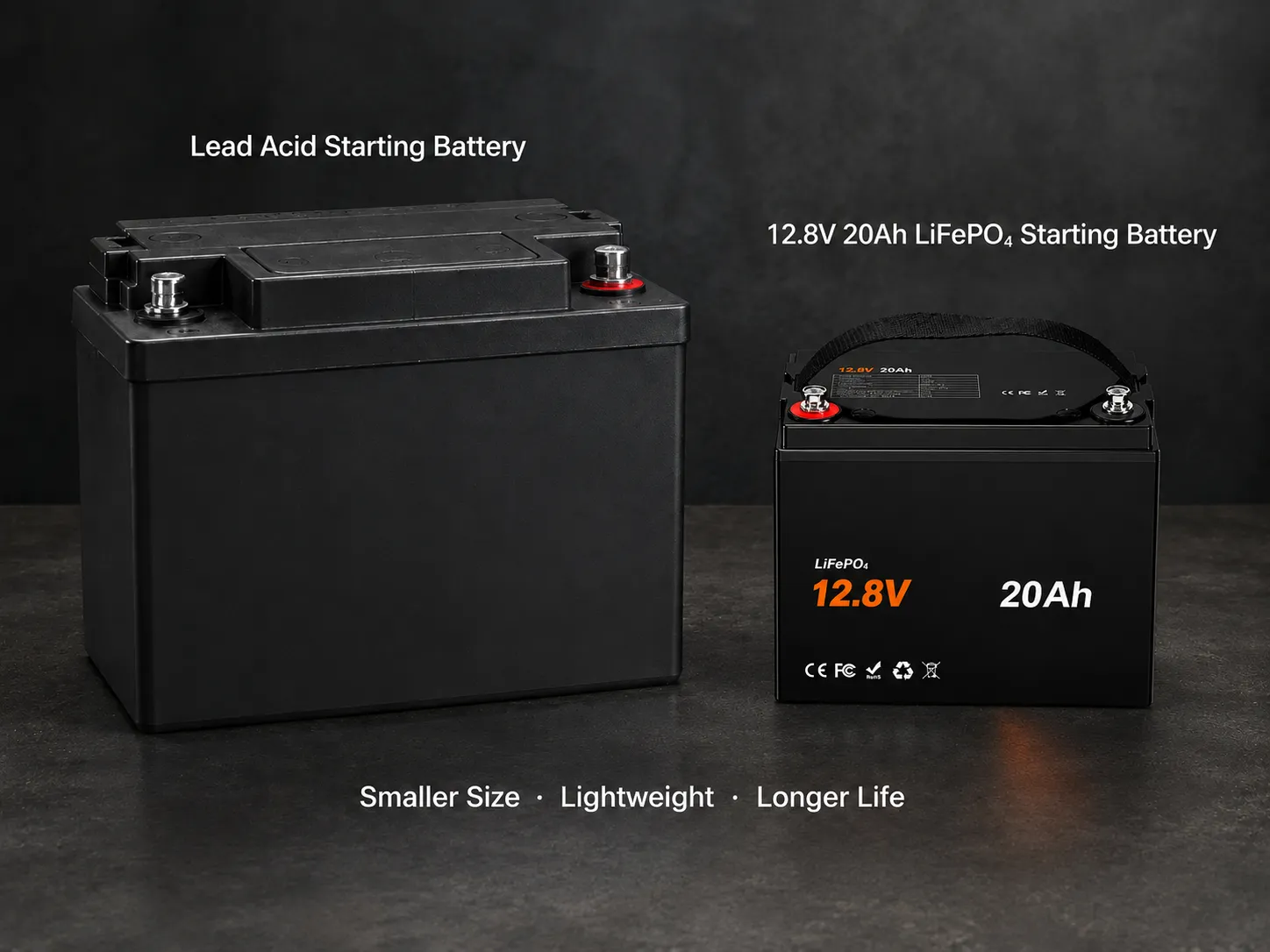
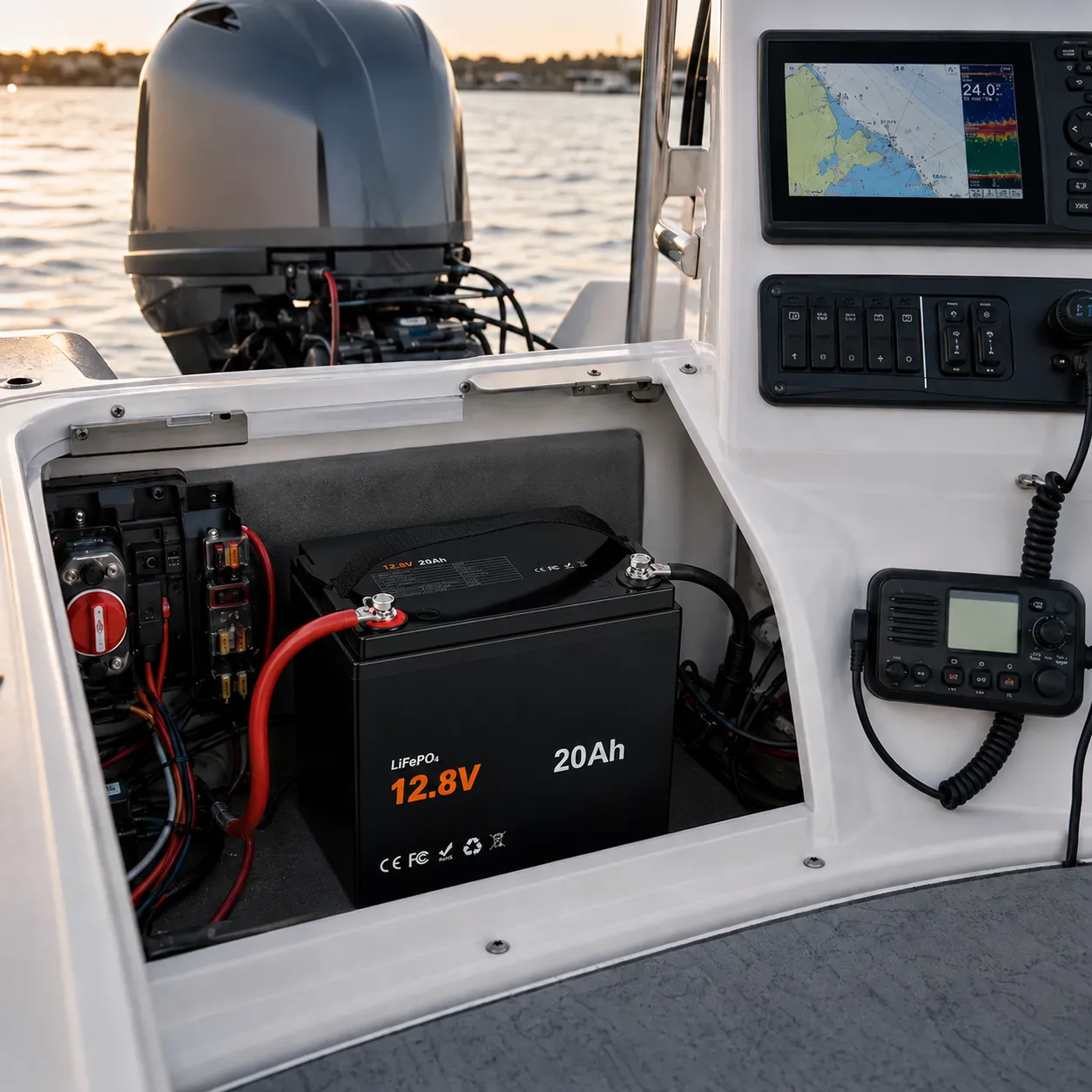
The 12V 20Ah marine starting LiFePO4 battery delivers high cranking current in a compact Group U1-size case. Rated at 800 CCA at −10°C, 810 MCA and 900 HCA, it is designed for compatible fuel-powered outboard engines that require dependable starting power without the weight of a conventional lead-acid battery.
The battery weighs approximately 9.68 lb and includes low-temperature protection, an IP67-rated ABS housing and a BMS developed for high-current marine starting. Before ordering, confirm the engine’s required CCA, alternator output, charging voltage, terminal layout and available installation space.
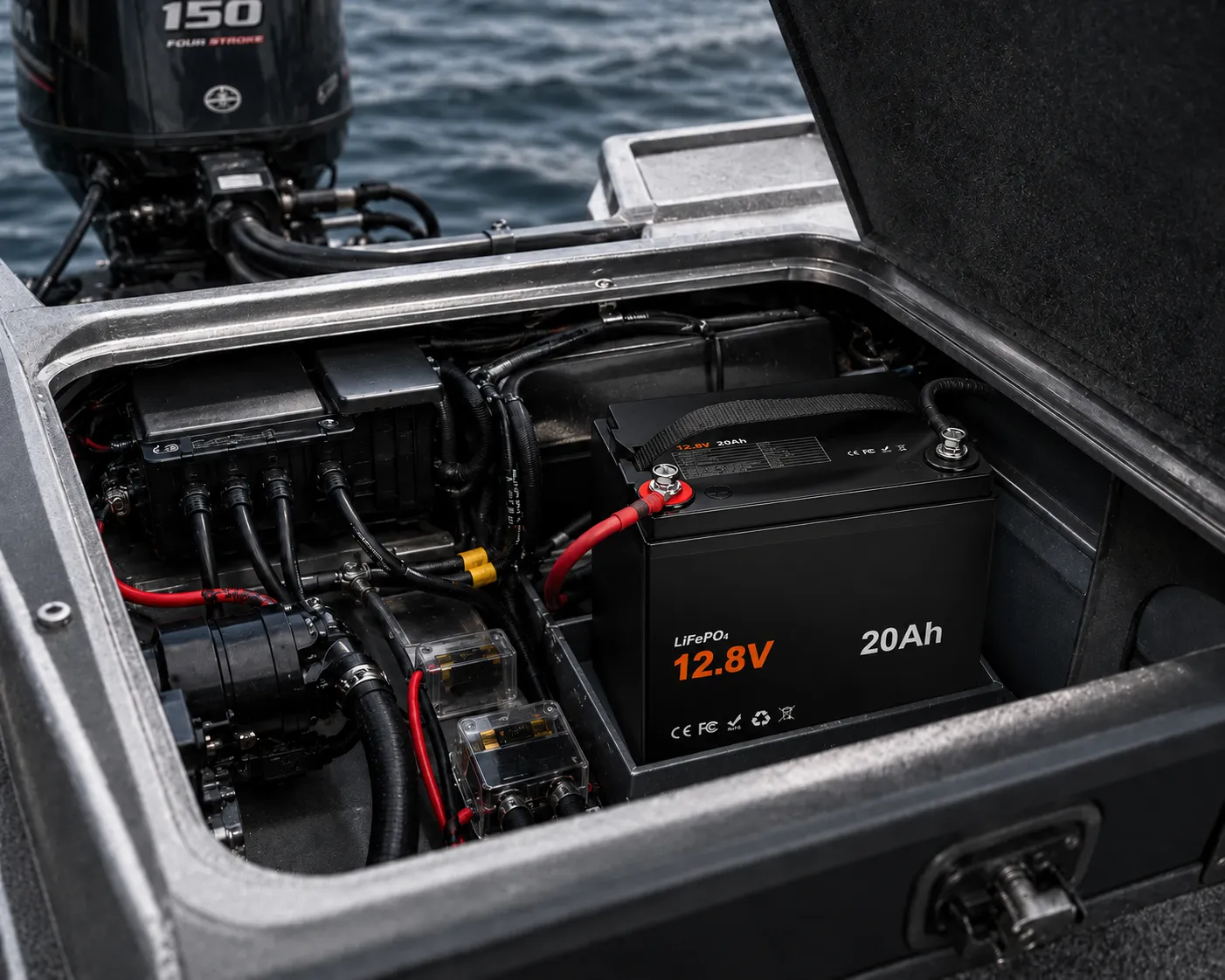
LiFePO4 starting cells and internal resistance of ≤40mΩ provide a fast current response during ignition. The published starting ratings are 800A CCA at −10°C, 650A CCA at −18°C, 810A MCA and 900A HCA.
Always use the engine manufacturer’s battery requirements as the primary reference. The required CCA must remain below the battery’s rated value, and the outboard alternator output must not exceed the battery’s supported charging current. Voltage drop through long or undersized cables can reduce starting performance.
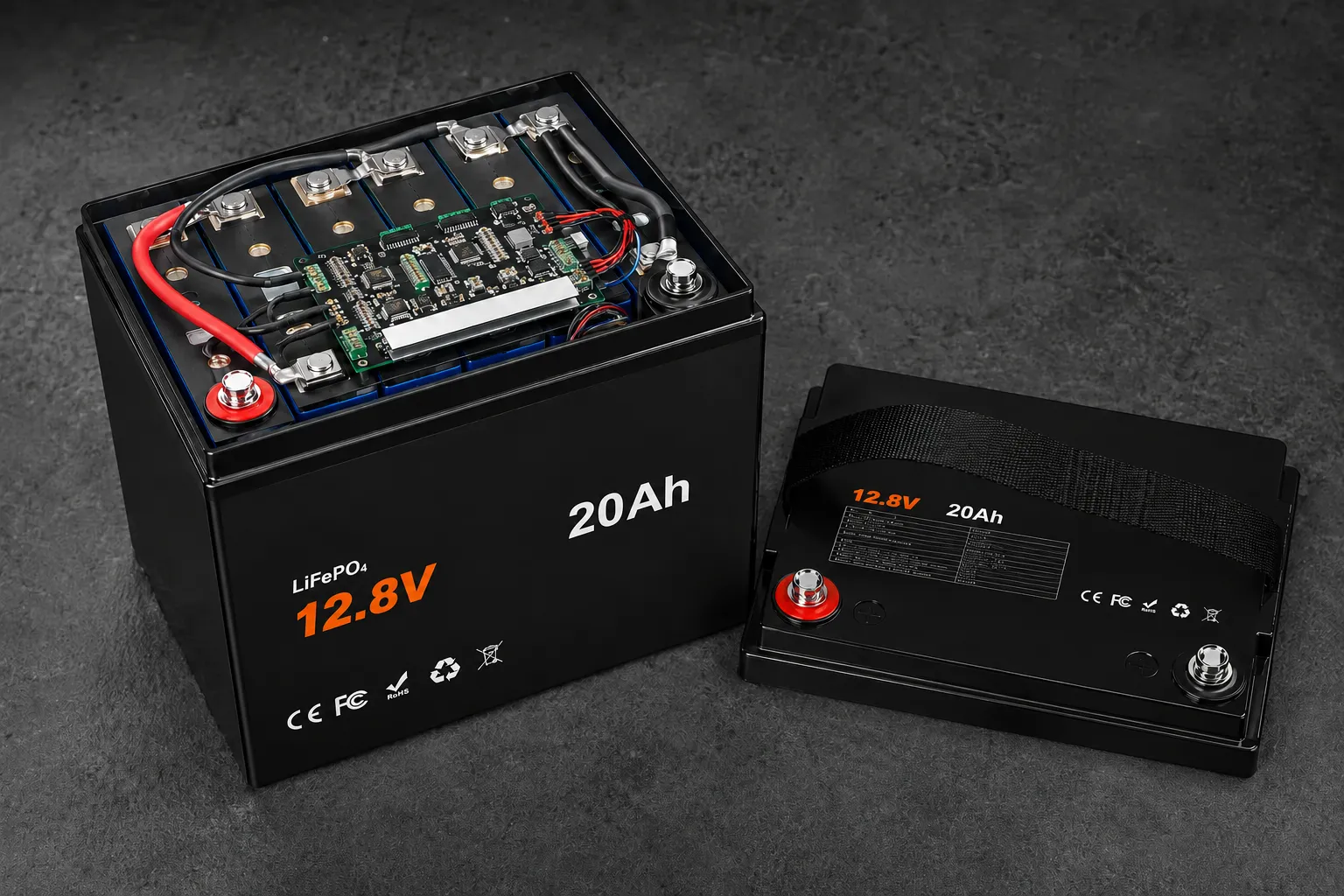
The integrated BMS monitors battery voltage, current and temperature while providing protection against overcharge, over-discharge, over-current, short circuit and abnormal temperature. The referenced design also includes overload recovery, pre-charge control and resistance to moisture and salt spray.
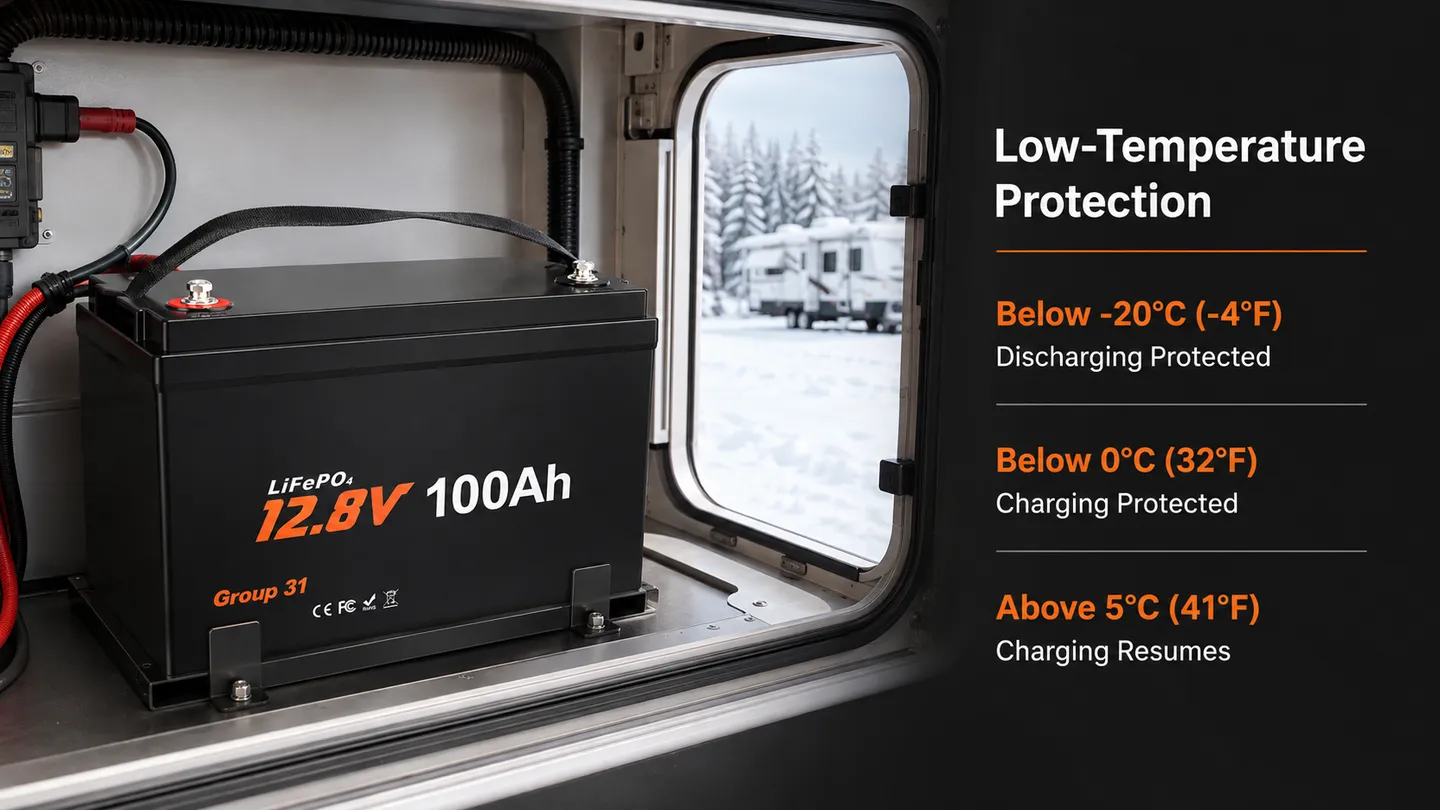
Charging stops below 32°F (0°C), and discharge protection activates below −4°F (−20°C). Low-temperature cut-off protects the cells; it does not heat the battery. This model does not include Bluetooth monitoring or self-heating.
| Battery chemistry | LiFePO4 |
|---|---|
| Nominal voltage | 12.8V |
| Rated capacity | 20Ah |
| Rated energy | 256Wh |
| Cold cranking amps | 800A at −10°C; 650A at −18°C |
| Marine cranking amps | 810A MCA |
| Hot cranking amps | 900A HCA |
| Peak discharge rate | 45C |
| Internal resistance | ≤40mΩ |
| BMS rating | 20A |
| Maximum continuous output | 256W |
| Maximum continuous charge current | 30A |
| Maximum continuous discharge current | 20A |
| Maximum outboard alternator charge current | 80A |
| Charge method | CC/CV |
| Charge voltage | 14.4V ± 0.2V |
| Recommended charge current | 10A |
| Cycle life | 4,000 cycles at 100% DOD; 6,000 cycles at 80% DOD; 15,000 cycles at 60% DOD |
| Connection | 1P1S only; no series or parallel connection |
| Charge temperature | 32°F to 122°F (0°C to 50°C) |
| Discharge temperature | −4°F to 140°F (−20°C to 60°C) |
| Storage temperature | 14°F to 122°F (−10°C to 50°C) |
| Terminals | M6 bolts |
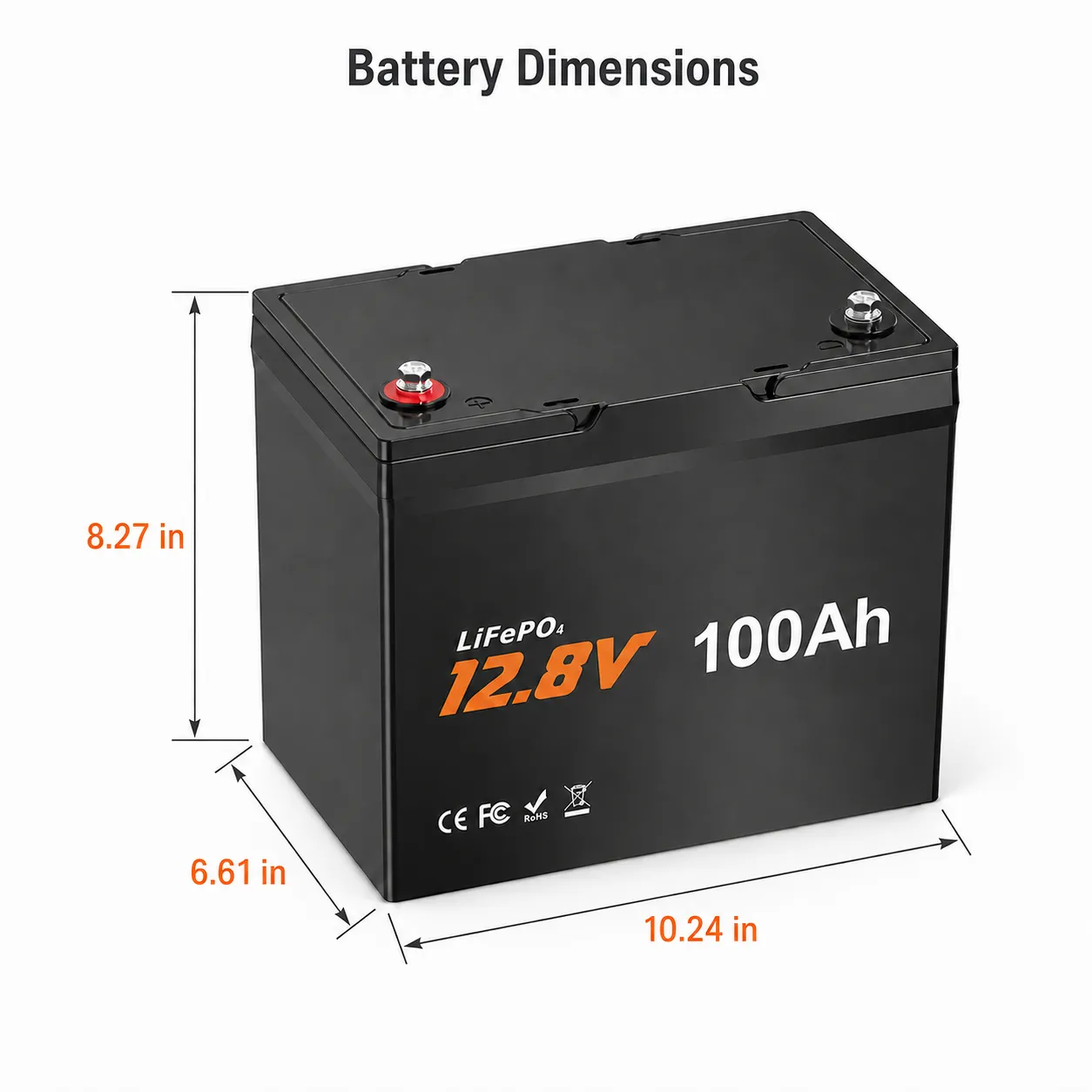
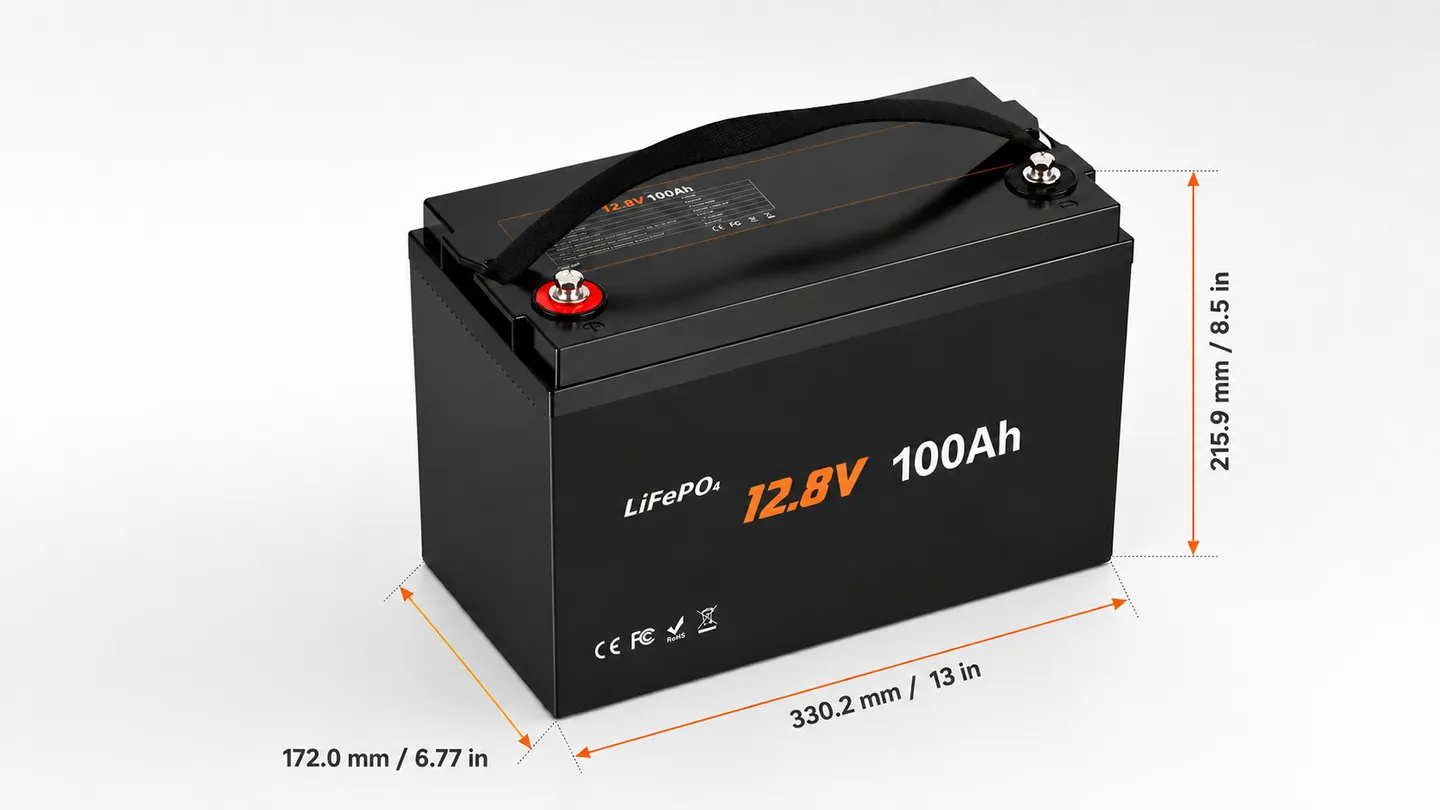
| Dimensions | 7.76 × 5.20 × 6.69 in (197 × 132 × 170 mm) |
| Approximate weight | 9.68 lb (4.39 kg) |
| Housing material | ABS |
| Protection rating | IP67 |
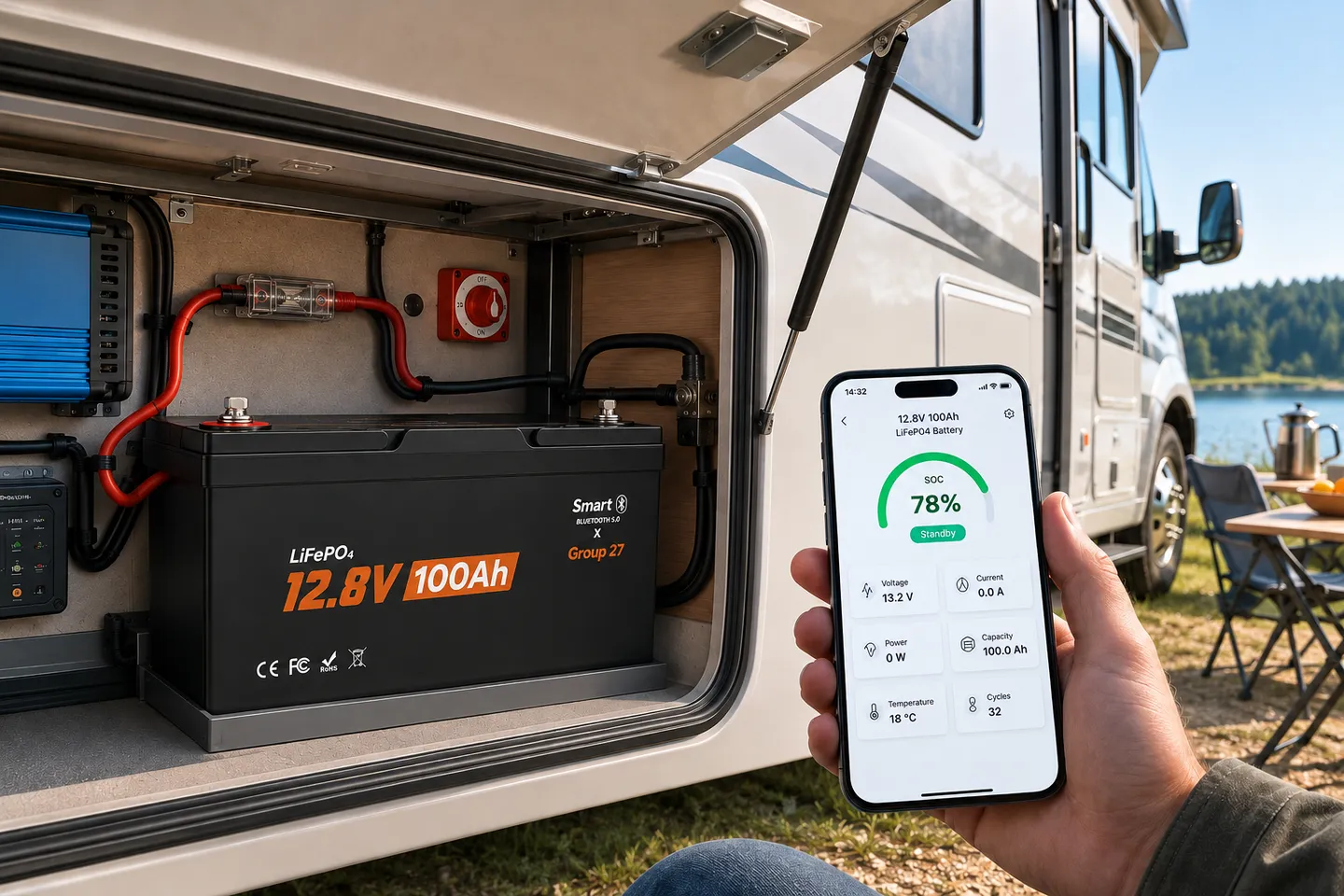
| Bluetooth / self-heating | No / No |
| Referenced certifications | FCC, CE, RoHS and UN38.3 |
Specification note: These values follow the referenced LiTime 12V 20Ah 800 CCA marine starting model. Verify that your production battery, BMS settings, cells, dimensions, certifications and test reports match before publishing the specifications under your own product.
This battery is intended for compatible fuel-powered marine outboard engines. It must not be used as a starter battery for cars, motorcycles, trucks, tractors or other road vehicles. It is also not intended for trolling motors, house loads or extended deep-cycle use.
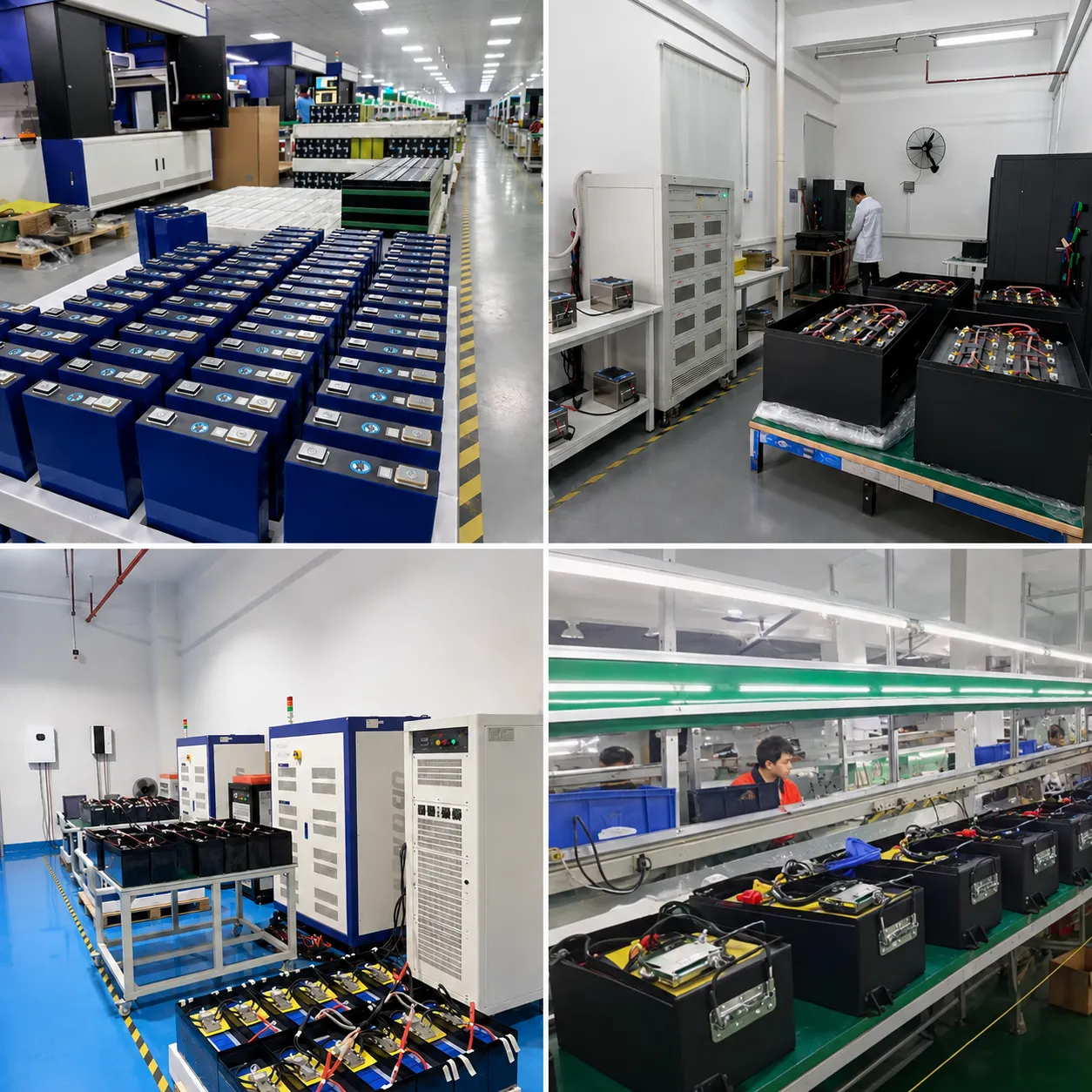
OEM support can cover starting-current validation, cell selection, BMS configuration, terminal layout, enclosure development, private labeling and sample testing. For an accurate recommendation, provide the engine model, required CCA or MCA, alternator output, installation dimensions, cable length and expected order quantity.
It may be suitable when the engine requires less than 800 CCA, uses a compatible alternator and matches the battery’s voltage, terminal arrangement and installation requirements. Confirm all values with the engine manufacturer before use.
Yes, when the required CCA or MCA, charging system, M6 terminals, battery tray and cable layout are compatible. A physical fit alone does not confirm electrical compatibility.
No. The referenced 12V 20Ah marine starting battery is designed for single 1P1S operation only.
No. This is a marine cranking battery. Choose a deep-cycle LiFePO4 battery for trolling motors, electronics and extended onboard loads.
No. It is intended for compatible marine outboard starting applications and should not be used as a vehicle starter battery.
No. IP67 does not replace correct marine installation. Mount the battery securely in a protected compartment or battery box and keep it out of standing bilge water.
Send your engine model, required CCA or MCA, alternator output and order quantity. We can review the datasheet, MOQ, OEM pricing, lead time and customization options.
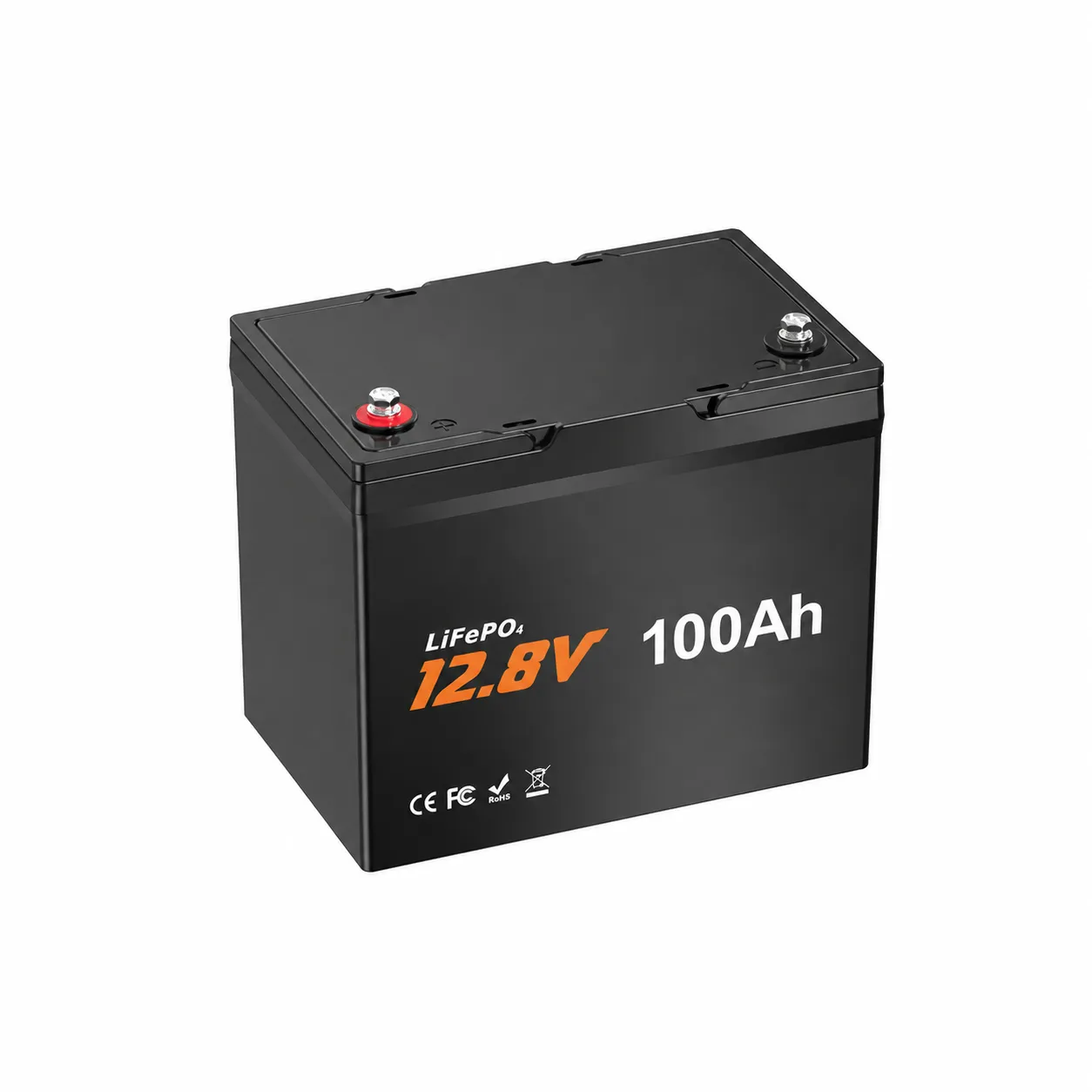
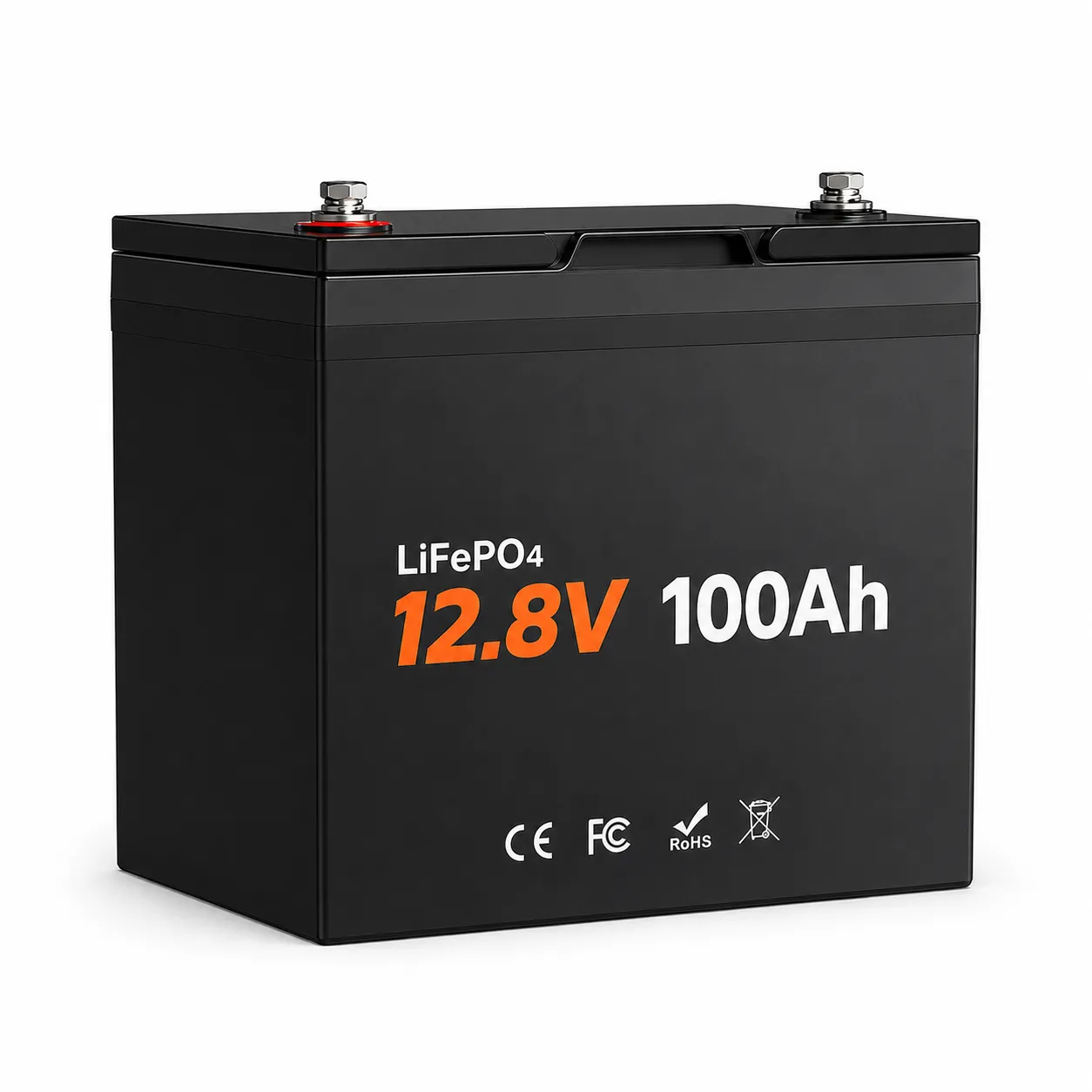
Many LiFePO4 batteries can replace compatible lead-acid deep-cycle batteries in RVs, boats, golf carts and industrial equipment. Before installation, confirm the system voltage, battery dimensions, terminal layout, charger profile, maximum load, cable size, fuse rating and operating temperature.
Most LiFePO4 batteries are compatible with standard 12V, 24V, 36V or 48V inverters when the system voltage and power requirements match. Many modern chargers also include a LiFePO4 charging profile. For lead-acid replacement projects, confirm the charger voltage, inverter rating and maximum load before installation. A compatible charger or DC-to-DC charger may be required if the existing charging equipment does not support LiFePO4 batteries.
Yes. OEM and custom battery support can include voltage, capacity, BMS settings, enclosures, terminals, connectors, communication protocols, labels and packaging. Send us the application, electrical requirements, installation dimensions and expected order quantity for review.
MOQ depends on the battery model, specification and customization requirements. Standard models may be available for sample testing, while custom enclosures, private labels and OEM production normally require a confirmed order quantity. Contact us with the model and required quantity for details.
Available certifications and documents depend on the battery model and destination market. Supporting documents may include UN38.3, MSDS, CE, RoHS and product test reports. Confirm the required documents and target market before placing an order.
Lead time depends on the battery model, order quantity, customization and testing requirements. Export shipping options are arranged according to the battery specification, destination and order volume. Send us the required quantity, delivery location and target schedule for a project-specific quotation.