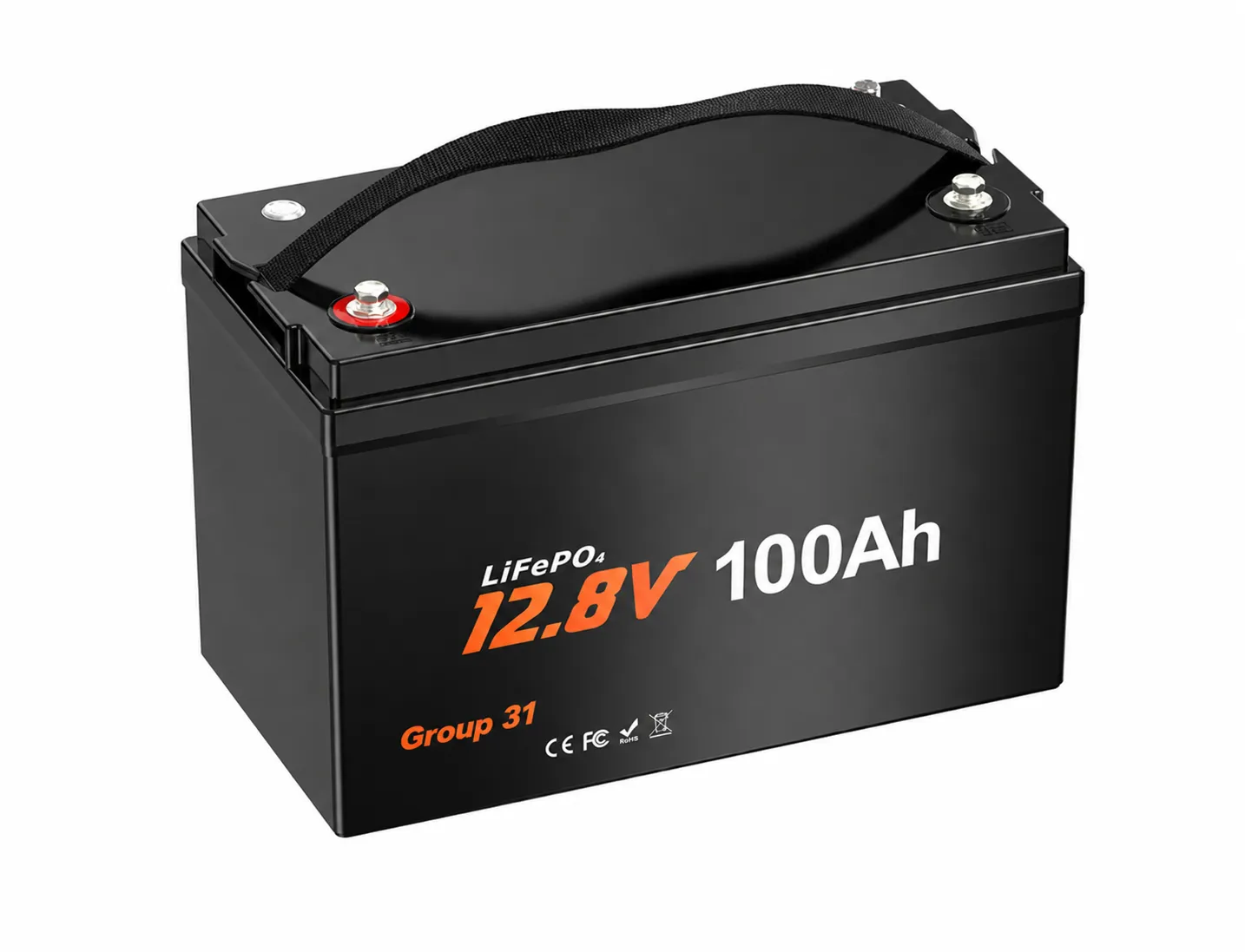
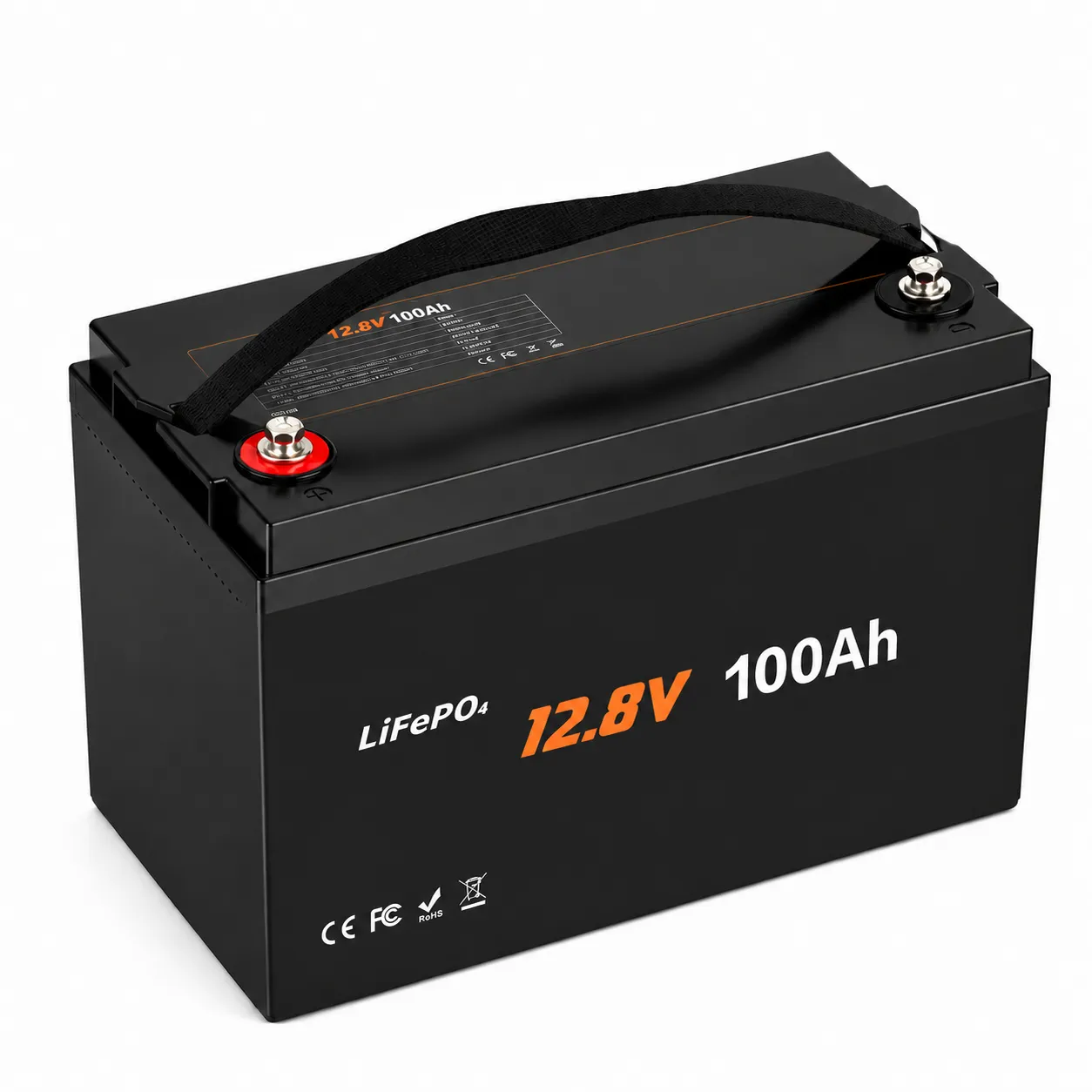
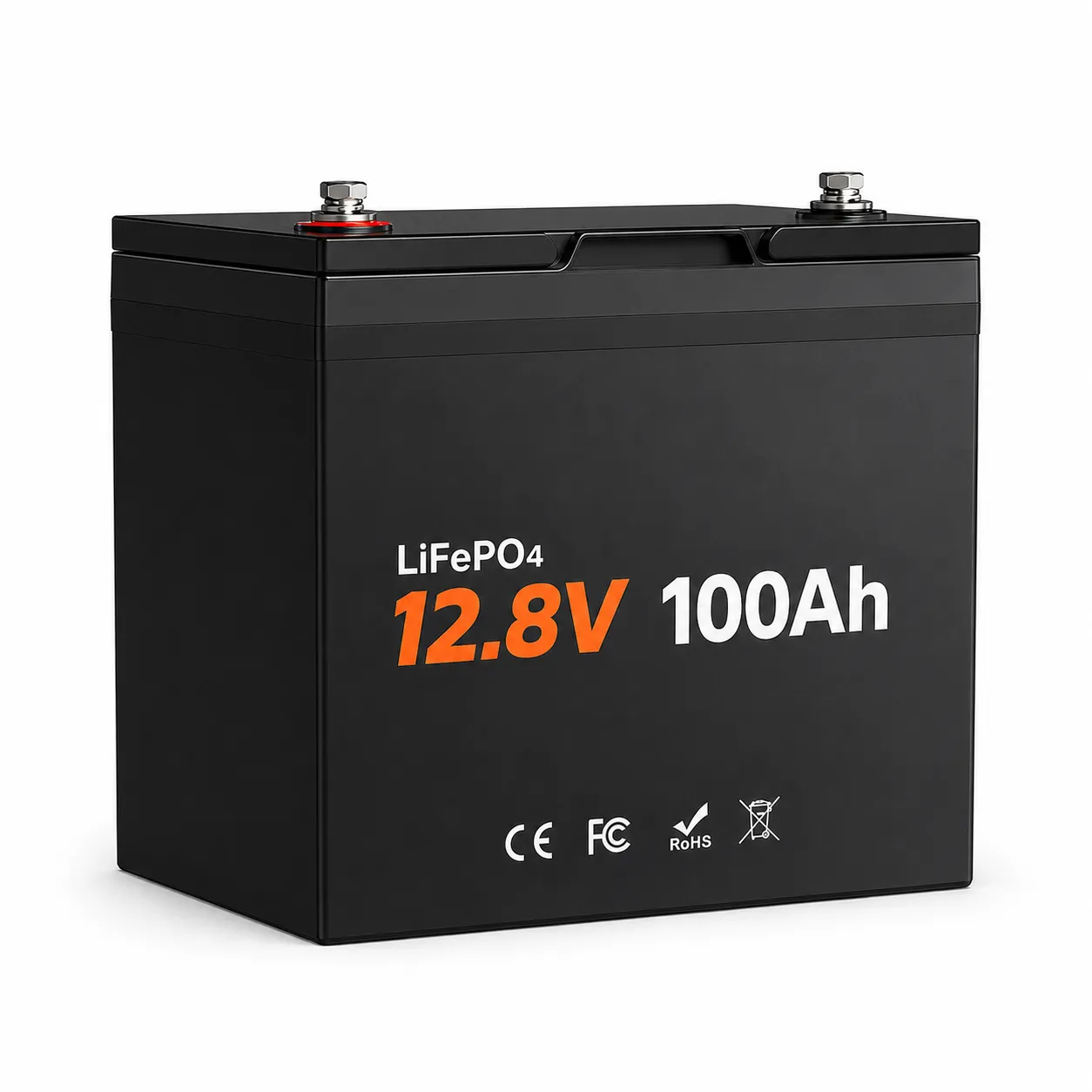
12V 100Ah Group 31 LiFePO4 Battery for Trolling Motors
$169.00
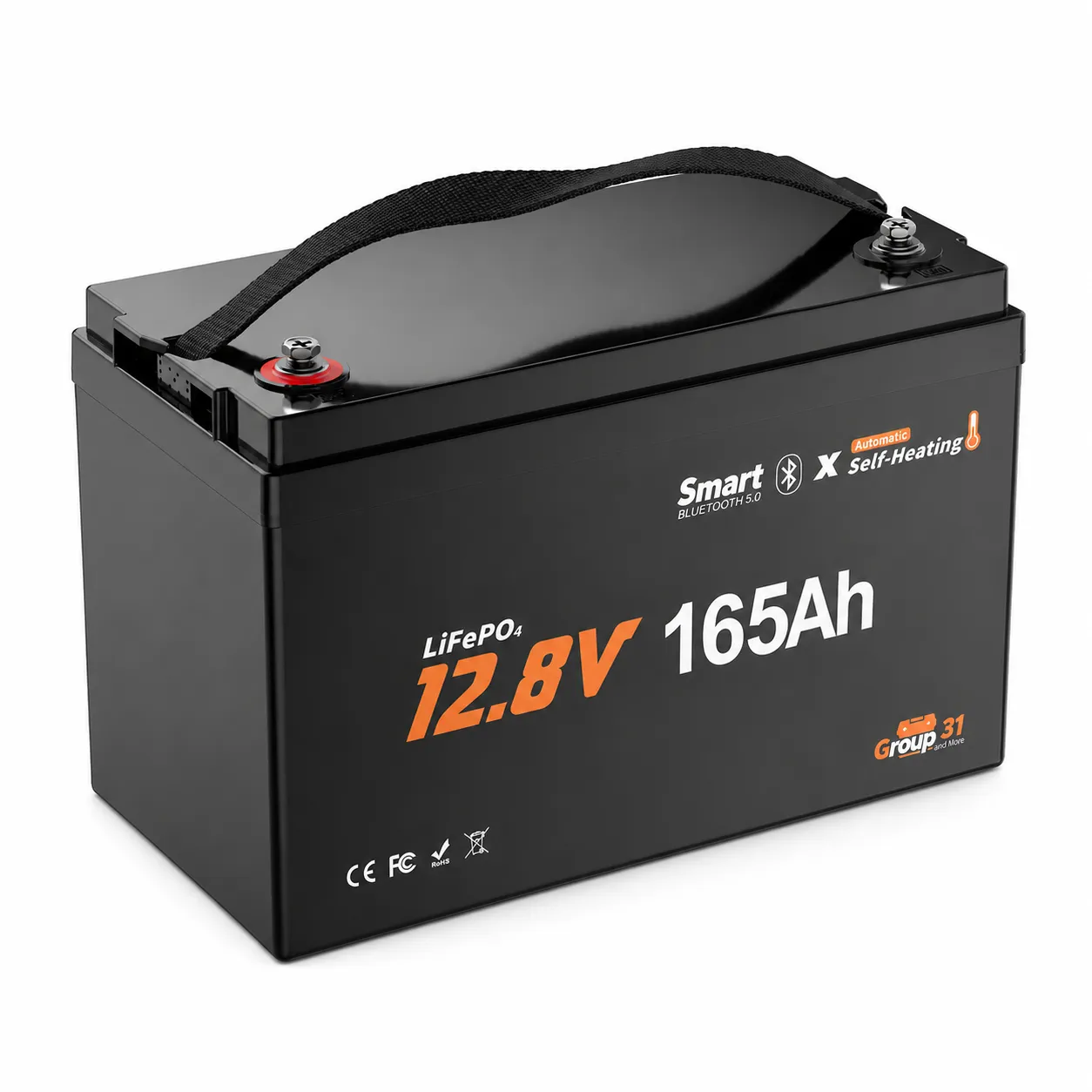
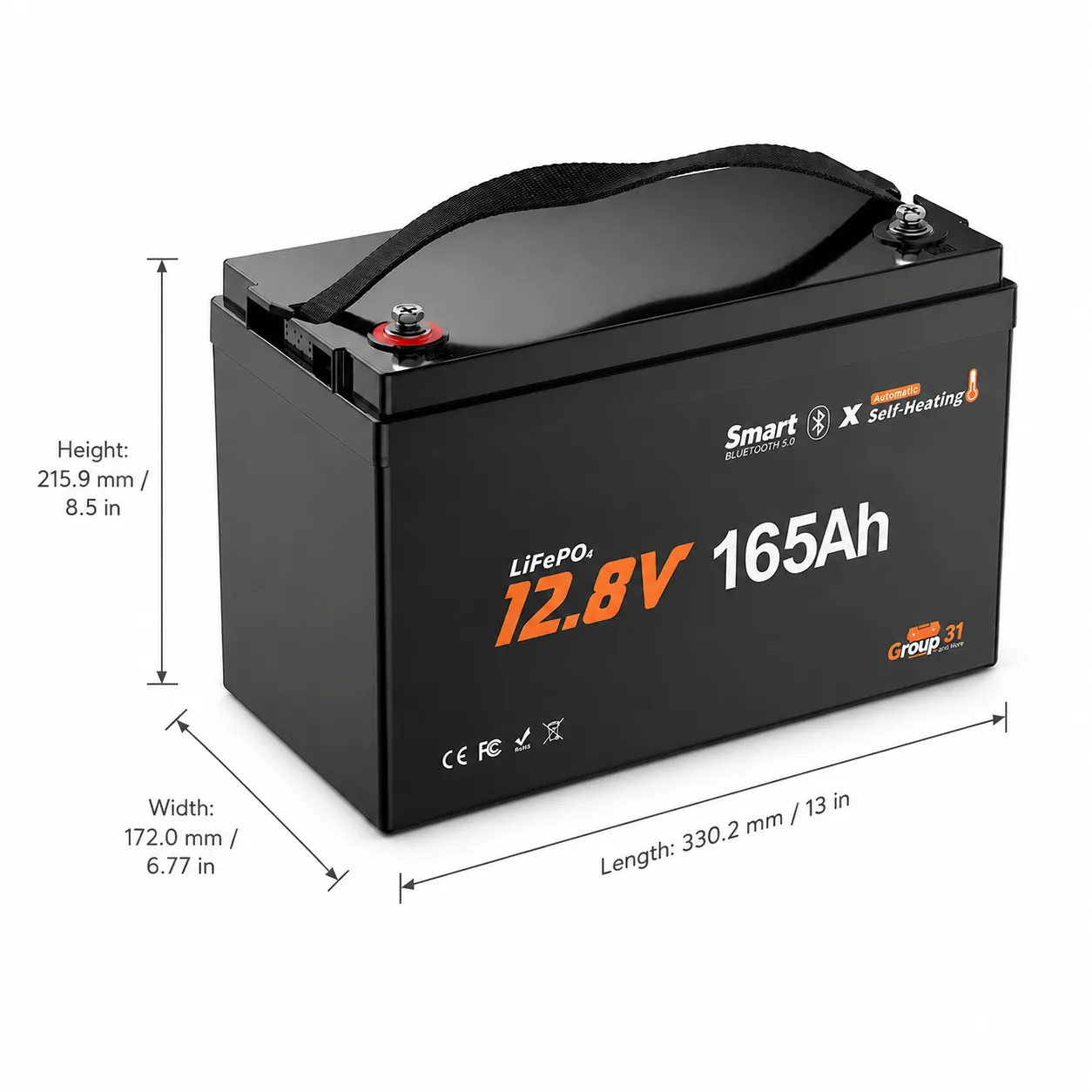
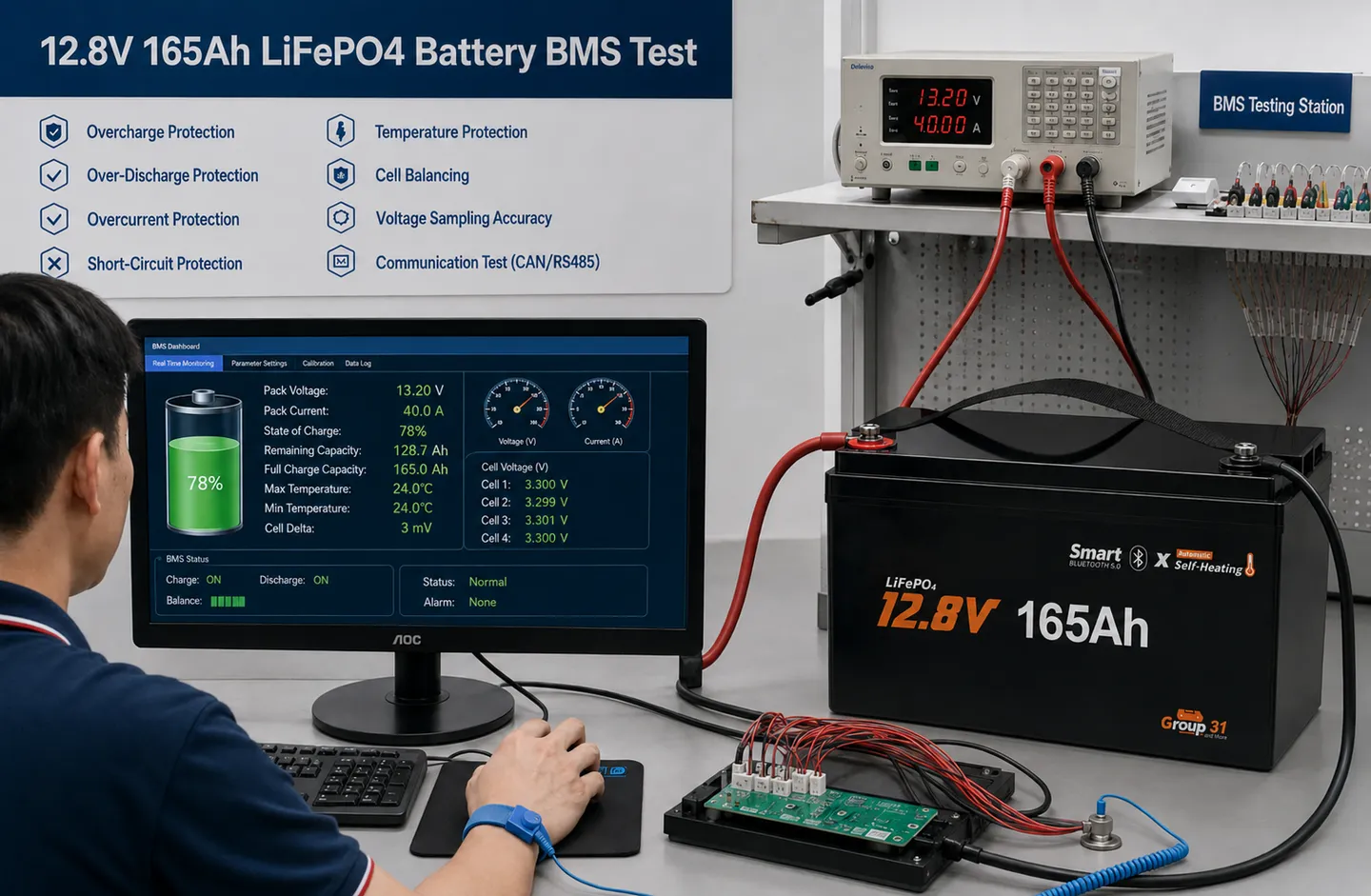
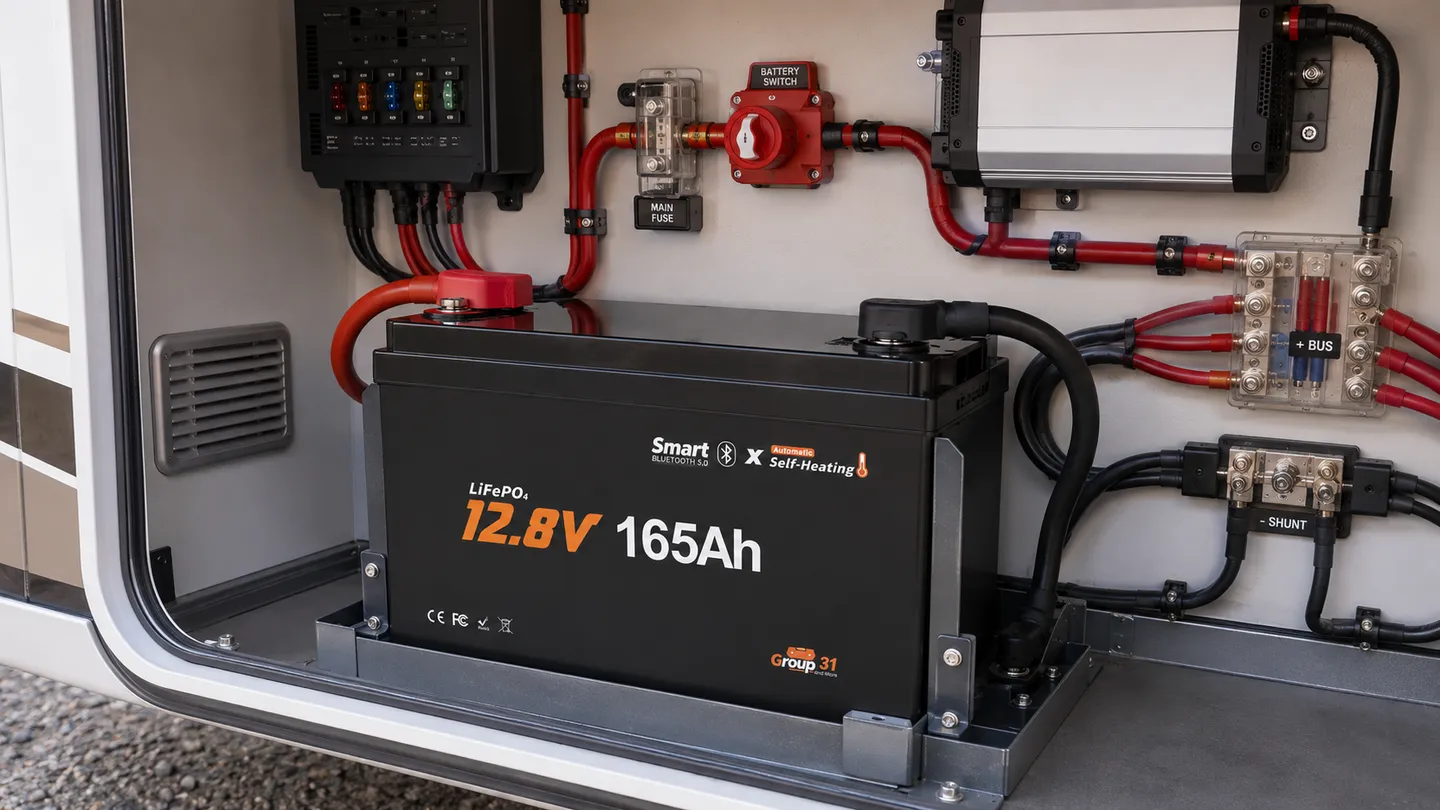
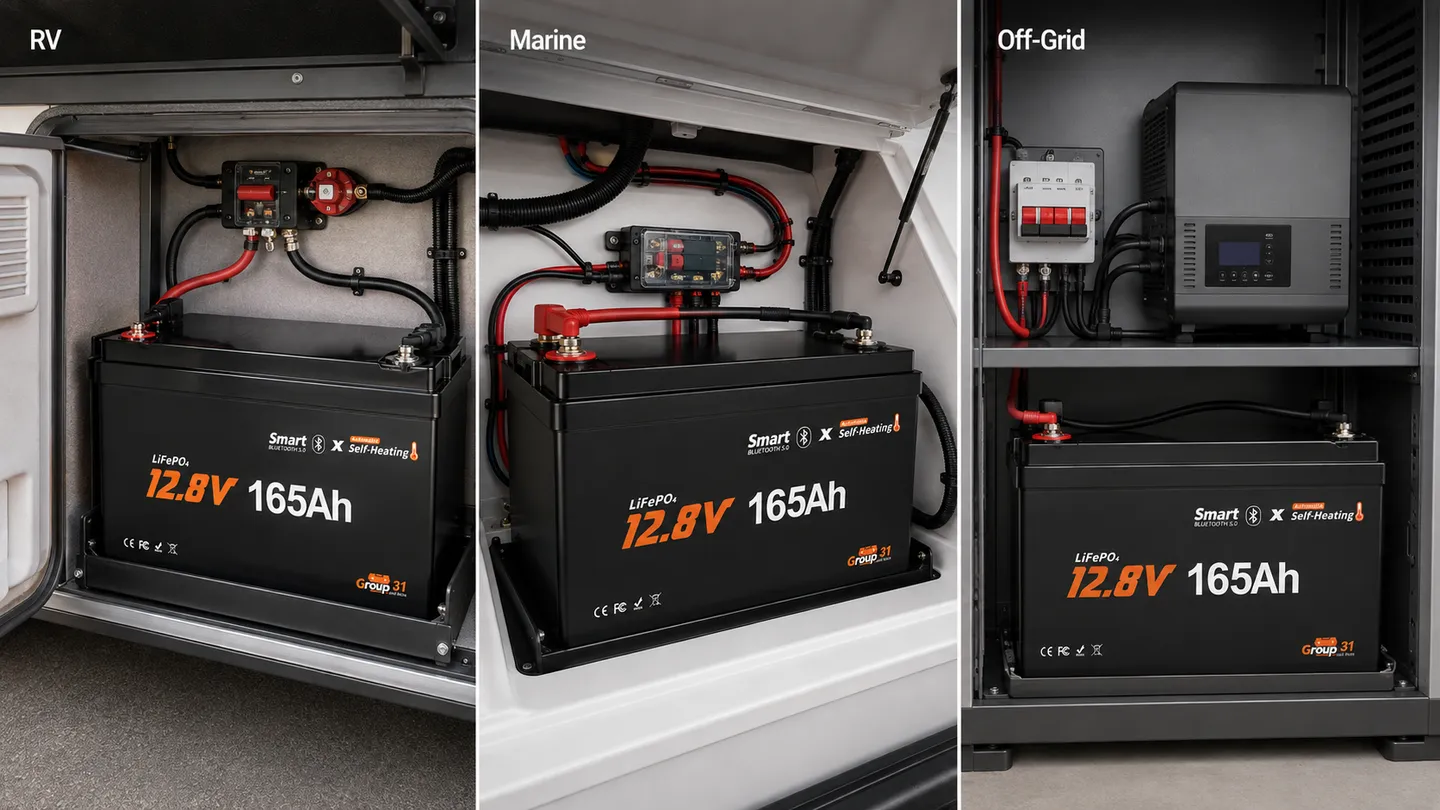
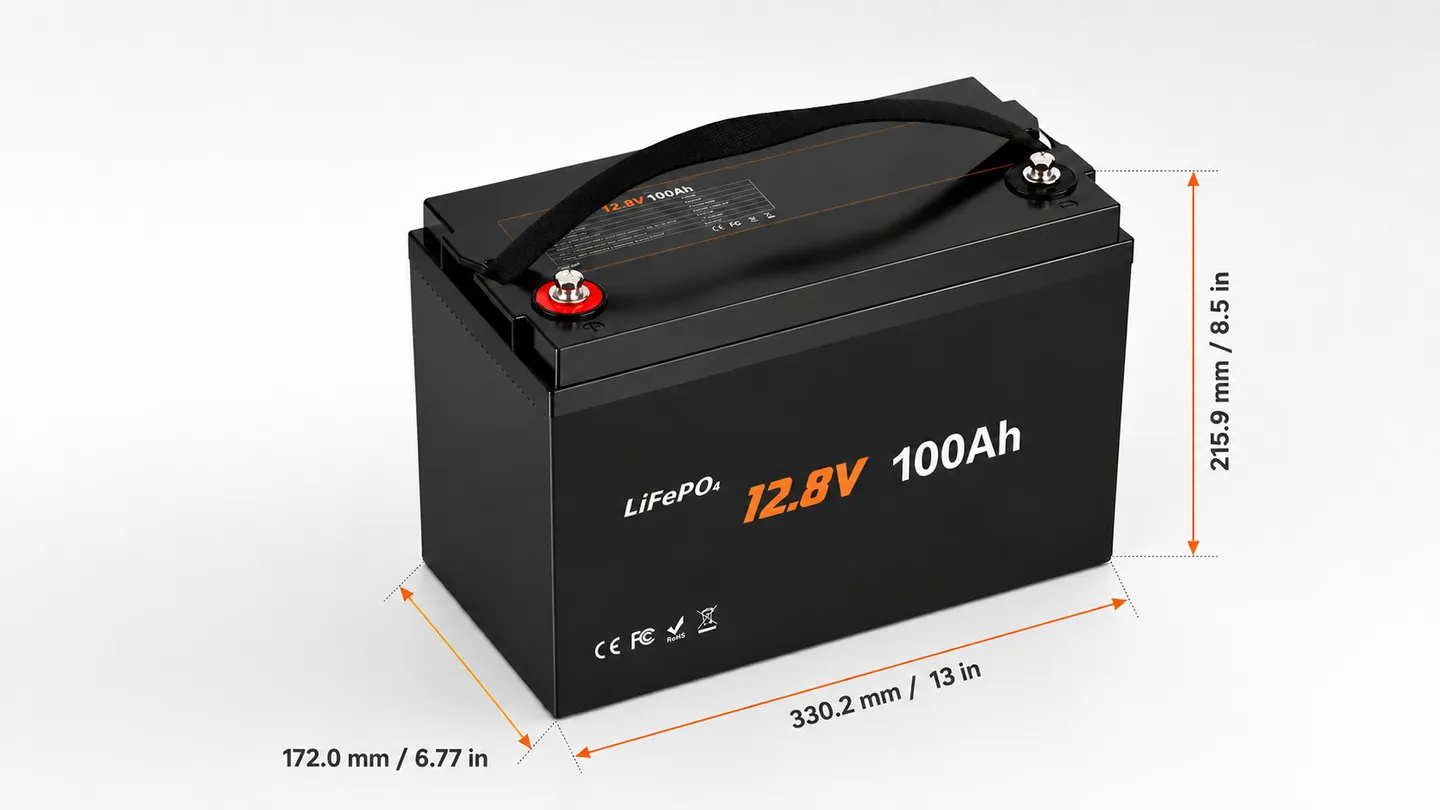
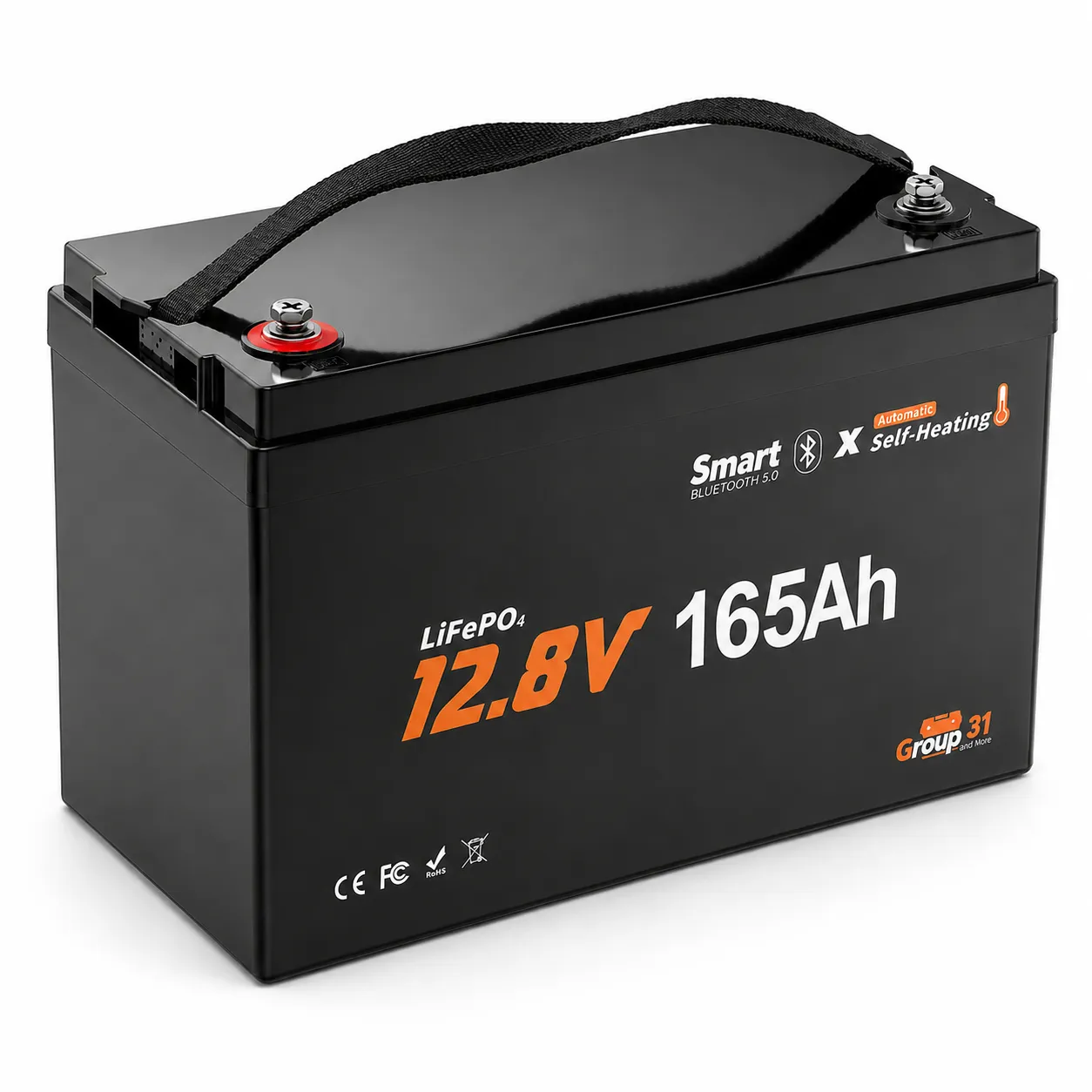
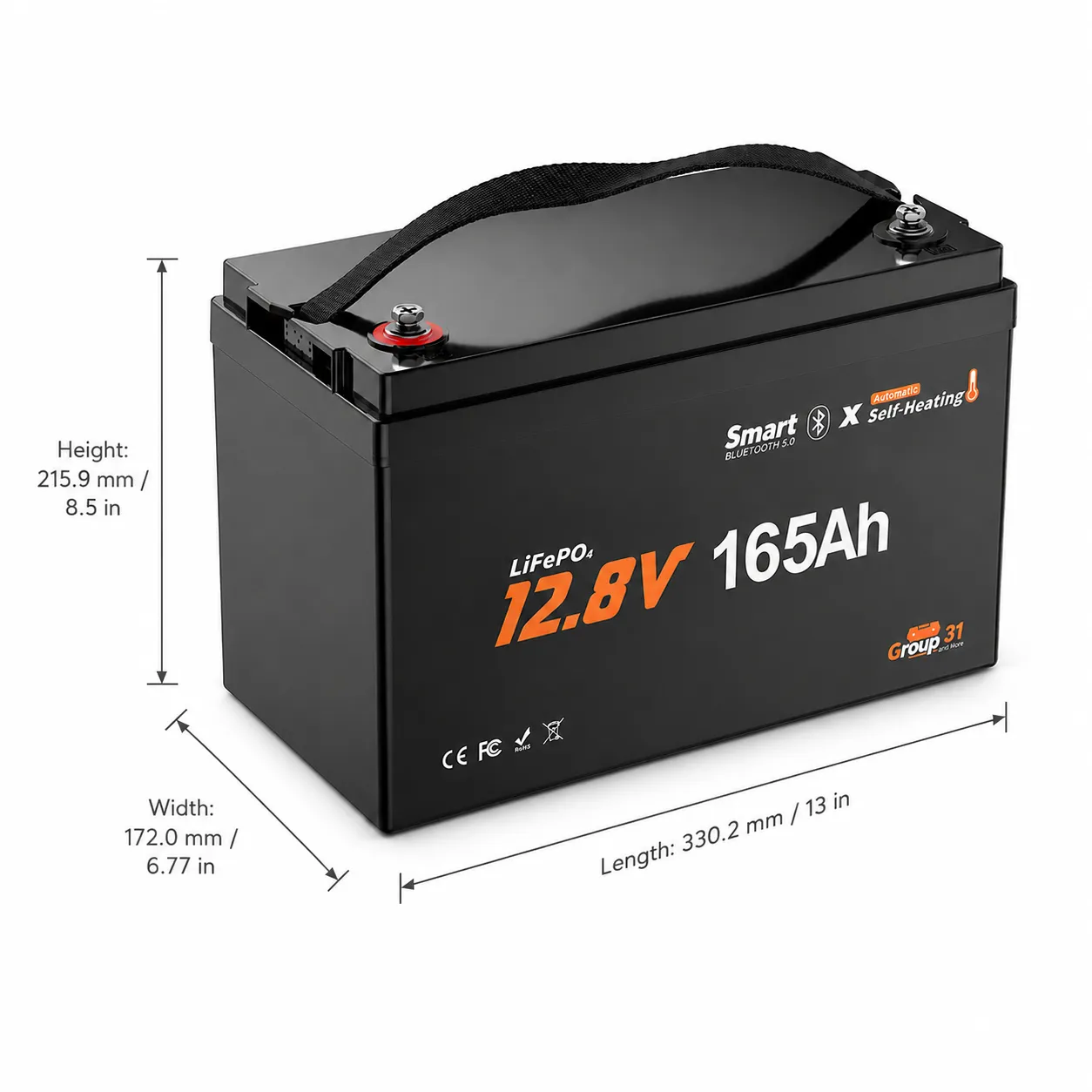
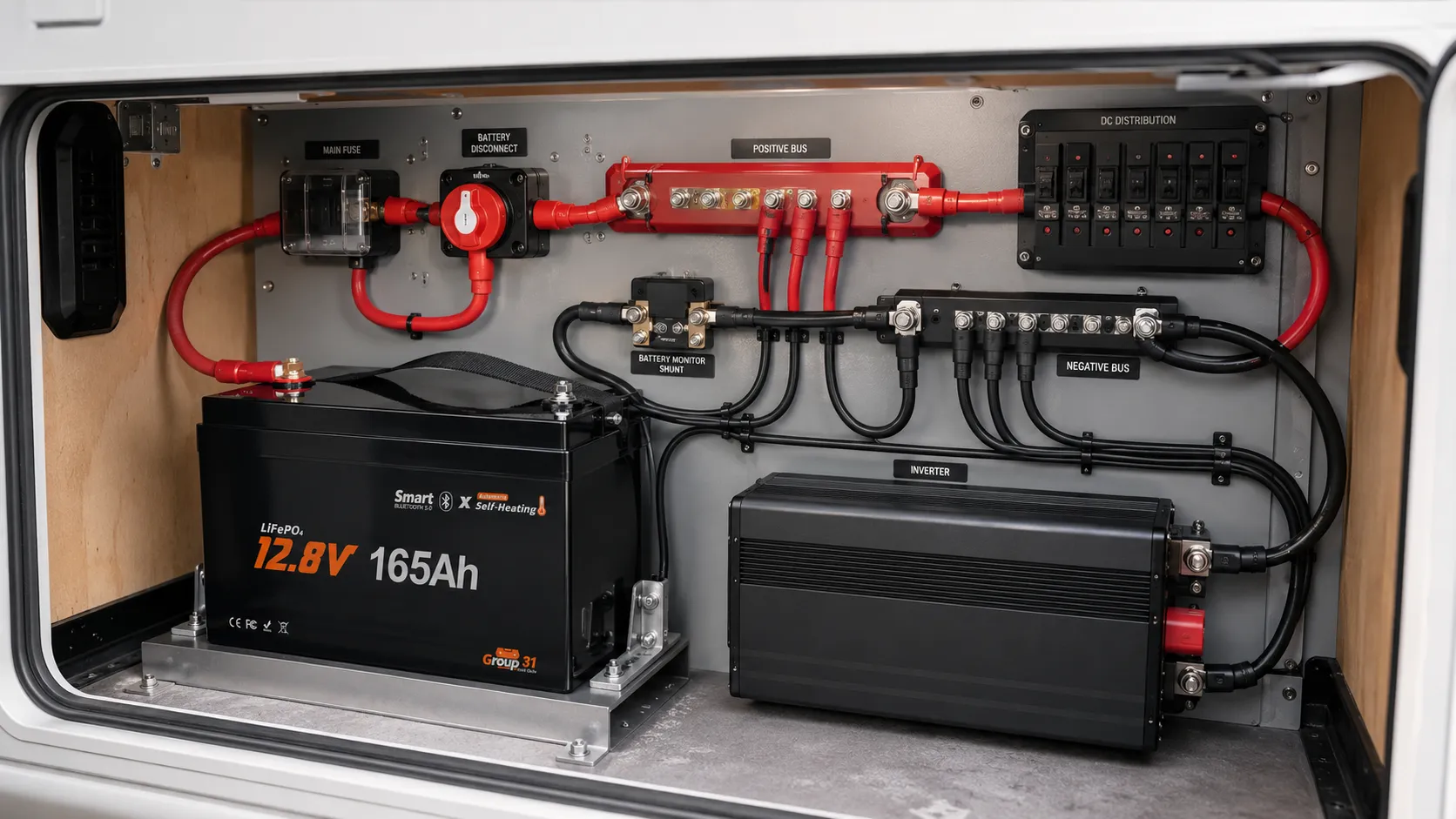
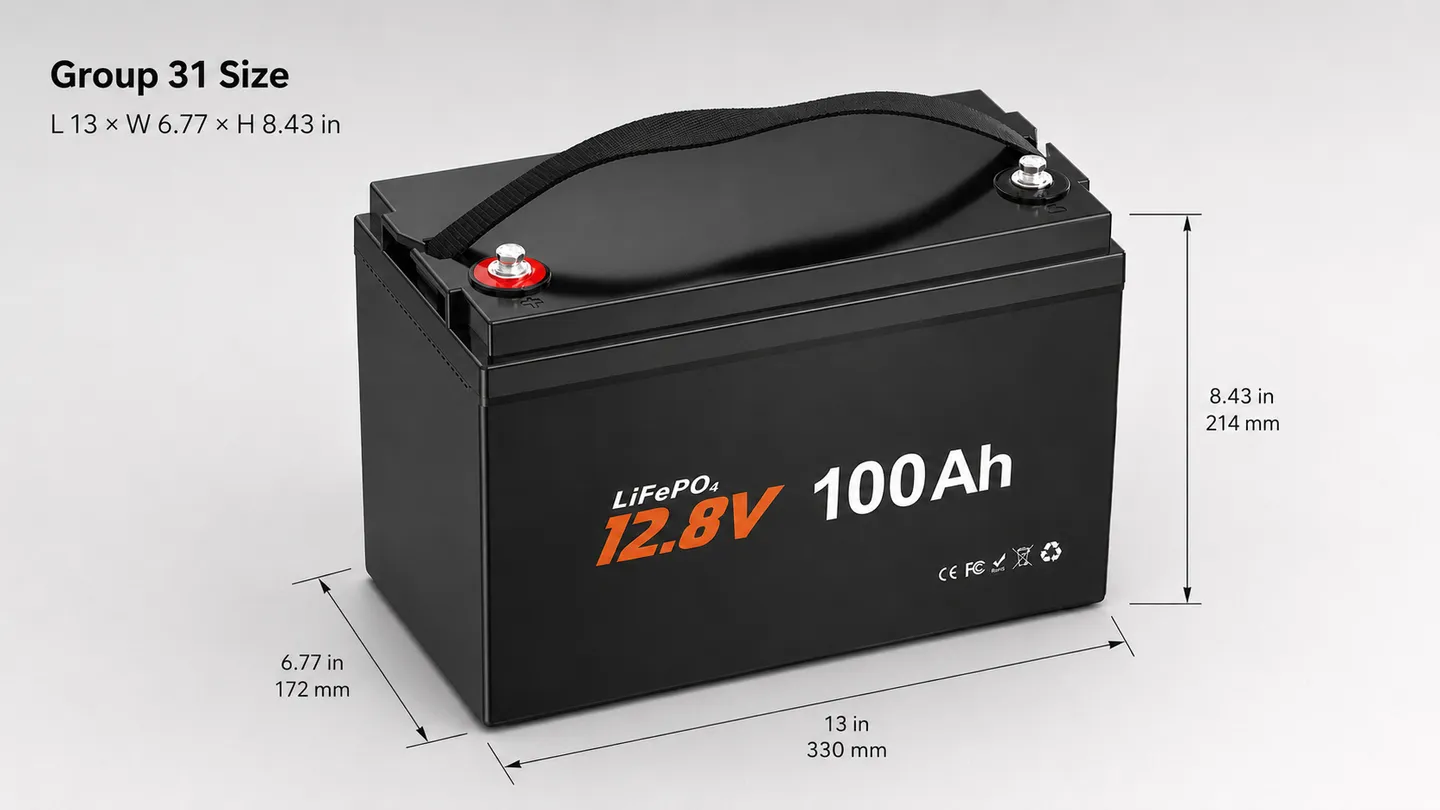
This 12V 165Ah Group 31 LiFePO4 battery stores 2112Wh of energy in a compact case measuring approximately 13 × 6.77 × 8.5 inches. It is designed for RV house power, marine electronics, solar storage and off-grid systems where installation space is limited but a standard 100Ah battery does not provide enough runtime.
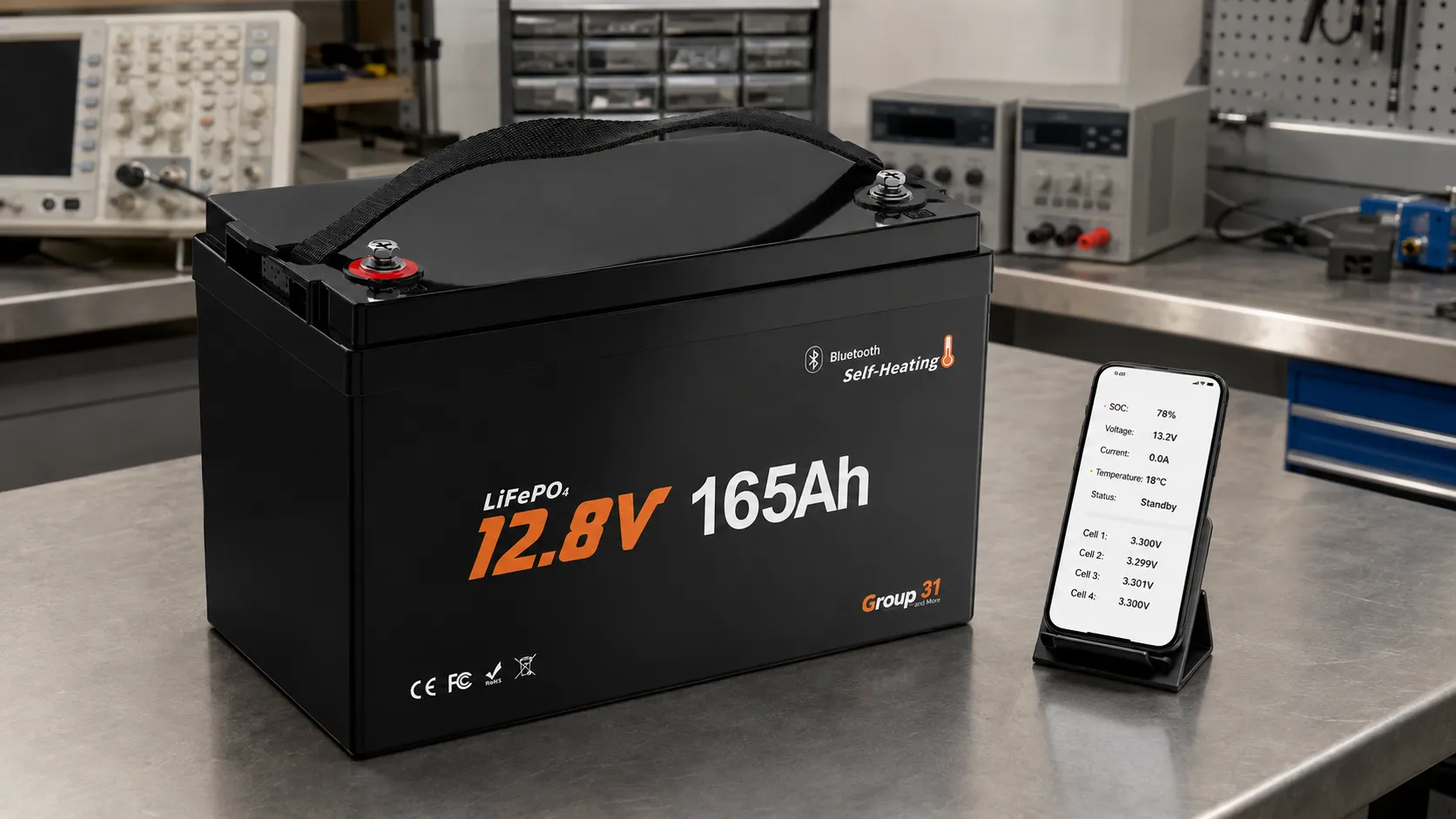
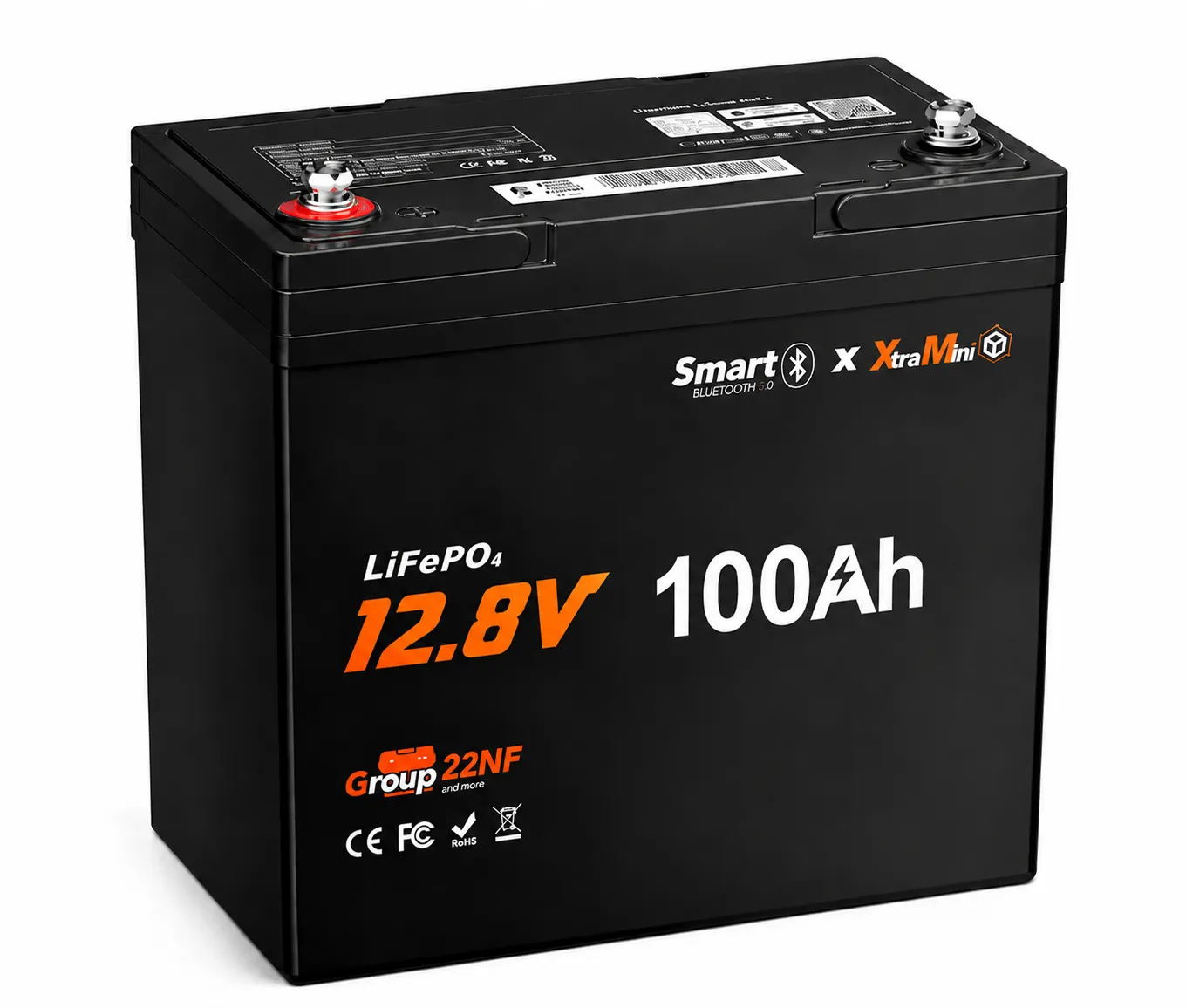
A 165A Smart BMS supports up to 2112W of continuous output. Bluetooth monitoring gives installers and users access to state of charge, voltage, current and temperature from a compatible mobile app. Integrated self-heating and low-temperature protection support safer charging in cold-weather installations.
12.8V | 165Ah | 2112Wh | 165A Smart BMS | Bluetooth 5.0 | Self-Heating | Group 31 | IP65
| Feature | Practical Benefit |
|---|---|
| 165Ah LiFePO4 capacity | Provides 2112Wh of stored energy for longer deep-cycle runtime. |
| 165A Smart BMS | Supports up to 2112W of continuous output while managing battery protection. |
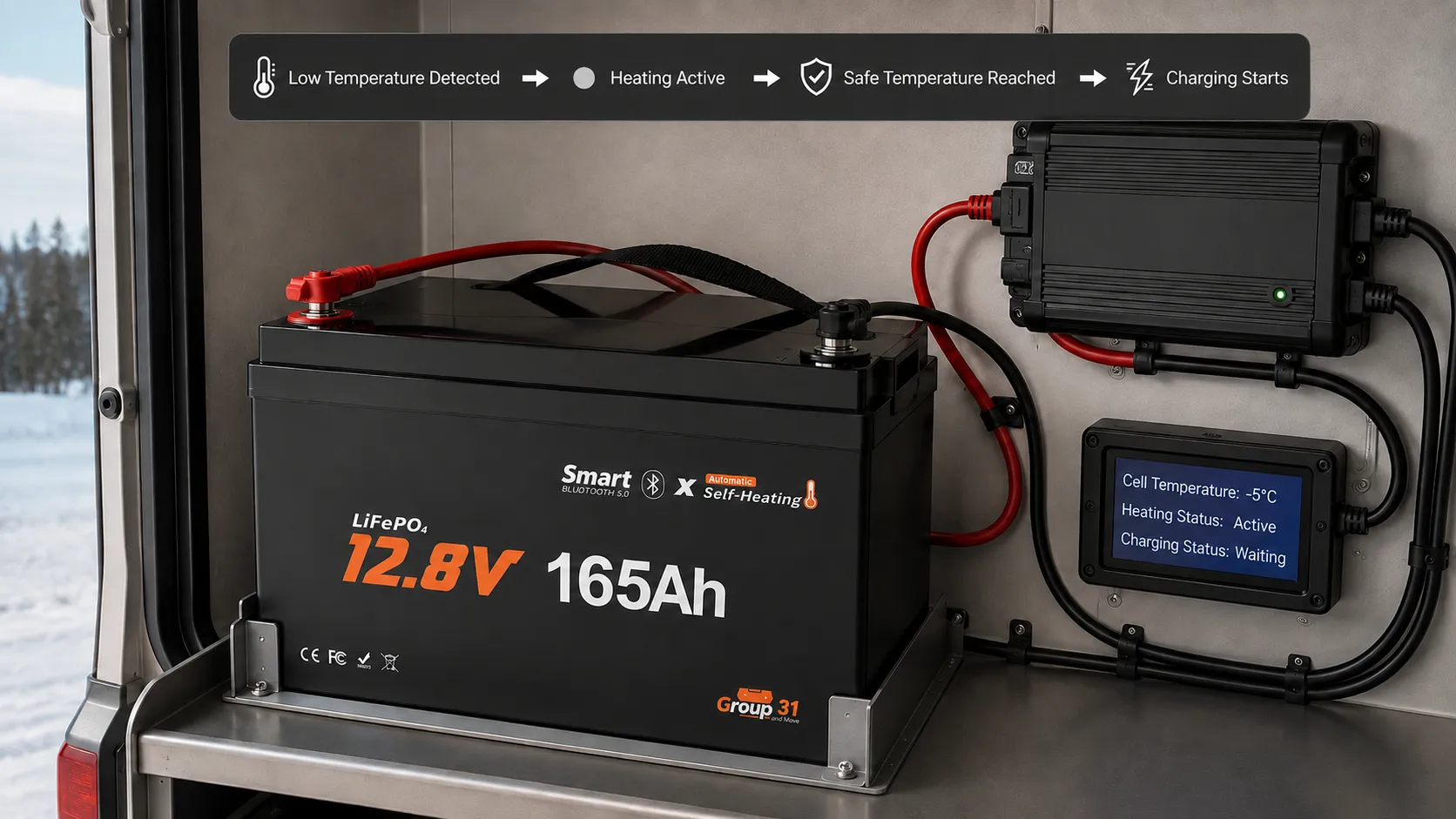
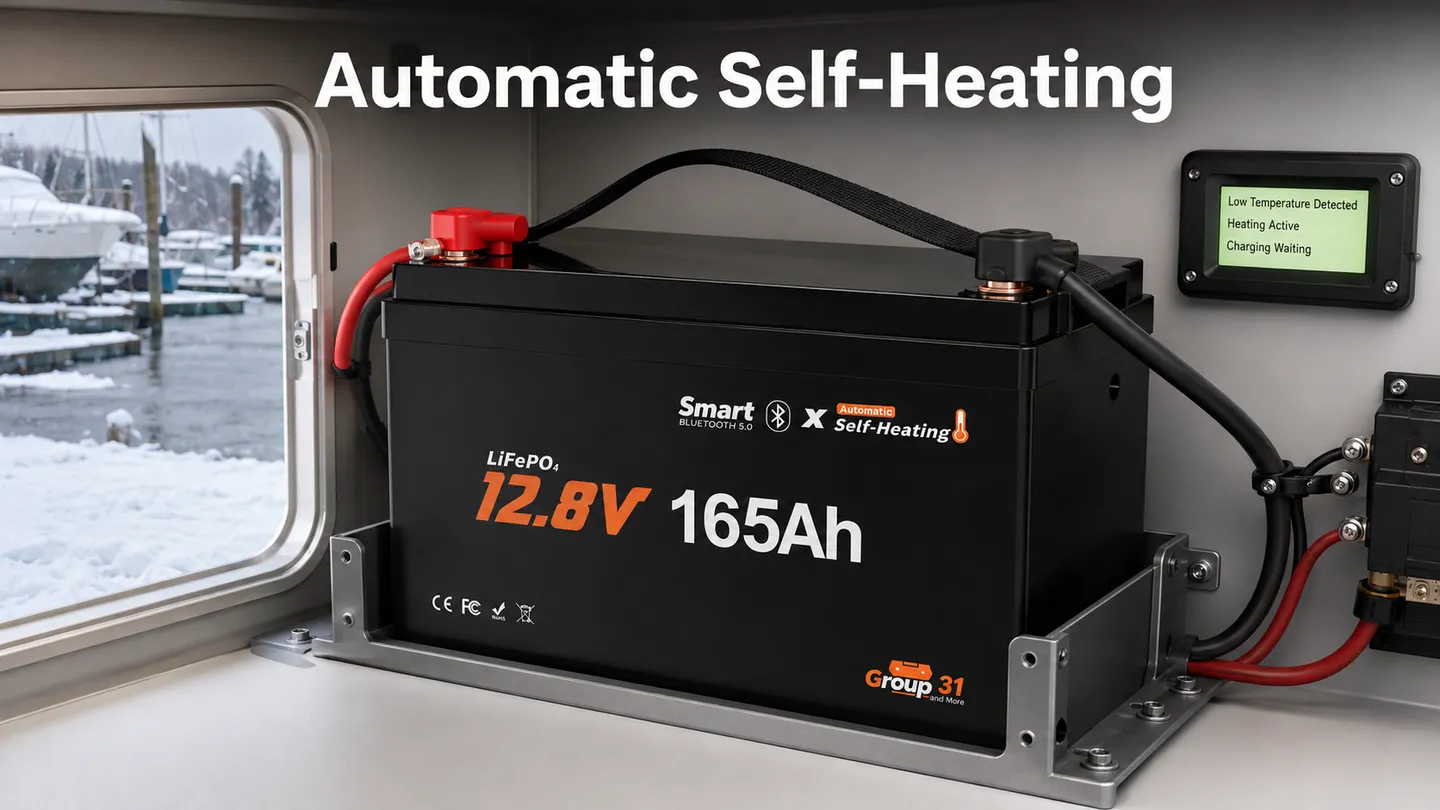
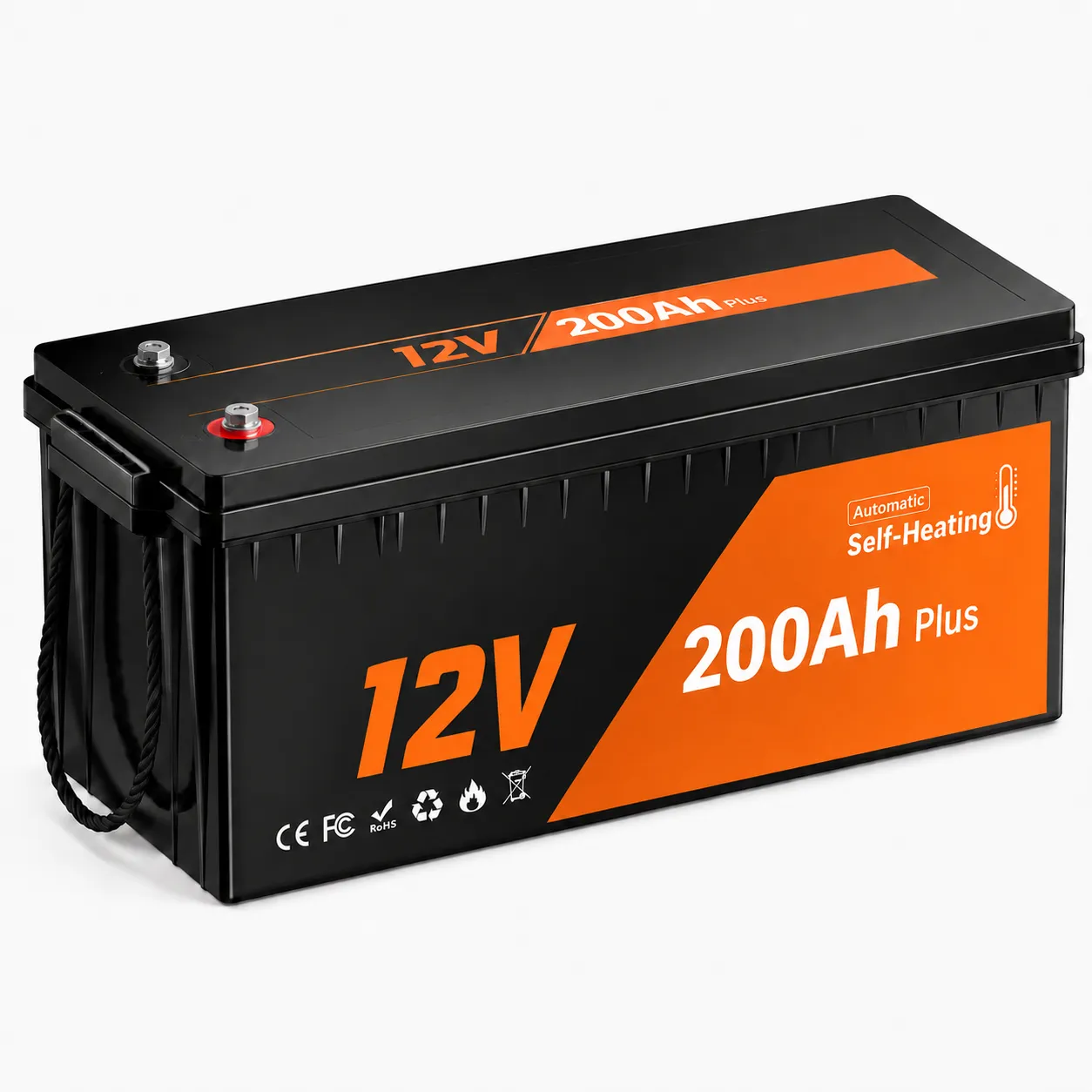
| Integrated self-heating | Warms the cells before charging when temperature is below the approved range. |
| Bluetooth monitoring | Shows battery operating data through a compatible mobile application. |
| Group 31 footprint | Fits many common RV, marine and off-grid battery compartments. |
| Series and parallel support | Allows larger compatible battery banks when the final specification approves the configuration. |
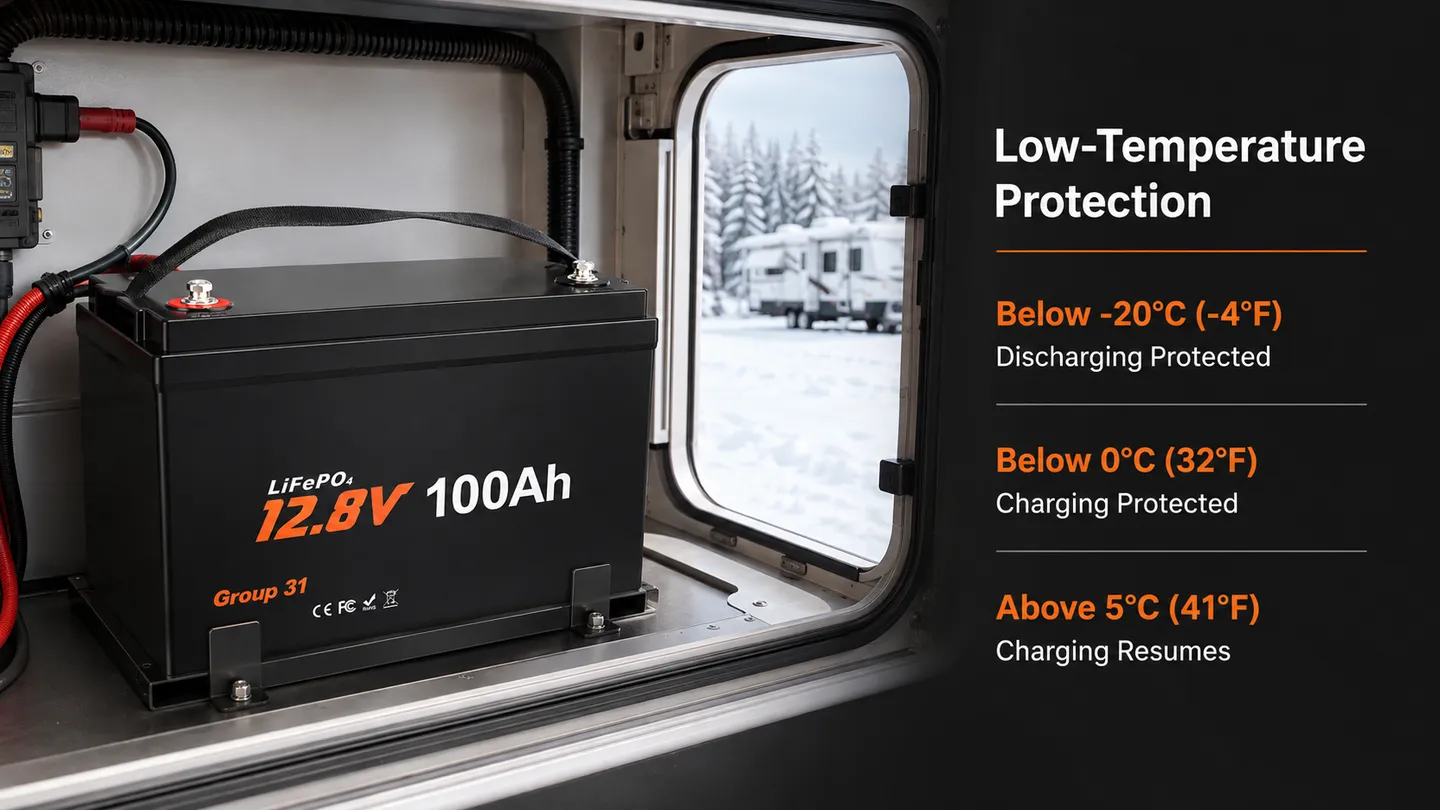
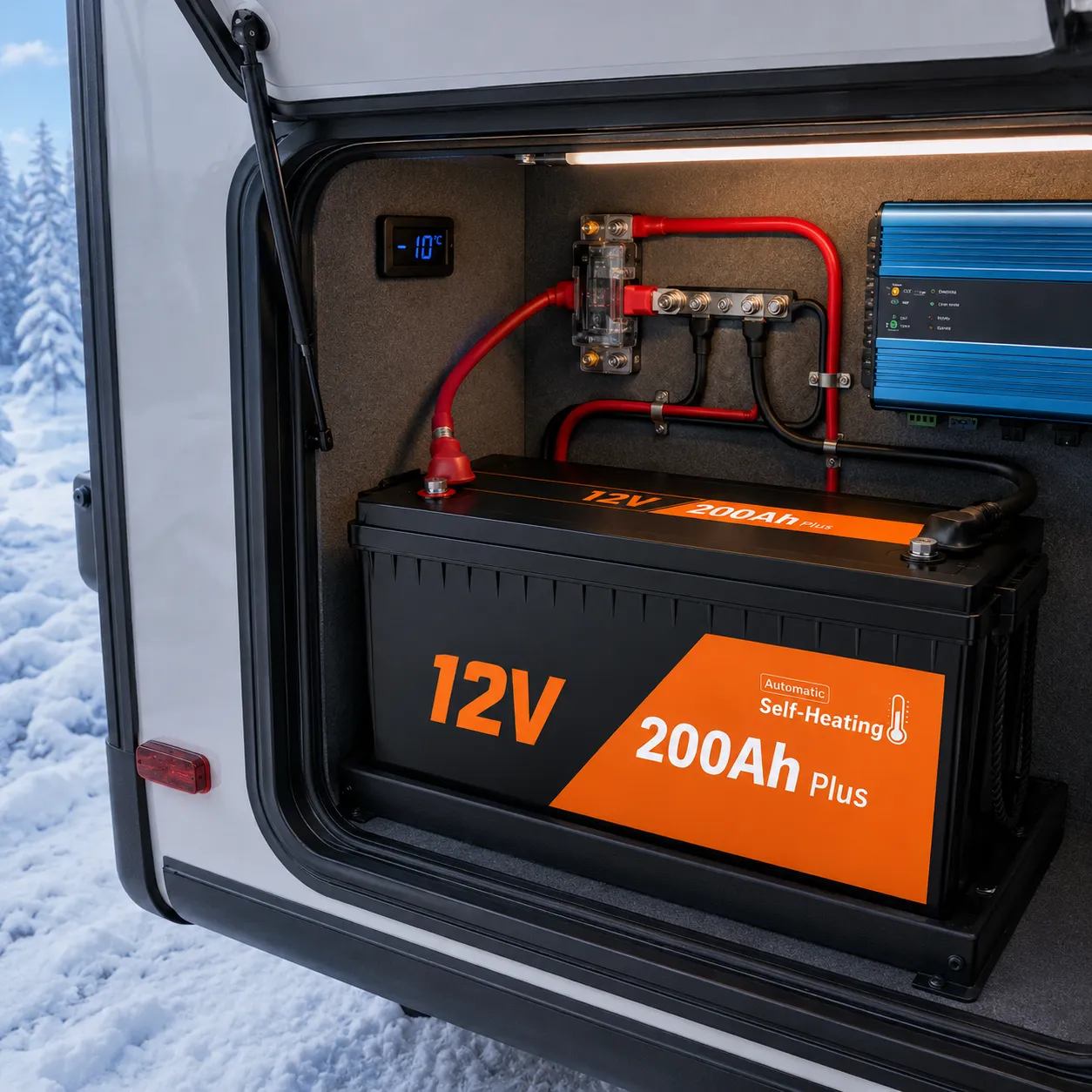
When cell temperature is below the safe charging range, the heating system warms the cells before charging begins. The reference design supports regular heating from an external charger and an energy-efficient mode that uses stored battery energy. Charging resumes after the cells reach the recovery temperature.
Self-heating is intended to prepare the cells for charging; it does not increase discharge power. Confirm heating modes, activation logic and minimum input current for the production model.
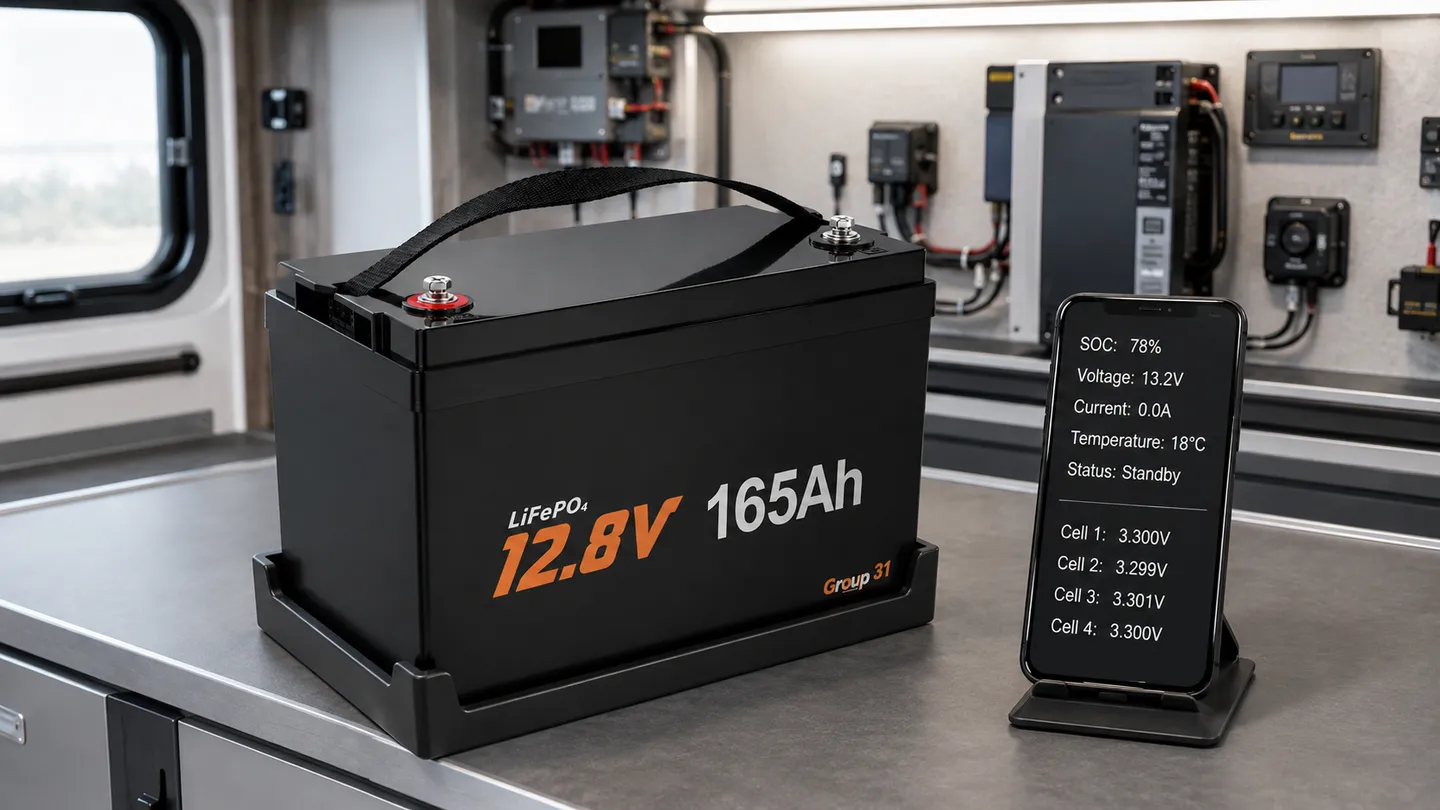
Bluetooth 5.0 monitoring makes routine checks faster after installation. Open the compatible app to view state of charge, battery voltage, charge or discharge current, cell temperature and protection status without opening the battery compartment.
The Group 31-style enclosure fits many common RV, boat and off-grid battery compartments while providing 65% more rated capacity than a 100Ah battery. At approximately 33.49lb, it is easier to handle than many equivalent-capacity lead-acid banks.
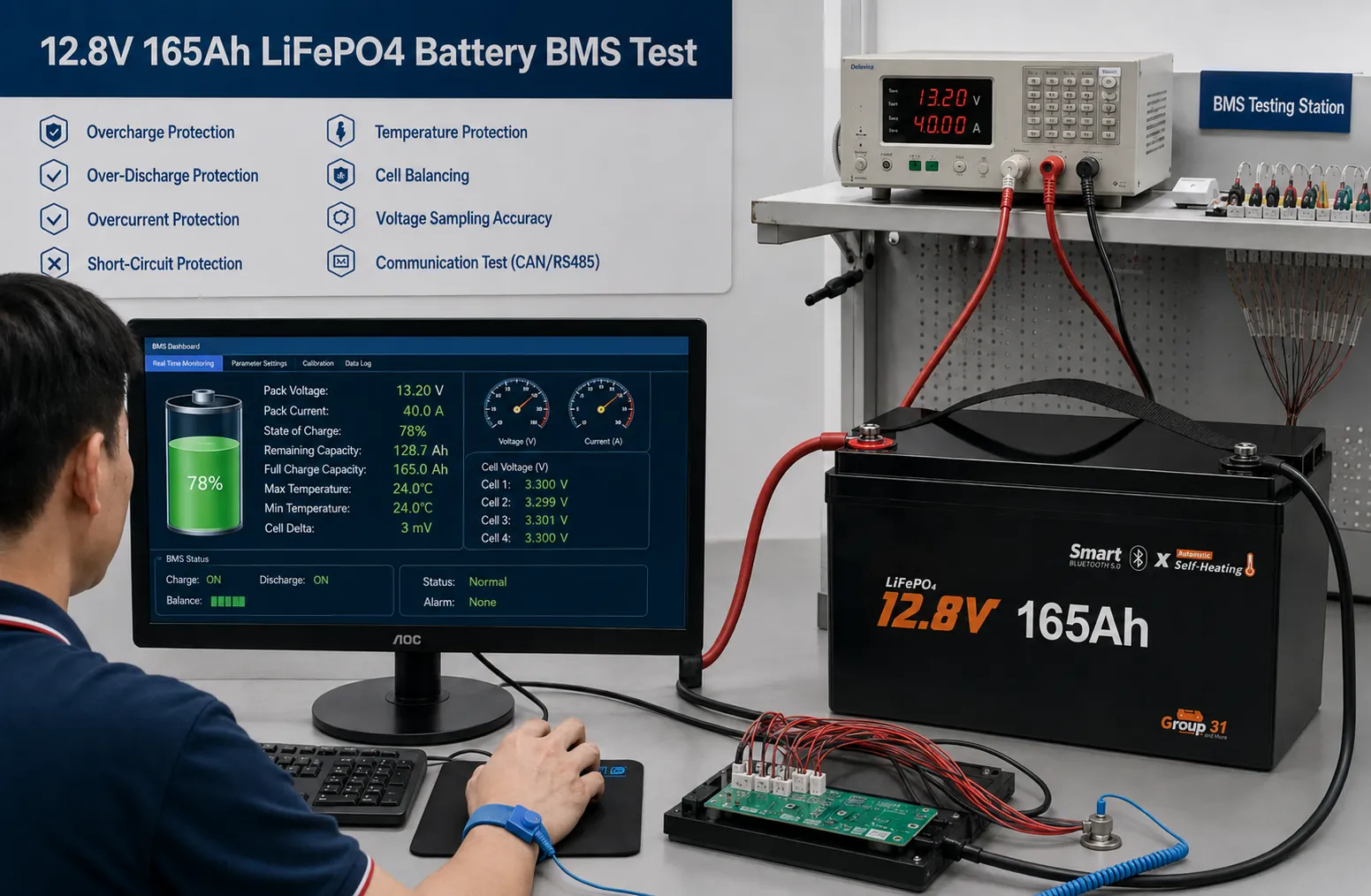
The reference 165A Smart BMS supports up to 2112W of continuous battery output for compatible inverters, onboard appliances and DC equipment. It manages charging and discharging while monitoring operating conditions inside the battery.
| Parameter | Specification |
|---|---|
| Cell Chemistry | Lithium Iron Phosphate (LiFePO4) |
| Nominal Voltage | 12.8V |
| Rated Capacity | 165Ah |
| Nominal Energy | 2112Wh |
| Battery Management | 165A Smart BMS* |
| Maximum Continuous Output | 2112W* |
| Maximum Continuous Charge Current | 165A* |
| Maximum Continuous Discharge Current | 165A* |
| Peak Discharge Current | 825A for 1 second* |
| Monitoring | Bluetooth 5.0 mobile app* |
| Self-Heating | Integrated dual-mode heating* |
| Charge Method | CC/CV |
| Charge Voltage | 14.4V ± 0.2V* |
| Recommended Charge Current | 33A* |
| Cycle Life | 4,000 cycles at 100% DOD; 6,000 at 80% DOD; 15,000 at 60% DOD* |
| Maximum Expansion | Up to 4S4P* |
| Internal Resistance | ≤40mΩ* |
| Charge Temperature | 0°C to 50°C / 32°F to 122°F* |
| Discharge Temperature | -20°C to 60°C / -4°F to 140°F* |
| Storage Temperature | -10°C to 50°C / 14°F to 122°F* |
| Heating Range | -20°C to 5°C / -4°F to 41°F* |
| Minimum Charger Current for Heating | 15A* |
| Low-Temperature Charge Cut-Off | Below 0°C / 32°F* |
| Automatic Charging Recovery | At or above 5°C / 41°F* |
| Terminals | M8 × 16mm bolts* |
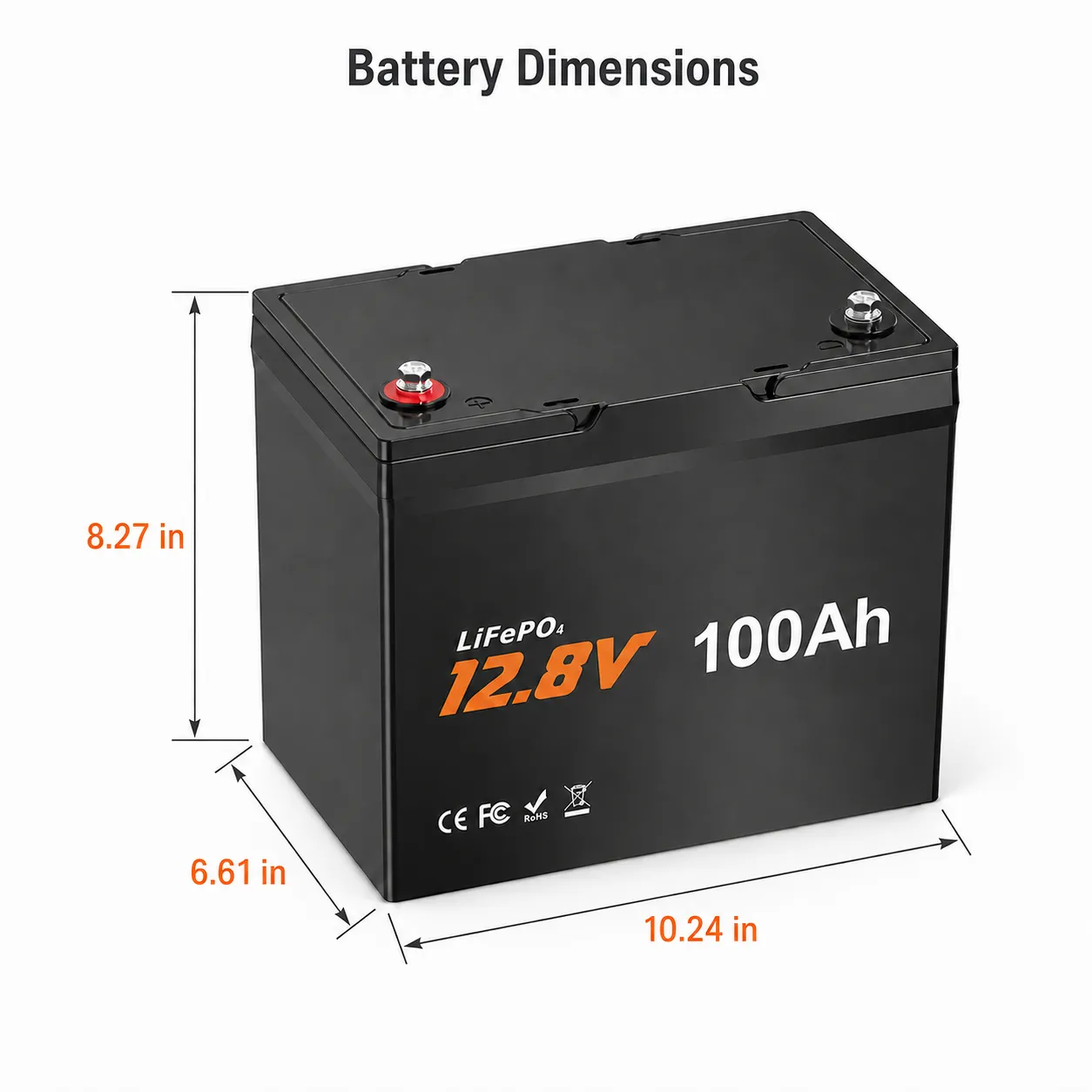
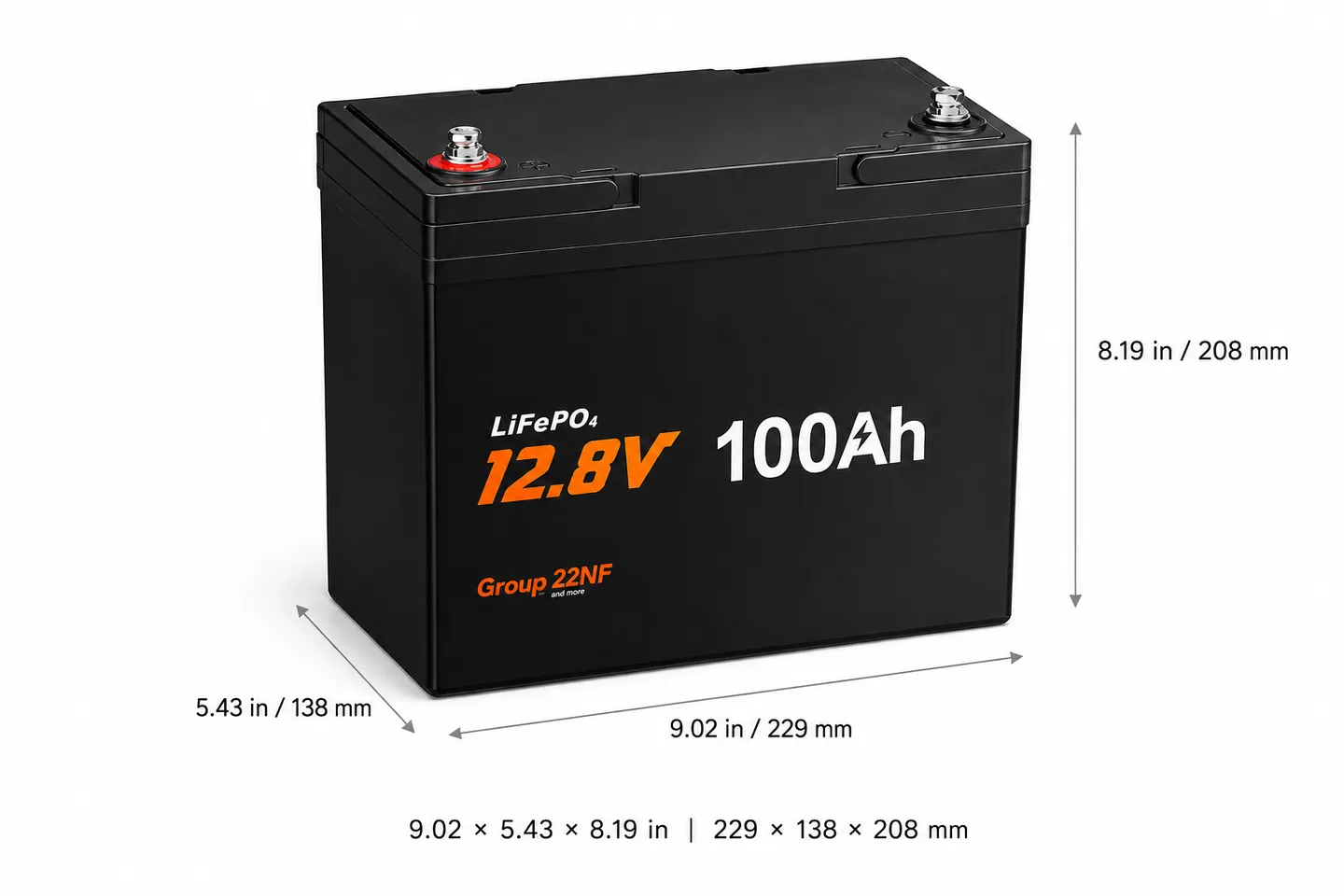
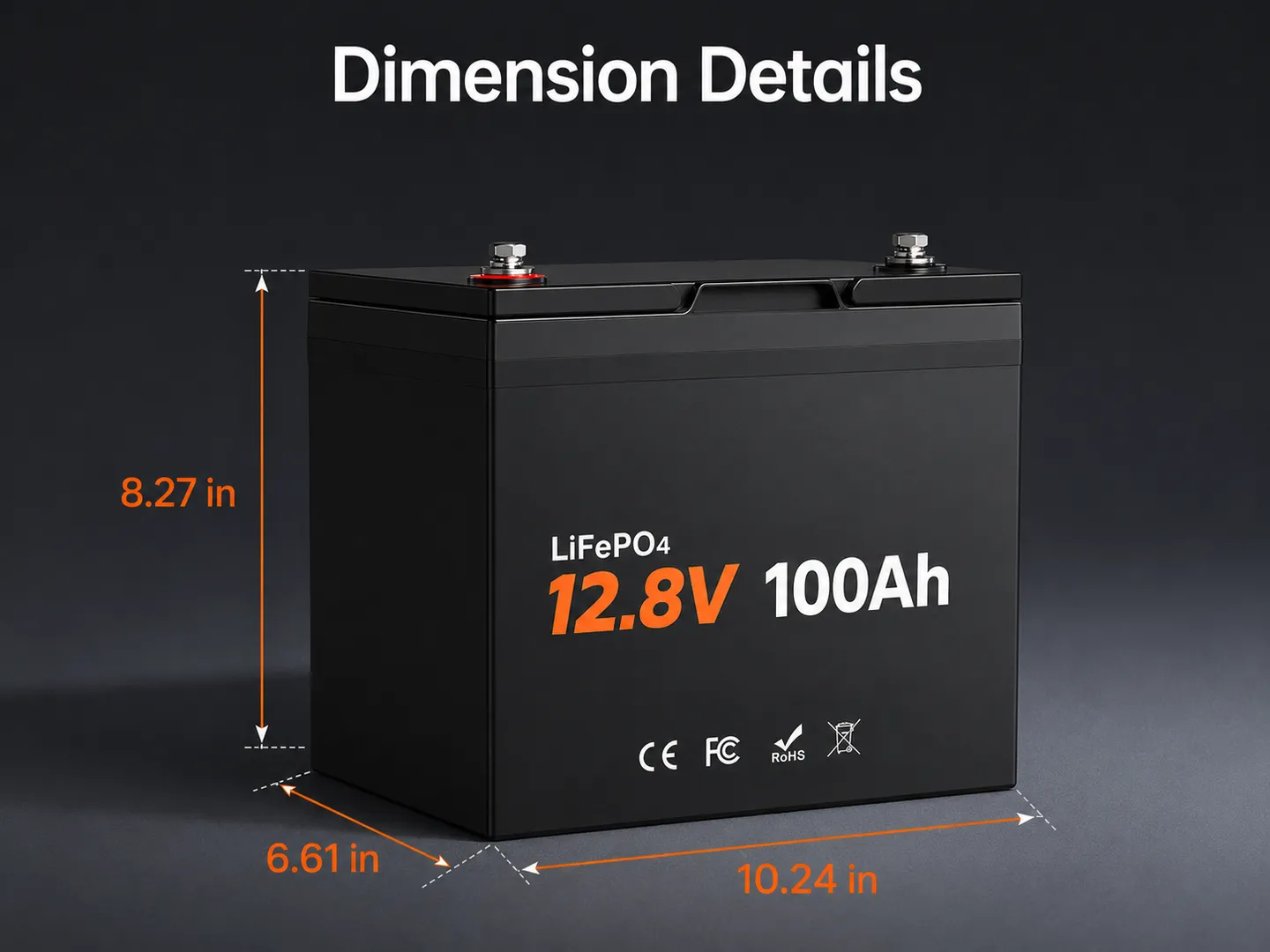
| Dimensions | 13 × 6.77 × 8.5in (330 × 172 × 216mm), Group 31* |
| Approximate Weight | 33.49lb (15.19kg)* |
| Housing / Protection | ABS / IP65* |
| Reference Certifications | FCC, CE, RoHS, UN38.3* |
| Starting-Battery Use | Not designed for engine starting |
*Reference-model value. Confirm the BMS rating, heating logic, cycle-life test conditions, temperature thresholds, dimensions, weight, ingress rating and certifications against the final production datasheet.
Not intended for engine starting or golf-cart traction use unless the final production specification explicitly approves that application.
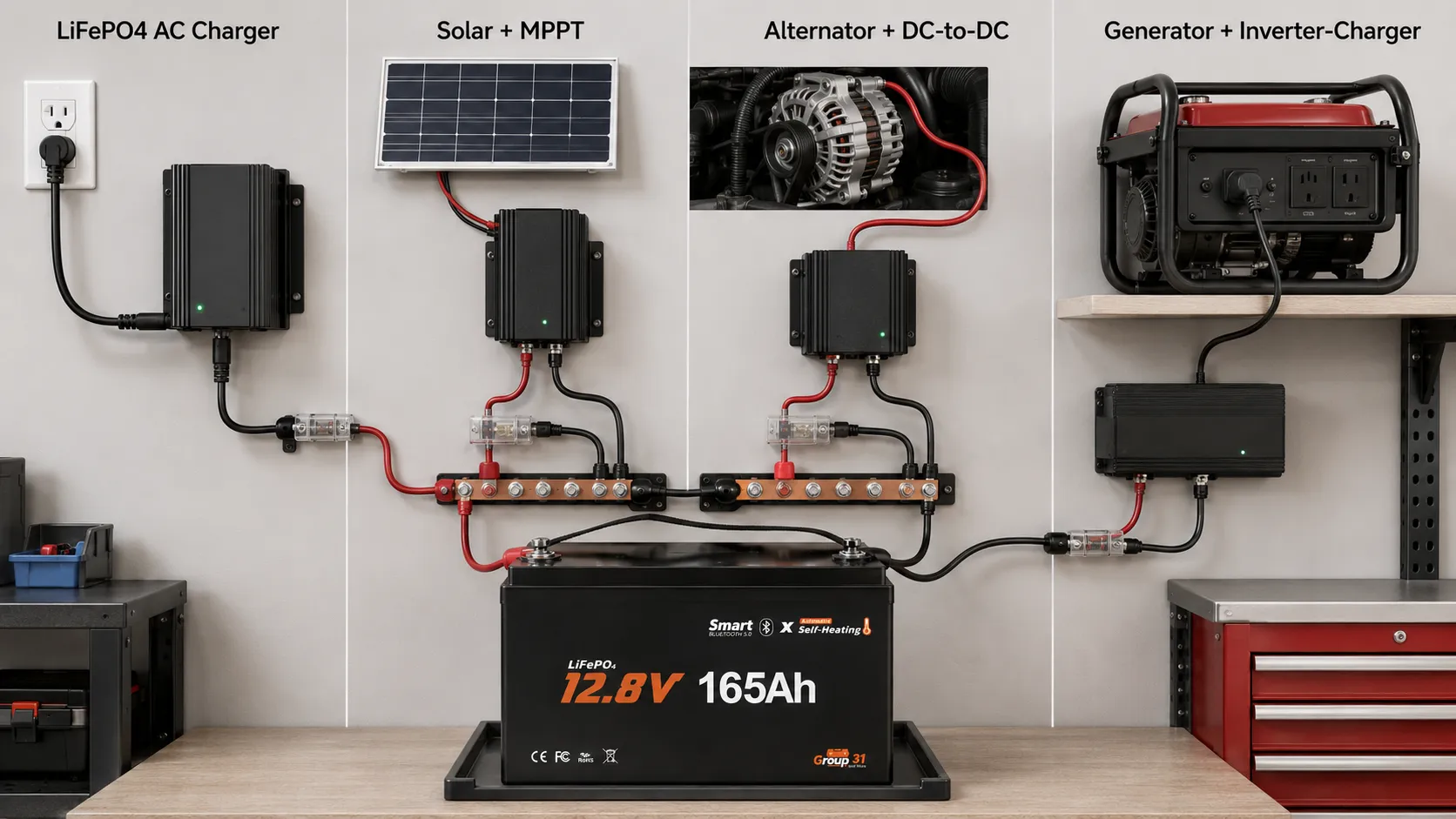
The battery can be integrated with compatible inverters, LiFePO4 chargers, solar charge controllers, DC-to-DC chargers and battery monitoring equipment. System voltage, charging profile, continuous load, surge demand and cable protection must be checked before installation.
CAN or RS485 communication and compatibility with named inverter brands are optional engineering configurations, not standard claims. Confirm the required protocol and equipment model before ordering.
Use a LiFePO4-compatible charger with a CC/CV profile. The reference charging voltage is 14.4V ± 0.2V, with a recommended current of 33A. In an RV or marine system, alternator charging should be managed through a compatible DC-to-DC charger. Solar charging requires an MPPT or PWM controller configured for LiFePO4 batteries.
Verify the charger profile, cable size, fuse rating and inverter demand against the final battery datasheet and the electrical requirements of the installation.
The reference configuration supports up to four batteries in series and four parallel strings. A 4S4P bank provides 51.2V 660Ah and approximately 33.79kWh of nominal energy. Use batteries of the same model, age and state of charge, and follow the approved wiring and protection requirements in the final manual.
Production support can cover cell inspection and matching, battery-pack assembly, BMS installation, Bluetooth configuration, charge-discharge testing, aging and final inspection. The required test plan and documents are confirmed for each production configuration and destination market.
OEM and private-label support can include BMS settings, Bluetooth functions, heating logic, housing labels, terminals, connectors, packaging and communication requirements. Send the target application, electrical load, installation dimensions, operating temperature and expected order quantity for engineering review.
It can be used in many compatible 12V deep-cycle replacement projects, but the battery compartment, charger profile, cable size, fuse, inverter demand and required continuous current should be checked before installation.
When the cells are below the safe charging range, the heating system warms them before charging begins. Activation temperature, recovery temperature, heating mode and required charger current must follow the final product manual.
A compatible mobile app can display information such as state of charge, voltage, current, temperature and protection status. Available controls depend on the Bluetooth module and BMS configuration.
Use a LiFePO4-compatible CC/CV charger. The reference model uses 14.4V ± 0.2V and recommends 33A, but the settings printed in the final datasheet take priority.
The reference configuration supports up to 4S4P. Only identical batteries of the same model, voltage, capacity, age and state of charge should be combined. Confirm the approved configuration before building the battery bank.
No. This product is designed for deep-cycle energy storage and should not be used to start an engine unless a separate production model is specifically rated for starting service.
Tell us your required quantity, application, inverter power, charging method and available installation space. We will review your requirements and provide the recommended battery configuration, available sample options, lead time and OEM pricing.
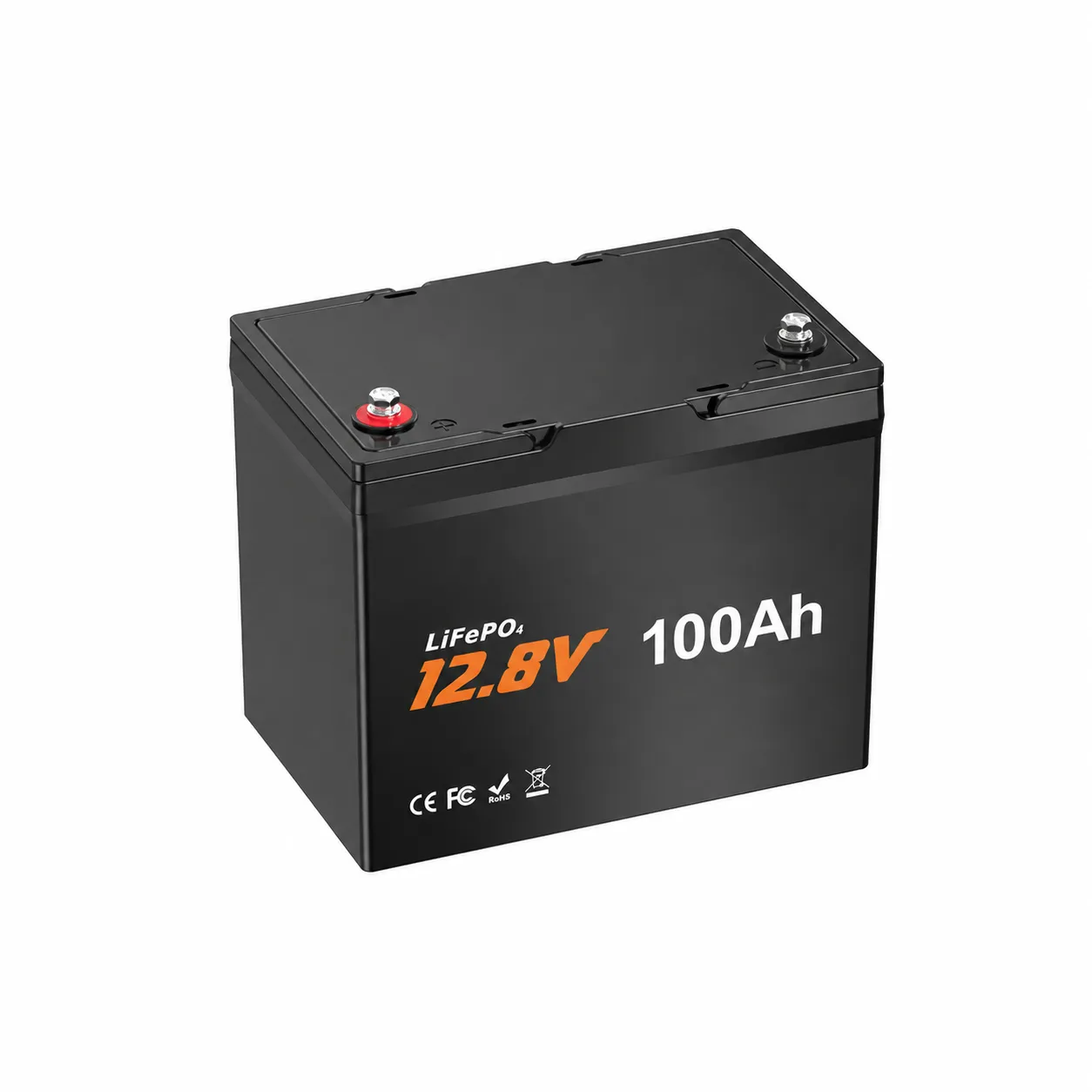
Many LiFePO4 batteries can replace compatible lead-acid deep-cycle batteries in RVs, boats, golf carts and industrial equipment. Before installation, confirm the system voltage, battery dimensions, terminal layout, charger profile, maximum load, cable size, fuse rating and operating temperature.
Most LiFePO4 batteries are compatible with standard 12V, 24V, 36V or 48V inverters when the system voltage and power requirements match. Many modern chargers also include a LiFePO4 charging profile. For lead-acid replacement projects, confirm the charger voltage, inverter rating and maximum load before installation. A compatible charger or DC-to-DC charger may be required if the existing charging equipment does not support LiFePO4 batteries.
Yes. OEM and custom battery support can include voltage, capacity, BMS settings, enclosures, terminals, connectors, communication protocols, labels and packaging. Send us the application, electrical requirements, installation dimensions and expected order quantity for review.
MOQ depends on the battery model, specification and customization requirements. Standard models may be available for sample testing, while custom enclosures, private labels and OEM production normally require a confirmed order quantity. Contact us with the model and required quantity for details.
Available certifications and documents depend on the battery model and destination market. Supporting documents may include UN38.3, MSDS, CE, RoHS and product test reports. Confirm the required documents and target market before placing an order.
Lead time depends on the battery model, order quantity, customization and testing requirements. Export shipping options are arranged according to the battery specification, destination and order volume. Send us the required quantity, delivery location and target schedule for a project-specific quotation.