This camper van power system combines a 12V 300Ah LiFePO4 battery bank, solar charging and inverter power for off-grid travel.
The battery capacity and charging equipment were selected according to daily energy use, inverter load, available solar input and installation space.
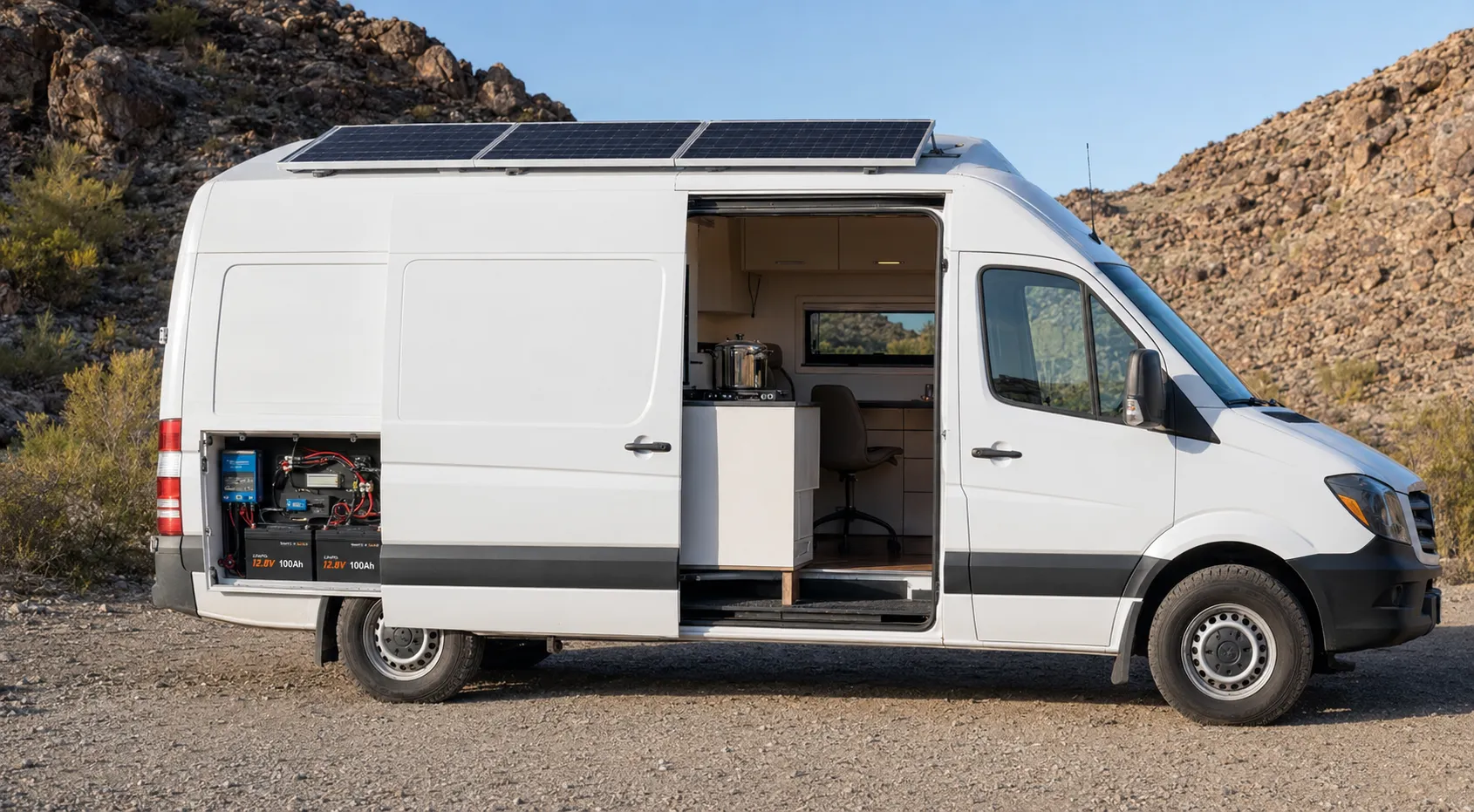
The customer needed a dependable 12V power supply for refrigeration, lighting, water pumps, electronics and occasional AC appliances.
The system design was based on:
Three 12V 100Ah LiFePO4 batteries were connected in parallel to create a nominal 12V 300Ah camper van house battery bank.
This configuration increased the available capacity while retaining the vehicle’s existing 12V electrical system. Before installation, the batteries were matched by model, capacity, voltage and state of charge.
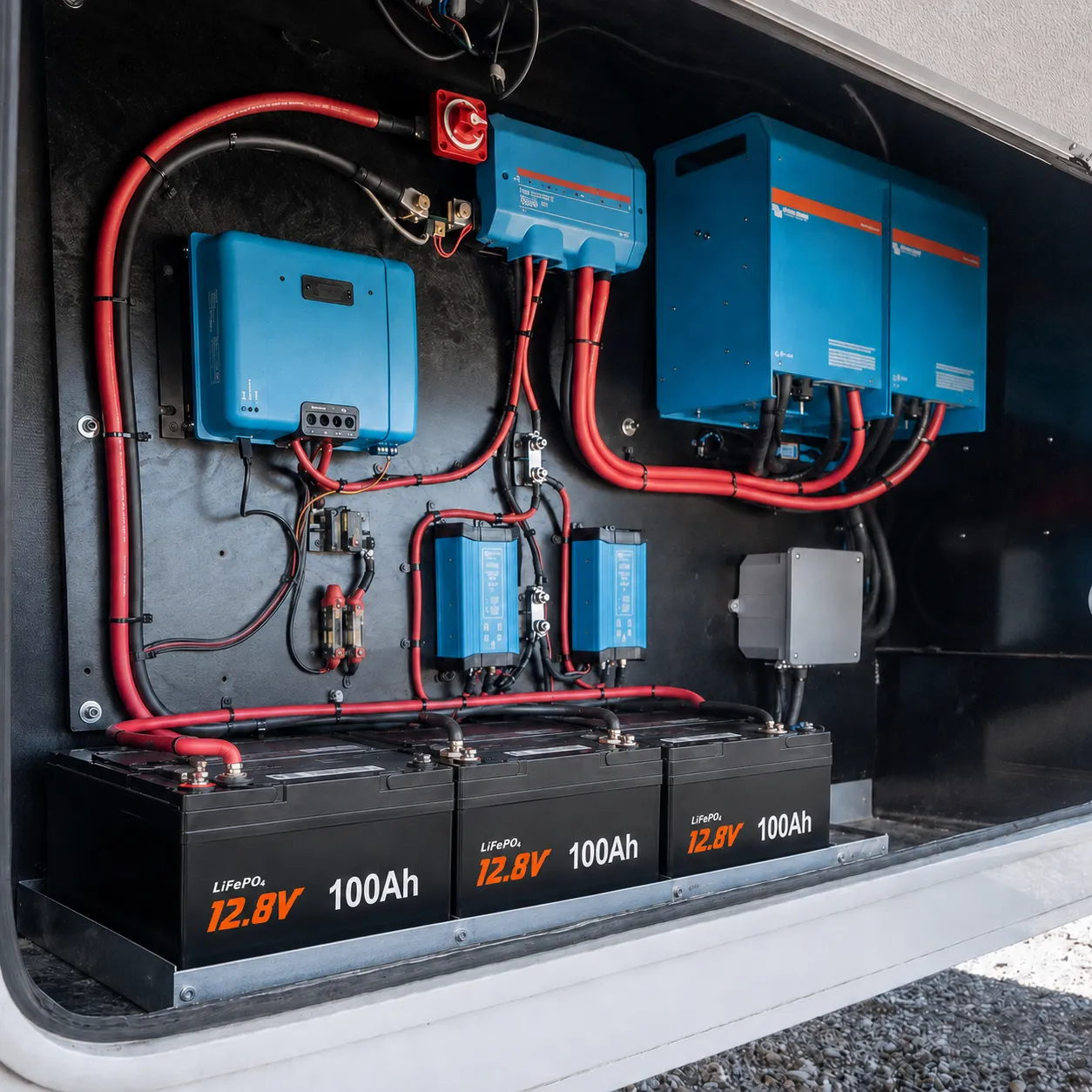
Only batteries approved for parallel operation should be connected in this way. The specified connection limits, cable arrangement and commissioning instructions must be followed.
The LiFePO4 battery bank was integrated with the camper van’s solar charge controller, inverter, AC charger and DC distribution system.
The completed system included:
The charging voltage and current limits were checked against the battery specifications. Inverter power, maximum battery current, cable size and cable length were also reviewed before installation.
A camper battery should be sized from actual daily energy use rather than the number of appliances alone. Refrigeration, lighting, pumps, electronics and inverter losses must all be included.
Daily energy use (Wh) = appliance power (W) × operating time (hours)
The required capacity also depends on the number of off-grid days, usable battery capacity, solar conditions and other available charging sources.
A larger battery bank will not improve the system if the solar array, alternator or AC charger cannot recharge it within the required time.
View RV Lead-Acid to LiFePO4 Battery Conversion →
The batteries and electrical equipment were secured for vibration and road travel. Cable routes were kept away from sharp edges, heat sources and moving components.
Installation details included:
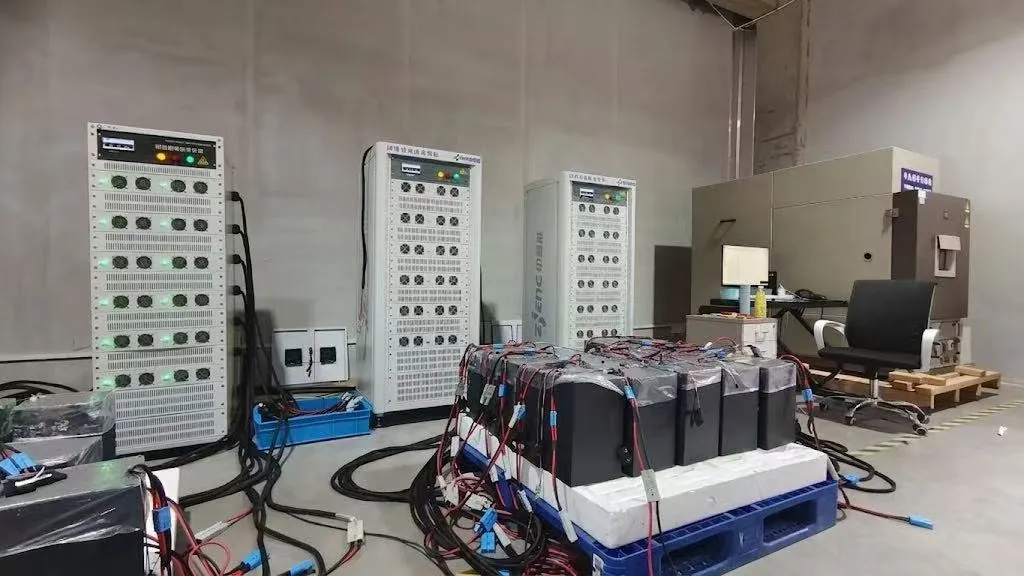
After installation, the camper van battery system was tested under charging and discharging conditions before being placed into service.
The checks covered:
The completed system provides off-grid power for refrigeration, lighting, electronics, water pumps and selected AC appliances.
Solar charging helps replenish the battery bank during daylight hours. Battery monitoring provides access to voltage, current, state of charge and operating status where supported.
Actual runtime depends on usable battery energy, connected loads, inverter efficiency, solar conditions and charging availability.
We manufacture LiFePO4 batteries for lead-acid replacement and custom OEM projects. Battery voltage, capacity, dimensions, discharge current, BMS settings and connection interfaces can be configured for each application.
Our LiFePO4 battery solutions are available for RVs, camper vans, marine systems, golf carts and industrial equipment.
OEM and custom battery options include:
View OEM & ODM Battery Services →
Three 12V 100Ah batteries connected in parallel provide a nominal capacity of 12V 300Ah. Actual usable capacity depends on the battery limits, Smart BMS settings and required reserve.
Yes. The solar charge controller must support the correct LiFePO4 charging voltage and be properly sized for the solar array and battery bank.
A DC-DC charger may be required when charging the house battery from the vehicle alternator. It controls charging current and provides a suitable charging profile for the LiFePO4 battery.
It may be retained if its input voltage, maximum current, low-voltage settings and cable requirements are suitable for the new battery bank.
Selected battery models support parallel connection. The permitted number of batteries, cable arrangement and installation requirements must be confirmed before assembly.
Please provide the system voltage, required capacity, daily energy use, inverter power, solar input, charging equipment, available installation space and estimated order quantity.
Send us your required voltage, battery capacity, inverter power, solar input, charging equipment, installation dimensions and estimated order quantity.
Our engineering team will review the requirements and recommend a suitable LiFePO4 battery configuration for lead-acid replacement, sample testing or OEM production.