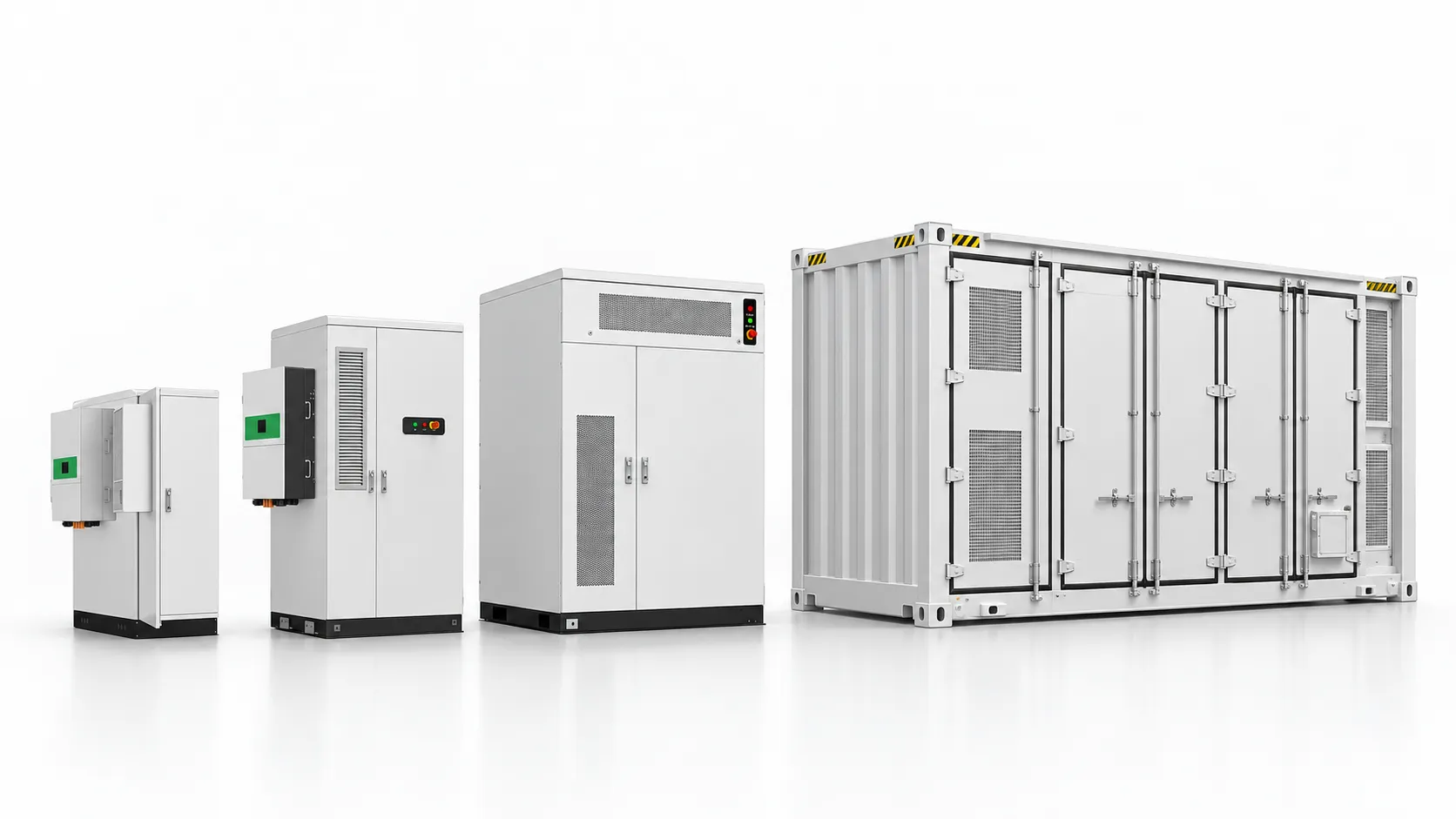
Modular LiFePO4 commercial and industrial battery energy storage systems for factories, commercial buildings,
solar projects, microgrids, EV charging sites and critical facilities. The product range extends from compact
30kVA / 40–60kWh all-in-one C&I BESS to 125kW liquid-cooled cabinets and 1MWh–5MWh containerized battery storage.
Grid / PV / Generator
Flexible integration for solar-plus-storage and microgrid projects
C&I BESS Engineering & Integration
Commercial battery storage engineered around the site load profile
C&I BESS selection should start with site load, peak-demand profile, solar generation, required backup duration,
grid conditions and installation environment. Available architectures include compact all-in-one systems,
high-voltage modular cabinets, liquid-cooled outdoor BESS and containerized MWh-scale energy storage.
40kWh–5MWh C&I BESS Product Range
Six commercial and industrial BESS platforms
Compare compact all-in-one BESS, high-voltage C&I cabinets, liquid-cooled industrial systems and
containerized storage. Each product below links once to its dedicated live product page.
Commercial and industrial BESS range from compact 40–60kWh cabinets to 1MWh–5MWh containerized energy storage.
Compact all-in-one BESS
30kVA / 40–60kWh Mini C&I BESS
Compact three-phase storage for small commercial and light-industrial loads.
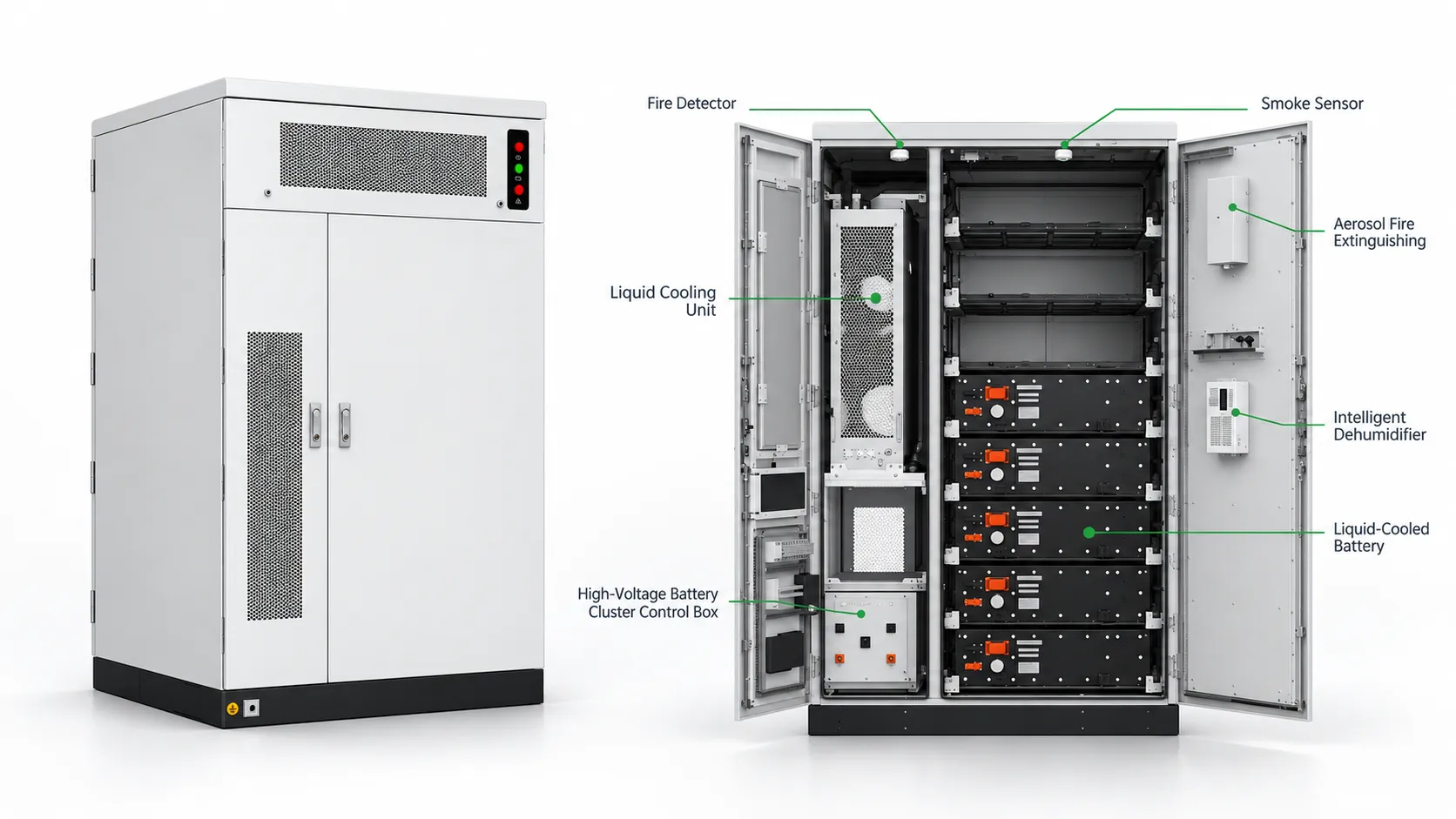
A 125kW / 261.2kWh cabinet represents a common C&I architecture for peak shaving, PV energy shifting,
load management and project-specific backup support.
Typical internal structure of a liquid-cooled commercial and industrial BESS cabinet.
System type
Outdoor all-in-one C&I battery energy storage cabinet
Rated power class
125kW
Nominal energy class
261.2kWh
Battery chemistry
LiFePO4 (LFP)
Thermal management
Liquid cooling
Core subsystems
Battery, BMS, PCS, EMS, protection, cooling, fire protection and auxiliary power
Typical operating goals
Peak shaving, time-of-use shifting, PV self-consumption, load management and backup support subject to project design
Containerized Battery Energy Storage
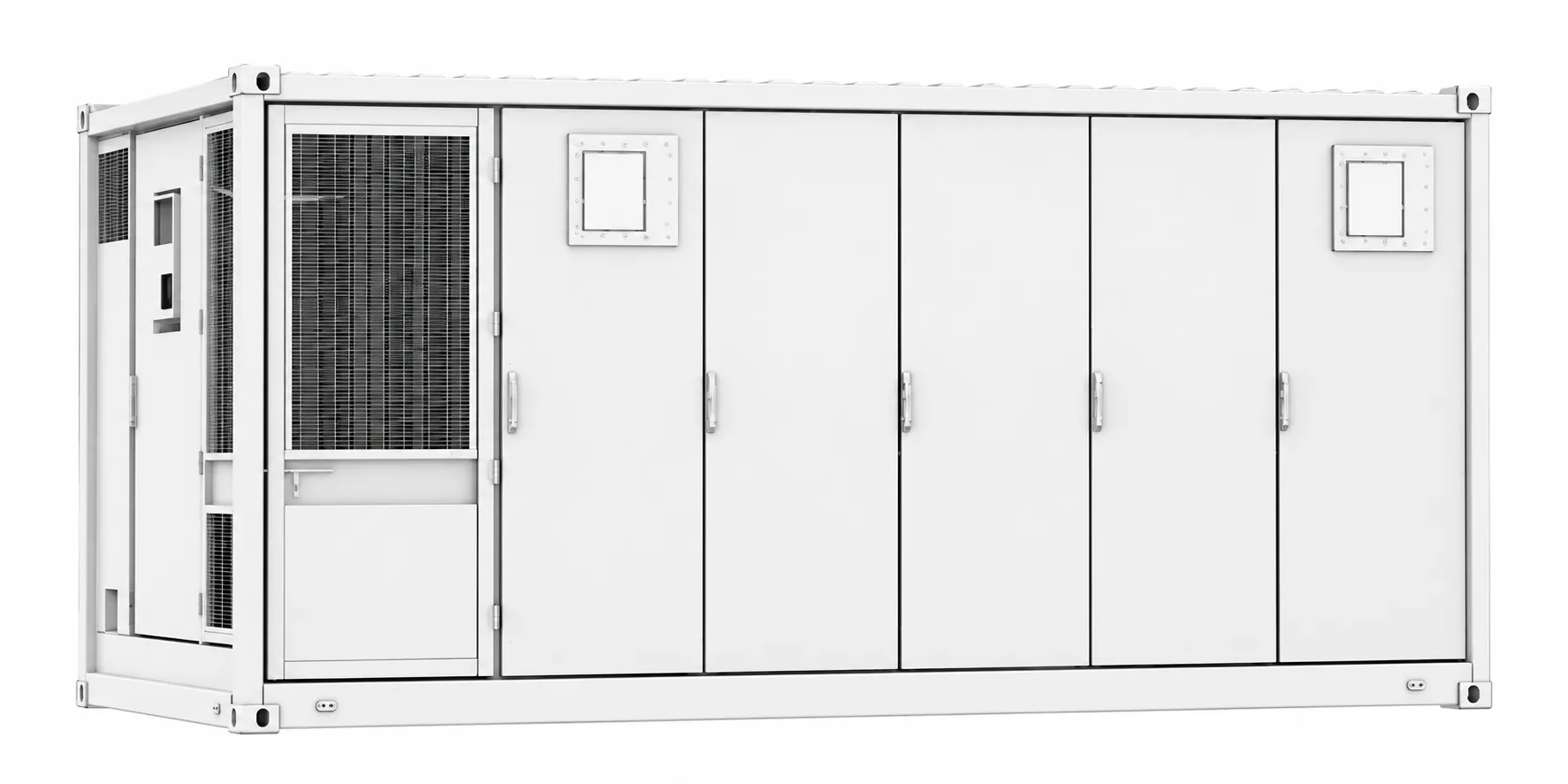
1MWh–5MWh liquid-cooled container energy storage
For industrial parks, renewable-energy plants, microgrids and high-load commercial sites,
containerized BESS provides a scalable high-voltage battery platform with project-specific PCS,
EMS, transformer, switchgear and auxiliary-system integration.
Exact container size, power rating, usable energy, thermal design, fire-protection strategy and
grid interface should be confirmed during project engineering.
Containerized BESS for industrial, solar, microgrid and large commercial projects.
BMS + PCS + EMS Integration
How a commercial battery energy storage system is integrated
PV / Grid / Generator
PCS & AC Protection
LFP Battery + BMS
EMS Scheduling
Facility Loads / Grid
The battery and BMS form the DC energy-storage layer, the PCS converts between DC and AC, and the EMS
supervises charging, discharging, metering and site-level operating strategy. Electrical and communication
compatibility should be reviewed before final system selection.
Commercial Battery Storage Applications
Commercial and industrial energy storage applications
Peak ShavingReduce facility demand peaks and manage grid-import limits.
Solar + BESSIncrease PV self-consumption and shift surplus solar energy.
Accurate sizing starts with the site load profile, grid conditions, required operating mode and installation environment.
✓ Site country, grid voltage and frequency
✓ Electricity bills and interval load data, if available
✓ Maximum demand, average load and critical-load power
✓ Required backup or charge/discharge duration
✓ Existing or planned solar PV capacity
✓ Transformer, switchgear and SLD information
✓ Indoor / outdoor conditions and available space
✓ Grid-connected, off-grid or hybrid requirement
✓ PCS, EMS and communication requirements
✓ Target quantity, delivery schedule and Incoterm
Commercial & Industrial Energy Storage FAQ
Questions about C&I battery energy storage systems
What is a C&I battery energy storage system?
A C&I BESS stores electrical energy for commercial or industrial facilities and releases it according to a control strategy. Typical uses include peak shaving, solar-energy shifting, backup support and microgrid energy management.
How do I choose between kW and kWh?
kW is instantaneous charging or discharging power; kWh is stored energy. Both must be sized from the site load profile and required duration.
What is the difference between air-cooled and liquid-cooled BESS?
Air cooling can suit smaller or cost-sensitive systems. Liquid cooling generally provides tighter temperature control and may be preferred for higher-energy-density outdoor cabinets or demanding duty cycles.
Can a commercial BESS work with solar PV and a generator?
Yes, when the PCS, EMS, protection and control logic are engineered for the intended PV, generator, grid and load interfaces.
Can a BESS provide UPS-style backup?
Not automatically. Transfer performance depends on topology, PCS mode, switchgear and controls. No-break applications may require a dedicated UPS architecture.
What should be validated before ordering?
Confirm load profile, SLD, grid parameters, operating modes, PCS and EMS functions, communication interfaces, protection coordination, installation environment, compliance, logistics, commissioning and warranty boundaries.
Project-Specific C&I BESS Proposal
Request a project-specific C&I BESS proposal
Send your load profile, grid parameters, solar capacity, backup duration, installation environment and target system size for project review.