
High Peak Demand
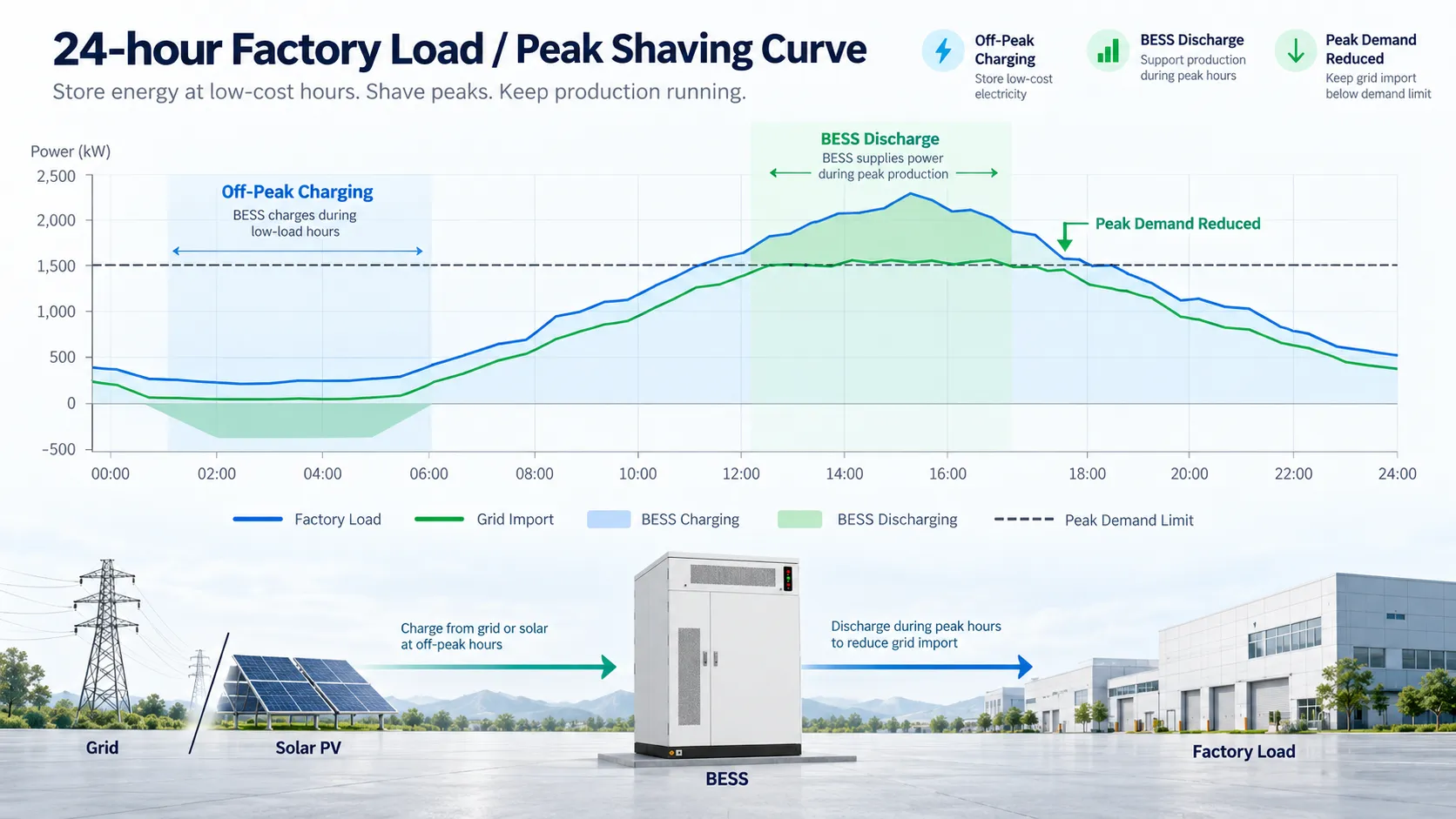
Production peaks can push site demand significantly above normal operating levels. BESS can support selected high-load periods.
Battery energy storage for factories and industrial parks helps manage peak demand, integrate solar PV, shift energy use and improve site-level power flexibility across manufacturing plants and multi-building industrial facilities.
Industrial BESS should be engineered around the site's actual load profile, transformer capacity, production schedule, grid connection and required operating modes rather than battery capacity alone.
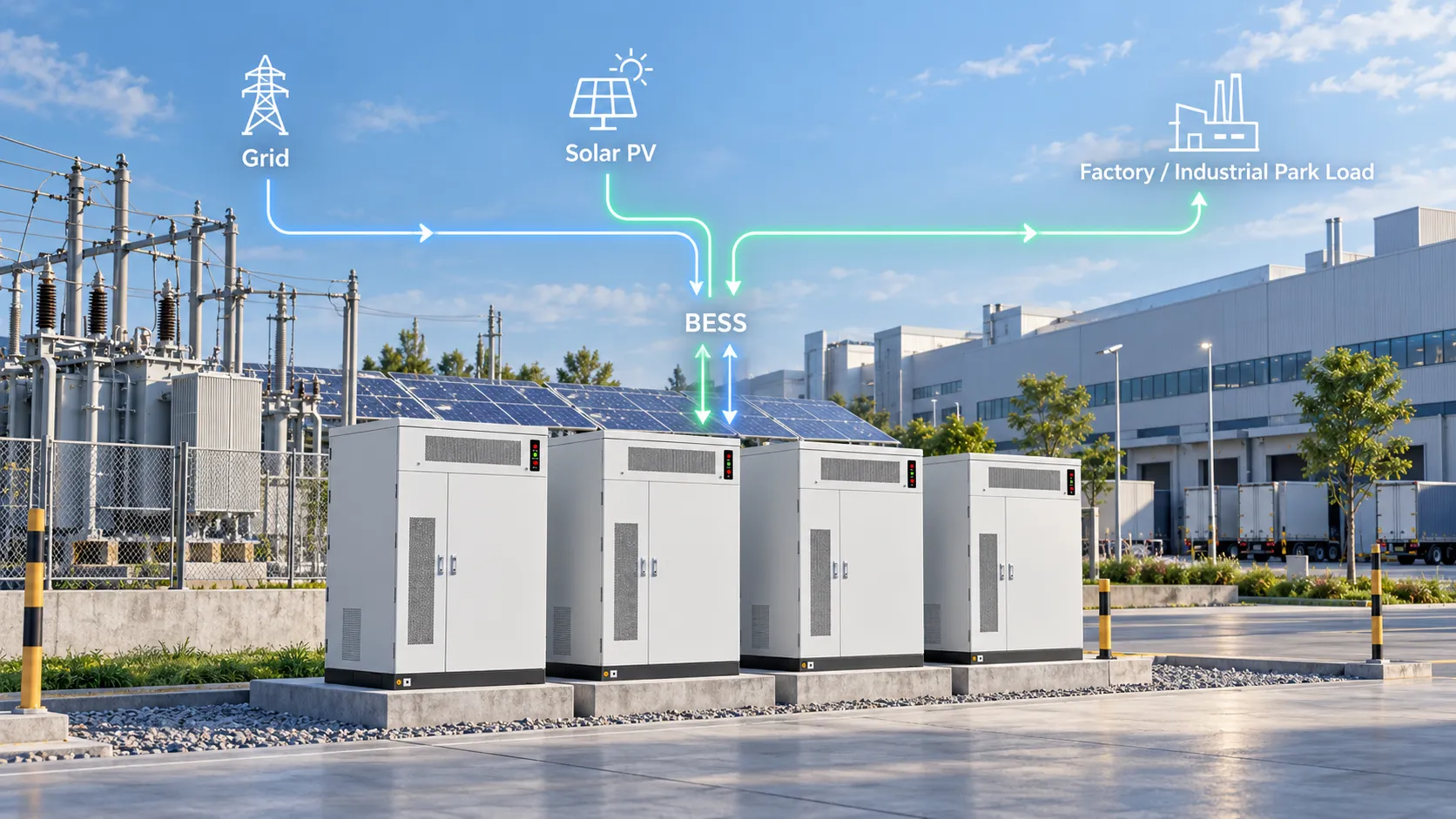
Industrial facilities often operate large motors, production lines, HVAC systems, compressors, pumps, automation equipment and EV charging loads. These loads can create high or rapidly changing electrical demand.
A Battery Energy Storage System can charge during selected periods and discharge when additional power is required, helping the site manage demand peaks, energy scheduling and changes in production load.
In an industrial park, this strategy may extend across multiple factories, buildings or tenants, with an Energy Management System coordinating BESS power, PV generation, utility-grid import and site demand.
Production peaks can push site demand significantly above normal operating levels. BESS can support selected high-load periods.
Existing electrical infrastructure may constrain production expansion, automation equipment or additional charging loads.
Available PV generation can be stored when solar production and industrial demand do not occur at the same time.
Battery charging and discharging can be coordinated around applicable tariff periods and site operating requirements.
Selected manufacturing processes may require additional continuity measures when backup operation is included in the electrical design.
Industrial parks may require centralized coordination across different meters, transformers, facilities and production schedules.
Site meters and EMS monitor facility demand, PV generation, battery SOC and configured operating limits.
Battery storage charges from available solar PV or the utility grid according to the selected operating strategy.
Stored energy supports production loads when demand reaches a configured threshold or during selected tariff periods.
The EMS coordinates battery power, PCS operation, grid import, solar PV and facility demand.
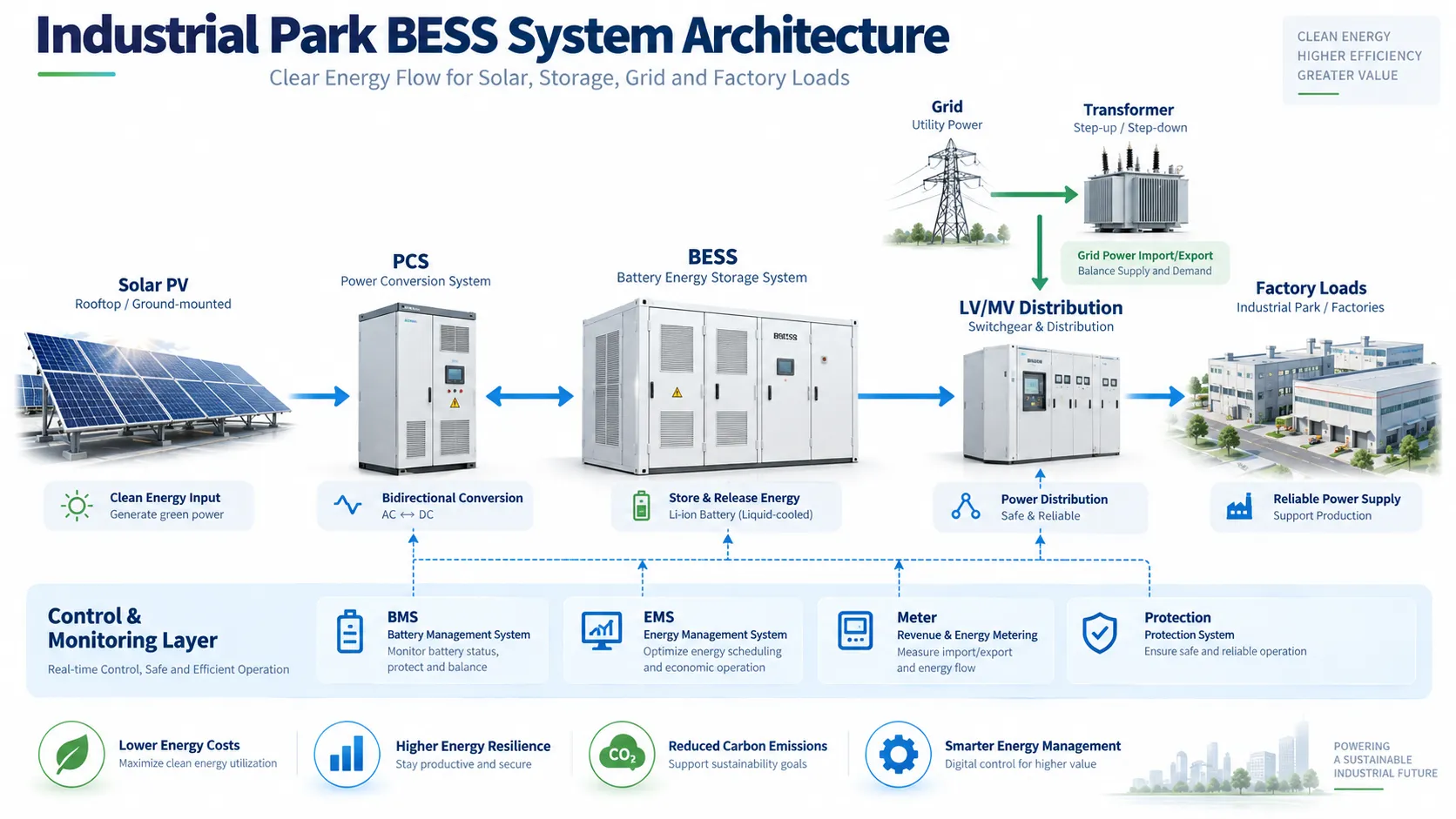
Final architecture depends on site voltage, transformer arrangement, PCS topology, metering, protection, switchgear, backup requirements, grid-connection rules and selected operating modes.
Discharge stored energy during high-load periods to reduce peak grid import.
Explore Peak Shaving →Move energy between operating periods through controlled charging and discharging.
Store available PV generation and use it later when industrial demand is higher.
Explore Solar + BESS →Use battery power to support temporary load increases where transformer or utility-grid capacity is constrained.
Coordinate battery power, PV generation and production loads through EMS-based operating strategies.
Where PCS, protection, switching and controls support backup operation, stored energy can support selected critical loads.
| Operating Mode | Typical Operation | Project Objective |
|---|---|---|
| Peak Shaving | Battery discharges when industrial demand approaches the configured grid-import target. | Reduce peak utility demand. |
| Time-of-Use Shifting | Charge and discharge according to applicable tariff periods and operating requirements. | Optimize site energy scheduling. |
| Solar + Storage | Store available PV generation for later industrial use. | Increase solar self-consumption. |
| Grid Capacity Support | Battery supports temporary loads above the preferred grid-import level. | Support industrial load growth. |
| Backup Support | Selected critical loads receive stored energy during qualifying utility interruptions when the electrical architecture supports it. | Support selected production or facility loads. |
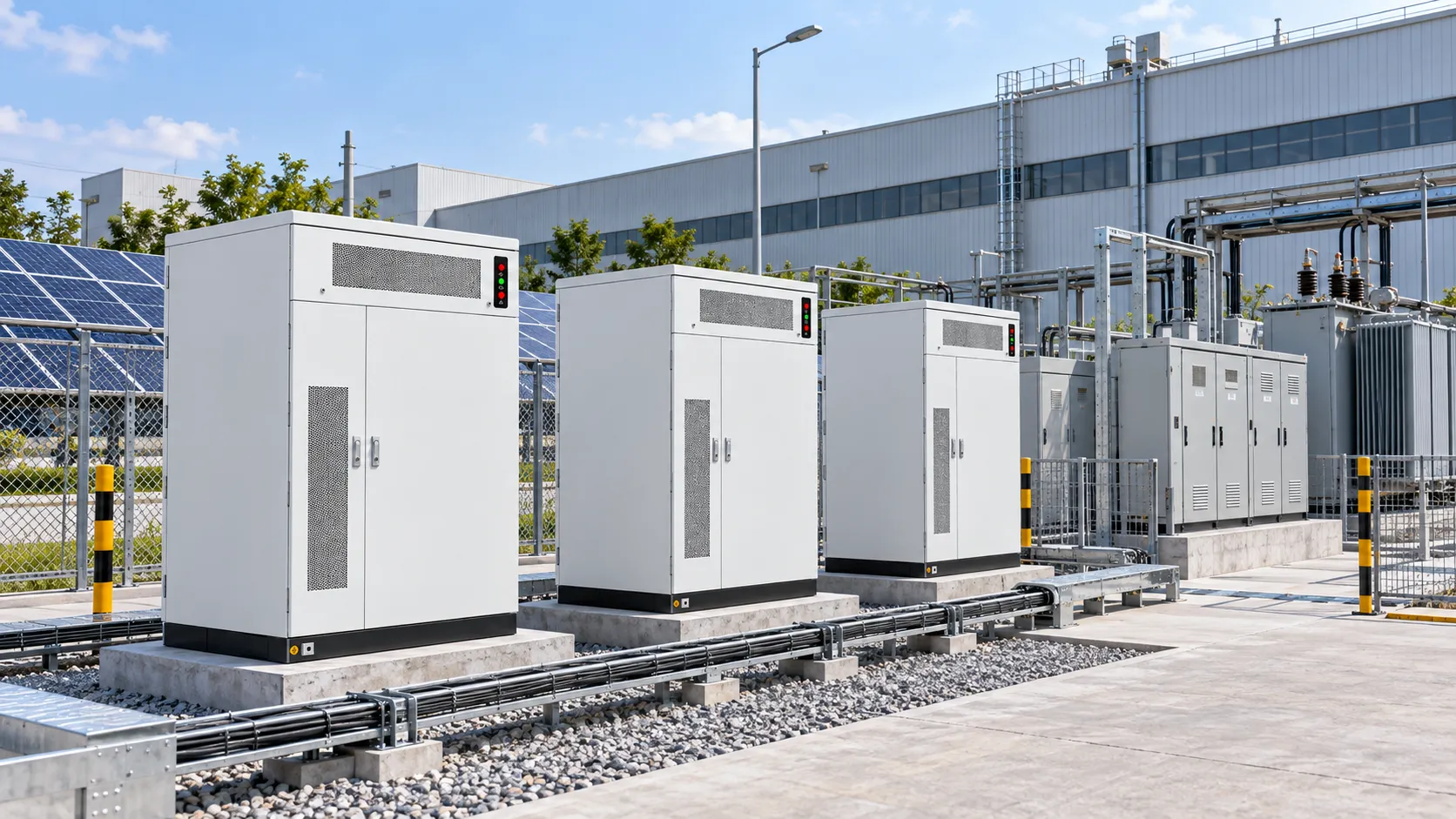
Industrial BESS sizing should be based on real electrical and operating data. Battery energy alone does not determine the correct system size.
Final system selection depends on required power, operating duration, production loads, transformer capacity and project scale. These platforms cover cabinet-scale and MWh-scale industrial applications.
Cabinet-scale energy storage for factory peak shaving, PV integration, industrial load management and multi-cabinet projects.
View 125kW / 261.2kWh System →Higher-energy industrial storage platform for longer-duration factory loads, solar integration and commercial energy management.
View 80kVA / 418kWh System →MWh-scale battery energy storage for large factories, industrial parks, renewable-energy projects and industrial microgrids.
View 1MWh–5MWh Container BESS →After defining the industrial application and preliminary system size, use the dedicated engineering resources for detailed sizing and project-document review.
Factory and industrial-park BESS projects frequently combine peak shaving, solar integration, EV charging or microgrid operation.
Send your site load profile, peak demand, transformer capacity, PV information, grid voltage, production schedule, critical loads and required operating modes. The project can then be reviewed for suitable BESS power, battery energy and system architecture.
Request an Industrial BESS Proposal →