A 36V golf cart battery should be selected based on more than voltage and amp-hour capacity alone. For lithium conversions, commercial fleets and OEM projects, the battery must be matched to the golf cart controller, charger, continuous and peak current requirements, available installation space and expected runtime.
Many lithium systems used in 36V golf carts are based on a 38.4V LiFePO4 battery configuration. However, compatibility should always be confirmed against the actual controller, charger and electrical system requirements rather than relying only on the nominal system voltage.
36V 100Ah LiFePO4 Golf Cart Battery Installation
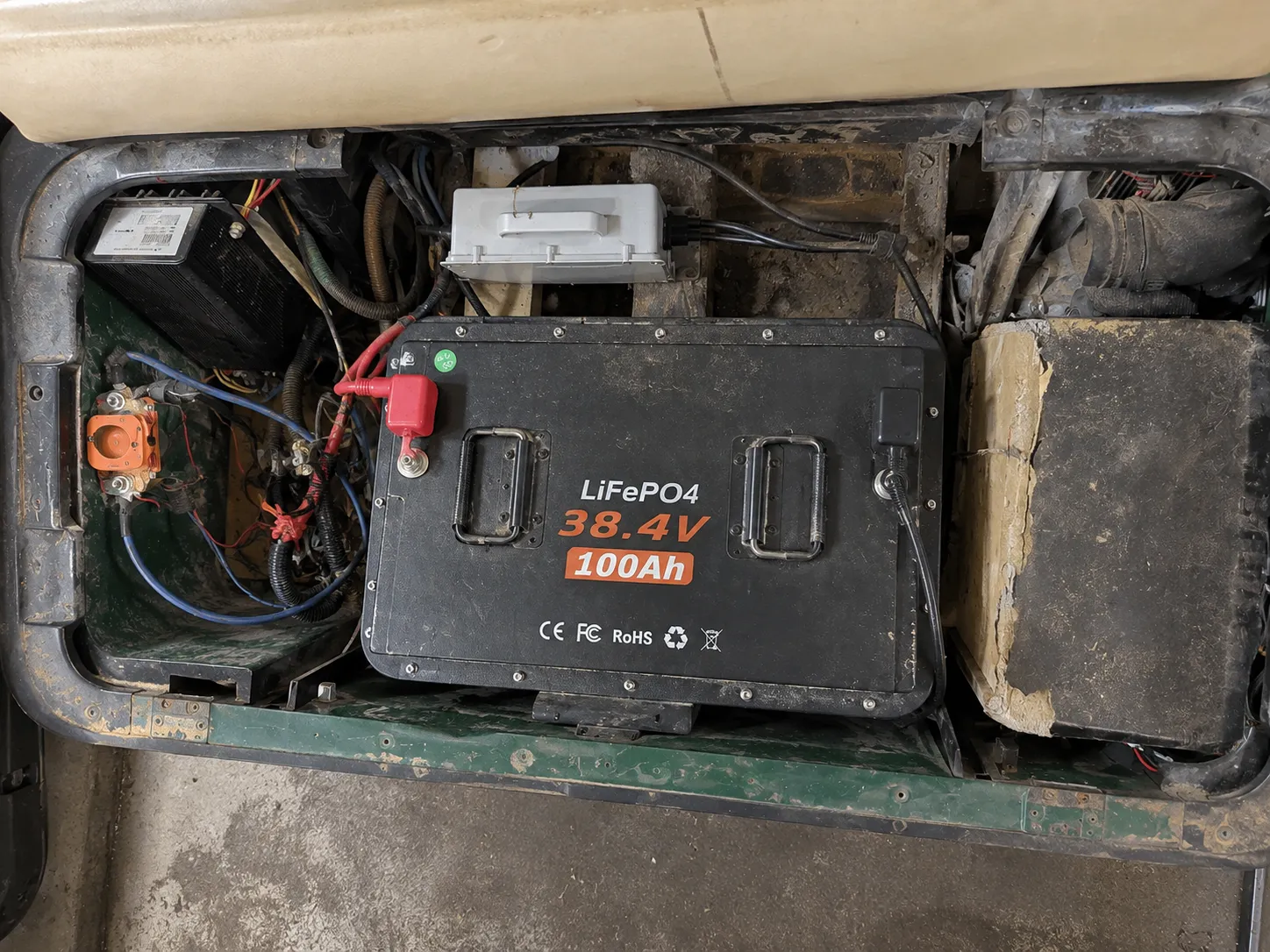
Example installation of a 38.4V 100Ah LiFePO4 battery in a compatible 36V golf cart battery compartment.
A golf cart may be described as a 36V system, while a 12-series-cell LiFePO4 battery typically has a nominal voltage of 38.4V. This difference in naming does not automatically indicate incompatibility, but the complete electrical system must be reviewed before replacing lead-acid batteries with lithium.
Important checks include the controller operating voltage range, charger output profile, motor demand, cable condition, circuit protection and battery compartment dimensions. For a broader view of available voltage-based products, see our 36V LiFePO4 batteries.
The right 36V lithium golf cart battery depends on how the cart is used. Capacity is important, but it should be evaluated together with current demand, runtime, installation space and charging conditions.
Before selecting a battery, review:
For fleet and OEM applications, these factors should be reviewed as a complete system rather than selecting a battery from voltage and Ah alone.
Two capacity options can address different 36V golf cart requirements. The correct choice depends on runtime requirements, available installation space and electrical load.
36V 45Ah vs 36V 100Ah Golf Cart Battery
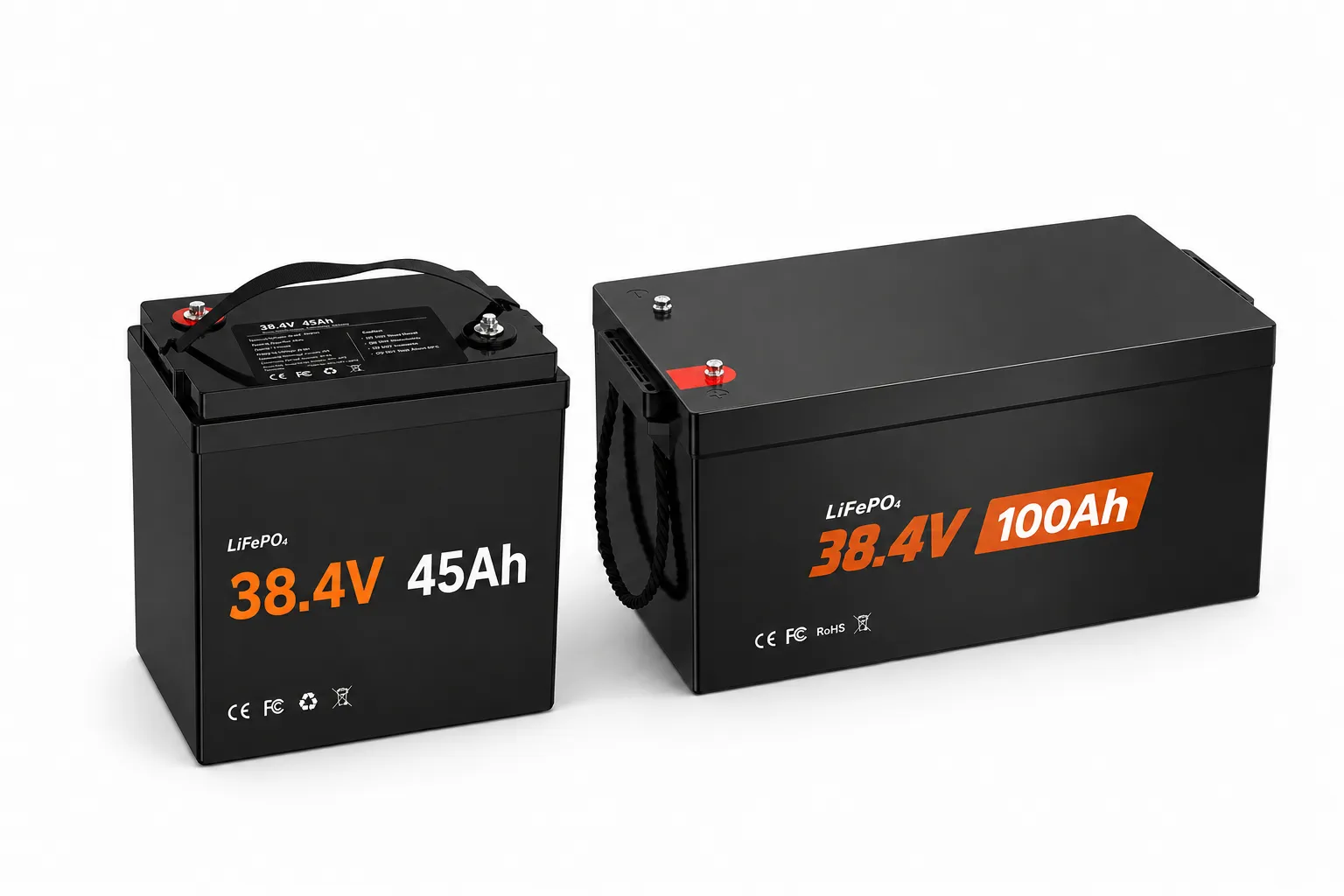
Compare 45Ah and 100Ah battery options based on runtime requirements, available installation space and electrical load.
| Selection Factor | 36V 45Ah | 36V 100Ah |
|---|---|---|
| Energy capacity | Lower | Higher |
| Typical selection priority | Moderate runtime and compact installation requirements | Longer runtime and higher energy reserve requirements |
| Installation | Confirm compartment dimensions | Confirm compartment dimensions |
| Electrical matching | Controller and current requirements must be checked | Controller and current requirements must be checked |
The 36V 45Ah golf cart battery can be considered for projects with moderate energy requirements or tighter installation constraints.
The 36V 100Ah golf cart battery provides greater stored energy for applications requiring longer runtime or additional capacity reserve.
Actual operating range depends on vehicle efficiency, terrain, load, driving style and electrical demand, so capacity should not be selected from Ah alone.
Replacing a lead-acid battery bank with a single LiFePO4 battery can simplify the battery system, but the conversion should be reviewed as an electrical integration project rather than treated as a direct battery swap.
36V Golf Cart Lead-Acid to LiFePO4 Battery Replacement
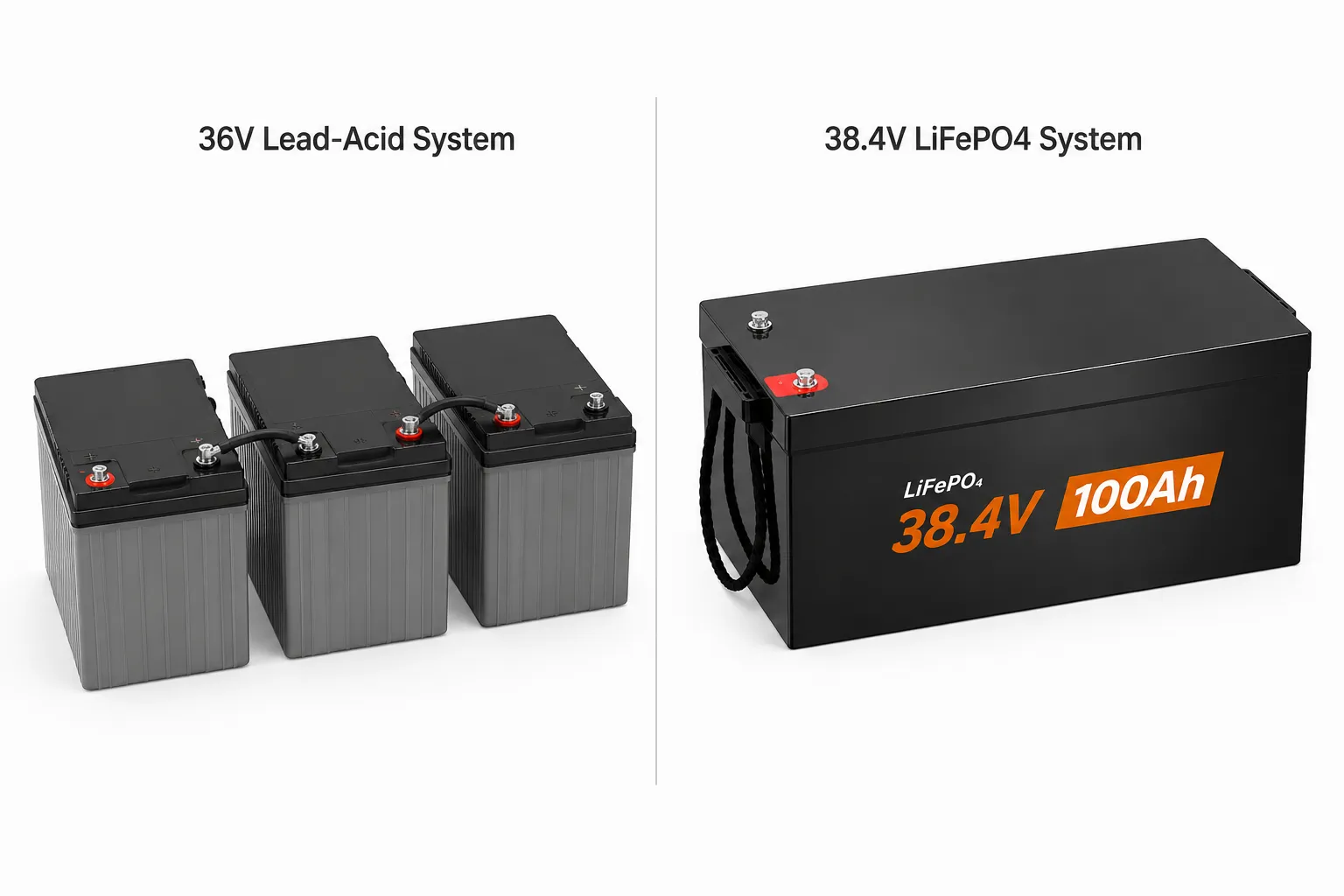
A 36V lead-acid to lithium conversion requires verification of system voltage, controller, charger, protection and installation requirements.
Before conversion, confirm:
For examples of lead-acid replacement and system integration considerations, visit our golf cart lithium battery conversion projects.
A charger labeled for a 36V system is not automatically suitable for a LiFePO4 battery. The charging profile and charging voltage must match the selected battery system.
The golf cart controller must also be checked for its operating voltage range and current requirements. This is especially important for carts with higher peak demand during acceleration, hill climbing or heavy-duty operation.
For technical evaluation, it is useful to provide the charger model, controller model, motor information and existing battery configuration before selecting a replacement battery.
For additional support with battery selection, charger compatibility, BMS configuration or system integration, see our LiFePO4 battery technical support.
Installation should provide secure mechanical support, appropriate cable routing and adequate electrical protection. The battery compartment should be checked before finalizing battery dimensions or terminal positions.
36V LiFePO4 Golf Cart Battery System Installation
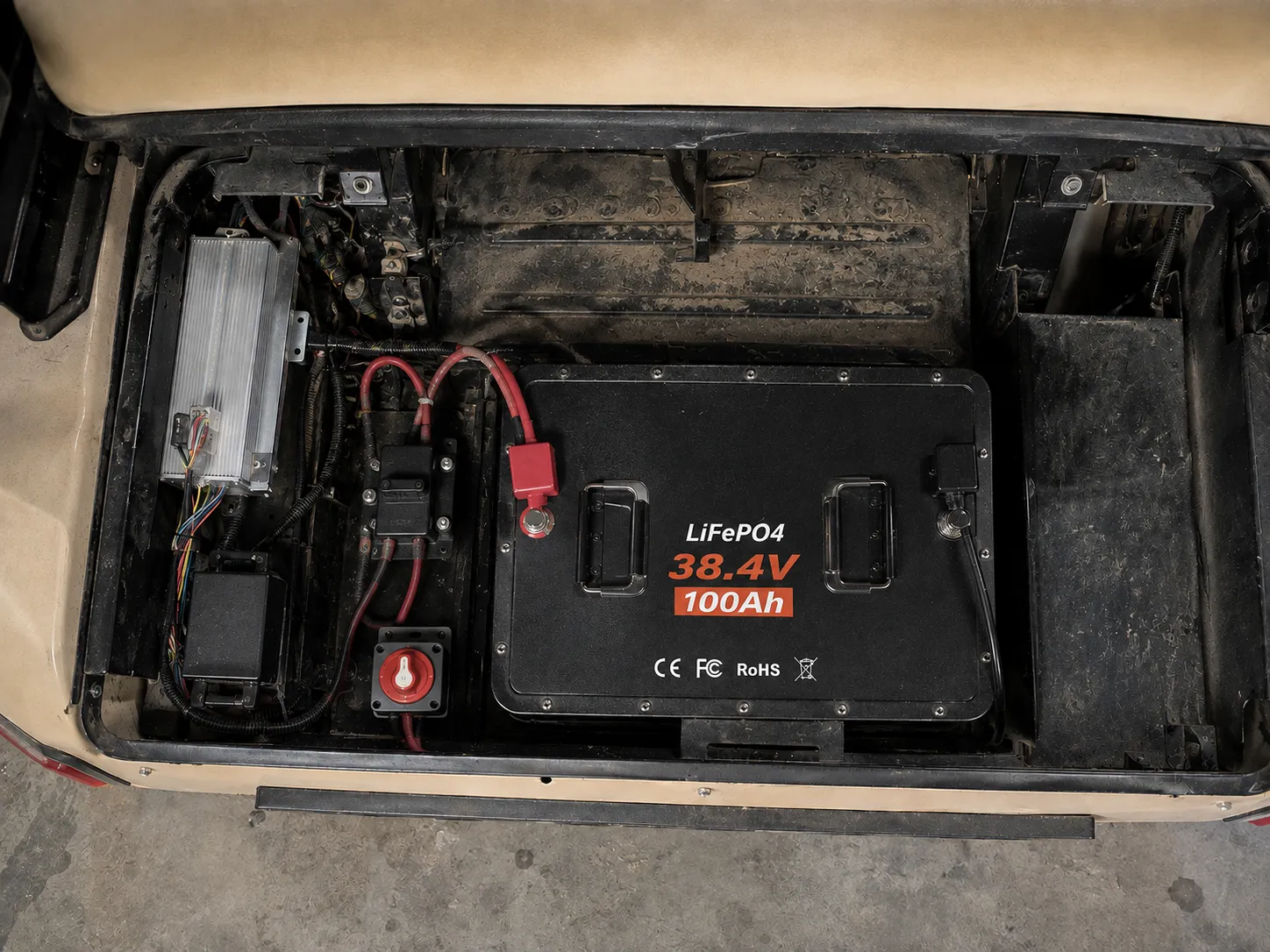
Example battery compartment layout showing secure mounting, main electrical protection and properly routed high-current cables.
Typical installation considerations include:
Commercial golf cart operators may have different requirements from individual vehicle owners. Golf courses, resorts, rental fleets and facility operators often need consistent battery configurations across multiple vehicles.
36V Lithium Golf Cart Batteries for Commercial Fleets

Golf courses, resorts and commercial fleets can evaluate battery capacity, charging schedules and system requirements across multiple carts.
Fleet battery selection should consider daily duty cycle, charging schedule, expected runtime, installation consistency, spare parts, charger standardization and service requirements.
For larger fleet projects, battery capacity and electrical configuration can be reviewed against actual operating data rather than using one standard configuration for every cart.
For OEMs, distributors, fleet operators and system integrators, a 36V LiFePO4 golf cart battery can be reviewed or customized according to project requirements.
Engineering review may include:
For broader 36V and 48V fleet or OEM requirements, see our lithium golf cart battery solutions.
If the vehicle platform has not yet been finalized, voltage selection should be based on the original electrical system and equipment requirements rather than choosing the battery independently. A 36V and a 48V golf cart system use different voltage architectures and should not be treated as interchangeable.
Read our 36V vs 48V golf cart battery guide for a more detailed comparison.
Select the battery according to the golf cart system voltage, controller, continuous and peak current requirements, charger, required runtime and available installation space. Voltage and Ah should not be the only selection criteria.
A 38.4V nominal LiFePO4 battery can be suitable for properly matched 36V golf cart systems, but compatibility with the controller, charger and overall electrical system should be confirmed before installation.
The choice depends mainly on runtime requirements, available installation space, electrical load and current requirements. A 100Ah battery stores more energy, while a 45Ah configuration may be appropriate where lower capacity is sufficient or installation space is more limited.
A lithium conversion should not be based only on adding the nominal voltage of the existing batteries. The controller, charger, current demand, circuit protection, mounting and cabling should also be reviewed before conversion.
The charger should use a charging profile and voltage appropriate for the selected LiFePO4 battery. Existing lead-acid chargers should not be assumed to be compatible without checking their specifications.
Battery configurations can be reviewed for qualified OEM and commercial projects based on capacity, BMS current, dimensions, terminals, communication requirements, connectors, charger compatibility and estimated project quantity.
For battery selection or OEM project evaluation, provide the golf cart system voltage, controller model, charger model, required runtime, continuous and peak current, available installation dimensions and estimated quantity.
