RV manufacturers and installers need more than battery capacity. Communication, circuit protection, installation space and internal layout all affect system performance.
Victron Communication Ready
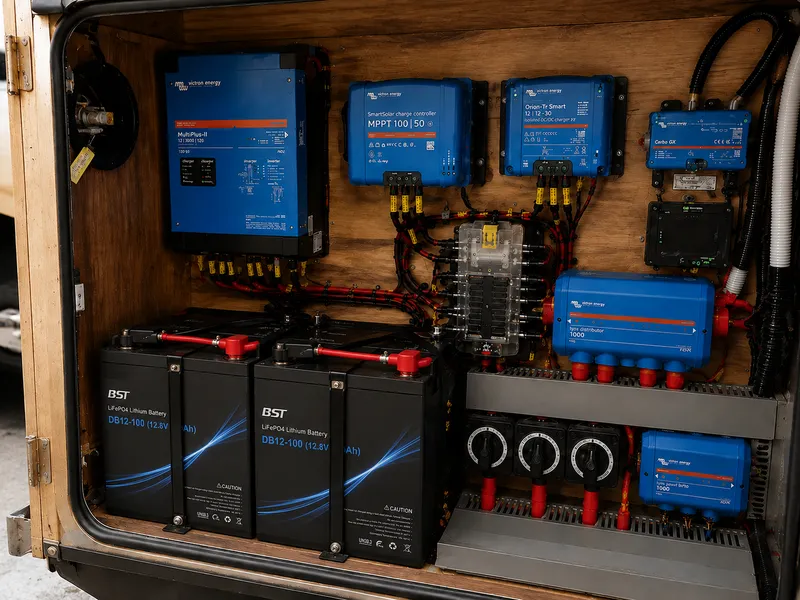
Selected battery models support CAN communication with compatible Victron systems.
When the protocol and system settings are matched, installers can monitor state of charge, voltage, current, temperature and BMS alarms.
T-Class Fuse Protection
LiFePO4 batteries can deliver high short-circuit current. A correctly sized T-Class fuse helps protect the main DC cable and connected RV equipment.
Fuse size should match the inverter power, system voltage, cable size and maximum current.
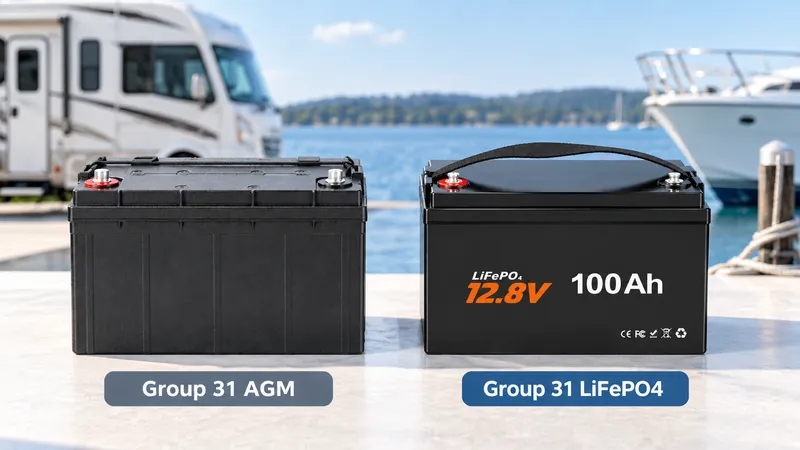
More Capacity in the Available Space
RV battery compartments are often limited. An optimized battery case can provide more usable energy without major changes to the existing installation.
This can reduce the need for extra battery boxes, cables and mounting hardware.
Optimized Internal Layout
Cell arrangement, BMS placement, insulation, cable routing and temperature monitoring affect battery operation.
A well-planned internal layout improves heat distribution, electrical protection and service access.
OEM Support for RV Manufacturers
OEM options include:
Custom voltage and capacity
BMS configuration
CAN or RS485 communication
Bluetooth monitoring
Terminal and housing options
Private labels and packaging
Sample testing before production
Send your required voltage, capacity, inverter power, installation dimensions and estimated quantity for a recommended RV battery configuration.
Need LiFePO4 batteries for your project?
Send your application, voltage, capacity and quantity. Our sales engineers will reply with a matched battery and a quotation.