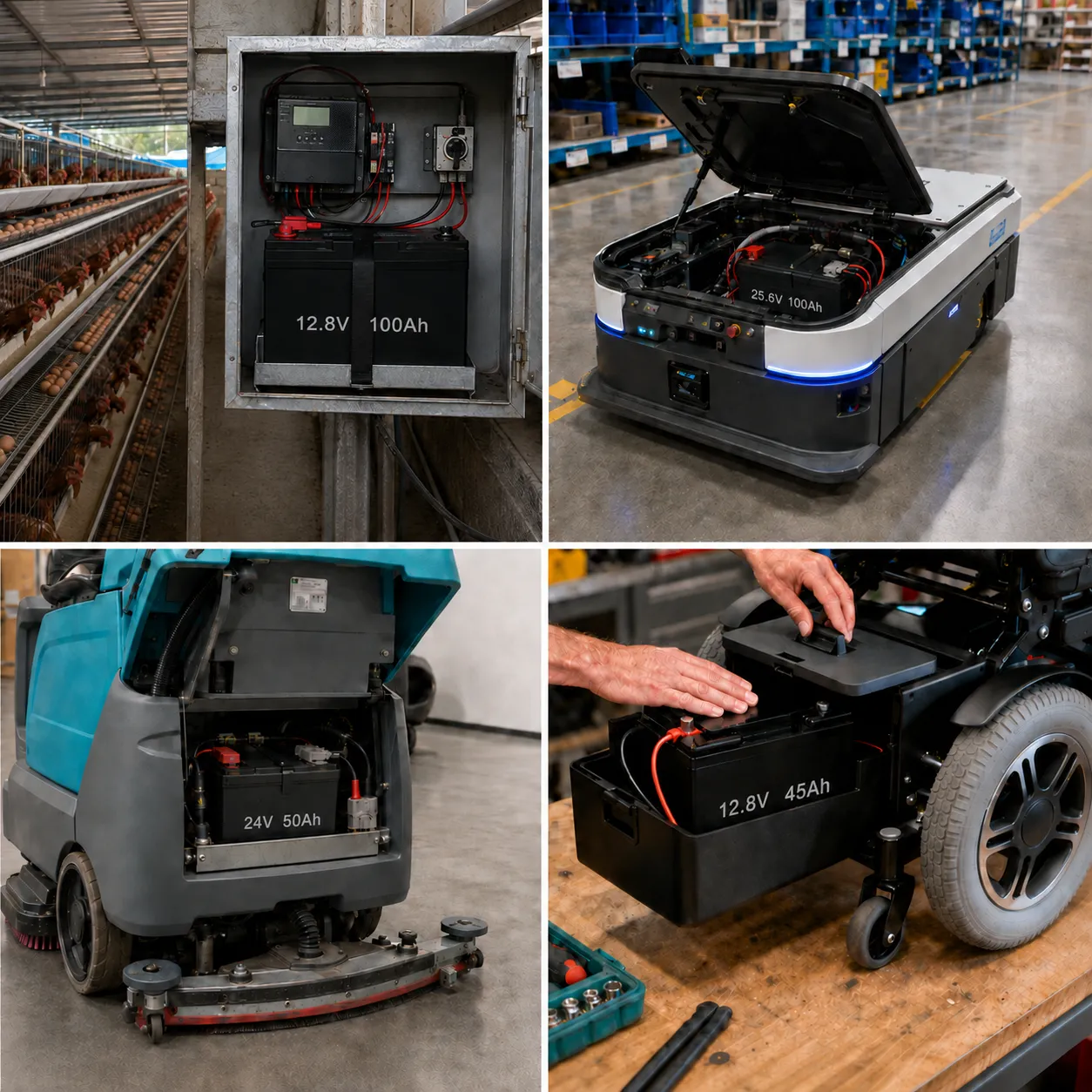
RV · Marine · Energy Storage · Industrial Applications

Industrial LiFePO4 Battery Solutions

Custom industrial LiFePO4 batteries for AGVs, AMRs, floor cleaning machines, mobility equipment, agricultural machinery and other OEM applications.

Each battery pack is developed around the equipment voltage, required capacity, continuous and peak current, battery compartment, charging system and communication requirements. Support is available from specification review and prototype development through equipment testing and volume production.

  • 12V, 24V, 36V and 48V battery configurations
  • Custom capacity and discharge current
  • Smart BMS protection and monitoring
  • CAN, RS485, RS232 and Bluetooth options
  • Custom enclosures, connectors and wiring harnesses
  • Lead-acid replacement and new equipment development
  • Prototype testing and OEM production

Request a Quote →

Custom industrial LiFePO4 batteries for automation mobility and equipment applications
Custom LiFePO4 battery packs for automation, mobility and industrial equipment.

Industrial LiFePO4 Battery Applications

Industrial equipment places different demands on a battery than a standard consumer application. Motor-starting current, shift length, charging intervals, vibration, operating temperature and communication with the machine all affect the final battery specification.

AGV and AMR Batteries

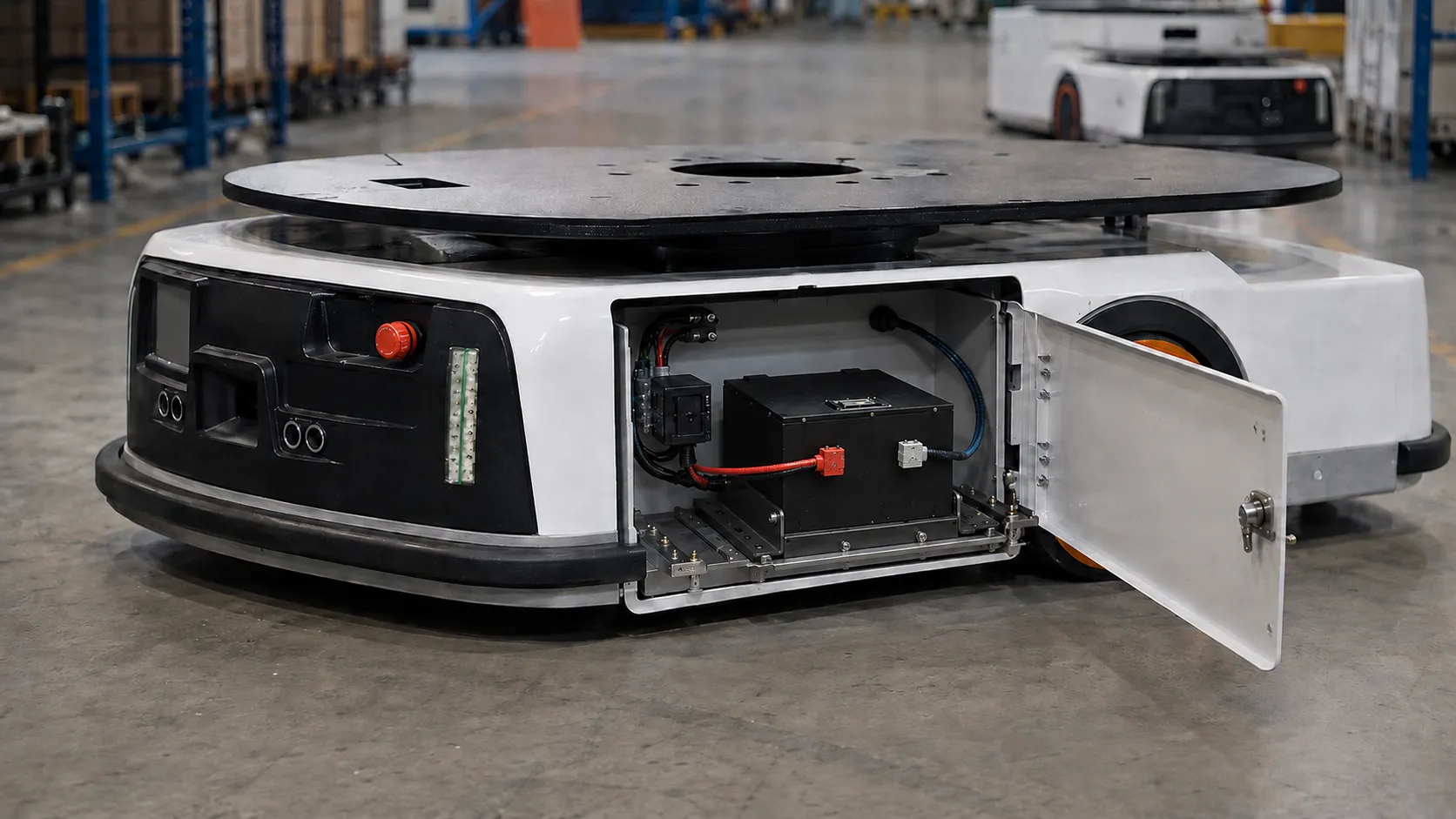
Custom LiFePO4 batteries for automated guided vehicles, autonomous mobile robots and warehouse automation equipment. The battery can be configured around the vehicle, motor controller and charging station.
  • 24V, 36V, 48V and custom configurations
  • Continuous and peak-current support
  • Smart BMS protection
  • CAN or RS485 equipment communication
  • Custom metal enclosures and mounting points
  • Charging-dock and connector compatibility
Custom industrial LiFePO4 battery installed in an AGV or AMR
Custom LiFePO4 battery installation for an AGV or autonomous mobile robot.

View AGV & AMR Battery Project →

Floor Cleaning Machine Batteries

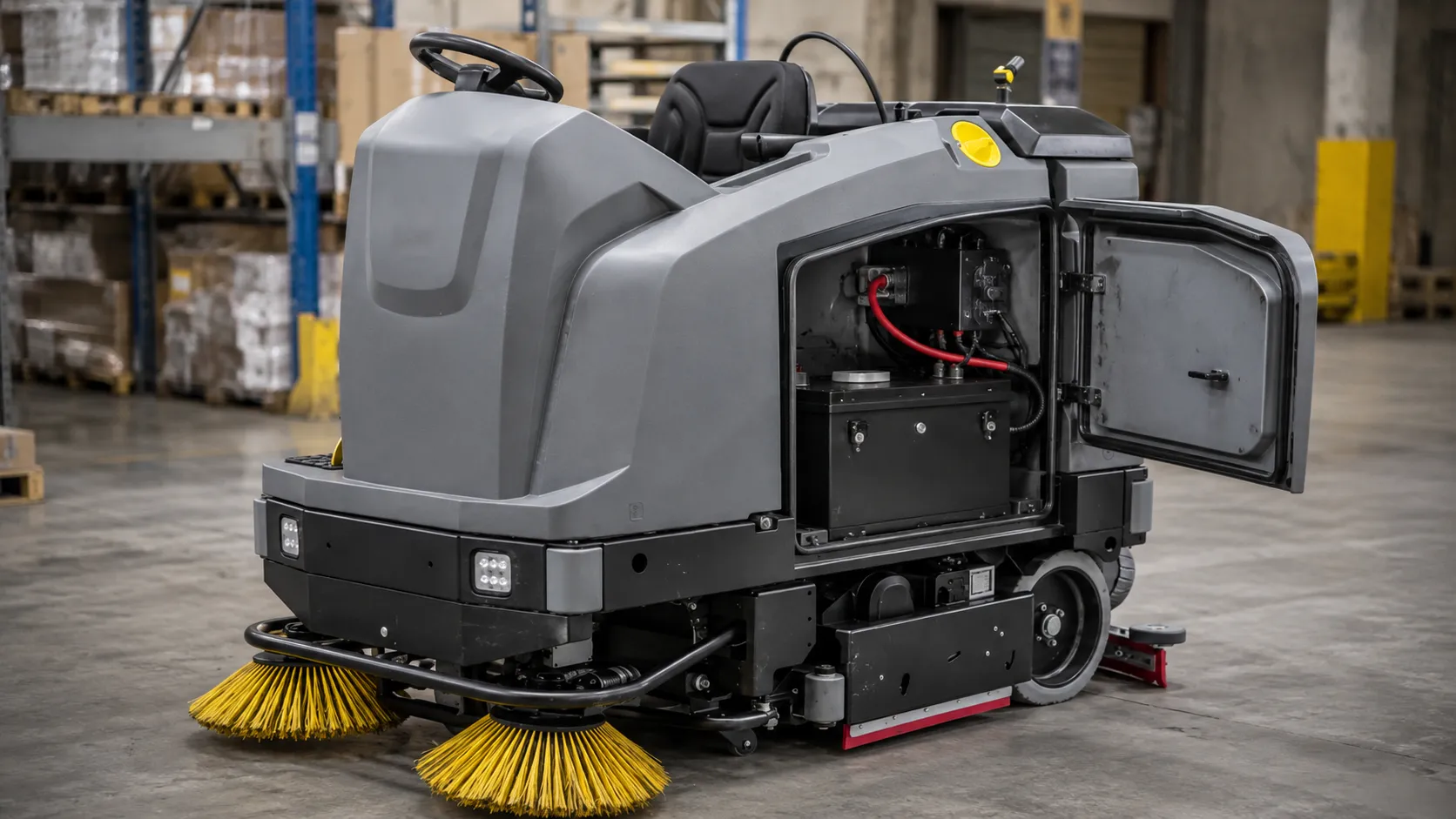
LiFePO4 batteries for floor scrubbers, sweepers and commercial cleaning machines. Voltage, capacity and discharge current are selected according to the traction motor, auxiliary loads, required operating time and charging schedule.

  • 24V, 25.6V, 36V and 48V configurations
  • Custom capacity and discharge current
  • Smart BMS protection
  • Enclosures matched to the battery compartment
  • Equipment-specific connectors and cables
  • Existing-charger compatibility review
Industrial LiFePO4 battery installed in a commercial floor cleaning machine
LiFePO4 battery installed in a commercial floor cleaning machine.

View Floor Cleaning Machine Battery Project →

Mobility Scooter and Wheelchair Batteries

Compact LiFePO4 batteries for mobility scooters, electric wheelchairs and related mobility equipment. The enclosure, terminals, connectors and charger interface can be adapted to the equipment and available installation space.

  • 12V, 24V and custom configurations
  • Compact metal or plastic enclosures
  • Smart BMS protection
  • Custom terminals and connectors
  • Low-temperature charging protection where required
  • CAN or RS485 communication where required
Compact LiFePO4 battery for mobility scooter and electric wheelchair equipment
Compact LiFePO4 battery for mobility scooter and wheelchair applications.

View Mobility Scooter & Wheelchair Battery Project →

Agricultural Equipment Batteries

Custom battery systems for farm utility vehicles, poultry equipment, feeding systems, egg conveyor lines and remote monitoring devices. The design can be adapted to the electrical load, installation space, charging method and operating environment.

  • Custom voltage and capacity
  • Smart BMS protection
  • Metal or plastic battery enclosures
  • Equipment-specific terminals and connectors
  • Low-temperature protection where required
  • Charger and equipment compatibility testing
Industrial LiFePO4 battery backup system for poultry farm equipment
LiFePO4 battery supplying backup power for poultry farm equipment.

View Agricultural Equipment Battery Project →

Industrial Lead-Acid Battery Replacement

LiFePO4 batteries can replace lead-acid batteries in many industrial machines, but a conversion should be based on the complete electrical system rather than voltage alone. The battery compartment, continuous and peak current, charger, cables, fuses, connectors and control interface must all be checked.

An industrial lead-acid replacement project may include:

  • Matching the original system voltage and equipment load
  • Confirming battery dimensions and mounting points
  • Reviewing charger voltage, current and charging profile
  • Checking motor-starting and peak-current requirements
  • Selecting suitable cables, fuses and connectors
  • Configuring low-temperature charging protection
  • Confirming approved series or parallel connections

View Lead-Acid Replacement Batteries →

Custom Industrial Battery Engineering

Battery development begins with the machine rather than a standard catalogue specification. The engineering review covers the electrical load, mechanical fit, charger and communication interface before the battery structure and BMS settings are finalized.

Electrical Requirements

  • Nominal system voltage
  • Required capacity and operating time
  • Continuous, peak and startup current
  • Charging voltage and maximum charging current
  • Daily operating and charging cycles
  • Standby and auxiliary loads

Mechanical Requirements

  • Battery compartment dimensions
  • Enclosure material and environmental protection
  • Mounting points and fixing brackets
  • Terminal and connector positions
  • Cable outlets and wiring harnesses
  • Inspection and replacement access

Equipment Integration

  • Charger or charging-dock compatibility
  • Motor-controller requirements
  • CAN, RS485 or RS232 interface
  • State-of-charge display
  • Equipment alarms and operating status
  • Communication cable and connector pinout

Smart BMS and Battery Communication

The Smart BMS is configured according to the cells, equipment load, charging system and operating conditions. Protection can include overcharge, over-discharge, overcurrent, short circuit, temperature limits, cell monitoring and balancing.

CAN, RS485, RS232 and Bluetooth are available for selected battery configurations. The equipment protocol, firmware and cable pinout must be confirmed before sample development; communication cannot be determined from the connector type alone.
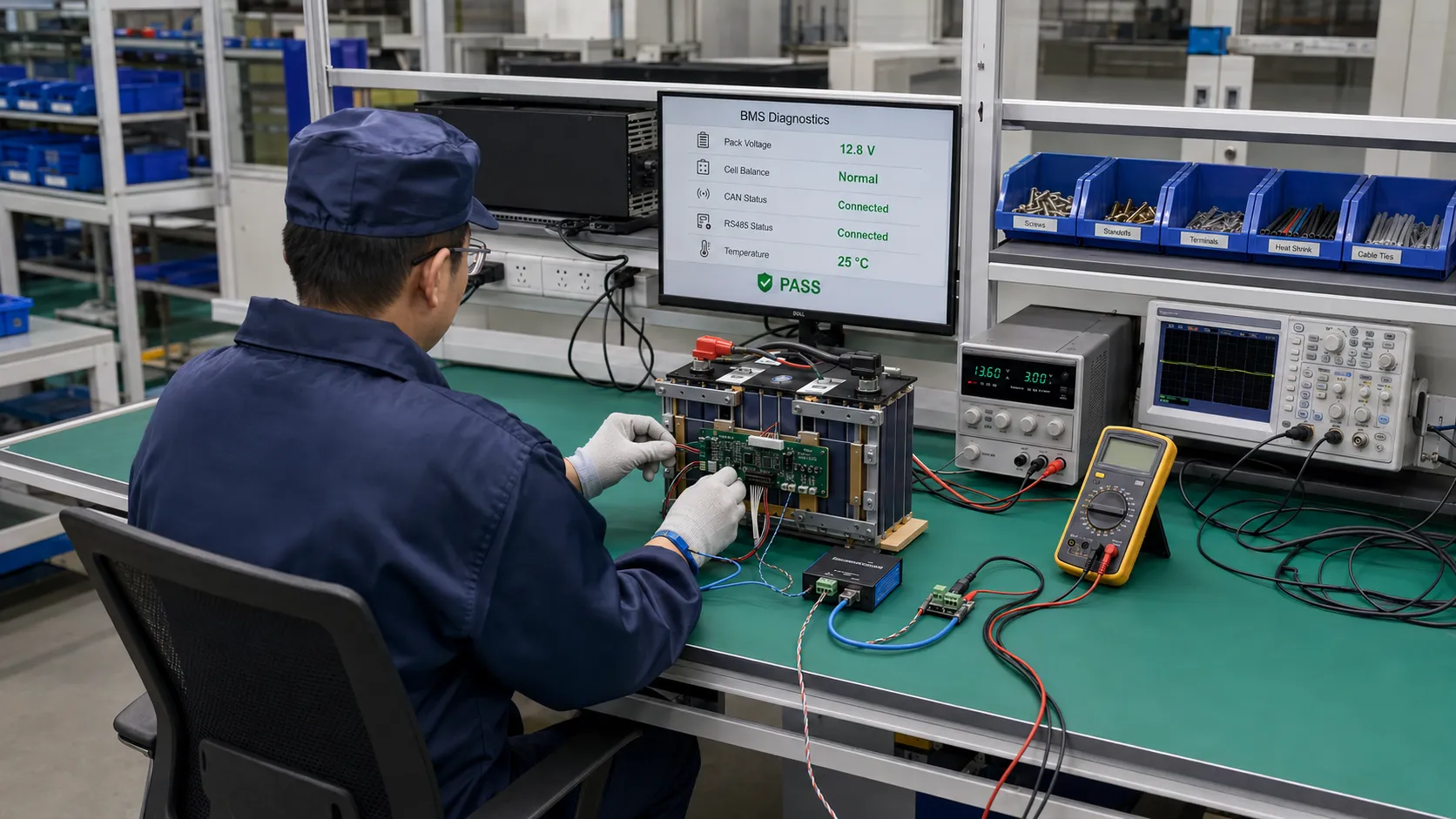
Industrial LiFePO4 battery Smart BMS CAN and RS485 communication testing
Smart BMS, CAN and RS485 communication testing for industrial equipment.

View LiFePO4 Battery Technical Support →

OEM Industrial LiFePO4 Battery Manufacturing

With more than 20 years of battery manufacturing experience, we support equipment manufacturers, automation integrators, battery brands and distributors from specification review through repeat production.

OEM and ODM services can include:
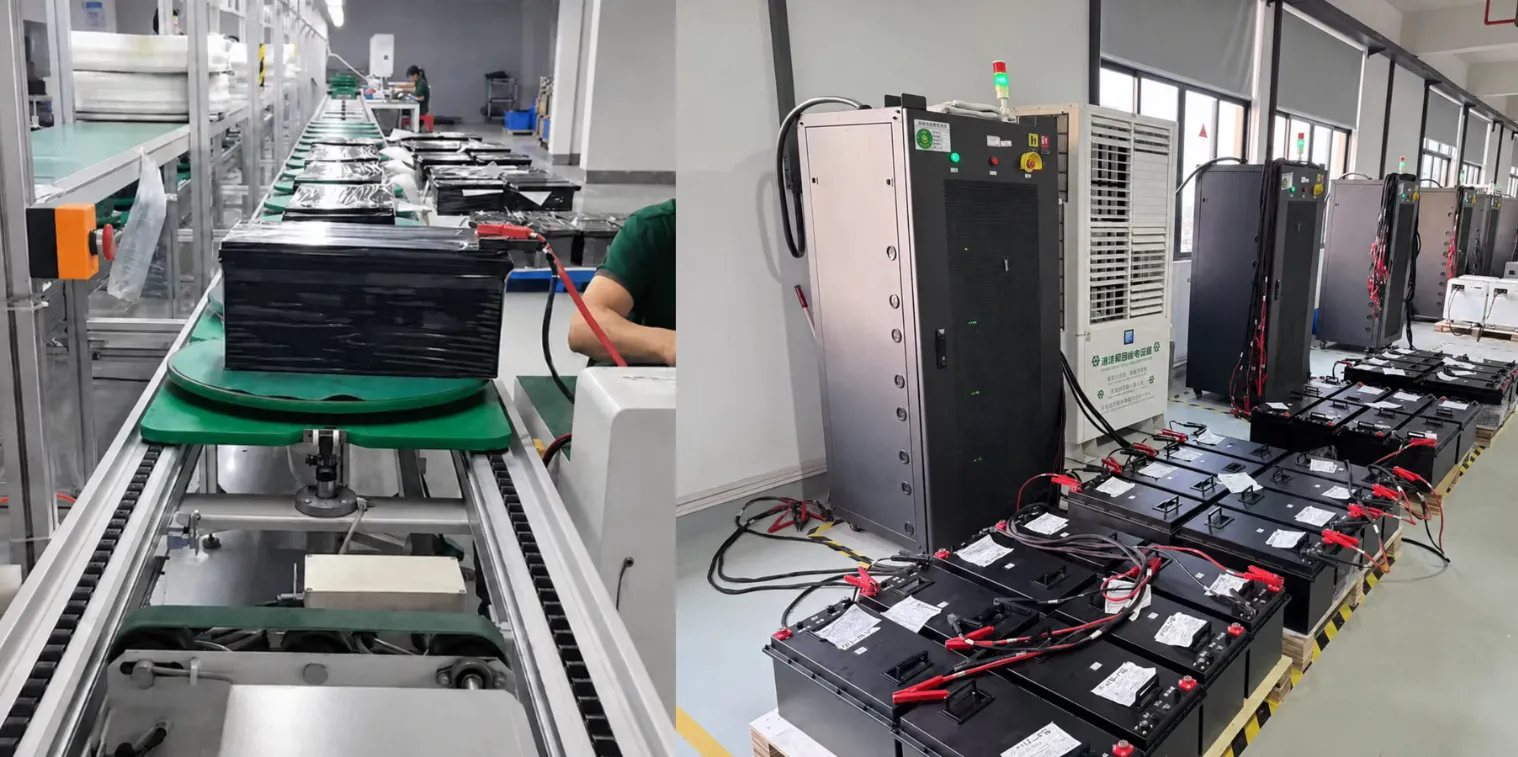
  • Custom battery voltage, capacity and discharge current
  • Smart BMS protection and communication settings
  • Custom enclosures and mounting structures
  • Equipment-specific terminals and connectors
  • Custom wiring harnesses
  • Private labels and customized packaging
  • Prototype and sample development
  • Volume production and quality inspection
OEM industrial LiFePO4 battery production line and aging test
LiFePO4 battery assembly, aging and inspection for OEM production.

View OEM & ODM Battery Services →

Battery Testing and Quality Control

Samples and production batteries are inspected against the approved electrical, mechanical and communication specifications. The test plan depends on the battery design and intended equipment.
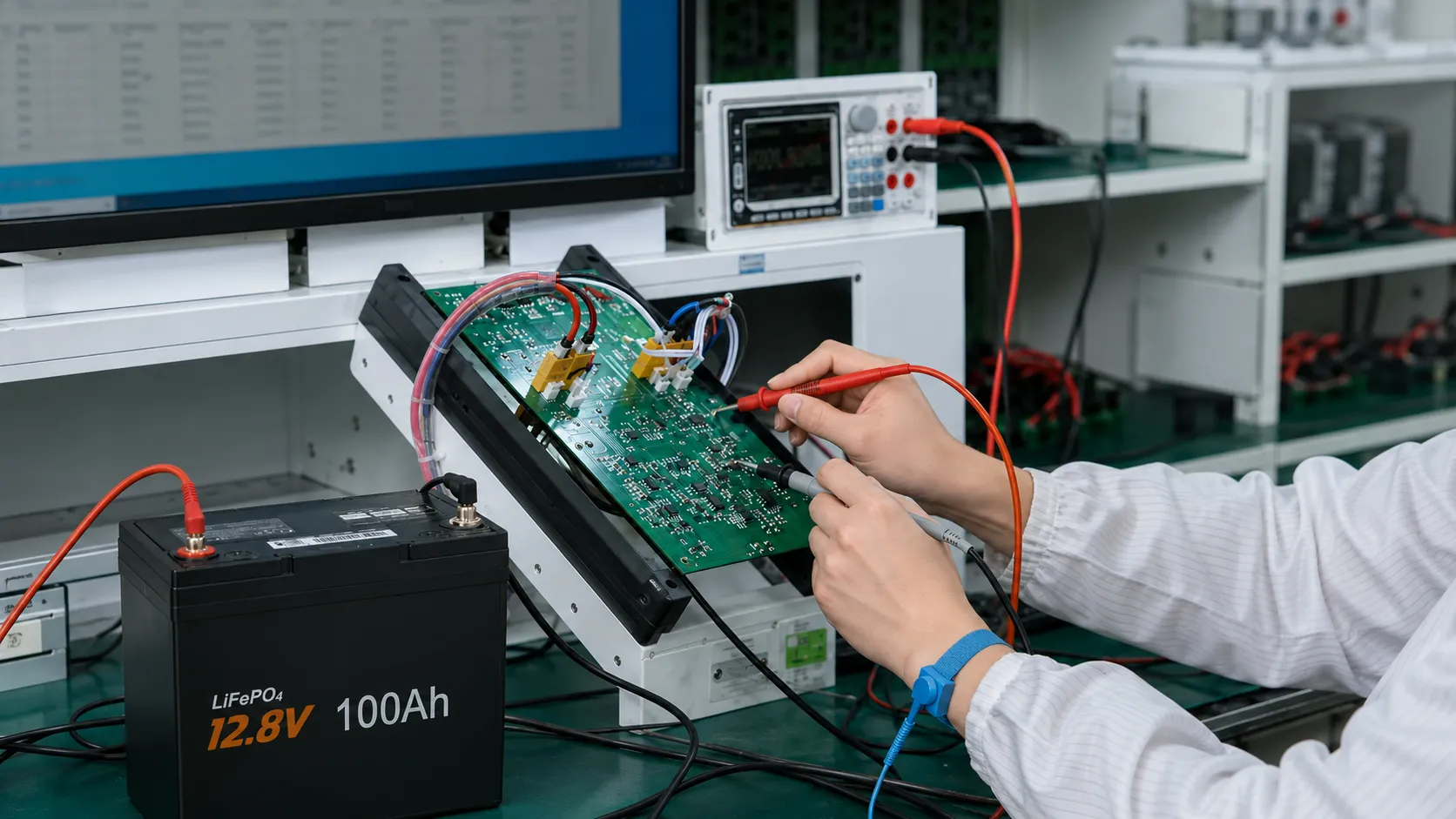
  • Cell voltage and internal-resistance inspection
  • Cell consistency matching
  • Capacity and charge-discharge testing
  • Continuous and peak-current verification
  • Smart BMS protection testing
  • CAN, RS485 or RS232 communication testing
  • Connector and wiring-harness inspection
  • Aging and final functional testing
Industrial LiFePO4 battery BMS communication and system integration testing
BMS communication and system-integration testing before production approval.

View LiFePO4 Battery Manufacturing →

Industrial Battery Development Process

  1. Requirement review: Confirm the equipment, voltage, capacity, current, dimensions, charger and communication requirements.
  2. Engineering configuration: Define the cells, Smart BMS, enclosure, terminals, connectors and wiring harness.
  3. Prototype development: Assemble a sample to the approved specification.
  4. Equipment testing: Verify electrical performance, BMS protection, charging and communication.
  5. Production approval: Confirm drawings, BMS settings, labels and inspection requirements.
  6. Volume production: Manufacture and inspect batteries against the approved production specification.

Industrial LiFePO4 Battery FAQ

Can you develop a LiFePO4 battery for our equipment?

Yes. We review the equipment voltage, required capacity, continuous and peak current, installation dimensions, connectors, charger and communication requirements before recommending a configuration.

Which industrial battery voltages are available?

Common configurations include 12V, 24V, 36V and 48V. Other voltages can be evaluated for qualified OEM projects.

Can LiFePO4 replace an industrial lead-acid battery?

In many applications, yes. The battery compartment, equipment current, charger, cables, fuses, connectors and control interface must be checked before conversion.

Do you support CAN and RS485 communication?

Selected configurations support CAN, RS485, RS232 or Bluetooth. Compatibility depends on the BMS, equipment protocol, firmware and cable configuration.

Can you customize the battery enclosure?

Yes. Dimensions, enclosure material, mounting structure, terminal positions, connectors and cable outlets can be configured for qualified OEM projects.

Can the battery work with our existing charger?

The charger may be retained if its voltage, charging current and charging profile are suitable for the proposed LiFePO4 battery and BMS. Compatibility must be confirmed before use.

What information is required for an industrial battery project?

Please provide the equipment type, required voltage and capacity, continuous and peak current, battery-compartment dimensions, charging method, communication protocol and estimated order quantity.

Discuss Your Industrial Battery Project

Send us your equipment type, voltage, capacity, continuous and peak current, installation dimensions, connector requirements, charger information, communication protocol and estimated order quantity.

Our engineering team will review the application and recommend a suitable industrial LiFePO4 battery configuration for prototype development or volume production.

Request a Quote →