An Agricultural Equipment LiFePO4 Battery should be selected around the equipment, its working schedule, and the conditions at the installation site. For farm automation and agricultural machinery, an engineering review normally begins with system voltage, required capacity, duty cycle, continuous and peak current, available charging time, installation space, and the operating environment. These inputs help define an appropriate battery configuration without treating one reference model as a universal solution.
Agricultural equipment manufacturers, distributors, and system integrators should also identify the equipment controls, motors, actuators, pumps, and other intermittent loads that the battery may support. The final battery specification must be matched to the actual electrical and mechanical requirements before sample approval.
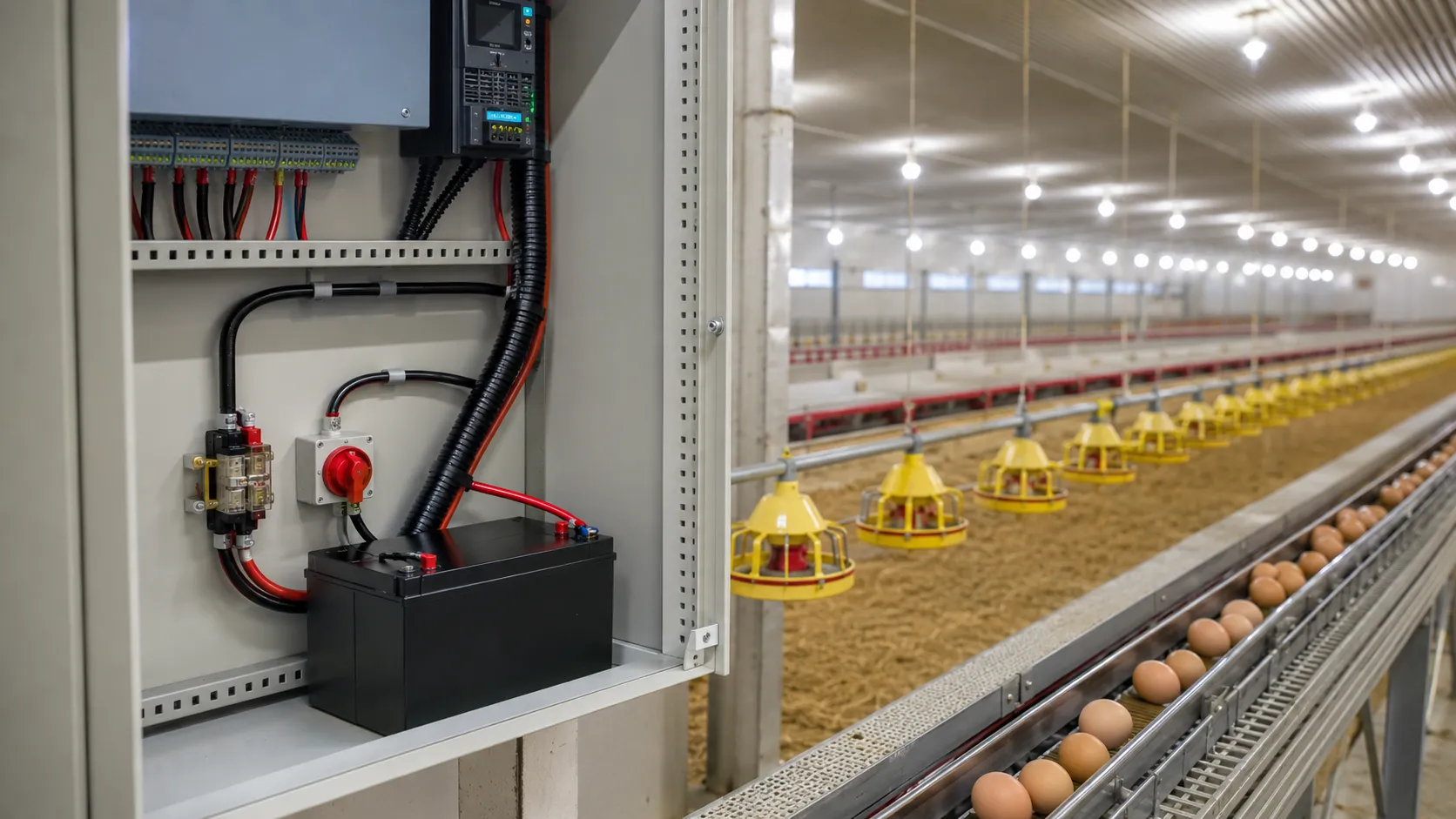
Farm equipment can follow variable schedules. Some systems run through long working shifts, while others operate intermittently or remain idle between seasons. Capacity planning should therefore consider required operating time, charging intervals, long idle periods, seasonal use, and the amount of reserve appropriate for the application. The required capacity cannot be determined from equipment category alone; it depends on the measured load and the real duty cycle.
Motors, actuators, pumps, controls, and other intermittent devices may create different continuous and short-duration current demands. Startup current and peak duration should be confirmed from the target equipment rather than estimated from a generic agricultural application. BMS current capability, cables, connectors, and protective devices must be reviewed against both the normal load and any short-duration peak demand.
The following is a verified reference battery configuration, not a validated agricultural machine specification. It can support an initial technical discussion, but the final battery must be confirmed for the equipment load, installation, charger, connector, and environment.
| Battery chemistry | LiFePO4 |
|---|---|
| Nominal voltage | 12.8V |
| Rated capacity | 100Ah |
| Nominal energy | 1,280Wh |
| Continuous charge/discharge current | Up to 100A |
| Reference output | Up to 1,280W at nominal voltage |
| Recommended charge current | 20A |
| Charging voltage | 14.4V ± 0.2V |
| Charging method | CC/CV |
| Reference terminal | M8 |
Runtime should be treated as a planning calculation, not a measured result for an agricultural machine. It depends on actual load, duty cycle, usable capacity, operating conditions, and the reserve required by the buyer. Bluetooth monitoring is available on the verified reference model; features for any selected configuration must still be confirmed.
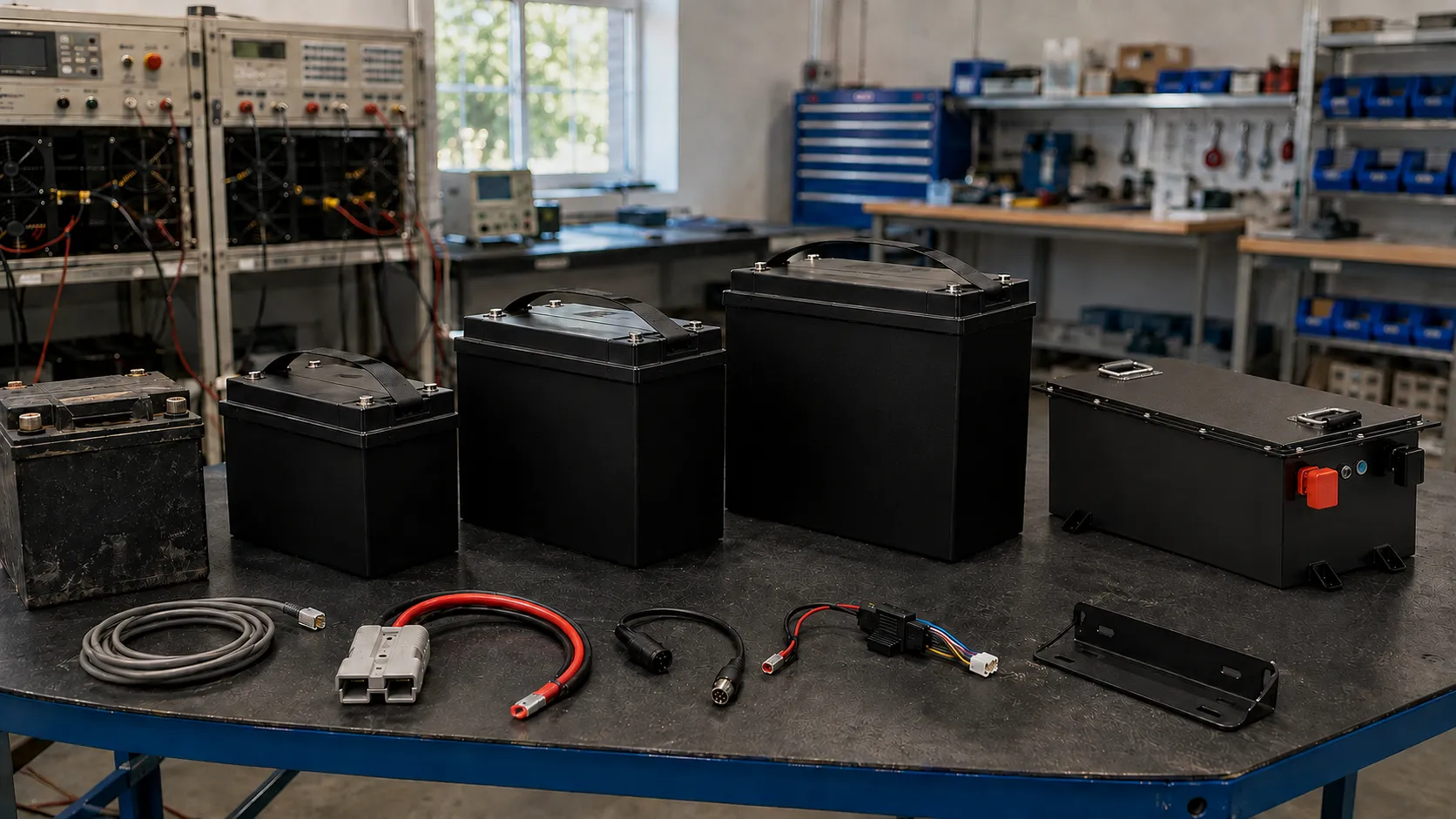
Replacing a lead-acid agricultural equipment battery with LiFePO4 requires a system-level conversion review. Matching nominal voltage alone is not sufficient. The review should cover continuous and peak current, battery-compartment dimensions, mounting, terminal and connector positions, cable size, charger compatibility, controller requirements, and the operating environment. Equipment balance should also be considered when battery mass affects the machine.
The existing charger should be retained only when its voltage, current limit, and charging profile are suitable for the approved LiFePO4 configuration. A replacement should not be described as universal, direct, or drop-in unless compatibility has been confirmed for the specific equipment.
Charging plans should reflect the time available between operating periods, the charging location, required turnaround, seasonal schedules, and acceptable equipment downtime. Charger voltage, current, and charging profile must match the final battery configuration. Fast charging, opportunity charging, or charging-station compatibility should not be assumed without a project-specific review.
Installation space, mounting points, cable routing, connector protection, vibration, dust exposure, moisture exposure, temperature changes, and outdoor operating conditions are engineering considerations for agricultural machinery. Required protection depends on the enclosure and the application. These items must be reviewed during integration and do not represent a certified IP, vibration, waterproof, dustproof, or agricultural environmental rating.
OEM evaluation can cover voltage, capacity, continuous and peak current, enclosure dimensions, mounting, terminals, connectors, wiring, charging, and the operating environment. Where required by the equipment, selected OEM configurations may support communication interfaces such as CAN or RS485; the protocol and system requirements must be confirmed before development.
ZXBATT's OEM capabilities include custom enclosures, wiring harnesses, sample development, volume production, and quality inspection. These are company capabilities and do not indicate that a particular agricultural machine or poultry-farm installation has completed validation. Review OEM & ODM Battery Services, Industrial Battery Solutions, or LiFePO4 Battery Technical Support for related engineering information.
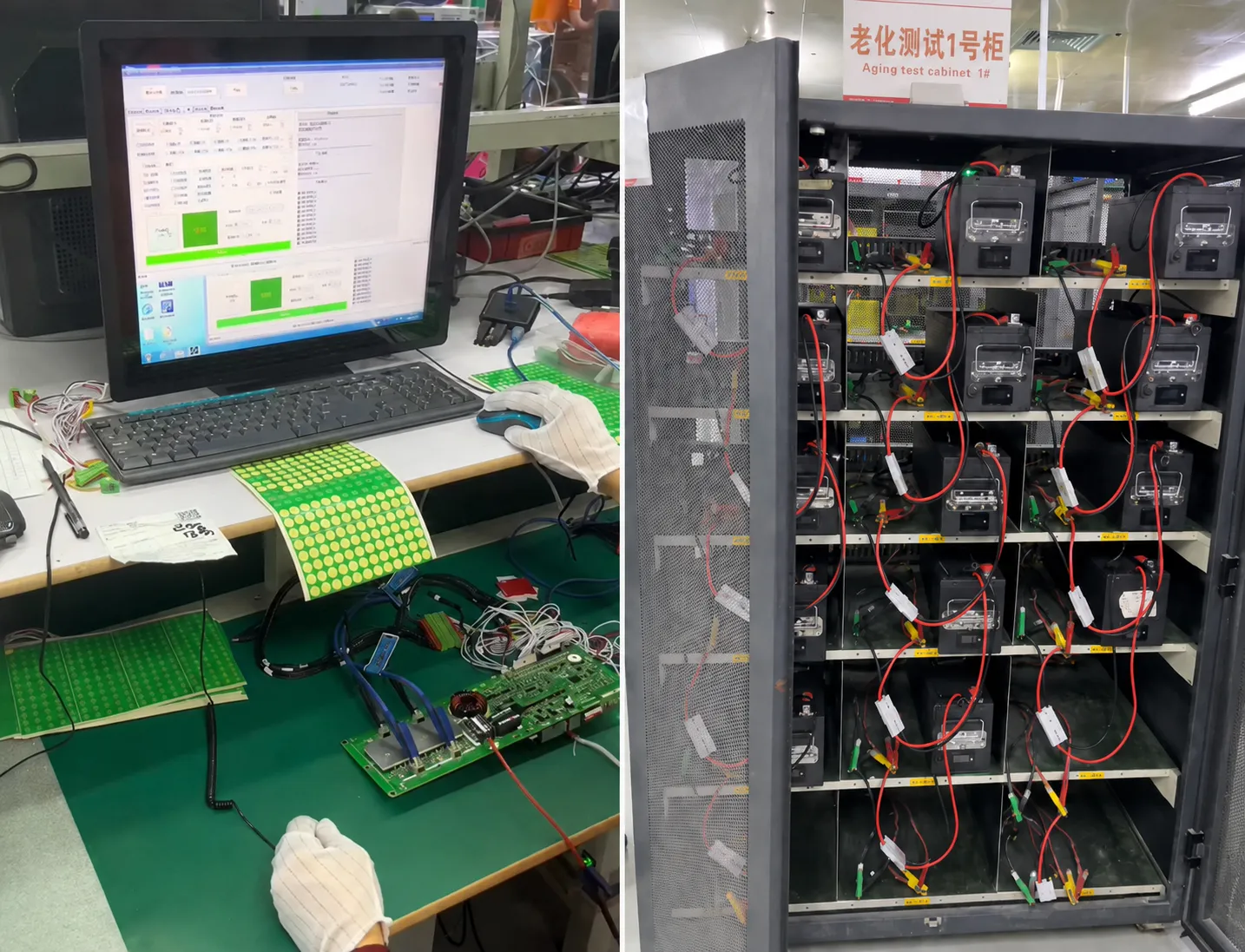
Provide the equipment type, system voltage, required operating time, average and peak current, charging availability, installation dimensions, and operating environment.
It may be possible after the charger, controller, current demand, compartment, terminals, cables, mounting, and environmental requirements are reviewed for the specific equipment.
Match the charger to the approved battery voltage and charging profile, then account for the available charging window, required turnaround, seasonal use, and planned equipment downtime.
Review temperature, vibration, dust, moisture, mounting, cable routing, and connector exposure. The required enclosure protection depends on the application and must be specified and verified separately.
For an engineering review, send the equipment type, voltage, capacity or runtime requirement, continuous and peak current, installation space, charging conditions, and operating environment. Request an Agricultural Battery Technical Review →