Explore residential solar battery storage, whole-home backup, off-grid solar and balcony energy projects using 48V and 51.2V LiFePO4 battery systems.
Each home energy storage project is developed around household energy use, inverter power, required backup time, available solar generation, installation space, Smart BMS requirements and battery-to-inverter communication.
We support energy storage brands, solar equipment distributors, installers and system integrators with battery sizing, Smart BMS configuration, CAN/RS485 inverter communication, sample testing and OEM production.
Looking for battery configurations rather than individual project cases? Residential LiFePO4 Battery Solutions →
This residential solar battery project uses a LiFePO4 home battery to store excess rooftop solar energy for evening use, solar self-consumption and backup power during grid outages.
Battery capacity and inverter output are selected according to household energy consumption, peak load, available solar generation, installation space and required backup time.
Project applications include:
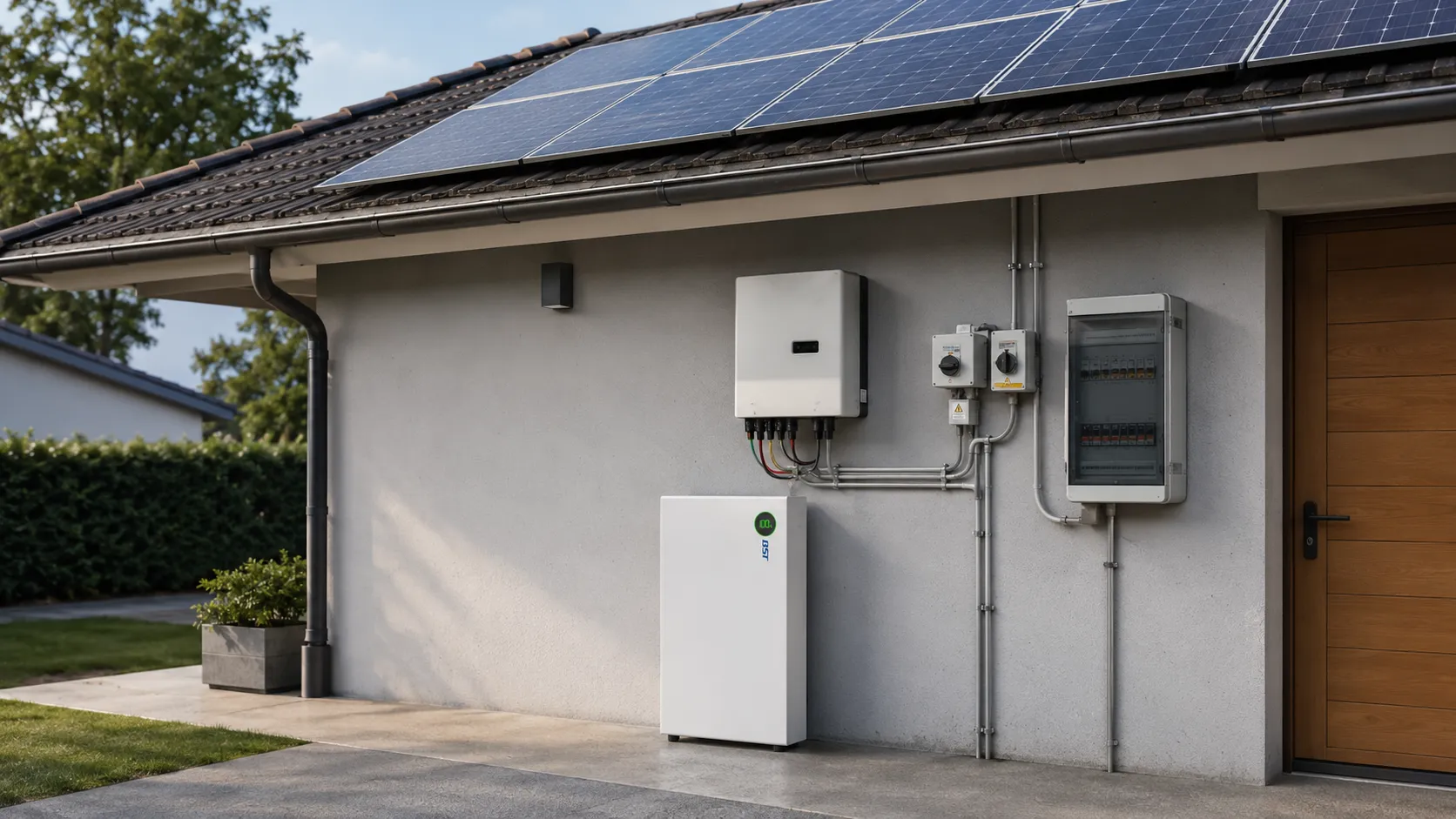
This residential battery backup system stores solar or grid energy and supplies household circuits when utility power is unavailable. Battery capacity and inverter output are configured around the connected loads, peak demand and required backup time.
Depending on system sizing, backup loads can include lighting, refrigeration, communications, water pumps, security equipment and other essential household circuits.
Whole-home backup does not automatically mean every household appliance can operate simultaneously. Available backup power depends on battery capacity, inverter output, connected circuits and actual load demand.
Project applications include:
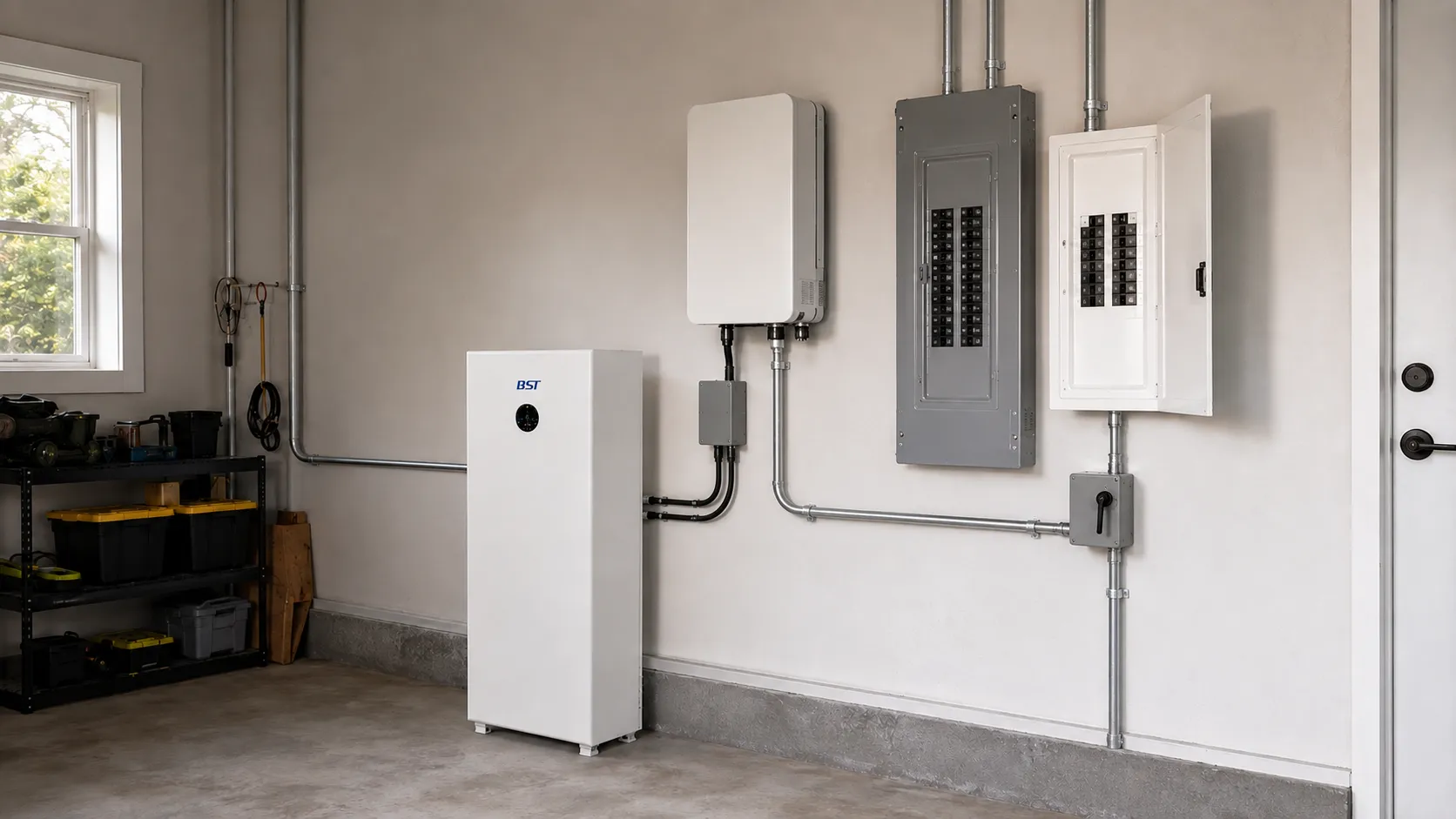
This off-grid home energy system combines solar panels, an off-grid or hybrid inverter and LiFePO4 battery storage to provide independent power where utility electricity is unavailable or unreliable.
Battery capacity is calculated from daily energy consumption, continuous and peak inverter load, available solar charging, usable battery capacity, system losses and required backup time.
Project applications include:
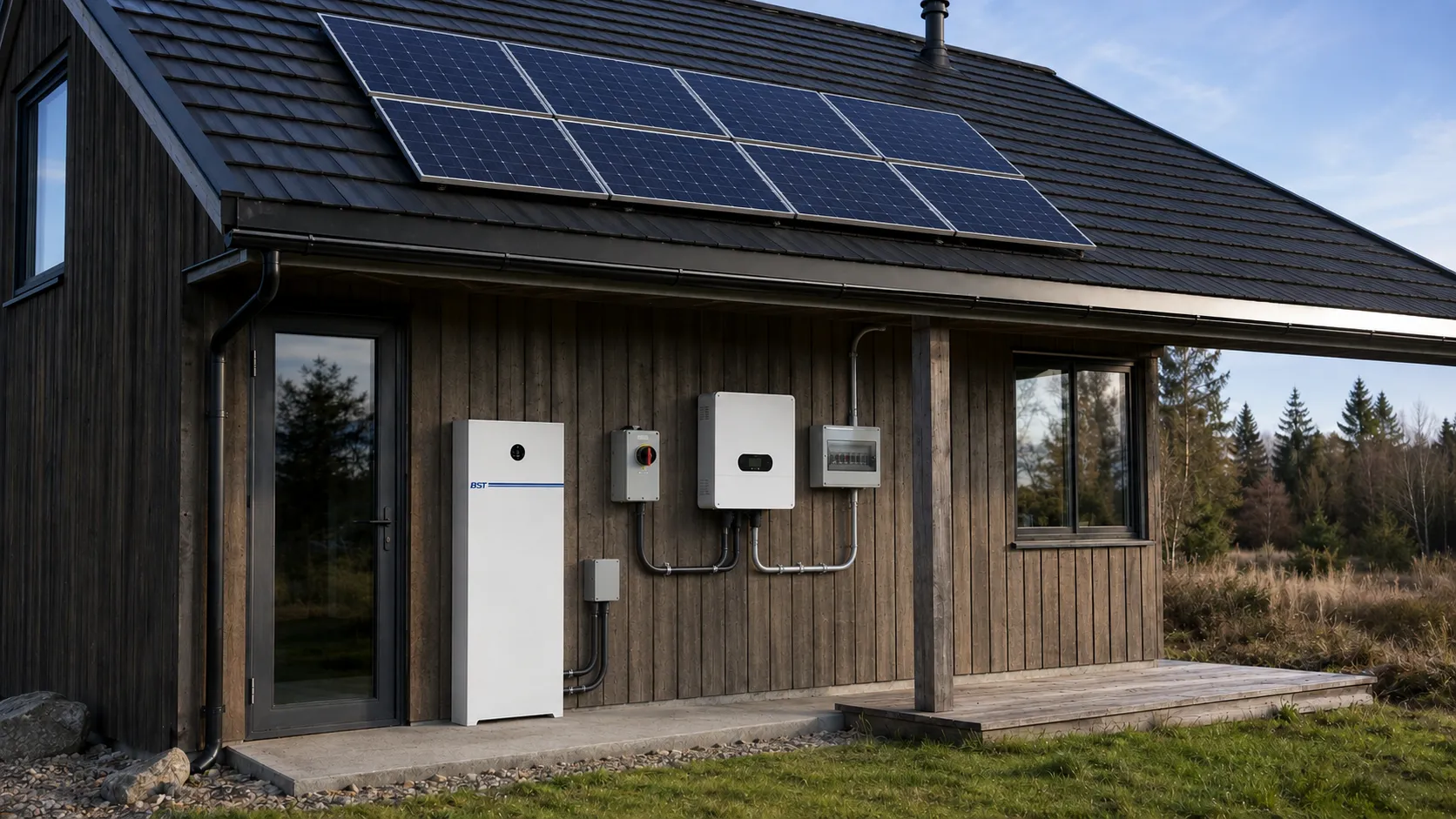
View Off-Grid Home Solar LiFePO4 Battery Project →
Planning a remote home, cabin, farm or independent solar system? Off-Grid Solar LiFePO4 Battery Solutions →
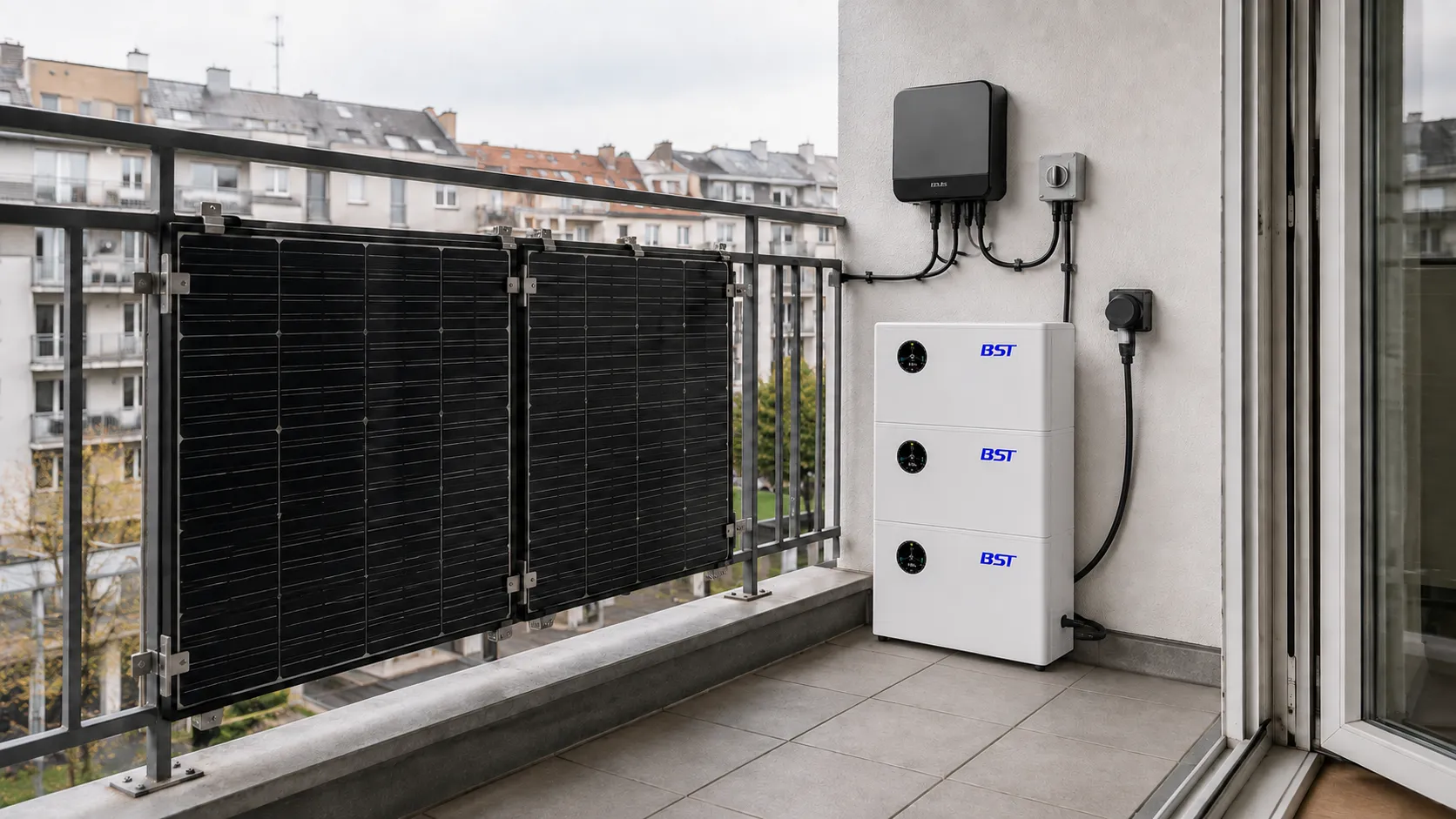
This compact balcony energy storage system stores electricity generated by small solar panels for use in the evening or when solar production is limited.
Battery capacity, enclosure dimensions, connectors and inverter communication can be configured for apartments and residential installations with limited available space.
Project applications include:
The battery should be installed in a protected and ventilated position. Outdoor placement, electrical connections and grid interaction must follow the product rating and applicable installation requirements.
A residential energy storage system requires correct integration between the LiFePO4 battery, Smart BMS, inverter, solar array, electrical protection and energy-management equipment.
System integration should review:
The inverter model, firmware version, communication protocol and communication cable should be confirmed before sample development or production.
BMS protocol, pinout, firmware, current limits and the complete electrical system should be reviewed before integration.
Review battery, BMS, charger, inverter and communication requirements in the LiFePO4 Battery System Compatibility Guide →
For additional guidance on LiFePO4 battery sizing, Smart BMS protection, charging, CAN/RS485 communication, parallel batteries, SOC behavior and complete system integration, visit the LiFePO4 Battery Technical Knowledge Center →
We manufacture residential LiFePO4 battery systems for energy storage brands, solar equipment distributors, installers and system integrators.
OEM and ODM options can include:
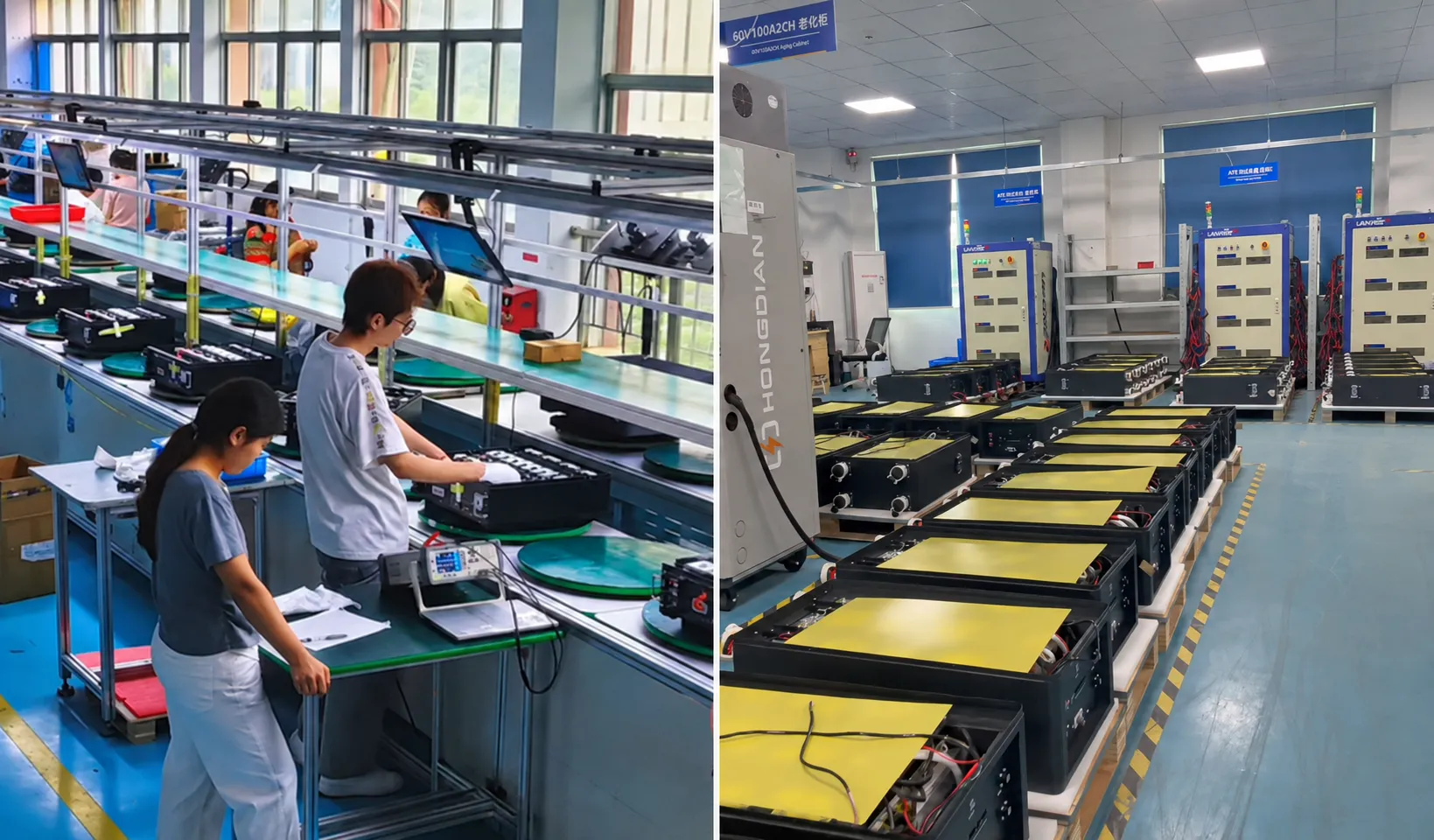
Battery samples and production units are inspected against the approved electrical, mechanical and communication specifications before production approval or shipment.
Testing can include:
For detailed battery, BMS, performance and communication validation, see Lithium Battery Testing & Validation →
For cell inspection, battery pack assembly, Smart BMS integration, aging and final quality control, see LiFePO4 Battery Manufacturing & Quality Control →
Residential energy storage systems commonly use 48V or 51.2V LiFePO4 batteries. Battery voltage must match the inverter and overall electrical system design.
Battery capacity is calculated from daily energy consumption, connected loads, required backup time, usable battery capacity, inverter efficiency, reserve requirements and available solar charging.
Selected battery configurations support CAN or RS485 communication with compatible inverters. Compatibility depends on the inverter model, firmware version, Smart BMS protocol and communication-cable configuration.
Selected systems support parallel capacity expansion. The approved number of batteries, cable configuration, current sharing and communication arrangement should be confirmed before installation.
Yes, when battery capacity, inverter output and electrical architecture are correctly sized for the intended loads. Whole-home backup and essential-load backup can require very different battery and inverter configurations.
It may be possible when battery voltage, charging requirements, discharge-current capability and CAN or RS485 communication are compatible. The exact inverter model and firmware should be confirmed.
Yes. OEM options can include custom capacity, battery enclosures, Smart BMS settings, inverter communication, product labels, customized packaging, prototype testing and volume production.
Please provide the required battery capacity, inverter model, installation type, available installation space, communication protocol, required backup time, connected loads and estimated order quantity.
Residential battery selection and system design: Residential Energy Storage Solutions →
Remote homes, cabins and independent solar power: Off-Grid Solar Battery Solutions →
Battery selection by application: LiFePO4 Battery Application Guides →
Smart BMS, CAN/RS485, charging and system integration: LiFePO4 Battery Technical Knowledge Center →
Battery, BMS and communication validation: Lithium Battery Testing & Validation →
Send us the required battery capacity, inverter model, installation space, communication protocol, backup-time requirement, connected loads and estimated order quantity.
Our engineering team will review the application and recommend a suitable LiFePO4 battery configuration for sample development or volume production.