Reduce peak grid demand, manage high-load periods and improve energy flexibility with scalable commercial and industrial battery energy storage systems designed around actual site load profiles, grid limits and operating requirements.
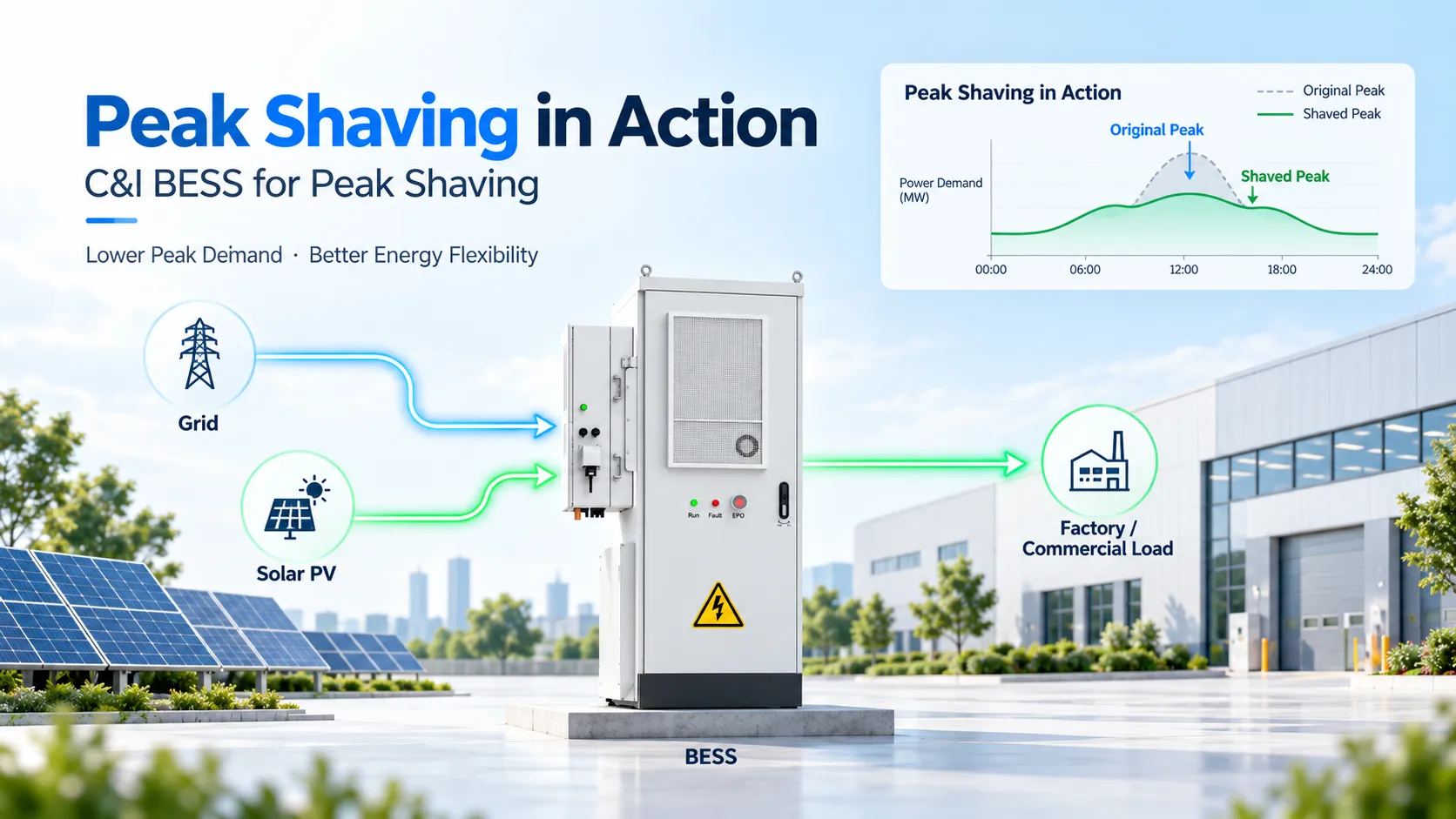
Peak shaving uses a Battery Energy Storage System (BESS) to supply part of a facility's power when electrical demand rises above a predefined grid-import limit. Instead of drawing the entire peak load from the utility grid, stored battery energy is discharged to support the site load.
During lower-demand periods, the battery can recharge from the grid or from available on-site solar PV. The Energy Management System (EMS) coordinates battery charging and discharging according to facility demand, battery state of charge, grid limits and the selected operating strategy.
For commercial and industrial facilities, the objective is not simply to install a larger battery. The BESS power rating in kW and usable battery energy in kWh should be matched to the magnitude and duration of the site's actual demand peaks.
Site meters and the EMS continuously monitor facility demand, grid import and predefined operating limits.
When site demand approaches or exceeds the configured grid-import target, the EMS determines the required battery response.
The PCS converts battery DC power to AC and supports the site load, reducing the amount of power imported from the utility grid.
The battery can recharge during lower-demand periods or absorb available solar generation in preparation for the next demand peak.
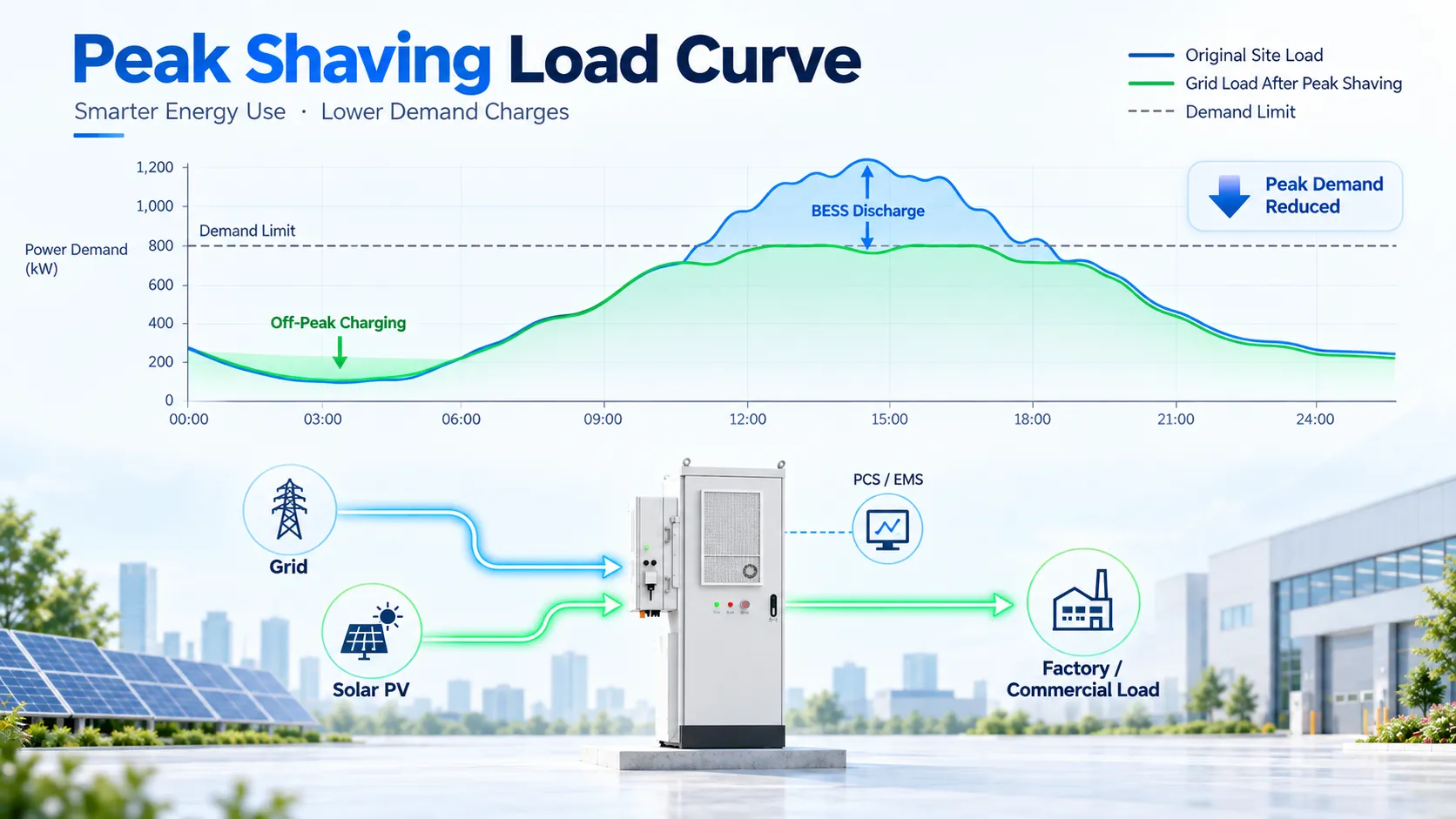
The BMS manages battery protection and operating limits, while the EMS coordinates the BESS, PCS, site meter, solar generation and grid import according to the configured peak-shaving strategy.
Use stored energy during high-load periods to reduce the facility's maximum instantaneous grid import.
Support demand-management strategies in markets where commercial electricity tariffs include demand-based charges.
Support facilities with constrained transformer or grid-connection capacity during temporary high-demand periods.
Store available surplus PV generation and use the energy later when facility demand is higher.
Charge and discharge the battery across different operating or tariff periods according to the site's energy-management strategy.
Depending on PCS, switchgear and control architecture, the same BESS platform can support additional energy-management functions beyond peak shaving.
Peak shaving system selection should be based on both required discharge power in kW and usable battery energy in kWh. The correct configuration depends on the site's actual load profile rather than battery capacity alone.
| Design Factor | Why It Matters |
|---|---|
| Site Peak Load (kW) | Defines the facility's maximum electrical demand that may need to be reduced. |
| Target Grid Limit (kW) | Defines the desired grid-import threshold during peak periods. |
| Required BESS Power (kW) | The difference between site peak demand and target grid limit helps determine required PCS discharge power. |
| Peak Duration (h) | Determines how long the BESS needs to sustain the required discharge power. |
| Usable Battery Energy (kWh) | Primarily determined by required discharge power multiplied by discharge duration. |
| Operating Reserve | Installed capacity should consider DoD, efficiency, auxiliary loads, degradation and project reserve requirements. |
| Daily Peak Frequency | Affects cycling strategy, required state of charge and battery availability throughout the operating day. |
| Solar PV Profile | Determines whether surplus PV energy can contribute to battery charging and later peak reduction. |
| Electricity Tariff | Helps determine whether peak-demand reduction, time-of-use shifting or a combined strategy should be evaluated. |
Assume an industrial facility normally operates below 400kW but experiences production peaks approaching 500kW for approximately two hours.
In this simplified example, the BESS would need to provide approximately 100kW of discharge power for 2 hours, giving a basic usable-energy requirement of approximately 200kWh.
Final installed battery capacity should also consider allowable depth of discharge, PCS efficiency, battery and auxiliary losses, operating reserve, temperature, degradation, peak frequency and required end-of-life performance.
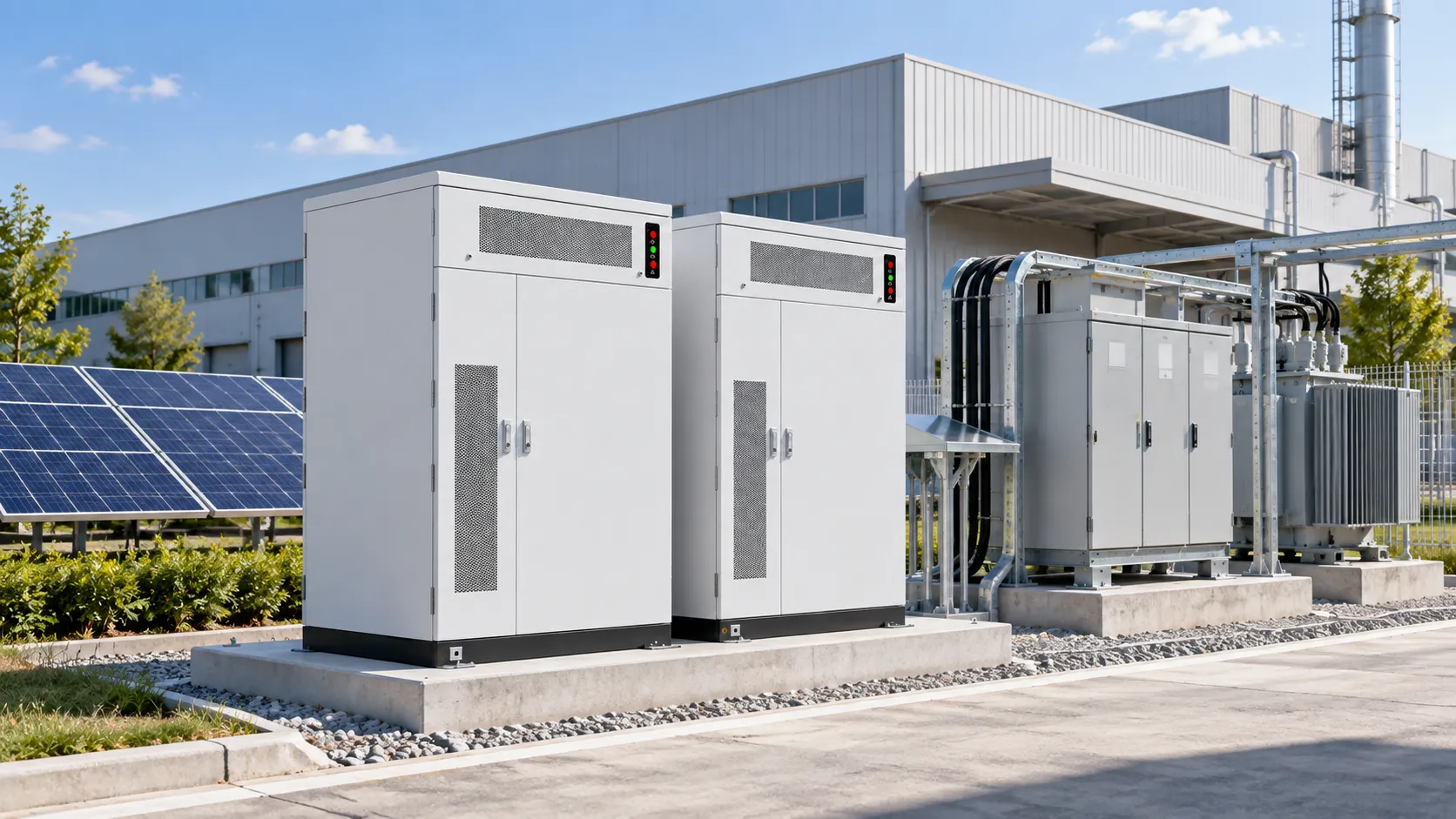
The appropriate system depends on required peak-reduction power, discharge duration and available operating reserve. The following configurations are relevant to many medium-scale commercial and industrial peak shaving projects.
Flexible battery-energy configurations for commercial peak shaving, solar integration and medium-duration energy management.
View 80kVA / 128–209kWh System →Suitable for industrial peak reduction, load management and applications requiring approximately two hours of battery support depending on operating conditions.
View 125kW / 232.9kWh System →Higher battery-energy reserve for industrial peak shaving, solar integration and multi-mode C&I energy management.
View 125kW / 261.2kWh System →A commercial peak shaving project should be configured around the actual electrical system, facility load curve and operating objectives. Useful engineering inputs typically include:
Peak shaving is not controlled by battery capacity alone. The EMS uses site-meter data and system status to determine when the BESS should charge, remain idle or discharge.
Access technical documentation for commercial and industrial battery energy storage projects, including BESS datasheets, system architecture, single-line diagrams, installation documents and integration resources.
Peak shaving focuses on reducing maximum power demand during high-load periods. Load shifting moves energy use between different time periods, commonly by charging the battery during lower-demand or lower-tariff periods and discharging it later.
Required capacity depends on how much peak power must be reduced and how long the peak lasts. As a basic example, reducing grid demand by 100kW for two hours requires approximately 200kWh of usable energy before accounting for depth of discharge, efficiency, reserve margin, degradation and other project factors.
Yes. Solar PV can supply facility loads and, when surplus generation is available, contribute to battery charging. Stored energy can then be used later when facility demand rises or according to the site's selected energy-management strategy.
Backup operation is possible when the selected PCS, switchgear, protection, control system and overall electrical architecture are designed for the required backup or islanded operating mode. Backup requirements should therefore be defined during project design.
The EMS monitors site demand, grid-import measurements, battery state of charge and system operating limits. When facility demand approaches the configured grid threshold, the EMS can command the PCS to discharge the battery and support the site load within the permitted battery and system limits.
Useful project information includes the facility load profile, maximum and average demand, target grid limit, duration and frequency of demand peaks, transformer capacity, grid voltage, solar PV profile, electricity tariff, required operating modes, installation environment and available site space.
Send us your facility load profile, peak demand, target grid limit, grid capacity, electricity tariff, PV capacity and required operating strategy. Our team can evaluate an appropriate BESS power and energy configuration for your project.
Request a BESS Solution