Use these LiFePO4 battery application guides to compare system voltage, battery capacity, continuous and peak current, installation space, charging method and operating environment before selecting a battery.
The goal is simple: match the battery to the equipment and the real duty cycle, then move from application selection to the most suitable battery solution or project quote.
Start with the application that best matches your equipment. Each link opens a dedicated, live solution page rather than a duplicate or generic destination.
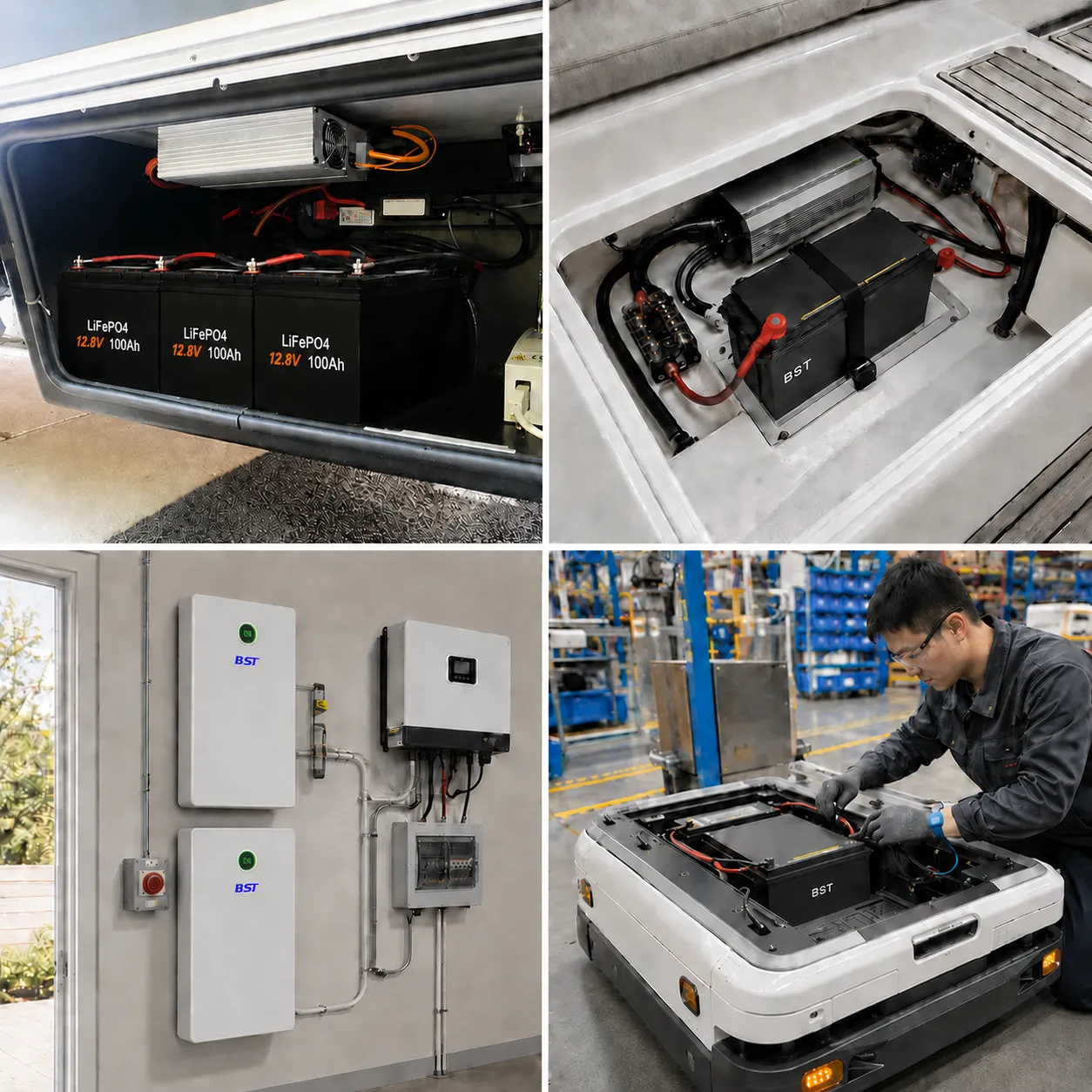
A good battery choice should be based on the complete application, not only the Ah number on the label. Before comparing models, collect the information that determines battery size, fitment and usable performance.
Select an RV LiFePO4 battery from the daily energy use, inverter power, charging sources, available battery space and the number of hours or days you want to operate away from shore power.
For a motorhome or camper conversion, start with the largest real loads and the expected daily energy use, then confirm that the battery fits the existing compartment and charging arrangement.
Marine battery selection depends on whether the battery is used for house power, a trolling motor or another onboard electrical load. These applications can require very different current and charging characteristics.
Choose a golf cart lithium battery according to system voltage, controller current, motor power, passenger or cargo load, terrain and required driving range.
A lead-acid to lithium conversion should be selected from the controller demand and battery-compartment dimensions, not only from the voltage printed on the original battery bank.
Industrial battery projects are usually equipment-specific. AGVs, AMRs, floor scrubbers, mobility equipment and agricultural systems may all need different voltage, current, enclosure and connector configurations.
Size a home LiFePO4 battery around daily electricity use, essential backup loads, inverter power, available solar generation and the number of hours of backup required.
A LiFePO4 replacement should match the equipment, not just the original battery voltage. Record the existing battery model, total bank voltage, Ah rating, dimensions, terminal layout, charger, controller or inverter, cable size and expected load before selecting the replacement.
In multi-battery lead-acid systems, a single integrated lithium battery may be possible when voltage, current capability, capacity, fitment and charging requirements are all suitable.
Application Guides are intended to answer which battery configuration fits the job. Once the application, voltage, capacity, current and installation format are defined, the next step is to confirm charger, inverter, BMS and communication compatibility.
For equipment manufacturers, distributors and private-label projects, battery selection can include custom voltage, capacity, current rating, enclosure, mounting points, terminals, cables and communication options.
The most useful starting information is the equipment type, electrical-system voltage, continuous and peak current, required runtime, installation dimensions, charging equipment and estimated order quantity.
OEM & ODM Battery Services →Send the application, required voltage, target capacity or runtime, continuous and peak current, installation dimensions, charging equipment and estimated quantity. The project can then be matched to a suitable battery configuration.
Request a Battery Recommendation →