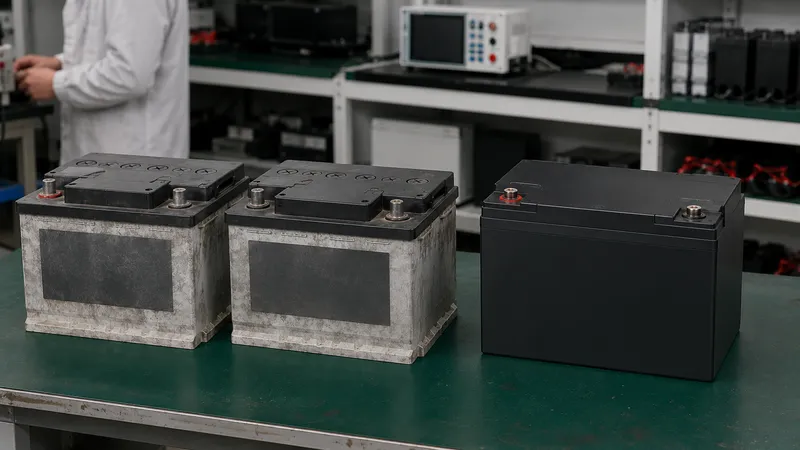
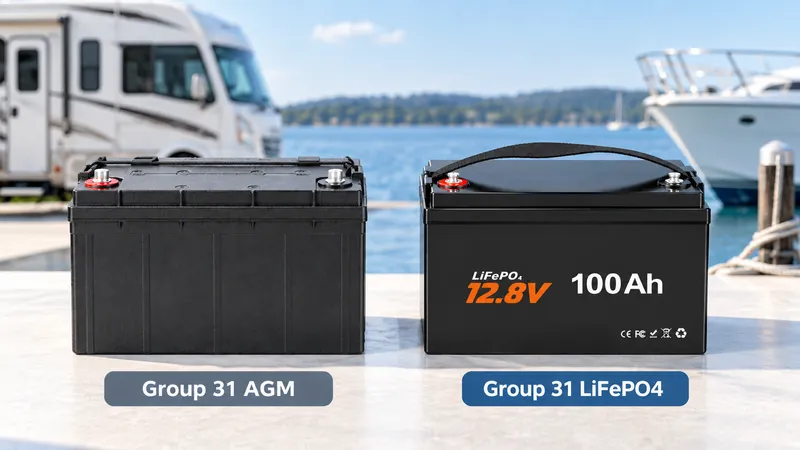
Group 31 AGM vs LiFePO4 Battery: Which Is Better for RV and Marine?
Comparing Group 31 AGM and LiFePO4 batteries for RV or marine use? Learn what to check for charging, usable capacity, cold weather and lithium replacement.
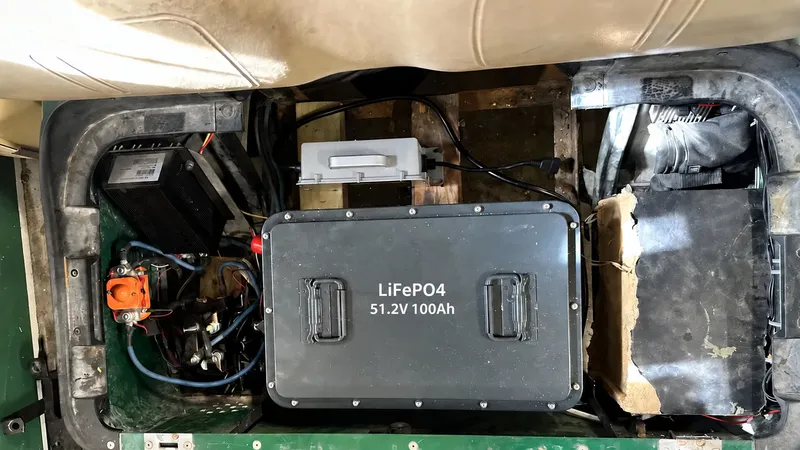
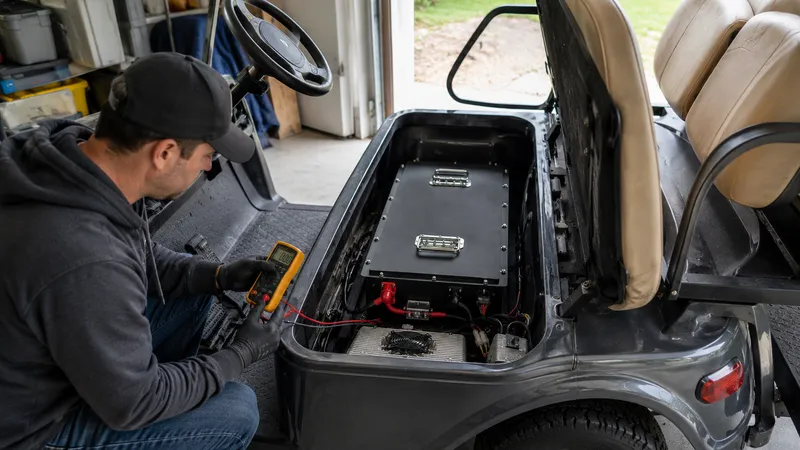
Can you keep the original lead-acid charger after converting a golf cart to lithium? Learn what to check before charging a 38.4V or 51.2V LiFePO4 battery.
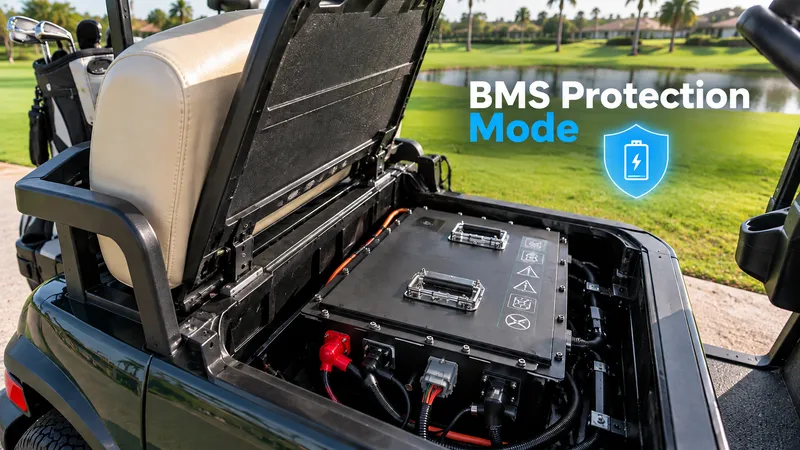
Golf cart lithium battery keeps entering BMS protection mode? Learn the common causes, including overcurrent, low voltage, temperature, charger compatibility, regenerative braking and wiring issues—and what to check before resetting the BMS
Golf cart lithium battery won’t turn on after storage? Check BMS sleep mode, parasitic drain, deep discharge and charger detection before replacing the battery.
Golf cart cuts out or beeps while going downhill after a lithium conversion? Learn how regenerative braking, high SOC and BMS charge limits can trigger protection.
Golf cart lithium battery shuts down uphill or during acceleration? Learn 7 common causes, from BMS current limits and voltage sag to weak cells, wiring and controller demand.
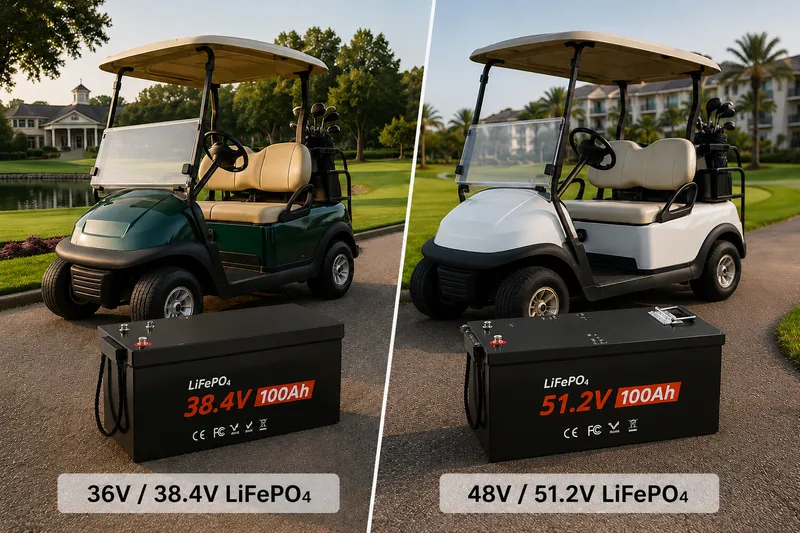
Compare 36V and 48V golf cart batteries, including 38.4V and 51.2V LiFePO4 systems, capacity, charger compatibility and lead-acid replacement considerations.
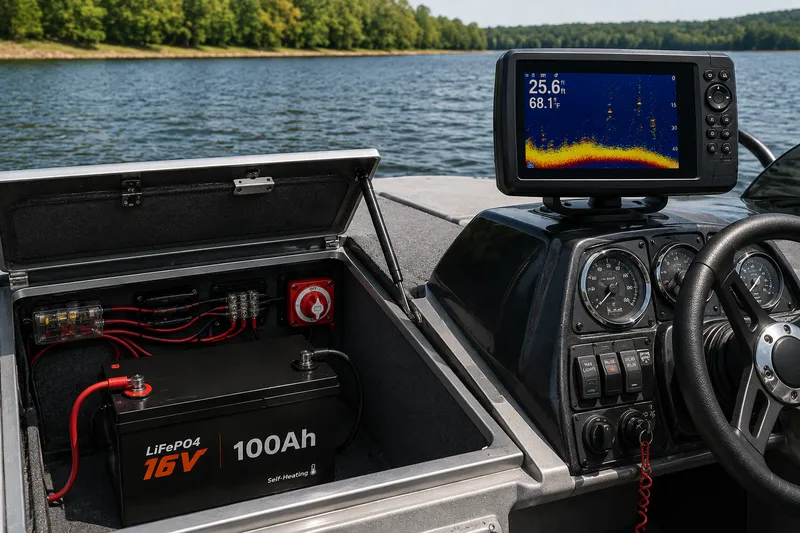
Learn how to choose the right lithium trolling motor battery based on motor voltage, current draw, runtime and 12V, 24V or 36V system requirements.
A 100Ah LiFePO4 battery may replace a 200Ah lead-acid bank, but runtime, BMS current, inverter load and charger compatibility must also be checked.