RV lead-acid to LiFePO4 battery conversion for motorhomes, camper vans and off-grid RV electrical systems.
This RV battery project replaced an aging lead-acid house battery bank with a 12V LiFePO4 battery system. The conversion provided more usable energy, reduced battery weight and extended off-grid runtime while retaining the existing RV electrical layout where compatible.
Before installation, the battery compartment, inverter, AC charger, solar charge controller, alternator charging circuit, DC-DC charging requirements, cables, fuses and battery protection were reviewed for LiFePO4 compatibility.
Planning a similar motorhome or camper battery upgrade? Explore RV LiFePO4 Battery Solutions →
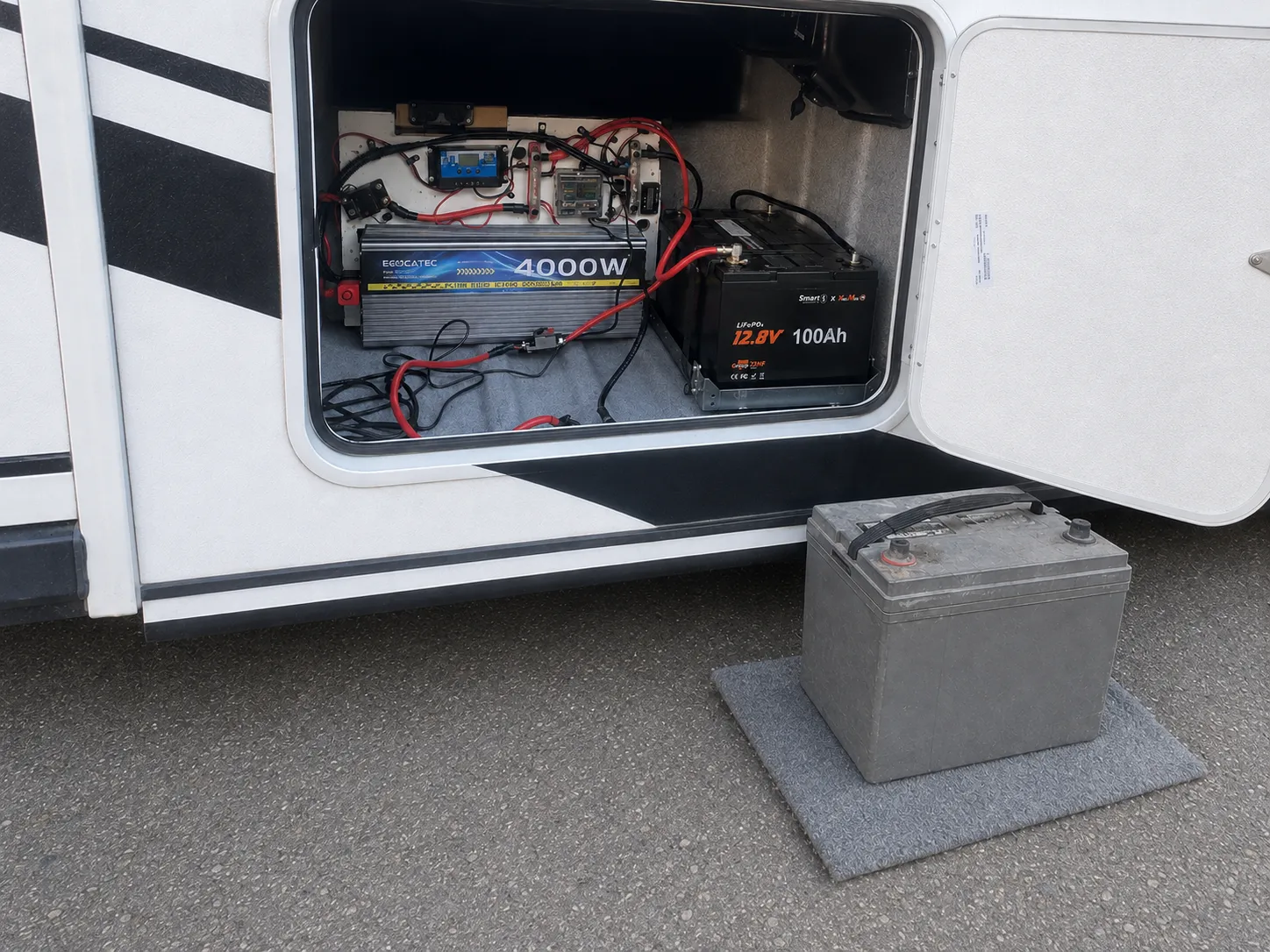
The project required more usable battery capacity without unnecessarily rebuilding the complete RV electrical system. The replacement battery also needed to support the existing inverter, solar charging and onboard DC equipment.
Project requirements included:
An RV LiFePO4 battery should not be treated as a universal drop-in replacement based only on nominal voltage and Ah capacity.
The charger, inverter, alternator charging system, maximum battery current, cable size, circuit protection and installation space should be checked before the conversion is approved.
The compatibility review covered:
Existing charging equipment should only be retained when its voltage, charging current and operating profile are suitable for the selected LiFePO4 battery specification.
View Lead-Acid to LiFePO4 Battery Replacement Guide →
For a complete review of battery voltage, Smart BMS limits, charger settings, inverter demand, wiring and communication requirements, see the LiFePO4 Battery System Compatibility Guide →
The 12V LiFePO4 battery bank was installed in the existing RV house-battery compartment. Battery dimensions, terminal positions and cable routes were confirmed beforehand so the existing compartment could be retained where suitable.
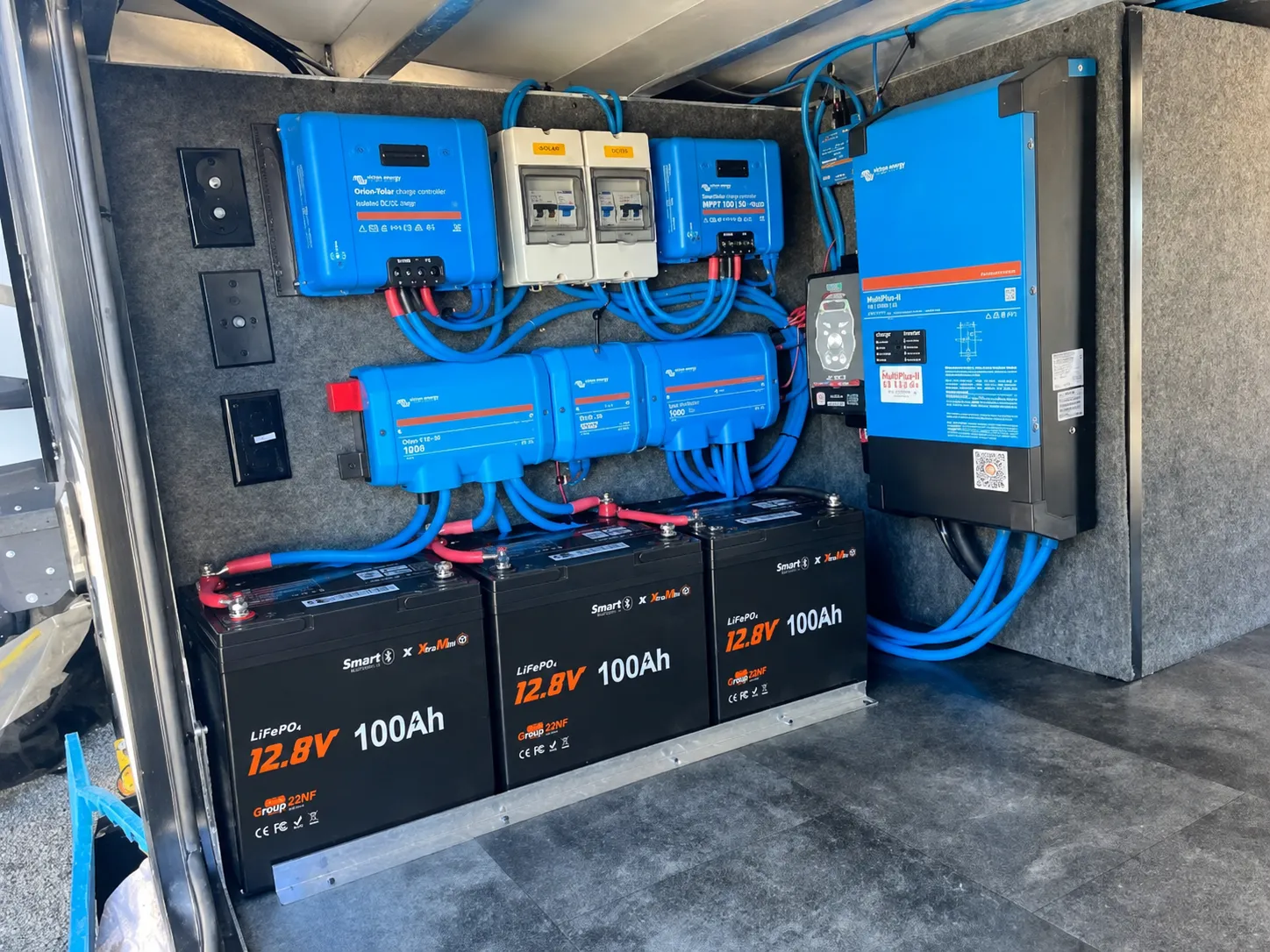
The battery was secured against movement and installed with protected terminals, correctly sized cables and suitable overcurrent protection. Access was retained for inspection and future service.
Charging equipment was configured within the LiFePO4 battery's permitted voltage and current limits. Inverter demand, peak current, cable length and fuse ratings were also reviewed before the final configuration was approved.
The completed RV battery system includes:
The AC charger must provide a charging voltage, current and charging profile suitable for the selected LiFePO4 battery.
Equalization, desulfation and other lead-acid-specific high-voltage charging modes should not be used unless explicitly permitted by the battery specification.
Existing RV solar panels can often remain in service, but the solar charge controller must support charging settings suitable for the LiFePO4 battery.
A DC-DC charger may be required between the vehicle alternator and LiFePO4 house battery. It regulates charging voltage and current while helping manage the load placed on the alternator.
Charger output should be selected according to alternator capacity, battery charge-current limit, cable size, cable length and circuit protection.
If the battery is not charging from shore power, solar or the alternator, or if the BMS shuts down under load, diagnose the complete system before replacing components. See the RV LiFePO4 Battery Troubleshooting Guide →
After installation, the battery and connected charging and power equipment were checked under charging and discharging conditions before the RV returned to service.
Testing included:
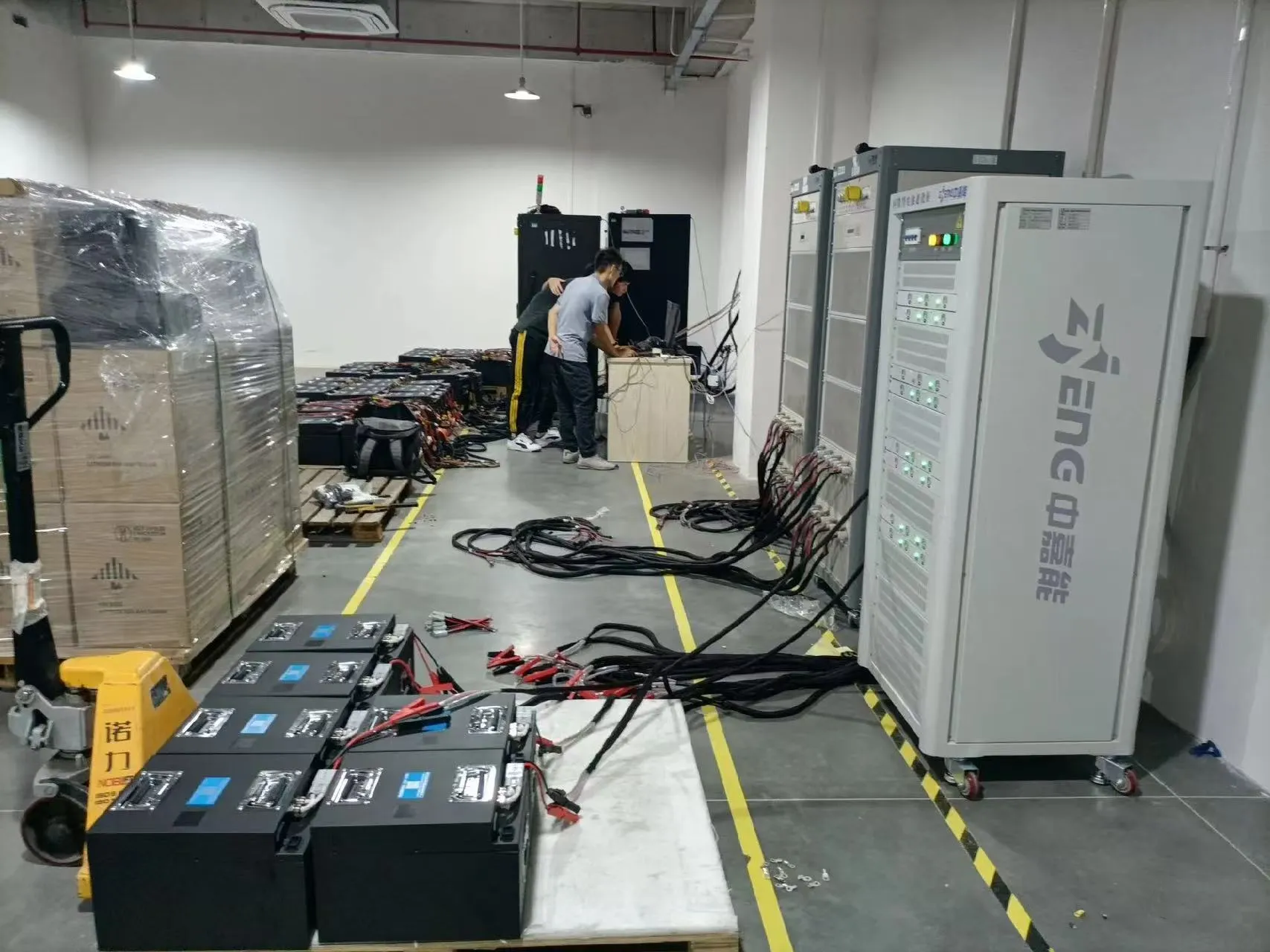
For more information about capacity, charge-discharge performance, BMS protection and battery validation, see Lithium Battery Testing & Validation →
The new RV house battery provides more usable energy for refrigeration, lighting, electronics, water pumps and other onboard equipment.
Lower battery weight and greater usable capacity extend operating time between charging cycles, while Bluetooth monitoring allows the user to check battery state of charge, voltage, current, temperature and operating status.
The conversion retained compatible parts of the existing RV electrical system while improving battery capacity, monitoring and everyday usability.
Learn more about battery sizing, charging voltage, Smart BMS protection, series and parallel systems, CAN/RS485 communication and system integration in the LiFePO4 Battery Technical Knowledge Center →
For answers about RV battery capacity, charging, solar, DC-DC chargers, inverters, BMS and installation, see the RV LiFePO4 Battery FAQ →
With more than 20 years of battery manufacturing experience, we develop RV LiFePO4 battery systems for motorhome manufacturers, camper builders, distributors and system integrators.
OEM and private-label options can include:
View OEM & ODM LiFePO4 Battery Services →
Learn more about battery pack assembly, Smart BMS integration, inspection and production testing: LiFePO4 Battery Manufacturing & Quality Control →
Not always. The AC charger, solar charge controller, alternator charging circuit, inverter, battery cables, fuses and installation space should be checked before conversion.
A DC-DC charger may be required when charging the house battery from a vehicle alternator. It controls charging current and provides a suitable charging profile for the battery and vehicle electrical system.
It can often be retained when its input voltage, continuous and surge current, cable size and low-voltage settings are suitable for the new battery configuration.
Existing solar panels can normally remain in use, but the solar charge controller must support suitable LiFePO4 charging settings.
It may be retained when its charging voltage, charging current and charging profile are compatible with the selected LiFePO4 battery. Incompatible equalization or desulfation modes should not be used.
Battery capacity is selected according to daily energy consumption, inverter load, required off-grid runtime, usable battery capacity, available charging energy and installation space.
Yes. Selected Smart BMS configurations provide Bluetooth monitoring for state of charge, battery voltage, current, temperature and operating status.
Selected BMS configurations can support CAN or RS485 communication. Compatibility depends on the battery BMS, connected equipment protocol, firmware and communication cable configuration.
RV battery selection, BMS and system integration: RV LiFePO4 Battery Solutions →
General lead-acid replacement engineering: Lead-Acid to LiFePO4 Battery Replacement →
Charging, BMS shutdown and RV electrical troubleshooting: RV LiFePO4 Battery Troubleshooting →
Battery, BMS, charger and inverter compatibility: LiFePO4 Battery System Compatibility →
RV battery questions and technical guidance: RV LiFePO4 Battery FAQ →
View more motorhome, camper van and RV LiFePO4 battery installations: RV LiFePO4 Battery Projects →
Send us the RV system voltage, required battery capacity, continuous and peak current, battery-compartment dimensions, inverter power, charger information, alternator or DC-DC charging configuration and estimated order quantity.
Our engineering team will review the application and recommend a suitable LiFePO4 battery configuration for your RV, camper van or motorhome project.