Selecting a Floor Scrubber LiFePO4 Battery requires more than matching nominal voltage and capacity. A floor cleaning machine battery should be reviewed against cleaning-shift runtime, average and continuous current, startup and peak loads, charging strategy, battery-compartment space, machine balance, and the operating environment.
Commercial cleaning equipment may operate traction, brush, vacuum, pump, and control loads at the same time. Review the complete duty cycle before approving a floor scrubber lithium battery configuration.
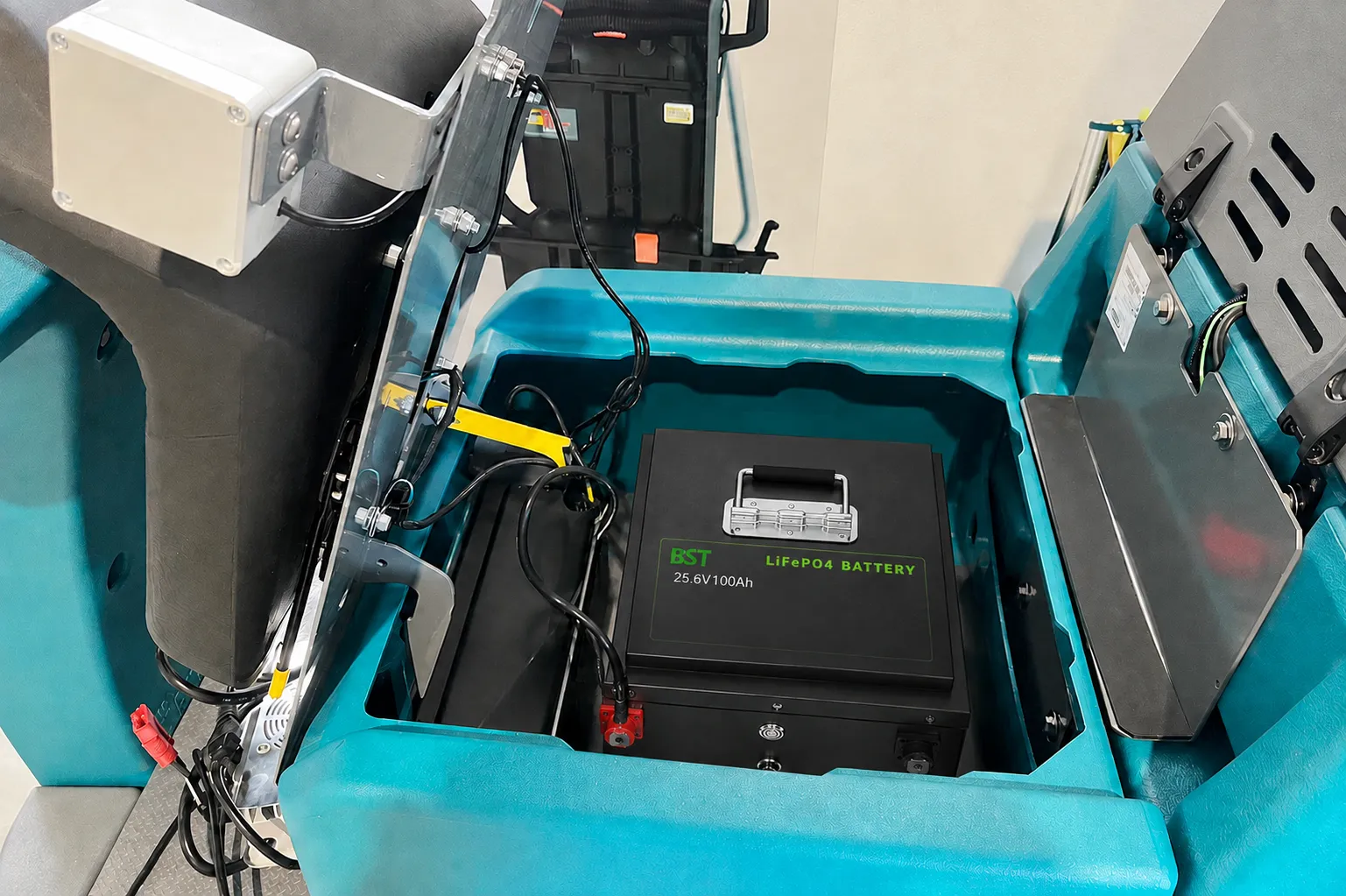
A floor scrubber battery should be sized from the actual cleaning workflow and electrical load rather than voltage alone. Required operating hours, charging intervals, brush pressure, floor conditions, travel speed, and simultaneous motor operation all affect battery capacity and current demand.
Runtime planning should use average battery current over a representative cleaning duty cycle. A practical engineering estimate is:
Calculated Runtime = Planning Usable Capacity ÷ Average Operating Current
If 80Ah is used as a planning capacity, a 20A average-current scenario gives an estimated four hours, while a 25A scenario gives approximately 3.2 hours. These are calculated planning examples, not measured machine runtime.
Actual operating time depends on average current, simultaneous motor operation, usable battery capacity, cleaning conditions, temperature, idle time, brush pressure, floor resistance, and the charging schedule. Final runtime should be established with the selected battery in the intended machine.
The traction motor, brush motor, vacuum motor, pumps, controls, and accessories may overlap during normal cleaning. Battery and BMS selection must therefore account for average current, continuous current, startup current, short-duration peak current, and the duration of simultaneous loads.
Motor nameplate power is useful for initial review, but battery-side current should be measured or obtained from the machine controller documentation. Cable size, connectors, fuse or circuit-breaker ratings, and terminal temperature must also remain within approved limits.
The specifications below are provided as a reference battery configuration for engineering review and do not represent a completed or validated floor scrubber installation.
| Nominal Voltage | 25.6V |
|---|---|
| Rated Capacity | 100Ah |
| Rated Energy | 2,560Wh |
| Continuous Charge / Discharge | Up to 100A |
| Reference Charge Profile | CC/CV, 28.8V ± 0.4V; recommended current 20A |
| Dimensions | Approximately 20.94 × 8.15 × 8.50 in |
| Weight | Approximately 43.67 lb |
Compatibility must still be confirmed against the machine controller, combined motor load, compartment, charger, cables, terminals, connectors, mounting, weight requirements, and cleaning environment. This reference specification should not be interpreted as approval for every 24V floor scrubber.
A lead-acid replacement battery for a floor scrubber must be reviewed as a complete system conversion. Confirm nominal voltage, continuous and peak current, compartment dimensions, hold-down method, charger compatibility, cable size, terminals, connectors, and state-of-charge display requirements.
Battery weight is especially important in cleaning equipment. Replacing a heavier lead-acid bank with a lighter lithium battery may affect traction, stability, machine balance, and brush pressure. The machine manufacturer should approve any required mounting or counterweight arrangement.
Use a charging profile that matches the approved battery configuration. Verify charger output voltage, charging current, connector polarity, cable rating, and the machine's daily or overnight charging schedule. An existing lead-acid charger should be retained only when its complete charging profile is compatible with the selected LiFePO4 battery.
Do not treat a capacity-to-current calculation as actual charging time. Charging losses, current tapering, battery temperature, initial state of charge, and the approved charging limits affect the real charging period.
Mechanical review should cover the compartment opening, internal clearance, enclosure, mounting points, terminal access, connector location, cable routing, ventilation, and service clearance. Also account for vibration, moisture, cleaning chemicals, debris, and operating position.
Custom enclosure details, connector selection, and wiring-harness layout can be evaluated as OEM engineering options. They do not indicate that the machine shown on this page uses a completed custom installation.
The BMS should be selected for the required continuous and peak current and the applicable electrical and temperature protections. Selected OEM configurations can support communication options such as CAN or RS485 where required. Protocol compatibility must be reviewed for the specific machine controller or charging system; many floor scrubbers do not require battery communication.
View LiFePO4 Battery Technical Support →
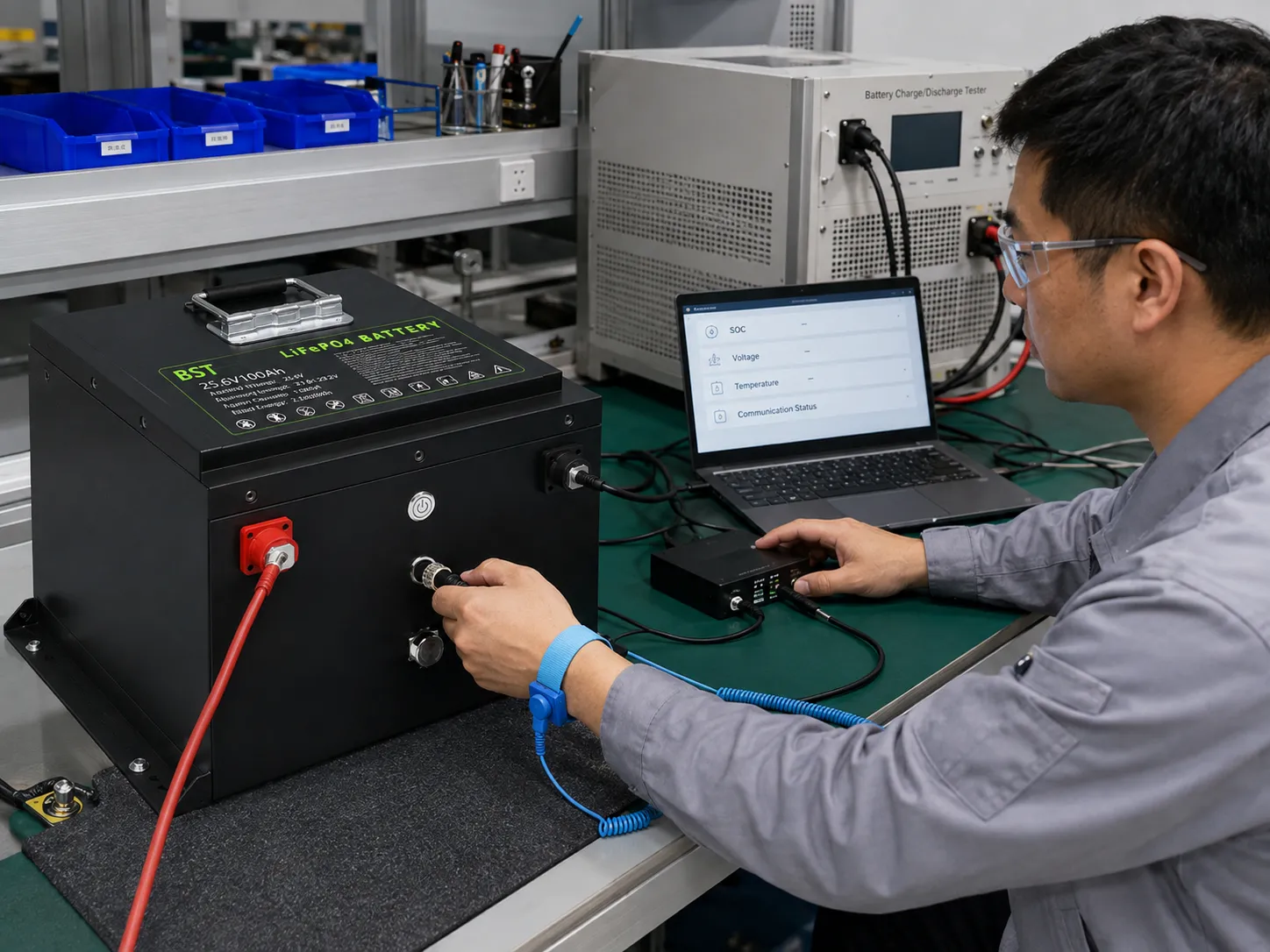
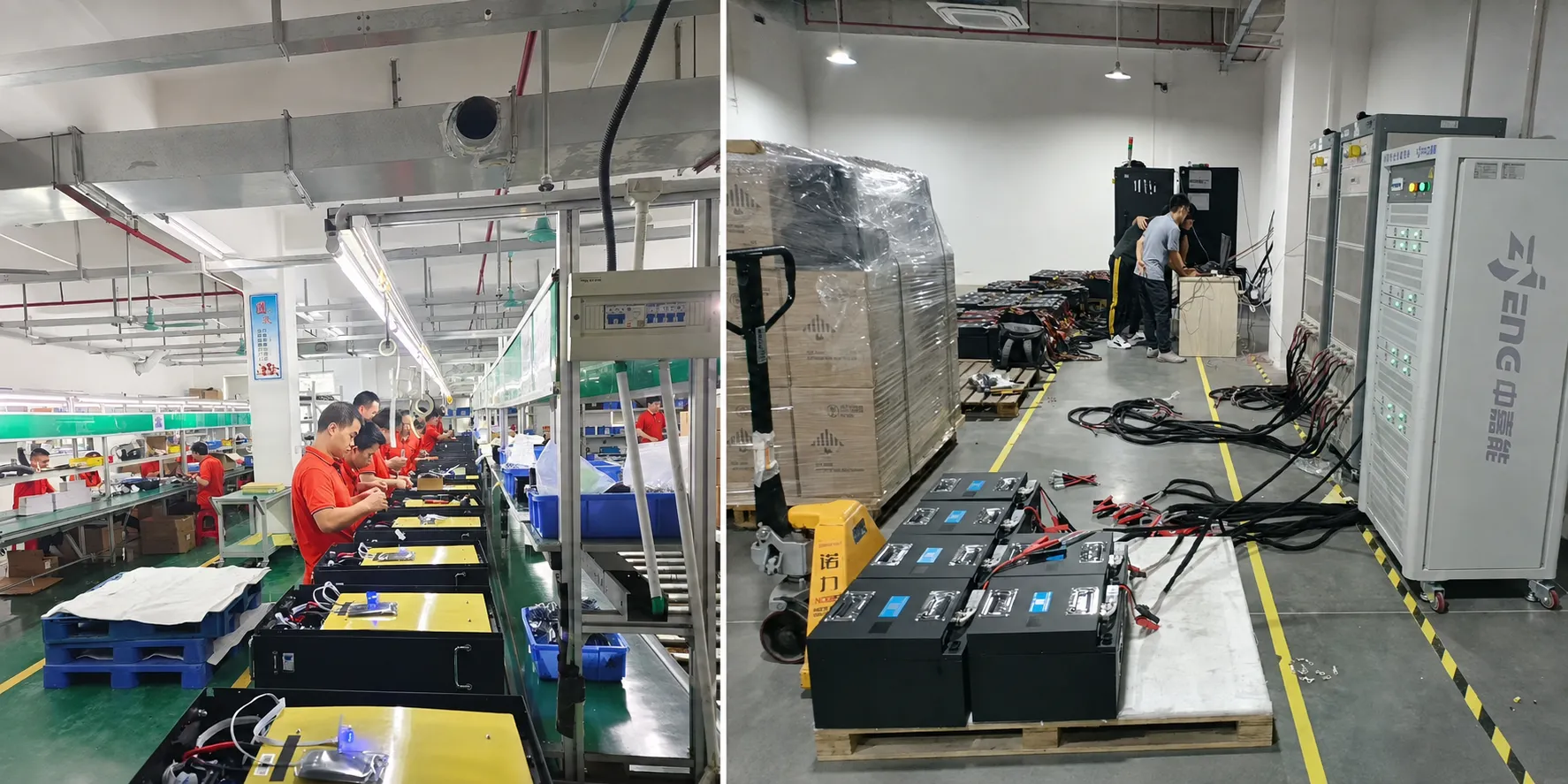
Manufacturers and system integrators can submit voltage, current, enclosure, connector, charger, and environmental requirements for review. Available OEM support can include BMS configuration, enclosure and wiring-harness options, sample development, production testing, and quality inspection.
Machine-level approval requires evaluation with the selected equipment. Recommended checks include average and startup current, simultaneous motor load, charger behavior, cable and connector temperature, battery retention, machine balance, brush pressure, and measured cleaning time. These are validation steps, not claims that the machine shown has completed testing.
View OEM & ODM Battery Services →
View Industrial Battery Solutions →
Confirm system voltage, measured average load, peak current and duration, cleaning-shift runtime, usable capacity, battery compartment, and charger requirements.
It can be evaluated for replacement, but voltage, charger, current, cables, terminals, compartment dimensions, mounting, battery weight, and machine balance must all be reviewed.
Only when its charging voltage, current, and complete charging profile are compatible with the approved battery configuration.
They affect mounting, clearance, cable routing, machine balance, traction, and brush pressure. The installation must remain secure.
Send the machine voltage, measured current requirements, required runtime, battery-compartment dimensions, charger information, connector requirements, operating environment, and estimated project quantity for a floor scrubber LiFePO4 battery review.