This custom marine battery project was developed for boat builders, marine equipment suppliers and battery distributors. The work covered battery specification, enclosure design, Smart BMS settings, terminal layout, charging compatibility and vessel-system integration.
The electrical, mechanical and communication requirements were confirmed before prototype assembly and testing.
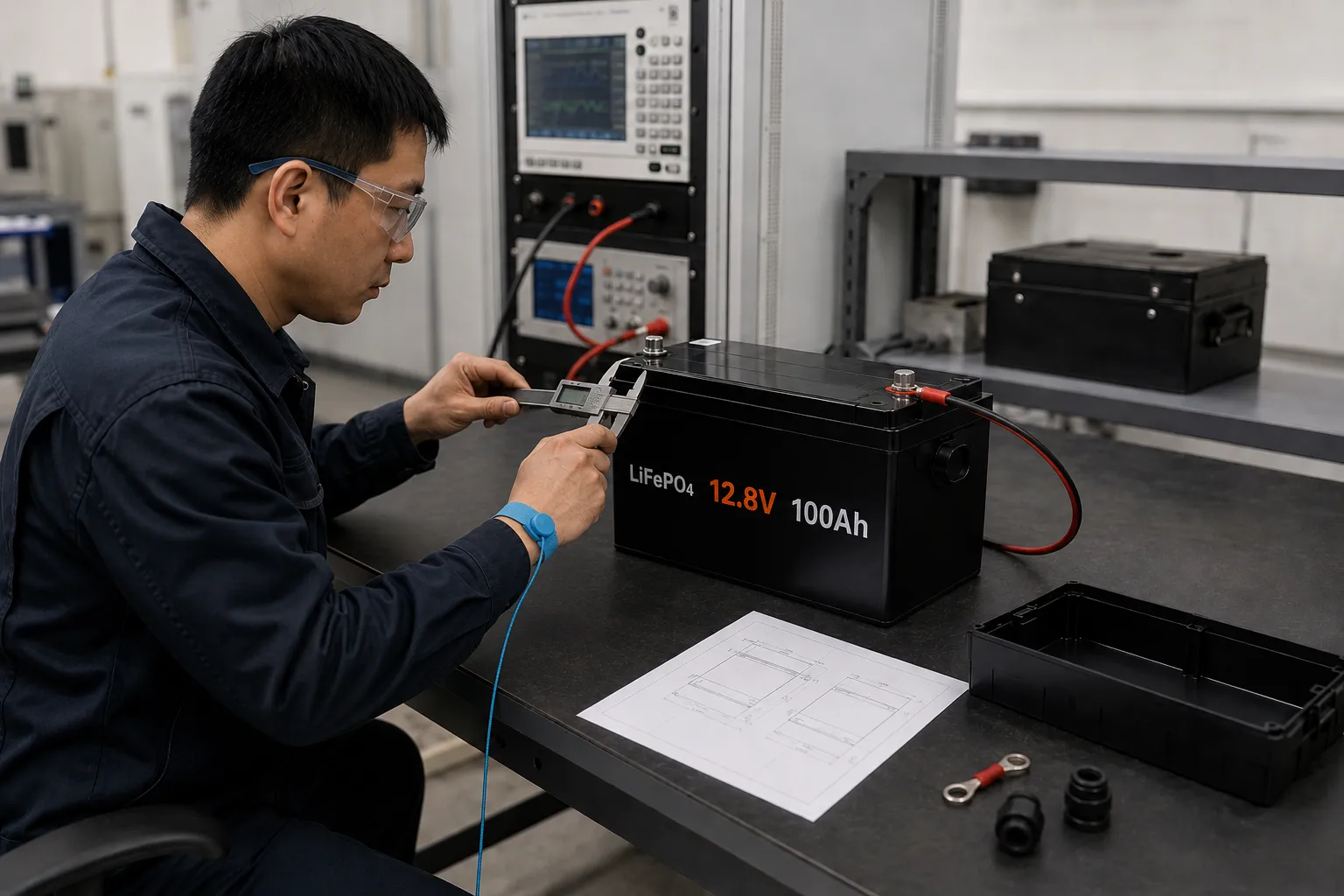
The battery needed to fit the available compartment, support the vessel’s electrical loads and work with the approved charging equipment.
The project review covered:
The enclosure, terminal positions and electrical configuration were developed around the vessel installation layout. Mounting, cable routing, service access and protection from the operating environment were reviewed before the design was approved.
Available engineering options included:
The battery system was designed for integration with the vessel’s inverter, shore charger, solar charge controller, fuse protection, isolation switch and DC distribution system.
The integration review included:
An existing charger or inverter can only be retained when its voltage, current limits and operating settings are suitable for the approved LiFePO4 battery specification.
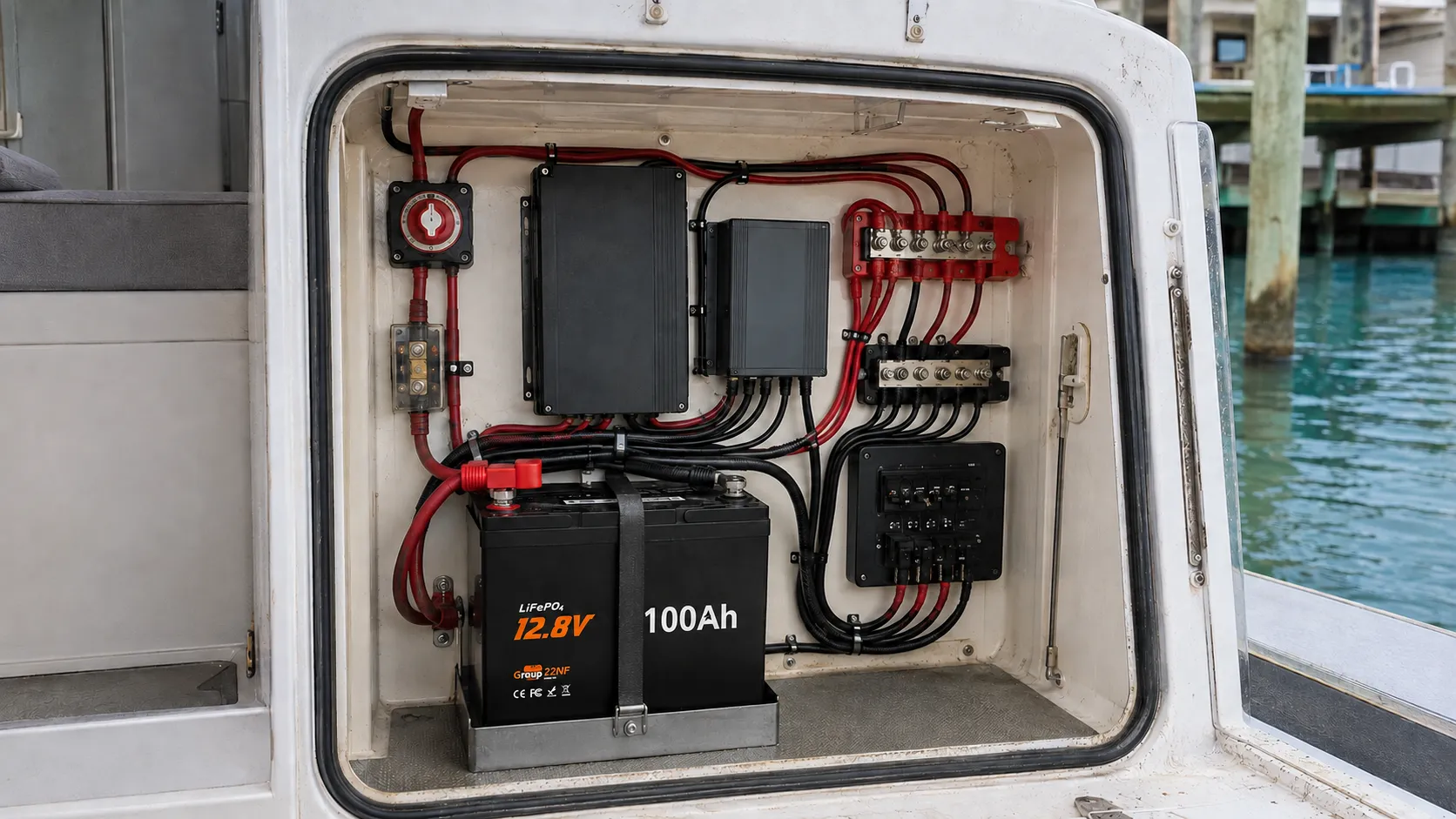
The Smart BMS settings were configured according to the selected cells, load current, charging equipment and operating conditions. Protection can include overcharge, over-discharge, overcurrent, short circuit and temperature limits.
Bluetooth monitoring, CAN or RS485 communication can be included when required and supported by compatible equipment. The BMS protocol, firmware, communication cable and connector pinout must be confirmed before sample development.
The prototype battery was inspected and tested against the approved electrical, mechanical and communication requirements before production approval.
Testing can include:
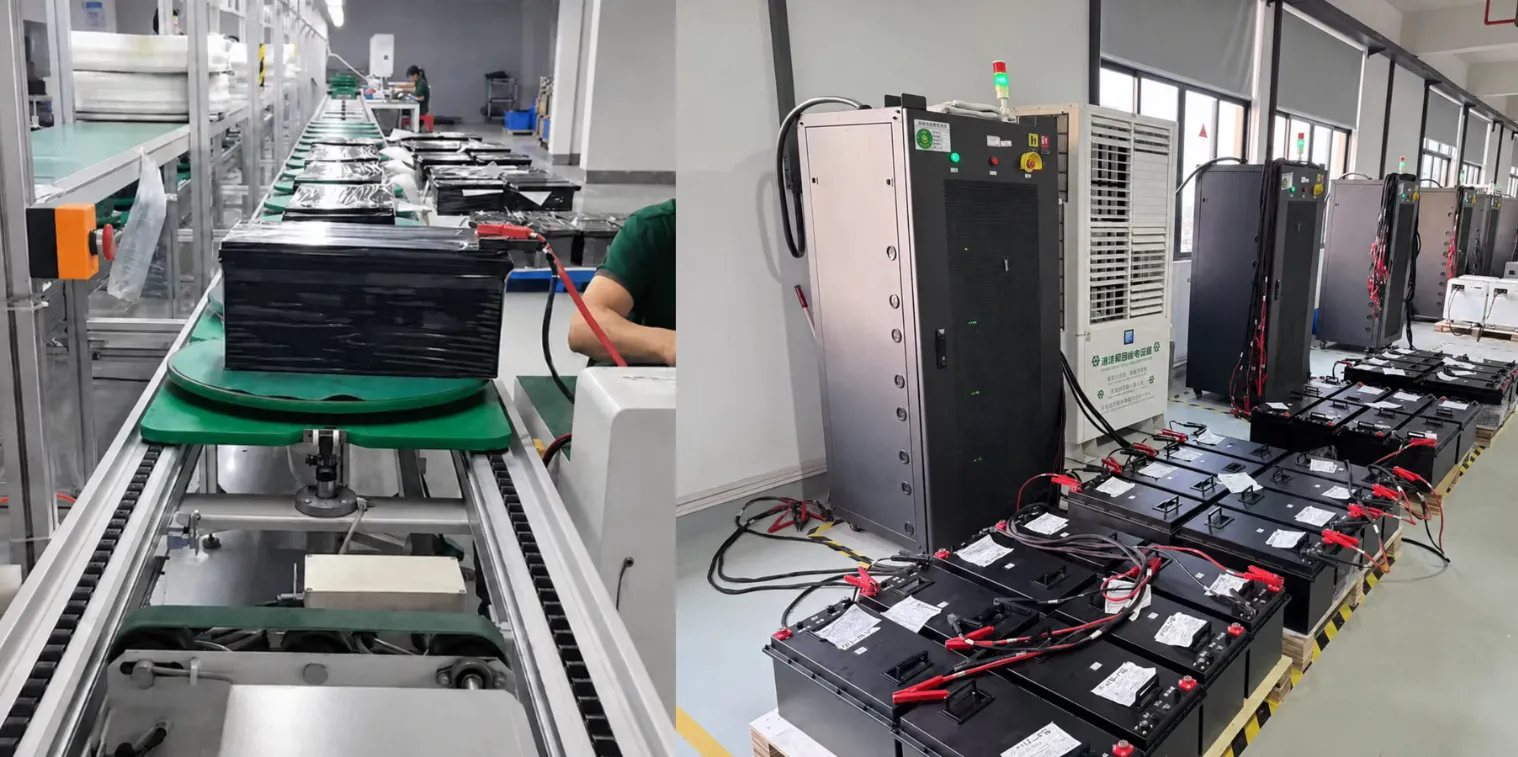
With more than 20 years of battery manufacturing experience, we support boat builders, marine equipment manufacturers, battery brands and distributors from specification review and prototyping through testing and volume production.
OEM and private-label services can include:
Yes. Enclosure dimensions, mounting points, terminal positions, cable outlets and service access can be configured for qualified OEM projects.
They may be retained if their voltage, charging profile, current limits and operating settings are suitable for the proposed battery and Smart BMS.
Selected battery configurations support CAN or RS485 communication. Compatibility depends on the BMS, connected marine equipment, protocol, firmware and cable pinout.
Self-heating and low-temperature charging protection are available options for suitable configurations. The required functions depend on the operating and charging conditions.
Please provide the system voltage, required capacity, continuous and peak current, installation dimensions, charging equipment, communication requirements and estimated order quantity.
Send us the required voltage, capacity, continuous and peak current, battery compartment dimensions, charger and inverter information, communication protocol and estimated order quantity.
Our engineering team will review the requirements and recommend a suitable custom marine LiFePO4 battery configuration for prototype development or volume production.