This custom 12V 45Ah LiFePO4 battery was developed for electric wheelchairs and other mobility equipment requiring compact size, dependable deep-cycle power and application-specific mounting.
The project covered lead-acid battery replacement, enclosure design, Smart BMS protection, connector configuration, charger compatibility, sample testing and OEM production.
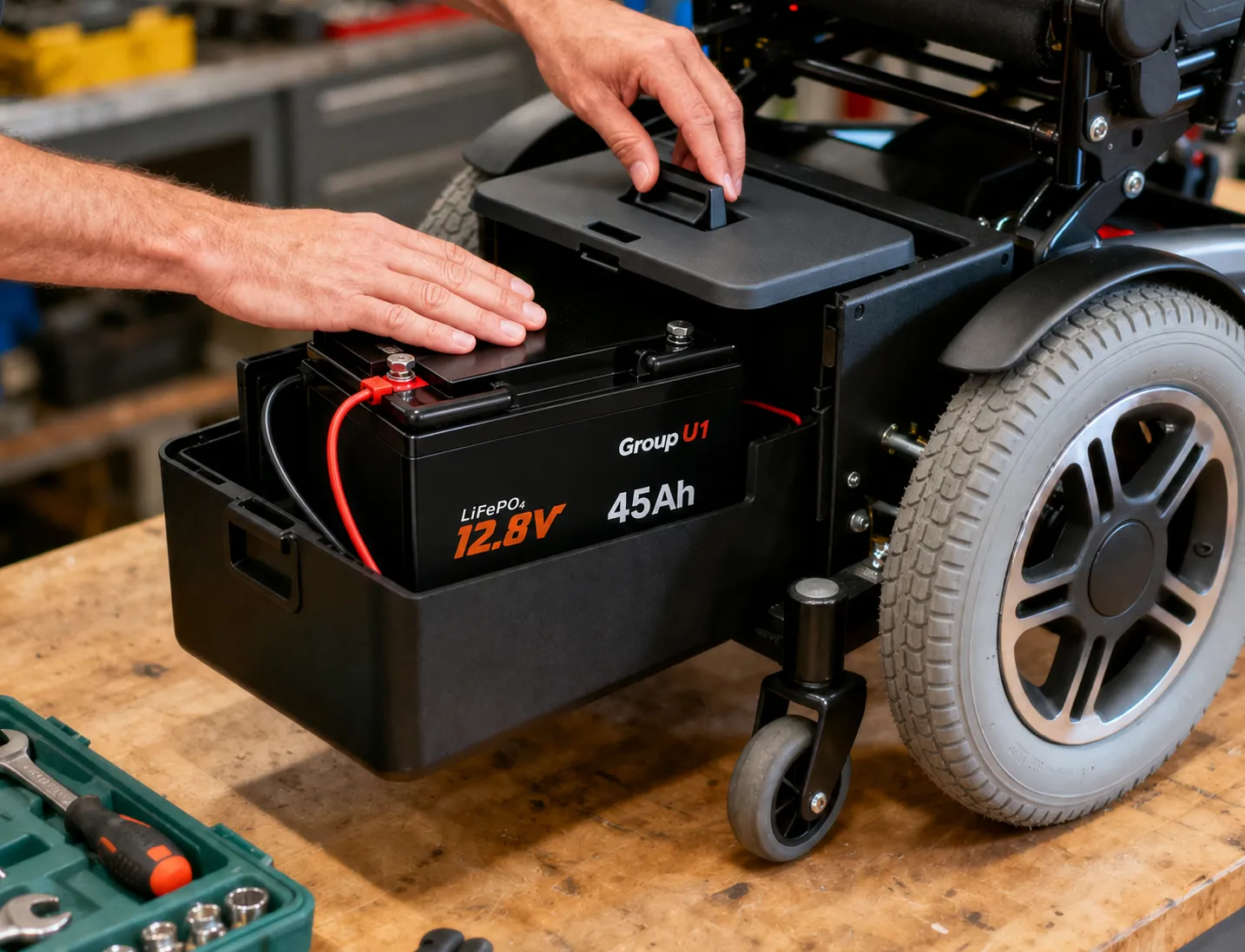
The replacement battery needed to fit the existing equipment compartment and supply the continuous and peak current required by the motor controller and onboard electronics.
Project requirements included:
The battery was configured around the equipment voltage, motor load, required runtime, charging current and available installation space.
| Battery Chemistry | LiFePO4 |
|---|---|
| System Class | 12V |
| Nominal Voltage | 12.8V |
| Rated Capacity | 45Ah |
| Nominal Energy | 576Wh |
| Battery Enclosure | Custom metal enclosure |
| Mounting | Equipment-specific brackets and mounting points |
| Battery Protection | Integrated Smart BMS |
| Terminals and Connectors | Configured for the equipment interface |
| Communication Options | Bluetooth, CAN or RS485 where required |
| Charging Method | LiFePO4-compatible CC/CV charging |
Continuous current, peak current, battery dimensions, charging limits and communication functions must follow the approved project specification.
A LiFePO4 battery can replace a lead-acid wheelchair battery when the electrical system and installation requirements are compatible. The conversion should not be based on voltage and capacity alone.
Before replacement, confirm:
Compared with a conventional lead-acid battery, a correctly configured LiFePO4 replacement can provide lower battery weight, more usable energy, stable voltage under load and longer service life.
The metal enclosure, mounting brackets, terminal positions and cable outlets were configured around the available installation space. The completed battery must remain secure during acceleration, braking and everyday equipment movement.
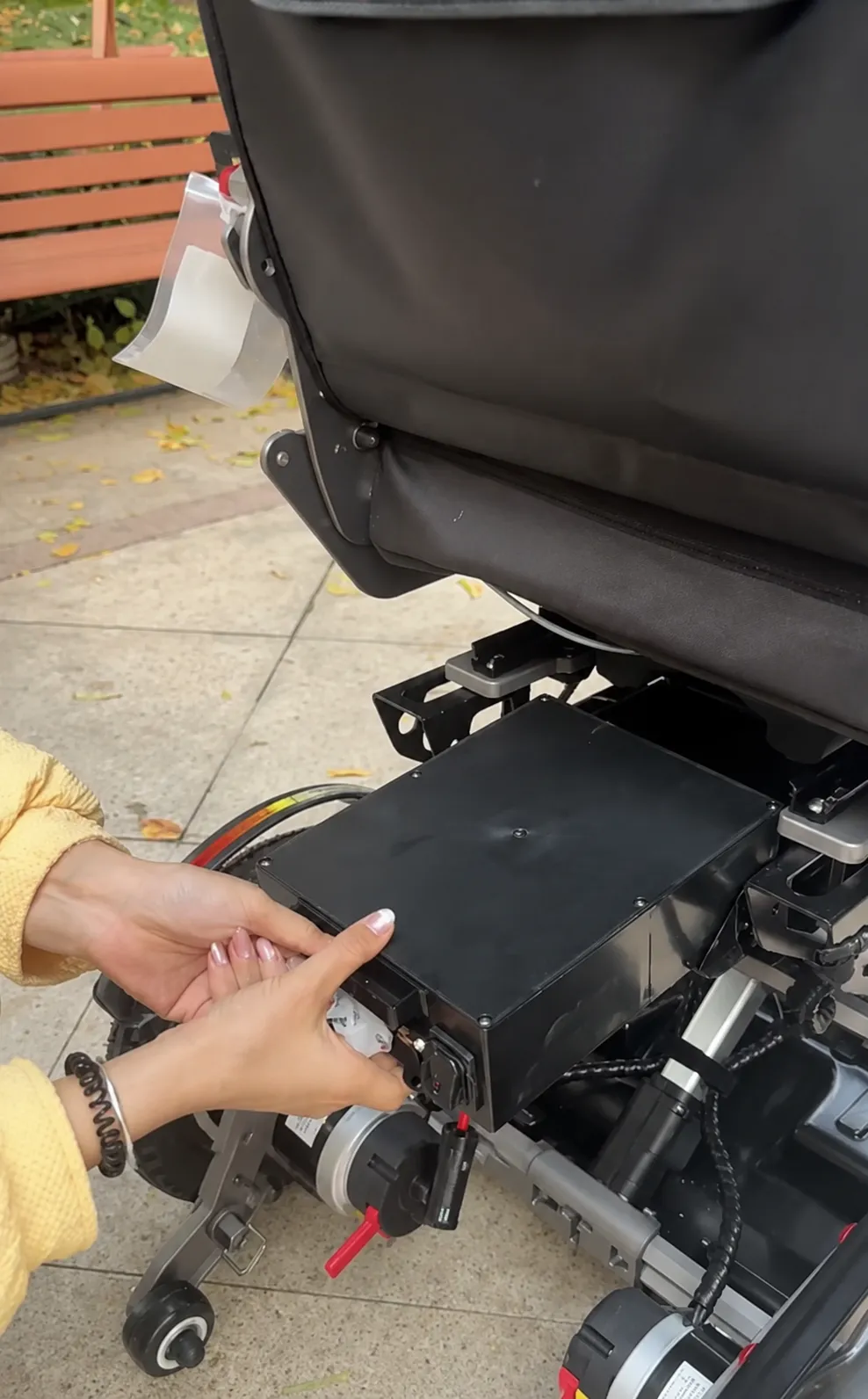
Final installation checks should include:
Battery capacity should be selected according to the equipment voltage, average operating current, peak motor current, required operating time and available installation space.
Actual runtime depends on the motor, controller, user weight, terrain, driving speed, operating temperature and required battery reserve.
Estimated Runtime (Hours) = Usable Battery Capacity (Ah) ÷ Average Operating Current (A)
This formula can be used for initial battery sizing. Final capacity should be confirmed using the equipment’s measured operating current and required duty cycle.
For an accurate battery recommendation, provide the equipment model, motor power, controller current, original battery specification, typical operating conditions and required runtime.
The integrated Smart BMS monitors cell voltage, battery current and temperature while protecting the battery against operating conditions outside its approved limits.
Available BMS functions include:
Battery communication is optional and is not required for every wheelchair or mobility equipment project. CAN or RS485 can be configured when the equipment controller needs battery status, operating data or fault information.
Available options can include:
The equipment controller model, communication protocol, connector pinout and message requirements must be confirmed before sample development.
The charger must use voltage and current settings suitable for the approved 12.8V LiFePO4 battery specification. An existing lead-acid charger should only be retained after its charging profile has been reviewed.
The charger compatibility review covers:
Sample batteries are checked against the approved electrical, mechanical and communication specifications before volume production.
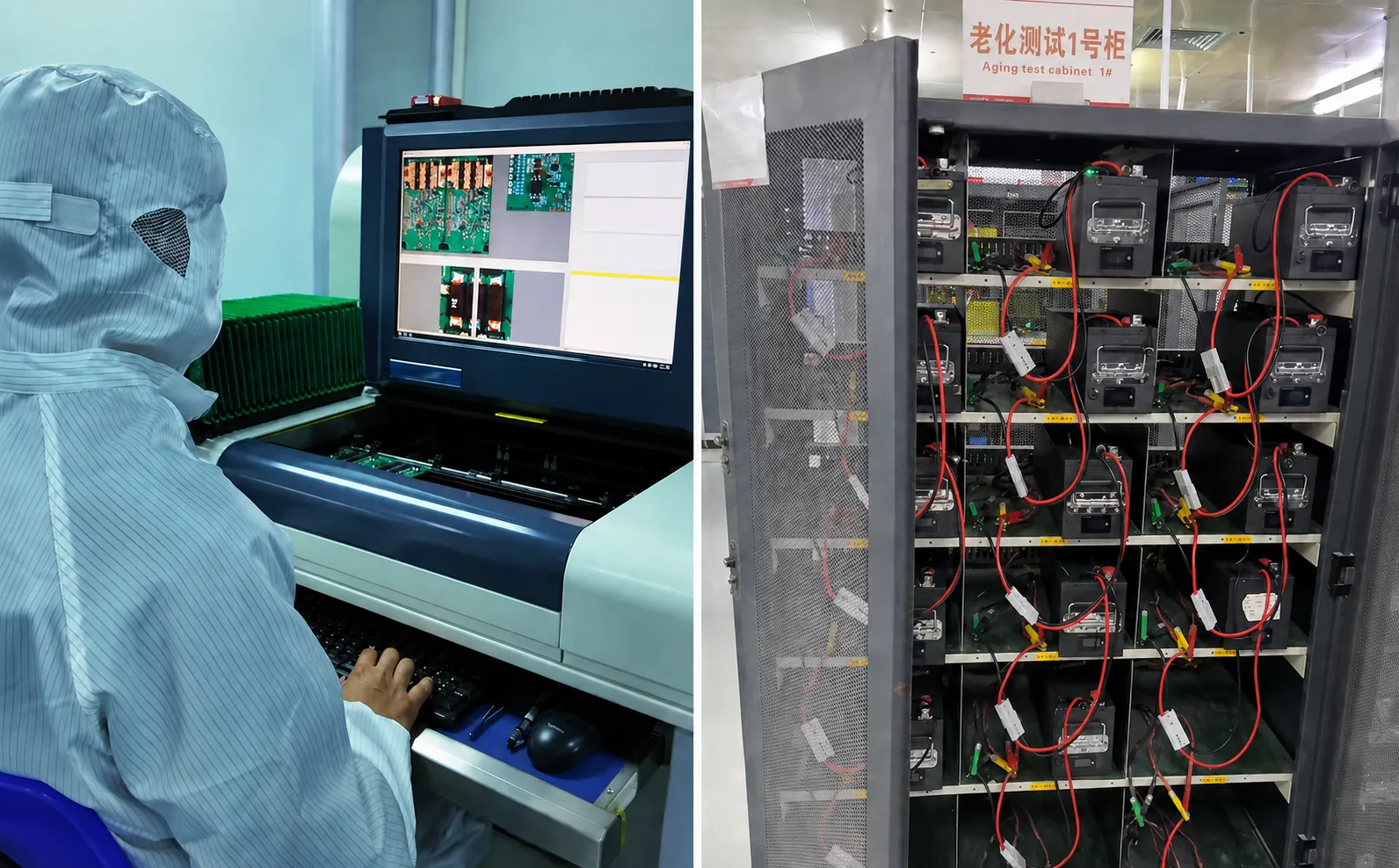
With more than 20 years of battery manufacturing experience, we support mobility equipment manufacturers, distributors and industrial system integrators with custom LiFePO4 battery development and volume production.
OEM and private-label options include:
Yes, when the battery voltage, controller current, charger, compartment dimensions, connectors and mounting method are compatible with the LiFePO4 replacement battery.
No. Battery selection depends on the equipment voltage, motor power, controller current, required runtime and installation space. Many wheelchairs use 24V systems and may require an approved two-battery arrangement or a complete 24V battery.
Only when its maximum voltage, charging current and charging profile are suitable for the approved LiFePO4 battery specification.
Only battery models and BMS configurations approved for series operation should be used. Both batteries should have the same model, capacity, state of charge and service condition.
Yes. Enclosure dimensions, brackets, mounting points, terminal positions, connectors and wiring harnesses can be developed for qualified OEM projects.
Not always. Communication is added when the equipment controller requires battery data or fault information and a compatible protocol is available.
Please provide the equipment model, system voltage, required capacity, continuous and peak current, battery compartment dimensions, connector type, charger model, communication requirements and estimated order quantity.
Send us the equipment model, required voltage and capacity, continuous and peak current, installation dimensions, connector type, charging equipment, communication protocol and estimated order quantity.
Our engineering team will review the electrical and mechanical requirements and recommend a suitable LiFePO4 battery configuration for sample development or volume production.